Introduction
In an era where digital threats are increasingly prevalent and operational efficiency is crucial, small businesses encounter a pivotal choice: how to adeptly manage their IT requirements. Managed Service Providers (MSPs) present a vital solution, offering specialized IT services that not only bolster security but also enhance productivity and foster growth.
Nevertheless, with a plethora of options at their disposal, how can small enterprises discern the most suitable MSP that aligns with their distinct needs? This article examines the fundamental criteria for selecting the right MSP, investigating the advantages they offer and the potential challenges that may arise in these collaborations, ultimately steering businesses toward making informed decisions in a complex environment.
Understanding Managed Service Providers: Importance for Small Businesses
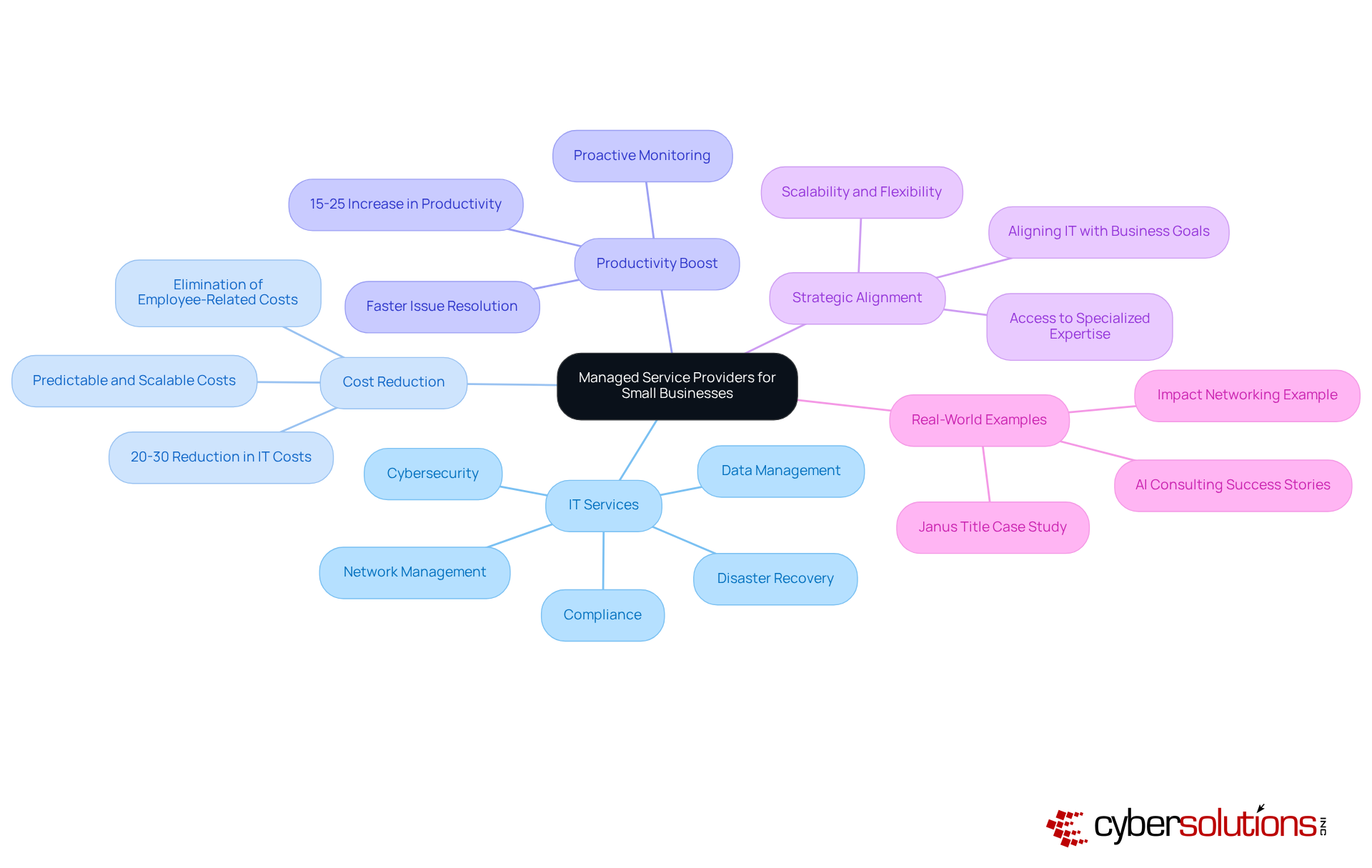
Managed Service Providers (MSPs) are the solution for small businesses, providing a range of services to focus on their core operations. By outsourcing IT functions such as cybersecurity, data management, and cloud services, enterprises can substantially reduce costs while gaining access to expert support. This is increasingly crucial in today's digital landscape, where cyber threats are not only sophisticated but also pervasive, with over half of minor enterprises that experience a cyber attack shutting down within six months.
MSPs provide comprehensive support that goes beyond basic IT services; they strategically align technology with organizational goals, enhancing productivity and growth potential. For instance, organizations that engage MSPs can lower overall IT costs by 20-30% while boosting productivity by 15-25%. This cost-effectiveness allows minor enterprises to allocate resources more efficiently, prioritizing innovation and customer service, which is why they often seek the expertise of MSPs to avoid being bogged down by IT challenges.
Real-world examples underscore the transformative influence of MSPs. For example, Janus Title successfully outsourced its marketing and IT solutions to an MSP, which streamlined operations and enhanced its market presence. Similarly, smaller enterprises utilizing AI consulting through MSPs have been able to uncover significant use cases and adopt advanced technologies without the burden of managing an internal team.
In conclusion, collaborating with the right MSP, such as those specializing in cybersecurity and compliance, not only enhances security and compliance—addressing critical standards such as GDPR and HIPAA—but also enables small enterprises to excel in a competitive landscape by ensuring their IT infrastructure is robust, efficient, and aligned with their strategic objectives.
Key Criteria for Choosing the Right MSP for Your Business
Selecting the best MSP for small business is crucial for enhancing their IT infrastructure and security. The landscape of technology is evolving, making it imperative for organizations to choose an MSP that can effectively safeguard their operations. Here are key criteria to consider:
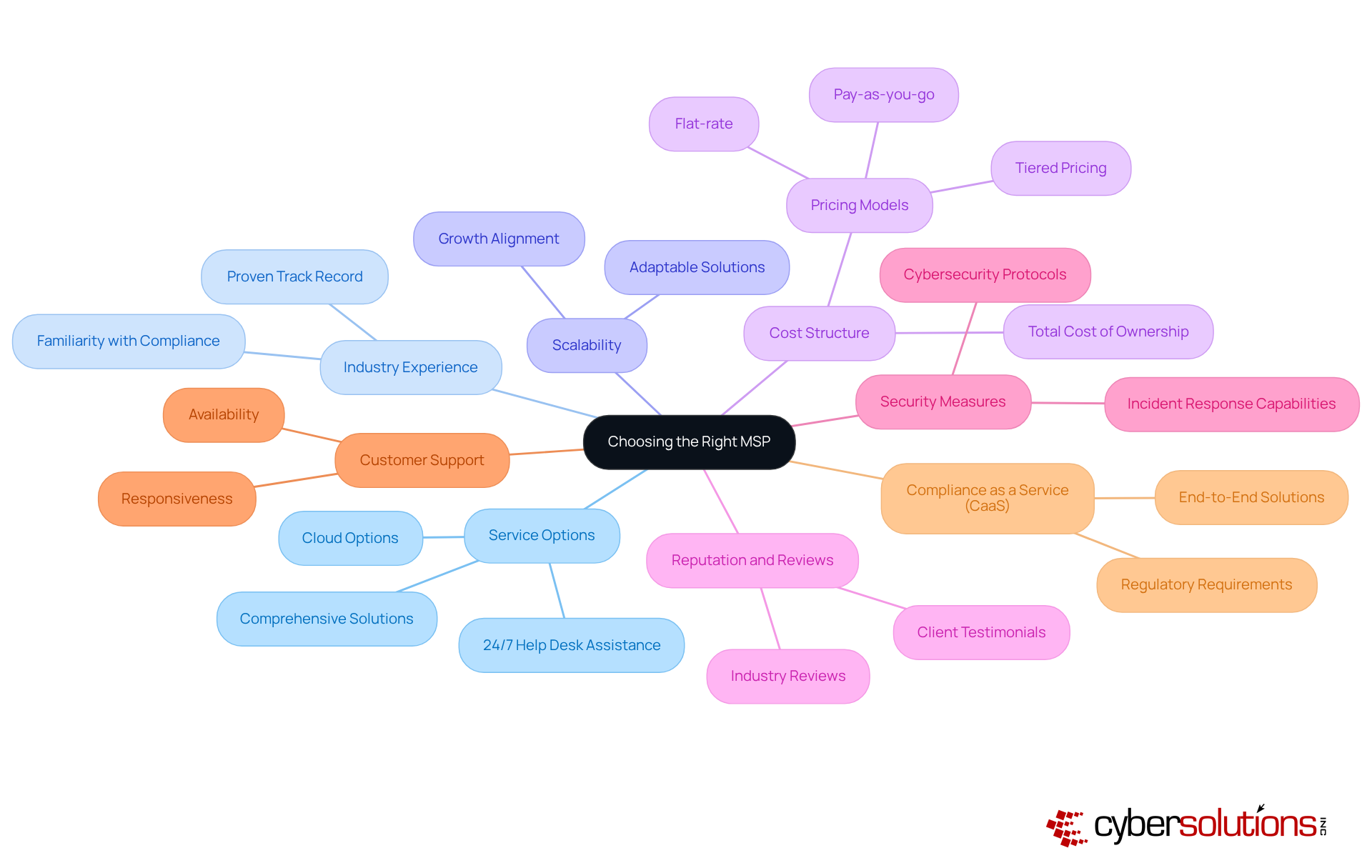
- Service Options: Ensure the MSP offers a comprehensive suite of services, including cybersecurity, cloud solutions, and data backup. This range of offerings is crucial for meeting various IT requirements, especially in regulated sectors such as healthcare, finance, and manufacturing.
- Industry Experience: Choose MSPs with a proven track record. Their familiarity with unique challenges and compliance requirements can significantly streamline your operations. Cyber Solutions, for example, customizes its IT offerings to address the particular security and compliance requirements of healthcare organizations, greatly enhancing operations.
- Scalability: The MSP should provide adaptable solutions that can expand in line with your organization. This adaptability is vital as your IT needs evolve over time, especially in dynamic sectors like healthcare and finance.
- Cost Structure: Evaluate the MSP's pricing model—whether flat-rate, pay-as-you-go, or tiered—to ensure it aligns with your budget. Understanding the total cost of ownership is essential to avoid unexpected expenses, particularly considering that the cost of downtime can exceed $1 million per hour in enterprises. Including specific pricing models can provide a clearer understanding of financial implications.
- Reputation and Reviews: Research the MSP’s reputation through client testimonials and industry reviews. A dependable MSP will possess a strong history of client satisfaction and successful delivery of services.
- Security Measures: Given the rising threat of cyberattacks, assess the MSP’s security protocols. Effective security measures are essential for safeguarding your enterprise from potential breaches. Cyber Solutions provides extensive security services, including round-the-clock monitoring and threat response, which are essential for safeguarding your organization from potential breaches.
- Customer Support: Consider the level of support offered, including availability and responsiveness. An MSP that emphasizes client support can greatly influence your operations, guaranteeing prompt solutions to IT problems.
- Compliance as a Service: Evaluate whether the MSP offers CaaS, which provides end-to-end solutions to meet regulatory requirements. This offering is especially advantageous for small and medium-sized enterprises in heavily regulated sectors, as it streamlines compliance procedures and safeguards organizations from possible penalties.
By thoroughly assessing these criteria, small enterprises can make informed choices when selecting the best MSP for small business, ultimately enhancing productivity and operational effectiveness.
Comparative Analysis of Leading MSP Providers: Unique Offerings and Benefits
In today's digital landscape, the importance of [cybersecurity in healthcare](https://discovercybersolutions.com/blog-posts/10-business-security-managed-services-to-enhance-your operations) cannot be overstated. As cyber threats evolve, healthcare organizations face unique challenges that demand robust solutions. This comparative analysis examines several leading MSP providers, focusing on their unique offerings and benefits:
- Cyber Solutions Inc.: A leader in cybersecurity, Cyber Solutions Inc. provides managed IT services, cloud solutions, and compliance support. Their comprehensive strategy guarantees that companies stay secure and compliant while enhancing IT infrastructure, effectively tackling crucial challenges such as data breaches.
- Method Technology: Recognized for its adaptability, Method Technology serves both large and small enterprises, offering customized IT solutions that include cloud options and cybersecurity strategies. Their dedication to customer care and personalized assistance sets them apart in the market.
- Techmedics: This provider offers a comprehensive range of solutions, including proactive monitoring and incident response. Their strong focus on cybersecurity makes them a superb option for enterprises prioritizing data protection, particularly in sectors susceptible to cyberattacks.
- Andromeda Technology Solutions: With a comprehensive range of IT services focused on scalability and flexibility, Andromeda is well-suited for expanding enterprises. Their competitive pricing models attract budget-conscious enterprises, making them an appealing choice in the MSP landscape.
- Soteria Technology Solutions: Specializing in compliance and regulatory adherence, Soteria is ideal for industries with stringent requirements, such as healthcare and finance. Their expertise in navigating complex regulations provides a significant advantage for organizations needing to maintain compliance.
By comparing these providers, minor enterprises can evaluate which MSP is the best fit that aligns with their operational needs, budget, and industry requirements. Notably, Cyber Solutions Inc. stands out with its tailored services that enhance security, making it a preferred choice among healthcare CFOs seeking reliable IT support.

Challenges and Considerations in Partnering with an MSP
While partnering with an MSP offers numerous benefits, small businesses must remain vigilant regarding potential challenges.
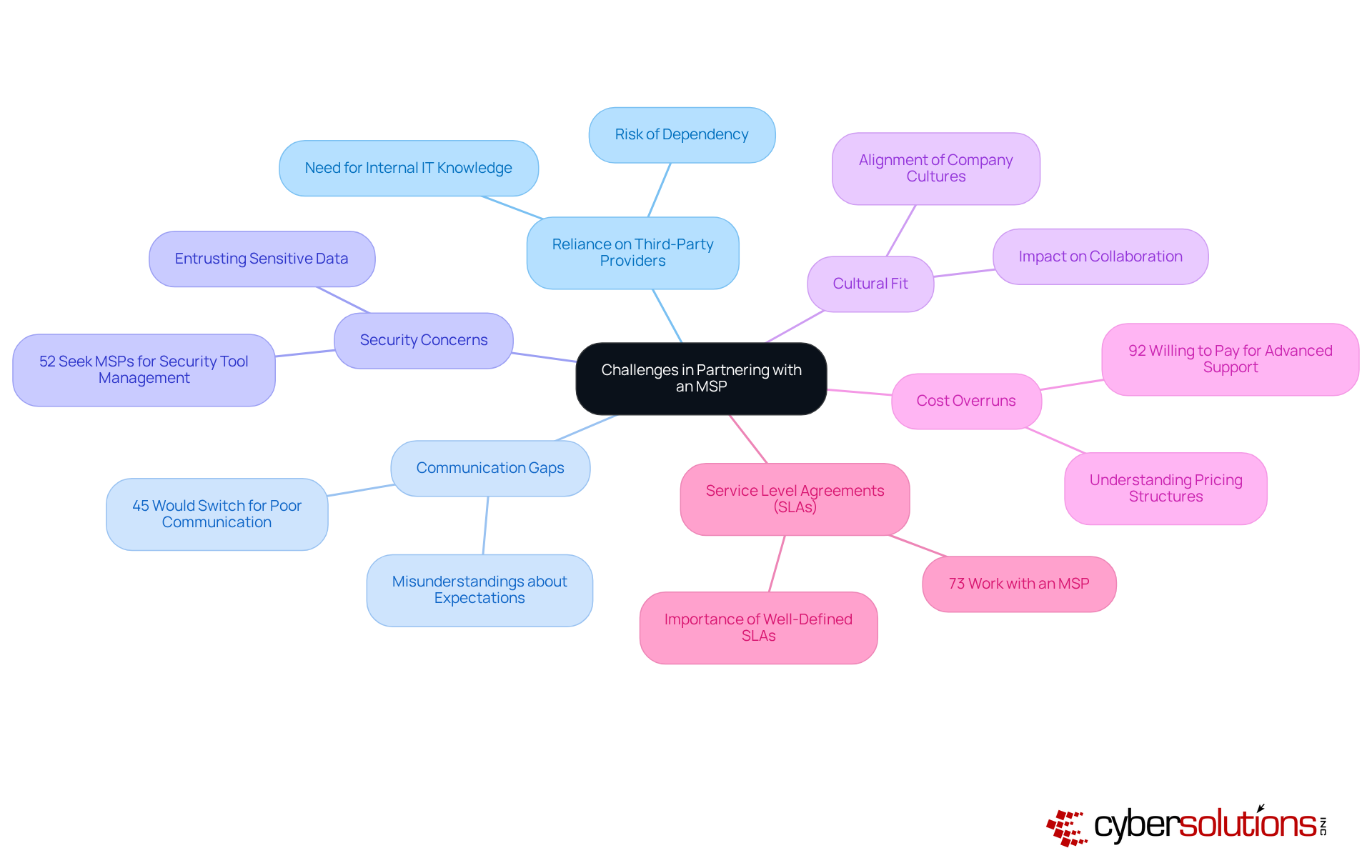
- Reliance on Third-Party Providers: Depending on an MSP can create a reliance that may hinder an organization's ability to manage its IT independently. It is essential to maintain a baseline of knowledge to mitigate this risk.
- Communication Gaps: Miscommunication between the business and the MSP can result in misunderstandings about expectations and deliverables. Establishing clear communication is vital; in fact, 45% of customers would consider switching providers if their current MSP fails to demonstrate the necessary skills and expertise for 24/7 security support.
- Data Security Risks: Entrusting sensitive data to an MSP raises significant concerns. Businesses must ensure that their MSP has robust security measures in place and is well-versed in compliance, as 52% of organizations seek MSPs to manage disconnected security tools and vendors. Cyber Solutions addresses these concerns with its proactive monitoring, ensuring that potential threats are identified and mitigated before they escalate.
- Cultural Fit: The MSP's company culture should align with that of the business to foster a collaborative working relationship. A mismatch can lead to friction and inefficiencies, ultimately affecting overall delivery. Streamlining communication and aligning values can enhance the effectiveness of the partnership.
- Pricing Transparency: Although MSPs can provide consistent pricing, unforeseen expenses may arise if the range of offerings changes. Businesses should have a clear understanding of the pricing structure and any potential additional fees, as 92% of organizations are willing to pay a premium for reliable service.
- Service Level Agreements: It is crucial to have well-defined SLAs that outline the expectations for service delivery, response times, and support. This helps prevent disputes and ensures accountability, particularly as 73% of organizations currently work with an MSP, underscoring the importance of clear agreements in maintaining effective partnerships.
By being aware of these challenges, small businesses can take proactive steps to ensure a successful partnership with an MSP, especially in leveraging comprehensive firewall and network security solutions like those offered by Cyber Solutions.
Conclusion
Choosing the right Managed Service Provider (MSP) is not just a decision; it is a pivotal strategy for small businesses striving to enhance their IT infrastructure and security. By outsourcing IT functions, organizations can concentrate on their core operations while reaping the benefits of specialized expertise. The significance of selecting an MSP that aligns with specific business needs cannot be overstated; it directly influences operational efficiency and cybersecurity resilience.
This article explores the critical criteria for selecting the best MSP for small businesses, emphasizing essential aspects such as:
- Service options
- Industry experience
- Scalability
- Cost structure
- Customer support
Real-world examples illustrate how companies have effectively leveraged MSPs to streamline operations, bolster security, and ensure compliance with regulatory standards. Additionally, it addresses potential challenges in MSP partnerships, highlighting the necessity for clear communication, robust security measures, and well-defined service level agreements to mitigate risks.
Ultimately, the choice of an MSP can profoundly affect a small business's capacity to navigate the complexities of the digital landscape. By meticulously evaluating options and comprehending the unique offerings of leading providers, organizations can forge partnerships that not only enhance their operational capabilities but also strengthen their defenses against evolving cyber threats. Embracing this proactive approach is essential for small businesses to remain competitive and secure in an increasingly challenging environment.
Frequently Asked Questions
What are Managed Service Providers (MSPs)?
Managed Service Providers (MSPs) are organizations that offer a range of IT services to help businesses focus on their core operations by outsourcing functions like cybersecurity, data management, and compliance with industry regulations.
Why are MSPs important for small businesses?
MSPs are important for small businesses because they help reduce operational costs, provide access to specialized expertise, and enhance productivity and growth potential, especially in a landscape filled with sophisticated cyber threats.
How can MSPs reduce costs for small businesses?
Engaging MSPs can lower overall IT costs by 20-30%, allowing small businesses to allocate resources more efficiently and prioritize innovation and customer service.
What impact do MSPs have on productivity?
Businesses that work with MSPs can boost their productivity by 15-25%, which helps them operate more effectively and focus on strategic objectives.
Can you provide examples of how MSPs have benefited businesses?
One example is Janus Title, which outsourced its marketing and IT solutions to an MSP, streamlining operations and enhancing its market presence. Additionally, smaller enterprises using AI consulting through MSPs have adopted advanced technologies without the burden of managing an internal team.
What compliance standards do MSPs help address?
MSPs assist small businesses in ensuring compliance with critical standards such as HIPAA and PCI-DSS, which are essential for maintaining security and regulatory adherence.
How do MSPs align technology with organizational goals?
MSPs strategically align technology with the goals of an organization, ensuring that the IT infrastructure is robust, efficient, and supports the business's overall objectives.
List of Sources
- Understanding Managed Service Providers: Importance for Small Businesses
- consilien.com (https://consilien.com/news/the-future-of-business-it-why-outsourcing-is-the-smart-move-in-2025)
- impactmybiz.com (https://impactmybiz.com/blog/small-business-managed-services-benefits)
- Managed IT Services for Small Businesses in the US | 2026 Guide (https://arpatech.com/blog/why-small-businesses-need-managed-it-services-in-the-usa)
- jumpcloud.com (https://jumpcloud.com/blog/msp-statistics-trends)
- hypershift.com (https://hypershift.com/blog/it-managed-services-for-small-business-the-2025-no-nonsense-guide)
- Key Criteria for Choosing the Right MSP for Your Business
- omegasystemscorp.com (https://omegasystemscorp.com/insights/blog/it-msp-101-key-considerations-for-selecting-a-managed-services-provider)
- vastitservices.com (https://vastitservices.com/blog/choosing-the-right-managed-service-provider-key-factors-to-consider)
- appliedtech.us (https://appliedtech.us/resource-hub/evaluating-a-managed-service-provider-tips-to-find-an-msp)
- kelsercorp.com (https://kelsercorp.com/blog/how-to-pick-the-right-msp-8-criteria-to-evaluate-managed-it-providers)
- mooit.com (https://mooit.com/how-to-choose-a-managed-services-provider)
- Comparative Analysis of Leading MSP Providers: Unique Offerings and Benefits
- ntiva.com (https://ntiva.com/news/ntiva-ranked-on-channel-partners-2025-msp-501-tech-industrys-most-prestigious-list-of-managed-service-providers-worldwide)
- discovercybersolutions.com (https://discovercybersolutions.com/blog-posts/7-managed-cybersecurity-services-every-cfo-should-consider)
- businesswire.com (https://businesswire.com/news/home/20250627368201/en/Channel-Partners-Unveils-2025-MSP-501-Tech-Industrys-Most-Prestigious-List-of-Managed-Service-Providers-Worldwide)
- gocloudwave.com (https://gocloudwave.com/cloudwave-ranked-15-on-channel-partners-2025-msp-501-the-tech-industrys-most-prestigious-list-of-managed-service-providers-worldwide)
- Challenges and Considerations in Partnering with an MSP
- prnewswire.com (https://prnewswire.com/news-releases/73-of-organizations-with-up-to-2-000-employees-rely-on-msps-to-manage-the-security-challenges-of-growth-302504774.html)
- blog.barracuda.com (https://blog.barracuda.com/2025/07/15/msps-vital-secure-business-growth)
- barracuda.com (https://barracuda.com/company/news/2025/organizations-employees-rely-msps-manage-security-challenges-growth)
- crn.com (https://crn.com/news/channel-news/2025/here-are-what-20-msp-500-executives-see-as-the-biggest-challenges-to-their-business-in-2025)
- todyl.com (https://todyl.com/blog/msp-challenges-2025)