
Navigating Compliance Challenges

Master IT Requests: A Step-by-Step Guide for CFOs in Healthcare

Overview

This article serves as a vital guide for CFOs in healthcare, focusing on the mastery of IT requests and underscoring the essential role of IT in boosting operational efficiency and ensuring regulatory compliance. It is critical to:

  1. Clearly define the problem at hand
  2. Articulate the necessity for resources
  3. Maintain open communication with IT teams

By emphasizing these elements, the article illustrates how structured IT requests can significantly enhance patient care and yield financial returns for healthcare organizations.

Introduction

In the intricate realm of healthcare, the importance of IT requests is paramount; they play a crucial role in ensuring patient safety, protecting sensitive data, and enhancing operational efficiency. This article serves as a comprehensive guide for CFOs, empowering them to navigate the complexities of IT requests and equipping them with the essential tools to advocate for critical technology investments that align seamlessly with organizational objectives. As the demand for IT continues to escalate, the pressing question arises: how can CFOs adeptly prioritize and manage these requests to guarantee the success of their healthcare organizations?

Understand the Importance of IT Requests

In the healthcare field, the demands for IT extend far beyond mere administrative duties; they are vital components that significantly impact individual safety, data protection, and operational effectiveness. Recognizing the importance of these demands empowers CFOs to prioritize IT initiatives that not only enhance service delivery but also with stringent regulations such as HIPAA and GDPR.

Effective IT management has been shown to reduce errors, improve health outcomes, and generate savings, making it imperative for CFOs to advocate for the necessary resources and support within their organizations. Furthermore, aligning IT requests with strategic financial planning is crucial, as it ensures that investments in technology yield measurable returns, ultimately benefiting both the organization and its clients.

For example, hospitals that have adopted robust cybersecurity measures have experienced a notable reduction in data breaches, which can incur an average cost of $408 per stolen health record—nearly three times the expense seen in other sectors. By fostering a culture of cybersecurity awareness and investing in advanced IT solutions, healthcare organizations can significantly bolster their operational resilience and safeguard trust.
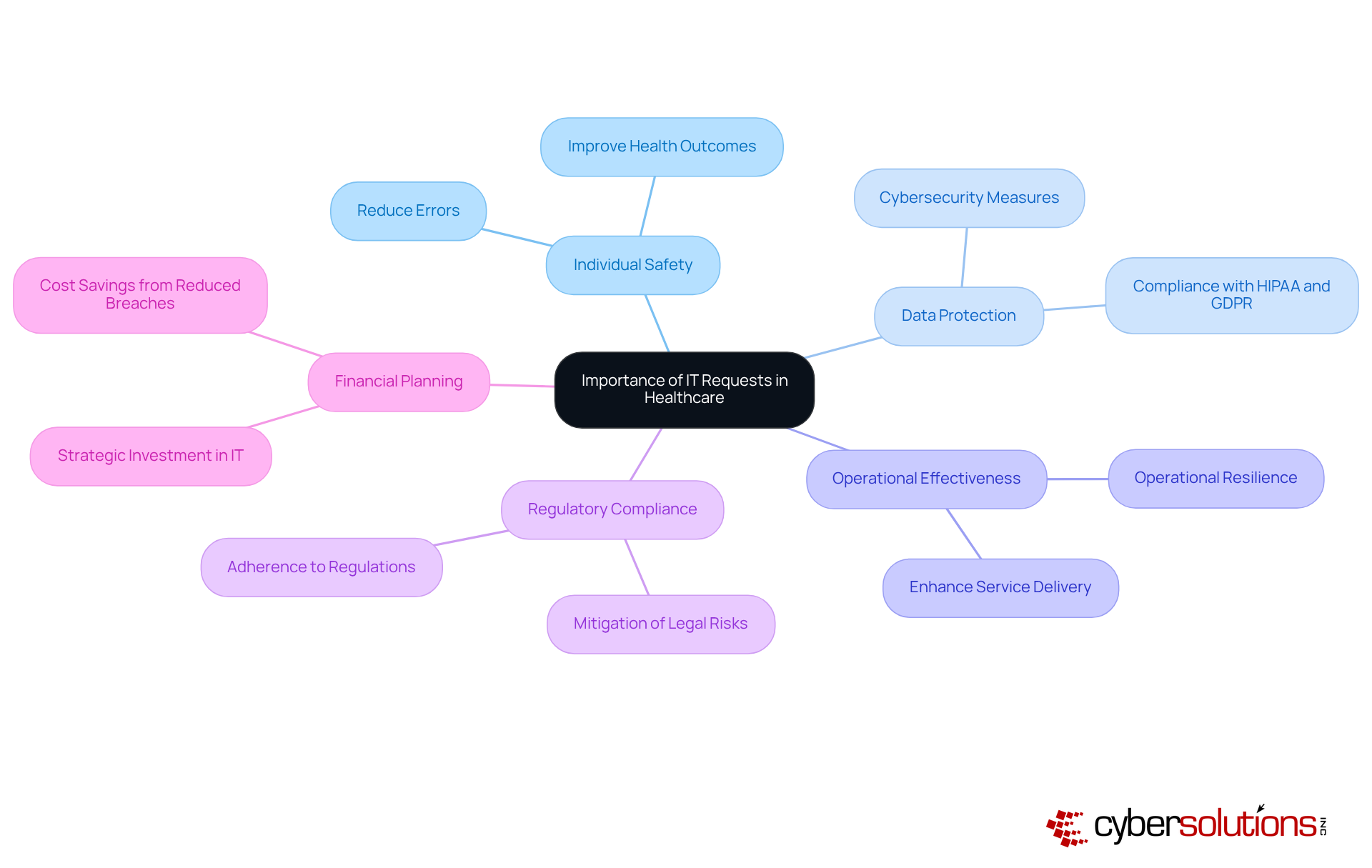
The central node captures the core theme, while branches represent different aspects of how IT requests impact healthcare. Each sub-point elaborates on specific benefits or considerations within those areas.

Craft a Clear and Detailed IT Request

To create an , it is crucial to begin by precisely defining the problem or need. Clearly articulate the nature of the issue, its urgency, and request any pertinent background information. For instance, when pursuing an enhancement to a management system for clients, explain how the current system affects care or operational efficiency. Furthermore, outline the anticipated outcomes of the proposal, such as enhanced data security or improved patient experiences.

Including a cost estimate and potential return on investment (ROI) will further strengthen your appeal, demonstrating to IT teams and stakeholders how the investment aligns with the entity's financial goals.

Leverage templates or examples from previous successful submissions to ensure your entry is clear and comprehensive. This structured approach not only facilitates better communication but also increases the likelihood of approval by showcasing a thorough understanding of the organization's needs and priorities.

Each box represents a step in creating your IT request. Follow the arrows to see how each step leads to the next, helping you build a comprehensive and impactful submission.

Follow Up and Manage Your IT Request

Once an IT request has been submitted, it is crucial to follow up regularly to monitor its progress. Establish a follow-up schedule, whether weekly or bi-weekly, depending on the urgency of the inquiry. During these follow-ups, ask about the status of the appeal, any challenges encountered, and the anticipated timeline for resolution. Maintaining open lines of communication with IT staff not only fosters collaboration but also ensures that any issues are promptly addressed.

Furthermore, documenting all interactions and updates can provide valuable insights for future inquiries and assist in evaluating the effectiveness of the IT support process. Should delays arise, it is essential to or modifications to the request are necessary to facilitate a quicker resolution.

This flowchart guides you through the steps to take after submitting an IT request. Each box represents an action or decision, and the arrows show you the path from one step to the next.

Conclusion

Recognizing the pivotal role of IT requests in healthcare is essential for CFOs aiming to enhance operational effectiveness and patient safety. By understanding and prioritizing these requests, CFOs can align technology investments with strategic financial goals, ensuring compliance with regulations and improving overall service delivery.

Throughout this guide, the importance of crafting clear and detailed IT requests has been emphasized. This includes the need for precise problem definitions, anticipated outcomes, and potential ROI. Furthermore, the significance of regular follow-ups and effective communication with IT teams cannot be overstated. These practices foster collaboration and facilitate timely resolutions.

Ultimately, managing IT requests in healthcare transcends mere procedural tasks; it is a strategic initiative that can significantly impact the quality of care provided. By adopting best practices in IT request management, healthcare organizations can safeguard patient trust, improve operational resilience, and drive meaningful advancements in service delivery. It is imperative for CFOs to take proactive steps in this area, ensuring that technology becomes a cornerstone of healthcare excellence.

Frequently Asked Questions

Why are IT requests important in the healthcare field?

IT requests are crucial in healthcare because they significantly impact individual safety, data protection, and operational effectiveness, beyond just administrative duties.

How do effective IT management practices benefit healthcare organizations?

Effective IT management reduces errors, improves health outcomes, and generates savings, making it essential for CFOs to secure necessary resources and support.

What role do CFOs play in IT initiatives within healthcare organizations?

CFOs are responsible for prioritizing IT initiatives that enhance service delivery and ensure compliance with regulations such as HIPAA and GDPR.

Why is it important to align IT requests with strategic financial planning?

Aligning IT requests with strategic financial planning ensures that technology investments yield measurable returns, benefiting both the organization and its clients.

How do cybersecurity measures impact data breaches in hospitals?

Hospitals that adopt robust cybersecurity measures experience a notable reduction in data breaches, which can cost an average of $408 per stolen health record.

What is the cost difference of data breaches in healthcare compared to other sectors?

The cost of data breaches in healthcare is nearly three times higher than in other sectors, highlighting the importance of investing in cybersecurity.

How can healthcare organizations enhance their operational resilience?

By fostering a culture of cybersecurity awareness and investing in advanced IT solutions, healthcare organizations can significantly enhance their operational resilience and safeguard trust.

Recent Posts
7 Steps to Create Your IT Disaster Plan Effectively
4 Best Practices for Cyber Security Awareness Training for Staff
3 Best Practices for Effective Workplace Security Awareness Training
Master Backup and DR Solutions for Business Resilience
Understanding EDR: The Full Form and Its Importance in Cybersecurity
Understanding Endpoint Detection and Response (EDR) in Cybersecurity
Understanding EDR Meaning in Cyber Security for Business Leaders
4 Best Practices for Implementing EDR Technologies in Cybersecurity
Understanding the Incident Response Plan: Importance and Key Components
Optimize Cybersecurity Costs: 4 Essential Strategies for Leaders
NIST 800-171 Summary: Essential Insights for C-Suite Leaders
6 Steps to Create an Effective IT Recovery Plan for Leaders
Master Cyber Security Risk Assessments: Key Practices for Leaders
4 Best Practices for Managed IT Solutions for Business Success
Define Managed IT Services: A Step-by-Step Guide for Executives
Maximize Efficiency with Proven Managed IT Support Solutions
What Are Managed IT Services? Key Benefits and Insights for Leaders
Achieve Cybersecurity Maturity Model Compliance: A Step-by-Step Guide
4 Steps to Calculate the Cost of Cyber Security for Your Business
5 Essential Backup and Disaster Recovery Procedures for Leaders
Master CMMC Security Services: Key Practices for Compliance Success
Understanding the Managed IT Department: Importance and Key Features
10 Essential Technical Safeguards for HIPAA Compliance
Compare Multi-Factor Authentication Companies: Features and Benefits
How Much Does Cyber Security Cost? A Step-by-Step Budget Guide
Master Google Search Operators for Effective Local IT Consulting
Understanding Managed Security Companies: Importance and Key Features
Select the Right Multi-Factor Authentication Vendors for Success
10 Essential CMMC Practices for C-Suite Leaders to Implement
What Are the Key Advantages of Penetration Testing Over Vulnerability Scanning?
Master Managed Cyber Security for Business: Key Steps and Insights
What Is an AUP Policy? Essential Steps for C-Suite Leaders
Penetration Test vs Vulnerability Assessment: Key Differences Explained
Understanding Cyber Assessment Services: Importance and Key Features
Which Backup Method Best Protects Your Critical Data?
Essential Proactive Security Measures for C-Suite Leaders
Effective HIPAA HITECH Compliance Solutions for C-Suite Leaders
Best Practices for Choosing IT Services in Concord
Create an Effective Acceptable Use Policy for Employees
4 Essential IT Budget Examples for C-Suite Leaders
5 Steps to Stay Compliant with Ontario's Employment Standards Act
Understanding the Benefits of Vulnerability Scanning for Leaders
Choose Wisely: MSP or MSSP for Your Business Needs
Understanding the IT Managed Services Model: Definition and Benefits
Master Firewall Management Services: Best Practices for C-Suite Leaders
Best Practices for a Successful Managed IT Helpdesk
Master Backup and Disaster Recovery BDR Solutions for Business Resilience
10 Key Steps to Meet CMMC 2.0 Level 2 Requirements
Maximize Impact with Cyber Security Simulation Exercises Best Practices
Maximize Security with Offsite Data Backup Services Best Practices
4 Best Practices for Effective Computer Security Awareness Training
Why C-Suite Leaders Need Managed Hosting Cloud Solutions Now
4 Multi-Factor Authentication Options to Enhance Security for Leaders
Master Cloud Hosting Managed: Best Practices for C-Suite Leaders
Essential Cyber Security Measures for Businesses in 2026
Master CMMC Regulations: Essential Steps for Compliance Success
Why Staff Security Awareness Training is Crucial for Your Organization
Understanding Cloud Hosting Management: Importance, Evolution, and Key Features
Master CMMC Standards: Essential Steps for Compliance and Success
Maximize ROI with Your Information Technology MSP: 4 Best Practices
4 Best Practices to Maximize Uptime in Cloud Infrastructure
10 Key Benefits of Partnering with IT MSPs for Your Business
What is Cyber Intelligence? Key Insights for C-Suite Leaders
5 Best Practices to Prevent Ransomware for C-Suite Leaders
Master Data Storage Disaster Recovery: Key Strategies for C-Suite Leaders
5 Best Practices for Using SIEM in Security Management
Understanding EDR Meaning in Security for Executive Strategy
CMMC Overview: Key Features and Compliance Insights for Leaders
Understanding Managed Services Technology: Definition and Key Insights
Ransomware History: Key Milestones Every C-Suite Leader Must Know
Create an Effective Cyber Attack Response Plan in 6 Steps
Why the Importance of Backing Up Data Cannot Be Overlooked
10 Essential Defense in Depth Examples for C-Suite Leaders
Master Disaster Backup: Essential Strategies for C-Suite Leaders
4 Best Practices for MSP Backup and Recovery Success
Master Backup and Disaster Recovery for Business Resilience
Which Firewall Should I Use? A Step-by-Step Guide for Leaders
Master Dark Web Protection Services to Safeguard Your Business
Maximize Cybersecurity with Managed Service Provider Strategies
Master USB Thumb Drive Hacks: Prevention and Response Strategies
Enhance Cybersecurity with Deep Packet Inspection and SSL Best Practices
What Is a Digital Certificate Used For in Cybersecurity?
Master CMMC Compliance Before the Deadline: Key Steps to Follow
What Is Managed Cloud Hosting and Why It Matters for Your Business
Why C-Suite Leaders Choose Managed Services Hosting for Success
Understanding Vulnerability Scanning in Cyber Security for Leaders
Why SSL Deep Packet Inspection is Essential for Cybersecurity Leaders
Protect Your Business: Best Practices Against USB Flash Drive Hacks
Protect Your Business from Thumb Drive Hacks: Essential Security Steps
Maximize Managed Service Provider Security: Best Practices for C-Suite Leaders
Understanding Threat Vector Meaning: Importance for Business Leaders
Understanding LOTL Attacks: Mechanisms, Prevention, and Impact
4 Best Practices for Effective Managed Web Security Strategies
Understanding the Consequences of Not Backing Up Your Information
Why Your Systems Should Be Scanned Monthly for Optimal Security
3 Best Practices for Effective Cyber Assessments in 2026
4 Key Benefits of Desktop Managed Services for C-Suite Leaders
6 Steps for C-Suite Leaders to Implement a Managed Services Helpdesk
Office vs 365: Key Differences, Features, and Costs for Leaders
Maximize Business Resilience with Co-Managed IT Solutions

Join our newsletter

Sign up for the latest industry news.
We care about your data in our privacy policy.
Thank you! Your submission has been received!
Oops! Something went wrong while submitting the form.