
Cybersecurity Trends and Insights

Master Managed Firewall Security: A CFO's Essential Tutorial

Overview

In the ever-evolving landscape of healthcare, the significance of managed firewall security cannot be overstated. As cyber threats continue to escalate, healthcare organizations face unique challenges in safeguarding sensitive patient data and ensuring compliance with stringent regulations. The increasing frequency of cyberattacks in this sector highlights the urgent need for robust security measures. Financial implications of data breaches are staggering, with potential losses that can cripple even the most resilient organizations. Therefore, it is imperative for CFOs to implement effective firewall security measures that bolster organizational resilience against these threats.

To navigate this complex environment, healthcare leaders must first understand the current cybersecurity threats they face. With cybercriminals targeting healthcare data more than ever, the stakes are high. The consequences of a breach extend beyond financial losses; they can damage reputations and erode patient trust. Cyber Solutions offers a comprehensive approach to addressing these challenges, providing tailored strategies that empower organizations to protect their most valuable asset: patient information.

CFOs play a crucial role in this endeavor. By following a step-by-step guide to implementing firewall security, they can enhance their organization's defenses against cyber threats. This proactive stance not only mitigates risks but also ensures compliance with regulatory requirements. The time to act is now—healthcare organizations must prioritize cybersecurity to safeguard their future.

Introduction

In today's healthcare landscape, where organizations are increasingly targeted by cyber threats, the significance of robust managed firewall security stands paramount. With staggering statistics revealing that medical facilities encounter an average of 40 cyberattacks annually, CFOs must acknowledge the critical role these security measures play in safeguarding sensitive patient data and ensuring compliance with regulations. Yet, the challenge lies in navigating the complexities of various firewall types and effectively implementing a comprehensive security strategy.

How can CFOs lead their organizations in fortifying defenses while optimizing cybersecurity budgets? This pressing question demands attention as the stakes continue to rise.

Define Firewall Security and Its Importance in Healthcare

In today's digital age, cybersecurity in healthcare is not just important—it's imperative. With delicate patient data being routinely stored and exchanged, the role of , which encompasses both hardware and software solutions, cannot be overstated. This managed firewall security acts as a protective barrier between trusted internal networks and untrusted external environments, effectively thwarting unauthorized access and cyber threats, while ensuring compliance with stringent regulations like HIPAA.

Recent statistics underscore the urgency for robust managed firewall security solutions: in 2024, medical facilities faced an alarming average of 40 cyberattacks each, with 92% reporting at least one incident. The financial ramifications are staggering, as the average cost of a medical data breach reached $9.8 million, highlighting the consequences of inadequate security measures. Furthermore, 67% of healthcare entities experienced ransomware attacks, further emphasizing the necessity for managed firewall security to ensure proactive defenses.

Beyond firewall management, application allowlisting emerges as a vital aspect of a comprehensive cybersecurity strategy. By permitting only authorized applications to operate, organizations can significantly reduce the risk of malware, ransomware, and unauthorized software execution. This proactive approach not only mitigates vulnerabilities but also aids medical entities in meeting compliance requirements for standards such as HIPAA, PCI-DSS, and GDPR.

Implementing effective managed firewall security and application allowlisting is essential for safeguarding sensitive patient data while enhancing operational efficiency. This makes it a crucial investment for CFOs aiming to optimize cybersecurity budgets. By prioritizing these protective measures, medical institutions can safeguard their resources, maintain patient trust, and minimize the risk of costly fines associated with data breaches. Real-world examples illustrate this point: entities that have successfully adopted advanced protection solutions and application allowlisting report notable reductions in breach incidents and improved compliance with regulatory standards, underscoring the critical importance of these measures in today's digital landscape.
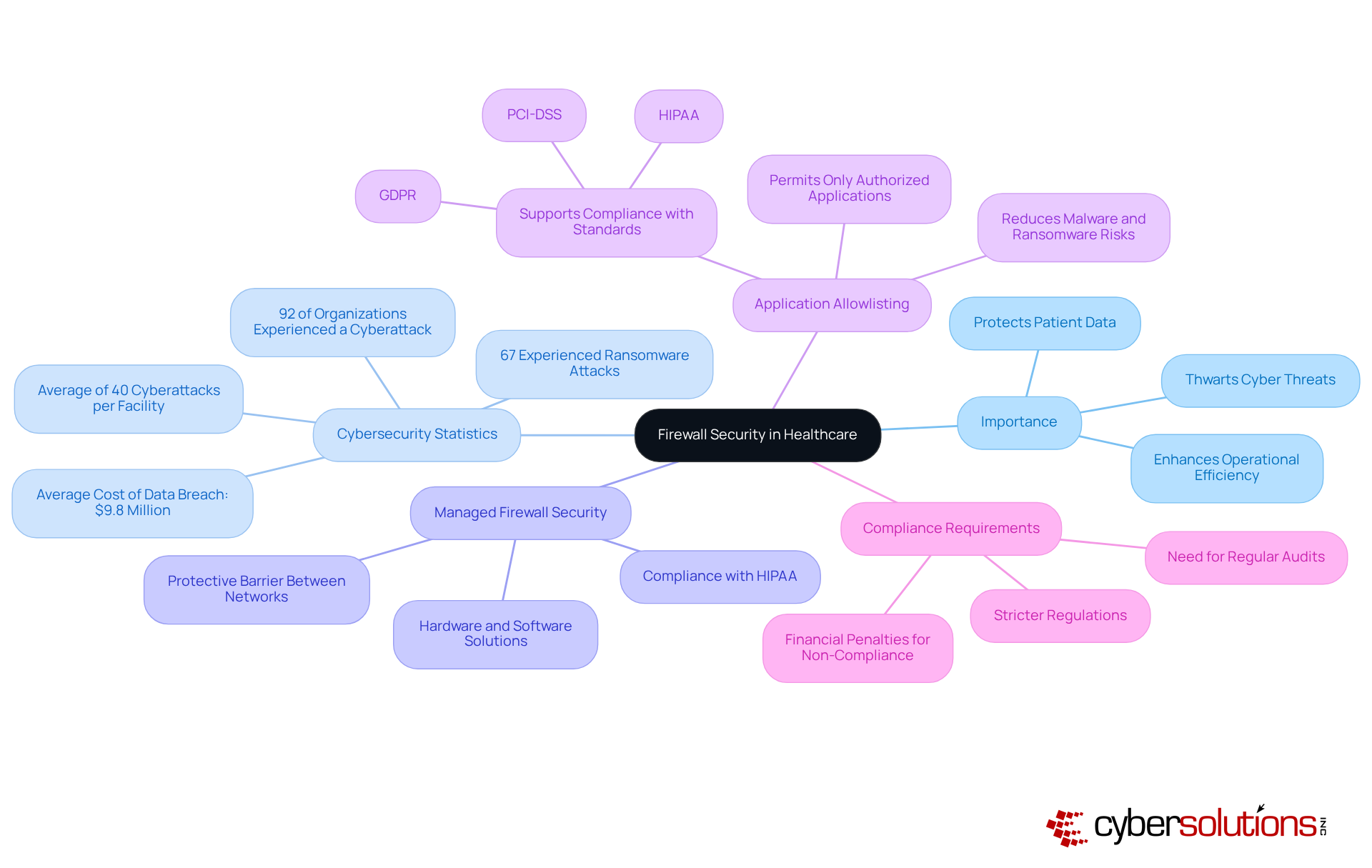
The center represents the core topic. Each branch shows a key aspect of firewall security, while sub-branches provide additional details like statistics or related actions. This helps visualize how everything connects in the context of healthcare.

Explore Different Types of Firewalls and Their Applications

In the rapidly evolving landscape of cybersecurity, managed firewall security is indispensable for safeguarding medical organizations from cyber threats. Understanding the various is essential for effective managed firewall security in this sector. Here’s an overview of the primary firewall types and their applications in healthcare:

  1. Packet-Filtering Systems: These foundational systems scrutinize data packets, permitting or denying them based on established rules. While suitable for smaller networks, their limited capabilities may not suffice for larger medical organizations that demand more robust protection.
  2. Stateful Inspection Systems: By monitoring the state of active connections, stateful inspection systems make decisions based on the context of the traffic. This type offers enhanced protection compared to packet-filtering systems and is frequently employed in medical environments, where managed firewall security is paramount for ensuring secure connections.
  3. Proxy Servers: Serving as intermediaries between users and the internet, proxy servers add an extra layer of security by masking internal IP addresses. They are particularly beneficial for medical institutions that need to oversee and manage internet usage, ensuring compliance with data protection regulations.
  4. Next-Generation Security Devices (NGFW): These advanced systems integrate traditional security functionalities with features such as intrusion prevention systems (IPS) and application awareness. Managed firewall security is ideal for medical institutions facing sophisticated cyber threats, providing extensive defense against various attacks.
  5. Cloud Barriers: As medical institutions increasingly migrate to cloud services, cloud barriers deliver adaptable protection solutions that secure data during transfer and while stored. They are vital for entities aiming to protect sensitive patient information while leveraging cloud technologies.

Looking ahead to 2025, the market share of these protective technologies in healthcare is expected to reflect a growing preference for NGFWs and cloud defenses, driven by the necessity for advanced protection strategies against evolving cyber threats. By comprehending these types of barriers and their specific applications, CFOs can make informed decisions that align with their organization's security requirements and budget constraints.
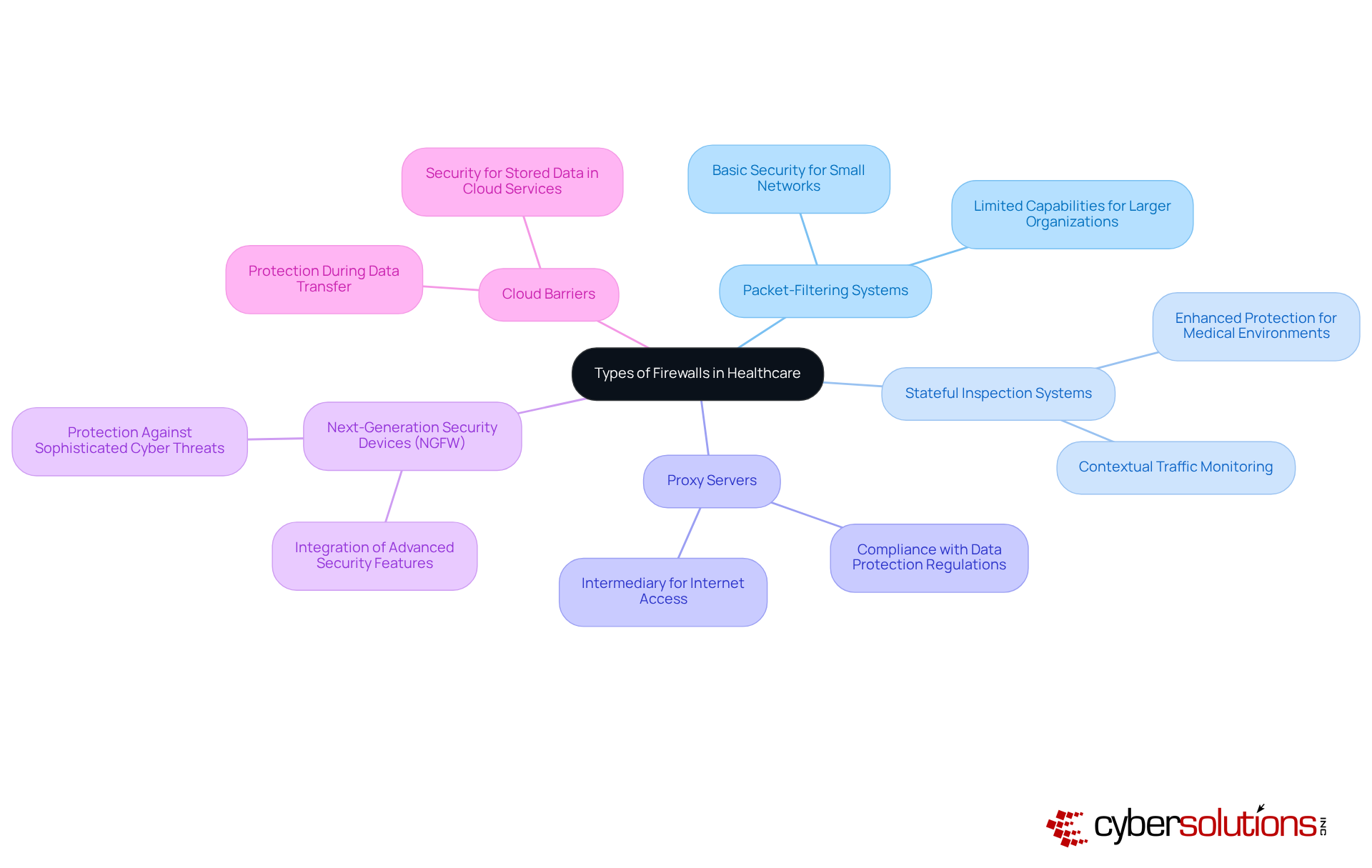
At the center is an overview of firewall types, with branches leading to each type. Follow the branches to learn how each firewall type protects medical organizations from cyber threats.

Implement Firewall Security: A Step-by-Step Guide for CFOs

Implementing managed firewall security is essential in today’s healthcare landscape, where cybersecurity threats are increasingly sophisticated. CFOs must lead the charge in safeguarding sensitive data while ensuring compliance with industry regulations. Here are several key steps to effectively implement firewall security:

  1. Assess Current Protection Posture: Begin by evaluating your organization's existing protective measures and identifying vulnerabilities. This evaluation will guide your security strategy and assist in prioritizing areas requiring attention. Conducting comprehensive risk assessments and gap analyses is essential to identify compliance gaps and risks within your systems, providing actionable recommendations to address vulnerabilities.
  2. Define Security Policies: Establish clear security policies that outline acceptable use, access controls, and data protection measures. These policies will direct the setup of your security system and ensure adherence to regulations such as HIPAA.
  3. Select the Right Security Barrier Type: Based on your assessment and policies, choose the appropriate category of security barrier that meets your organization's needs. Consider factors such as scalability, ease of management, and integration with existing systems to ensure seamless operation.
  4. Set Up the Security System: Collaborate with IT experts to set up the security system in line with your established policies. Ensure that rules are set to allow legitimate traffic while blocking unauthorized access, thereby protecting sensitive patient information.
  5. Monitor and Maintain: Regularly check logs and performance to detect any anomalies or breaches. Proactive monitoring is crucial to detect and respond to threats before they compromise sensitive data. Arrange regular maintenance to update security software and guidelines as necessary, swiftly addressing vulnerabilities to reduce risks.
  6. Train Staff: Instruct employees on the significance of network protection and optimal methods for upholding a safe environment. Regular training can significantly reduce the likelihood of breaches caused by human error.
  7. Review and Update: Periodically assess your network protection measures and policies to ensure they remain effective against evolving threats. This ongoing assessment is crucial for adapting to new vulnerabilities and . Collaborating with a virtual CISO can provide strategic guidance and oversight to direct your compliance initiatives and manage protection strategies without the expense of a full-time employee.

By diligently following these steps, CFOs can effectively lead their organizations in implementing managed firewall security that not only protects sensitive data but also ensures compliance with industry regulations.
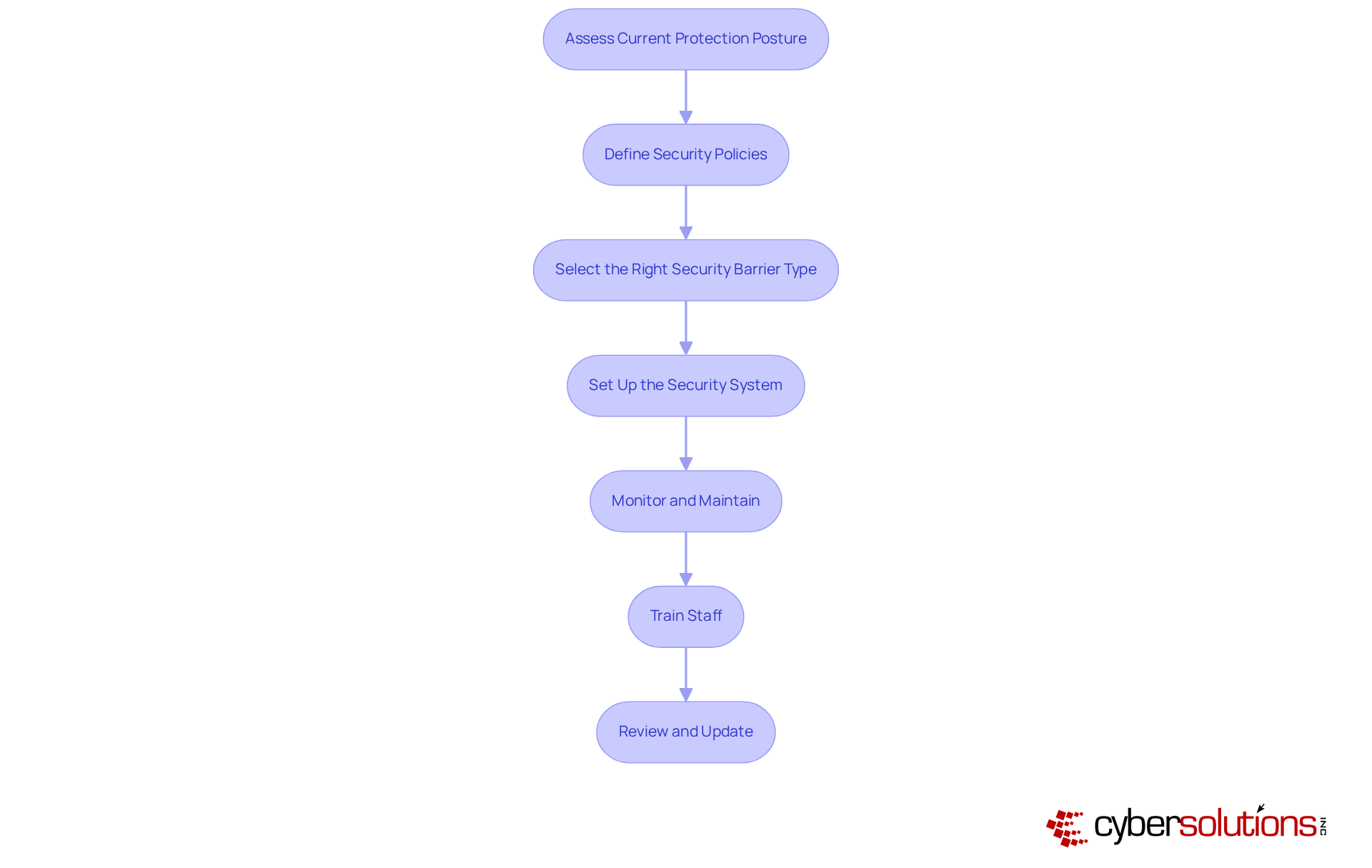
Each box represents a crucial step in securing your network. Follow the arrows to see how to proceed from one step to the next, ensuring you cover all important actions.

Conclusion

In the realm of healthcare, the significance of managed firewall security cannot be overstated. As cyber threats grow increasingly sophisticated, CFOs must prioritize the implementation of robust firewall solutions to protect sensitive patient data and ensure compliance with industry regulations. This tutorial underscores the critical role that managed firewall security plays in safeguarding healthcare organizations against potential breaches and the financial repercussions that follow.

Key insights discussed include:

  • Alarming statistics surrounding cyberattacks in the healthcare sector
  • The various types of firewalls available
  • Essential steps for effective implementation

From assessing current security postures to training staff and regularly updating policies, each step is crucial for establishing a comprehensive cybersecurity strategy. Moreover, the importance of application allowlisting and the selection of appropriate firewall types are highlighted as pivotal components in enhancing overall security.

Ultimately, investing in managed firewall security is not merely a technical necessity but a strategic imperative for healthcare CFOs. By proactively addressing cybersecurity challenges and fostering a culture of compliance, organizations can protect their valuable resources, maintain patient trust, and mitigate the risks associated with data breaches. Taking action now ensures that healthcare institutions are well-equipped to navigate the evolving landscape of cybersecurity threats, safeguarding both their operations and the sensitive data they manage.

Frequently Asked Questions

What is firewall security in healthcare?

Firewall security in healthcare refers to managed security solutions that include both hardware and software to protect sensitive patient data by creating a barrier between trusted internal networks and untrusted external environments, preventing unauthorized access and cyber threats.

Why is firewall security important in the healthcare sector?

Firewall security is crucial in healthcare to safeguard delicate patient data, ensure compliance with regulations like HIPAA, and protect against the increasing number of cyberattacks targeting medical facilities.

What statistics highlight the need for robust firewall security in healthcare?

In 2024, medical facilities experienced an average of 40 cyberattacks each, with 92% reporting at least one incident. The average cost of a medical data breach reached $9.8 million, and 67% of healthcare entities faced ransomware attacks.

What is application allowlisting, and why is it important?

Application allowlisting is a cybersecurity strategy that permits only authorized applications to run within an organization. It is important because it reduces the risk of malware, ransomware, and unauthorized software execution, helping organizations meet compliance requirements.

How do managed firewall security and application allowlisting contribute to compliance?

These measures help healthcare organizations meet compliance standards such as HIPAA, PCI-DSS, and GDPR by proactively protecting sensitive data and minimizing vulnerabilities.

What are the financial implications of inadequate cybersecurity measures in healthcare?

Inadequate cybersecurity can lead to significant financial ramifications, with the average cost of a medical data breach reaching $9.8 million, alongside potential fines for non-compliance with regulations.

How can healthcare institutions benefit from implementing firewall security and application allowlisting?

By implementing these protective measures, healthcare institutions can safeguard patient data, enhance operational efficiency, maintain patient trust, and reduce the risk of costly fines associated with data breaches.

Are there real-world examples of the effectiveness of these cybersecurity measures?

Yes, entities that have adopted advanced protection solutions and application allowlisting report notable reductions in breach incidents and improved compliance with regulatory standards, demonstrating the critical importance of these measures.

Recent Posts
4 Key Steps to Evaluate IT Security Outsourcing Companies
Master Change Management in Cyber Security: A Step-by-Step Guide
4 Steps to Comply with Regulations for C-Suite Leaders
Maximize Business Resilience with IT Security as a Service Best Practices
Achieve NIST 800-171 Certification: A Step-by-Step Guide for Leaders
What Are the Benefits of a Defense-in-Depth Approach in Cybersecurity?
10 Benefits of IT Department Outsourcing for C-Suite Leaders
5 Key Steps: When Is CMMC Compliance Required for Your Business?
How Does a Vulnerability Scanner Work? Key Insights for Leaders
Enhance Security with Information Security as a Service Best Practices
Why Choosing a Local IT Service Provider Boosts Business Success
Master CMMC Implementation: Steps for C-Suite Leaders to Succeed
CMMC vs. NIST 800-171: Key Similarities and Compliance Strategies
Master IT Support Price: Key Strategies for C-Suite Leaders
Crafting Effective Password Security Infographics: Best Practices
Understanding Desktop as a Service Cost for C-Suite Leaders
Master CMMC 2.0 Level 1 Requirements for Business Success
Understanding CMMC Level 3 Requirements for Defense Contractors
Why Are Logs Important for Cybersecurity and Compliance Success?
Malware vs Spyware: Key Differences Every C-Suite Leader Should Know
7 Steps for Effective HIPAA Disaster Recovery Planning
Achieve CMMC Compliance: Essential Services for Your Organization
Why Your Business Needs an IT Security Provider Now
What to Do with Phishing Emails: 4 Steps to Protect Your Business
Maximize Cloud Hosting Support: Best Practices for C-Suite Leaders
4 Best Practices for Effective Company Security Training
Why Hosting and Cloud Services Are Essential for Business Resilience
Maximize SIEM Events: Best Practices for Cybersecurity Success
4 Best Practices for Managed Email Security Services Success
Understanding EDR in Cyber Security: Meaning and Importance
10 Essential Computer IT Services for C-Suite Leaders
4 Best Practices for Cyber Security Compliance Services Success
5 Best Practices for Achieving CMMC 1.0 Compliance Success
Implementing Multi-Factor Authentication: A Step-by-Step Guide for Leaders
What Is Endpoint Detection and Why It Matters for Your Business
What is an IR Plan? Importance, Components, and Evolution Explained
Master Email Security Training: 4 Steps for C-Suite Leaders
What is EDR? Understanding Its Role in Cybersecurity for Leaders
10 Benefits of Network Managed Service Providers for C-Suite Leaders
5 Steps to Build an Effective Cyber Response Plan for Leaders
7 Steps to Build a Successful Managed Service Provider Business
5 Best Practices to Manage Cloud Document Systems Effectively
Master Backup and Data Recovery: Best Practices for C-Suite Leaders
Understanding Hybrid Work Environment Meaning for C-Suite Leaders
What Is a Hybrid Work Environment? Key Features and Evolution Explained
CMMC Compliance Definition: What It Means for Your Organization
10 Essential Dark Web Scanners for C-Suite Leaders in 2025
Essential Best Practices for Your Software Disaster Recovery Plan
Understanding CMMC Compliance Meaning for Business Leaders
Master Fully Managed Cybersecurity: Key Steps for Executives
4 Best Practices for Effective Cyber Risk Assessments
Master Server Managed Services: Best Practices for C-Suite Leaders
Understanding the Benefits of Privileged Access Management for Leaders
Essential Email Safety Tips for C-Suite Leaders to Implement
Understanding NIST Guidelines for Passwords: Importance and Key Insights
Maximize ROI with Tailored IT Solutions and Managed Services
Achieve NIST 800 Compliance: 4 Essential Steps for Leaders
Compare 4 Dark Web Monitoring Companies: Features, Benefits, Pricing
Master the NIST Incident Response Process for Effective Security
Best Practices for Selecting Multi-Factor Authentication Tools
10 Managed Security Services Companies to Watch in 2025
Navigating DOD CMMC Requirements: Compare Compliance Impacts and Trends
Understanding Desktop-as-a-Service: Key Insights for Executives
Understanding Failover Systems: Importance and Key Configurations
10 Essential Strategies for Small Business Ransomware Protection
Understanding Managed Cybersecurity Solutions: Importance and Benefits
Understanding Secure Infrastructure Solutions: Importance and Key Features
How Vulnerability Scanning Works: A Guide for C-Suite Leaders
10 Essential Managed IT Solutions in Maine for Business Leaders
Master Cybersecurity and Compliance: Best Practices for C-Suite Leaders
Backup vs Disaster Recovery: Key Differences for C-Suite Leaders
Why Managed IT Compliance Services Are Essential for Business Success
Understanding Disaster Recovery Tiers: Importance and Key Features
4 Best Practices for Effective Backup and Continuity Strategies
Achieve CMMC 2.0 Level 2 Compliance: A Step-by-Step Approach
Create an Effective Acceptable Use Policy (AUP) in 7 Steps
10 Essential Strategies for Hybrid Work Security Success
10 Essential Cyber Security KPIs for Business Resilience
Comparing Cyber Security Pricing Models for Strategic Decision-Making
Understanding the Benefits of a Managed Service Provider for Leaders
7 Managed Security Services Cloud Solutions for Business Resilience
9 Key Benefits of Cyber Attack Simulation Exercises for Leaders
What an Acceptable Use Policy (AUP) Means for Your Organization
Why Use a Managed Service Provider for Strategic Business Success
10 Key Benefits of the Managed Service Provider Business Model
Understanding the Difference Between MSP and MSSP for Leaders
10 Managed Network IT Services to Boost Business Efficiency
What is a Managed Services Consultant and Why It Matters for Leaders
Understanding the Cost of Cybersecurity for Small Businesses
7 Top Data Center Managed Services Providers for C-Suite Leaders
10 Essential MSP IT Plans for C-Suite Leaders to Enhance Efficiency
Understanding Managed Services Benefits and Risks for Executives
10 Essential Security Services in Information Security for C-Suite Leaders
Create Your CMMC SSP: A Step-by-Step Guide for Leaders
Understanding CVE Funding Cuts: Impacts and Strategies for Leaders
IT Spending as a Percentage of Revenue by Industry: Key Insights
Understanding MSP Company Meaning: Role and Impact for Leaders
10 Examples of Managed Service Providers for C-Suite Leaders
10 Benefits of Defensive Artificial Intelligence for C-Suite Leaders
10 Key Insights on What Juice Jacking Means for Your Business

Join our newsletter

Sign up for the latest industry news.
We care about your data in our privacy policy.
Thank you! Your submission has been received!
Oops! Something went wrong while submitting the form.