


The healthcare sector is increasingly vulnerable to cyber threats, with a staggering 92% of medical organizations experiencing at least one cyberattack in the past year. This alarming statistic underscores the critical importance of cybersecurity in healthcare. As CFOs grapple with the dual pressures of safeguarding sensitive patient information and adhering to stringent regulatory standards, the role of managed security providers becomes paramount.
This article delves into how seven leading managed security providers, including Cyber Solutions Inc., are not only enhancing cybersecurity measures but also aligning their services with the financial strategies of healthcare CFOs.
With the stakes so high, the pressing question arises: how can CFOs effectively navigate the complexities of cybersecurity while ensuring operational efficiency and compliance?
In today's healthcare landscape, the importance of robust cybersecurity cannot be overstated. Cyber Solutions Inc. excels in delivering tailored services specifically designed for medical CFOs. Recognizing the unique financial pressures and stringent regulatory requirements within the medical field, Cyber Solutions deliver comprehensive solutions that not only bolster security but also align seamlessly with the operational needs of healthcare organizations. They offer services that encompass:
This ensures that medical entities can effectively protect patient health information while meeting HIPAA standards.
With 24/7 network monitoring and alert services, Cyber Solutions enable proactive security measures, allowing medical facilities to detect anomalies and potential vulnerabilities in real-time. This ongoing observation is essential, particularly as 92% of medical organizations reported facing at least one cyber incident, highlighting the urgent requirement for effective security frameworks from managed service providers. As cybersecurity expert Jared Sorensen aptly notes, "When one attack can vaporize a quarter’s earnings, CFOs have an undeniable fiduciary duty to lead on cyber risk."
Additionally, Cyber Solutions provide incident response services and cybersecurity training, including virtual CISO services, equipping CFOs in the medical sector with the necessary tools to enhance audit readiness and ensure ongoing compliance. By implementing customized solutions provided by Cyber Solutions, CFOs in the medical field can mitigate risks and enhance operational resilience, ultimately safeguarding both financial and patient outcomes.
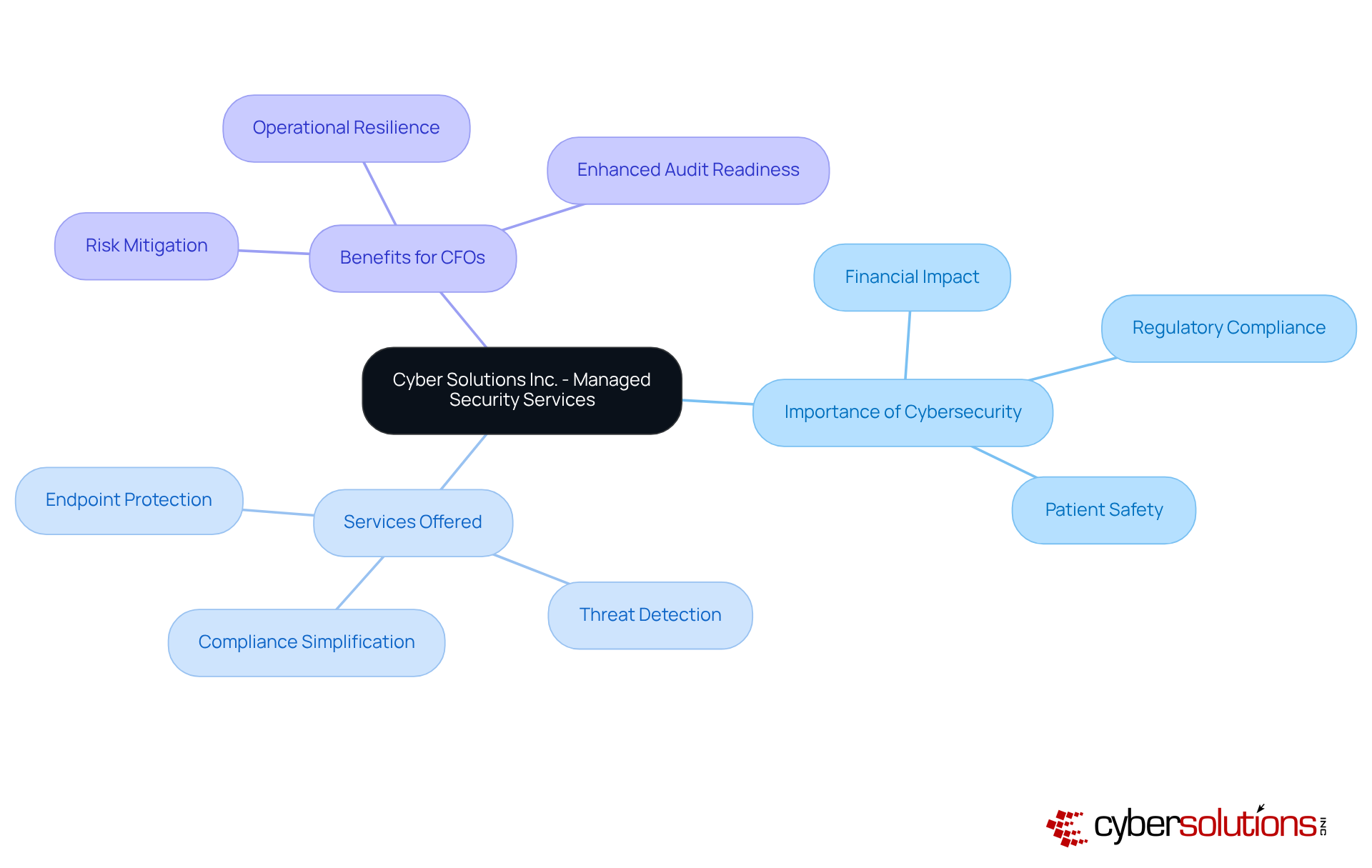
In the ever-evolving landscape of healthcare, continuous monitoring emerges as a cornerstone of robust cybersecurity. Cyber Solutions Inc. provides 24/7 monitoring services, ensuring immediate detection and response to any suspicious activities. This proactive strategy not only enhances security but also aids CFOs in mitigating the financial risks, which can average $408 per record—significantly higher than the cross-industry average. As we look toward 2025, the projected escalation in cyber threats within the medical field underscores the critical need for effective continuous monitoring to uphold compliance with regulations and protect patient data.
Our services integrate robust cybersecurity measures, including:
to thwart unauthorized access and ensure the protection of patient health information (PHI). As cyber attacks become increasingly frequent and sophisticated, the ability to respond through ongoing monitoring not only enhances operational resilience but also fortifies trust in medical provisions. Furthermore, our incident response services, featuring 24-hour on-site support, guarantee that any threats are contained swiftly, minimizing damage and facilitating a quicker recovery.

In today's healthcare landscape, navigating the intricate web of medical regulations is not just a challenge; it is a formidable imperative for CFOs. With the rise of cyber threats, the stakes have never been higher. Cyber Solutions Inc. stands as a crucial ally, offering essential services that empower organizations to adhere to pivotal regulations such as:
Through comprehensive audits, meticulous risk assessments, and targeted compliance education, Cyber Solutions not only aids medical entities in achieving compliance but also significantly mitigates the risk of incurring penalties. This proactive support is indispensable for CFOs striving to align their financial strategies with rigorous compliance demands, ensuring both operational integrity and fiscal accountability in an increasingly regulated environment. The question remains: can your organization afford to overlook these critical services?

In today's healthcare landscape, the importance of cybersecurity cannot be overstated. Delegating to managed security providers not only addresses the pressing need for robust protection but also leads to cost savings for medical institutions. By partnering with experts, CFOs can transform fixed costs into variable expenses, which facilitates budget flexibility. This strategic approach alleviates the necessity for large in-house IT teams and capitalizes on economies of scale, ultimately resulting in lower operational costs.
Moreover, the proactive characteristics of managed security services play a vital role in averting costly breaches, which can average $2.1 million per incident in the medical field. Data indicates that information security typically consumes 4 to 7 percent of overall IT budgets in medical institutions, underscoring the opportunity for substantial savings through outsourcing. For instance, entities that utilize managed security services achieve an average reduction in costs, while simultaneously enhancing their security measures by 40%. This dual advantage of cost reduction and improved security positions outsourcing as a strategic imperative in the medical sector.
As healthcare organizations navigate the complexities of cybersecurity, the partnership with managed security providers emerges as a compelling solution. Are you ready to transform your IT strategy and drive down costs? The time to act is now.

In today's healthcare landscape, the importance of cybersecurity cannot be overstated. Medical institutions face a pressing need for specialized security knowledge, particularly as 67% of healthcare organizations experience cyberattacks. This shortage presents a significant challenge in the medical sector, making it increasingly difficult to recruit and retain qualified personnel. By collaborating with managed security providers, organizations can enhance their cybersecurity posture without the financial burden of hiring full-time staff. This partnership enables medical providers to implement effective security measures, remain vigilant against emerging threats, and ensure robust protection of sensitive patient data.
Furthermore, with 64% of IT professionals in the medical field expressing concerns about their cybersecurity readiness, the urgency for seeking external cybersecurity support is clear. Engaging with Cyber Solutions not only mitigates these risks but also empowers CFOs to concentrate on strategic financial management. This collaboration ensures resilience in an increasingly complex digital landscape, allowing organizations to operate effectively.
In conclusion, the collaboration with managed security providers is not merely a tactical move; it is a strategic necessity for medical institutions aiming to safeguard their operations and protect patient data in a rapidly evolving threat environment.
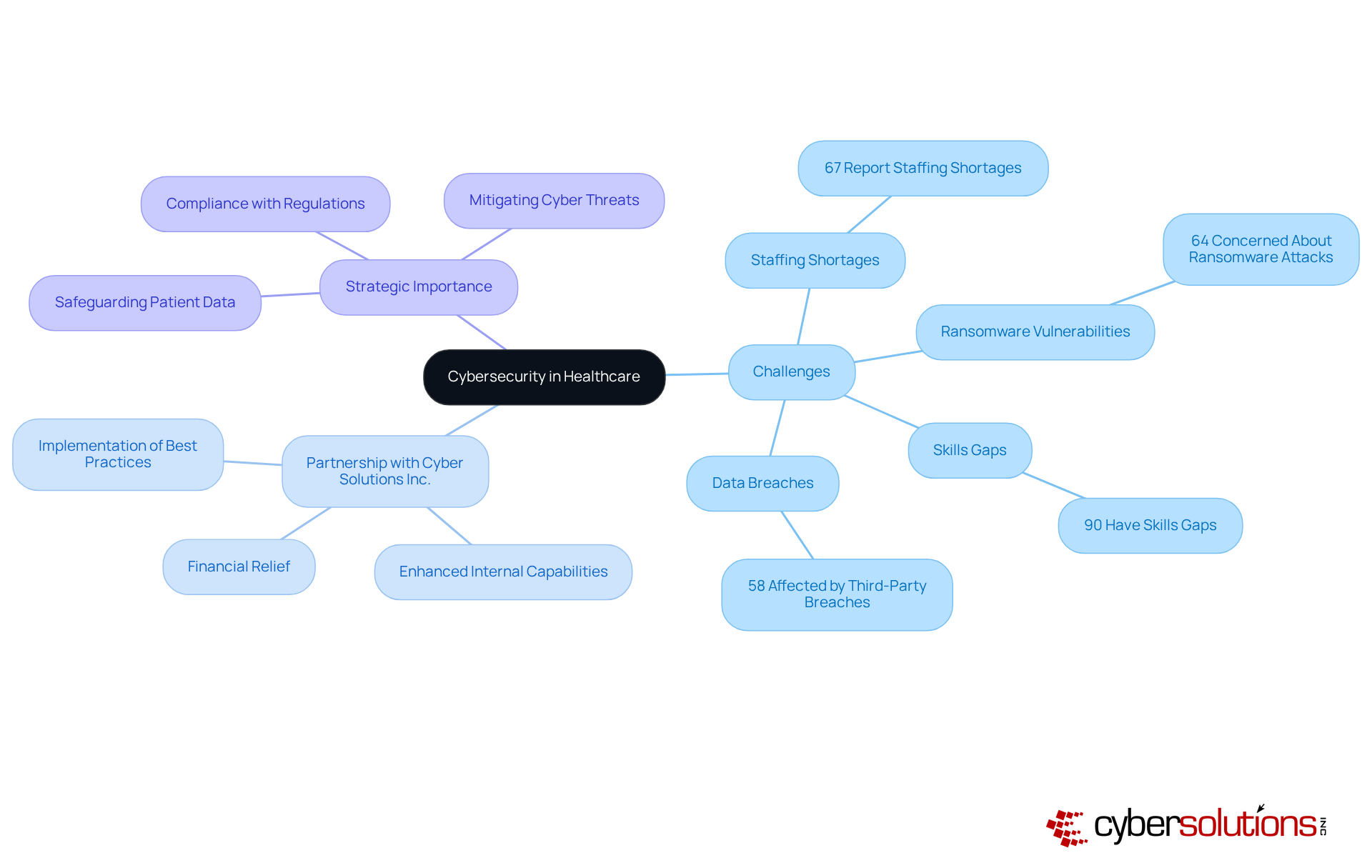
assistance is vital in mitigating harm during cyber incidents, particularly in healthcare. Cyber Solutions has developed a comprehensive plan that empowers healthcare providers to respond swiftly and effectively to breaches. This structured approach includes containment, eradication, and recovery processes, which are essential for maintaining operational continuity. With a dedicated team and virtual CISO services, CFOs can ensure their organizations are well-equipped to confront challenges, significantly minimizing potential financial and reputational damage.
Statistics reveal that organizations without a response plan endure an average loss, leading to elevated costs and prolonged exposure. Conversely, those with effective incident response plans can save an average of $2.66 million per incident. Cybersecurity experts stress the importance of timely and well-coordinated responses; as one noted, "The best-performing companies are closing these gaps with AI, automation, and regular training." This highlights the necessity for CFOs in the medical sector to prioritize robust strategies to shield their organizations from the risks.
Moreover, medical institutions face an increasing number of cyber threats, underscoring the critical need for a proactive system. For instance, a recent case study demonstrated how a medical provider, after implementing our solutions, halved their recovery time, showcasing the effectiveness of our approach. By investing in incident response capabilities, medical institutions can not only enhance their security posture but also ensure they are prepared to manage incidents efficiently, thereby protecting patient health information (PHI) and maintaining trust. Our strategy encompasses advanced encryption, multi-factor authentication, and access control measures to thwart unauthorized access, ensuring compliance with regulations while preparing for potential incidents with a robust response plan and meticulous documentation.
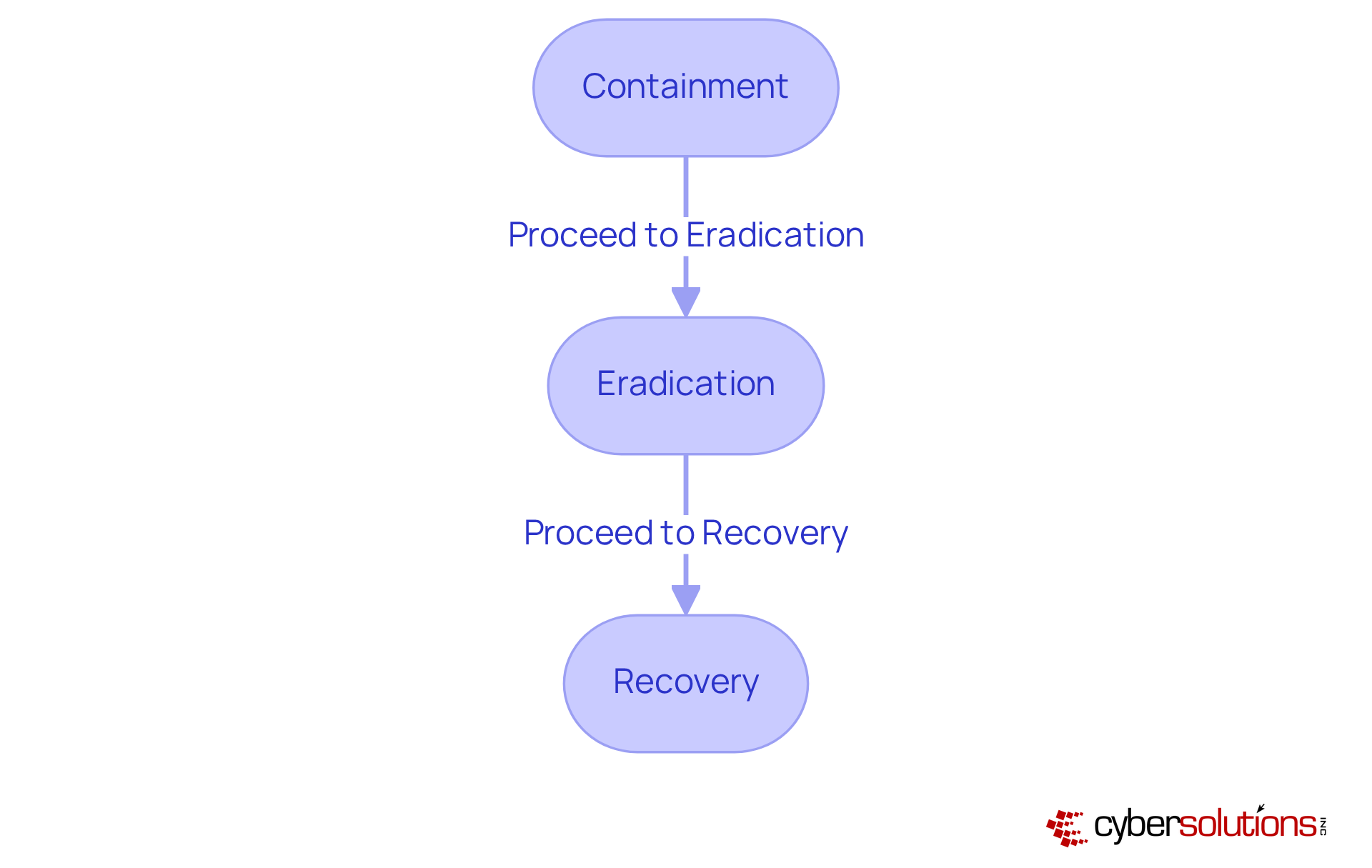
In today's healthcare landscape, cybersecurity is not just important; it is imperative. The stakes are exceptionally high, making threat intelligence a cornerstone of a robust security strategy with real-time data, allowing them to anticipate and respond to threats with efficiency. By meticulously analyzing trends and pinpointing potential vulnerabilities, organizations can proactively refine their security measures, drastically diminishing the risk of breaches. This proactive approach not only fortifies the overall security posture but also equips CFOs with the insights necessary for making informed decisions regarding investments.
As cyber threats continue to evolve, the integration of advanced technologies is increasingly vital for medical facilities striving to protect their operations and ensure compliance. Cyber Solutions further enhances this capability by offering comprehensive services, which encompass risk assessments, audit assistance, and virtual CISO offerings. This ensures that medical entities are not merely reactive to threats but are also committed to adhering to stringent regulations. In a world where the cost of inaction can be staggering, the question remains: can your organization afford to overlook the critical role of threat intelligence?
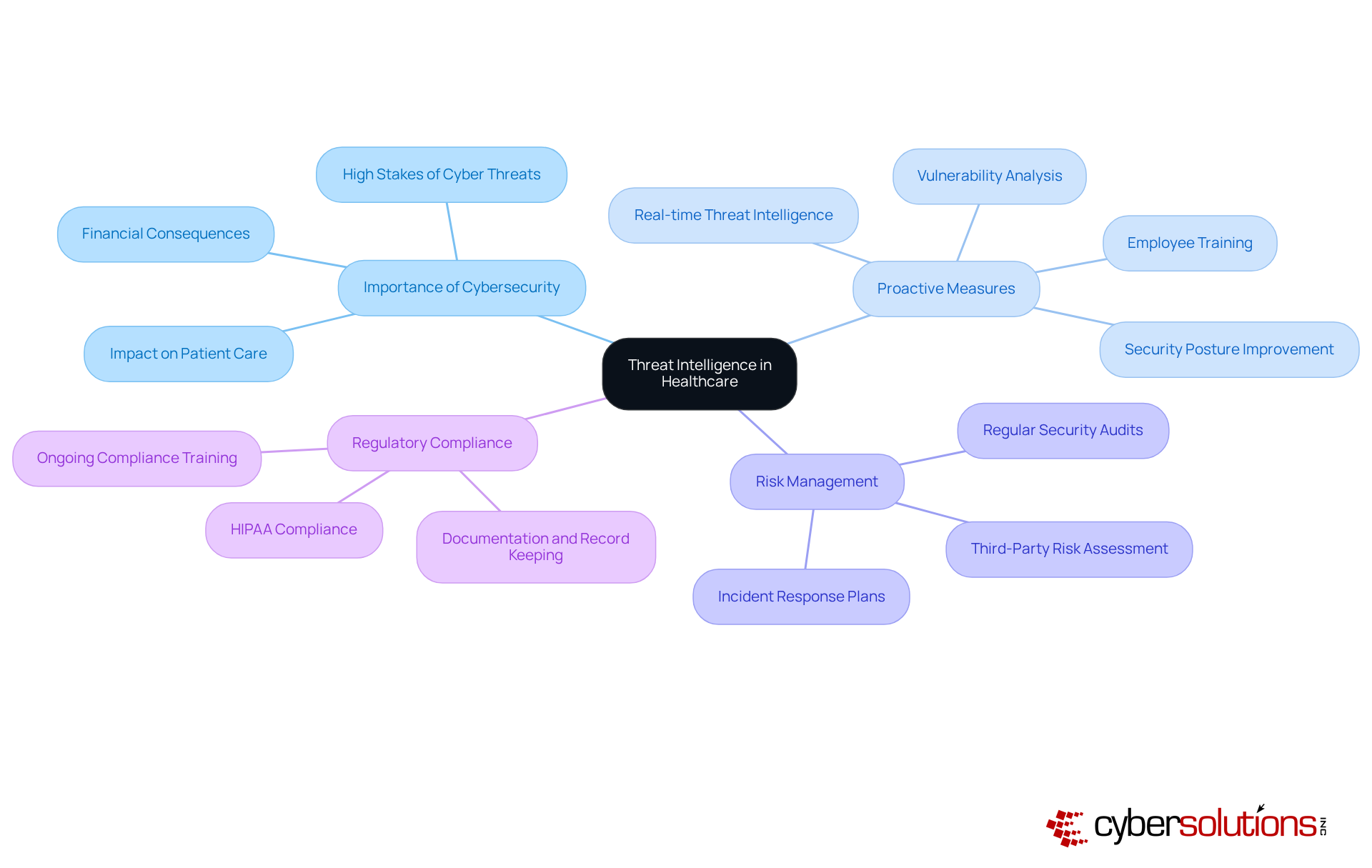
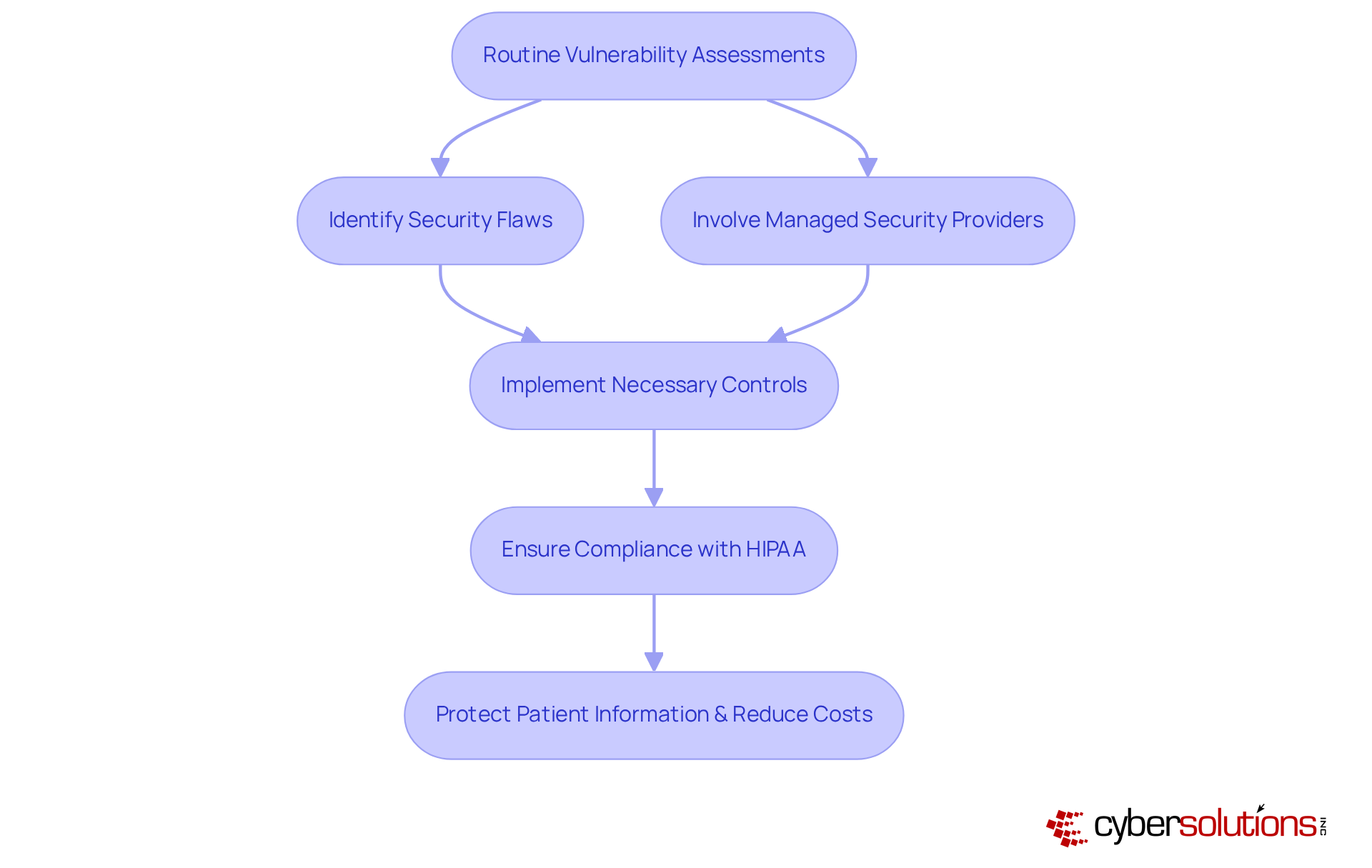
Routine vulnerability evaluations are vital for identifying and addressing security weaknesses. The provider conducts comprehensive assessments with the help of cybersecurity experts that meticulously examine the security posture of IT systems and applications, ensuring adherence to HIPAA standards. Proactively identifying vulnerabilities before exploitation allows entities to implement necessary controls, significantly mitigating the risk of data breaches. This proactive approach not only protects sensitive patient information but also aligns with the budget by reducing potential costs associated with security incidents.
Indeed, medical entities that engage in regular evaluations report a substantial decrease in the average cost of data breaches, which reached $9.8 million in 2024. Cybersecurity experts emphasize that ongoing assessments are essential, as 92% of medical providers experienced at least one data breach, underscoring the urgent need for healthcare organizations to implement robust security measures.
By prioritizing cybersecurity assessments, medical institutions can enhance their security frameworks and ensure compliance with regulatory standards, ultimately protecting both their patients and financial health. To bolster their cybersecurity posture, healthcare organizations should incorporate vulnerability assessments as a fundamental element of their overall strategy, supported by tailored remediation tactics and expert guidance from managed security providers.
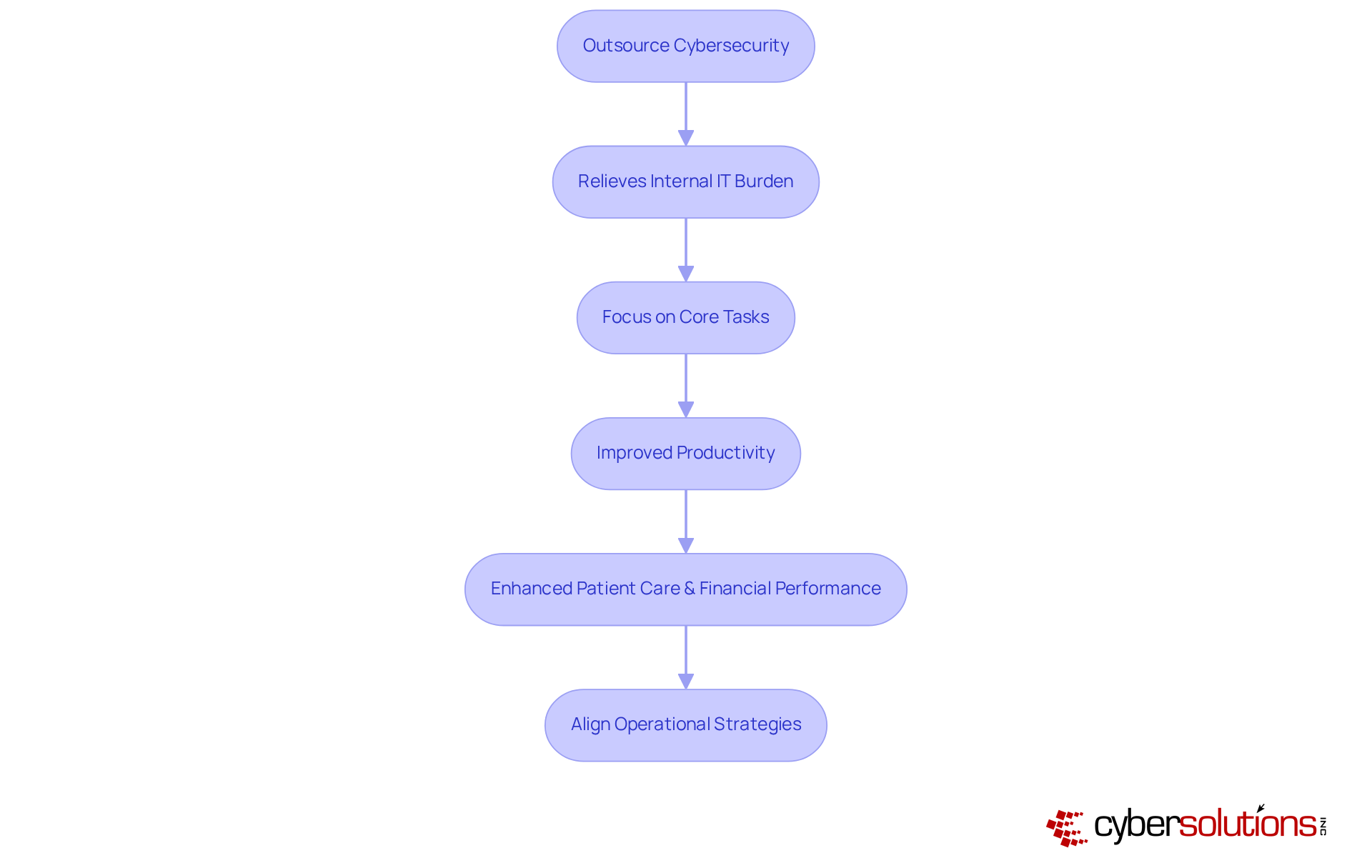
In today's healthcare landscape, the importance of cybersecurity cannot be overstated. Outsourcing cybersecurity through managed services like Cyber Solutions significantly enhances operational efficiency by reducing risks. By alleviating the burden on internal IT teams, these services empower staff to focus on core operational tasks, resulting in improved productivity. This strategic shift not only guarantees the effective implementation of security measures but also enhances patient care and safety. Consequently, financial officers can align their operational strategies with the broader objectives of their healthcare entities, fostering a safe and effective environment.
Industry leaders emphasize that effective cybersecurity is crucial for preserving trust and compliance. In an intricate medical environment, the significance of outsourcing becomes even more pronounced. How can healthcare organizations navigate these challenges? By partnering with providers such as Cyber Solutions, they can address the complexities of cybersecurity, ensuring that both security and compliance are prioritized.
In today's digital landscape, cybersecurity is not just important—it's essential. Cyber Solutions Inc. specializes in providing managed security services that cater to the unique requirements of medical organizations. Recognizing the specific challenges faced by CFOs in this sector, the company tailors its offerings to align with both organizational goals and compliance standards. This bespoke approach not only ensures that organizations implement the most effective security measures but also strengthens their overall safety posture.
Our Compliance as a Service (CaaS) solutions simplify the complex terrain of regulatory requirements through comprehensive risk assessments, policy development, and continuous compliance monitoring. Additionally, our offerings are designed to mitigate the impacts of cyberattacks, facilitating swift detection, containment, and remediation of threats while restoring systems and ensuring business continuity. The implementation of Application Allowlisting is crucial in proactively preventing unauthorized software execution, thereby reducing vulnerabilities and enhancing regulatory compliance.
In a climate where investment in digital security is vital, optimizing return on investment is essential. Specialists emphasize that tailoring solutions for medical institutions is key to navigating the complexities of compliance. As cybersecurity expert Cam Sivesind notes, "The significant market growth is a signal that peers and competitors are ramping up their defenses; falling behind could leave an organization dangerously exposed."
The impact of customized security services from Cyber Solutions Inc. extends beyond simple compliance; it cultivates a culture of security awareness and resilience, ultimately safeguarding sensitive patient data and organizational integrity.
In the realm of healthcare, the integration of managed security providers is not merely beneficial; it is essential for safeguarding patient data and ensuring compliance with regulatory standards. Cyber Solutions Inc. exemplifies how tailored cybersecurity services can align with the strategic objectives of healthcare CFOs, enabling them to navigate the complexities of cyber threats while maintaining financial integrity. By emphasizing the importance of customized solutions, continuous monitoring, and incident response strategies, healthcare organizations can significantly enhance their security posture and operational resilience.
Throughout the discussion, key insights emerge regarding the multifaceted advantages of partnering with managed security providers. From cost-effectiveness and access to cybersecurity expertise to robust compliance support and proactive threat intelligence, these providers equip healthcare CFOs with the necessary tools to mitigate risks and streamline IT processes. The staggering statistics surrounding cyberattacks in the healthcare sector underscore the urgency for organizations to adopt comprehensive security measures and prioritize regular vulnerability assessments.
Ultimately, the message is clear: investing in managed security services is not just a tactical decision but a strategic imperative for healthcare organizations. As the landscape of cyber threats continues to evolve, the time to act is now. By embracing the support of managed security providers, healthcare CFOs can protect their institutions, enhance patient trust, and ensure compliance in an increasingly complex digital environment. The future of healthcare cybersecurity depends on proactive measures and strategic partnerships—are you ready to take the next step?
What services does Cyber Solutions Inc. provide for healthcare CFOs?
Cyber Solutions Inc. offers tailored managed security services that include endpoint protection, threat detection, and compliance simplification, specifically designed to meet the unique needs of medical CFOs.
How does Cyber Solutions Inc. help in safeguarding patient health information (PHI)?
Cyber Solutions Inc. ensures the protection of PHI by implementing comprehensive cybersecurity solutions that align with HIPAA standards, including continuous 24/7 monitoring and advanced security measures.
Why is continuous 24/7 monitoring important in healthcare cybersecurity?
Continuous 24/7 monitoring is crucial as it allows for immediate detection and response to suspicious activities, helping to safeguard sensitive patient information and mitigate the financial repercussions of data breaches.
What are the financial implications of data breaches in the healthcare sector?
The average cost of a data breach in the healthcare sector is approximately $408 per record, which is significantly higher than the cross-industry average, emphasizing the need for effective cybersecurity measures.
What compliance regulations does Cyber Solutions Inc. assist with?
Cyber Solutions Inc. assists organizations in adhering to key regulations such as HIPAA, PCI-DSS, and GDPR through comprehensive audits, risk assessments, and compliance education.
How does Cyber Solutions Inc. support CFOs in achieving compliance?
Cyber Solutions Inc. provides essential compliance assistance that includes conducting audits, risk assessments, and offering targeted compliance education to help medical entities meet regulatory standards and avoid penalties.
What is the role of a virtual CISO in managed security services?
The virtual CISO service offered by Cyber Solutions Inc. provides expert guidance to CFOs in the medical sector, helping enhance audit readiness and ensure ongoing compliance with regulatory requirements.
What incident response strategies does Cyber Solutions Inc. employ?
Cyber Solutions Inc. employs incident response strategies that include 24-hour on-site support to swiftly contain threats, minimize damage, and facilitate quicker recovery from cyber incidents.
Managed IT Service Provider | Cyber Security | Incident Response | Compliance As A Service | Hosted Phone Service | Managed Security Service Provider | AI As A Service