Optimizing IT Management

Comparing IT Support Companies for Small Business Needs in Healthcare

Overview

In the current landscape of healthcare, the significance of robust cybersecurity cannot be overstated. As small healthcare businesses navigate an increasingly complex environment, the selection of IT support companies becomes paramount to safeguarding sensitive information. The unique challenges faced by CFOs in this sector demand providers who possess not only experience in healthcare but also comprehensive service offerings and scalability.

Cyber Solutions Inc. emerges as a preferred choice, offering a holistic approach to cybersecurity and compliance. This is critical in an industry that is continually confronted with rising cyber threats. By prioritizing the right IT support, healthcare organizations can effectively mitigate risks and ensure the integrity of their operations.

Introduction

In the rapidly evolving landscape of healthcare, the urgency of cybersecurity cannot be overstated. Small businesses grapple with significant challenges posed by cybersecurity threats and regulatory compliance, where the stakes are particularly high. Protecting sensitive patient information is paramount, making the choice of an IT support provider a critical decision for medical organizations.

With a myriad of options available, how can these businesses discern which IT support companies genuinely meet their unique needs and can safeguard their operations effectively?

This article delves into the key criteria for selecting an IT support provider and compares the top contenders in Calgary, equipping healthcare entities with the insights necessary to make informed choices in a complex environment.

Understanding the Importance of IT Support for Small Businesses

In today's digital landscape, the importance of robust cybersecurity in healthcare cannot be overstated. Small enterprises, particularly in the medical sector, face unique challenges that necessitate the services of IT support companies for small business to protect sensitive patient information and comply with stringent regulations. Effective IT support not only addresses immediate technical issues but also plays a pivotal role in strategic planning, risk management, and operational efficiency.

A vital aspect of this support is application allowlisting, which proactively prevents malware and unauthorized software from executing. This approach significantly reduces the attack surface and minimizes vulnerabilities, making it essential for healthcare providers. The stakes are exceptionally high; can result in substantial financial penalties—averaging over $3 million per incident—and can severely erode patient trust. Consider the WannaCry ransomware incident in 2017, which disrupted numerous medical services globally, underscoring the dire consequences of inadequate cybersecurity measures.

Investing in reliable IT assistance from IT support companies for small business transcends mere technical necessity; it is a strategic imperative that can profoundly influence a small medical business's success and sustainability. By ensuring compliance with regulations such as HIPAA and enhancing data security through measures like application allowlisting—featuring centralized management and continuous monitoring—effective IT support empowers healthcare entities to concentrate on delivering quality patient care while mitigating risks associated with cyber threats.

The central node represents the overall importance of IT support, while each branch highlights specific areas affected by IT services. Follow the branches to explore how each aspect connects to the main theme.

Key Criteria for Choosing an IT Support Provider

When selecting an IT support provider, healthcare organizations must prioritize several critical criteria:

  • Experience in Healthcare: Professionals must possess a robust track record within the healthcare sector, navigating unique regulatory and operational challenges. A significant 67% of physicians have identified interoperability deficiencies as a top priority, underscoring the need for experienced partners who can address these issues effectively.
  • Comprehensive Service Offerings: Choose companies that provide a complete range of services, including managed IT assistance, cybersecurity measures, and compliance help. This comprehensive strategy ensures that every facet of IT management is addressed, which is essential in an environment where 65% of suppliers express dissatisfaction with their current electronic health record (EHR) systems.
  • 24/7 Assistance Availability: Given the critical nature of healthcare operations, round-the-clock assistance is indispensable. Healthcare professionals often encounter urgent matters that demand prompt attention, making ongoing assistance an essential component of service.
  • Scalability: The selected partner should deliver solutions that can develop with the entity, adapting to future requirements without requiring major revisions. This flexibility is crucial as medical institutions adjust to evolving regulations and technological progress.
  • Cost-Effectiveness: Assess pricing models to ensure they align with budgetary constraints while delivering value through enhanced security and operational efficiency. With 54% of practitioners looking to , cost factors must be weighed against the quality of service offered.

By concentrating on these essential elements, medical institutions can make educated choices when evaluating IT support companies for small business, ultimately improving their operational efficiency and security stance.
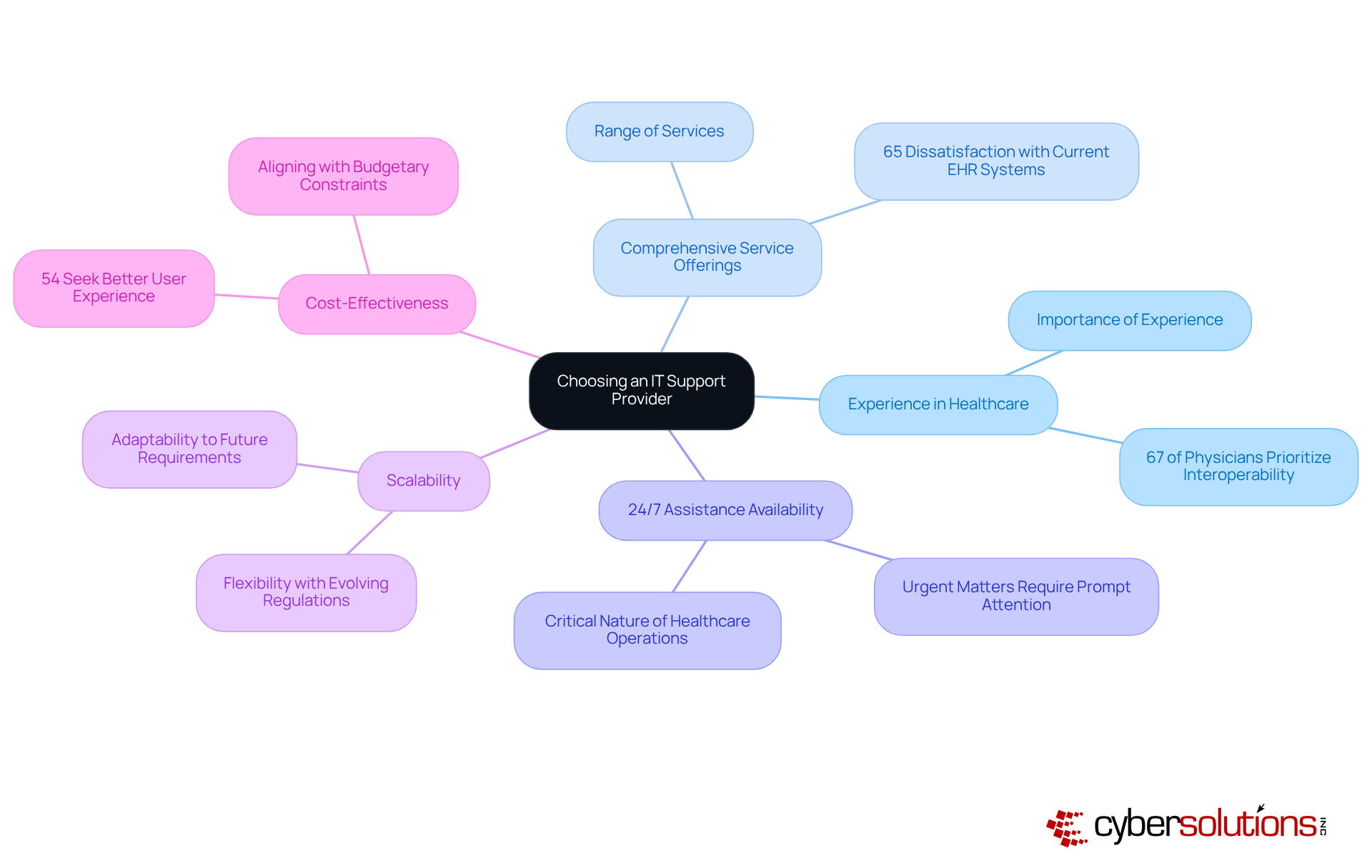
The central idea is about choosing an IT support provider, with branches representing the main criteria to consider. Each branch can have additional details that help explain why that criterion is important.

Comparative Analysis of Top IT Support Providers in Calgary

In today's digital landscape, the importance of cybersecurity in healthcare cannot be overstated. Calgary hosts several IT support companies for small business in the medical field, each offering distinct advantages.

Among these options, Cyber Solutions Inc. stands out due to its holistic approach. By combining proactive monitoring with tailored services, they effectively address both operational and compliance needs. This positions them as the that are looking for IT support companies for small business seeking reliable assistance. In a sector where cybersecurity threats are ever-evolving, having a dependable partner like Cyber Solutions Inc. is not just beneficial—it's essential.
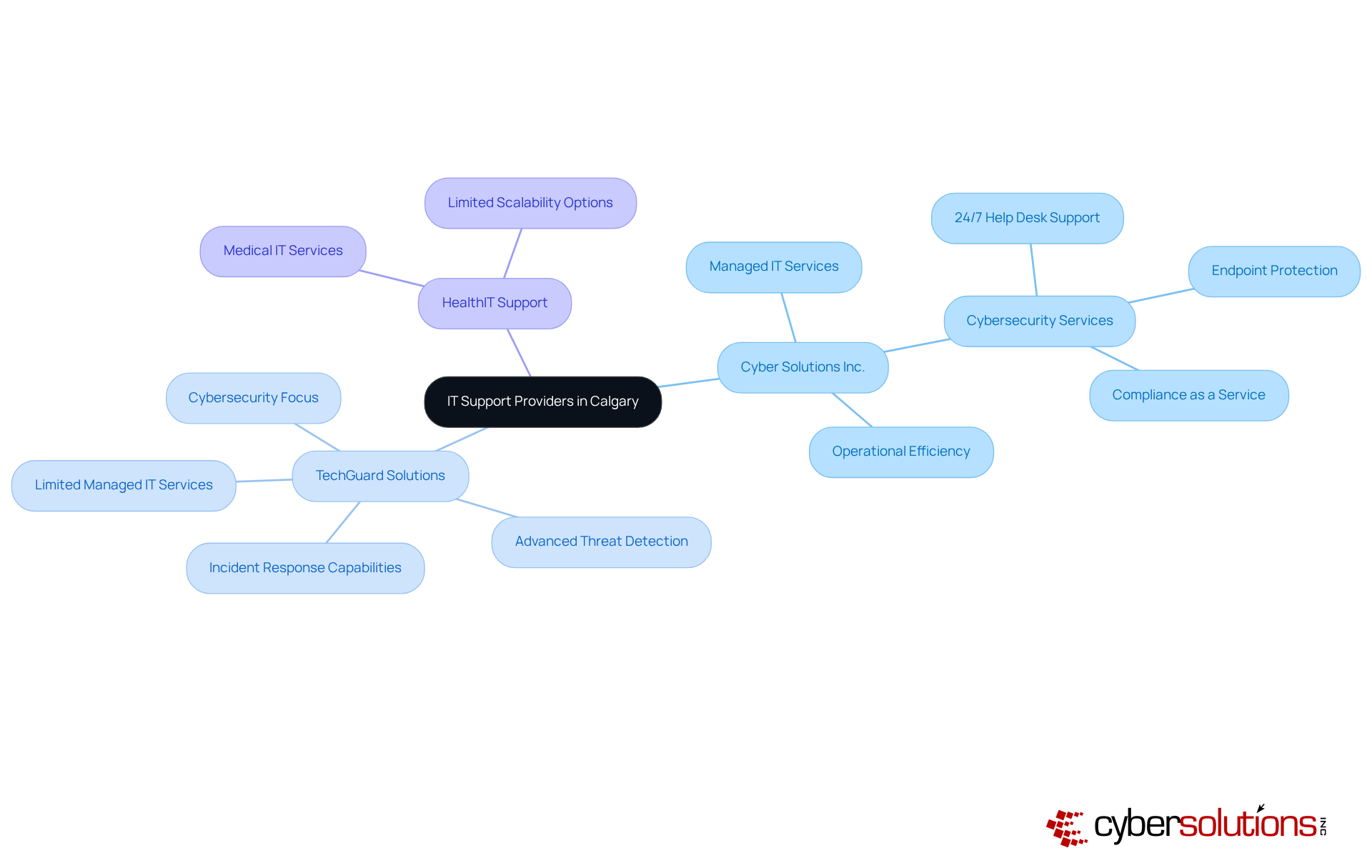
The central node represents the overall topic, while the branches show the specific providers and their services. Each color-coded section helps differentiate the companies and their unique strengths.

Evaluating Strengths and Weaknesses of Each Provider

In today's digital landscape, cybersecurity in healthcare is not just important—it's essential. With the increasing frequency of , healthcare organizations must navigate a complex web of regulations and threats. Evaluating potential IT support companies for small business is crucial for ensuring compliance and operational efficiency.

  • Cyber Solutions Inc. stands out with its comprehensive suite of services tailored specifically for the healthcare sector.

  • TechGuard Solutions is recognized for its advanced cybersecurity features and robust incident response capabilities.

    • Strengths: They excel in safeguarding sensitive medical data, aligning with the urgent need for security in the medical sector. Notably, over 500 million medical records have been compromised since 2020, underscoring the importance of their proactive approach to threat detection.
    • Weaknesses: On the downside, their limited managed IT services may not fully address the diverse needs of medical facilities, potentially leaving gaps in support.
  • HealthIT Support demonstrates a profound understanding of medical IT needs, making them a strong candidate for institutions seeking specialized expertise.

    • Strengths: Their focus on healthcare-specific solutions can significantly enhance operational efficiency.
    • Weaknesses: Nevertheless, they face challenges with scalability and often incur higher expenses for additional services, which may not be feasible for all medical entities.

By carefully evaluating these strengths and weaknesses, healthcare organizations can better align their needs with IT support companies for small business, ensuring they receive the necessary support to maintain compliance and enhance operational efficiency.
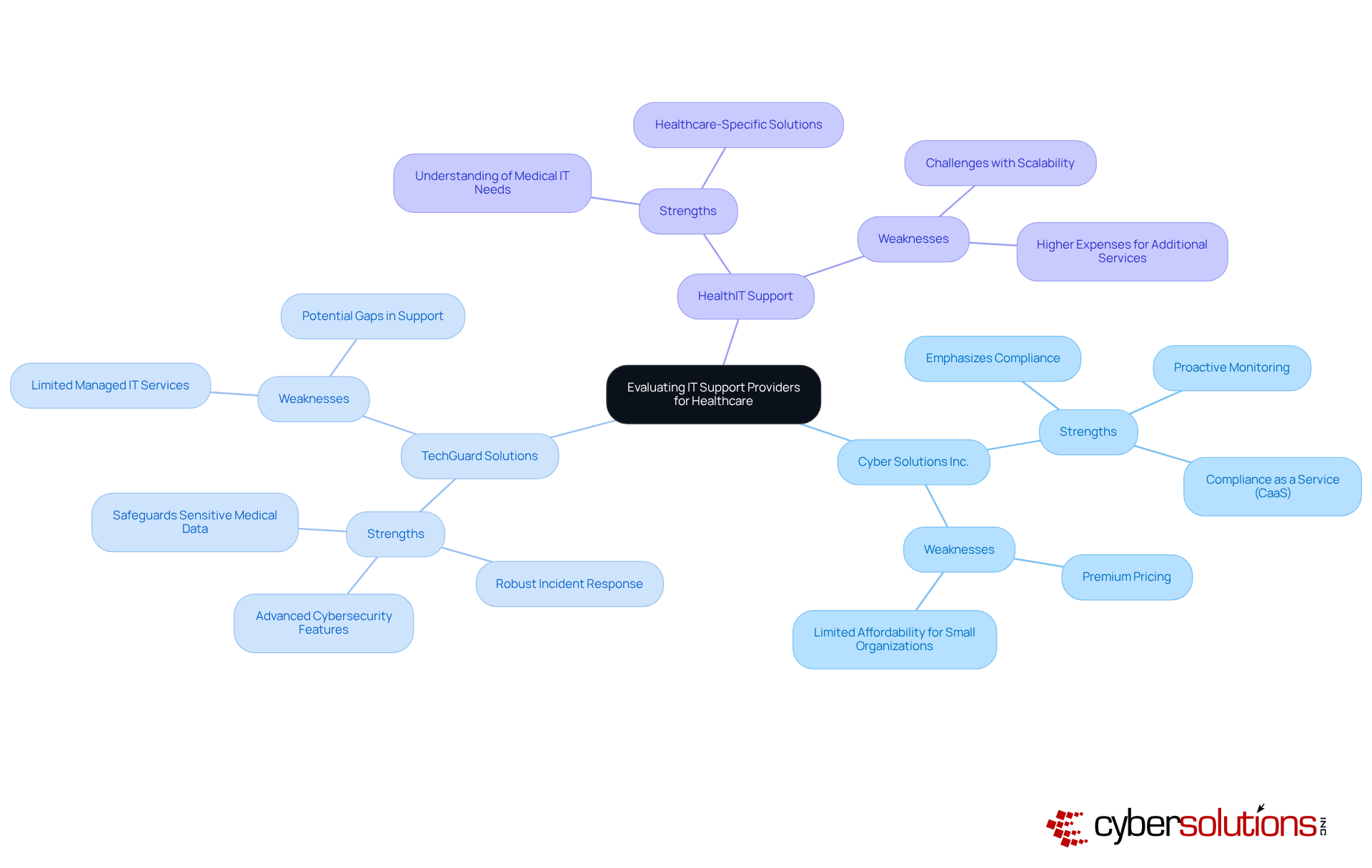
The central node represents the main topic of evaluation. Each provider's strengths and weaknesses are shown in their respective branches, helping you quickly grasp what each company offers and where they might fall short.

Conclusion

Selecting the right IT support company is critical for small businesses in the healthcare sector, where the implications of inadequate support can be dire. In today's landscape, cybersecurity threats are ever-evolving, making a strategic partnership with IT support providers essential. Not only does this enhance operational efficiency, but it also safeguards sensitive patient data against cyber threats. This proactive approach is vital for compliance with stringent regulations, ultimately allowing healthcare professionals to focus on delivering quality care.

Key criteria for choosing an IT support provider include:

  1. Their experience in healthcare
  2. Comprehensive service offerings
  3. 24/7 assistance
  4. Scalability
  5. Cost-effectiveness

A comparative analysis of top IT support companies in Calgary highlights the strengths and weaknesses of each provider. Cyber Solutions Inc. stands out for its holistic approach to managed IT and cybersecurity services. In contrast, other providers like TechGuard Solutions and HealthIT Support offer specialized services but may lack the comprehensive support required by many medical institutions.

Healthcare organizations are urged to carefully evaluate their options, considering the unique challenges they face. By prioritizing experienced and comprehensive IT support, small businesses can not only protect their operations but also enhance their overall service quality. This ensures they remain resilient in the face of future challenges, ultimately delivering the quality care that patients deserve.

Frequently Asked Questions

Why is IT support important for small businesses, especially in the healthcare sector?

IT support is crucial for small businesses in healthcare to protect sensitive patient information, comply with regulations, and enhance operational efficiency. It addresses immediate technical issues and plays a key role in strategic planning and risk management.

What is application allowlisting and why is it significant?

Application allowlisting is a security measure that prevents malware and unauthorized software from executing. It significantly reduces the attack surface and minimizes vulnerabilities, making it essential for healthcare providers to protect against cyber threats.

What are the potential consequences of inadequate cybersecurity in healthcare?

Inadequate cybersecurity can lead to data breaches, resulting in substantial financial penalties averaging over $3 million per incident, and can severely erode patient trust. Historical incidents, like the WannaCry ransomware attack in 2017, highlight the serious repercussions of insufficient cybersecurity measures.

How does IT support contribute to compliance with regulations like HIPAA?

Effective IT support helps healthcare entities ensure compliance with regulations such as HIPAA by implementing necessary security measures, like application allowlisting, which features centralized management and continuous monitoring of data security.

What are the strategic benefits of investing in IT support for small medical businesses?

Investing in reliable IT support is a strategic imperative that can significantly influence a small medical business's success and sustainability by enhancing data security, ensuring regulatory compliance, and allowing healthcare providers to focus on delivering quality patient care while mitigating cyber risks.

Recent Posts
Choose Wisely: MSP or MSSP for Your Business Needs
Understanding the IT Managed Services Model: Definition and Benefits
Master Firewall Management Services: Best Practices for C-Suite Leaders
Best Practices for a Successful Managed IT Helpdesk
Master Backup and Disaster Recovery BDR Solutions for Business Resilience
10 Key Steps to Meet CMMC 2.0 Level 2 Requirements
Maximize Impact with Cyber Security Simulation Exercises Best Practices
Maximize Security with Offsite Data Backup Services Best Practices
4 Best Practices for Effective Computer Security Awareness Training
Why C-Suite Leaders Need Managed Hosting Cloud Solutions Now
4 Multi-Factor Authentication Options to Enhance Security for Leaders
Master Cloud Hosting Managed: Best Practices for C-Suite Leaders
Essential Cyber Security Measures for Businesses in 2026
Master CMMC Regulations: Essential Steps for Compliance Success
Why Staff Security Awareness Training is Crucial for Your Organization
Understanding Cloud Hosting Management: Importance, Evolution, and Key Features
Master CMMC Standards: Essential Steps for Compliance and Success
Maximize ROI with Your Information Technology MSP: 4 Best Practices
4 Best Practices to Maximize Uptime in Cloud Infrastructure
10 Key Benefits of Partnering with IT MSPs for Your Business
What is Cyber Intelligence? Key Insights for C-Suite Leaders
5 Best Practices to Prevent Ransomware for C-Suite Leaders
Master Data Storage Disaster Recovery: Key Strategies for C-Suite Leaders
5 Best Practices for Using SIEM in Security Management
Understanding EDR Meaning in Security for Executive Strategy
CMMC Overview: Key Features and Compliance Insights for Leaders
Understanding Managed Services Technology: Definition and Key Insights
Ransomware History: Key Milestones Every C-Suite Leader Must Know
Create an Effective Cyber Attack Response Plan in 6 Steps
Why the Importance of Backing Up Data Cannot Be Overlooked
10 Essential Defense in Depth Examples for C-Suite Leaders
Master Disaster Backup: Essential Strategies for C-Suite Leaders
4 Best Practices for MSP Backup and Recovery Success
Master Backup and Disaster Recovery for Business Resilience
Which Firewall Should I Use? A Step-by-Step Guide for Leaders
Master Dark Web Protection Services to Safeguard Your Business
Maximize Cybersecurity with Managed Service Provider Strategies
Master USB Thumb Drive Hacks: Prevention and Response Strategies
Enhance Cybersecurity with Deep Packet Inspection and SSL Best Practices
What Is a Digital Certificate Used For in Cybersecurity?
Master CMMC Compliance Before the Deadline: Key Steps to Follow
What Is Managed Cloud Hosting and Why It Matters for Your Business
Why C-Suite Leaders Choose Managed Services Hosting for Success
Understanding Vulnerability Scanning in Cyber Security for Leaders
Why SSL Deep Packet Inspection is Essential for Cybersecurity Leaders
Protect Your Business: Best Practices Against USB Flash Drive Hacks
Protect Your Business from Thumb Drive Hacks: Essential Security Steps
Maximize Managed Service Provider Security: Best Practices for C-Suite Leaders
Understanding Threat Vector Meaning: Importance for Business Leaders
Understanding LOTL Attacks: Mechanisms, Prevention, and Impact
4 Best Practices for Effective Managed Web Security Strategies
Understanding the Consequences of Not Backing Up Your Information
Why Your Systems Should Be Scanned Monthly for Optimal Security
3 Best Practices for Effective Cyber Assessments in 2026
4 Key Benefits of Desktop Managed Services for C-Suite Leaders
6 Steps for C-Suite Leaders to Implement a Managed Services Helpdesk
Office vs 365: Key Differences, Features, and Costs for Leaders
Maximize Business Resilience with Co-Managed IT Solutions
Create Your CMMC SSP Template: A Step-by-Step Approach
What Is the Benefit of a Defense in Depth Approach for Organizations?
4 Essential Cloud App Security Best Practices for C-Suite Leaders
8 Best IT Support Services for C-Suite Leaders in 2026
4 Key Steps to Evaluate IT Security Outsourcing Companies
Master Change Management in Cyber Security: A Step-by-Step Guide
4 Steps to Comply with Regulations for C-Suite Leaders
Maximize Business Resilience with IT Security as a Service Best Practices
Achieve NIST 800-171 Certification: A Step-by-Step Guide for Leaders
What Are the Benefits of a Defense-in-Depth Approach in Cybersecurity?
10 Benefits of IT Department Outsourcing for C-Suite Leaders
5 Key Steps: When Is CMMC Compliance Required for Your Business?
How Does a Vulnerability Scanner Work? Key Insights for Leaders
Enhance Security with Information Security as a Service Best Practices
Why Choosing a Local IT Service Provider Boosts Business Success
Master CMMC Implementation: Steps for C-Suite Leaders to Succeed
CMMC vs. NIST 800-171: Key Similarities and Compliance Strategies
Master IT Support Price: Key Strategies for C-Suite Leaders
Crafting Effective Password Security Infographics: Best Practices
Understanding Desktop as a Service Cost for C-Suite Leaders
Master CMMC 2.0 Level 1 Requirements for Business Success
Understanding CMMC Level 3 Requirements for Defense Contractors
Why Are Logs Important for Cybersecurity and Compliance Success?
Malware vs Spyware: Key Differences Every C-Suite Leader Should Know
7 Steps for Effective HIPAA Disaster Recovery Planning
Achieve CMMC Compliance: Essential Services for Your Organization
Why Your Business Needs an IT Security Provider Now
What to Do with Phishing Emails: 4 Steps to Protect Your Business
Maximize Cloud Hosting Support: Best Practices for C-Suite Leaders
4 Best Practices for Effective Company Security Training
Why Hosting and Cloud Services Are Essential for Business Resilience
Maximize SIEM Events: Best Practices for Cybersecurity Success
4 Best Practices for Managed Email Security Services Success
Understanding EDR in Cyber Security: Meaning and Importance
10 Essential Computer IT Services for C-Suite Leaders
4 Best Practices for Cyber Security Compliance Services Success
5 Best Practices for Achieving CMMC 1.0 Compliance Success
Implementing Multi-Factor Authentication: A Step-by-Step Guide for Leaders
What Is Endpoint Detection and Why It Matters for Your Business
What is an IR Plan? Importance, Components, and Evolution Explained
Master Email Security Training: 4 Steps for C-Suite Leaders
What is EDR? Understanding Its Role in Cybersecurity for Leaders

Join our newsletter

Sign up for the latest industry news.
We care about your data in our privacy policy.
Thank you! Your submission has been received!
Oops! Something went wrong while submitting the form.