
Managed IT Services Insights

Understanding Fully Managed IT Support: Key Benefits for Leaders

Overview

Fully managed IT support is essential for organizations seeking comprehensive IT management. This approach not only enhances operational efficiency but also significantly boosts security and cost-effectiveness.

By enabling businesses to concentrate on their core activities, they gain the advantage of expert oversight and 24/7 monitoring.

Moreover, the substantial cost savings position them to thrive in an increasingly complex digital landscape.

Introduction

In an era where digital threats are more pronounced than ever, organizations are compelled to seek robust solutions to protect their IT infrastructure. Fully managed IT support stands out as a strategic partner, providing a comprehensive framework that not only boosts operational efficiency but also strengthens cybersecurity defenses. Yet, with an abundance of options at their disposal, how can leaders accurately assess the true value of fully managed IT services amidst this overwhelming landscape? This article explores the key benefits of fully managed IT support, equipping decision-makers with essential insights to effectively navigate today’s intricate digital environment.

Define Fully Managed IT Support

Fully managed IT support represents a comprehensive framework in which an external provider assumes full responsibility for an organization's IT infrastructure and operations. This model encompasses a broad spectrum of functions, including:

  1. Network management
  2. Cybersecurity
  3. Help desk support
  4. Data backup

A critical component of this approach is 24/7 network monitoring and alert systems, which proactively detect anomalies and potential vulnerabilities. This ensures that suspicious activities are addressed before they escalate into serious threats. The primary objective is to facilitate seamless integration and oversight of all IT functions, allowing organizations to concentrate on their core activities without the burden of daily IT management.

In contrast, co-managed IT solutions involve collaboration between the internal IT team and an external provider, distributing responsibilities between the two. Notably, nearly 90% of small and medium-sized enterprises (SMBs) currently utilize or consider employing IT services, highlighting the growing reliance on these solutions. Organizations across various sectors, such as healthcare and finance, have successfully implemented fully supervised IT assistance to enhance operational efficiency and security, underscoring its significance in today's complex digital landscape.

Furthermore, organizations leveraging Managed Service Providers (MSPs) can reduce total IT costs by 20-30%, making fully managed IT support not only a strategic choice but also a financially prudent one. By incorporating comprehensive firewall and network security solutions, Cyber Solutions ensures that organizations are protected against ransomware, phishing, and other malware attacks, maximizing ROI through tailored IT and cybersecurity services, including:
  1. SOC/SIEM
  2. Office 365 Support
  3. Endpoint Protection

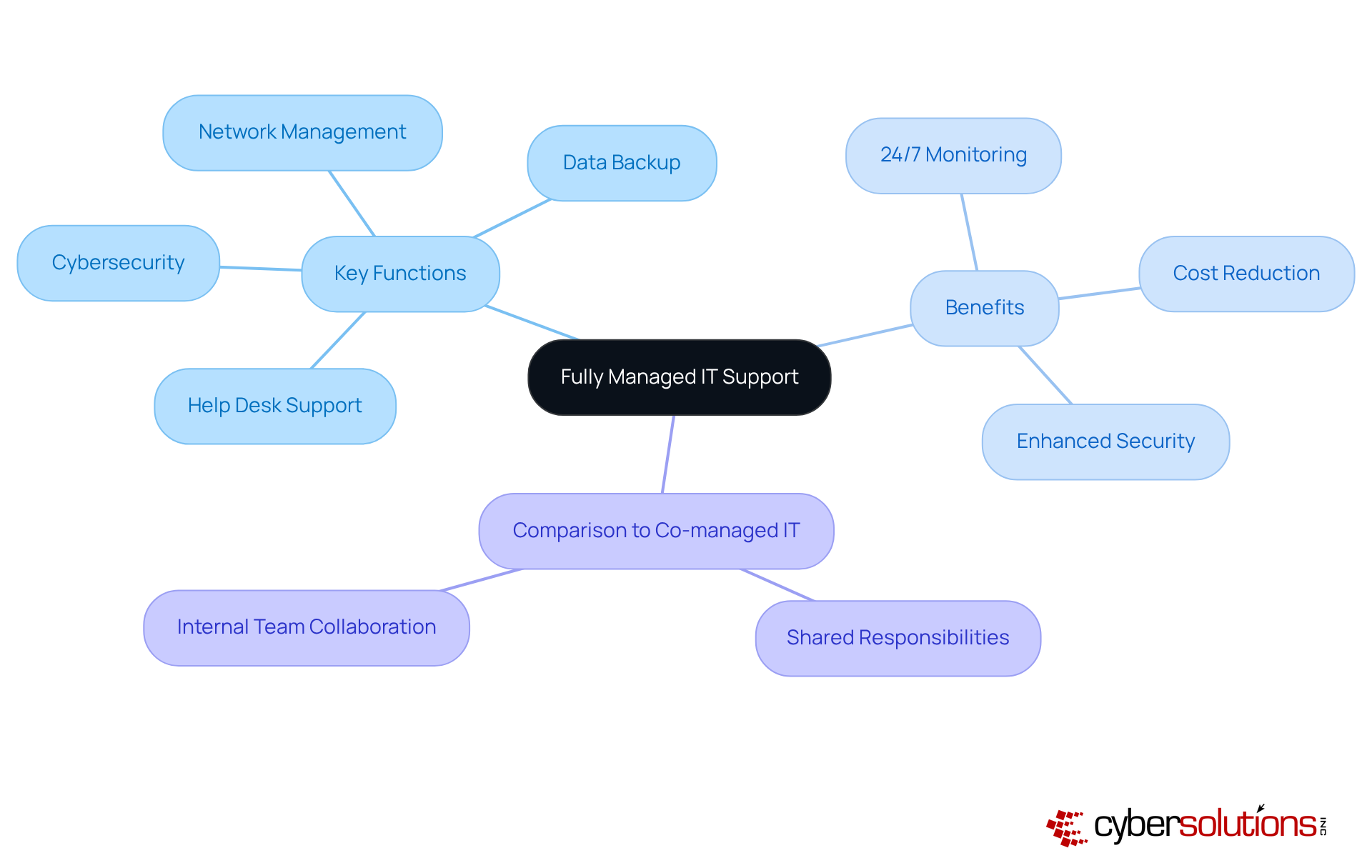
The center represents the main concept of fully managed IT support. Each branch shows a key component or benefit, helping you visualize how they all connect and contribute to the overall framework.

Contextualize the Importance of Managed IT Support

In today's rapidly evolving digital landscape, the importance of robust cybersecurity cannot be overstated. Organizations are grappling with significant challenges related to cybersecurity threats, regulatory compliance, and the pursuit of operational efficiency. The complexity of modern IT environments, coupled with the swift pace of technological advancements, complicates effective IT management. This is where fully managed IT support emerges as a vital solution, providing businesses access to specialized expertise, cutting-edge technologies, and proactive monitoring.

This service model not only bolsters through a layered approach—such as application allowlisting, which proactively prevents malware and unauthorized software from executing—but also ensures adherence to industry regulations like HIPAA, PCI-DSS, and GDPR. Quick incident response strategies, including round-the-clock on-site assistance, empower organizations to manage threats rapidly and recover more thoroughly. For instance, having an incident response team on-site within a day has proven crucial in minimizing damage and enhancing recovery efforts.

By incorporating these extensive cybersecurity strategies, organized IT assistance becomes an essential element of a successful corporate strategy. Statistics reveal that:

  1. 59% of businesses experienced successful cyberattacks in the past year, highlighting the pressing need for robust defenses.
  2. The average cost of a data breach has surged to approximately $4.88 million globally, underscoring the financial implications of inadequate cybersecurity measures.

By adopting a proactive strategy with fully managed IT support, organizations can significantly reduce these risks and improve their overall security framework.
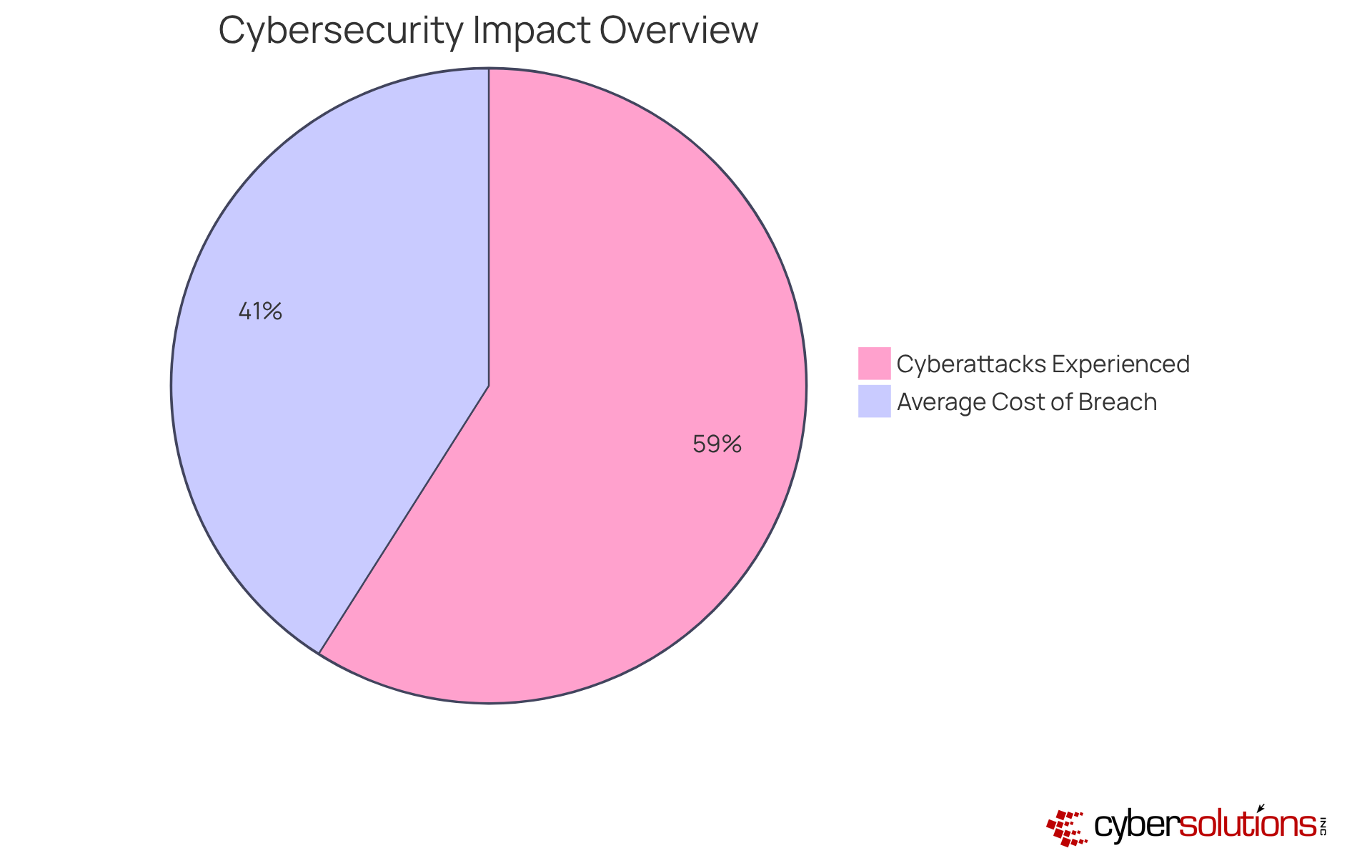
The red segment shows the proportion of businesses that faced cyberattacks, while the blue segment illustrates the average cost of a data breach — highlighting the serious implications of cybersecurity challenges.

Explore Key Components of Fully Managed IT Support

Key components of fully managed IT support include:

  • 24/7 Monitoring and Support: Continuous oversight of IT systems enables early detection and resolution of issues, preventing disruptions to operations. Organizations utilizing proactive monitoring report 40% faster issue resolution, significantly enhancing productivity.
  • Cybersecurity Services: Robust security measures are essential in today’s landscape, incorporating threat detection, incident response, and vulnerability assessments to safeguard sensitive data. With 57% of SMBs , these solutions are essential for preserving trust and compliance.
  • Data Backup and Disaster Recovery: Regular backups and well-structured recovery plans ensure data integrity and business continuity during incidents. Companies with proactive disaster recovery strategies experience 50% less downtime during critical events, reinforcing operational resilience.
  • Network Management: Comprehensive management of network infrastructure includes performance monitoring and optimization, which are vital for maintaining seamless operations. Proactive IT settings can decrease delivery delays by 30%.
  • Help Desk Assistance: Access to technical aid for employees ensures quick resolution of IT-related issues, with 24/7 assistance minimizing downtime and enhancing overall productivity. Research indicates that organizations with 24/7 support desks experience notable enhancements in employee satisfaction and productivity.
  • Compliance Management: Assistance with adhering to regulatory requirements, such as HIPAA and GDPR, mitigates legal risks. Our Compliance as a Service (CaaS) solutions offer enterprises comprehensive assistance, including expert audit preparation and ongoing monitoring to guarantee adherence to changing regulations such as CMMC. CMMC compliance is divided into three levels, each with increasing security requirements to protect sensitive federal data. As compliance grows more intricate, specialized IT solutions assist organizations in navigating these challenges effectively. Notably, 70% of companies fail audits due to inadequate IT compliance measures, highlighting the importance of tailored remediation strategies and documentation in cybersecurity.

These components work synergistically to create a holistic IT management solution, which includes fully managed IT support, that enhances operational efficiency and security, positioning organizations to thrive in a rapidly evolving digital landscape.

The central node represents the overarching theme of IT support, while each branch shows a critical component. Sub-branches provide extra details and statistics to help understand the significance of each part.

Assess the Benefits of Fully Managed IT Support for Businesses

The advantages of fully managed IT support are substantial and transformative:

  • Cost Efficiency: Outsourcing IT management can lead to significant reductions in overhead costs, with businesses saving up to 85% compared to maintaining in-house teams. This translates to an per employee, allowing organizations to allocate resources more strategically.
  • Enhanced Security: Organizations benefit from robust cybersecurity measures that are essential to managed IT solutions. These services help mitigate risks associated with data breaches and cyberattacks, with proactive monitoring and incident response strategies significantly reducing vulnerabilities.
  • Increased Focus on Core Operations: By delegating IT responsibilities, leaders can redirect their attention to strategic initiatives and growth opportunities, enhancing overall organizational performance.
  • Scalability: Fully overseen IT support is crafted to adjust effortlessly to the changing requirements of an organization. This flexibility allows organizations to scale their IT resources efficiently, accommodating growth without the complexities of hiring additional staff.
  • Access to Expertise: Collaborating with outsourced providers gives organizations entry to a group of IT experts who are knowledgeable about the latest technologies and security challenges. This expertise guarantees that companies stay competitive and secure in a swiftly evolving digital environment.
  • Predictable Costs: The subscription-based model of IT services allows businesses to budget effectively, minimizing the risk of unexpected IT expenses. This financial predictability is crucial for strategic planning and resource allocation.

These compelling benefits position organizations aiming to enhance their IT capabilities while minimizing risks and costs to choose fully managed IT support as a strategic option.

Each slice of the pie shows a key benefit of managed IT support for businesses. The bigger the slice, the more significant that benefit is to enhancing IT capabilities while saving costs.

Conclusion

Fully managed IT support stands as a strategic imperative for organizations aiming to streamline their IT operations and bolster security. By outsourcing IT management to specialized providers, businesses can concentrate on their core missions while reaping the benefits of comprehensive support that spans everything from network management to cybersecurity. This approach alleviates the burden of daily IT tasks, positioning companies to thrive in an increasingly complex digital landscape.

The multifaceted advantages of fully managed IT support are significant. Organizations can achieve substantial cost savings, with reductions in overhead expenses and predictable budgeting. Enhanced security measures are crucial in protecting against the rising tide of cyber threats, while continuous monitoring and expert guidance ensure operational resilience. Moreover, the scalability of managed IT services enables organizations to adapt swiftly to changing demands, fostering growth and innovation.

In light of these insights, embracing fully managed IT support emerges as a necessity for businesses striving to enhance their operational efficiency and security posture. As cyber threats continue to evolve and regulatory landscapes grow more complex, investing in a robust IT support framework is not merely a choice—it is essential. Organizations are encouraged to explore the transformative potential of fully managed IT services to safeguard their future and drive sustainable success.

Frequently Asked Questions

What is fully managed IT support?

Fully managed IT support is a comprehensive framework where an external provider takes full responsibility for an organization's IT infrastructure and operations, including network management, cybersecurity, help desk support, and data backup.

What are the key functions included in fully managed IT support?

Key functions include network management, cybersecurity, help desk support, and data backup.

How does 24/7 network monitoring contribute to fully managed IT support?

24/7 network monitoring and alert systems proactively detect anomalies and potential vulnerabilities, allowing suspicious activities to be addressed before they escalate into serious threats.

What is the difference between fully managed IT support and co-managed IT solutions?

Fully managed IT support involves an external provider taking full responsibility for IT functions, while co-managed IT solutions involve collaboration between an internal IT team and an external provider, distributing responsibilities between the two.

What percentage of small and medium-sized enterprises (SMBs) use or consider using IT services?

Nearly 90% of small and medium-sized enterprises (SMBs) currently utilize or consider employing IT services.

In which sectors have organizations successfully implemented fully managed IT support?

Organizations in various sectors, such as healthcare and finance, have successfully implemented fully managed IT support to enhance operational efficiency and security.

How can organizations benefit financially from fully managed IT support?

Organizations leveraging Managed Service Providers (MSPs) can reduce total IT costs by 20-30%, making fully managed IT support a financially prudent choice.

What cybersecurity services are included in fully managed IT support?

Cybersecurity services include comprehensive firewall and network security solutions, as well as tailored IT and cybersecurity services such as SOC/SIEM, Office 365 Support, and Endpoint Protection.

Recent Posts
Choose Wisely: MSP or MSSP for Your Business Needs
Understanding the IT Managed Services Model: Definition and Benefits
Master Firewall Management Services: Best Practices for C-Suite Leaders
Best Practices for a Successful Managed IT Helpdesk
Master Backup and Disaster Recovery BDR Solutions for Business Resilience
10 Key Steps to Meet CMMC 2.0 Level 2 Requirements
Maximize Impact with Cyber Security Simulation Exercises Best Practices
Maximize Security with Offsite Data Backup Services Best Practices
4 Best Practices for Effective Computer Security Awareness Training
Why C-Suite Leaders Need Managed Hosting Cloud Solutions Now
4 Multi-Factor Authentication Options to Enhance Security for Leaders
Master Cloud Hosting Managed: Best Practices for C-Suite Leaders
Essential Cyber Security Measures for Businesses in 2026
Master CMMC Regulations: Essential Steps for Compliance Success
Why Staff Security Awareness Training is Crucial for Your Organization
Understanding Cloud Hosting Management: Importance, Evolution, and Key Features
Master CMMC Standards: Essential Steps for Compliance and Success
Maximize ROI with Your Information Technology MSP: 4 Best Practices
4 Best Practices to Maximize Uptime in Cloud Infrastructure
10 Key Benefits of Partnering with IT MSPs for Your Business
What is Cyber Intelligence? Key Insights for C-Suite Leaders
5 Best Practices to Prevent Ransomware for C-Suite Leaders
Master Data Storage Disaster Recovery: Key Strategies for C-Suite Leaders
5 Best Practices for Using SIEM in Security Management
Understanding EDR Meaning in Security for Executive Strategy
CMMC Overview: Key Features and Compliance Insights for Leaders
Understanding Managed Services Technology: Definition and Key Insights
Ransomware History: Key Milestones Every C-Suite Leader Must Know
Create an Effective Cyber Attack Response Plan in 6 Steps
Why the Importance of Backing Up Data Cannot Be Overlooked
10 Essential Defense in Depth Examples for C-Suite Leaders
Master Disaster Backup: Essential Strategies for C-Suite Leaders
4 Best Practices for MSP Backup and Recovery Success
Master Backup and Disaster Recovery for Business Resilience
Which Firewall Should I Use? A Step-by-Step Guide for Leaders
Master Dark Web Protection Services to Safeguard Your Business
Maximize Cybersecurity with Managed Service Provider Strategies
Master USB Thumb Drive Hacks: Prevention and Response Strategies
Enhance Cybersecurity with Deep Packet Inspection and SSL Best Practices
What Is a Digital Certificate Used For in Cybersecurity?
Master CMMC Compliance Before the Deadline: Key Steps to Follow
What Is Managed Cloud Hosting and Why It Matters for Your Business
Why C-Suite Leaders Choose Managed Services Hosting for Success
Understanding Vulnerability Scanning in Cyber Security for Leaders
Why SSL Deep Packet Inspection is Essential for Cybersecurity Leaders
Protect Your Business: Best Practices Against USB Flash Drive Hacks
Protect Your Business from Thumb Drive Hacks: Essential Security Steps
Maximize Managed Service Provider Security: Best Practices for C-Suite Leaders
Understanding Threat Vector Meaning: Importance for Business Leaders
Understanding LOTL Attacks: Mechanisms, Prevention, and Impact
4 Best Practices for Effective Managed Web Security Strategies
Understanding the Consequences of Not Backing Up Your Information
Why Your Systems Should Be Scanned Monthly for Optimal Security
3 Best Practices for Effective Cyber Assessments in 2026
4 Key Benefits of Desktop Managed Services for C-Suite Leaders
6 Steps for C-Suite Leaders to Implement a Managed Services Helpdesk
Office vs 365: Key Differences, Features, and Costs for Leaders
Maximize Business Resilience with Co-Managed IT Solutions
Create Your CMMC SSP Template: A Step-by-Step Approach
What Is the Benefit of a Defense in Depth Approach for Organizations?
4 Essential Cloud App Security Best Practices for C-Suite Leaders
8 Best IT Support Services for C-Suite Leaders in 2026
4 Key Steps to Evaluate IT Security Outsourcing Companies
Master Change Management in Cyber Security: A Step-by-Step Guide
4 Steps to Comply with Regulations for C-Suite Leaders
Maximize Business Resilience with IT Security as a Service Best Practices
Achieve NIST 800-171 Certification: A Step-by-Step Guide for Leaders
What Are the Benefits of a Defense-in-Depth Approach in Cybersecurity?
10 Benefits of IT Department Outsourcing for C-Suite Leaders
5 Key Steps: When Is CMMC Compliance Required for Your Business?
How Does a Vulnerability Scanner Work? Key Insights for Leaders
Enhance Security with Information Security as a Service Best Practices
Why Choosing a Local IT Service Provider Boosts Business Success
Master CMMC Implementation: Steps for C-Suite Leaders to Succeed
CMMC vs. NIST 800-171: Key Similarities and Compliance Strategies
Master IT Support Price: Key Strategies for C-Suite Leaders
Crafting Effective Password Security Infographics: Best Practices
Understanding Desktop as a Service Cost for C-Suite Leaders
Master CMMC 2.0 Level 1 Requirements for Business Success
Understanding CMMC Level 3 Requirements for Defense Contractors
Why Are Logs Important for Cybersecurity and Compliance Success?
Malware vs Spyware: Key Differences Every C-Suite Leader Should Know
7 Steps for Effective HIPAA Disaster Recovery Planning
Achieve CMMC Compliance: Essential Services for Your Organization
Why Your Business Needs an IT Security Provider Now
What to Do with Phishing Emails: 4 Steps to Protect Your Business
Maximize Cloud Hosting Support: Best Practices for C-Suite Leaders
4 Best Practices for Effective Company Security Training
Why Hosting and Cloud Services Are Essential for Business Resilience
Maximize SIEM Events: Best Practices for Cybersecurity Success
4 Best Practices for Managed Email Security Services Success
Understanding EDR in Cyber Security: Meaning and Importance
10 Essential Computer IT Services for C-Suite Leaders
4 Best Practices for Cyber Security Compliance Services Success
5 Best Practices for Achieving CMMC 1.0 Compliance Success
Implementing Multi-Factor Authentication: A Step-by-Step Guide for Leaders
What Is Endpoint Detection and Why It Matters for Your Business
What is an IR Plan? Importance, Components, and Evolution Explained
Master Email Security Training: 4 Steps for C-Suite Leaders
What is EDR? Understanding Its Role in Cybersecurity for Leaders

Join our newsletter

Sign up for the latest industry news.
We care about your data in our privacy policy.
Thank you! Your submission has been received!
Oops! Something went wrong while submitting the form.