


In the ever-evolving landscape of healthcare, Managed Service Providers (MSPs) play a pivotal role for CFOs, enhancing operational efficiency, bolstering cybersecurity, and optimizing budgeting within medical institutions. This importance cannot be overstated, as MSPs alleviate the burdens of IT management, ensuring compliance with critical regulations like HIPAA. By providing predictable cost structures, they empower CFOs to concentrate on strategic initiatives that not only enhance patient care but also improve overall operational effectiveness.
The unique challenges faced by healthcare organizations today, particularly in cybersecurity, necessitate a robust response. Cyber threats are increasingly sophisticated, and the implications for healthcare institutions are profound. MSPs address these challenges by offering tailored solutions that enhance security measures while allowing CFOs to maintain focus on their core responsibilities.
Ultimately, the partnership with MSPs enables healthcare CFOs to navigate the complexities of financial management in a sector fraught with risks. By leveraging the expertise of these providers, CFOs can ensure that their organizations are not only compliant but also well-prepared to face the future of healthcare with confidence.
In an era where healthcare institutions face escalating operational demands and stringent regulatory requirements, the role of Managed Service Providers (MSPs) is undeniably critical. These specialized partners not only enhance operational efficiency but also strengthen cybersecurity and compliance, empowering CFOs to concentrate on strategic initiatives that elevate patient care. Yet, amidst the complexities of budgeting and resource allocation in this rapidly evolving landscape, how can healthcare CFOs effectively leverage MSPs to optimize financial management while ensuring robust data protection?
Managed Service Providers, through MSP in technology, are pivotal in enhancing operational efficiency within medical institutions. In today's landscape, where cybersecurity threats loom large, outsourcing IT management to an MSP in technology like Cyber Solutions allows CFOs in the medical field to alleviate their teams from the complexities of daily IT operations. This shift enables a renewed focus on strategic initiatives that ultimately enhance patient care. Cyber Solutions delivers customized IT solutions tailored to the unique security and compliance requirements of the medical sector, ensuring adherence to HIPAA regulations while safeguarding patient health information (PHI).
With 24/7 help desk support, technical issues are resolved promptly, significantly and enhancing productivity. Furthermore, Cyber Solutions implements advanced technologies, including endpoint protection, threat detection, and data encryption, to automate routine tasks, streamline workflows, and improve communication across departments. For instance, by utilizing cloud solutions, healthcare organizations can facilitate better data sharing and collaboration among staff, ultimately leading to improved patient care and operational outcomes.
Additionally, Cyber Solutions offers comprehensive compliance as a service (CaaS) and managed security services, ensuring audit readiness and robust cybersecurity measures. This operational efficiency not only boosts productivity but also results in cost savings, providing a compelling reason for CFOs to engage with MSP in technology. Are you ready to enhance your institution's cybersecurity posture and operational effectiveness?

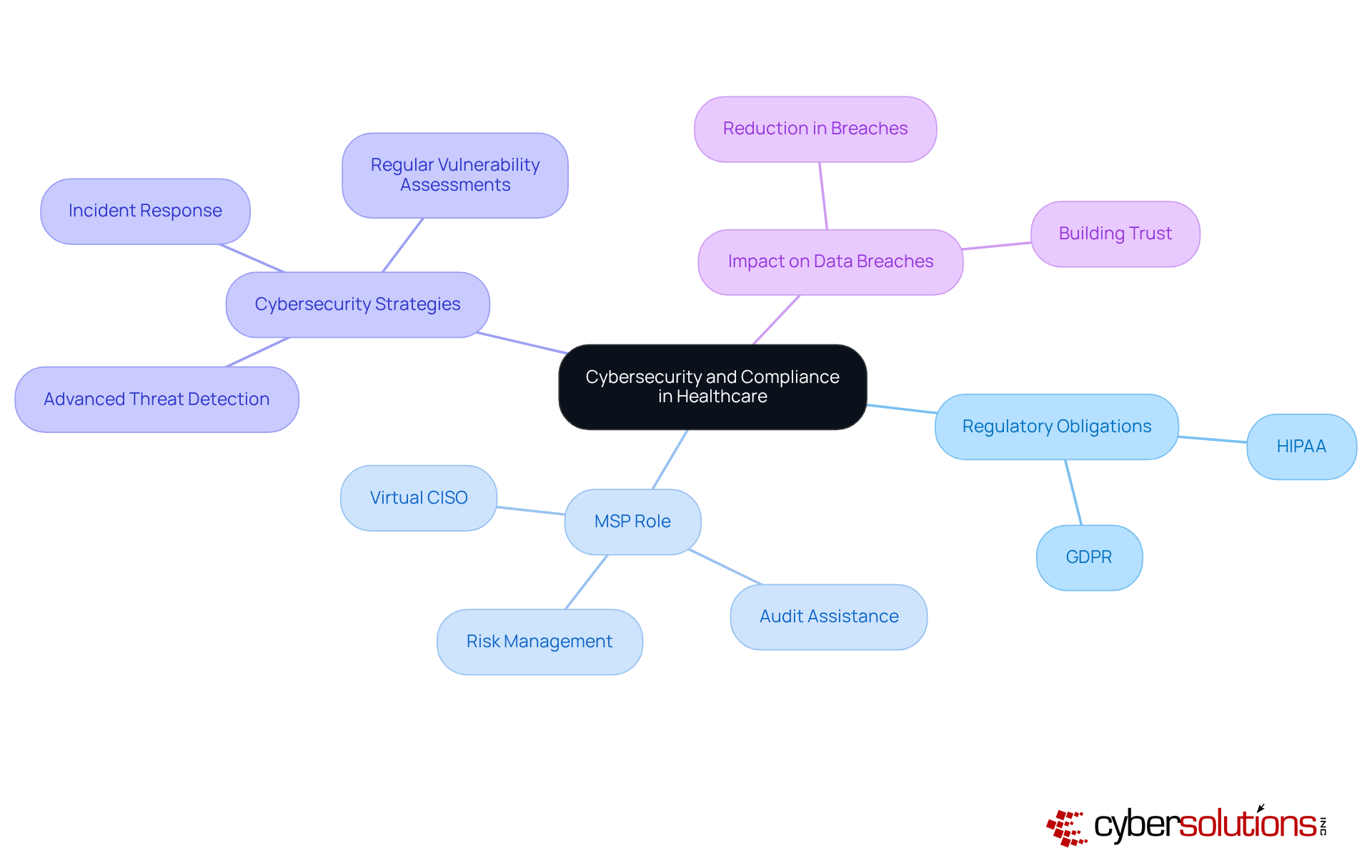
In the medical field, the stakes surrounding cybersecurity and compliance are exceptionally high. MSPs in technology offer specialized solutions that empower entities to navigate the intricate landscape of regulatory obligations, including HIPAA and GDPR. Cyber Solutions' extensive HIPAA compliance offerings integrate robust cybersecurity strategies, encompassing proactive risk management, audit assistance, and virtual CISO options. These measures ensure that medical facilities uphold the highest standards of data protection.
By employing advanced threat detection technologies, incident response protocols, and regular vulnerability assessments, an MSP in technology significantly mitigates the risk of data breaches, which can lead to substantial financial penalties and reputational damage. Medical entities utilizing managed services have reported a notable decrease in data breaches, underscoring the effectiveness of these proactive strategies. This not only but also cultivates trust among stakeholders, making it a critical consideration for CFOs who must balance financial performance with regulatory compliance.
As cybersecurity expert Lucas McCanna emphasizes, "Healthcare organizations must invest in advanced security and threat detection to better protect patient information, maintain compliance, and prevent breaches." This statement highlights the pivotal role of MSP in technology, as managed service providers play in safeguarding medical data and ensuring adherence to industry standards. It is essential to recognize that HIPAA compliance is an ongoing process, necessitating continuous monitoring and updates to adapt to evolving threats.
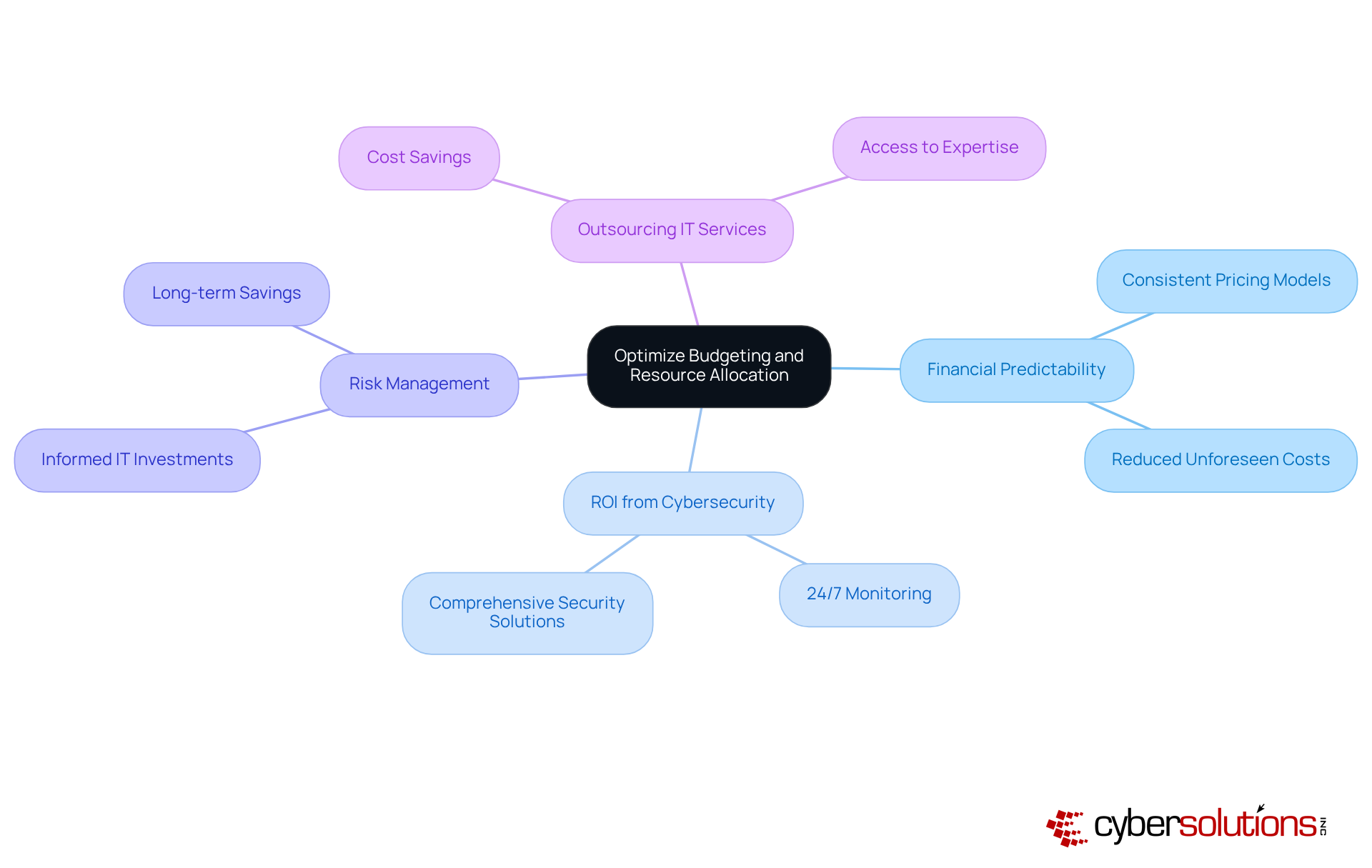
In today's healthcare landscape, the collaboration with MSP in technology has become essential for CFOs looking to enhance budgeting and resource allocation. The consistent monthly pricing models offered by service providers empower healthcare organizations to anticipate IT expenses with precision, significantly reducing unforeseen costs that often accompany in-house IT management. This financial predictability is not just beneficial; it is crucial for CFOs, enabling them to allocate resources more strategically toward initiatives that enhance patient care and drive organizational value.
Moreover, MSPs provide invaluable insights into the return on investment (ROI) associated with cybersecurity measures. How can effective risk management yield significant long-term savings? By leveraging the specialized knowledge of MSP in technology, medical organizations can make informed decisions about their IT investments, ultimately boosting financial performance and operational resilience. Additionally, MSPs implement comprehensive firewall and network security solutions, coupled with 24/7 network monitoring, to safeguard data against cyber threats, further solidifying their value proposition.
With the managed services market projected to exceed $1 trillion by 2033, the trend toward is becoming increasingly vital for healthcare institutions. How will these organizations navigate complex regulatory environments while optimizing costs? The answer lies in embracing MSP in technology as a strategic partner in addressing cybersecurity challenges and enhancing overall operational efficiency.
In today's healthcare landscape, Managed Service Providers (MSPs) have emerged as indispensable allies for CFOs, offering a strategic approach to enhancing operational efficiency, strengthening cybersecurity, and optimizing budgeting. By outsourcing IT management, healthcare institutions can redirect their focus toward patient care and strategic initiatives, all while ensuring compliance with stringent regulations like HIPAA. This partnership not only alleviates the burden of daily IT operations but also fortifies the organization’s cybersecurity posture against evolving threats.
Key insights from this discussion underscore how MSPs significantly mitigate the risk of data breaches through advanced threat detection and compliance strategies. The financial predictability provided by MSPs enables CFOs to allocate resources more effectively, leading to strategic investments that enhance both operational performance and patient outcomes. Furthermore, the ability to leverage specialized knowledge in cybersecurity and compliance ensures that healthcare organizations remain vigilant and proactive in safeguarding sensitive patient information.
Ultimately, collaboration with MSPs represents a transformative opportunity for healthcare institutions to navigate complex regulatory environments while achieving cost efficiency and operational resilience. As the managed services market continues to expand, embracing this partnership is not merely advantageous; it is essential for healthcare organizations striving to thrive in an increasingly challenging landscape. Engaging with MSPs can pave the way for a future where patient care is prioritized, operational challenges are minimized, and financial performance is optimized.
What role do Managed Service Providers (MSPs) play in medical institutions?
MSPs enhance operational efficiency within medical institutions by managing IT operations, allowing healthcare teams to focus on strategic initiatives that improve patient care.
How do MSPs help with cybersecurity in the medical field?
MSPs like Cyber Solutions provide customized IT solutions that ensure compliance with HIPAA regulations and safeguard patient health information (PHI), addressing cybersecurity threats effectively.
What support do MSPs offer for technical issues?
MSPs provide 24/7 help desk support to resolve technical issues promptly, significantly minimizing downtime and enhancing productivity in medical institutions.
What advanced technologies do MSPs implement to improve operational efficiency?
MSPs implement advanced technologies such as endpoint protection, threat detection, and data encryption to automate routine tasks, streamline workflows, and enhance communication across departments.
How do cloud solutions benefit healthcare organizations?
Cloud solutions facilitate better data sharing and collaboration among staff, leading to improved patient care and operational outcomes.
What services does Cyber Solutions offer to ensure compliance?
Cyber Solutions offers comprehensive compliance as a service (CaaS) and managed security services, ensuring audit readiness and robust cybersecurity measures.
What are the overall benefits of engaging with an MSP in technology for CFOs?
Engaging with an MSP boosts productivity, enhances operational efficiency, and results in cost savings, making it a compelling choice for CFOs in the medical field.
Managed IT Service Provider | Cyber Security | Incident Response | Compliance As A Service | Hosted Phone Service | Managed Security Service Provider | AI As A Service