Navigating Compliance Challenges

What Does CMMC Stand For? Understanding Its Importance in Compliance

Overview

CMMC, or Cybersecurity Maturity Model Certification, represents a critical framework established by the U.S. Department of Defense aimed at enhancing the cybersecurity posture of organizations within the Defense Industrial Base. This initiative ensures that sensitive information is effectively protected.

As compliance with CMMC becomes mandatory for all DoD contracts involving Controlled Unclassified Information (CUI) and Federal Contract Information (FCI) starting November 10, 2025, organizations must recognize the urgency of implementing robust security measures to mitigate escalating cyber threats.

The importance of addressing these challenges cannot be overstated, as failure to comply will impact organizational integrity and operational continuity.

Introduction

Understanding the nuances of cybersecurity has become increasingly critical, particularly for organizations involved with the Department of Defense (DoD). The stakes are higher than ever with the Cybersecurity Maturity Model Certification (CMMC) at the forefront of this initiative—a framework designed to bolster the security of sensitive information within the Defense Industrial Base. As compliance becomes mandatory for all DoD contracts involving Controlled Unclassified Information (CUI) by November 2025, organizations must not only navigate the complexities of this certification but also enhance their overall cybersecurity posture. How can they achieve this dual objective effectively?

Define CMMC: Understanding Its Meaning and Purpose

The Cybersecurity Maturity Model Certification (CMMC), often asked about in the question 'what does CMMC stand for', is a critical framework established by the U.S. Department of Defense (DoD) aimed at strengthening the cybersecurity posture of organizations within the Defense Industrial Base (DIB). Its primary objective is to ensure that contractors and subcontractors effectively protect sensitive information, particularly Controlled Unclassified Information (CUI) and Federal Contract Information (FCI). By implementing a standardized certification process, this initiative seeks to mitigate risks associated with cyber threats and enhance the overall security of the defense supply chain.

The significance of CMMC is underscored by the fact that, starting November 10, 2025, compliance will be mandatory for all DoD contracts involving CUI or FCI. This requirement will impact approximately 337,968 entities across various sectors, underscoring the essential need for robust protective measures. As organizations prepare for compliance, they must navigate a tiered certification model that encompasses self-assessments and third-party evaluations, ensuring that their cybersecurity practices align with established standards.

Real-world examples illustrate the critical nature of this compliance framework in safeguarding sensitive information. For instance, defense contractors are now required to extend CUI or FCI obligations to all subcontractors, highlighting the necessity for thorough adherence across the supply chain. This collaborative approach not only but also fosters trust among contractors and their partners.

In conclusion, understanding what does CMMC stand for is essential as the CMMC framework plays a crucial role in security compliance, especially with the evolving landscape in 2025 and beyond. Organizations must proactively assess their cybersecurity posture and engage with qualified assessors to meet the stringent requirements set forth by the DoD, ultimately ensuring the protection of national security and sensitive data.
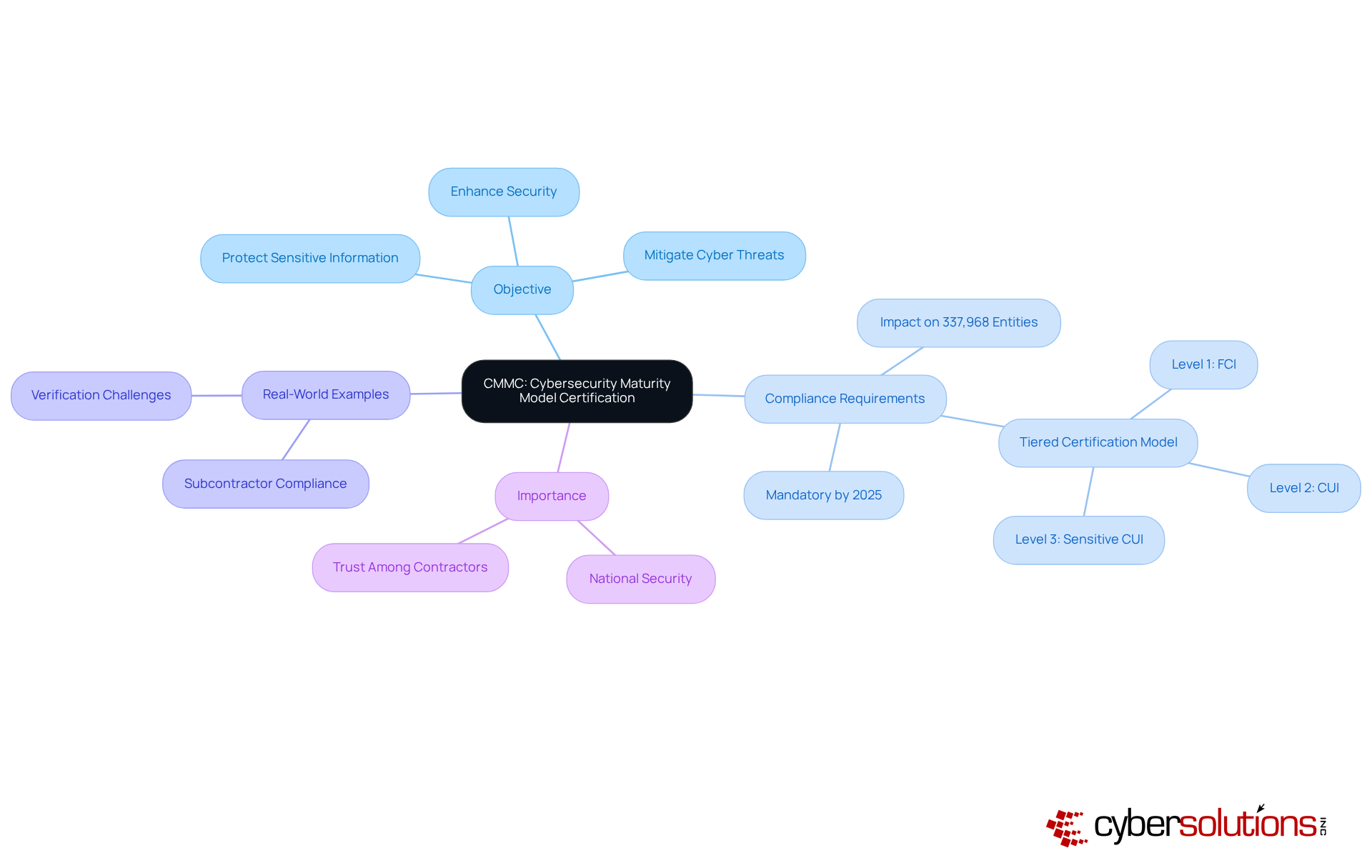
The central idea is CMMC, with branches illustrating its objectives, compliance requirements, examples, and significance. Follow the branches to explore how CMMC works to protect sensitive information and ensure robust cybersecurity.

Contextualize CMMC: Importance in Cybersecurity and Compliance

In today’s landscape of escalating cyber threats, understanding what does CMMC stand for is of paramount significance. Organizations engaged with the Department of Defense (DoD) are prime targets for cyberattacks due to the sensitive nature of the information they manage. This framework serves as an essential structure, compelling these entities to implement robust security protocols that significantly reduce the risk of data breaches and cyber incidents.

Understanding what does CMMC stand for is essential, as compliance with the is not merely recommended; it is a requirement for contractors seeking to bid on DoD contracts, underscoring its crucial role within the defense sector. By adhering to established security guidelines, entities not only bolster their security posture but also demonstrate a commitment to safeguarding sensitive data, thereby cultivating trust with the DoD and other stakeholders.

Real-world examples illustrate how organizations have effectively enhanced their security through adherence to specific standards, showcasing the model’s efficacy in minimizing vulnerabilities. Furthermore, expert insights stress that following CMMC guidelines is increasingly viewed as essential for maintaining competitiveness in the defense contracting arena, especially as digital security risks continue to evolve in 2025.

The impact of compliance with the CMMC framework extends beyond mere eligibility for contracts; it significantly influences the frequency and severity of security incidents, making it a critical factor for any organization operating in this domain.
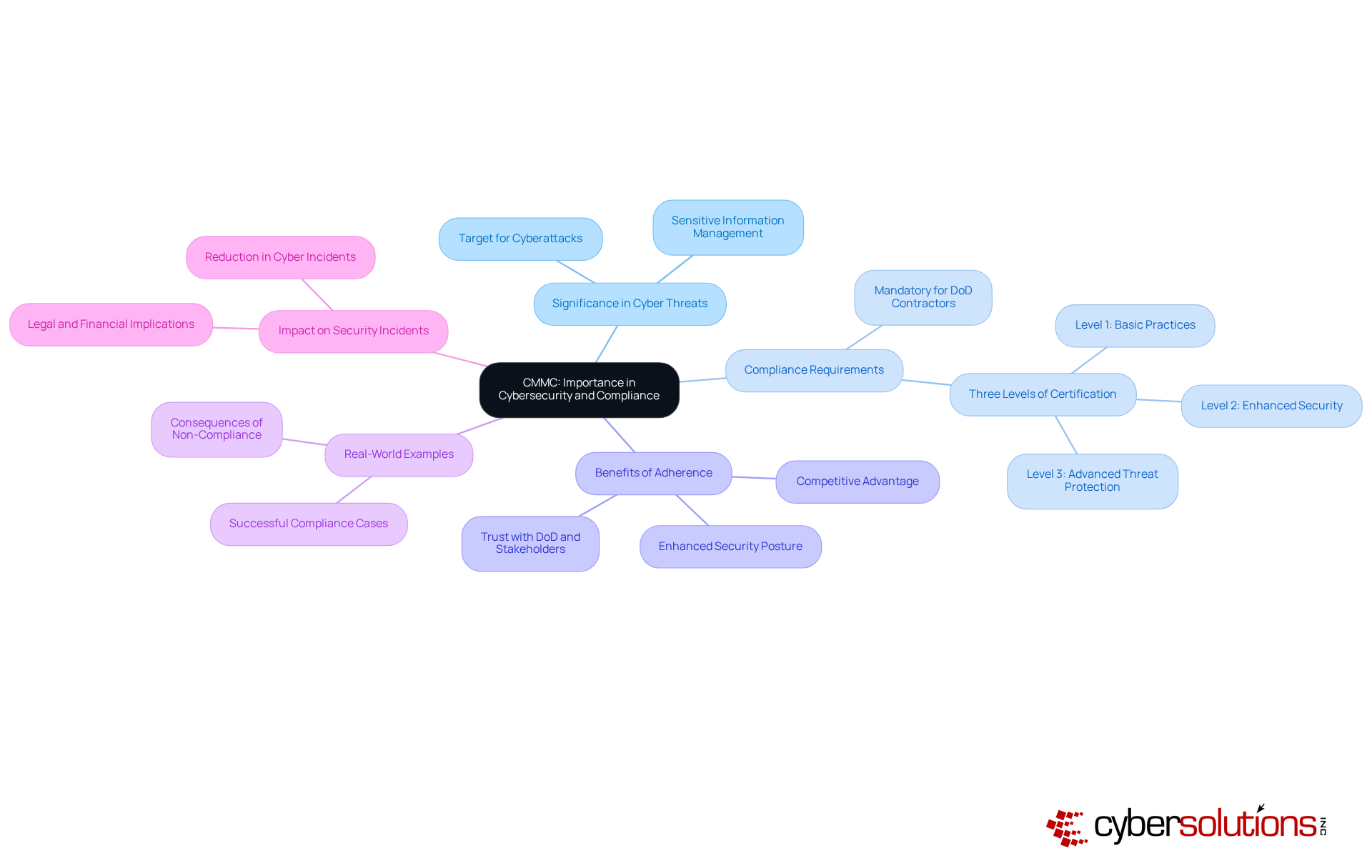
The central node represents CMMC, with branches indicating its crucial aspects like why it's significant, what compliance entails, and how it affects security and competitiveness. Each branch further breaks down the topic, helping you grasp the interconnected nature of these ideas.

Trace the Origins of CMMC: Development and Regulatory Needs

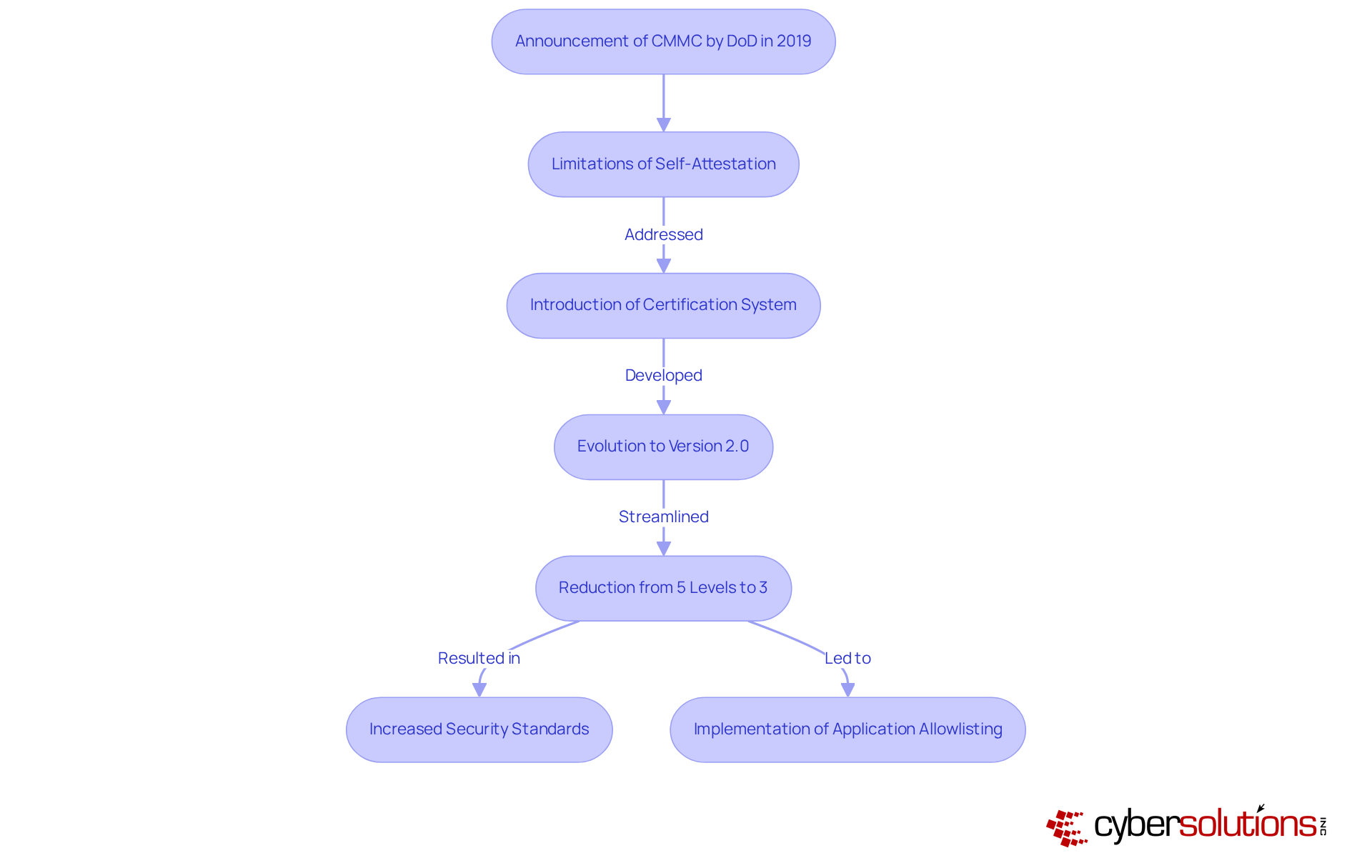
The emergence of the Cybersecurity Maturity Model Certification (CMMC), which raises the question of what does CMMC stand for, underscores a critical response to the growing security vulnerabilities within the defense supply chain. Announced by the Department of Defense (DoD) in 2019, this certification, which addresses what does CMMC stand for, was designed to rectify the limitations of the self-attestation model that allowed contractors to certify their own compliance without independent verification. This pivotal change was prompted by a series of significant data breaches that exposed sensitive information, emphasizing the urgent need for a more rigorous and standardized approach to digital security.

The CMMC framework, and what does CMMC stand for, integrates established cybersecurity standards, such as NIST SP 800-171, into a comprehensive certification system that evaluates an organization's maturity in implementing security practices. Notably, the framework has evolved, with version 2.0 being the latest iteration, prompting the question of what does CMMC stand for in the context of ongoing regulatory demands and the ever-changing landscape of cyber threats. This updated framework has streamlined the certification process, reducing the levels from five to three, thereby facilitating compliance for contractors while also clarifying what does CMMC stand for in the context of maintaining stringent security standards.

To understand what does CMMC stand for, organizations must implement to protect Controlled Unclassified Information (CUI) in accordance with NIST 800-171 to achieve Level 2 adherence. Furthermore, to understand what does CMMC stand for, one must know that attaining CMMC Level 3 requires advanced security protocols to safeguard the most sensitive information, ensuring eligibility for federal contracts. As the DoD prepares to enforce these requirements, organizations must adapt to this new compliance environment, anticipated to be fully integrated into contracts by the end of 2025.

In this evolving context, the role of application allowlisting becomes increasingly vital. This proactive measure prevents unauthorized software from executing, thereby bolstering digital security and assisting organizations in meeting strict compliance standards. Key features of application allowlisting include:

  • Monitoring application activity
  • Managing allowlists from a centralized dashboard
  • Customizing policies to meet organizational needs

All contributing to a robust security posture.

Each step in the flowchart represents a significant development in the CMMC journey. Follow the arrows to see how the model has changed and what organizations need to do to comply with the latest standards.

Explore CMMC Levels: Key Characteristics and Requirements

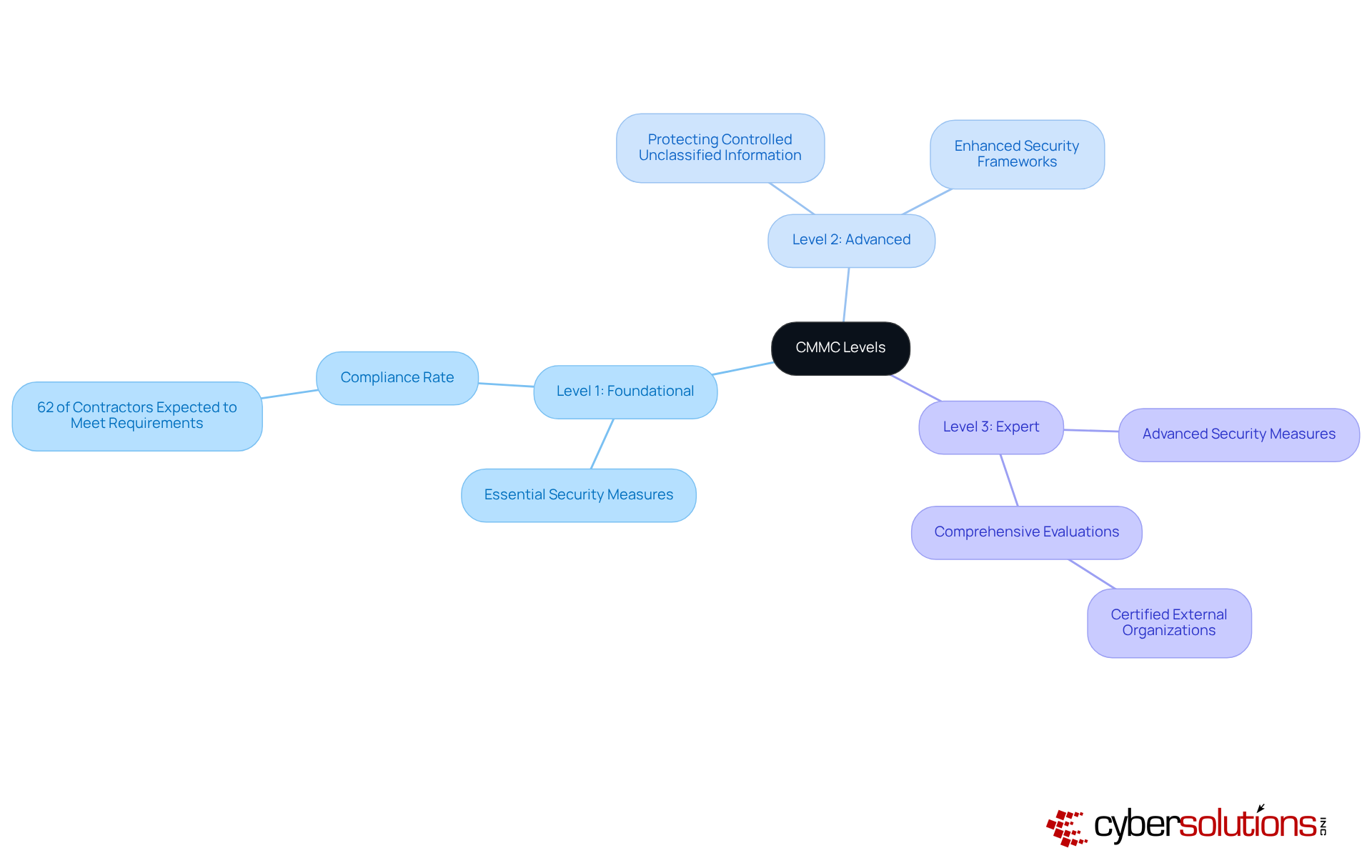
The (CMMC), which raises the question of what does CMMC stand for, is organized into three distinct levels, each representing a different degree of security maturity and associated requirements.

  1. Level 1, known as Foundational, mandates that entities implement essential security measures to safeguard Federal Contract Information (FCI). It is anticipated that approximately 62% of contractors will meet these Level 1 requirements, establishing a crucial baseline for compliance.
  2. Level 2, termed Advanced, builds upon these foundational practices by introducing additional measures designed to protect Controlled Unclassified Information (CUI). This level necessitates that entities exhibit a more robust cybersecurity posture, ensuring that sensitive information is effectively secured.
  3. Finally, Level 3, referred to as Expert, encompasses the most rigorous requirements, focusing on the execution of advanced security measures to protect sensitive information. Entities at this level must undergo comprehensive evaluations by certified external organizations to confirm compliance, thereby ensuring they meet the stringent standards essential for participation within the defense supply chain.

Practical examples illustrate the journey of entities achieving cybersecurity maturity model certification. For instance, organizations that have attained Level 2 certification report enhanced security frameworks and improved operational efficiencies, showcasing the tangible benefits of adhering to established standards. As the CMMC program advances, it is imperative for organizations to understand what does CMMC stand for and prepare for the forthcoming compliance requirements, particularly with the final rule set to take effect on November 10, 2025.

The central node represents the CMMC framework, while the branches illustrate the different levels of maturity, detailing what each level entails and the requirements that come with it.

Conclusion

The Cybersecurity Maturity Model Certification (CMMC) is a crucial framework aimed at bolstering cybersecurity within the Defense Industrial Base (DIB). By enforcing compliance with rigorous security standards, the CMMC seeks to safeguard sensitive information and reduce risks linked to cyber threats, thereby ensuring the integrity of the defense supply chain.

It is imperative to recognize that CMMC compliance is not merely optional; it is essential for organizations seeking to secure Department of Defense contracts. The tiered certification levels, from foundational to expert, illustrate the diverse degrees of security maturity required. Real-world examples reinforce the significance of these measures, demonstrating that adherence to CMMC not only enhances security protocols but also cultivates trust within the defense sector.

As the cybersecurity landscape continues to evolve, organizations must prioritize compliance with CMMC standards. The approaching deadline of November 10, 2025, serves as a critical reminder for entities to evaluate their cybersecurity practices and collaborate with qualified assessors. By taking these steps, they not only protect sensitive data but also contribute to the overarching goal of national security in an increasingly digital world.

Frequently Asked Questions

What does CMMC stand for?

CMMC stands for Cybersecurity Maturity Model Certification.

What is the purpose of CMMC?

The purpose of CMMC is to strengthen the cybersecurity posture of organizations within the Defense Industrial Base (DIB) by ensuring that contractors and subcontractors effectively protect sensitive information, particularly Controlled Unclassified Information (CUI) and Federal Contract Information (FCI).

When will compliance with CMMC become mandatory?

Compliance with CMMC will become mandatory for all DoD contracts involving CUI or FCI starting November 10, 2025.

How many entities will be impacted by CMMC compliance?

Approximately 337,968 entities across various sectors will be impacted by CMMC compliance.

What does the CMMC certification process involve?

The CMMC certification process involves a tiered model that includes self-assessments and third-party evaluations to ensure that organizations' cybersecurity practices align with established standards.

How does CMMC affect subcontractors?

Defense contractors are required to extend CUI or FCI obligations to all subcontractors, emphasizing the need for adherence to cybersecurity standards across the entire supply chain.

Why is CMMC important for national security?

CMMC is important for national security as it plays a crucial role in safeguarding sensitive information and mitigating risks associated with cyber threats within the defense supply chain.

Recent Posts
Choose Wisely: MSP or MSSP for Your Business Needs
Understanding the IT Managed Services Model: Definition and Benefits
Master Firewall Management Services: Best Practices for C-Suite Leaders
Best Practices for a Successful Managed IT Helpdesk
Master Backup and Disaster Recovery BDR Solutions for Business Resilience
10 Key Steps to Meet CMMC 2.0 Level 2 Requirements
Maximize Impact with Cyber Security Simulation Exercises Best Practices
Maximize Security with Offsite Data Backup Services Best Practices
4 Best Practices for Effective Computer Security Awareness Training
Why C-Suite Leaders Need Managed Hosting Cloud Solutions Now
4 Multi-Factor Authentication Options to Enhance Security for Leaders
Master Cloud Hosting Managed: Best Practices for C-Suite Leaders
Essential Cyber Security Measures for Businesses in 2026
Master CMMC Regulations: Essential Steps for Compliance Success
Why Staff Security Awareness Training is Crucial for Your Organization
Understanding Cloud Hosting Management: Importance, Evolution, and Key Features
Master CMMC Standards: Essential Steps for Compliance and Success
Maximize ROI with Your Information Technology MSP: 4 Best Practices
4 Best Practices to Maximize Uptime in Cloud Infrastructure
10 Key Benefits of Partnering with IT MSPs for Your Business
What is Cyber Intelligence? Key Insights for C-Suite Leaders
5 Best Practices to Prevent Ransomware for C-Suite Leaders
Master Data Storage Disaster Recovery: Key Strategies for C-Suite Leaders
5 Best Practices for Using SIEM in Security Management
Understanding EDR Meaning in Security for Executive Strategy
CMMC Overview: Key Features and Compliance Insights for Leaders
Understanding Managed Services Technology: Definition and Key Insights
Ransomware History: Key Milestones Every C-Suite Leader Must Know
Create an Effective Cyber Attack Response Plan in 6 Steps
Why the Importance of Backing Up Data Cannot Be Overlooked
10 Essential Defense in Depth Examples for C-Suite Leaders
Master Disaster Backup: Essential Strategies for C-Suite Leaders
4 Best Practices for MSP Backup and Recovery Success
Master Backup and Disaster Recovery for Business Resilience
Which Firewall Should I Use? A Step-by-Step Guide for Leaders
Master Dark Web Protection Services to Safeguard Your Business
Maximize Cybersecurity with Managed Service Provider Strategies
Master USB Thumb Drive Hacks: Prevention and Response Strategies
Enhance Cybersecurity with Deep Packet Inspection and SSL Best Practices
What Is a Digital Certificate Used For in Cybersecurity?
Master CMMC Compliance Before the Deadline: Key Steps to Follow
What Is Managed Cloud Hosting and Why It Matters for Your Business
Why C-Suite Leaders Choose Managed Services Hosting for Success
Understanding Vulnerability Scanning in Cyber Security for Leaders
Why SSL Deep Packet Inspection is Essential for Cybersecurity Leaders
Protect Your Business: Best Practices Against USB Flash Drive Hacks
Protect Your Business from Thumb Drive Hacks: Essential Security Steps
Maximize Managed Service Provider Security: Best Practices for C-Suite Leaders
Understanding Threat Vector Meaning: Importance for Business Leaders
Understanding LOTL Attacks: Mechanisms, Prevention, and Impact
4 Best Practices for Effective Managed Web Security Strategies
Understanding the Consequences of Not Backing Up Your Information
Why Your Systems Should Be Scanned Monthly for Optimal Security
3 Best Practices for Effective Cyber Assessments in 2026
4 Key Benefits of Desktop Managed Services for C-Suite Leaders
6 Steps for C-Suite Leaders to Implement a Managed Services Helpdesk
Office vs 365: Key Differences, Features, and Costs for Leaders
Maximize Business Resilience with Co-Managed IT Solutions
Create Your CMMC SSP Template: A Step-by-Step Approach
What Is the Benefit of a Defense in Depth Approach for Organizations?
4 Essential Cloud App Security Best Practices for C-Suite Leaders
8 Best IT Support Services for C-Suite Leaders in 2026
4 Key Steps to Evaluate IT Security Outsourcing Companies
Master Change Management in Cyber Security: A Step-by-Step Guide
4 Steps to Comply with Regulations for C-Suite Leaders
Maximize Business Resilience with IT Security as a Service Best Practices
Achieve NIST 800-171 Certification: A Step-by-Step Guide for Leaders
What Are the Benefits of a Defense-in-Depth Approach in Cybersecurity?
10 Benefits of IT Department Outsourcing for C-Suite Leaders
5 Key Steps: When Is CMMC Compliance Required for Your Business?
How Does a Vulnerability Scanner Work? Key Insights for Leaders
Enhance Security with Information Security as a Service Best Practices
Why Choosing a Local IT Service Provider Boosts Business Success
Master CMMC Implementation: Steps for C-Suite Leaders to Succeed
CMMC vs. NIST 800-171: Key Similarities and Compliance Strategies
Master IT Support Price: Key Strategies for C-Suite Leaders
Crafting Effective Password Security Infographics: Best Practices
Understanding Desktop as a Service Cost for C-Suite Leaders
Master CMMC 2.0 Level 1 Requirements for Business Success
Understanding CMMC Level 3 Requirements for Defense Contractors
Why Are Logs Important for Cybersecurity and Compliance Success?
Malware vs Spyware: Key Differences Every C-Suite Leader Should Know
7 Steps for Effective HIPAA Disaster Recovery Planning
Achieve CMMC Compliance: Essential Services for Your Organization
Why Your Business Needs an IT Security Provider Now
What to Do with Phishing Emails: 4 Steps to Protect Your Business
Maximize Cloud Hosting Support: Best Practices for C-Suite Leaders
4 Best Practices for Effective Company Security Training
Why Hosting and Cloud Services Are Essential for Business Resilience
Maximize SIEM Events: Best Practices for Cybersecurity Success
4 Best Practices for Managed Email Security Services Success
Understanding EDR in Cyber Security: Meaning and Importance
10 Essential Computer IT Services for C-Suite Leaders
4 Best Practices for Cyber Security Compliance Services Success
5 Best Practices for Achieving CMMC 1.0 Compliance Success
Implementing Multi-Factor Authentication: A Step-by-Step Guide for Leaders
What Is Endpoint Detection and Why It Matters for Your Business
What is an IR Plan? Importance, Components, and Evolution Explained
Master Email Security Training: 4 Steps for C-Suite Leaders
What is EDR? Understanding Its Role in Cybersecurity for Leaders

Join our newsletter

Sign up for the latest industry news.
We care about your data in our privacy policy.
Thank you! Your submission has been received!
Oops! Something went wrong while submitting the form.