
Introduction
In today's rapidly evolving digital landscape, grasping IT spending as a percentage of revenue is crucial for organizational leaders. This metric not only reveals how companies allocate their resources but also acts as a strategic tool for boosting operational efficiency and fostering growth. With the surge in cybersecurity costs, compliance requirements, and the transition to cloud solutions, leaders face a pressing question: how can they adeptly navigate these complexities to optimize their IT investments? This article explores ten essential insights that illuminate the realm of IT spending, providing actionable strategies for aligning expenditures with industry-specific objectives and market dynamics.
Cyber Solutions Inc.: Tailored IT Spending Solutions for Diverse Industries
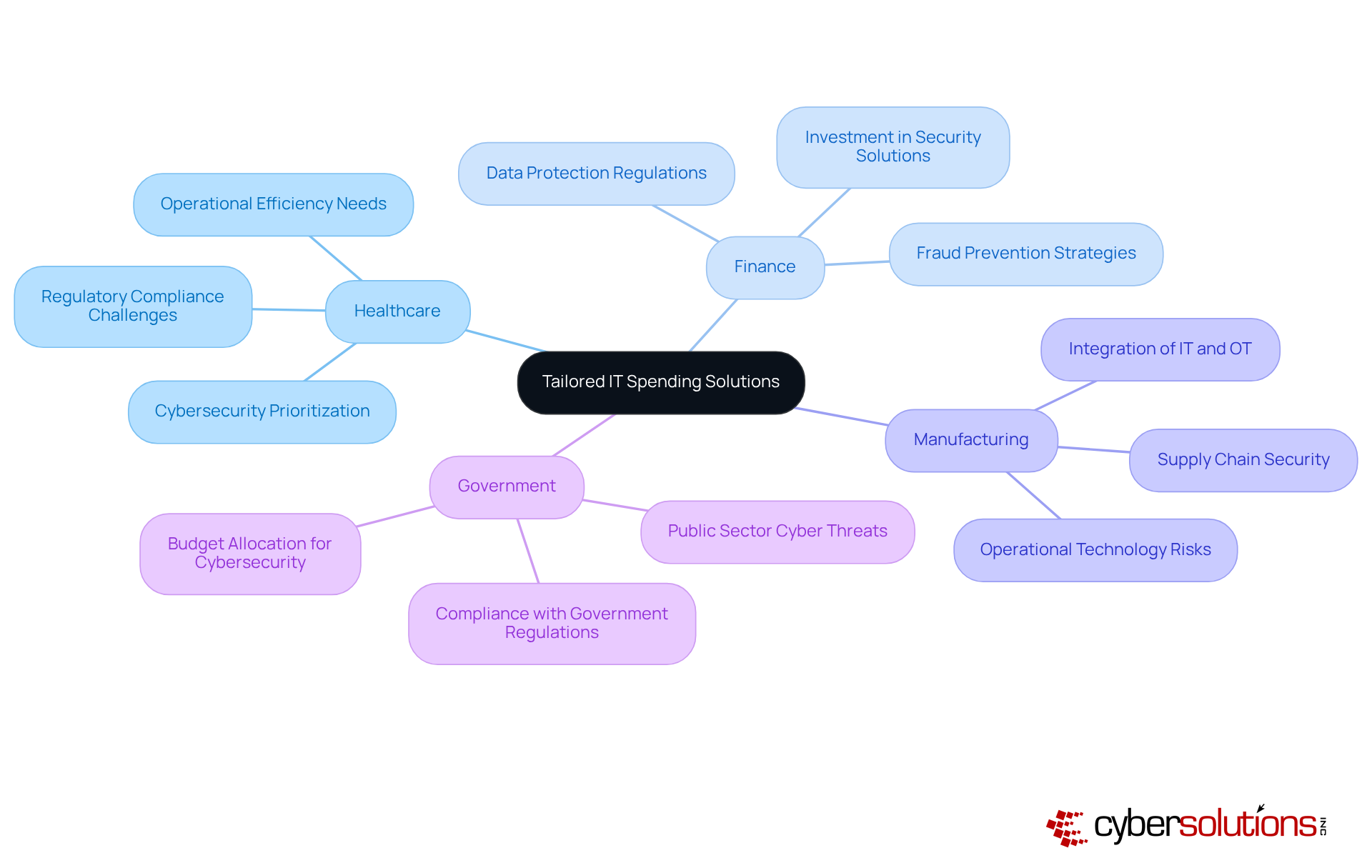
In today's digital landscape, the importance of IT spending cannot be overstated. With cybersecurity threats on the rise, that demand immediate attention. Cyber Solutions Inc. delivers tailored IT spending solutions designed to meet the distinct needs of industries such as healthcare, finance, manufacturing, and government. By examining the specific challenges and regulatory demands of each sector, Cyber Solutions enables entities to allocate their budgets effectively.
This strategic approach not only enhances efficiency but also strengthens security measures, addressing critical concerns related to cyber threats and vulnerabilities. For instance, did you know that 53% of healthcare entities are increasingly prioritizing IT spending as a percentage of revenue? This statistic highlights the growing trend in 2025. By focusing on these pressing issues, Cyber Solutions empowers clients to concentrate on their core operations while expertly managing the complexities of IT costs.
Ultimately, this targeted approach ensures that expenditures generate optimal returns and align with industry-specific goals. As healthcare organizations navigate the intricate landscape of cybersecurity, partnering with Cyber Solutions can provide the expertise needed to tackle these challenges head-on.
Understanding IT Spending as a Percentage of Revenue: A Critical Metric
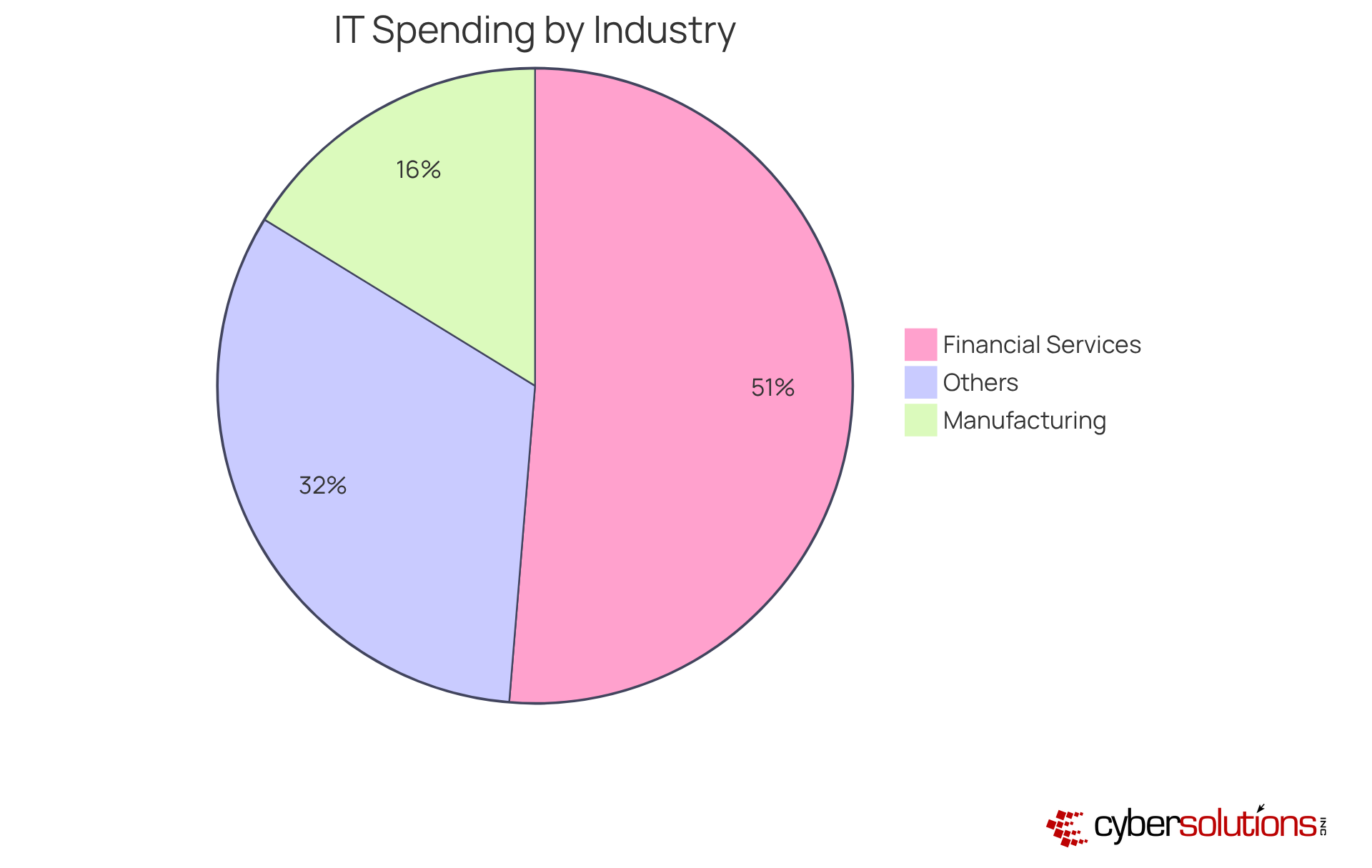
IT spending serves as a crucial benchmark for organizations assessing their performance in relation to revenue. Did you know that businesses typically allocate between 4% to 6% of their revenue to IT? However, the percentage can vary significantly across industries. For example, financial services often lead with higher allocations, utilizing between 4.4% and 11.4% of their revenue on IT spending, while sectors like manufacturing may allocate less.
Understanding IT spending is essential for leaders. It enables them to determine whether their expenditures on IT, expressed as a percentage of revenue, align with industry norms and support strategic goals. By doing so, they can make informed decisions regarding future allocations. Financial analysts emphasize the importance of regularly evaluating IT budgets. Companies should measure their costs against industry standards and their own financial outcomes to foster growth and efficiency.
Furthermore, it is advisable for companies to designate around 15% of their IT budget to innovation initiatives. This ensures that technology expenditures are not only aligned with broader business objectives but also positioned to drive innovation and competitive advantage.
Industry Variations in IT Spending: Key Insights for Strategic Planning
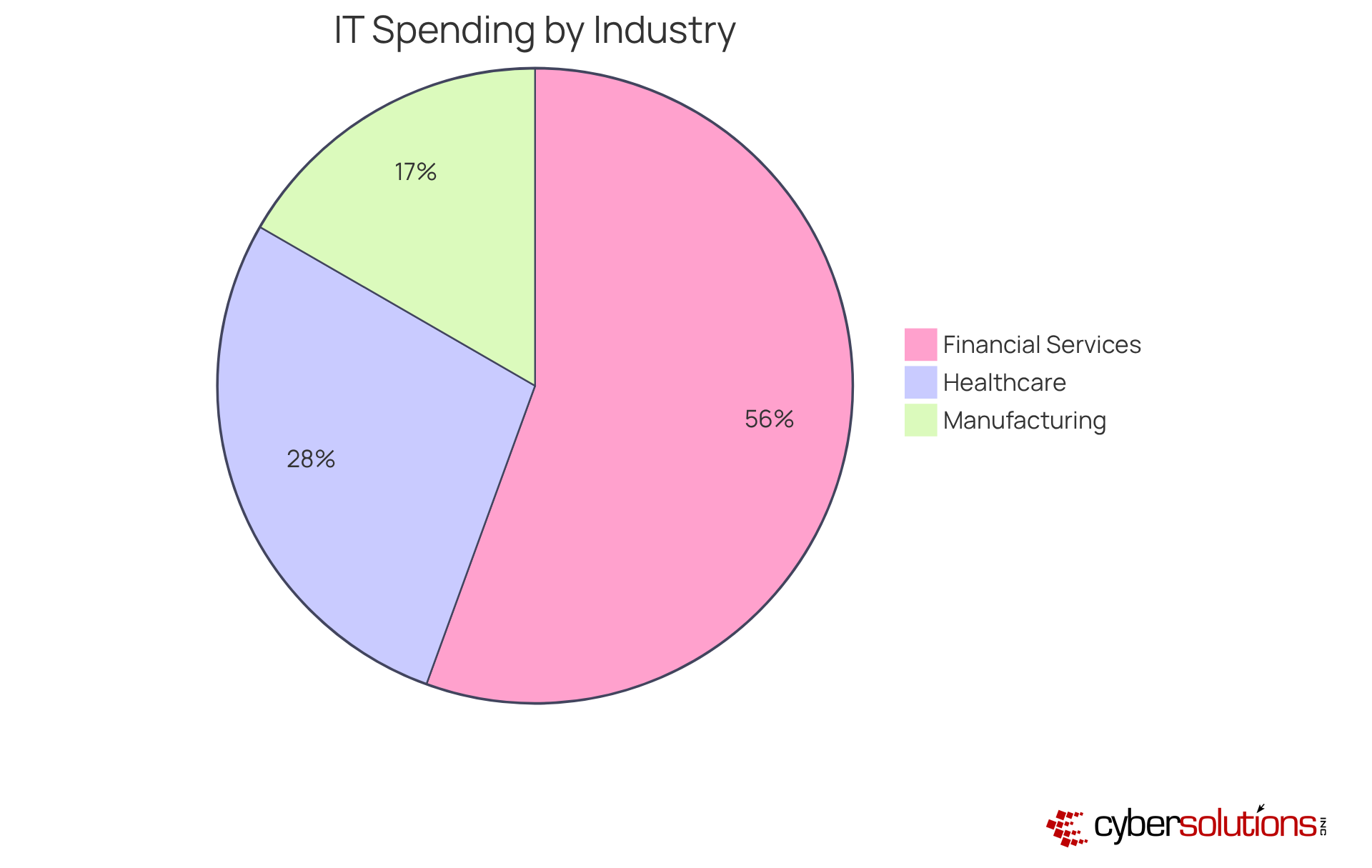
The disparities in IT spending are evident, particularly as financial services often demonstrate leadership by allocating over 10% of their revenue to technology. This significant investment stems from the sector's pressing need for innovation and adherence to stringent regulations. Conversely, industries like manufacturing typically allocate around 3% of their revenue, which reflects their operational constraints, highlighting distinct operational priorities and regulatory pressures.
For instance, healthcare organizations face escalating costs, necessitating a larger share of IT resources to improve efficiency and ensure compliance. By acknowledging these differences, leaders can benchmark with industry benchmarks, ensuring sufficient funding to meet both operational and compliance demands.
As companies prepare for 2025, understanding these trends is crucial for enhancing IT investment and strengthening overall business resilience. Are you ready to take action and align with these insights?
The Shift to Cloud Solutions: Transforming IT Budget Allocations
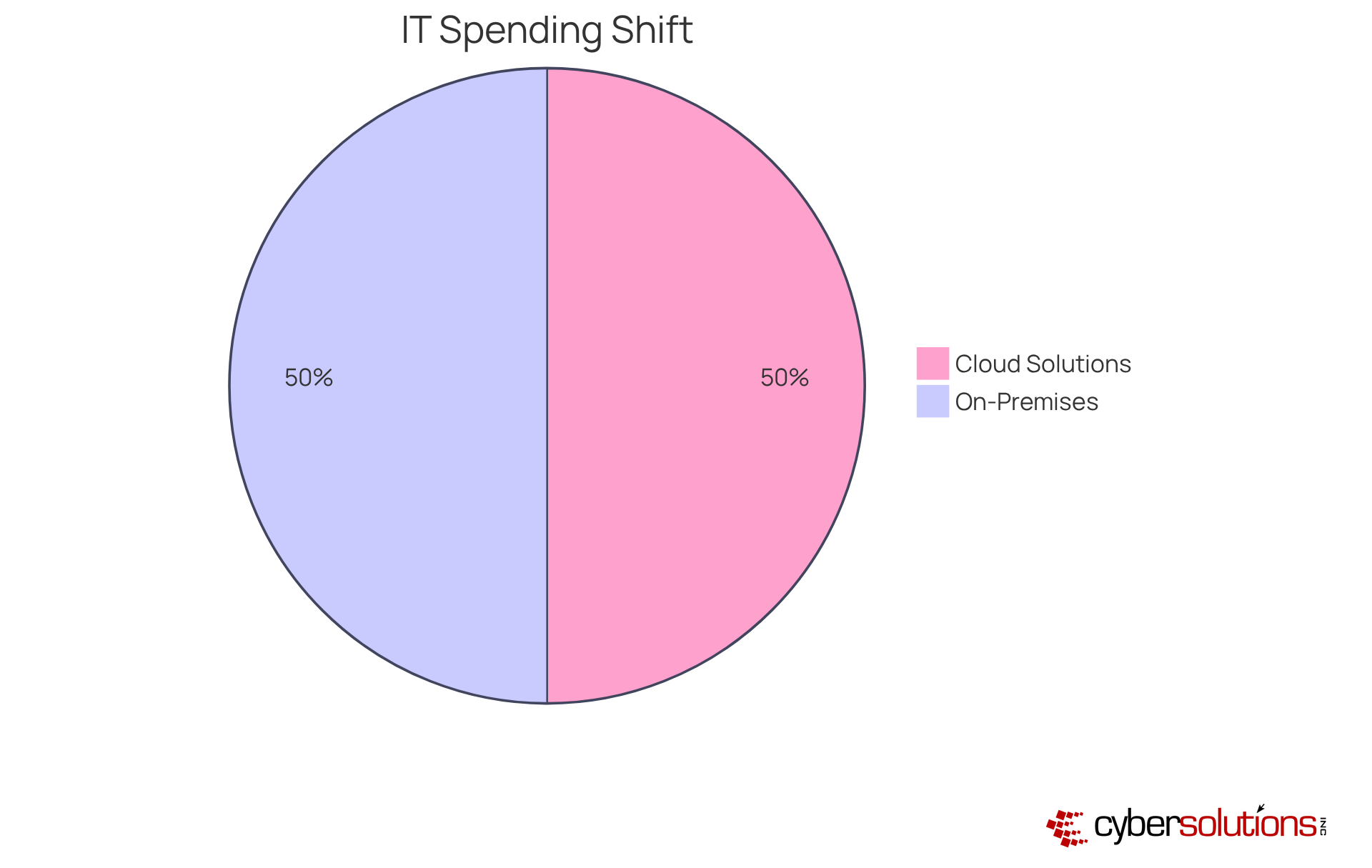
The transition to cloud computing is fundamentally reshaping IT budgets. A significant number of organizations are reallocating resources that were once dedicated to on-premises infrastructure. By 2025, projections indicate that IT spending will increasingly favor cloud solutions. This shift reflects a growing acknowledgment of the scalability and flexibility that cloud services provide.
This model empowers businesses to pay solely for the resources they utilize, resulting in substantial reductions in capital expenditures. However, this transition also demands a comprehensive reevaluation of ongoing operational costs, particularly in critical areas such as security measures and compliance. With 94% of organizations reporting the use of cloud services in various capacities, it is imperative for leaders to evaluate IT spending as a percentage of revenue. This planning is essential to optimize budgets while effectively managing the challenges associated with these new environments.
Effective budgeting strategies will be crucial for organizations aiming to enhance their efficiency and agility in an increasingly digital landscape. As the shift continues, the ability to adapt and optimize IT funding will determine the success of enterprises in leveraging cloud technologies.
Rising Cybersecurity Costs: Implications for IT Spending Strategies
As cyber threats evolve, organizations face escalating costs. In 2025, cybersecurity spending is projected to reach $150 billion, marking a 15% rise compared to the previous year. This upward trend underscores the necessity for leaders to integrate cybersecurity measures within their strategies for risk management. By doing so, entities can not only protect sensitive information but also ensure compliance with stringent regulatory requirements. Strategic budgeting for cybersecurity is essential, as it mitigates risks and bolsters organizational resilience against an increasingly complex threat landscape.
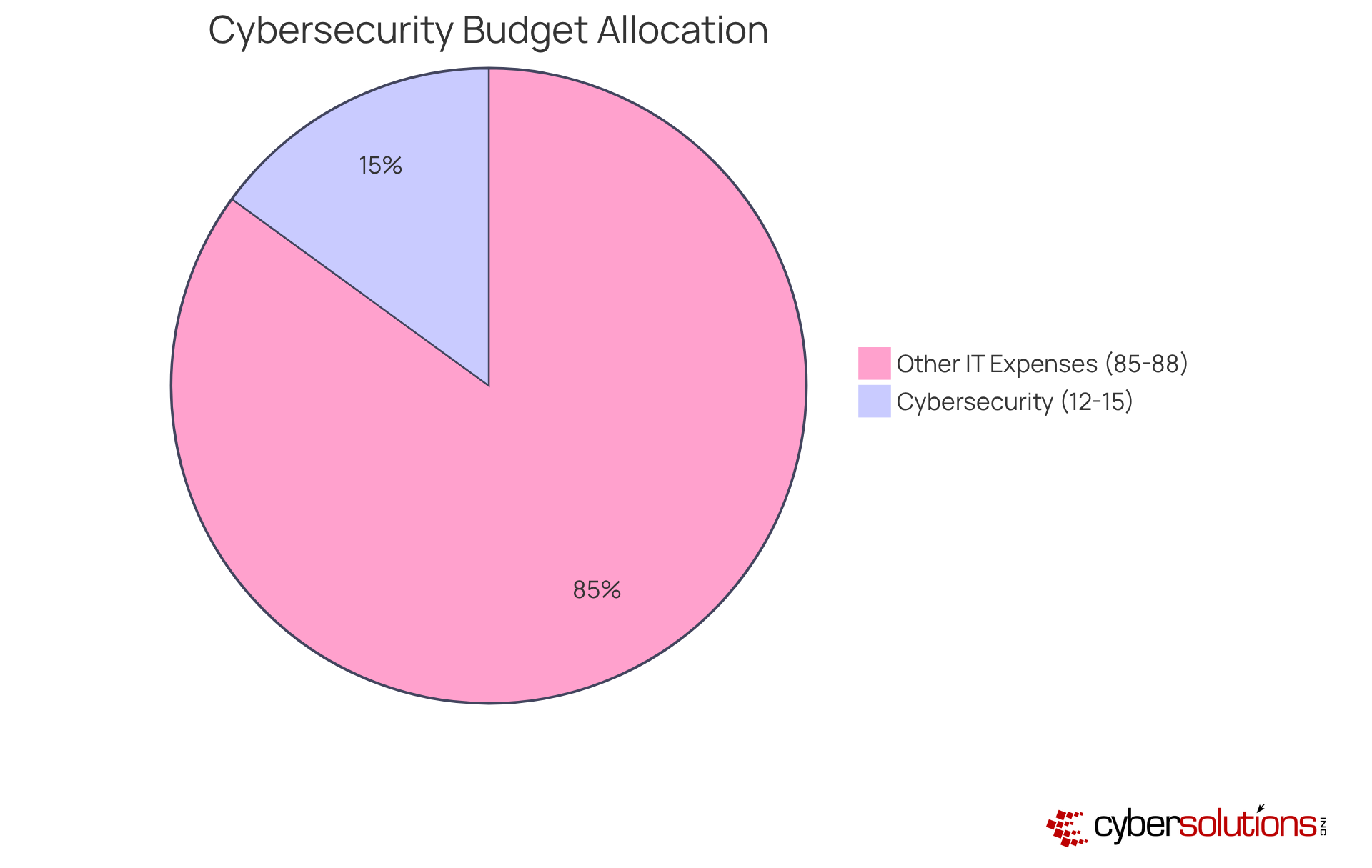
Insights from cybersecurity experts suggest that organizations should ensure that their budgets allocate at least 12-15% of their total IT budgets to cybersecurity. This allocation is crucial, especially considering that the average cost of a data breach in healthcare alone soared to $10.93 million in 2023, highlighting the financial impact of cyber threats. Furthermore, with companies encountering an average of 4,000 cyber attacks each day, the demand for robust cybersecurity frameworks becomes even more urgent.
One effective strategy that companies can implement is endpoint protection. This approach proactively prevents malware and unauthorized software from executing, thereby reducing the attack surface and minimizing vulnerabilities. Features such as centralized management and continuous monitoring of application activity ensure that only approved applications run on the network, enhancing resilience against threats like ransomware and phishing attacks.
Organizations prioritizing cybersecurity include financial institutions, which have reported a significant increase in ransomware attacks, prompting them to enhance their security measures. Additionally, the U.S. government has surpassed a $13 billion cybersecurity budget for FY2025, reflecting a growing recognition of the importance of cybersecurity across various sectors. As the landscape continues to shift, aligning with evolving risks will be a key challenge for leaders in 2025.
Compliance Costs: A Driving Force Behind IT Budgeting Decisions
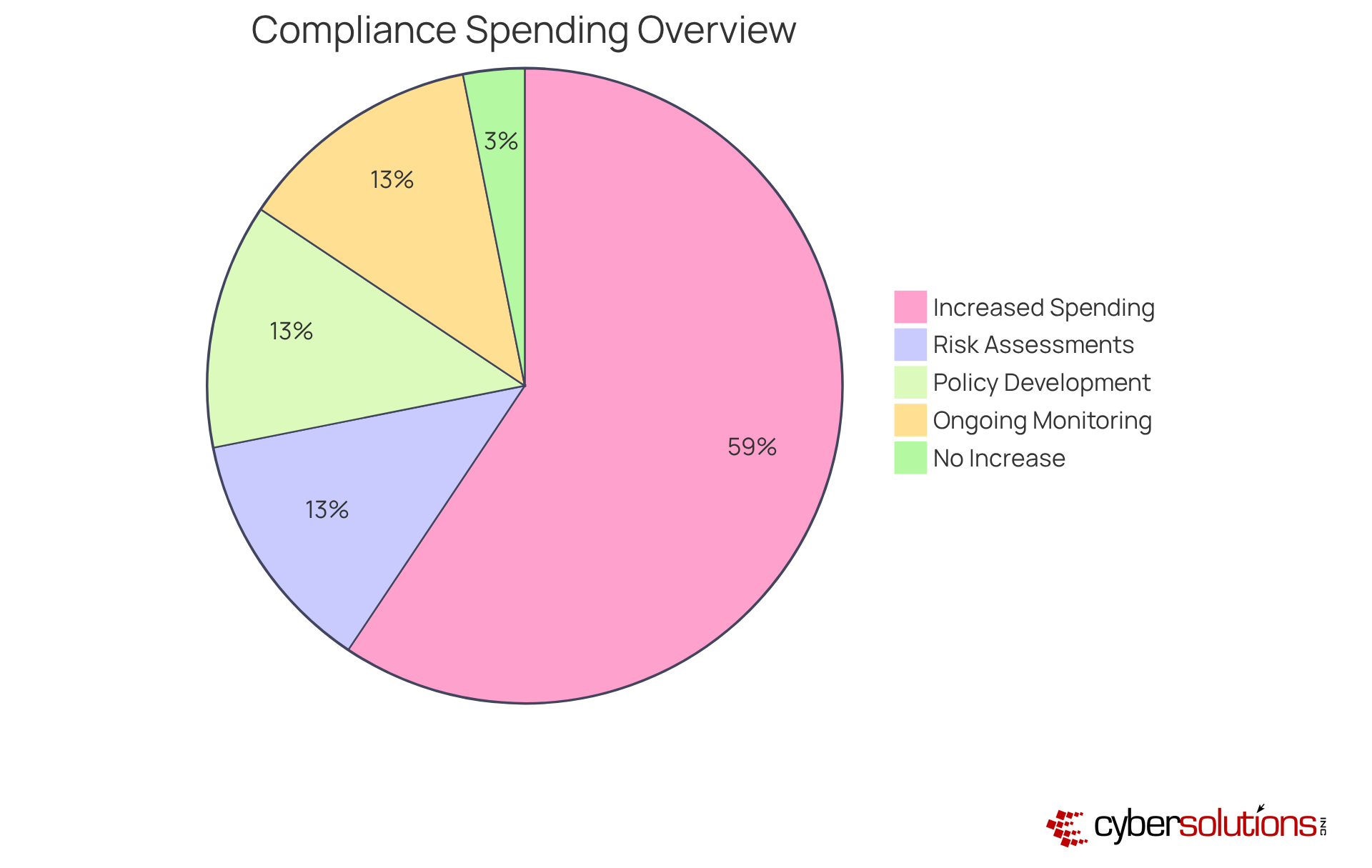
Compliance costs are increasingly pivotal in shaping IT budgeting decisions, particularly in highly regulated sectors like healthcare and finance. Organizations in these industries must allocate substantial resources not just for compliance but also for ongoing training and audits. Did you know that 95% of firms reported increased compliance spending in 2023? This statistic underscores a broader recognition of compliance in business operations.
As regulations evolve, leaders must remain vigilant about these costs to ensure their IT budgets adequately encompass compliance needs. This proactive approach not only helps avoid potential fines but also mitigates operational disruptions that can be financially detrimental. Regulatory experts emphasize that compliance is not merely a cost; it’s a strategic investment that enhances organizational resilience and operational efficiency.
Looking ahead, organizations are expected to face even greater scrutiny by 2025, making it imperative to integrate compliance considerations into IT financial planning. Cyber Solutions offers services to simplify this process. Our services include:
- Policy development
to help businesses meet standards like HIPAA, PCI, CMMC, SOX, and GDPR.
Moreover, our solutions are designed to minimize the impact of cyberattacks, ensuring that entities can quickly recover and maintain business continuity. This further supports effective compliance management, allowing organizations to navigate the complexities of regulatory requirements with confidence.
Maximizing ROI: Evaluating IT Spending Effectiveness
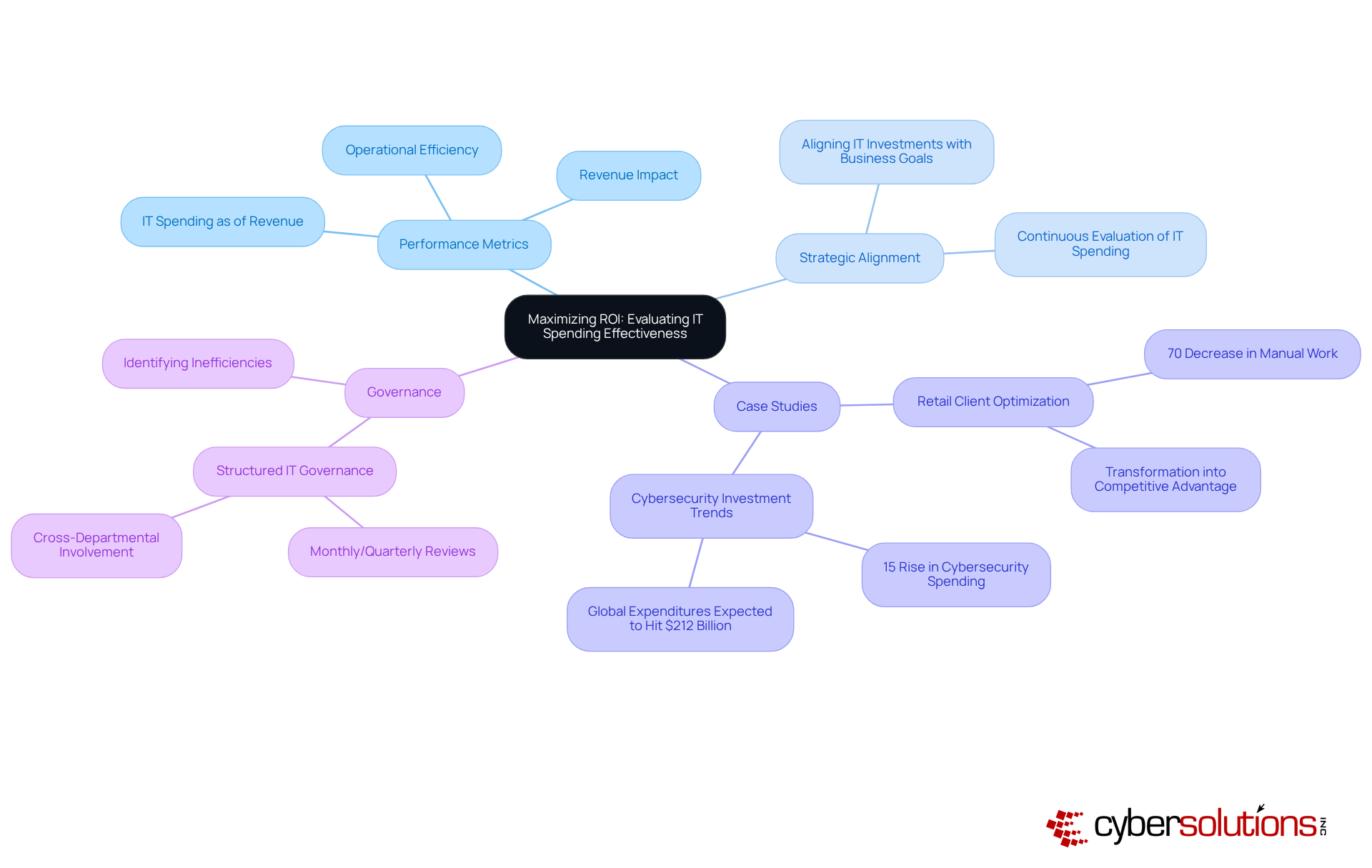
Maximizing ROI from IT spending is crucial for organizations aiming to thrive in a competitive landscape. Continuous assessment of IT spending effectiveness is essential. This means setting clear performance metrics and regularly reviewing technology outcomes against business objectives. By leveraging data analytics, leaders can pinpoint which IT initiatives yield the highest returns and adjust their budgets accordingly. This strategic approach not only maximizes efficiency but also ensures that IT spending aligns with broader business goals. Alarmingly, many companies overspend by 30-40% on underused resources, underscoring the critical need for effective budget management.
Looking ahead to 2025, organizations will increasingly emphasize cost efficiency, revenue impact, and strategic alignment. Organizations that prioritize metrics such as return on investment will be better equipped to navigate the complexities of modern IT environments. As Raj Sanghvi, a prominent business leader, aptly states, "It is not about using more. It is about aligning your IT investments with where your business is headed next." This perspective highlights the necessity of strategic planning. Furthermore, he reinforces that "this moment isn’t about spending more - it’s about spending smarter," echoing the theme of intelligent financial management.
Moreover, compelling evidence supports this approach. For instance, a retail client that optimized its IT finances by reallocating funds into low-code platforms and intelligent automation achieved a remarkable 70% decrease in manual work, resulting in significant cost savings. Such examples underscore the tangible benefits of assessing IT investment effectiveness, reinforcing the notion that strategic evaluation is essential for sustained growth and innovation. Implementing structured IT governance through monthly or quarterly reviews can further enhance this process, ensuring that organizations remain agile and responsive to evolving needs.
Decentralized IT Spending: Challenges and Opportunities for Organizations
Decentralized IT spending is crucial for empowering individual departments, which fosters agility and responsiveness to specific business needs. This approach not only allows teams to swiftly adapt to changing circumstances. However, it introduces significant challenges, such as the risk of overspending, potentially leading to misalignment with broader organizational goals.
Consider this: a survey revealed that 67% of organizations allocate at least half of their IT spend. This statistic underscores the prevalence of decentralized spending and its implications. To navigate these complexities, organizations must establish guidelines that encourage accountability while allowing for flexibility in budget management.
For instance, companies employing decentralized strategies have demonstrated an average savings of 15% annually, showcasing the potential for increased efficiency. Leaders should prioritize regular audits and performance evaluations to ensure departmental expenditures align with strategic objectives. This proactive approach ultimately enhances resource allocation and effectiveness across the organization.
As one expert aptly noted, "Overall, the future of IT is all about efficiency and transparency." This statement underscores the critical role of governance frameworks in IT spending, highlighting the need for a balanced approach that fosters both innovation and accountability.
Economic Influences on IT Spending: Adapting Budgets to Market Dynamics
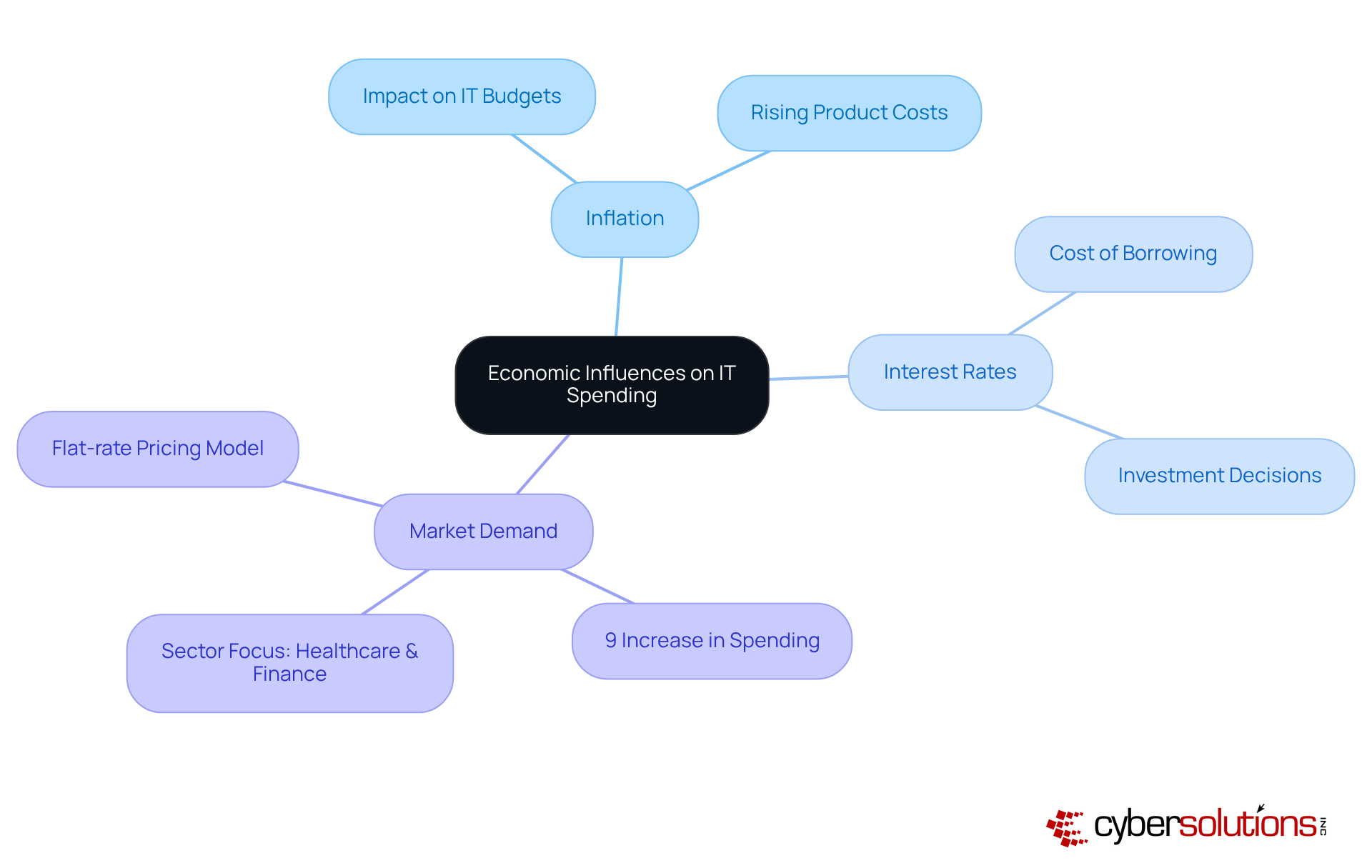
Economic conditions significantly influence IT expenditures, with factors such as inflation, interest rates, and market demand shaping financial allocations. As we look ahead to 2025, organizations are expected to boost their IT budgets by an average of 9% year over year. This reflects a cautious optimism in the face of shifting market dynamics. Leaders must remain adaptable, adjusting their strategies to capitalize on growth opportunities while effectively managing costs.
Particularly in sectors like healthcare and finance, there’s a strong emphasis on investing in and modernizing technology. This focus has led to substantial increases in IT spending. Economists note that businesses are prioritizing cybersecurity measures to navigate challenges and improve resilience. As organizations respond to these economic pressures, the ability to shift resources and realign priorities becomes crucial for maintaining a competitive edge.
Implementing a flat-rate pricing model for IT services can streamline budgeting processes. This approach ensures predictable monthly costs, enhancing operational efficiency. By eliminating unexpected IT expenses, organizations gain peace of mind, allowing leaders to concentrate on strategic initiatives.
How can your organization leverage these insights to strengthen its IT strategy?
Key Takeaways: Strategic IT Spending Insights for Industry Leaders
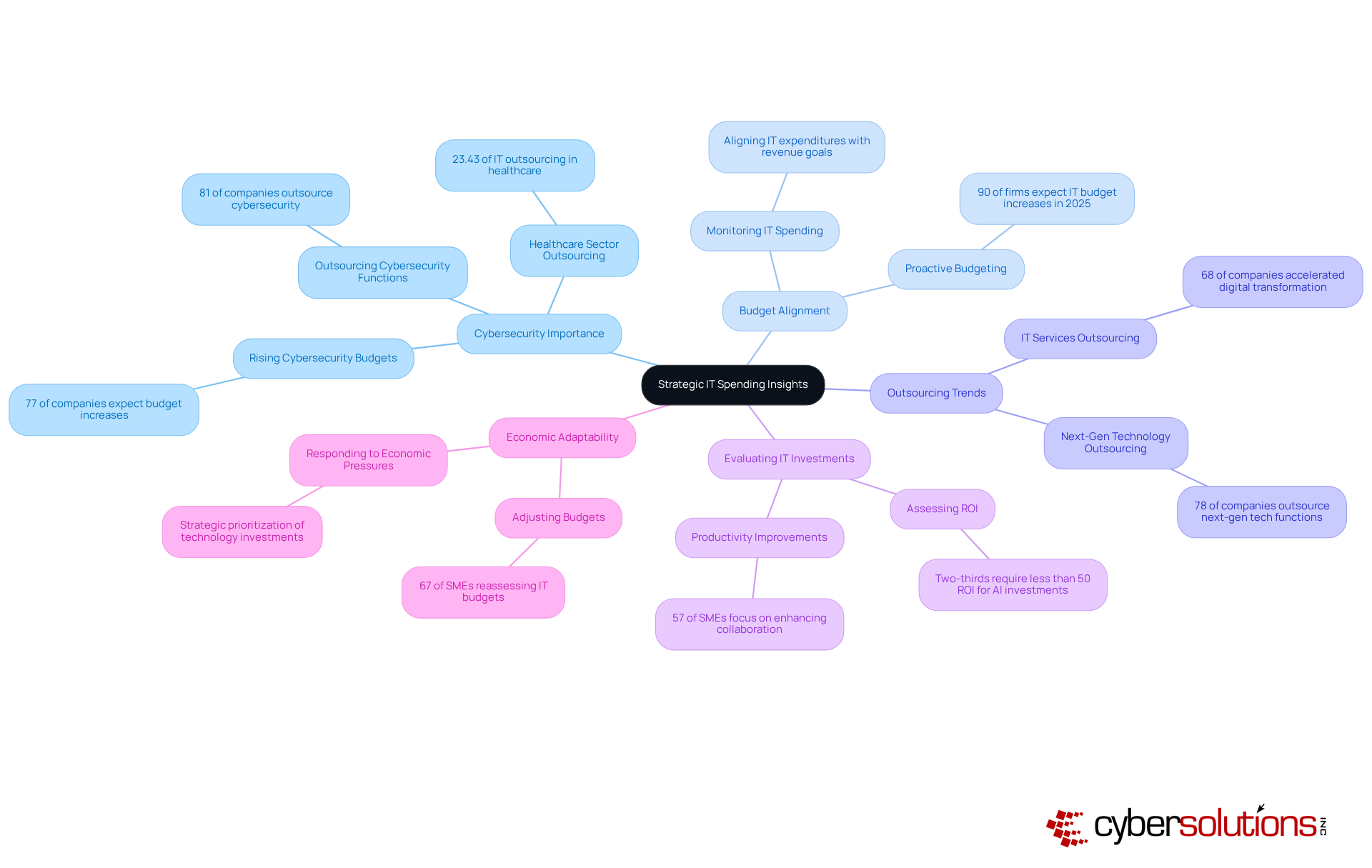
To optimize IT spending, industry leaders must recognize the critical importance of cybersecurity, particularly in the current landscape. With the rise of digital threats, it’s essential to tailor IT budgets to meet the unique demands of this field. Compliance and security measures are not just priorities; they are necessities for protecting sensitive data.
Regularly reviewing IT spending as a percentage of revenue is vital for financial health. Organizations should strive for a balanced approach, ensuring that IT expenditures support growth without compromising profitability. Are your budgets aligned with your revenue goals?
As digital threats evolve, acknowledging the impact of increasing cybersecurity expenses is crucial. With 81% of companies facing cyberattacks, understanding the financial implications of these expenditures is imperative. Allocating sufficient resources to cybersecurity is not merely prudent; it’s essential for safeguarding your organization’s assets.
Evaluating the effectiveness of IT investments is another key strategy. Organizations should implement metrics to assess the ROI of their IT initiatives. This includes analyzing productivity improvements and cost reductions achieved through technology adoption. Notably, 57% of SMEs focus on enhancing employee collaboration and productivity - are you measuring your success?
Finally, adapting budgets in response to economic influences is necessary for maintaining flexibility. Economic pressures demand that businesses be ready to adjust their spending strategies. With 90% of firms anticipating a rise in their IT budgets, driven by the demand for innovation and efficiency, it’s clear that proactive budgeting is essential.
By adopting these strategies, organizations can optimize their IT spending, ensuring that investments are aligned with overarching business goals and positioned for sustainable growth.
Conclusion
As organizations look ahead, the importance of IT spending as a percentage of revenue stands out as a crucial metric. This figure not only serves as a key indicator for leaders to evaluate and align their technology investments with strategic business objectives but also reflects the broader landscape of operational efficiency and competitive advantage.
Understanding the nuances of IT expenditures across various industries is essential. The article explores significant insights into the disparities in IT spending across sectors, the rising costs associated with cybersecurity, and the critical need for compliance in budgeting decisions. Regularly assessing the effectiveness of IT spending is vital to maximizing ROI and adapting to economic shifts. Moreover, the transition towards cloud solutions and decentralized spending presents both opportunities and challenges, underscoring the necessity for strong governance frameworks.
Organizations must adopt a proactive stance on IT budgeting, ensuring that their investments are strategically aligned with their overarching goals. By leveraging these insights, leaders can navigate the complexities of IT spending, enhance operational resilience, and drive sustainable growth in an ever-evolving digital landscape. The call to action is clear: prioritize intelligent financial management and adapt to the dynamic IT environment to secure a prosperous future.
Frequently Asked Questions
What services does Cyber Solutions Inc. provide?
Cyber Solutions Inc. offers tailored IT spending solutions designed to meet the specific needs of various industries, including healthcare, finance, manufacturing, and government, focusing on enhancing operational efficiency and strengthening security measures.
Why is cybersecurity particularly important in healthcare?
Cybersecurity is crucial in healthcare due to the rise in cyber threats and the unique challenges that healthcare organizations face, including compliance with regulatory demands and the need to protect sensitive information.
How much do healthcare entities prioritize cybersecurity in their IT spending?
Approximately 53% of healthcare entities are increasingly prioritizing cybersecurity in relation to their IT spending as a percentage of revenue, reflecting heightened security concerns.
What is the typical range for IT spending as a percentage of revenue across industries?
Businesses typically allocate IT spending as a percentage of revenue between 4% to 6%, although this can vary significantly by industry.
Which industry tends to allocate the highest percentage of revenue to IT spending?
The financial services industry often leads with higher allocations, utilizing between 4.4% and 11.4% of their revenue on IT spending.
What should companies consider when evaluating their IT expenditures?
Companies should measure their IT costs against industry benchmarks and their own financial outcomes to ensure that their expenditures align with industry norms and support strategic goals.
How much of the IT budget should companies designate for growth initiatives?
It is advisable for companies to allocate around 15% of their IT budget to growth initiatives to ensure technology expenditures drive innovation and competitive advantage.
What are the IT spending trends for the manufacturing industry?
Manufacturing organizations typically allocate around 3% of their revenue to IT spending, reflecting their operational priorities and regulatory pressures.
How can understanding IT spending variations across industries benefit organizations?
By recognizing the disparities in IT expenditure, leaders can strategically align their IT financial plans with industry benchmarks, ensuring sufficient investment in technology to meet operational and compliance demands.
Why is it important for companies to prepare for changes in IT investment by 2025?
Understanding IT spending trends and preparing for changes is crucial for enhancing IT investment and strengthening overall business resilience as companies navigate the evolving digital landscape.
List of Sources
- Cyber Solutions Inc.: Tailored IT Spending Solutions for Diverse Industries
- bain.com (https://bain.com/insights/healthcare-it-spending-innovation-integration-ai)
- spiceworks.com (https://spiceworks.com/research/it-report)
- deloitte.com (https://deloitte.com/us/en/insights/industry/technology/technology-media-telecom-outlooks/technology-industry-outlook.html)
- splunk.com (https://splunk.com/en_us/blog/learn/it-tech-spending.html)
- Understanding IT Spending as a Percentage of Revenue: A Critical Metric
- Data Transformation Challenge Statistics — 50 Statistics Every Technology Leader Should Know in 2026 (https://integrate.io/blog/data-transformation-challenge-statistics)
- computereconomics.com (https://computereconomics.com/it-spending-and-staffing-benchmarks)
- linkedin.com (https://linkedin.com/pulse/spending-benchmarks-2025-beyond-sean-grennan-gpy8c)
- avasant.com (https://avasant.com/report/it-spending-as-a-percentage-of-revenue-by-industry-company-size-and-region)
- Industry Variations in IT Spending: Key Insights for Strategic Planning
- teamdynamix.com (https://teamdynamix.com/blog/software-it-services-growth-expected-to-boost-it-spend-in-2025)
- avasant.com (https://avasant.com/report/it-spending-as-a-percentage-of-revenue-by-industry-company-size-and-region)
- 24 Inspiring Digital Transformation Quotes | Vista Projects (https://vistaprojects.com/digital-transformation-quotes)
- splunk.com (https://splunk.com/en_us/blog/learn/it-tech-spending.html)
- The Shift to Cloud Solutions: Transforming IT Budget Allocations
- claritypartners.com (https://claritypartners.com/case_study/orange-county-transportation-authority-oracle-planning-and-budgeting-cloud-service-solution)
- n2ws.com (https://n2ws.com/blog/cloud-computing-statistics)
- itdeskuk.com (https://itdeskuk.com/latest-cloud-statistics)
- solutionsreview.com (https://solutionsreview.com/cybersecurity-awareness-month-quotes-and-commentary-from-industry-experts-in-2025)
- sqmagazine.co.uk (https://sqmagazine.co.uk/cloud-computing-statistics)
- Rising Cybersecurity Costs: Implications for IT Spending Strategies
- seceon.com (https://seceon.com/global-cybersecurity-spending-to-hit-213-billion-in-2025-whats-fueling-the-surge)
- programs.com (https://programs.com/resources/cybercrime-cost)
- Top Cybersecurity Statistics: Facts, Stats and Breaches for 2025 (https://fortinet.com/resources/cyberglossary/cybersecurity-statistics)
- splunk.com (https://splunk.com/en_us/blog/learn/it-tech-spending.html)
- linkedin.com (https://linkedin.com/pulse/cybersecurity-spending-statistics-every-cto-should-gwirf)
- Compliance Costs: A Driving Force Behind IT Budgeting Decisions
- 130+ Compliance Statistics & Trends to Know for 2026 (https://secureframe.com/blog/compliance-statistics)
- complianceandrisks.com (https://complianceandrisks.com/blog/25-critical-stats-every-chief-compliance-officer-needs-to-know-in-2025)
- compliancebridge.com (https://compliancebridge.com/4-quote-that-underscore-importance-of)
- 115 Compliance Statistics You Need To Know in 2023 - Drata (https://drata.com/blog/compliance-statistics)
- Maximizing ROI: Evaluating IT Spending Effectiveness
- bitcot.com (https://bitcot.com/it-budget-planning-and-optimize-tech-costs)
- netier.com.au (https://netier.com.au/strategic-it-budgeting-for-2025-align-goals-maximise-value-and-drive-roi)
- Decentralized IT Spending: Challenges and Opportunities for Organizations
- moldstud.com (https://moldstud.com/articles/p-the-future-of-it-budget-management-key-trends-to-watch)
- ciodive.com (https://ciodive.com/news/it-spending-budget-oversight/569569)
- ibm.com (https://ibm.com/think/topics/it-cost-management)
- comptia.org (https://comptia.org/en-us/resources/research/it-industry-outlook-2025)
- Economic Influences on IT Spending: Adapting Budgets to Market Dynamics
- hginsights.com (https://hginsights.com/blog/it-spend-market-report)
- spiceworks.com (https://spiceworks.com/research/it-report)
- aiprm.com (https://aiprm.com/technology-statistics)
- Key Takeaways: Strategic IT Spending Insights for Industry Leaders
- cgsinc.com (https://cgsinc.com/blog/19-Quotes-Digital-Transformation-C-Suite-Executives)
- vrinsofts.com (https://vrinsofts.com/it-statistics-and-insights)
- blog.invgate.com (https://blog.invgate.com/it-quotes)
- teamdynamix.com (https://teamdynamix.com/blog/software-it-services-growth-expected-to-boost-it-spend-in-2025)
- spglobal.com (https://spglobal.com/market-intelligence/en/news-insights/research/sme-it-spending-strategies-for-2025-driven-by-ai-adoption)