
Introduction
The healthcare landscape is rapidly evolving, propelled by technological advancements and an escalating demand for efficient patient care. As organizations endeavor to enhance their IT solutions, grasping best practices becomes essential for aligning technology with business objectives. Yet, with a plethora of options at their disposal, how can healthcare providers guarantee that they are making informed decisions that not only address current needs but also anticipate future challenges? This article explores critical strategies for optimizing IT solutions in healthcare, providing insights that can significantly enhance operational effectiveness and ultimately elevate patient outcomes.
Assess Organizational Needs for IT Solutions
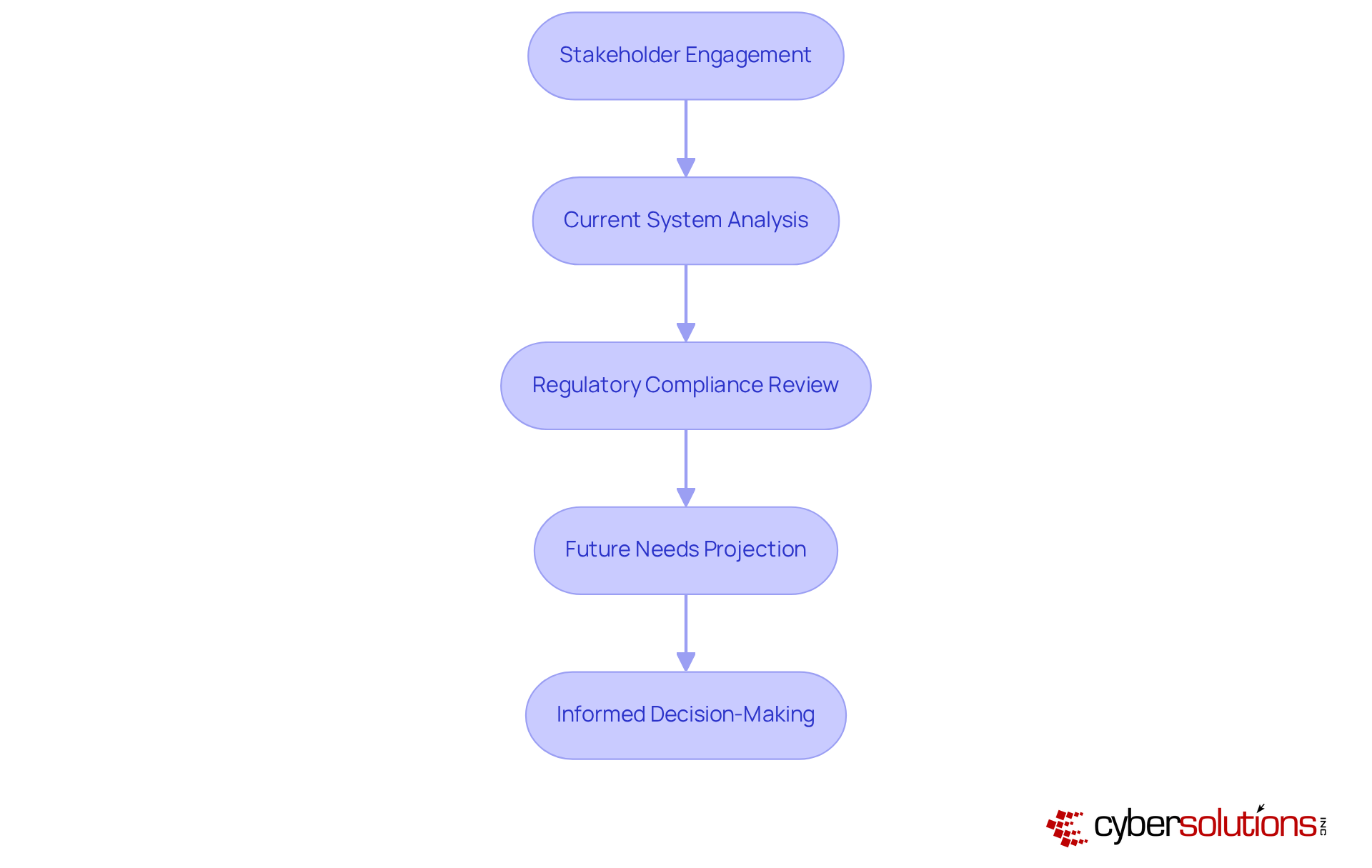
To effectively assess organizational needs for IT solutions, healthcare providers must engage in a comprehensive evaluation process that includes several critical steps:
- Involve stakeholders: Involving key stakeholders from clinical, administrative, and IT departments is essential to gather diverse perspectives on current challenges and desired outcomes. Engaging stakeholders early fosters credibility and buy-in, ensuring that their insights shape the assessment process.
- Review existing systems: A thorough review of existing technologies, software, and workflows is necessary to identify inefficiencies and areas for enhancement. Recent studies indicate that a significant percentage of medical organizations are conducting current system analyses to optimize their operations, underscoring the necessity of this step.
- Ensure compliance: It is vital to ensure that the assessment considers adherence to regulations, which is essential for safeguarding patient data. This review not only protects sensitive information but also aligns with the growing scrutiny on medical data management.
- Anticipate future needs: Anticipating future technological requirements based on emerging trends in medical services, such as telemedicine and electronic health records (EHRs), is crucial. By projecting future needs, entities can proactively adjust to shifts in the medical environment, ensuring their IT tools remain pertinent and efficient.
By adhering to these steps, businesses can develop a clear view of their IT environment, which facilitates informed decision-making when selecting options that align with their strategic objectives.
Choose IT Solutions Aligned with Business Goals
When selecting IT solutions, healthcare organizations must adhere to best practices that ensure effective outcomes.
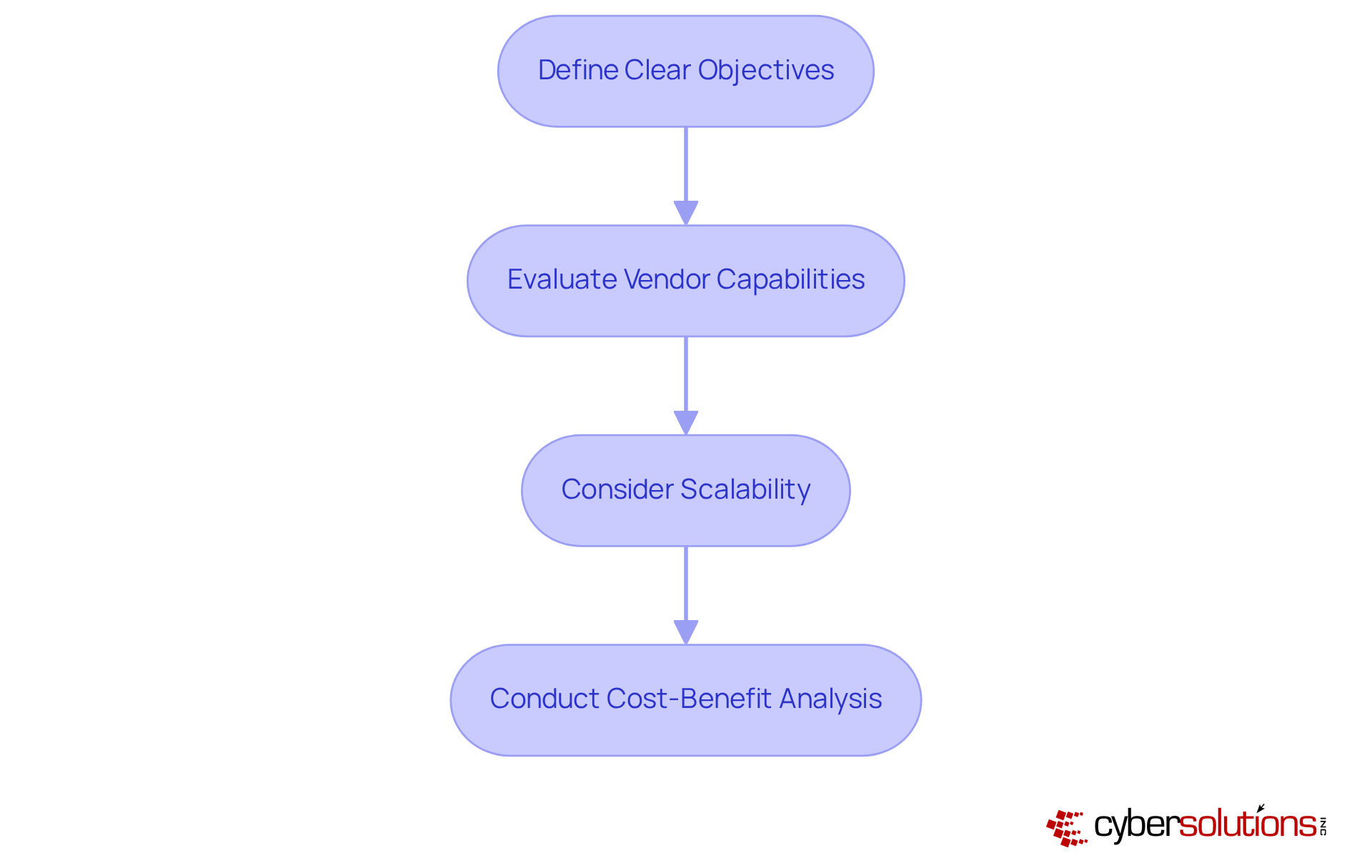
- Define Clear Objectives: Establish specific, measurable goals that the IT systems should help achieve, such as enhancing patient outcomes or optimizing administrative workflows. Addressing ongoing challenges like low-value care is crucial, as it emphasizes the need for effective IT solutions that deliver tangible benefits to patients.
- Vendors: Assess potential vendors not only based on their technology offerings but also on their ability to support the entity’s strategic vision and goals. Collaboration among providers during IT modernization efforts is essential, leading to shared successes and improved vendor evaluations. Consider vendors such as those that offer solutions that simplify budgeting and eliminate unexpected IT costs, ensuring comprehensive support for businesses it serves.
- Options: Choose options that can adapt alongside the organization, ensuring they can handle future requirements without necessitating a total revamp of current systems. This adaptability is crucial in a rapidly changing medical environment, where the ability to integrate new technologies can significantly impact operational efficiency.
- Financial Implications: Thoroughly analyze the financial implications of each solution, factoring in initial costs, ongoing maintenance, and potential savings from enhanced efficiencies. For instance, entities should evaluate the return on investment (ROI) associated with improved operational performance, as highlighted by recent trends in IT. Flat-rate pricing not only simplifies budgeting but also enhances operational efficiency, allowing entities to focus on delivering quality care.
By ensuring that selected IT approaches align closely with business objectives, medical institutions can cultivate a more effective strategy, ultimately leading to improved patient care and institutional efficiency.
Provide Comprehensive Training and Support for Staff
To ensure staff are well-prepared to utilize new technologies, healthcare organizations must implement training programs.
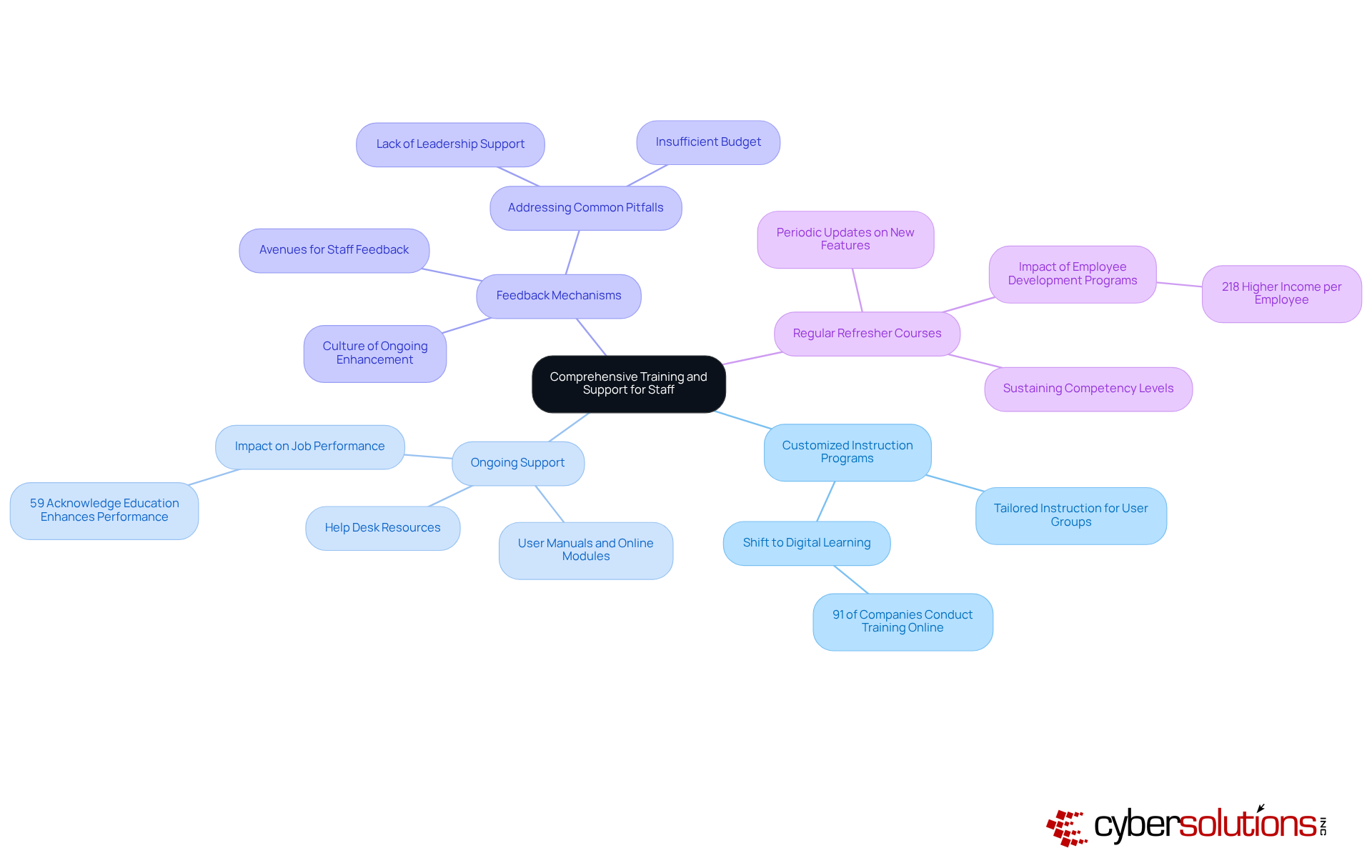
- Customized Instruction Programs: It is essential to create instructional sessions tailored to different user groups. This ensures that clinical staff, administrative personnel, and IT teams receive guidance pertinent to their specific roles and responsibilities. A recent study indicates that 91% of companies conducted required or compliance education online in 2024, underscoring the shift towards digital learning methods.
- Support System: Establishing a support system is crucial. This system should include resources, user manuals, and online instructional modules, assisting staff as they adapt to new technologies. With 59% of employees acknowledging that ongoing support is necessary, the necessity of continuous support systems in healthcare becomes clear.
- Feedback Mechanisms: Gathering feedback on the effectiveness of instruction is vital. This promotes a culture of ongoing enhancement and responsiveness to employee needs, ultimately improving development outcomes. Addressing common pitfalls, such as lack of leadership support and insufficient budget, can significantly enhance the implementation of these feedback mechanisms.
- Regular Refresher Courses: Scheduling courses about new features, best practices, and technologies related to the systems in use. Consistent practice aids in sustaining elevated competency levels, ensuring personnel are prepared to manage advancing technologies. Notably, companies with extensive employee development programs have demonstrated 218% higher income per employee than those lacking such initiatives, emphasizing the anticipated impact of prioritizing education and support.
By prioritizing comprehensive training and support, healthcare organizations can significantly enhance staff performance, which is crucial for businesses in the sector. This leads to improved utilization of IT resources and ultimately better patient care.
Continuously Evaluate and Optimize IT Solutions
Healthcare organizations must adopt a proactive strategy for evaluating and optimizing their IT solutions, as businesses it focuses on key practices that drive effectiveness and adaptability.
Establishing Metrics: Defining specific metrics is essential to assess the effectiveness of IT approaches in meeting organizational objectives. For instance, tracking patient satisfaction scores and performance metrics can provide valuable insights into system performance and areas for improvement. According to Waleed A. Hassen, MD, MBA, "KPIs empower organizations to identify inefficiencies, implement evidence-based improvements, and demonstrate value to stakeholders."
Conducting Audits: Implementing a schedule for periodic audits of IT systems is crucial for evaluating performance, security, and compliance with regulatory standards. Regular audits not only help identify vulnerabilities but also ensure that systems align with best practices and industry regulations. Partnering with experts in healthcare IT, such as consultants, enhances this process by ensuring thorough documentation and proactive risk management, including detailed reporting and audit support.
Soliciting User Feedback: Actively gathering input from staff and stakeholders regarding the usability and effectiveness of IT systems is vital. This feedback informs future enhancements and ensures that systems meet user needs, ultimately leading to improved efficiency. A case study on "Technician Satisfaction" highlights how gathering user feedback can lead to a 20% increase in help desk efficiency.
Monitoring Technologies: Continuously monitoring emerging technologies and best practices in medical IT allows organizations to recognize opportunities for innovation and enhancement. By remaining informed, companies ensure their IT approaches stay pertinent and efficient in a swiftly changing environment. Additionally, understanding the role of cybersecurity in healthcare is essential, as it protects patient health information (PHI) from breaches and unauthorized access. Organizations should also consider the benefits of managed services, which provides ongoing support for audit preparation and continuous monitoring, helping to maintain compliance and security.
By committing to these practices, healthcare organizations can ensure their IT solutions are effective and adaptable to changing needs, thereby contributing to sustained operational success for businesses it supports.

Conclusion
Healthcare organizations encounter distinct challenges that necessitate customized IT solutions to boost operational efficiency and enhance patient care. This article delineates four best practices that can assist businesses in effectively evaluating their IT requirements and selecting suitable solutions. By engaging stakeholders, analyzing existing systems, ensuring regulatory compliance, and anticipating future needs, organizations can establish a robust framework for informed decision-making.
Moreover, aligning IT solutions with business objectives is crucial. By defining explicit goals, assessing vendor capabilities, ensuring scalability, and performing a comprehensive cost-benefit analysis, healthcare providers can choose technologies that not only tackle current challenges but also facilitate long-term growth. Furthermore, thorough training and ongoing support for staff are vital for maximizing the advantages of these IT investments, thereby nurturing a culture of continuous improvement.
In the swiftly evolving healthcare landscape, a commitment to regularly assess and optimize IT solutions is indispensable. By setting key performance indicators, conducting audits, seeking user feedback, and staying abreast of industry trends, organizations can ensure their IT systems remain effective and adaptable. Embracing these best practices not only enhances operational success but also ultimately leads to improved patient outcomes, reinforcing the critical role of strategic IT in the healthcare sector.
Frequently Asked Questions
What is the first step in assessing organizational needs for IT solutions in healthcare?
The first step is stakeholder engagement, which involves involving key stakeholders from clinical, administrative, and IT departments to gather diverse perspectives on current challenges and desired outcomes.
Why is current system analysis important in the evaluation process?
Current system analysis is important because it involves a thorough review of existing IT infrastructure, software, and workflows to identify inefficiencies and areas for enhancement, helping organizations optimize their IT solutions.
What role does regulatory compliance play in assessing IT needs?
Regulatory compliance review is vital to ensure adherence to medical regulations such as HIPAA, which protects patient data and aligns with the scrutiny on medical data management.
How can organizations project their future IT needs?
Organizations can project future IT needs by anticipating technological requirements based on emerging trends in medical services, such as telemedicine and electronic health records (EHRs), to ensure their IT tools remain relevant and efficient.
What is the overall benefit of following these assessment steps?
By adhering to these steps, businesses can develop a clear view of their IT environment, facilitating informed decision-making when selecting options that align with their strategic objectives.
List of Sources
- Assess Organizational Needs for IT Solutions
- performancehealthus.com (https://performancehealthus.com/blog/top-10-health-it-challenges-in-2025)
- renoirgroup.com (https://renoirgroup.com/case_studies/healthcare/hospital-achieves-21-roi-with-new-management-systems)
- ncbi.nlm.nih.gov (https://ncbi.nlm.nih.gov/books/NBK196183)
- deloitte.com (https://deloitte.com/us/en/insights/industry/health-care/life-sciences-and-health-care-industry-outlooks/2025-global-health-care-executive-outlook.html)
- Choose IT Solutions Aligned with Business Goals
- prnewswire.com (https://prnewswire.com/news-releases/ai-compliance-and-modernization-top-priorities-for-healthcare-it-leaders-in-2025-according-to-info-tech-research-groups-new-report-302440122.html)
- nordicglobal.com (https://nordicglobal.com/blog/9-insightful-quotes-on-cloud-and-ai-from-stanford-health-care-and-aws-leaders-at-arab-health-2024)
- kjr.com.au (https://kjr.com.au/case_studies/department-of-health-victoria)
- White House, Tech Leaders Commit to Create Patient-Centric Healthcare Ecosystem | CMS (https://cms.gov/newsroom/press-releases/white-house-tech-leaders-commit-create-patient-centric-healthcare-ecosystem)
- visiblethread.com (https://visiblethread.com/case_studies/how-caresource-innovators-harness-visiblethread-for-new-business-proposals-and-implementations)
- Provide Comprehensive Training and Support for Staff
- Employee Training Statistics, Trends, and Data in 2025 | Devlin Peck (https://devlinpeck.com/content/employee-training-statistics)
- chicomm.com (https://chicomm.com/blog/30-inspirational-quotes-for-healthcare-workers)
- 10 Insights from Healthcare Innovators: The Best Quotes from the ‘Leader to Leader’ Podcast in 2024 - Healthcare IT Leaders (https://healthcareitleaders.com/blog/insights-from-healthcare-innovators)
- 2026 Training Industry Statistics: Data, Trends & Predictions | Research.com (https://research.com/careers/training-industry-statistics)
- deliberatedirections.com (https://deliberatedirections.com/quotes-future-of-healthcare)
- Continuously Evaluate and Optimize IT Solutions
- crescendo.ai (https://crescendo.ai/news/ai-in-healthcare-news)
- healthcareitsm.com (https://healthcareitsm.com/blog/healthcare-kpi)
- You are being redirected... (https://auanews.net/issues/articles/2025/march-2025/aua2025-preview-the-importance-of-key-performance-indicators-in-health-care-operations)
- deliberatedirections.com (https://deliberatedirections.com/quotes-future-of-healthcare)
- aidoc.com (https://aidoc.com/learn/blog/5-essential-hospital-performance-metrics-2025)