
Introduction
In an era where cyberattacks are on the rise, healthcare organizations must prioritize the protection of sensitive patient data to maintain operational integrity. Implementing effective backup and recovery management is crucial; it not only safeguards against data loss but also ensures compliance with strict regulations that can lead to hefty penalties.
With the financial burden of a data breach looming, healthcare organizations must act swiftly to protect their assets. As the stakes continue to escalate - with the average cost of a data breach expected to surpass $12 million by 2026 - how can healthcare organizations adopt effective backup practices that not only reduce risks but also bolster their resilience against emerging threats?
The time to fortify your defenses is now; the cost of inaction could be catastrophic for your organization.
Understand the Importance of Backup and Recovery Management
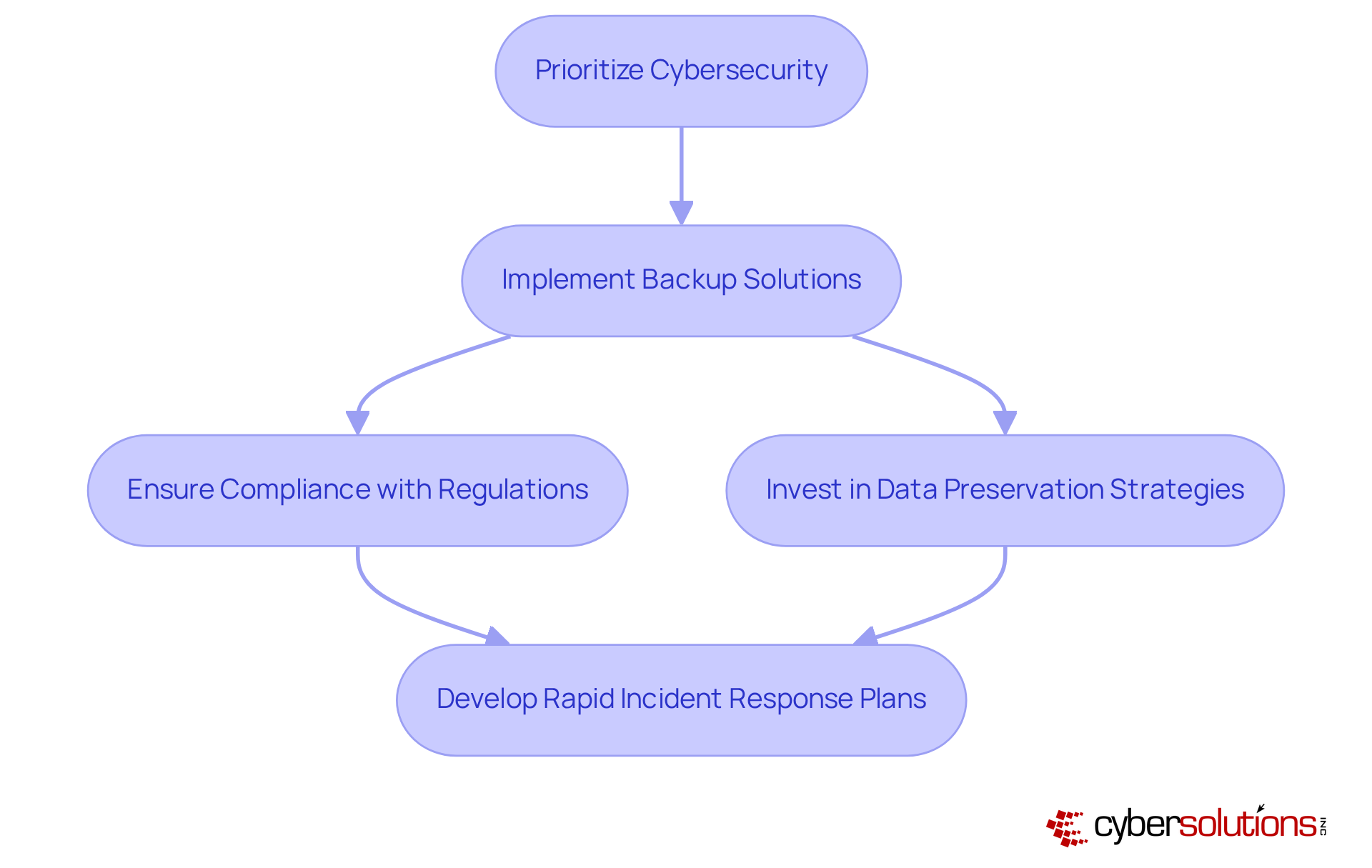
In an era where cyber threats loom large, the healthcare sector must prioritize cybersecurity to protect sensitive patient information and maintain operational integrity. To safeguard sensitive information from the ever-present threats of cyberattacks and other disasters, organizations must prioritize efficient backup and recovery management. A robust backup and recovery management plan not only protects sensitive data but also ensures compliance with industry regulations, which can carry hefty financial penalties.
Consider this: the average cost of a healthcare data breach soared to $9.8 million in 2024, and it's projected to exceed $12 million by 2026. Organizations that overlook efficient backup and recovery management solutions risk facing significant penalties and reputational damage in the event of a data breach. Moreover, the financial burden of insufficient support can greatly surpass the initial expenditure on preventive actions, underscoring the necessity for organizations to invest in robust data preservation strategies.
Real-world incidents illustrate this urgency; for instance, a March 2024 survey revealed that 74% of hospitals reported direct impacts on patient care due to ransomware attacks, with many experiencing significant operational disruptions. These incidents highlight the critical importance of reliable support systems that enhance backup and recovery management, facilitating swift recovery and minimizing downtime, thus ensuring that organizations can uphold operational integrity and safeguard their profitability.
Additionally, implementing application allowlisting can further enhance cybersecurity by preventing unauthorized software from executing, thereby reducing the attack surface and ensuring compliance with regulations like HIPAA and GDPR. Rapid incident response strategies, as demonstrated in recent case studies, are essential for backup and recovery management to restore operations quickly after a ransomware attack, ensuring continuity of care and compliance in healthcare settings. Without a proactive approach to cybersecurity, healthcare organizations risk not only their finances but also the trust of the patients they serve.
Explore Effective Backup Strategies and Methods
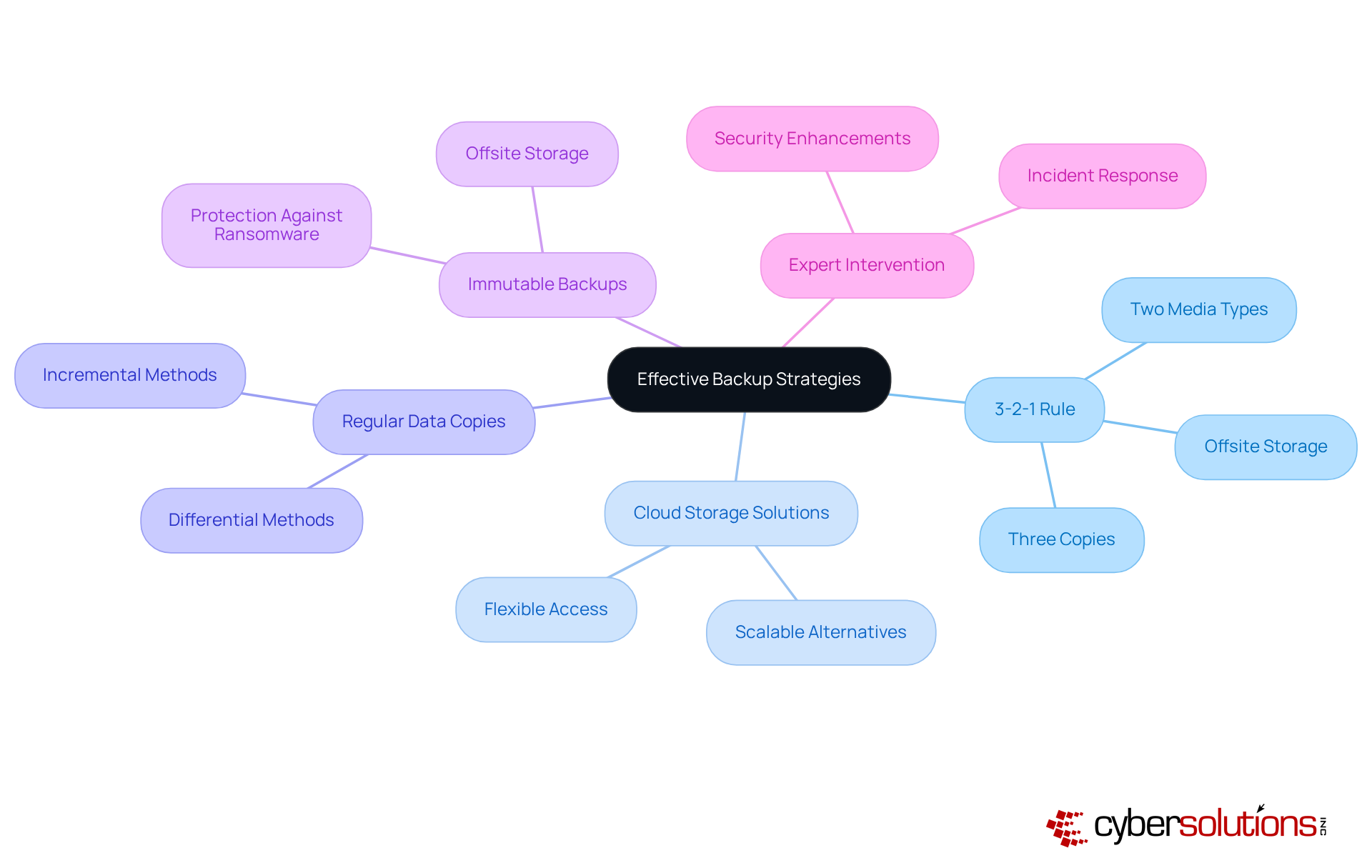
In an era where cyber threats loom larger than ever, healthcare organizations must prioritize data preservation strategies to safeguard their operations. Adopting the 3-2-1 rule means maintaining three copies of data across two different media types, with one copy securely stored offsite, ensuring enhanced availability and resilience against threats.
By 2026, the cloud-based storage solutions market is set to expand significantly, driven by the increasing demand for scalable and flexible alternatives that guarantee data accessibility during local emergencies. Implementing regular data copies, including incremental and differential methods, is crucial for optimizing storage and minimizing recovery time. Automated data preservation processes streamline operations, reducing the risk of human error.
With 72% of organizations seeing an increase in cyber risk, immutable backups are essential for protecting against ransomware, and organizations must prioritize their implementation. This was exemplified when a healthcare provider faced a ransomware attack; thanks to Cyber Solutions' rapid incident response, they not only restored 4,500 endpoints but also enhanced their security measures to safeguard patient data and operations against future threats.
This incident underscores the critical role of expert intervention in mitigating cyber threats and ensuring data integrity. The layered strategy - featuring endpoint isolation, malware removal, and user training - facilitated a quicker and more thorough restoration. This highlights how Cyber Solutions applies the 3-2-1 rule effectively in their strategies.
Frequent assessment of restoration and retrieval procedures is also essential to guarantee dependability during critical incidents. Ultimately, the effectiveness of Cyber Solutions in implementing the 3-2-1 rule can mean the difference between recovery and disaster in the face of cyber attacks.
Implement Robust Data Recovery Practices
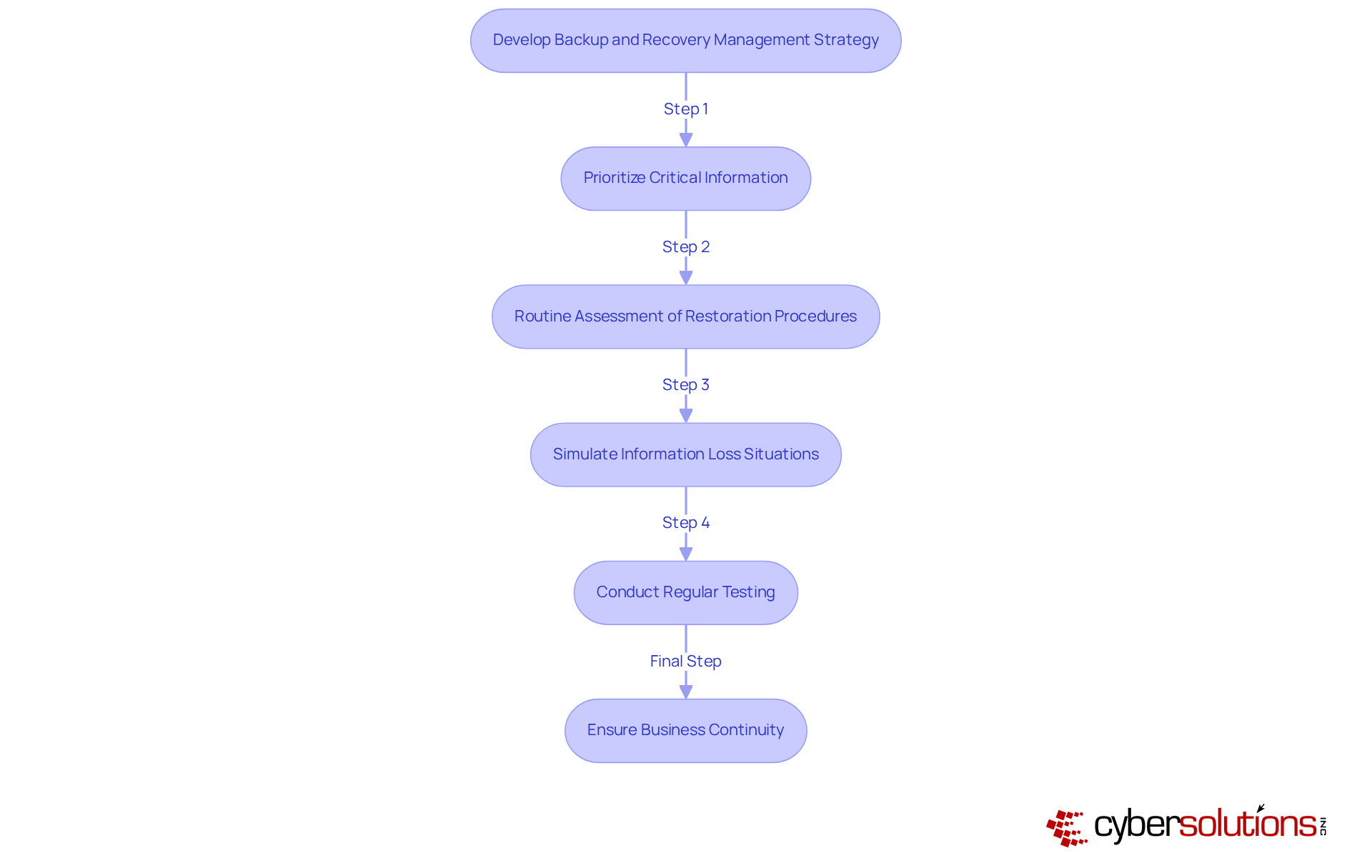
In an era where cyber threats loom large, the importance of a robust information restoration strategy cannot be overstated. To ensure efficient information retrieval, companies must develop and routinely evaluate a comprehensive backup and recovery management strategy that details methods for retrieving information from backups.
What crucial information and applications does your plan prioritize to ensure business continuity? Routine assessment of restoration procedures is essential. How often do you assess your restoration procedures? Organizations ought to simulate information loss situations to confirm the efficacy of their restoration tactics.
Statistics show that 30.2% of technology leaders regard backup and recovery management of vital information as the most critical measure in preventing and recovering from loss of information. Moreover, companies that conduct regular testing recover faster and incur lower financial losses. Clear records of your restoration procedures can significantly speed up response times when incidents occur.
For instance, a healthcare provider that consistently tested its restoration plan successfully retrieved patient information within hours after a ransomware attack, significantly reducing interruptions to patient care. This proactive strategy not only improves operational resilience but also aligns with best practices for backup and recovery management in 2026 and beyond.
As we move towards 2026, the organizations that prioritize proactive restoration strategies will not only survive but thrive in the face of adversity.
Ensure Compliance and Security in Backup Practices
In an era where data breaches are rampant, the stakes for healthcare organizations have never been higher. Organizations must prioritize compliance and security in their data protection practices to mitigate legal risks and safeguard sensitive information.
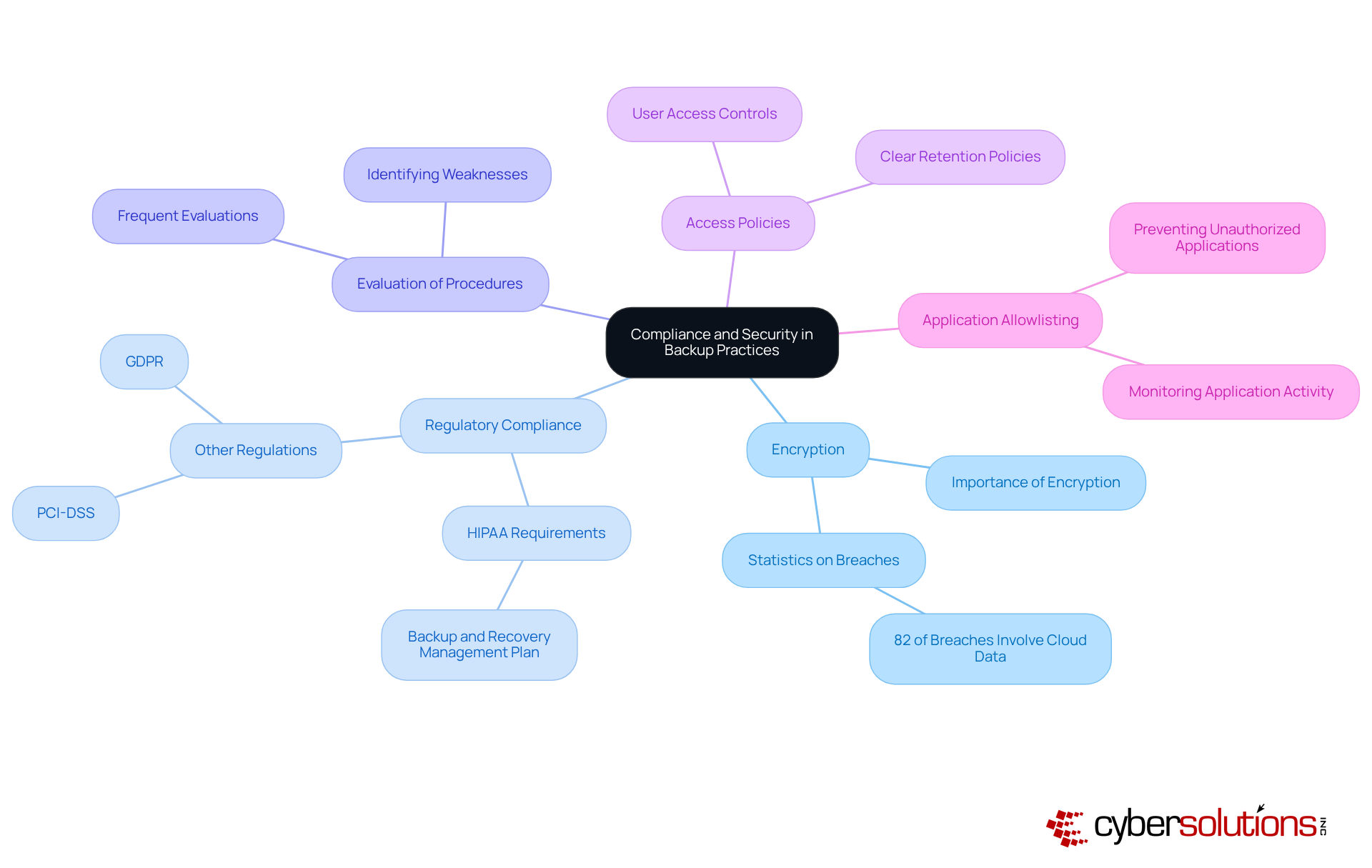
- Encryption is vital for protecting the integrity and confidentiality of stored information.
- In fact, studies indicate that 82% of breaches involve information stored in the cloud, underscoring the need for strong encryption measures.
- Adhering to industry-specific regulations such as HIPAA, PCI-DSS, and GDPR is crucial; for instance, HIPAA mandates healthcare providers to have a backup and recovery management plan that includes encryption to protect patient information.
- Without robust data protection, organizations risk facing severe legal repercussions and loss of trust.
- Frequent evaluations of recovery procedures can assist in recognizing weaknesses and ensuring that information protection measures stay up to date.
- It's essential to have clear policies on how information is retained and who can access it to keep unauthorized users at bay.
- Application allowlisting plays a crucial role in this context by proactively preventing unauthorized or malicious applications from running, thereby enhancing the security of storage systems.
- This includes monitoring application activity to detect any unauthorized attempts and managing allowlists from a centralized dashboard.
A significant instance is a financial organization that applied stringent access controls and encryption for its backup and recovery management, successfully upholding compliance with regulatory standards while greatly lowering the risk of breaches. By prioritizing these measures, organizations not only protect sensitive data but also build trust with their stakeholders. Ultimately, the choice to prioritize data protection can mean the difference between security and vulnerability in a digital landscape.
Conclusion
In today's healthcare landscape, the stakes of cybersecurity have never been higher, making effective backup and recovery management an absolute necessity. Prioritizing these practices is crucial. It protects sensitive patient information, ensures compliance with industry regulations, and safeguards organizational integrity against the constant threat of data breaches.
This article highlights several key strategies to bolster backup and recovery efforts. These include:
- Adopting the 3-2-1 rule for data storage
- Implementing immutable backups to combat ransomware
- Routinely assessing restoration procedures
By integrating robust encryption measures and application allowlisting, organizations can enhance their security posture, ensuring they are well-prepared to face potential cyber threats while minimizing operational disruptions.
Taking a proactive approach to backup and recovery isn’t just smart; it’s a vital investment in your organization’s resilience. As the landscape of cyber threats evolves, embracing these strategies will empower healthcare organizations to protect their data, uphold patient trust, and ensure compliance with regulatory standards. Investing in robust backup and recovery solutions today is not just a precaution; it’s a strategic move that can define the future of healthcare security.
Frequently Asked Questions
Why is backup and recovery management important in healthcare?
Backup and recovery management is crucial in healthcare to protect sensitive patient information from cyber threats and disasters, ensure compliance with industry regulations, and maintain operational integrity.
What are the financial implications of neglecting backup and recovery management?
Organizations that overlook efficient backup and recovery management risk facing significant penalties, reputational damage, and the financial burden of data breaches, which can cost an average of $9.8 million in 2024 and is projected to exceed $12 million by 2026.
How do ransomware attacks affect patient care in hospitals?
A March 2024 survey found that 74% of hospitals reported direct impacts on patient care due to ransomware attacks, leading to significant operational disruptions.
What role does application allowlisting play in cybersecurity?
Application allowlisting enhances cybersecurity by preventing unauthorized software from executing, which reduces the attack surface and helps ensure compliance with regulations like HIPAA and GDPR.
What strategies are essential for effective backup and recovery management?
Rapid incident response strategies are essential for quickly restoring operations after a ransomware attack, ensuring continuity of care and regulatory compliance in healthcare settings.
What are the risks of not adopting a proactive approach to cybersecurity in healthcare?
Without a proactive approach, healthcare organizations risk financial loss, penalties, and loss of trust from patients, which can severely impact their operations and reputation.
List of Sources
- Understand the Importance of Backup and Recovery Management
- Ransomware Tops Growing Cyber Threats in Healthcare, Driving Up Breach Costs (https://scnsoft.com/healthcare/cybersecurity-statistics)
- xopero.com (https://xopero.com/blog/en/cybersecurity-trends-2026)
- aha.org (https://aha.org/change-healthcare-cyberattack-underscores-urgent-need-strengthen-cyber-preparedness-individual-health-care-organizations-and)
- morphisec.com (https://morphisec.com/blog/ransomware-in-healthcare-a-life-critical-business-priority-for-2026)
- linkedin.com (https://linkedin.com/pulse/ransomware-attacks-us-healthcare-systems-rising-cw7me)
- Explore Effective Backup Strategies and Methods
- cio.economictimes.indiatimes.com (https://cio.economictimes.indiatimes.com/tools/7-best-cloud-backup-solutions-for-enterprises-in-2026/129950720)
- docs.cometbackup.com (https://docs.cometbackup.com/blog/2026/2026-03-31-world-backup-day)
- netgainit.com (https://netgainit.com/blogs/data-backup-keep-your-information-safe)
- World Backup Day 2026 – recommended processes and solutions (https://greymatter.com/content-hub/world-backup-day-2026-recommended-processes-and-solutions)
- World Backup Day 2026: Expert Insights from the Field (https://solutionsreview.com/backup-disaster-recovery/world-backup-day-2026-expert-insights-from-the-field)
- Implement Robust Data Recovery Practices
- harness.io (https://harness.io/blog/an-introduction-to-disaster-recovery-testing-what-you-need-to-know-2026)
- warrenaverett.com (https://warrenaverett.com/insights/disaster-recovery-testing)
- The Importance of Regular Disaster Recovery Testing and Updates - VAST (https://vastitservices.com/blog/the-importance-of-regular-disaster-recovery-testing-and-updates)
- cutover.com (https://cutover.com/blog/how-often-should-recovery-plans-be-tested)
- Data Loss Statistics In The US In 2025 / Infrascale (https://infrascale.com/data-loss-statistics-usa)
- Ensure Compliance and Security in Backup Practices
- docs.cometbackup.com (https://docs.cometbackup.com/blog/2026/2026-03-31-world-backup-day)
- Data Loss Statistics In The US In 2025 / Infrascale (https://infrascale.com/data-loss-statistics-usa)
- World Backup Day 2026 – recommended processes and solutions (https://greymatter.com/content-hub/world-backup-day-2026-recommended-processes-and-solutions)
- acronis.com (https://acronis.com/en/blog/posts/critical-servers-under-attack-why-backup-isnt-enough-in-2026)
- Data Protection Strategies for 2026 (https://hyperproof.io/resource/data-protection-strategies-for-2026)