
Introduction
Aligning IT strategy with business strategy is no longer just an option; it’s a necessity for organizations that want to thrive in today’s fast-paced marketplace. This synergy not only boosts operational efficiency but also fuels innovation and enhances customer satisfaction, ultimately leading to tangible business outcomes. But here’s the question: how can leaders effectively bridge the gap between these two critical domains? How can they ensure that every IT initiative drives the organization toward its core objectives?
In a landscape where technology evolves rapidly, the alignment of IT and business strategies is crucial. Organizations that master this alignment can respond swiftly to market changes and customer needs, positioning themselves ahead of the competition. As we delve deeper, we’ll explore the unique challenges leaders face in this endeavor and how strategic alignment can be achieved to foster growth and success.
Understand the Importance of IT and Business Strategy Alignment
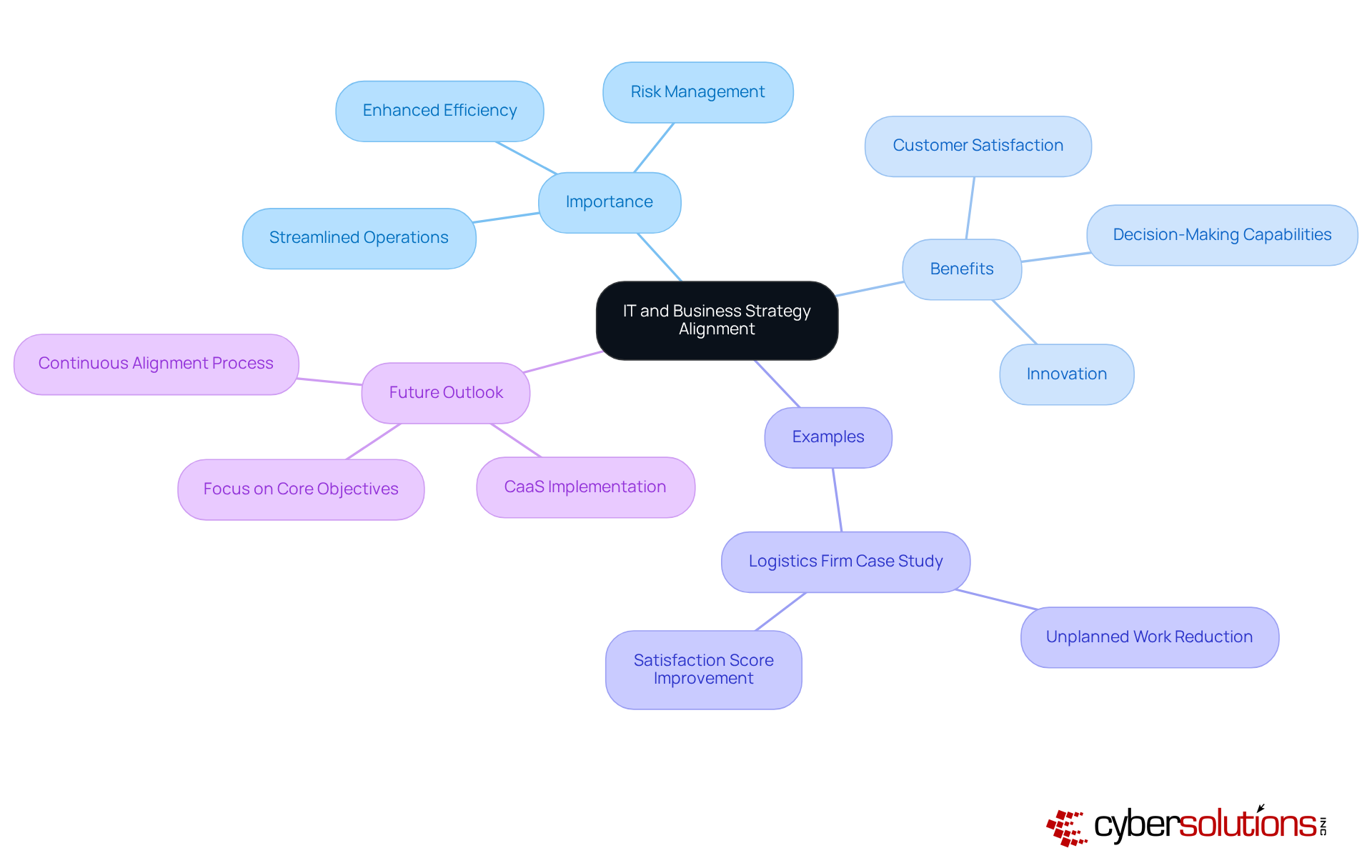
Alignment of IT strategy and business strategy is crucial for organizations seeking to excel in today's competitive environment. This alignment ensures that resources are utilized effectively, which results in improved performance. Organizations that successfully align their IT strategy with business strategy often report significant improvements in efficiency and decision-making capabilities. For instance, a mid-sized logistics firm decreased unplanned work from 40% to 22% within 90 days after applying strategic interventions, leading to an increase in customer satisfaction scores from 3.1 to 4.2 out of 5.
Leaders must recognize that alignment not only fosters innovation but also plays a vital role in risk management, especially in highly regulated sectors such as healthcare and finance. As organizations navigate complex regulatory landscapes, advocating for IT initiatives that bolster overall business success becomes paramount.
Compliance as a Service provides SMBs access to enterprise-level compliance expertise, streamlining the process of meeting regulatory requirements while safeguarding organizations from potential penalties. CaaS ensures compliance through continuous monitoring and proactive risk assessments, which are essential for maintaining alignment with current regulations.
In 2026, high-performing enterprises will ensure that every IT initiative advances core corporate objectives, whether that involves scaling into new markets or optimizing operational margins. By prioritizing this alignment and leveraging comprehensive CaaS solutions, organizations can enhance their competitiveness and operational resilience.
Develop a Shared Vision and Common Objectives
In today's healthcare landscape, cybersecurity is not just a technical issue; it's a critical priority. To effectively align strategies, leaders must develop a vision that resonates with all stakeholders. This means engaging key personnel from both IT and operational units to collaborate.
Consider conducting workshops or brainstorming sessions to gather insights from various departments. For instance, a healthcare organization might focus on improving patient safety while enhancing data protection. By establishing clear objectives that reflect both IT capabilities and organizational needs, leaders can create a roadmap guiding all teams toward a unified purpose.
This not only motivates employees but also ensures that everyone is aligned in their efforts to achieve organizational success. Are your teams ready to tackle the challenges ahead? By fostering collaboration and clarity, you can empower your organization to effectively navigate change.
Establish Clear Communication and Build Trust
Effective communication is essential to organizational success. Leaders must prioritize regular meetings and updates to foster open dialogue between teams. By creating a framework utilizing designated channels like management tools or collaborative platforms, organizations can enhance transparency and ensure that everyone stays informed. For instance, tools such as Slack or Microsoft Teams, which integrate seamlessly with various project management applications, facilitate ongoing discussions about project statuses and challenges, ensuring alignment among all team members.
Moreover, trust is vital. Leaders can build this trust by being transparent about decision-making processes and actively encouraging feedback. Consider this: studies reveal that organizations with robust internal communication plans experience higher productivity, while engaged environments face fewer challenges compared to disengaged ones. This data underscores the critical role of trust in fostering effective teamwork.
Additionally, the financial implications of inadequate communication are staggering. It's projected that by 2026, the costs could range from $9,284 to over $30,000 per employee each year. This highlights the urgent need for organizations to adopt effective communication strategies. By focusing on communication and trust-building, organizations can create a synergistic environment that aligns IT strategy with business strategy, allowing teams to collaborate effectively towards shared objectives.

Integrate Planning Processes and Prioritize IT Projects
To effectively integrate planning, leaders must collaborate across departments. This integration is crucial for setting standards that prioritize initiatives based on their organizational impact and value. As Dwight D. Eisenhower wisely stated, 'Plans are nothing; planning is everything.' This highlights the necessity of a strategic approach in today’s fast-paced environment.
Start by conducting a thorough evaluation of current projects to identify priorities. For example, a financial organization may prioritize initiatives that enhance customer experience over less critical activities. This reflects the increasing demand for efficient management, especially as the global software market is projected to reach $20.47 billion by 2030.
Implementing a project management methodology, such as Agile or Waterfall, can streamline processes and ensure accountability. By prioritizing projects that deliver the most value, leaders can significantly improve outcomes and drive organizational success. Moreover, with an anticipated need for an additional 30 million IT experts by 2035, the importance of effective collaboration in aligning IT strategy with business strategy cannot be overstated.
Leverage Metrics and Data for Alignment
To ensure effective alignment between IT and organizational strategies, leaders must recognize the critical role of metrics in evaluating performance and guiding decision-making. In today’s landscape, where challenges loom large, identifying metrics that reflect both IT and organizational objectives is essential. For instance, a healthcare entity might track metrics related to patient data security incidents alongside operational efficiency.
Regular reviews of these metrics not only allow leaders to assess the success of their alignment efforts but also enable them to make necessary adjustments. Are you leveraging data analytics to gain deeper insights into performance trends? By doing so, organizations can facilitate proactive decision-making, enhancing their ability to respond to challenges.
Fostering a culture of collaboration is paramount; it empowers entities to propel innovation. Looking ahead to 2026, organizations that effectively integrate KPIs into their governance frameworks are likely to experience improved performance and risk management. This integration reinforces the importance of cybersecurity within the enterprise, ensuring that cybersecurity remains a top priority in healthcare.

Conclusion
Aligning IT strategy with business strategy is not just a tactical move; it’s a fundamental necessity for organizations that want to thrive in today’s competitive landscape. This synergy fosters innovation, enhances operational efficiency, and ultimately leads to improved customer satisfaction. Have you recognized the significance of this alignment? Leaders who do can strategically position their organizations to navigate challenges and seize opportunities.
To achieve this alignment, consider these five essential steps:
- Understand the importance of collaboration
- Develop a shared vision
- Establish clear communication
- Integrate planning processes
- Leverage metrics for performance evaluation
Each of these components plays a crucial role in ensuring that IT initiatives are in lockstep with business objectives, driving organizational success.
In conclusion, the imperative to align IT and business strategies goes beyond immediate operational benefits; it shapes the very foundation of an organization’s future growth and resilience. Leaders are encouraged to take proactive steps in fostering this alignment, embracing a culture of collaboration, transparency, and data-driven decision-making. By doing so, organizations can enhance their competitiveness and ensure long-term sustainability in an ever-evolving business environment.
Frequently Asked Questions
Why is aligning IT strategy with business strategy important?
Aligning IT strategy with business strategy is crucial for organizations to excel in a competitive environment. It ensures technology investments support business goals, leading to streamlined operations and enhanced efficiency.
What are the benefits of successful IT and business strategy alignment?
Organizations that successfully align their IT and business strategies often see significant improvements in customer satisfaction and decision-making capabilities. For example, a logistics firm reduced unplanned work and increased satisfaction scores after implementing strategic interventions.
How does alignment contribute to risk management?
Aligning IT strategy with business strategy fosters innovation and plays a vital role in risk management, particularly in regulated sectors like healthcare and finance. It helps organizations navigate complex compliance landscapes and advocate for IT initiatives that support overall business success.
What is Compliance as a Service (CaaS)?
Compliance as a Service (CaaS) provides small and medium-sized businesses (SMBs) with access to enterprise-level compliance expertise. It streamlines the process of meeting regulatory requirements and protects organizations from potential penalties through continuous monitoring and proactive risk assessments.
What will high-performing enterprises focus on by 2026 regarding IT initiatives?
By 2026, high-performing enterprises will ensure that every IT initiative supports core corporate objectives, such as scaling into new markets or optimizing operational margins. This focus enhances competitiveness and operational resilience.
How can organizations develop a shared vision for IT and business strategy alignment?
Organizations can develop a shared vision by engaging key personnel from both IT and operational units to collaboratively define common objectives. Conducting workshops or brainstorming sessions can help gather insights and establish clear, measurable objectives.
What role does employee motivation play in achieving organizational success?
A shared vision motivates employees and ensures alignment in efforts toward achieving organizational success. By fostering collaboration and clarity, organizations can empower their teams to effectively navigate challenges, such as cybersecurity.
List of Sources
- Understand the Importance of IT and Business Strategy Alignment
- itleadershiphub.com (https://itleadershiphub.com/best-practices/it-business-alignment)
- osibeyond.com (https://osibeyond.com/blog/aligning-it-with-business-strategy)
- One moment, please... (https://newresources.com/strategic-alignment-turning-it-into-a-business-advantage-in-2026)
- aisllp.com (https://aisllp.com/business-optimization/from-hype-to-hard-decisions-6-it-priorities-leaders-cant-ignore-in-2026)
- Develop a Shared Vision and Common Objectives
- runn.io (https://runn.io/blog/teamwork-statistics)
- 60+ Goal Setting Statistics You Can't Ignore in 2026 (https://mooncamp.com/blog/goal-setting-statistics)
- 60 Business Strategy Quotes: From Planning to Profit | ITD World (https://itdworld.com/blog/leadership/business-strategy-quotes)
- 90+ Workplace Collaboration Statistics That Matter in 2026 (https://hireborderless.com/post/workplace-collaboration-statistics)
- The Top 200 Strategy & Strategic Planning Business Quotes (https://praxie.com/top-business-strategy-strategic-planning-quotes)
- Establish Clear Communication and Build Trust
- sociabble.com (https://sociabble.com/blog/employee-communications/communications-statistics)
- hbr.org (https://hbr.org/2026/02/our-favorite-management-tips-on-building-trust-on-your-team)
- kapable.club (https://kapable.club/blog/statistics/communication-and-leadership-statistics)
- Workplace Communication Statistics for 2026 (https://pumble.com/learn/communication/communication-statistics)
- inc.com (https://inc.com/debra-roberts/mastering-communication-in-2026-the-3-tier-framework-every-leader-needs/91286470)
- Integrate Planning Processes and Prioritize IT Projects
- Inspiring Quotes about Strategic Planning - Funding for Good (https://fundingforgood.org/inspiring-quotes-about-strategic-planning)
- 34 of the Best Planning Quotes (https://projectmanager.com/blog/planning-quotes)
- 60 Business Strategy Quotes: From Planning to Profit | ITD World (https://itdworld.com/blog/leadership/business-strategy-quotes)
- Project Management Statistics and Trends for 2026 (https://plaky.com/learn/project-management/project-management-statistics)
- rhythmsystems.com (https://rhythmsystems.com/blog/planning-process-quotes)
- Leverage Metrics and Data for Alignment
- One moment, please... (https://newresources.com/strategic-alignment-turning-it-into-a-business-advantage-in-2026)
- news.designrush.com (https://news.designrush.com/marketing-alignment-revenue-growth-2026)
- isaca.org (https://isaca.org/resources/news-and-trends/industry-news/2026/transforming-cybersecurity-metrics-into-strategic-business-insights-for-executive-leadership)
- cioindex.com (https://cioindex.com/topic/linking-metrics-and-kpis-to-business-goals)