
Introduction
In an age where cyber threats are escalating at an alarming rate, the significance of conducting thorough cybersecurity assessments is paramount. Organizations, especially in the healthcare sector, grapple with numerous vulnerabilities that can jeopardize sensitive information and operational integrity. This article presents a comprehensive, step-by-step guide to mastering cybersecurity assessments, empowering businesses to identify weaknesses, implement robust security measures, and ultimately safeguard their assets. But with so many complexities involved, how can organizations ensure they are not only compliant but also resilient against the ever-evolving landscape of cyber threats?
The current landscape of cybersecurity threats is daunting. Healthcare organizations face unique challenges that require immediate attention. From data breaches to ransomware attacks, the stakes are high, and the implications can be devastating. CFOs must navigate these turbulent waters, balancing compliance with the need for robust security measures.
Cyber Solutions can effectively address these challenges, providing the expertise and tools necessary to fortify defenses. By conducting thorough assessments, organizations can uncover vulnerabilities and take proactive steps to mitigate risks. This guide will walk you through the essential steps to ensure your organization is not just compliant but also resilient in the face of evolving cyber threats.
Understand Cybersecurity Assessment Fundamentals
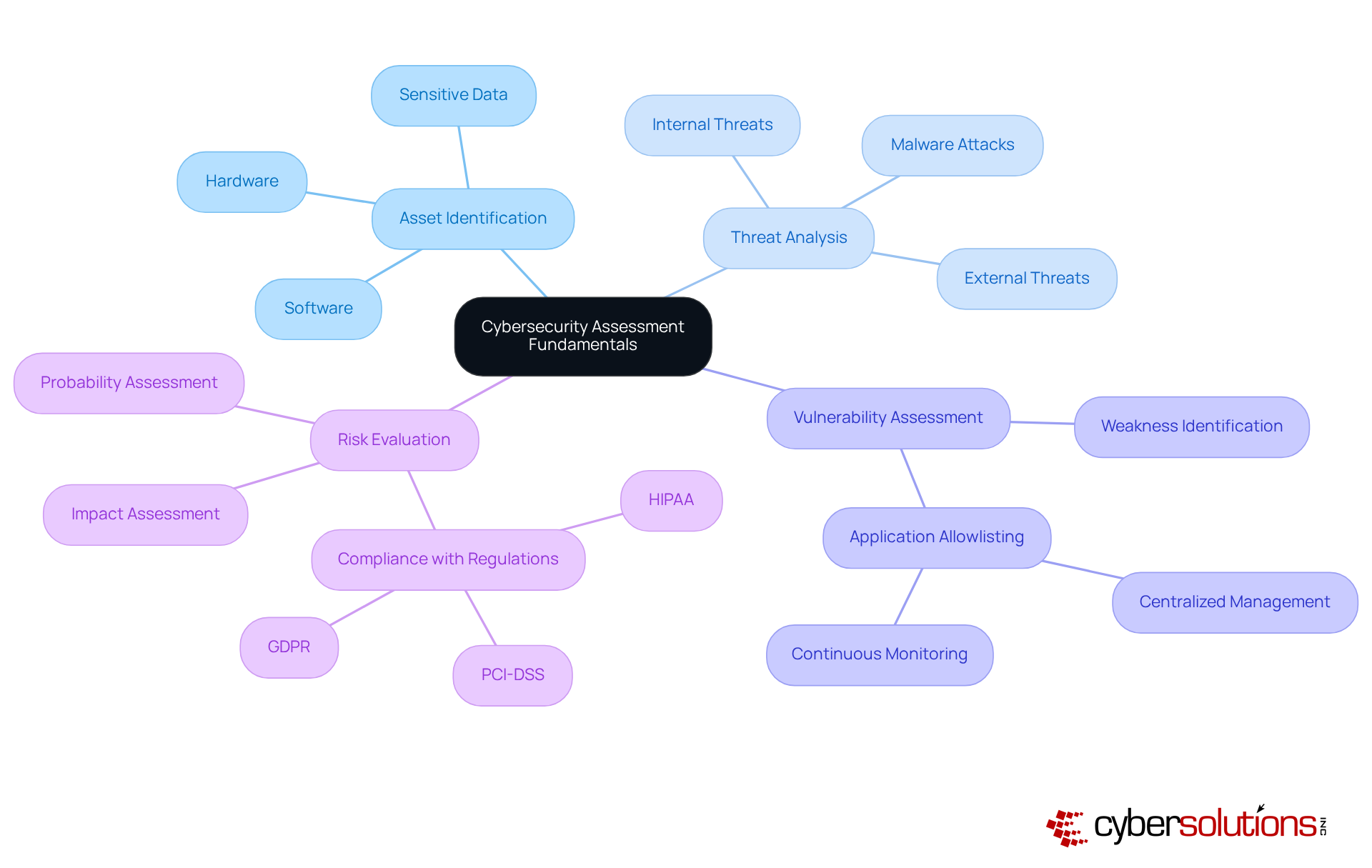
An assessment of cyber security is not merely a formality; it’s a critical evaluation of a company's information systems, policies, and procedures designed to uncover vulnerabilities and threats. In today’s landscape, where cyber threats are prevalent, an assessment of cyber security is essential for any organization, especially in healthcare. Breaches of information, malware attacks, and insider threats are just the tip of the iceberg. So, what can organizations do to safeguard their assets?
Key Components of a Robust Cybersecurity Assessment
- Identifying assets: Recognizing all critical assets—hardware, software, and sensitive data—is vital for the organization’s operations.
- Threat evaluation: Evaluating potential threats that could exploit identified vulnerabilities is crucial, considering both external and internal sources.
- Vulnerability identification: Pinpointing weaknesses within systems that could be targeted by malicious actors allows for proactive remediation. Security software plays a crucial role here, as it prevents unauthorized or malicious applications from executing, thereby reducing the attack surface and minimizing vulnerabilities. Features such as centralized management and continuous monitoring enhance the effectiveness of security measures in maintaining security.
- Risk assessment: Assessing the potential impact and probability of identified threats enables entities to prioritize their security efforts effectively. By implementing security frameworks, companies can enhance their compliance with regulations such as HIPAA, PCI-DSS, and GDPR, ensuring strict control over software usage.
Understanding these fundamentals is vital for organizations to allocate resources strategically and effectively manage risks. Statistics suggest that by 2025, information breaches and malware incidents will continue to rise, underscoring the necessity for assessment cyber security. A recent report highlighted that nearly 60% of companies faced a breach in the past year, with malware attacks increasing by 30% compared to the previous year.
Real-world examples illustrate the significance of vulnerability evaluations. For instance, a healthcare entity that conducted a thorough evaluation uncovered significant weaknesses in its patient data management system. This led to the adoption of improved security measures that greatly reduced the risk of data breaches. By prioritizing security assessments and implementing proactive strategies like employee training, organizations can better defend against the evolving landscape of cyber threats, ensuring they remain resilient and compliant in an increasingly regulated environment.
Follow a Step-by-Step Process for Assessment
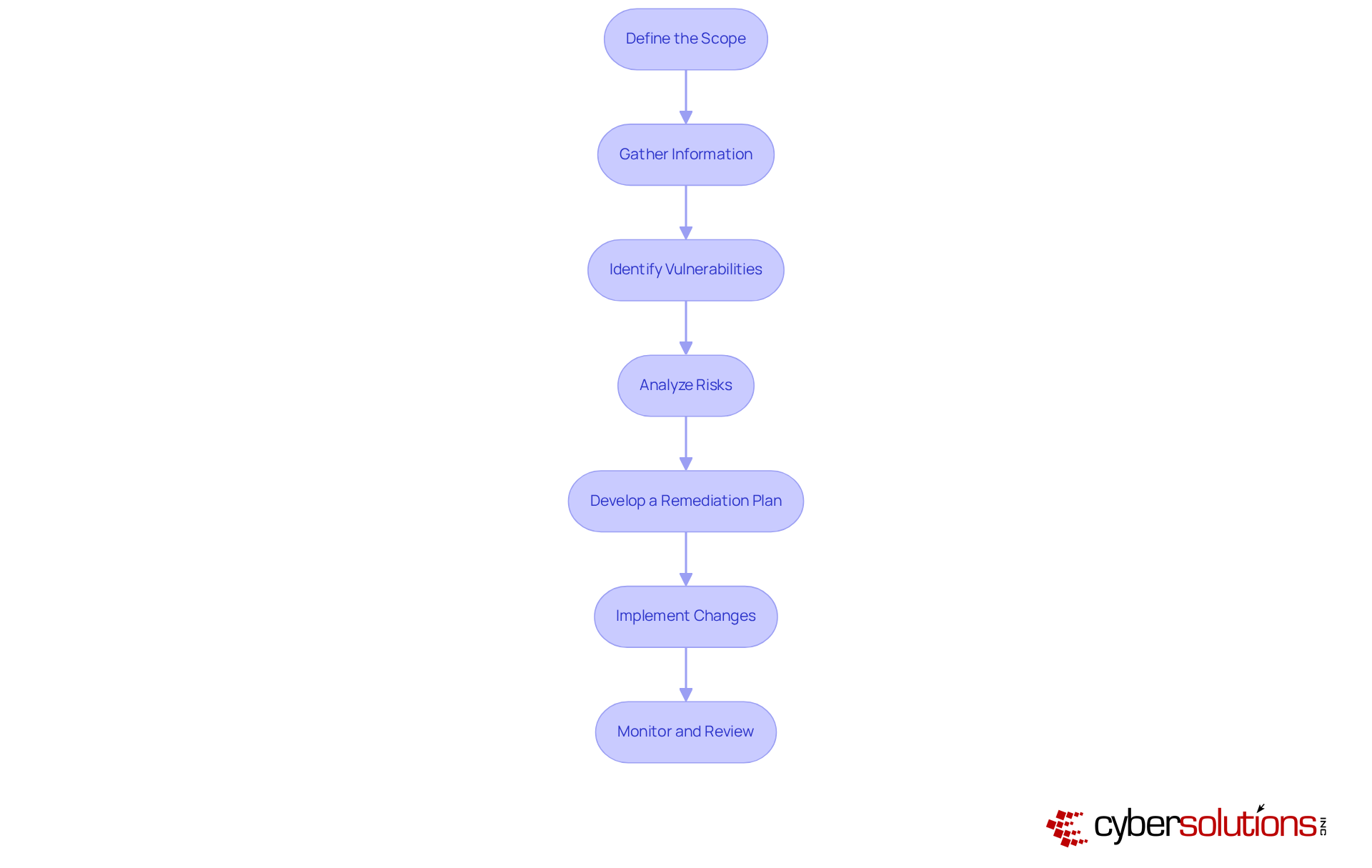
To conduct a comprehensive cybersecurity assessment, it’s crucial to follow these essential steps:
-
Define the Scope: Start by identifying which systems, processes, and assets will be included in the evaluation. This focus ensures that efforts are directed toward the most critical areas.
- Tip: Involve stakeholders from various departments to ensure that all pertinent areas are covered. Surprisingly, only 44 percent of organizations currently lack a formal assessment process.
-
Gather Information: Collect data on existing security measures, policies, and procedures. This involves reviewing documentation and conducting interviews with key personnel.
- Tip: Utilize standardized questionnaires to streamline the information-gathering process.
-
Identify Vulnerabilities: Employ tools and techniques such as penetration testing and vulnerability scanning to uncover weaknesses in your systems.
- Tip: Regularly update your scanning tools to ensure they can detect the latest vulnerabilities, as new threats emerge frequently.
-
Analyze Risks: Assess the likelihood and potential impact of identified vulnerabilities being exploited. This assessment helps in prioritizing which vulnerabilities to address first.
- Tip: Use a risk matrix to visualize and prioritize risks based on their severity, aiding in effective decision-making.
-
Develop a Remediation Plan: Formulate a plan to address identified vulnerabilities, detailing timelines and assigning responsibilities.
- Tip: Ensure the plan is realistic and considers available resources to enhance feasibility.
-
Implement Changes: Execute the remediation plan, making necessary adjustments to policies, procedures, and technical controls.
- Tip: Communicate changes to all stakeholders to ensure compliance and understanding, fostering a culture of security awareness.
-
Monitor and Review: Continuously observe the effectiveness of implemented changes and regularly evaluate the assessment process to adapt to new threats.
- Tip: Schedule regular follow-up evaluations to maintain and enhance your security posture, as ongoing vigilance is crucial in today’s threat landscape.
Utilize Essential Tools and Resources for Effective Assessment
In today’s digital landscape, the importance of cybersecurity cannot be overstated, especially for healthcare organizations. With the rise in cyber threats, it’s crucial to adopt measures that not only comply with CMMC Level 3 standards but also improve your organization’s assessment of cyber security posture. Here are essential tools and resources to consider:
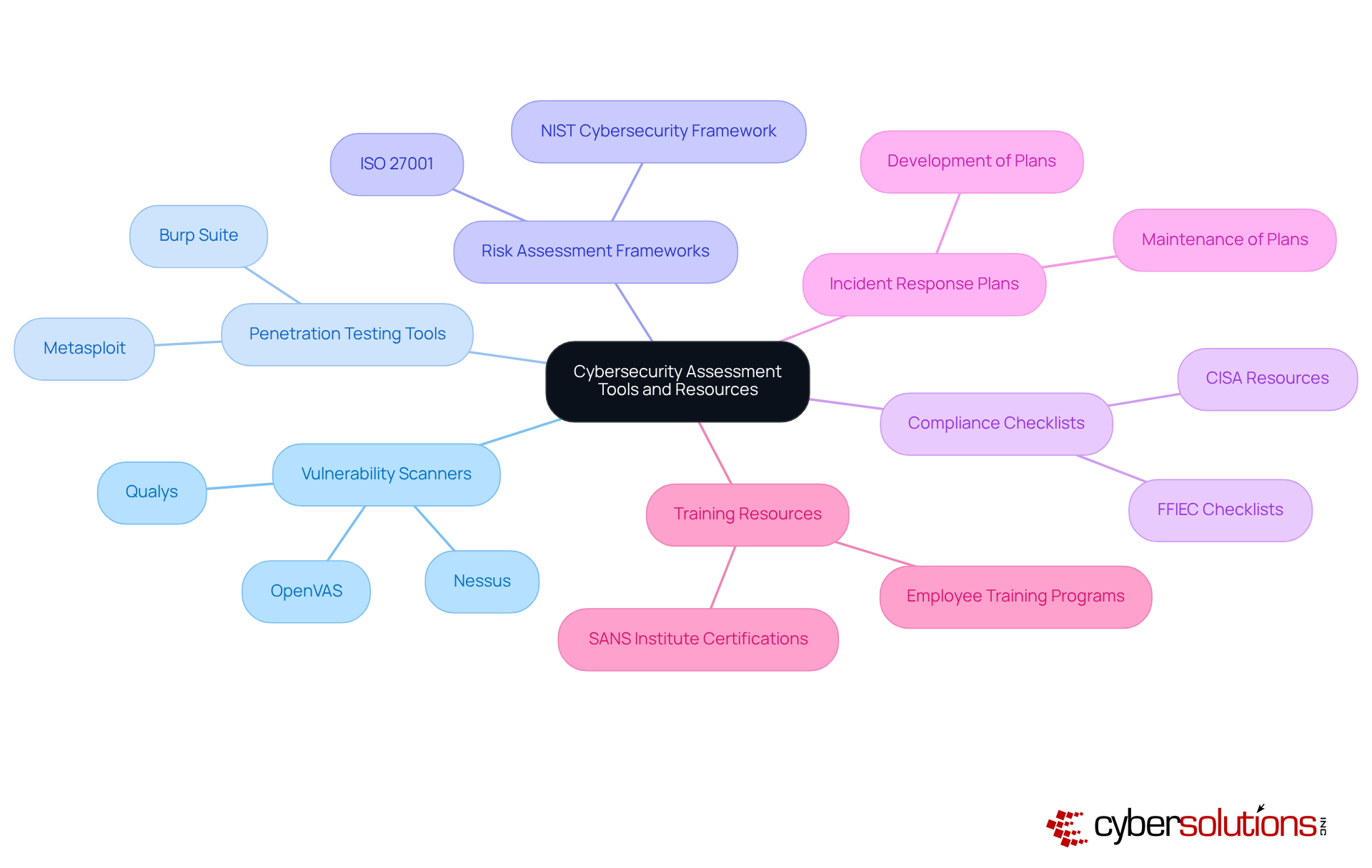
- Vulnerability Assessment Tools: Tools like Nessus, Qualys, and OpenVAS are vital for identifying vulnerabilities in your systems. They ensure compliance with stringent cybersecurity standards necessary for protecting Controlled Unclassified Information (CUI) and Federal Contract Information (FCI).
- Penetration Testing Tools: Utilizing tools such as Metasploit and Burp Suite allows you to simulate attacks and rigorously test your defenses. This not only demonstrates your commitment to cybersecurity but also showcases your capability to protect sensitive federal data.
- Cybersecurity Frameworks: Implement frameworks like the NIST Cybersecurity Framework or ISO 27001 to guide your assessment of the cyber security process. These frameworks ensure compliance with industry standards and enhance your overall security practices.
- Compliance Checklists: Leverage resources from entities such as CISA and FFIEC, which provide checklists to guarantee adherence to mandatory requirements. This aids in maintaining eligibility for lucrative government contracts.
- Incident Response Plans: It’s essential to develop and maintain an incident response plan. This proactive measure effectively addresses potential breaches, reducing the risk of cyberattacks and safeguarding your business.
- Security Training Programs: Investing in training tools and programs is crucial for educating employees about information security best practices. This reinforces your organization’s commitment to protecting sensitive data.
Recommended Resources:
- CISA Cybersecurity Best Practices: A comprehensive guide on implementing effective cybersecurity measures.
- NIST Cybersecurity Framework: A structured method for managing digital security risks.
- SANS Institute: Offers training and certification programs for security professionals.
By integrating these tools and resources, you can significantly enhance your assessment of cyber security measures, ensuring not only compliance but also the protection of vital information.
Troubleshoot Common Issues During the Assessment
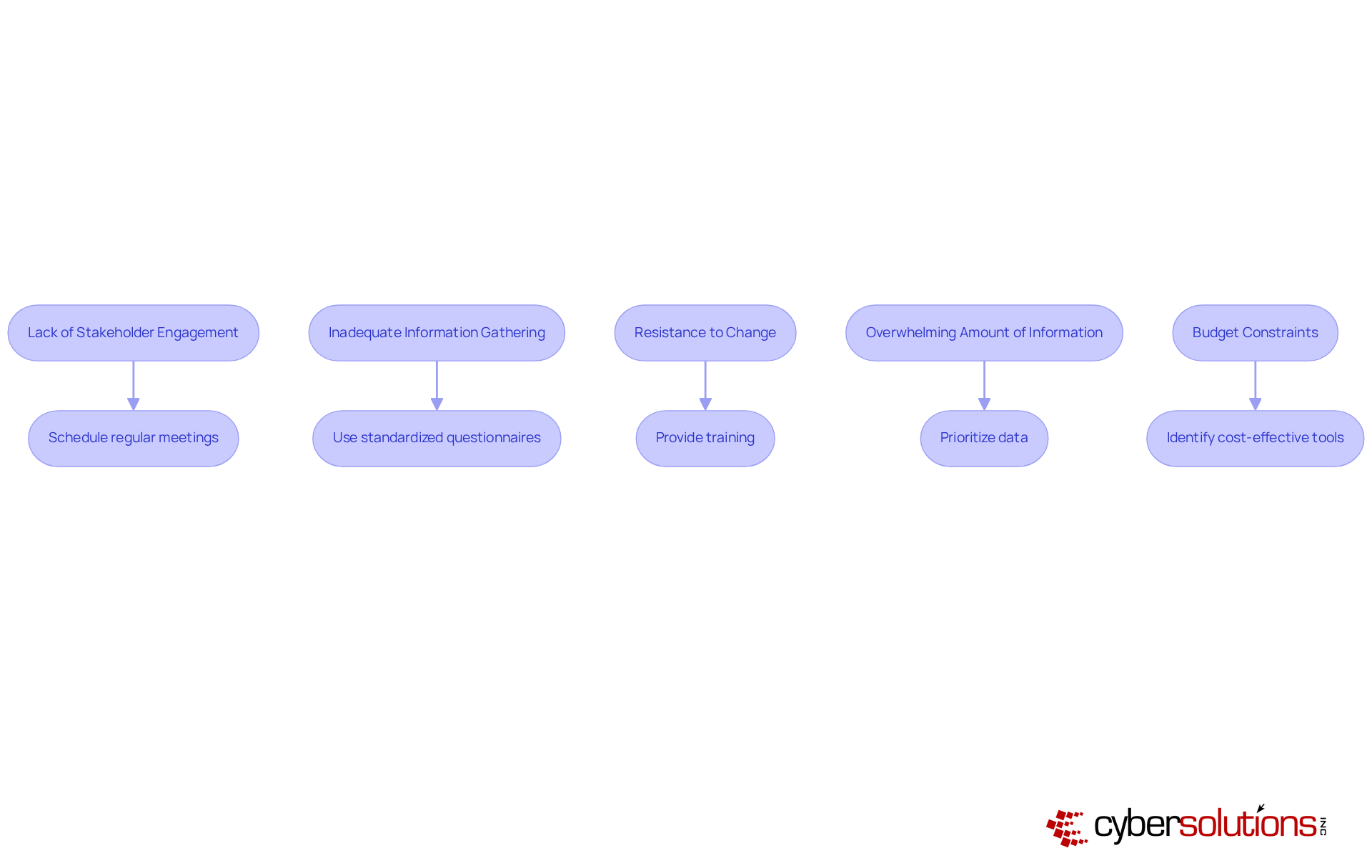
In today's digital landscape, cybersecurity is not just a technical concern; it's a critical priority for healthcare organizations. With the increasing frequency of cyber threats, CFOs face unique challenges that demand immediate attention and strategic action. Here’s how to troubleshoot common issues encountered during a cybersecurity assessment:
-
Lack of stakeholder engagement: When key stakeholders are not involved, assessments can become incomplete.
- Solution: Schedule regular meetings and updates to keep stakeholders informed and engaged throughout the process.
Inadequate information: Insufficient information can lead to flawed assessments.
- Solution: Use standardized questionnaires and checklists to ensure thorough information collection.
Resistance to Change: Employees may resist new security measures or policies.
- Solution: Provide training and communicate the benefits of changes to gain buy-in from staff. Cyber Solutions emphasizes immediate training on recognizing suspicious emails and maintaining proper security protocols, significantly enhancing staff engagement and compliance.
Overwhelming Amount of Information: Analyzing excessive information can lead to analysis paralysis.
- Solution: Prioritize data based on risk and relevance to focus on the most critical areas first. Cyber Solutions utilizes a layered strategy for digital security, ensuring that the most urgent vulnerabilities are dealt with swiftly.
Resource constraints: Limited resources can hinder the evaluation process.
- Solution: Identify cost-effective tools and prioritize high-risk areas for immediate attention. Cyber Solutions has successfully implemented segmented network strategies to optimize security configurations, demonstrating that effective measures can be achieved even within budget limitations.
By anticipating these issues and implementing targeted solutions, organizations can significantly enhance the effectiveness of their assessment of cyber security. Cyber Solutions stands ready to provide specialized expertise and rapid response capabilities, ensuring that your organization is well-equipped to tackle the evolving landscape of cyber threats.
Conclusion
A comprehensive cybersecurity assessment is not merely a regulatory obligation; it is a fundamental necessity for organizations striving to protect their critical assets against an ever-evolving threat landscape. In today’s digital age, where cyber threats are rampant, organizations must systematically identify vulnerabilities, analyze risks, and implement robust remediation plans. This proactive approach not only enhances their security posture but also ensures compliance with industry standards.
Key components of an effective cybersecurity assessment include:
- Asset identification
- Threat analysis
- Vulnerability assessments
- Risk evaluations
Each of these elements plays a crucial role in uncovering potential weaknesses and prioritizing security measures. The integration of essential tools and resources, such as vulnerability scanners and risk assessment frameworks, empowers organizations to navigate the complexities of cybersecurity challenges effectively.
Ultimately, the importance of conducting thorough cybersecurity assessments cannot be overstated. As cyber threats continue to rise, it is imperative for organizations to adopt a proactive approach, ensuring they not only comply with regulations but also safeguard sensitive data. By fostering a culture of security awareness and utilizing best practices, organizations can position themselves to mitigate risks and protect their valuable information in an increasingly digital world. Are you ready to take the necessary steps to secure your organization?
Frequently Asked Questions
What is the purpose of a cybersecurity assessment?
A cybersecurity assessment is a critical evaluation of a company's information systems, policies, and procedures designed to uncover vulnerabilities and threats to safeguard organizational assets.
Why is cybersecurity assessment especially important for healthcare organizations?
Cybersecurity assessments are essential for healthcare organizations due to the high risk of information breaches, malware attacks, and insider threats that can compromise sensitive patient data.
What are the key components of a robust cybersecurity assessment?
The key components include asset identification, threat analysis, vulnerability assessment, and risk evaluation.
What does asset identification involve?
Asset identification involves recognizing all critical assets, including hardware, software, and sensitive data, that are vital for an organization's operations.
How does threat analysis contribute to cybersecurity?
Threat analysis evaluates potential threats that could exploit identified vulnerabilities, considering both external and internal sources to enhance security measures.
What is a vulnerability assessment and why is it important?
A vulnerability assessment identifies weaknesses within systems that could be targeted by malicious actors, allowing for proactive remediation to strengthen security.
What role does application allowlisting play in cybersecurity?
Application allowlisting prevents unauthorized or malicious applications from executing, thereby reducing the attack surface and minimizing vulnerabilities within an organization.
How does risk evaluation help organizations prioritize their security efforts?
Risk evaluation assesses the potential impact and probability of identified threats, enabling organizations to prioritize their security measures effectively.
What are some statistics regarding cybersecurity threats?
Statistics suggest that by 2025, information breaches and malware incidents will continue to rise, with nearly 60% of companies facing a breach in the past year and malware attacks increasing by 30% compared to the previous year.
Can you provide an example of the importance of vulnerability evaluations?
A healthcare entity that conducted a thorough vulnerability evaluation uncovered significant weaknesses in its patient data management system, leading to improved security measures that greatly reduced the risk of data breaches.
List of Sources
- Understand Cybersecurity Assessment Fundamentals
- diligent.com (https://diligent.com/resources/blog/top-20-quotes-cyber-risk-virtual-summit)
- Follow a Step-by-Step Process for Assessment
- deliberatedirections.com (https://deliberatedirections.com/quotes-on-cybersecurity-and-biometrics)
- atera.com (https://atera.com/blog/best-cybersecurity-quotes)
- solutionsreview.com (https://solutionsreview.com/cybersecurity-awareness-month-quotes-and-commentary-from-industry-experts-in-2025)
- acecloudhosting.com (https://acecloudhosting.com/blog/cybersecurity-quotes)