Introduction
In an age where cyber threats are becoming increasingly sophisticated, organizations face the daunting task of safeguarding their digital assets against relentless attacks. Endpoint Detection and Response (EDR) has emerged as a pivotal solution, offering real-time monitoring and rapid response capabilities that are essential for maintaining robust cybersecurity.
As businesses strive to enhance their security posture, the pressing question arises: how can they effectively integrate EDR into their existing frameworks to maximize its benefits and minimize vulnerabilities?
This article delves into the critical components of EDR, its operational mechanisms, and best practices for implementation, providing a roadmap for organizations determined to fortify their defenses in an evolving threat landscape.
Define Endpoint Detection and Response (EDR) and Its Importance
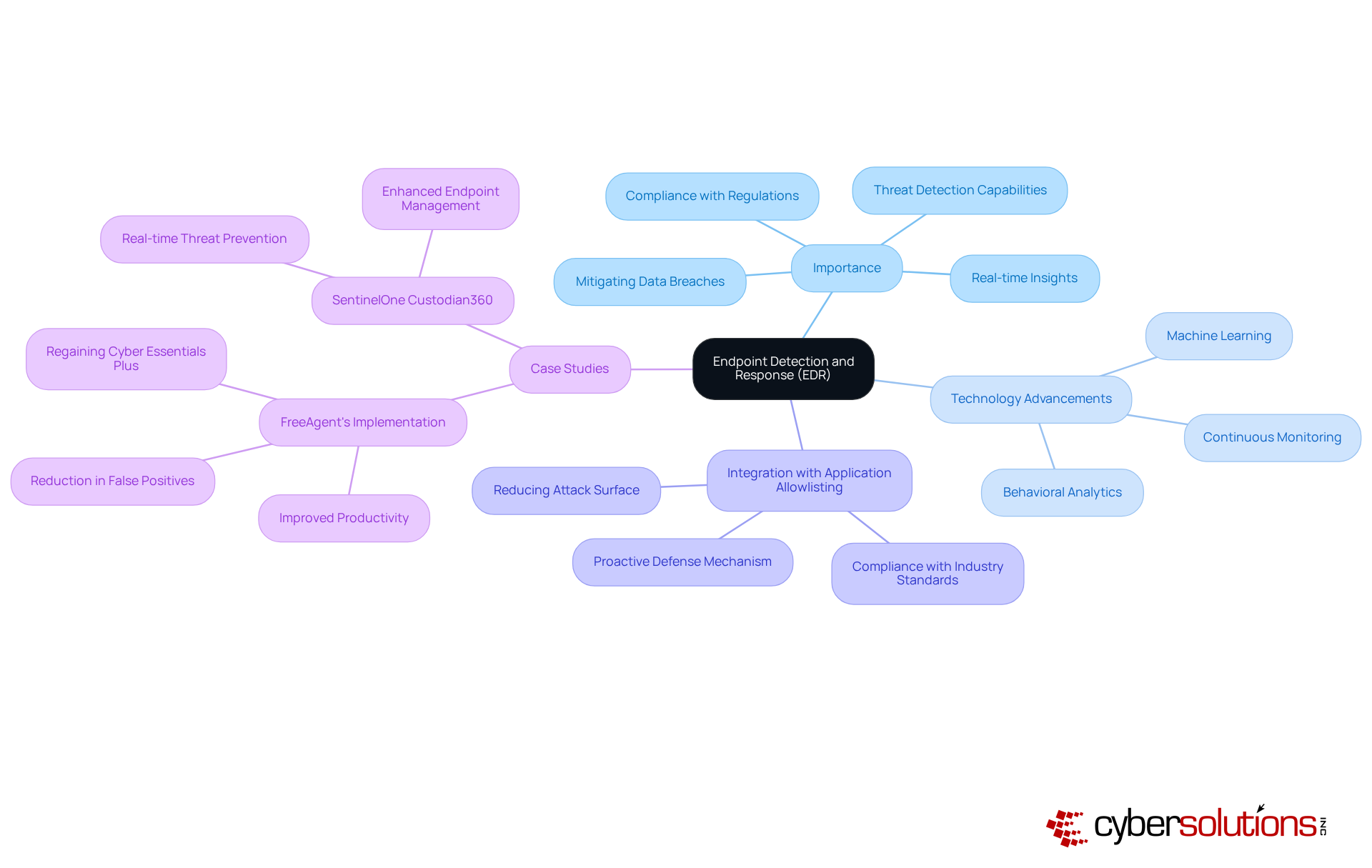
represents a critical suite of cybersecurity tools and processes designed to monitor, detect, and respond to threats targeting endpoint devices, including computers, mobile devices, and servers. EDR solutions furnish real-time insights into endpoint activities, empowering organizations to swiftly identify and address suspicious behaviors. The importance of EDR is underscored by its features, which are essential for bolstering a company’s security posture, mitigating the risk of data breaches, and ensuring compliance.
As we look ahead to 2025, advancements in technology have firmly established EDR's position as a fundamental component of cybersecurity. These methodologies leverage machine learning and behavioral analytics to uncover threats that traditional antivirus software may overlook, providing organizations with a defense against increasingly sophisticated cyber threats. Experts assert that EDR is not merely an enhancement; it is a necessity for organizations committed to protecting sensitive data and maintaining operational integrity.
In conjunction with EDR, application whitelisting is regarded as the gold standard in cybersecurity. This strategy proactively prevents unauthorized or malicious applications from executing, significantly reducing risks and minimizing vulnerabilities. Application whitelisting permits only approved applications to run while continuously monitoring all application activity to identify any attempts to launch unauthorized software. This method not only aids in blocking malware, ransomware, and zero-day attacks but also ensures compliance with stringent regulations such as HIPAA, PCI-DSS, and GDPR. The integration of application whitelisting with EDR solutions enhances the overall security framework, providing robust protection against cyber threats.
Case studies illustrate the impact of EDR on organizational safety. For example, FreeAgent's adoption of the SentinelOne Custodian360 solution resulted in a notable reduction in false positives, enabling employees to operate more efficiently and regain Cyber Essentials Plus accreditation. This not only boosted productivity but also reinforced the company’s commitment to data protection within a highly regulated environment. Conor MacHugh, Systems and Security Engineer, remarked, "Working with CWSI has resulted in FreeAgent having practically zero productivity issues, which is a welcomed change from our previous experience."
Furthermore, statistics indicate that organizations using EDR solutions experience a significant decrease in breach impact. Continuous monitoring and rapid response capabilities enable teams to act promptly, often reducing the average time between a breach and detection, which can exceed 200 days without such measures. By integrating EDR and application whitelisting into their cybersecurity frameworks, businesses can proactively defend against attacks, minimize potential damage, and enhance their overall security posture.
Explain How EDR Works: Mechanisms and Processes
In the ever-evolving landscape of cybersecurity, understanding the mechanisms behind EDR solutions is crucial for organizations aiming to improve their security posture. EDR solutions provide detection, analysis, and response mechanisms. They continuously monitor endpoint activities and network connections, gathering telemetry data on processes and files. This data is analyzed using advanced algorithms and machine learning methods, enabling the identification of anomalies that may indicate potential risks. Ongoing observation ensures that dubious actions are detected and mitigated before they escalate into significant threats, thus protecting your organization from ransomware, phishing, and other malware attacks through proactive measures.
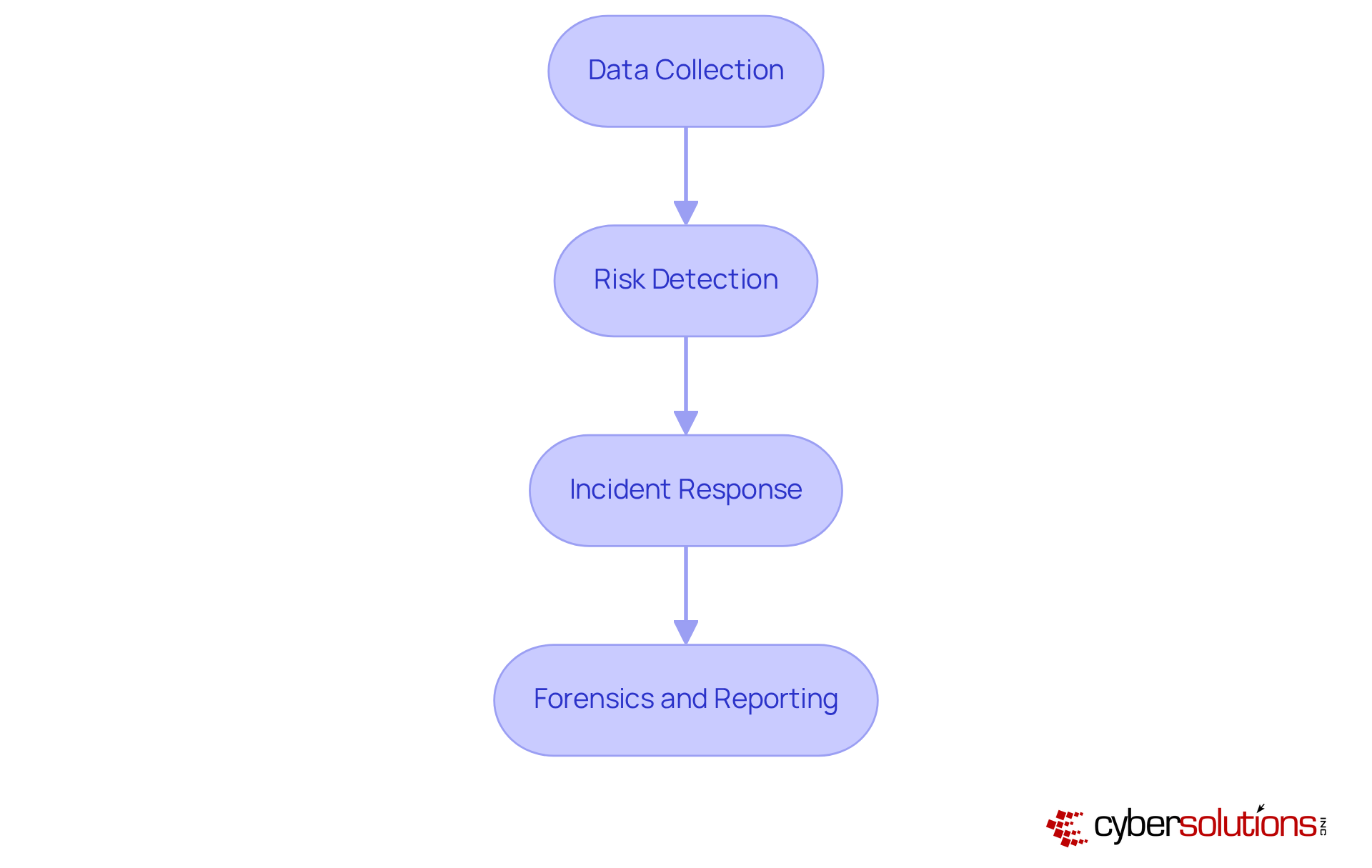
Upon detection, EDR systems can respond by isolating the affected endpoint, blocking harmful processes, or alerting security teams for further investigation. The key processes involved in EDR include:
- Data Collection: Telemetry data is collected from endpoints to monitor activities in real-time.
- Risk Detection: Behavioral analysis and risk intelligence are employed to identify suspicious activities, ensuring timely intervention.
- Response Actions: EDR systems execute automated or manual actions to mitigate risks and swiftly restore impacted systems. The automated containment feature effectively restricts the spread of threats, supported by 24/7 monitoring and alerts that enable prompt action to prevent downtime or breaches.
- Forensics and Reporting: Comprehensive reports and insights into incidents are generated for further analysis and compliance, ensuring that organizations meet regulatory requirements.
By comprehending these mechanisms, organizations can appreciate the essential role EDR plays in cybersecurity, particularly as the threat landscape continues to evolve.
Identify Key Features and Best Practices for EDR Implementation
When implementing EDR, organizations must prioritize several key features and best practices to enhance their cybersecurity strategy.
- Real-Time Monitoring: Monitoring of all endpoints is essential for detecting threats as they occur, enabling swift action against potential breaches. Without this capability, organizations may find themselves vulnerable to attacks that could compromise sensitive data.
- Automated Response: Solutions that can automatically respond to threats significantly reduce the time to containment, minimizing potential damage and operational disruption. This feature is critical in today’s fast-paced threat landscape of EDR cyber, where every second counts.
- Integration Capability: EDR should seamlessly connect with other protective solutions, such as firewalls and Security Information and Event Management (SIEM) systems, to create a comprehensive protection framework. This integration ensures that organizations can leverage their existing security investments effectively.
- User-Friendly Interface: A clear and intuitive interface enables teams to quickly analyze incidents and respond effectively, enhancing overall operational efficiency. When security teams can navigate their tools with ease, they are better equipped to address threats promptly.
Regular updates and threat intelligence are crucial for the EDR cyber solution to stay updated with the latest information and maintain an advantage against emerging threats and vulnerabilities. Organizations must prioritize this to maintain a proactive security stance.
Best practices involve conducting a thorough assessment of your organization's specific needs before selecting an EDR solution to ensure alignment with security objectives. Training your security team on the functionalities of the EDR tool is essential to maximize its effectiveness and ensure proper utilization. Additionally, regularly reviewing and updating plans based on insights gained from EDR data is vital for maintaining agility in response strategies. Engaging in continuous evaluation and improvement of EDR processes allows organizations to adapt to evolving threats, leveraging data analytics for informed decision-making.
Case studies illustrate the effectiveness of these practices. For instance, implementing EDR resulted in a notable decrease in false positives, thereby improving productivity and defensive stance. This deployment not only regained their Cyber Essentials Plus accreditation but also underscored the importance of integrating EDR with existing security measures for comprehensive protection. As entities encounter progressively advanced cyber threats, embracing these best practices is crucial for enhancing overall cybersecurity strategies.

Integrate EDR into Your Cybersecurity Strategy for Enhanced Protection
To effectively integrate EDR into your cybersecurity strategy, organizations must recognize the critical importance of cybersecurity in today's digital landscape. With 31% of entities reporting breaches, the urgency for strong protective frameworks has never been clearer.
- Evaluate Current Protection Posture: Begin with a thorough assessment of existing protective measures to identify vulnerabilities that EDR can address. This evaluation is vital in fortifying your defenses against potential threats.
- Define Clear Objectives: Establish specific, measurable goals for EDR implementation, such as reducing response times or improving detection capabilities. Clear objectives ensure that EDR efforts are aligned with overall business priorities, driving meaningful results.
- Develop a Comprehensive Plan: Your strategy should seamlessly incorporate EDR functionalities, detailing precise procedures for responding to alerts generated by the system. Organizations integrating EDR into their processes have reported significantly improved success rates, with streamlined processes reducing the number of individual occurrences to examine by 98%.
- Foster Collaboration Between Teams: Encourage teamwork among IT, compliance, and other departments to enhance the efficiency of EDR across the organization. A unified approach not only enhances communication but also ensures that all stakeholders are aligned in their cybersecurity efforts, fostering a culture of shared responsibility.
- Conduct Regular Reviews: Continuously monitor the performance of your EDR solution and make necessary adjustments to optimize its effectiveness. Regular assessments empower organizations to stay ahead of evolving risks, enhancing their overall security posture.
By implementing these essential steps, organizations can successfully integrate EDR into their cybersecurity strategies, significantly bolstering their defenses against threats and ensuring a proactive stance in an increasingly complex digital landscape.

Conclusion
EDR cyber has become a critical component in today’s cybersecurity landscape, equipping organizations with essential tools to detect, respond to, and mitigate threats aimed at endpoint devices. As cyber threats evolve in sophistication, integrating Endpoint Detection and Response into cybersecurity strategies is not merely optional; it is a vital necessity for protecting sensitive data and ensuring operational integrity.
This article has underscored the significance of EDR through its advanced threat detection capabilities, real-time monitoring, and automated response mechanisms. The collaboration between EDR and application allowlisting further strengthens the security framework, significantly decreasing the attack surface and enhancing compliance with regulatory standards. Case studies, such as that of FreeAgent, illustrate the tangible benefits of implementing EDR solutions, showcasing reduced false positives and improved productivity. Furthermore, statistics indicate a notable decline in data breaches among organizations employing these technologies.
In conclusion, the urgency for robust cybersecurity measures cannot be overstated. Organizations must assess their current security posture, define clear objectives for EDR implementation, and promote collaboration across teams to bolster the effectiveness of their cybersecurity strategies. By adopting EDR cyber solutions and adhering to best practices, businesses can not only defend against existing threats but also prepare to adapt to the ever-evolving landscape of cyber risks. Taking proactive measures today will ensure a more secure tomorrow.
Frequently Asked Questions
What is Endpoint Detection and Response (EDR)?
EDR is a suite of cybersecurity tools and processes designed to monitor, detect, and respond to threats targeting endpoint devices like computers, mobile devices, and servers.
Why is EDR important for organizations?
EDR is important because it provides real-time insights into endpoint activities, allowing organizations to swiftly identify and address suspicious behaviors, thereby bolstering their security posture and mitigating the risk of data breaches.
How does EDR improve threat detection?
EDR improves threat detection by leveraging machine learning and behavioral analytics to uncover threats that traditional antivirus software may overlook, offering a proactive defense against sophisticated cyber threats.
What is application allowlisting and how does it relate to EDR?
Application allowlisting is a cybersecurity strategy that prevents unauthorized or malicious applications from executing by allowing only approved applications to run. When integrated with EDR, it enhances overall security by reducing the attack surface and minimizing vulnerabilities.
What are the benefits of using application allowlisting?
The benefits of application allowlisting include blocking malware, ransomware, and zero-day attacks, as well as ensuring compliance with regulations like HIPAA, PCI-DSS, and GDPR.
Can you provide an example of EDR's impact on an organization?
An example is FreeAgent's adoption of the SentinelOne Custodian360 solution, which led to a reduction in false positives, improved employee efficiency, and the regaining of Cyber Essentials Plus accreditation.
What statistics support the effectiveness of EDR solutions?
Statistics indicate that organizations using EDR experience a significant decrease in data breaches, with continuous monitoring and rapid response capabilities reducing the average time between a breach and detection, which can exceed 200 days without EDR measures.
How do EDR and application allowlisting work together?
EDR and application allowlisting work together to provide a comprehensive cybersecurity framework that proactively defends against attacks, minimizes potential damage, and enhances the overall security posture of businesses.
List of Sources
- Define Endpoint Detection and Response (EDR) and Its Importance
- cwsisecurity.com (https://cwsisecurity.com/case_studies/freeagent)
- crowdstrike.com (https://crowdstrike.com/en-us/cybersecurity-101/endpoint-security/endpoint-detection-and-response-edr)
- dmctechgroup.com (https://dmctechgroup.com/the-importance-of-endpoint-detection-response-edr)
- omnicybersecurity.com (https://omnicybersecurity.com/case_studies/case-study-inside-a-red-team-engagement)
- Explain How EDR Works: Mechanisms and Processes
- itbd.net (https://itbd.net/blog/noc/what-is-edr-endpoint-detection-and-response)
- acecloudhosting.com (https://acecloudhosting.com/blog/cybersecurity-quotes)
- lucintel.com (https://lucintel.com/endpoint-detection-and-response-market.aspx)
- Identify Key Features and Best Practices for EDR Implementation
- cwsisecurity.com (https://cwsisecurity.com/case_studies/freeagent)
- cisa.gov (https://cisa.gov/news-events/cybersecurity-advisories/aa25-266a)
- corvusinsurance.com (https://corvusinsurance.com/blog/endpoint-detection-response)
- empyreanit.com.au (https://empyreanit.com.au/case_studies/managed-soc-services)
- infotank.com (https://infotank.com/blog/best-practices-deploying-endpoint-detection-response)
- Integrate EDR into Your Cybersecurity Strategy for Enhanced Protection
- acecloudhosting.com (https://acecloudhosting.com/blog/cybersecurity-quotes)
- llcbuddy.com (https://llcbuddy.com/data/endpoint-detection-response-edr-statistics)
- cisa.gov (https://cisa.gov/news-events/cybersecurity-advisories/aa25-266a)
- atera.com (https://atera.com/blog/best-cybersecurity-quotes)