
Introduction
In an era where cybersecurity threats loom larger than ever, healthcare organizations must prioritize robust managed services to safeguard their operations. As C-suite leaders navigate an increasingly complex landscape of cybersecurity threats and operational challenges, they have a unique opportunity to leverage outsourced IT solutions. These services not only enhance efficiency and reduce costs but also provide access to specialized expertise that may be lacking internally.
However, as technology advances at breakneck speed, how can executives navigate the complexities of compliance and security? The right managed services strategy could be the difference between thriving in a secure environment and facing devastating breaches that compromise patient trust.
Define Managed Services and Their Importance
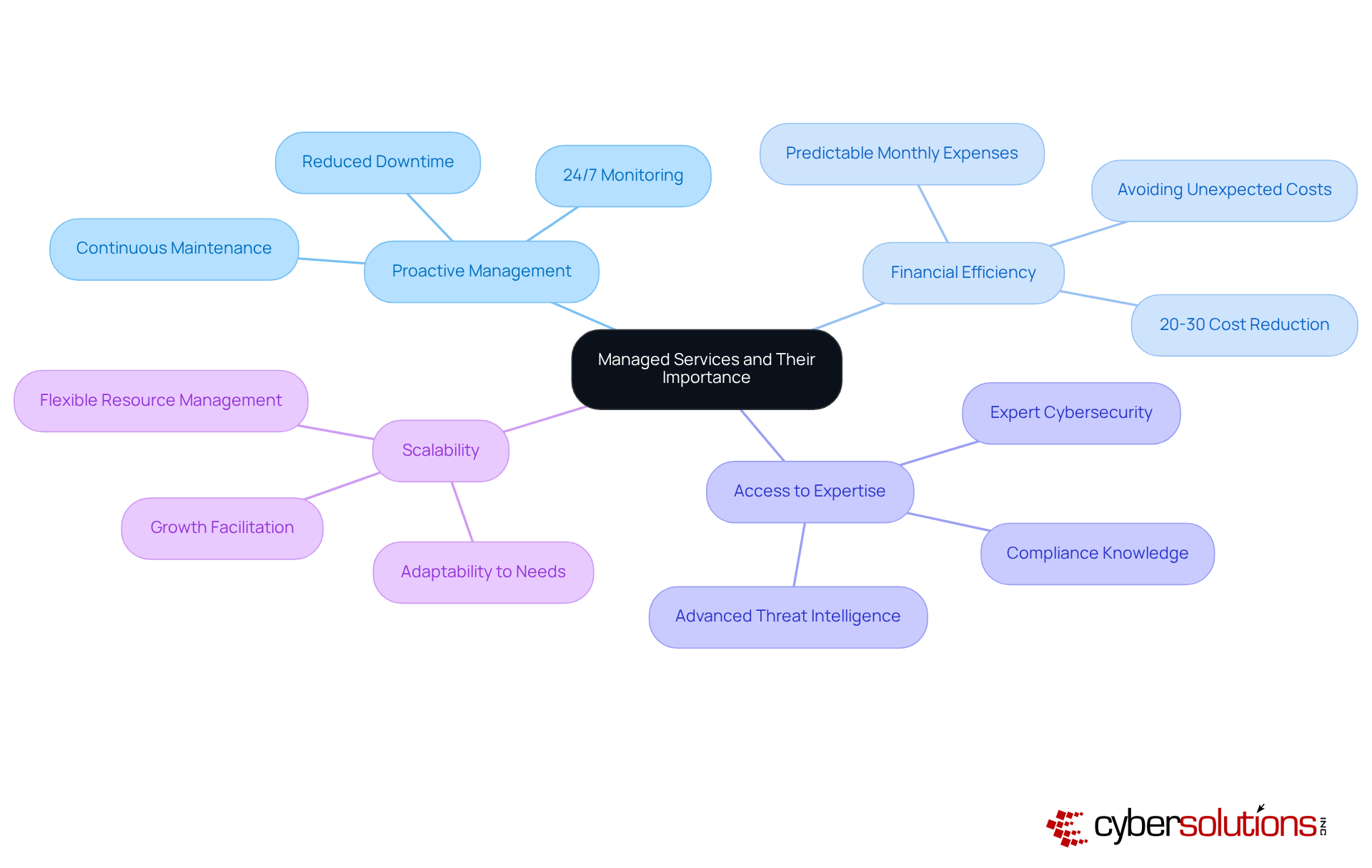
In an era where cybersecurity threats are escalating, healthcare organizations must prioritize robust IT management to safeguard their operations. Managed services projects involve the outsourcing of IT systems and infrastructure administration to a third-party provider, known as a Managed Service Provider (MSP). This model allows organizations to focus on their core operations while ensuring effective management and security of their IT systems. The significance of managed services is underscored by several key benefits:
- Proactive Management: Unlike traditional IT support, which often reacts to issues as they arise, managed services entail continuous monitoring and maintenance. This proactive approach not only cuts down on downtime but also boosts system reliability, helping organizations keep their operations running smoothly. Cyber Solutions offers 24/7 network monitoring to detect anomalies and potential vulnerabilities, ensuring that suspicious activities are stopped before they escalate into threats. This proactive strategy is crucial for safeguarding operational activities.
- Financial Efficiency: Outsourcing IT functions can lead to significant savings on operational expenses related to hiring and training internal personnel. Organizations benefit from predictable monthly expenses, which aid in budgeting and financial planning. In reality, companies that implement managed services projects can lower overall IT expenses by 20% to 30% while enhancing productivity by 15% to 25% through better efficiency and minimized downtime. Furthermore, organizations can prevent unforeseen expenses associated with urgent repairs and system breakdowns by investing in managed services projects, making them a financially wise option.
- Access to Expertise: MSPs provide specialized knowledge and skills that may not be available internally, particularly in critical areas such as cybersecurity and compliance. With nearly 50% of cyberattacks aimed at small enterprises, having access to expert cybersecurity measures, such as advanced threat intelligence and customized access controls offered by Cyber Solutions, is crucial for safeguarding sensitive data and fulfilling regulatory requirements.
- Scalability: Managed solutions provide the adaptability to effortlessly adjust IT resources up or down according to evolving organizational needs. This flexibility facilitates growth without the burden of significant capital investment, allowing organizations to respond swiftly to market demands.
As the reliance on managed services projects increases, organizations that embrace this shift will not only survive but thrive in the face of evolving challenges. The outsourced solutions market is expected to expand considerably, attaining $370.5 billion in 2026, highlighting the growing dependence on these offerings.
Assess Organizational Needs for Managed Services
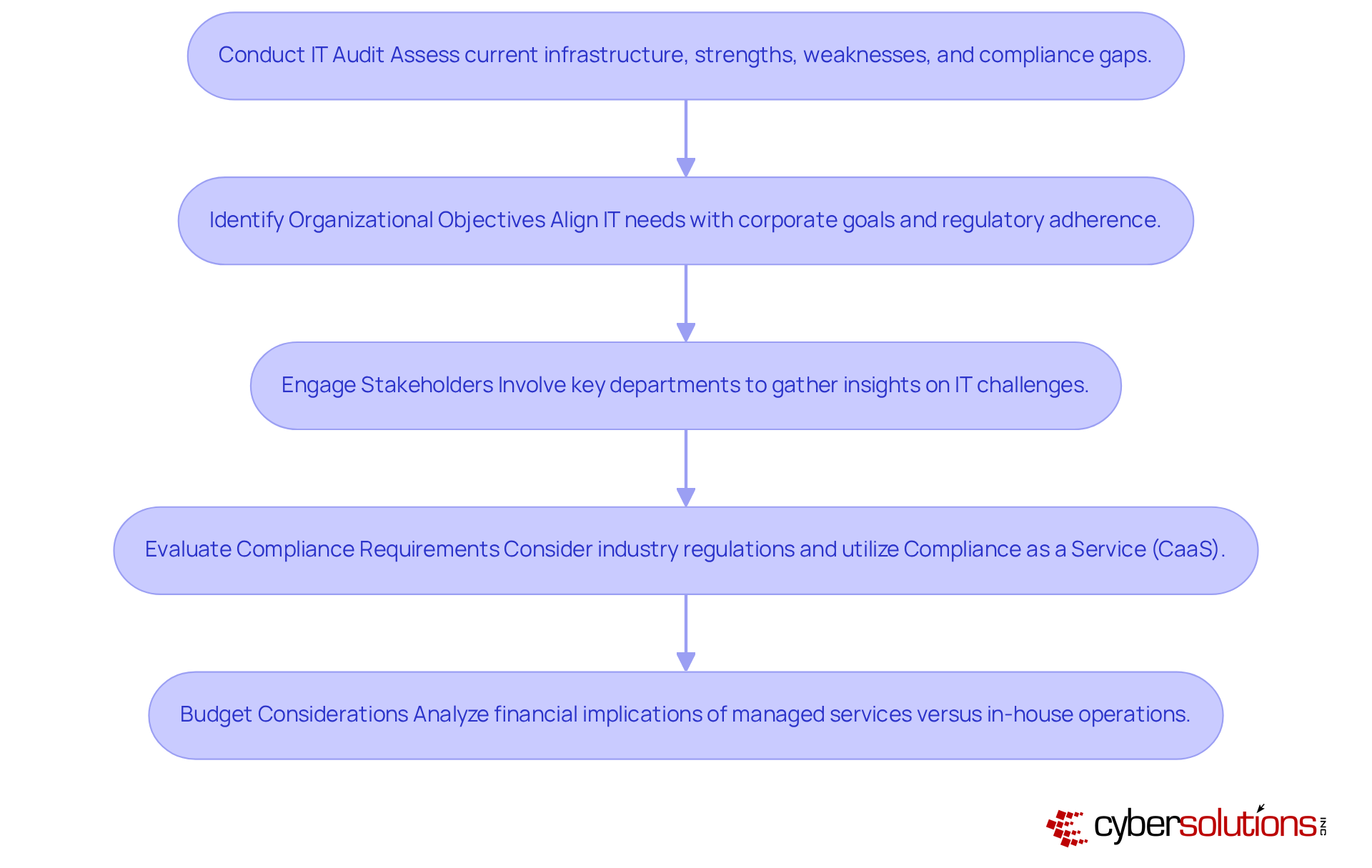
In an era where cybersecurity threats loom large, healthcare organizations must prioritize robust IT strategies to safeguard their operations and patient data. To effectively assess organizational needs for managed services, C-suite leaders should adopt a systematic approach:
- Conduct a Comprehensive IT Audit: Start by conducting a thorough IT audit to pinpoint strengths and weaknesses in your current infrastructure. This audit should encompass an assessment of existing hardware, software, and security measures, ensuring a complete understanding of the current state and identifying specific compliance gaps that may require tailored remediation strategies.
- Identify Organizational Objectives: Align IT needs with broader corporate goals. Determine how outsourced solutions can support objectives such as enhancing customer assistance, boosting operational efficiency, or ensuring adherence to regulations like HIPAA and PCI-DSS. As we approach 2026, aligning IT with business objectives is crucial, as organizations increasingly recognize the importance of strategic IT investments.
- Engage Stakeholders: Involve key stakeholders from various departments to gather insights on their specific IT challenges and requirements. This collaborative approach ensures that the chosen solutions meet the needs of the entire organization, fostering a sense of ownership and commitment.
- Evaluate Compliance Requirements: Consider industry-specific regulations that may impact IT operations, such as HIPAA for healthcare or PCI-DSS for finance. Understanding these requirements is vital for selecting supported solutions that ensure compliance. Utilizing Compliance as a Service (CaaS) can provide businesses with comprehensive solutions to meet these regulatory demands, including audit preparation and continuous monitoring, while addressing specific compliance gaps.
- Budget Considerations: Consider the financial implications of managed services, weighing potential savings against the costs of in-house operations. This entails examining current IT expenditures and forecasting future expenses related to outsourcing. With U.S. companies facing an average expense of $10,000 per employee for regulatory compliance, comprehending the financial landscape is essential for informed decision-making.
By thoroughly evaluating organizational requirements, C-suite leaders can make informed choices about which managed services projects will best support their strategic goals and improve overall business performance. Ultimately, a strategic approach to managed services not only mitigates risks but also positions organizations for sustainable growth in a complex regulatory landscape.
Implement Cost Control Strategies for Managed Services
In an era where healthcare costs are spiraling, effective cost control in managed services is not just beneficial - it's essential for C-suite leaders. To implement effective cost control strategies, C-suite leaders should consider the following approaches:
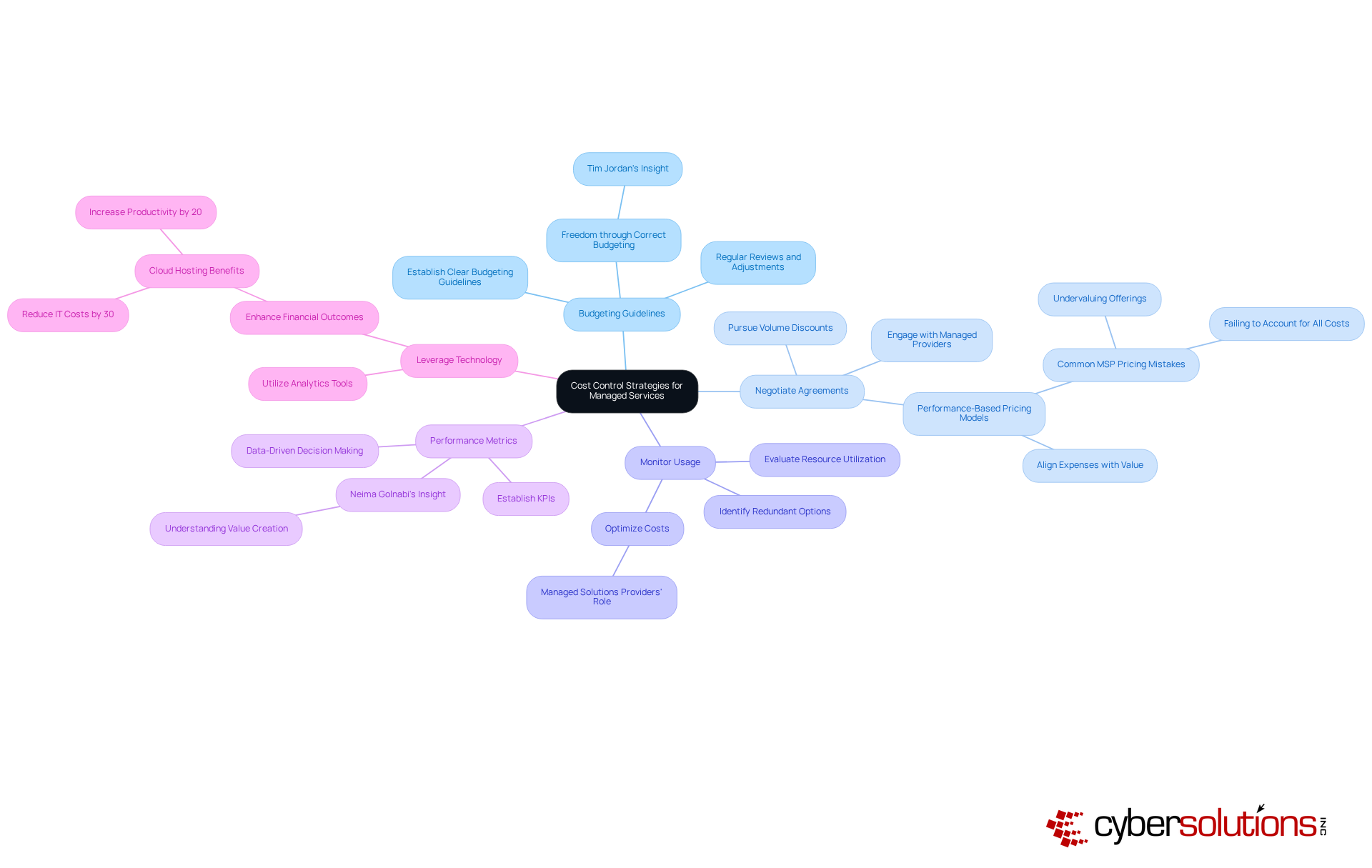
- Establish Clear Budgeting Guidelines: Create a detailed budget that specifies anticipated costs for supervised offerings, encompassing both fixed and variable expenses. Regular reviews and adjustments based on actual spending and evolving business needs are essential for maintaining financial control. As Tim Jordan emphasizes, "Budgeting, when done correctly, gives you incredible freedom, and shows you how to do it the right way for you."
- Negotiate Agreements: Engage in discussions with managed providers to secure favorable terms and pricing. This may entail pursuing volume discounts, bundled offerings, or performance-based pricing models that align expenses with delivery outcomes, ensuring that expenditures reflect actual value received. Frequent MSP pricing errors involve undervaluing offerings and failing to consider all expenses, as observed by Richelle Arevalo.
- Monitor Usage: Keep a close eye on how managed resources are being used to spot opportunities for saving costs. Evaluate whether all contracted offerings are being used efficiently and remove any redundant options to optimize costs. Managed solutions providers assist in recognizing unused cloud resources and overseeing license efficiency, which can result in considerable savings.
- Implement Performance Metrics: Establish key performance indicators (KPIs) to evaluate the effectiveness and efficiency of administered solutions. This data-oriented method aids in recognizing underperforming areas and guides decisions concerning adjustments or provider changes, enhancing overall quality. Neima Golnabi states, "Cost optimization is not about spending less - it’s about understanding where every dollar creates value."
- Leverage Technology for Cost Management: Utilize technology solutions that provide visibility into IT spending and resource allocation. Tools providing analytics and reporting functions allow organizations to make informed, data-driven choices regarding their investments, ultimately resulting in enhanced financial outcomes. For example, cloud hosting can decrease IT expenses by as much as 30%, making it a significant factor for financial management.
Without these strategies, C-suite leaders risk not only financial inefficiency but also the potential for compromised service quality.
Conclusion
In an era where cybersecurity threats are escalating, C-suite leaders must adopt proactive strategies to safeguard their organizations and ensure operational efficiency. Outsourcing IT management to specialized providers allows healthcare organizations to concentrate on their core missions, gaining proactive support and expert knowledge while achieving financial savings. This transition streamlines operations and equips organizations to excel in a complex regulatory environment.
It's crucial for leaders to conduct thorough assessments of their organizational needs, aligning IT strategies with business objectives, and implementing effective cost control measures. By adopting a systematic approach that includes comprehensive audits, stakeholder engagement, and budget considerations, leaders can make informed decisions that bolster their IT infrastructure. Furthermore, negotiating favorable agreements and leveraging technology for cost management can lead to significant savings and improved service quality.
Transitioning to managed services is not just a trend; it's a strategic imperative for organizations aiming for sustainable growth and resilience. C-suite leaders are encouraged to prioritize managed services as a core component of their operational strategy, ensuring that they not only meet current challenges but also proactively prepare for future demands. By embracing managed services, C-suite leaders can not only navigate today's challenges but also lay the groundwork for a resilient future in the digital age.
Frequently Asked Questions
What are managed services in the context of IT management?
Managed services involve outsourcing IT systems and infrastructure administration to a third-party provider, known as a Managed Service Provider (MSP), allowing organizations to focus on their core operations while ensuring effective management and security of their IT systems.
Why are managed services important for healthcare organizations?
Managed services are crucial for healthcare organizations as they provide proactive IT management, enhance cybersecurity, and ensure continuous monitoring and maintenance, which helps safeguard operations against escalating cybersecurity threats.
How do managed services differ from traditional IT support?
Unlike traditional IT support, which reacts to issues as they arise, managed services involve continuous monitoring and maintenance, leading to reduced downtime and improved system reliability.
What financial benefits do organizations gain from managed services?
Organizations can achieve significant savings on operational expenses, with overall IT expenses potentially lowered by 20% to 30%. Managed services also provide predictable monthly expenses, aiding in budgeting and financial planning.
How do managed services enhance productivity?
By improving efficiency and minimizing downtime, managed services can enhance productivity by 15% to 25%, allowing organizations to operate more effectively.
What expertise do Managed Service Providers (MSPs) offer?
MSPs provide specialized knowledge and skills, particularly in critical areas such as cybersecurity and compliance, which may not be available internally within an organization.
How do managed services contribute to cybersecurity?
Managed services offer access to expert cybersecurity measures, such as advanced threat intelligence and customized access controls, which are vital for protecting sensitive data and meeting regulatory requirements.
What is the scalability advantage of managed services?
Managed solutions allow organizations to easily adjust IT resources according to their evolving needs, facilitating growth without significant capital investment and enabling quick responses to market demands.
What is the projected growth of the managed services market?
The outsourced solutions market is expected to expand considerably, reaching $370.5 billion by 2026, indicating a growing dependence on managed services.
List of Sources
- Define Managed Services and Their Importance
- The 10 MSP trends to watch in 2026—and beyond (https://integrisit.com/blog/the-10-msp-trends-to-watch-in-2026-and-beyond)
- Managed IT Services Benefits In 2026 (https://alxtel.com/blogs/managed-it-services-benefits-in-2026)
- kpmg.com (https://kpmg.com/ke/en/insights/2026/04/managed-services-outlook-survey-2026.html)
- Managed Services On The Rise: The CRN 2026 MSP 500 (https://crn.com/news/managed-services/2026/managed-services-on-the-rise-the-crn-2026-msp-500)
- Assess Organizational Needs for Managed Services
- zluri.com (https://zluri.com/blog/key-compliance-statistics-and-insights)
- 130+ Compliance Statistics & Trends to Know for 2026 (https://secureframe.com/blog/compliance-statistics)
- Implement Cost Control Strategies for Managed Services
- grantthornton.com (https://grantthornton.com/insights/whitepapers/advisory/2026/turning-uncertainty-into-advantage)
- ninjaone.com (https://ninjaone.com/blog/managed-services-pricing-strategies)
- atypicalfinance.com (https://atypicalfinance.com/9-inspiring-budgeting-quotes-and-how-you-can-use-them-to-take-action-now)
- oneupnetworks.com (https://oneupnetworks.com/post/best-100-motivational-finance-quotes)
- IT Strategic Plan for 2026 and Beyond: How Managed Services Can Help (https://naviant.com/blog/managed-services-strategic-plan)