
Introduction
In an era where data breaches can cost healthcare organizations millions, the importance of robust firewall services is paramount. These digital sentinels are essential not only for safeguarding sensitive information but also for ensuring compliance with stringent regulations such as HIPAA and GDPR. As the landscape of cyber threats continues to evolve, healthcare organizations must ask: how can they effectively leverage firewall services to enhance their compliance and security posture? By exploring the types, best practices, and strategic management of firewall services, we uncover critical insights that can protect both data and reputation in an increasingly complex digital environment.
Define Firewall Services and Their Importance in Compliance
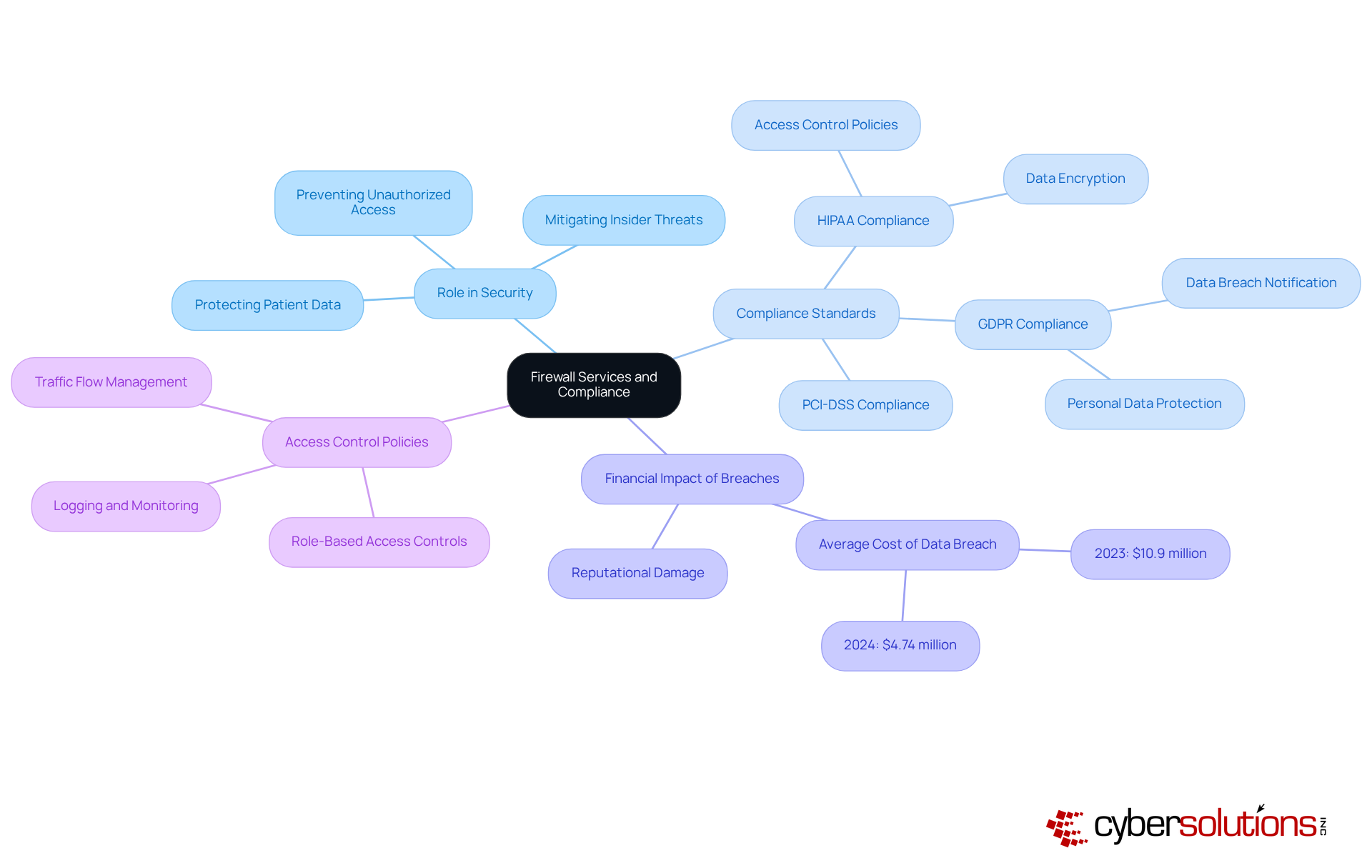
In today's digital landscape, cybersecurity stands as a paramount concern for healthcare organizations. Firewalls act as an essential barrier between trusted internal networks and untrusted external environments, effectively monitoring and managing both incoming and outgoing traffic in accordance with established protection protocols. Their role in compliance is indispensable; security systems are integral in helping entities meet regulatory standards such as HIPAA, HITECH, and PCI-DSS by safeguarding data from unauthorized access.
Consider this: in 2023, the average cost of a data breach in healthcare soared to $10.9 million. This staggering figure underscores the importance of cybersecurity. By implementing robust firewall services, organizations can demonstrate a commitment to security, significantly reducing the likelihood of breaches and regulatory violations. A healthcare provider that effectively utilizes these measures not only protects patient data but also ensures compliance with regulations, thus averting potential fines and reputational harm.
Moreover, firewalls facilitate the implementation of access control policies that are essential for adhering to compliance standards and best practices. This enhances the security of the organization, ensuring that patient information remains secure while fostering trust with stakeholders. As healthcare continues to evolve, the integration of comprehensive cybersecurity strategies will be crucial for navigating the complexities of regulatory compliance and protecting sensitive data.
Explore Different Types of Firewalls and Their Applications
In today's digital landscape, cybersecurity is paramount, especially in healthcare. The role of firewall services is crucial in safeguarding sensitive information from increasingly sophisticated threats. Understanding the various types of firewalls is essential for protecting their networks effectively.
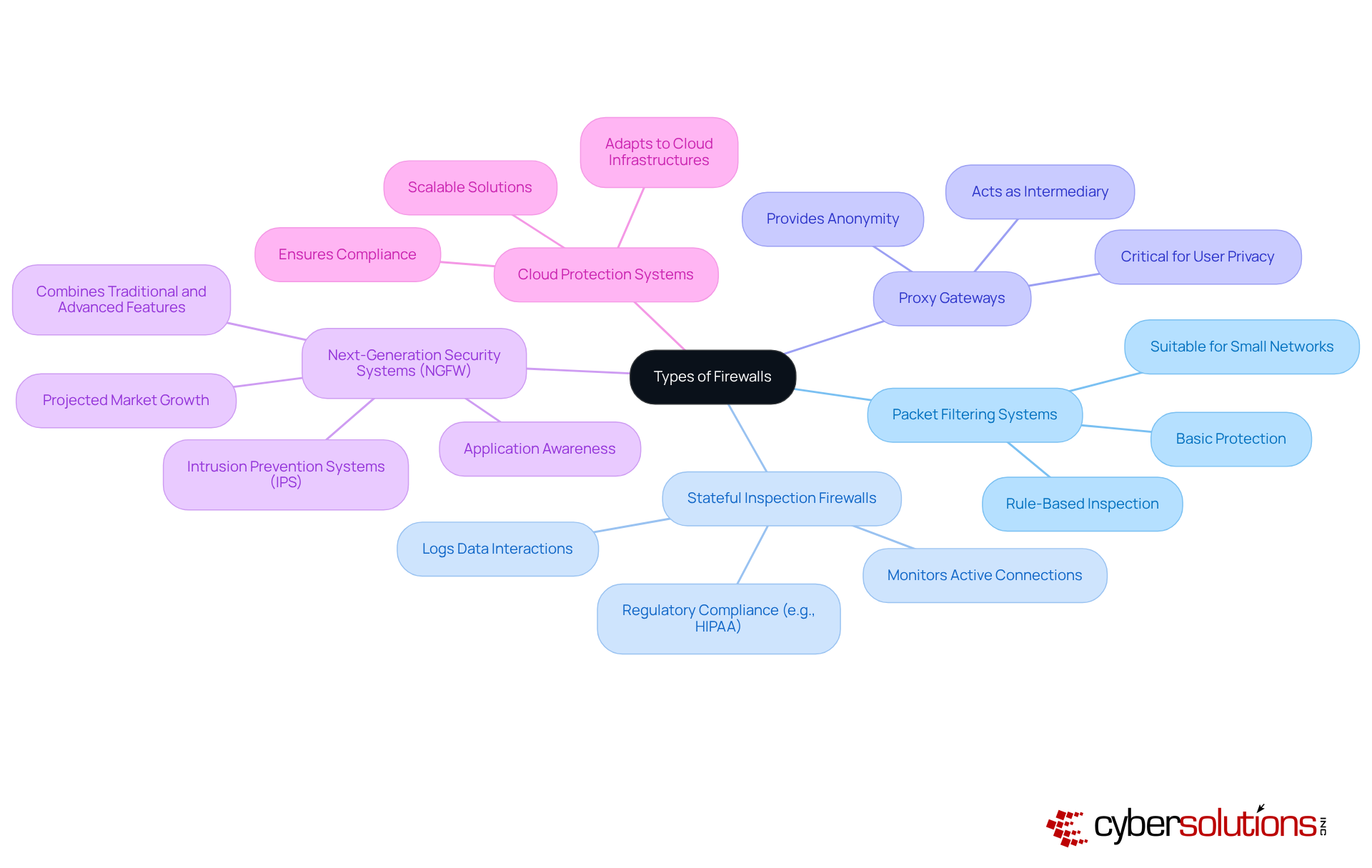
- Packet Filtering Systems serve as the foundation of network security, inspecting packets and permitting or denying them based on established rules. While suitable for small networks with basic protection needs, they may lack the depth required for more complex environments.
- Stateful Inspection Firewalls offer a more robust solution by monitoring active connections and making decisions based on the connection's state. This enhanced protection is particularly valuable for organizations needing to secure sensitive data, as they can effectively monitor and log data interactions.
- Proxy Gateways act as intermediaries, filtering traffic between users and the internet. They provide anonymity and an additional layer of protection, making them beneficial in environments where user privacy and data protection are critical.
- Next-Generation Firewalls (NGFW) combine traditional capabilities with advanced features like intrusion prevention systems (IPS) and application awareness. These solutions are ideal for complex environments, particularly in sectors such as finance, where sophisticated threats are prevalent. The market share of NGFWs is projected to grow significantly in 2025, underscoring their increasing importance in cybersecurity.
- Cloud firewalls are vital as organizations migrate to cloud infrastructures. These scalable solutions adapt to changing requirements, ensuring compliance while maintaining robust security measures.
Choosing the appropriate type of firewall is essential for compliance. For instance, healthcare entities may require specific solutions to meet HIPAA standards, while financial institutions could benefit from advanced firewalls to guard against advanced cyber threats. IT protection experts emphasize that the selection of a network barrier should align with the specific regulatory demands and safety needs of the organization.
Implement Best Practices for Firewall Configuration and Management
To maximize the effectiveness of their cybersecurity measures, organizations must embrace best practices.
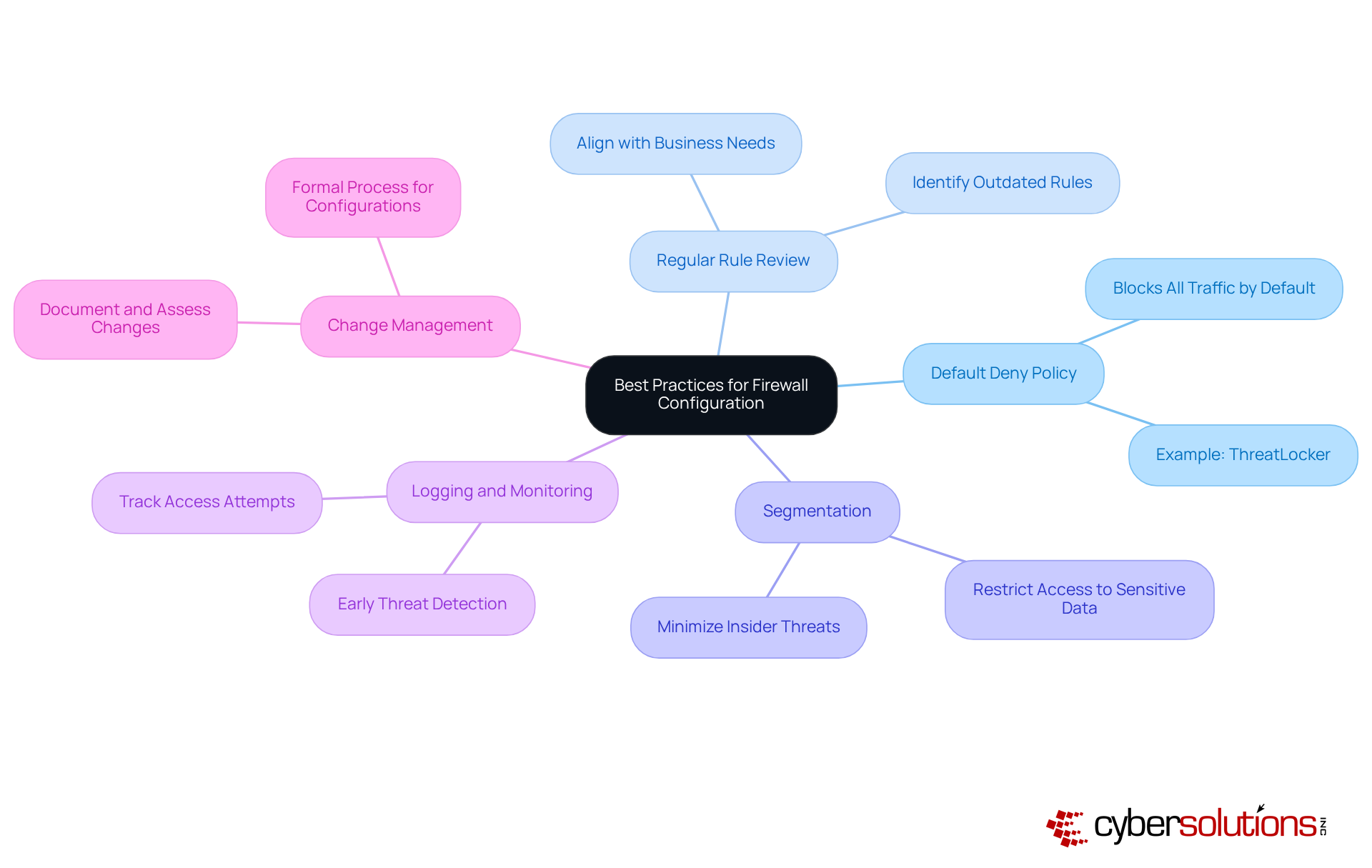
- Default Deny: Implementing a default deny policy is crucial; it blocks all traffic unless explicitly allowed. This strategy significantly reduces exposure to potential threats by ensuring that only necessary traffic is permitted. Entities such as ThreatLocker exemplify the practicality and efficiency of this approach, showcasing its role in bolstering protection.
- Regular Rule Review: Conducting periodic assessments of security rules is essential to identify and eliminate outdated or unnecessary entries. This practice not only closes vulnerabilities that could be exploited by attackers but also ensures that the firewall remains aligned with current business needs and objectives.
- Segmentation: Utilizing network segmentation restricts access to sensitive data effectively. By ensuring that only authorized users can access critical systems, organizations can significantly minimize the risk of insider threats and unauthorized access, thereby enhancing overall safety.
- Comprehensive Logging: Enabling comprehensive logging is vital for tracking access attempts and monitoring for suspicious activities. Regularly examining these logs is crucial for the early detection of possible threats, enabling prompt actions to mitigate risks.
- Change Management: Establishing a formal process for network configurations is imperative. By recording and assessing all alterations, organizations can ensure that adjustments do not introduce weaknesses, thereby preserving the integrity of the system's protective stance.
By adhering to these best practices, organizations can substantially improve their compliance with the implementation of firewall strategies while ensuring alignment with relevant regulations, ultimately safeguarding sensitive data and maintaining trust in their digital operations.
Conduct Regular Audits and Updates for Firewall Compliance
Regular reviews and updates are vital for firewall security and compliance. Organizations must embrace strategic approaches to fortify their defenses against evolving threats:
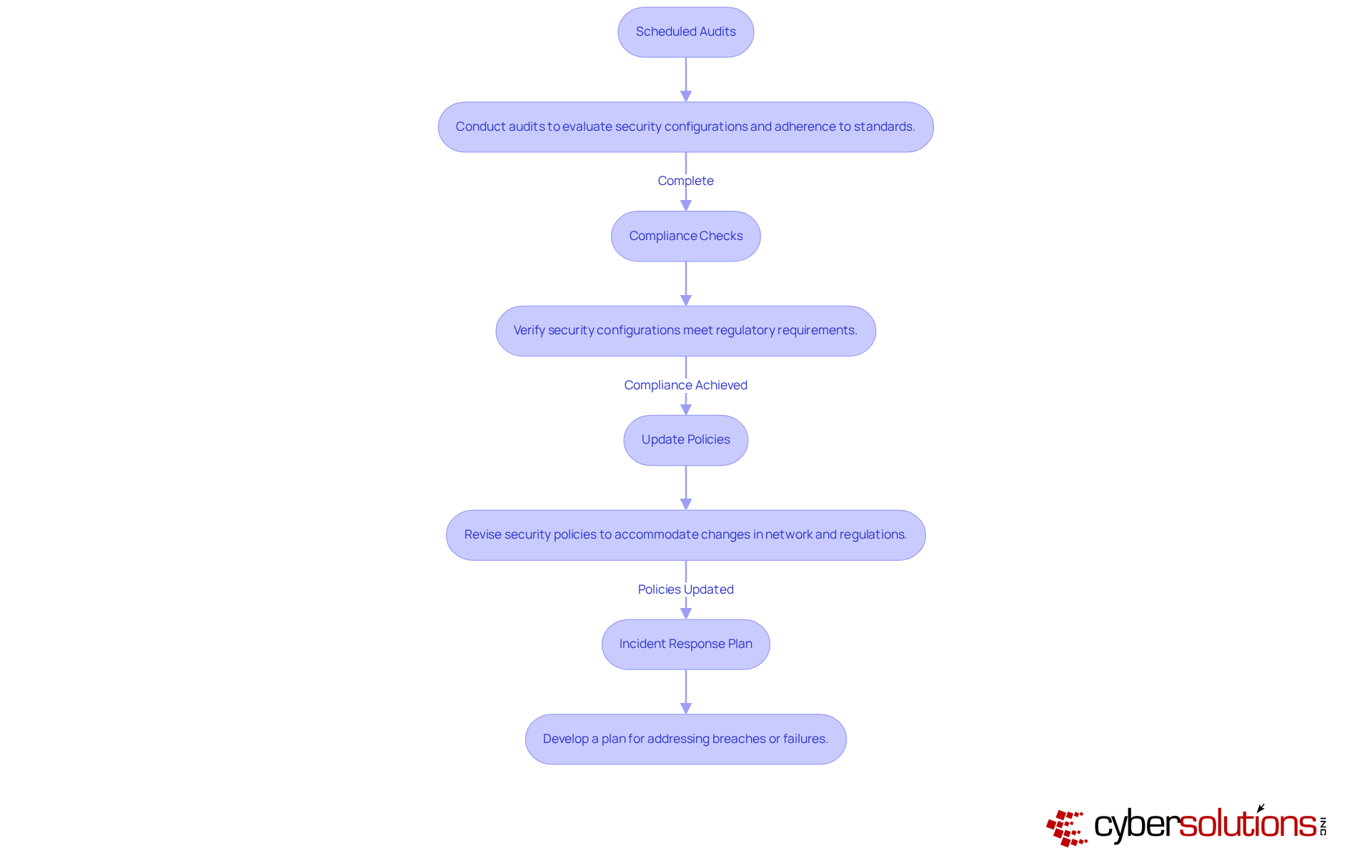
- Conduct audits at least annually to evaluate firewall configurations, rule sets, and adherence to industry standards. This proactive strategy aids in recognizing weaknesses and opportunities for improvement, ensuring that security systems effectively prevent unauthorized access.
- Verify that organizations meet compliance requirements such as PCI-DSS, HIPAA, and GDPR. This process may involve cross-referencing with established compliance checklists to ensure alignment with legal and regulatory standards.
- Regularly revise policies to accommodate changes in the entity's network structure, business processes, and regulatory landscape. Keeping policies current minimizes the risk of vulnerabilities arising from outdated configurations.
- Develop and maintain a comprehensive incident response plan that outlines procedures for addressing breaches or failures in firewall services. This readiness allows entities to respond effectively, reducing possible harm and ensuring the continuation of operations.
By implementing these strategies, organizations can sustain a robust security posture and ensure ongoing compliance with relevant regulations, ultimately enhancing their resilience against evolving threats.
Conclusion
In the realm of healthcare, the importance of robust cybersecurity cannot be overstated. Firewall services play a critical role in safeguarding sensitive information and ensuring compliance with essential regulations such as HIPAA, GDPR, and PCI-DSS. By acting as a protective barrier against unauthorized access, these services not only mitigate the risk of data breaches but also shield organizations from the financial repercussions associated with regulatory penalties.
As we explored throughout this article, various types of firewall services—from basic packet filtering systems to advanced next-generation firewalls—each cater to specific needs and applications. This underscores the necessity of selecting the right solution that aligns with an organization’s regulatory requirements and security demands. Best practices for firewall configuration, including the implementation of a default deny policy and conducting regular audits, further bolster security measures and ensure compliance.
Ultimately, organizations must prioritize the integration of comprehensive cybersecurity strategies. A proactive approach to compliance management is essential; it not only protects sensitive data but also cultivates trust with stakeholders and sustains an organization’s reputation in an increasingly digital landscape. Taking decisive action now to optimize firewall services will pave the way for a more secure future, safeguarding both the organization and the individuals it serves.
Frequently Asked Questions
What are firewall services and their primary function?
Firewall services act as a barrier between trusted internal networks and untrusted external environments, monitoring and managing both incoming and outgoing traffic according to established protection protocols.
Why are firewall services important for healthcare organizations?
They are crucial for ensuring compliance with regulatory standards such as GDPR, HIPAA, and PCI-DSS by safeguarding sensitive information from unauthorized access.
What is the financial impact of data breaches in healthcare?
In 2023, the average cost of a data breach in healthcare reached $10.9 million, highlighting the financial consequences of inadequate security measures.
How do robust security protocols benefit healthcare organizations?
Implementing strong security protocols demonstrates a commitment to data protection, reduces the likelihood of breaches and regulatory violations, and helps avoid potential fines and reputational damage.
How do firewall services support compliance with HIPAA and GDPR?
Firewall services facilitate the implementation of access control policies that are essential for adhering to HIPAA and GDPR regulations, enhancing the overall security posture of the organization.
What is the overall significance of integrating cybersecurity strategies in healthcare?
Comprehensive cybersecurity strategies are crucial for navigating regulatory compliance complexities and protecting sensitive data as the healthcare landscape continues to evolve.
List of Sources
- Define Firewall Services and Their Importance in Compliance
- securitymetrics.com (https://securitymetrics.com/blog/how-to-implement-and-maintain-hippa-compliant-firewalls)
- nordlayer.com (https://nordlayer.com/blog/firewall-hipaa-compliance)
- paloaltonetworks.com (https://paloaltonetworks.com/cyberpedia/how-the-next-generation-security-platform-contributes-to-gdpr-compliance)
- Healthcare Cybersecurity Statistics 2024 (https://ispartnersllc.com/blog/healthcare-cybersecurity-statistics)
- Explore Different Types of Firewalls and Their Applications
- fortifiedhealthsecurity.com (https://fortifiedhealthsecurity.com/blog/healthcare-cybersecurity-threats-february-2025)
- 38 Must-Know Healthcare Cybersecurity Stats (https://varonis.com/blog/healthcare-cybersecurity-statistics)
- jotform.com (https://jotform.com/blog/hipaa-compliant-firewall)
- healthmanagement.org (https://healthmanagement.org/c/cybersecurity/News/next-generation-firewalls-in-healthcare)
- healthtechmagazine.net (https://healthtechmagazine.net/article/2025/08/next-generation-firewalls-in-healthcare-cybersecurity-perfcon)
- Implement Best Practices for Firewall Configuration and Management
- clearnetwork.com (https://clearnetwork.com/firewall-security-management-best-practices)
- backbox.com (https://backbox.com/blog/7-firewall-best-practices-to-secure-your-network)
- cybersecuritytribe.com (https://cybersecuritytribe.com/articles/the-case-for-default-deny)
- securemyorg.com (https://securemyorg.com/best-practices-for-configuring-firewall-rules)
- infraon.io (https://infraon.io/blog/7-firewall-management-best-practices)
- Conduct Regular Audits and Updates for Firewall Compliance
- serma-safety-security.com (https://serma-safety-security.com/en/blog/firewall-audit)
- checkpoint.com (https://checkpoint.com/cyber-hub/network-security/what-is-firewall/firewall-compliance)
- technology.org (https://technology.org/2025/03/28/performing-a-firewall-audit-what-business-owners-should-know)
- The Importance of Regular Firewall Audits (https://linkedin.com/pulse/importance-regular-firewall-audits-cesar-mora--kg7ic)
- dialoghealth.com (https://dialoghealth.com/post/healthcare-cybersecurity-statistics)