
Introduction
Managed cloud platforms are essential for boosting business efficiency, especially in high-demand sectors like healthcare. By utilizing these platforms, organizations can streamline their processes, ensure compliance, and concentrate on their core missions - all while reaping the benefits of scalability and cost savings. Yet, as cloud technology continues to evolve, businesses encounter a significant challenge: how to maximize their return on investment.
How can organizations effectively leverage managed cloud services to not only enhance operational efficiency but also foster continuous improvement and protect their investments? This question is crucial as it sets the stage for exploring the transformative potential of cloud solutions in today’s dynamic landscape.
Understand the Role of Managed Cloud Platforms in Business Efficiency
are indispensable for modern enterprises, particularly in the healthcare sector, where they significantly enhance operational efficiency. By outsourcing to specialized providers, organizations can focus on their core competencies while harnessing cutting-edge technologies. These systems provide scalability, flexibility, and cost-effectiveness, enabling businesses to adapt to shifting market demands without the burdens of managing physical infrastructure.
Consider that organizations utilize managed online services: they can achieve compliance with regulations, ensuring the secure handling of sensitive data. This approach not only improves operational efficiency but also elevates patient care and satisfaction. The integration of online solutions has been shown to substantially improve operational productivity, with systematic process enhancements leading to efficiency gains of 25-30% in medical organizations.
As the healthcare industry continues to embrace technology, the strategic adoption of managed cloud platforms becomes crucial for maintaining and delivering high-quality care. Are you ready to leverage these advancements to enhance your organization's performance?

Implement Key Strategies for Optimizing Cloud Resource Utilization
To maximize efficiency, businesses must adopt several key strategies.
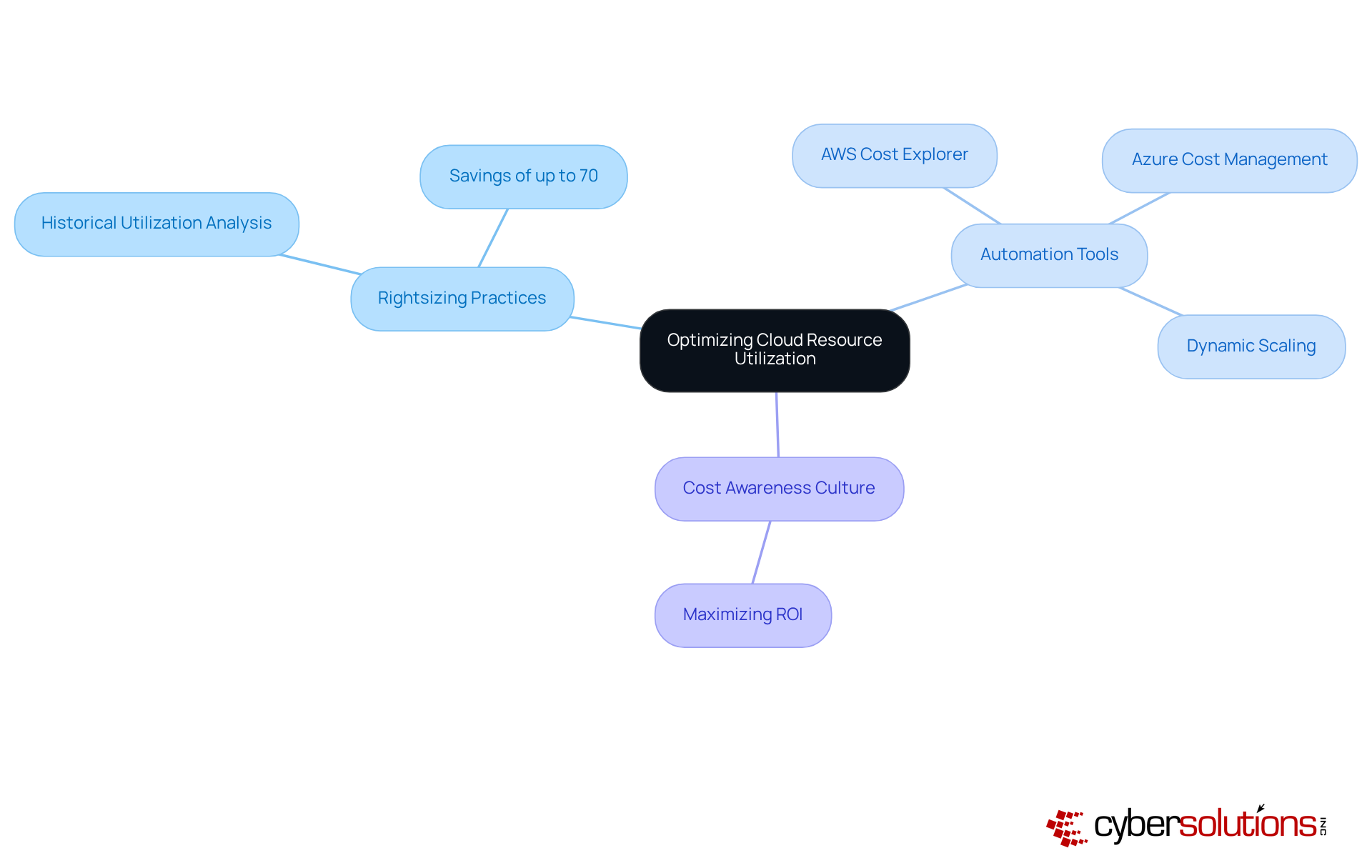
- Implementing rightsizing is essential; it ensures resources are allocated based on actual usage, effectively preventing overprovisioning and unnecessary costs. In 2026, rightsizing relies on historical utilization analysis rather than static thresholds, enhancing its effectiveness. Organizations that have embraced rightsizing have seen significant benefits.
- Additionally, utilizing automation tools such as cloud management platforms can streamline resource management, enabling dynamic scaling based on demand. Regular monitoring and analysis of usage patterns are crucial for identifying inefficiencies and areas for improvement.
- Consider a manufacturing company that implemented these strategies, resulting in a 20-40% decrease in operational expenses, thereby improving returns on investments.
By fostering a culture of continuous improvement, as emphasized by industry leaders, and employing these strategies, entities can significantly enhance their financial accountability and operational efficiency. Are you ready to take the next step in optimizing your resource utilization?
Measure and Analyze ROI to Drive Continuous Improvement
To effectively measure ROI from a managed cloud platform, organizations must establish clear metrics aligned with their objectives. This is crucial in today’s competitive landscape, where understanding the return on investment can make or break success.
Key performance indicators such as:
- Cost savings
should be tracked consistently. These metrics facilitate real-time analysis, empowering organizations to make informed decisions based on current data. For instance, nearly half of FinOps teams are now coordinating expenditures with organizational results. This shift reflects a strategic change in how financial services firms evaluate technology investments.
By establishing a robust ROI measurement framework, organizations can pinpoint where improvements are needed. This insight allows for strategic reallocations of resources, ultimately enhancing overall profitability. Furthermore, adopting a flat-rate pricing model for a service that includes IT and cybersecurity services, as offered by Cyber Solutions, simplifies budgeting and eliminates unexpected IT expenses.
This model not only boosts financial clarity but also supports organizational growth by providing predictable costs. It ensures compliance with regulatory standards and drives continuous improvement in financial performance. Are you ready to transform your approach to ROI measurement and enhance your organization’s financial health?

Ensure Compliance and Security to Protect Investments
In today's digital landscape, the importance of compliance cannot be overstated. With a staggering 79% of companies experiencing at least one data breach in the last 18 months, the need for robust security measures is more critical than ever. To protect investments in a managed cloud platform, healthcare organizations must prioritize compliance through a comprehensive security framework. This framework should encompass:
- Encryption
- Stringent access controls
Staying informed about regulatory changes is essential. Service providers must comply with industry standards such as HIPAA. For instance, healthcare organizations that implement these standards can significantly lower their risk of cyberattacks. This not only protects their reputation but also safeguards their financial assets. Regular training on security protocols is vital, enhancing the overall security posture and fostering a culture of vigilance against potential threats.
The unique challenges faced by CFOs in healthcare demand immediate attention. As the landscape of cybersecurity threats evolves, organizations must adapt swiftly. Cyber Solutions can address these challenges effectively, ensuring that healthcare providers remain resilient against emerging threats. By investing in comprehensive cybersecurity strategies, organizations can protect their data and maintain trust with their patients.

Conclusion
Maximizing the return on investment (ROI) from managed cloud platforms is not just essential; it’s a strategic imperative for organizations aiming to enhance operational efficiency and secure a competitive edge. In today’s fast-paced environment, leveraging these platforms allows businesses to streamline IT management, concentrate on core competencies, and swiftly adapt to market changes. Moreover, integrating managed cloud services not only ensures compliance with industry regulations but also significantly boosts productivity, especially in the healthcare sector.
Key strategies such as:
- Rightsizing
- Automation
- Robust ROI measurement frameworks
are pivotal in optimizing resource utilization. Organizations that have embraced these practices report substantial cost savings and marked improvements in operational efficiency. Furthermore, prioritizing compliance and cybersecurity measures is crucial for protecting investments and safeguarding sensitive data against potential breaches.
In a rapidly evolving digital landscape, adopting these best practices for managed cloud platforms is no longer optional; it’s a necessity. Organizations must take decisive steps to optimize their cloud resources, measure ROI effectively, and ensure compliance with security standards. By doing so, they can fully realize the potential of their cloud investments, drive continuous improvement, and ultimately enhance overall business performance.
Frequently Asked Questions
What are managed cloud platforms and why are they important for businesses?
Managed cloud platforms are services that outsource IT infrastructure management to specialized providers, allowing businesses to focus on their core competencies while utilizing advanced technologies. They are crucial for enhancing operations and boosting productivity, especially in sectors like healthcare.
How do managed cloud platforms benefit the healthcare sector?
In the healthcare sector, managed cloud platforms help organizations achieve compliance with HIPAA regulations for secure handling of sensitive patient information. They also improve operational efficiency and elevate patient care by optimizing IT resources.
What advantages do managed cloud platforms offer in terms of scalability and flexibility?
Managed cloud platforms provide scalability and flexibility, enabling businesses to adapt to changing market demands without the burden of managing physical infrastructure. This adaptability is essential for maintaining competitiveness.
How do managed cloud platforms impact operational productivity in healthcare organizations?
The integration of managed cloud platforms in healthcare has been shown to improve operational productivity significantly, with efficiency gains of 25-30% due to systematic process enhancements.
Why is the strategic adoption of managed cloud platforms important for healthcare organizations?
The strategic adoption of managed cloud platforms is crucial for healthcare organizations to maintain compliance with regulations and deliver high-quality care as the industry continues to embrace digital transformation.
List of Sources
- Understand the Role of Managed Cloud Platforms in Business Efficiency
- cloudcomputing-news.net (https://cloudcomputing-news.net/news/5-ways-cloud-computing-is-transforming-healthcare)
- oracle.com (https://oracle.com/news/announcement/healthcare-organizations-enhance-efficiency-with-oracle-fusion-cloud-applications-2025-12-15)
- rsmus.com (https://rsmus.com/insights/industries/health-care/cloud-migration-boosting-efficiency-and-patient-care-in-health-care.html)
- careset.com (https://careset.com/7-managed-services-for-healthcare-to-enhance-operational-efficiency)
- AI gains traction as hospitals focus on operational efficiency (https://healthcarefinancenews.com/news/ai-gains-traction-hospitals-focus-operational-efficiency)
- Implement Key Strategies for Optimizing Cloud Resource Utilization
- future-processing.com (https://future-processing.com/blog/cloud-cost-optimisation-how-to-reduce-your-cloud-spendings)
- holori.com (https://holori.com/complete-guide-to-cloud-cost-optimization-in-2026)
- northflank.com (https://northflank.com/blog/cloud-cost-optimization)
- forbes.com (https://forbes.com/councils/forbestechcouncil/2026/02/02/how-to-optimize-cloud-costs-in-2026)
- linkedin.com (https://linkedin.com/pulse/cloud-cost-optimization-best-practices-2026-zkpvf)
- Measure and Analyze ROI to Drive Continuous Improvement
- ciodive.com (https://ciodive.com/news/finops-expands-focus-roi-ai-efficiency/815478)
- businesswire.com (https://businesswire.com/news/home/20260303651823/en/Only-One-Third-of-AI-Projects-Deliver-Positive-ROI-Yet-Companies-Continue-to-Invest-in-AI-Infrastructure-According-to-the-2026-Wasabi-Global-Cloud-Storage-Index)
- AI ROI Measurement: New Metrics For 2026 Financial Returns (https://forbes.com/sites/guneyyildiz/2026/01/28/56-of-ceos-see-zero-roi-from-ai-heres-what-the-12-who-profit-do-differently)
- cloudgeometry.com (https://cloudgeometry.com/blog/planning-ai-investments-that-actually-pay-off-in-2026)
- skill-mine.com (https://skill-mine.com/ai-roi-in-2026-what-leaders-are-measuring-beyond-cost-savings)
- Ensure Compliance and Security to Protect Investments
- getastra.com (https://getastra.com/blog/cloud/cloud-security-statistics)
- Cloud Security and Compliance Updates Expected in 2026 (https://databank.com/resources/blogs/cloud-security-and-compliance-updates-expected-in-2026)
- akitra.com (https://akitra.com/blog/cloud-security-compliance-guide)
- forbes.com (https://forbes.com/councils/forbestechcouncil/2026/02/23/why-2026-is-the-year-cloud-migration-accelerates-with-confidence)
- cybernews.com (https://cybernews.com/partner-content/how-secure-is-the-cloud-in-2026-risks-security-controls-and-best-practices)