

Introduction
In an era where cyber threats loom large, the healthcare sector must prioritize cybersecurity to protect sensitive patient data and maintain operational integrity. Understanding the digital landscape is crucial for businesses operating in today's technology-driven world, especially as cyber threats like adware and spyware become increasingly prevalent. Organizations face mounting pressure to safeguard sensitive data against relentless cyber threats while navigating complex regulatory landscapes.
These forms of malware not only jeopardize sensitive information but also disrupt operations, leading to significant financial and reputational damage. We’ll explore the characteristics and differences between adware and spyware, how they infiltrate systems, and actionable strategies to safeguard your data and maintain operational integrity.
Without robust cybersecurity measures, organizations risk not only their financial stability but also the trust of those they serve.
Define Adware and Spyware: Key Differences and Characteristics
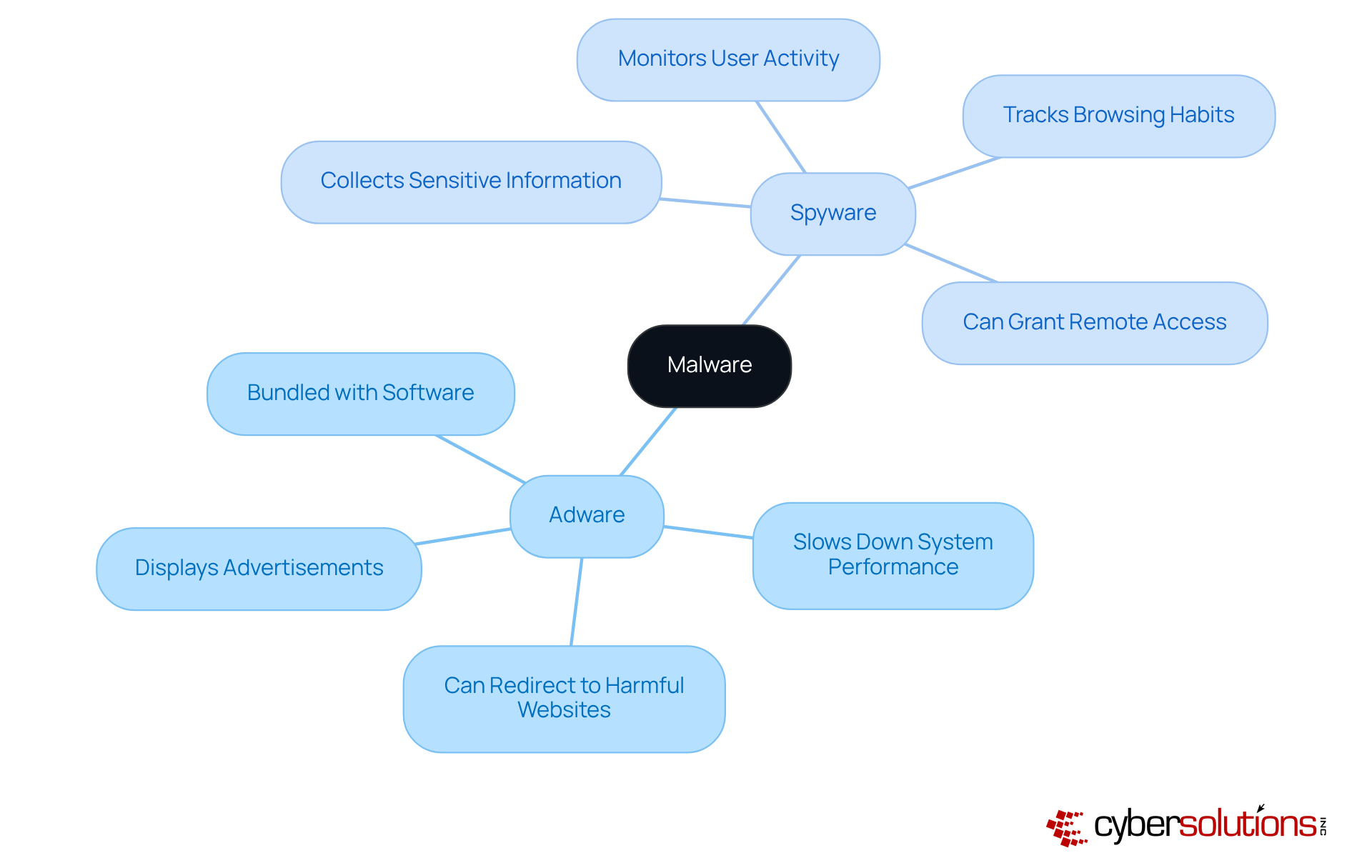
In an era where cyber threats are increasingly sophisticated, understanding the nuances of malware is essential for safeguarding sensitive information in healthcare. Adware and spyware are both forms of malware, yet they serve different purposes and operate in unique ways:
- Adware: This software is primarily designed to display advertisements on your device, often manifesting as pop-ups or banners. While some advertising-supported software can be benign and used for legitimate promotion, it frequently slows down system performance and creates unwanted distractions. Significantly, adware can examine browsing patterns and redirect individuals to harmful websites, heightening the chance of exposure to more serious malware.
- Surveillance software: In contrast, surveillance software is malicious code that operates covertly to monitor user activity and collect sensitive information without consent. It can track browsing habits, capture keystrokes, and access personal data, posing significant privacy risks. The seriousness of malicious software threats is emphasized by its ability to steal financial or personal information, making it a high-priority concern for businesses.
Grasping these differences is vital for organizations looking to strengthen their cybersecurity efforts. Without proper backups, organizations risk losing critical data forever during an attack, underscoring the urgent need for proactive security measures to safeguard their data. Application allowlisting is an essential instrument in this context, as it stops unauthorized applications, including malicious software, from running on systems. By limiting the applications that can run, organizations can significantly reduce their attack surface and enhance compliance with regulations like HIPAA and GDPR. The increase in advanced tracking software attacks, especially aimed at messaging applications, highlights the necessity for continuous alertness and strong protections against developing dangers.
Cyber Solutions offers expert malware removal and system reconstruction services, ensuring that compromised endpoints are cleaned, patched, and fortified against future attacks. By identifying the traits of malicious software, businesses can better protect their sensitive information and uphold operational integrity. By prioritizing cybersecurity, organizations can not only protect their data but also maintain trust and integrity in their operations.
Explore How Adware and Spyware Operate: Infiltration and Functionality
In an era where healthcare organizations are increasingly targeted by cybercriminals, it is crucial to understand the threats posed by adware and spyware to safeguard sensitive patient data and maintain operational integrity.
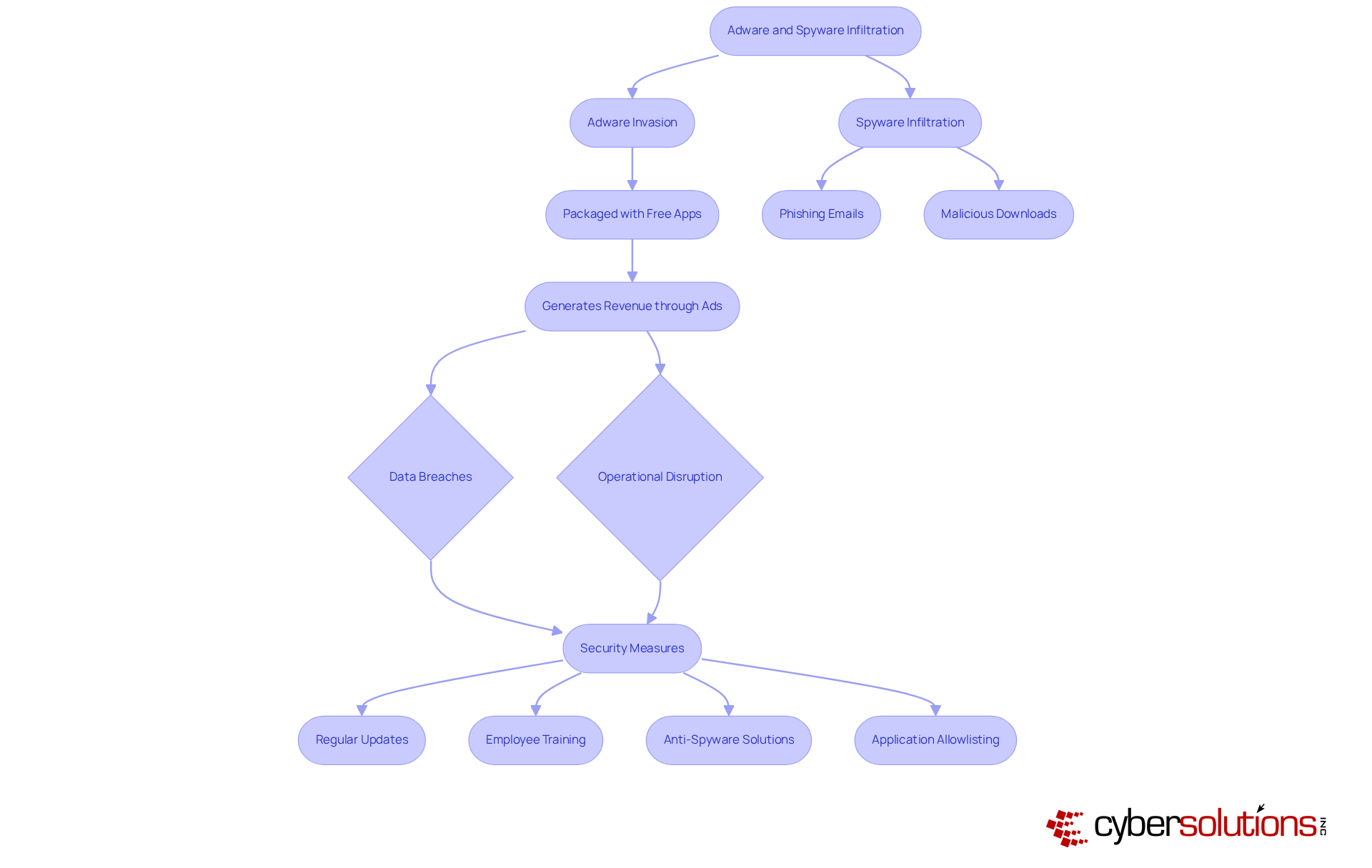
Adware and spyware infiltrate systems through various methods, creating significant risks to organizational security and productivity.
- Advertising Malware Invasion: Often packaged with complimentary applications, advertising malware can embed itself without user approval. Once embedded, it generates revenue by displaying intrusive advertisements, cluttering the user experience and leading to decreased productivity. This method of infiltration exploits users' desire for free applications, making it a prevalent threat in the digital landscape.
- Spyware Infiltration: Spyware typically employs deceptive tactics for infiltration, such as phishing emails or malicious downloads. Once it gains access to a system, it operates covertly, collecting sensitive data and transmitting it to third parties without the user's knowledge. This stealthy operation can lead to severe privacy breaches and data loss, impacting organizational integrity.
These threats not only compromise sensitive data but also disrupt daily operations, leading to financial losses and reputational damage, highlighting the urgent need for robust security measures. To combat these threats, organizations must prioritize regular updates, empower employees with training to spot phishing attempts, and invest in trusted anti-spyware solutions. Furthermore, applying application allowlisting can enhance security by ensuring that only authorized applications can operate on your systems, effectively preventing unauthorized software and decreasing the chance of malware infiltration. Additionally, application allowlisting helps organizations meet compliance requirements for standards such as HIPAA, PCI-DSS, and GDPR, ensuring adherence to strict data protection protocols. By adopting comprehensive security strategies, organizations not only protect their assets but also uphold their commitment to patient trust and regulatory compliance.
Implement Strategies to Prevent Adware and Spyware: Best Practices for Businesses
In an era where cyber threats loom large, safeguarding healthcare organizations against threats such as adware and spyware is not just a necessity; it's a critical imperative for survival. To effectively protect your business, consider implementing the following best practices:
- Install Reputable Security Software: Utilize comprehensive antivirus and anti-malware solutions that effectively detect and remove harmful software. Regular updates are crucial to safeguard against the latest threats.
- Educate Employees: Conduct ongoing training sessions to enhance awareness of the risks associated with adware and spyware. Employees should learn to recognize phishing attempts and suspicious downloads, which are common entry points for malware.
- Keep Programs Updated: Regularly refresh all programs, including operating systems and applications, to address vulnerabilities that could be exploited by malware. This proactive approach is essential, as unpatched applications are a common vector for cyberattacks.
- Practice Safe Browsing: Encourage employees to avoid clicking on unknown links or downloading software from untrusted sources. Safe browsing practices can greatly minimize the risk of malware infections.
- Implement Ad Blockers: Use ad blockers in browsers to reduce exposure to harmful advertisements that may contain unwanted software.
- Implement Application Allowlisting: This powerful tool enhances your cybersecurity by ensuring that only approved applications can run on your network. By limiting the applications that can execute, you significantly reduce the attack surface and minimize vulnerabilities, making it harder for attackers to exploit your systems. Additionally, application allowlisting helps meet compliance requirements for standards such as HIPAA, PCI-DSS, and GDPR, ensuring your organization adheres to strict data protection protocols.
By adopting these strategies, organizations not only protect their data but also fortify their reputation and trustworthiness in an increasingly digital world.

Assess the Impact of Adware and Spyware on Business Operations and Compliance
In an era where cyber threats loom large, the impact of adware and spyware on business operations should not be underestimated.
Operational disruption can occur as both adware and spyware significantly hinder system performance, resulting in decreased productivity and heightened frustration among employees. This disruption doesn’t just slow things down; it can hit the bottom line hard. With a staggering 32% rise in cyberattacks reported in 2025, can organizations afford to ignore the need for robust cybersecurity measures? Application allowlisting serves as a frontline defense, blocking unauthorized software and significantly reducing the risk of malware disruptions. Continuous monitoring further enhances this defense by detecting and blocking unauthorized attempts in real-time.
- Data Breaches: Adware and spyware are especially infamous for their ability to stealthily gather sensitive information, presenting a significant threat of data breaches. Such breaches can lead to legal liabilities, with the average cost of a data breach estimated between $4.4 million and $4.9 million globally. In 2025, healthcare organizations faced an average breach cost of $10.1 million, highlighting the financial stakes involved. Application allowlisting helps reduce these threats by ensuring that only authorized applications can operate, thus preventing possible malicious software before it can inflict damage.
- Compliance Risks: Many industries operate under stringent regulations concerning data protection and privacy. A malware infection can jeopardize compliance efforts, potentially resulting in hefty fines and legal repercussions. For example, malicious software can increase compliance challenges under regulations like the California Privacy Rights Act (CPRA) and the Health Insurance Portability and Accountability Act (HIPAA). Application allowlisting not only enhances security but also supports compliance by enforcing strict control over software usage, making it imperative for organizations to maintain vigilant cybersecurity practices.
By recognizing these impacts, businesses can better prioritize their cybersecurity initiatives and allocate resources effectively to mitigate the risks associated with adware and spyware, while utilizing solutions such as application allowlisting to enhance their overall security posture. By prioritizing cybersecurity measures like application allowlisting, organizations can not only protect their assets but also secure their future in an increasingly digital landscape.

Conclusion
In an era where digital threats are ever-evolving, understanding the distinct challenges posed by adware and spyware is essential for organizations committed to safeguarding sensitive information. These two forms of malware disrupt business operations in unique ways, making it vital for organizations to understand their differences. Adware primarily generates revenue through intrusive advertisements, while spyware covertly collects sensitive data, posing significant privacy risks. By recognizing these differences, businesses can adopt targeted strategies to effectively mitigate their impact.
The insights shared in this article underscore the critical need for proactive cybersecurity measures. By implementing practices such as:
- Application allowlisting
- Regular software updates
- Comprehensive employee training
organizations can significantly reduce their vulnerability to these threats. Moreover, the financial implications of data breaches and the compliance risks associated with adware and spyware highlight the necessity of robust security protocols to safeguard assets and uphold regulatory standards.
By prioritizing cybersecurity, organizations not only protect their data but also fortify the trust that is vital for their long-term success. Taking decisive action against adware and spyware enables organizations to navigate the complex digital landscape with confidence, securing their future against evolving cyber threats. Investing in comprehensive security strategies today will pave the way for a more resilient tomorrow.
Frequently Asked Questions
What is adware?
Adware is a type of software designed to display advertisements on a device, often through pop-ups or banners. While some adware can be benign, it typically slows down system performance and can redirect users to harmful websites.
What is spyware?
Spyware, also known as surveillance software, is malicious code that operates covertly to monitor user activity and collect sensitive information without consent. It can track browsing habits, capture keystrokes, and access personal data, posing significant privacy risks.
How do adware and spyware differ?
The primary difference is their purpose: adware displays advertisements and can slow down system performance, while spyware secretly monitors user activity and collects sensitive information, posing serious privacy and security threats.
Why is understanding adware and spyware important for organizations?
Understanding the differences between adware and spyware is crucial for organizations to strengthen their cybersecurity efforts and protect sensitive information from potential threats.
What are the risks associated with adware and spyware?
Adware can lead to exposure to more serious malware and disrupt system performance, while spyware poses significant privacy risks by stealing financial or personal information.
What proactive measures can organizations take to safeguard against malware?
Organizations can implement application allowlisting to prevent unauthorized applications, including malicious software, from running on their systems, thus reducing their attack surface.
How can Cyber Solutions assist organizations with malware threats?
Cyber Solutions offers expert malware removal and system reconstruction services to ensure that compromised endpoints are cleaned, patched, and fortified against future attacks.
What is the significance of maintaining strong cybersecurity measures?
Prioritizing cybersecurity helps organizations protect their data, maintain trust and integrity in their operations, and comply with regulations like HIPAA and GDPR.
List of Sources
- Define Adware and Spyware: Key Differences and Characteristics
- dailyiowan.com (https://dailyiowan.com/2026/01/12/from-adware-to-spyware-the-new-wave-of-mac-specific-cyber-risks)
- cisco.com (https://cisco.com/site/us/en/learn/topics/security/adware-vs-spyware.html)
- cybersecuritydive.com (https://cybersecuritydive.com/news/cisa-spyware-alert-messaging-apps-security-warning/806429)
- prnewswire.com (https://prnewswire.com/news-releases/android-mobile-adware-surges-in-second-half-of-2025-302644115.html)
- cisa.gov (https://cisa.gov/news-events/alerts/2025/11/24/spyware-allows-cyber-threat-actors-target-users-messaging-applications)
- Explore How Adware and Spyware Operate: Infiltration and Functionality
- time.com (https://time.com/article/2026/03/19/iphone-hack-spyware-malware-darksword-cyberattacks)
- cisa.gov (https://cisa.gov/news-events/news/recognizing-and-avoiding-spyware)
- thehackernews.com (https://thehackernews.com/2026/02/new-zerodayrat-mobile-spyware-enables.html)
- usatoday.com (https://usatoday.com/story/tech/news/2026/03/18/iphone-spyware-darksword-security-fears/89210349007)
- livenowfox.com (https://livenowfox.com/news/researchers-discover-iphone-spyware)
- Implement Strategies to Prevent Adware and Spyware: Best Practices for Businesses
- One moment, please... (https://thecyberguild.org/cyber-security-news/10-cybersecurity-tips-that-actually-matter-in-2026)
- cisa.gov (https://cisa.gov/news-events/news/recognizing-and-avoiding-spyware)
- Cyber Security Best Practices for 2026 (https://sentinelone.com/cybersecurity-101/cybersecurity/cyber-security-best-practices)
- foxnews.com (https://foxnews.com/tech/10-simple-cybersecurity-resolutions-safer-2026)
- atomicmail.io (https://atomicmail.io/blog/malware-protection-how-to-stop-threats)
- Assess the Impact of Adware and Spyware on Business Operations and Compliance
- jdsupra.com (https://jdsupra.com/legalnews/new-warning-on-mobile-spyware-what-1548457)
- sentinelone.com (https://sentinelone.com/cybersecurity-101/cybersecurity/malware-statistics)
- zerothreat.ai (https://zerothreat.ai/blog/cyberattack-statistics)
- darkreading.com (https://darkreading.com/threat-intelligence/commercial-spyware-opponents-fear-us-policy-shifting)
- cybersecuritydive.com (https://cybersecuritydive.com/news/cisa-spyware-alert-messaging-apps-security-warning/806429)
