
Introduction
Understanding the complexities of managed IT support pricing is crucial for organizations aiming to boost their IT efficiency and manage costs effectively. As businesses increasingly depend on managed service providers (MSPs) to navigate the intricate landscape of technology, the pricing structures and factors influencing these costs become essential in strategic decision-making. With various pricing models available—from flat-rate to per-user systems—how can organizations ensure they make informed choices that align with their specific operational needs?
In today’s fast-paced digital environment, the stakes are high. Organizations must not only consider the immediate costs but also the long-term implications of their IT support decisions. By grasping the nuances of pricing models, businesses can better position themselves to optimize their IT investments and enhance overall performance.
Ultimately, the right managed IT support pricing strategy can lead to significant cost savings and improved service delivery. It’s time for organizations to take a closer look at their options and make decisions that will drive their success.
Define Managed IT Support Pricing
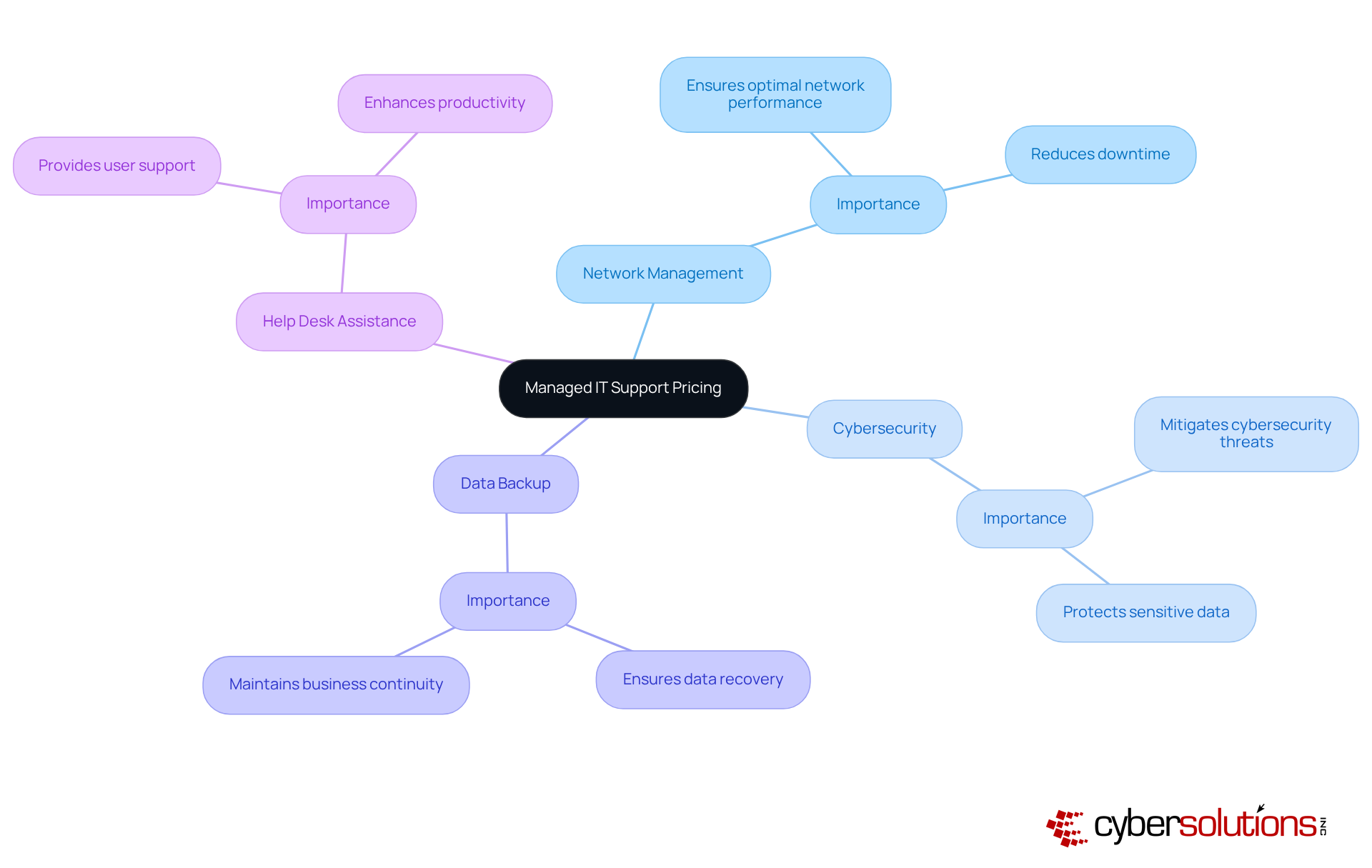
The management of IT support expenses through outsourcing is crucial for organizations looking to optimize their IT operations. These costs are tied to outsourcing IT assistance to a managed service provider and can vary significantly based on factors such as the complexity of the IT environment and the specific needs of the organization. Typically, managed IT support includes a range of services, such as:
- Cybersecurity
All bundled into a predictable monthly fee. This model not only allows businesses to budget effectively but also ensures they receive comprehensive support tailored to their operational requirements.
In today’s fast-paced digital landscape, understanding managed IT support pricing is essential for strategic planning. Organizations must consider how pricing models affect their overall IT strategy and operational efficiency. By partnering with an MSP, businesses can mitigate risks associated with IT challenges and ensure their IT infrastructure is robust and reliable.
Ultimately, investing in managed IT support is not just about managing costs; it’s about securing a competitive edge in the market. With the right support, organizations can focus on their core business while leaving IT complexities to the experts.
Explore Factors Influencing Pricing
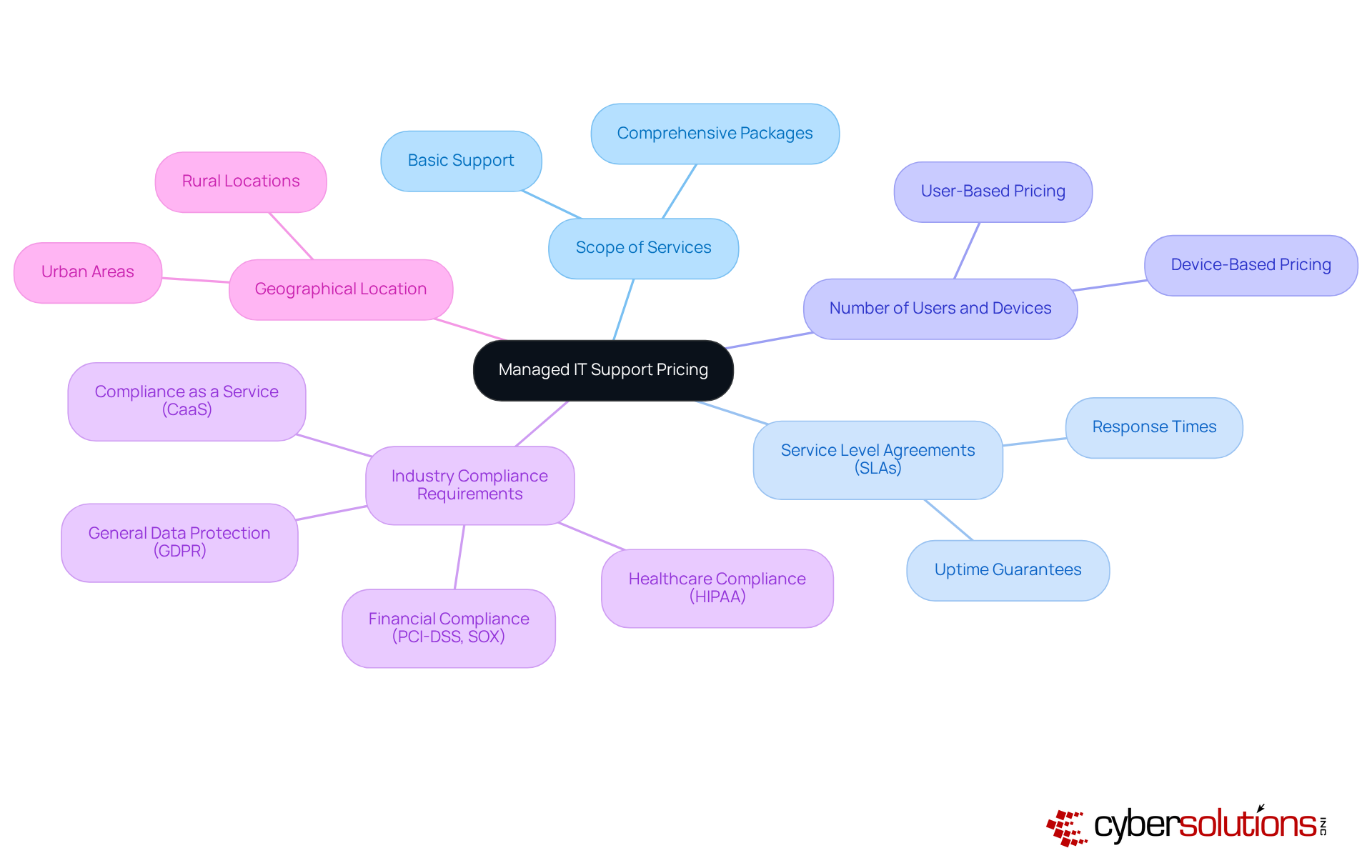
Understanding managed IT support pricing is crucial for organizations aiming to optimize their IT investments. Several key factors significantly influence these costs:
- Service Scope: The breadth of services included in the managed IT package can greatly affect pricing. Comprehensive packages that cover everything from cybersecurity to cloud management typically require a higher investment than basic support.
- Service Level Agreements: The terms outlined in SLAs, including response times and uptime guarantees, also impact costs. Higher service levels often come with increased fees, reflecting the value of reliable support.
- User and Device Count: Pricing models frequently depend on the number of users or devices being supported. An increase in users or devices generally leads to greater expenses, necessitating careful consideration of organizational needs.
- Industry Compliance Requirements: Organizations in regulated sectors, such as healthcare or finance, may incur additional costs to meet compliance standards like HIPAA. Compliance solutions can provide these organizations with comprehensive solutions to manage regulatory requirements efficiently, including audit preparation and ongoing monitoring, which can influence overall costs.
- Regional Market Rates: The cost of living and market rates in different regions can affect charges, with urban areas typically experiencing higher rates than rural locations.
By understanding these factors, organizations can make informed decisions about managed IT support pricing, ensuring they receive the best value for their investment.
Examine Pricing Models for Managed IT Support
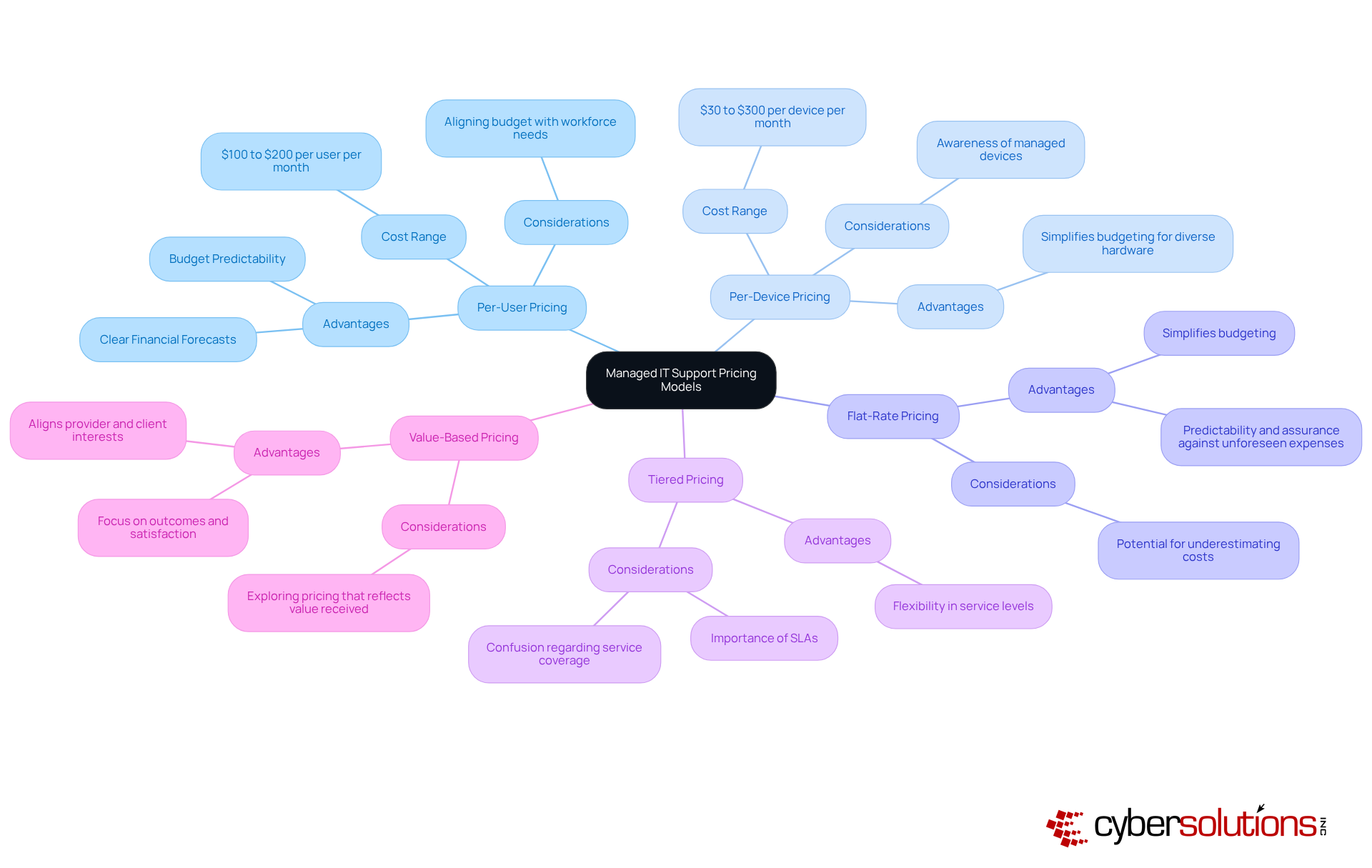
can be organized in various ways, each providing unique advantages that organizations need to consider carefully.
Flat Rate Pricing: This system applies a fixed fee for every user supported, enabling clear financial forecasts based on workforce size. Typical rates range from $50 to $150 per user per month, making it a popular choice for organizations seeking budget predictability. How can you ensure your budget aligns with your workforce needs?
Device-Based Pricing: Similar to flat rate pricing, this approach charges based on the number of devices being managed. It is particularly beneficial for organizations with a diverse range of hardware, with average costs ranging from $30 to $300 per device per month. This framework simplifies budgeting for businesses with varying device needs. Are you aware of how many devices your organization manages?
Service-Based Pricing: Organizations pay a single monthly fee for a defined set of services, regardless of usage. This system not only simplifies budgeting but also offers a maximum liability amount, making it cost-effective for businesses with stable IT needs. Clients often favor this approach for its predictability and assurance against unforeseen expenses, offering psychological comfort. Could this be the solution to your budgeting concerns?
Tiered Pricing: This model provides different levels of assistance at varying price points, allowing organizations to choose a package that best suits their needs and budget. While it offers flexibility, it can also result in confusion concerning service coverage and cost clarity. Service level agreements (SLAs) are essential in this context, as they specify the coverage details at each cost tier. How can you navigate the complexities of tiered pricing?
Value-Based Pricing: In this approach, costs are determined by the value provided to the organization, frequently linked to particular results or performance indicators. This method aligns the interests of the provider and the client, fostering a partnership focused on outcomes and enhancing overall satisfaction. Are you ready to explore pricing that reflects the value you receive?
Comprehending these cost models is essential for organizations to make informed choices that correspond with their operational requirements and budget constraints. Additionally, businesses should reassess every 6 to 12 months to ensure alignment with changing needs. Are you prepared to assess your strategy for managed IT support?
Conclusion
Understanding managed IT support pricing is crucial for organizations looking to enhance their IT operations while effectively managing costs. By examining various pricing models and the factors that influence these costs, businesses can make informed decisions that align with their specific needs and strategic objectives.
The nuances of managed IT support pricing reveal the importance of several key factors:
- the scope of services
- service level agreements
- the number of users and devices
- industry compliance
- geographical considerations
Each of these elements plays a vital role in determining the overall investment required for effective IT support.
Ultimately, it’s essential to recognize that managed IT support is not just a financial expense; it’s a strategic investment that can yield significant returns. Organizations should regularly assess their managed IT support pricing and select models that best fit their operational landscape. By doing so, they can optimize their IT expenditures and secure a competitive advantage in an increasingly digital marketplace.
Frequently Asked Questions
What is managed IT support pricing?
Managed IT support pricing refers to the costs associated with outsourcing IT assistance to a managed service provider (MSP). It typically includes a range of services for a predictable monthly fee.
What services are included in managed IT support pricing?
Managed IT support pricing generally includes services such as network management, cybersecurity, data backup, and help desk assistance.
Why is understanding managed IT support pricing important for organizations?
Understanding managed IT support pricing is crucial for strategic planning as it affects overall IT strategy and operational efficiency, allowing organizations to budget effectively and optimize their IT operations.
How does partnering with a managed service provider (MSP) benefit businesses?
Partnering with an MSP helps businesses mitigate risks associated with cybersecurity threats and ensures their IT infrastructure is robust and reliable, allowing them to focus on core business objectives.
Is managed IT support pricing only about managing costs?
No, investing in managed IT support pricing is not just about managing costs; it is also about securing a competitive edge in the market by leaving IT complexities to experts.
List of Sources
- Examine Pricing Models for Managed IT Support
- linkedin.com (https://linkedin.com/pulse/flat-rates-vs-hourly-which-one-should-you-use-mark-stiving-ph-d-)
- hfsresearch.com (https://hfsresearch.com/research/pricing-rational-psychological-wins)
- sterling-technology.com (https://sterling-technology.com/blog/managed-it-services-pricing)
- shop.us.dlink.com (https://shop.us.dlink.com/blogs/news/evaluating-the-pros-and-cons-of-four-msp-pricing-models?srsltid=AfmBOoqJKdTx4x58gZDbROaD74D2VS-MpLua8Ec_a3dDS9ncIv2qnFNP)