
Introduction
In today's fast-paced business environment, the role of Managed Service Providers (MSPs) has never been more crucial. As organizations navigate an increasingly complex landscape defined by technology, MSPs not only enhance operational efficiency but also provide strategic advantages that can significantly reshape IT management. With cyber threats on the rise and compliance complexities mounting, businesses must ask themselves: how can partnering with an MSP redefine their operational resilience and financial performance in this ever-evolving digital landscape?
The current cybersecurity threats pose unique challenges for organizations, particularly in sectors like healthcare where sensitive data is at stake. CFOs are increasingly tasked with ensuring that their organizations not only comply with regulations but also protect against potential breaches that could jeopardize their financial standing and reputation. This is where MSPs come into play, offering tailored solutions that address these pressing concerns.
By leveraging the expertise of MSPs, organizations can bolster their defenses against cyber threats while streamlining their IT operations. These providers bring a wealth of knowledge and resources, enabling businesses to focus on their core objectives without the constant worry of technological vulnerabilities. In this context, the partnership with an MSP becomes not just a strategic move but a necessity for sustainable growth and security.
Defining Managed Service Providers (MSPs)
In today's business landscape, the article highlights the crucial role that MSPs play in improving efficiency and reducing costs. These specialized third-party companies remotely oversee a customer's IT infrastructure and end-user systems, allowing organizations to focus on their core business functions. By outsourcing their technology needs, companies can ensure that their requirements are met with both efficiency and expertise.
The services offered by MSPs, which align with the business objectives, are diverse, encompassing:
- Network management
- Data backup
All tailored to meet the unique requirements of their clients. As of 2025, approximately 62% of enterprises report relying on MSPs, reflecting a significant trend towards outsourcing IT operations. This shift not only enhances operational efficiency but also alleviates the burden on internal resources.
Numerous successful examples illustrate the effectiveness of MSPs across various sectors. For instance, organizations in healthcare and finance have reported improved performance through strategic collaborations with these providers. Industry leaders emphasize that the role of MSPs goes beyond being mere service providers; they are strategic partners. As one expert noted, "Providers that deliver value and demonstrate measurable outcomes will stand out in today's crowded marketplace." This statement underscores the growing recognition of MSPs as essential players in navigating the complexities of contemporary IT environments.

The Role of MSPs in Modern IT Infrastructure
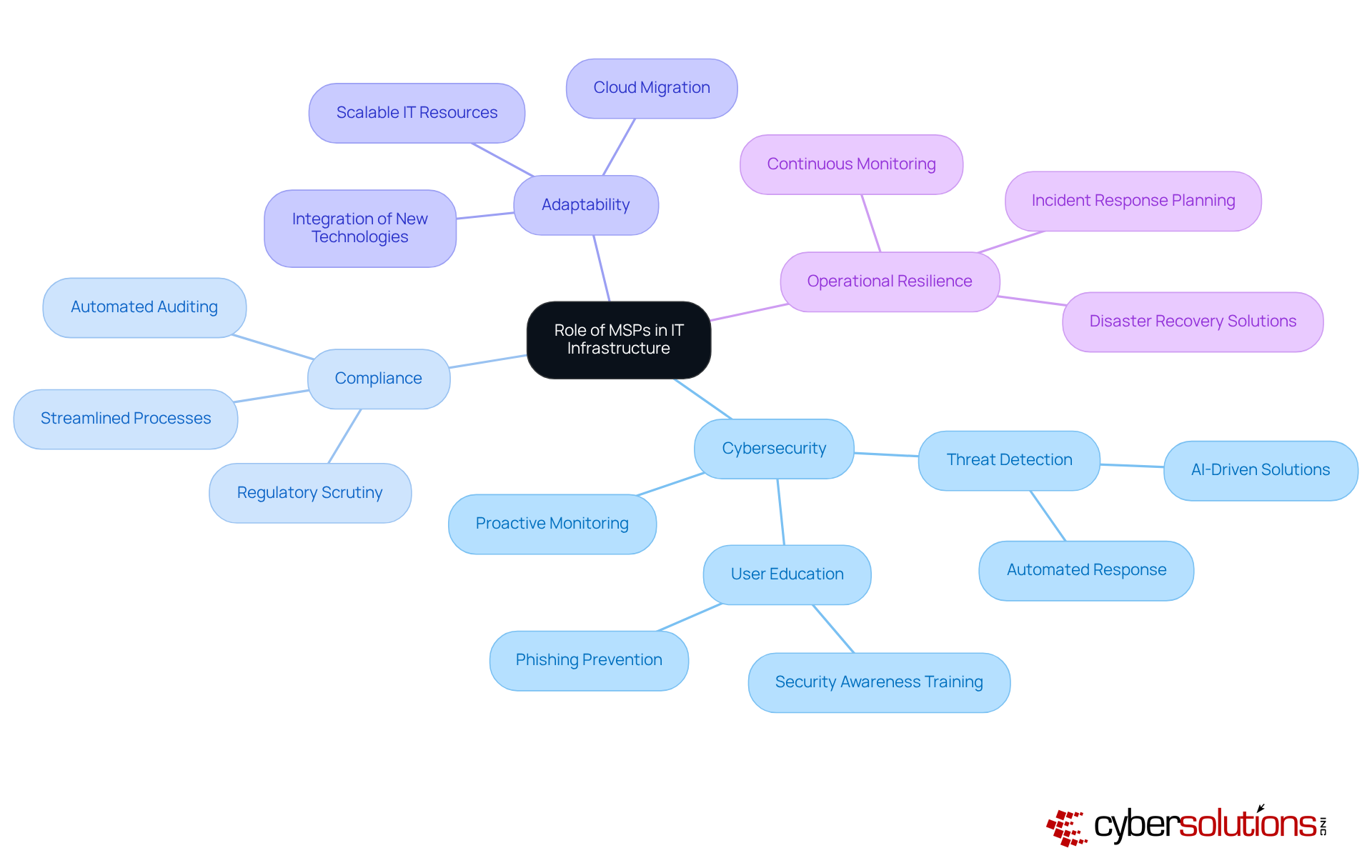
In today's digital landscape, cybersecurity is not just a concern; it's a necessity, especially in sectors like healthcare. The role of MSPs highlights how they play a pivotal role in this arena by helping to safeguard sensitive data. With proactive monitoring and maintenance, they ensure that systems operate smoothly and securely, significantly reducing the risks associated with data breaches and compliance challenges.
Organizations leveraging MSPs often report improved operational efficiency and cost savings. This is particularly crucial in highly regulated sectors, where the stakes are high. For instance, consider the healthcare industry, where patient data must be protected against evolving threats. How can CFOs ensure their organizations remain compliant while navigating these challenges? The answer lies in managed service providers, which exemplify the value of outsourcing by providing expertise and the technological advancements necessary to adapt to changing demands.
Moreover, this adaptability allows companies to scale their IT resources efficiently, facilitating growth without the burden of substantial capital investments. As industries face increasing regulatory scrutiny, the collaboration with an MSP becomes essential for maintaining compliance. In a world where cyber threats are ever-present, can your organization afford to overlook the benefits of such a partnership?
Key Services Provided by MSPs
In today's rapidly evolving digital landscape, cybersecurity is not just an option; it's a necessity for organizations striving to remain competitive and secure. Managed Service Providers, which embody the best practices in IT management, offer a comprehensive suite of solutions tailored to meet the diverse needs of businesses, ensuring they navigate the complexities of modern IT environments effectively.
Continuous assistance for IT issues is crucial. This service significantly reduces downtime and enhances productivity. Organizations leveraging round-the-clock support can respond swiftly to incidents, minimizing disruptions to operations.
With 90% of successful cyberattacks originating from endpoint devices, robust measures to safeguard these devices against malware and cyber threats are essential. Success stories from various entities demonstrate that comprehensive endpoint security strategies can drastically reduce the risk of breaches and bolster overall security posture.
The disaster recovery service includes developing and implementing plans to protect critical data, ensuring operational continuity during incidents. This is vital for organizations that cannot afford data loss or extended downtime.
By partnering with internal IT teams, MSPs enhance existing capabilities, providing additional expertise and resources. This collaboration allows organizations to optimize their IT infrastructure while retaining control over their operations.
Advanced cybersecurity measures, including threat detection and incident response, are integral to MSP offerings. As cyber threats escalate, these services ensure organizations remain compliant with industry regulations and are prepared to respond effectively to incidents.
Navigating complex regulatory requirements can be daunting. Managed Service Providers offer Compliance as a Service, encompassing evaluations, policy creation, oversight, and audit readiness, ensuring organizations comply with standards like HIPAA, PCI-DSS, and CMMC.
These offerings collectively enhance operational efficiency and compliance, positioning MSPs as indispensable partners for organizations, which illustrates the importance of their role in addressing the challenges of modern IT. The integration of 24/7 support, cybersecurity measures, and Compliance as a Service is particularly significant, addressing the urgent need for continuous vigilance against evolving threats and regulatory demands.

Evaluating the Financial Impact of MSP Engagement
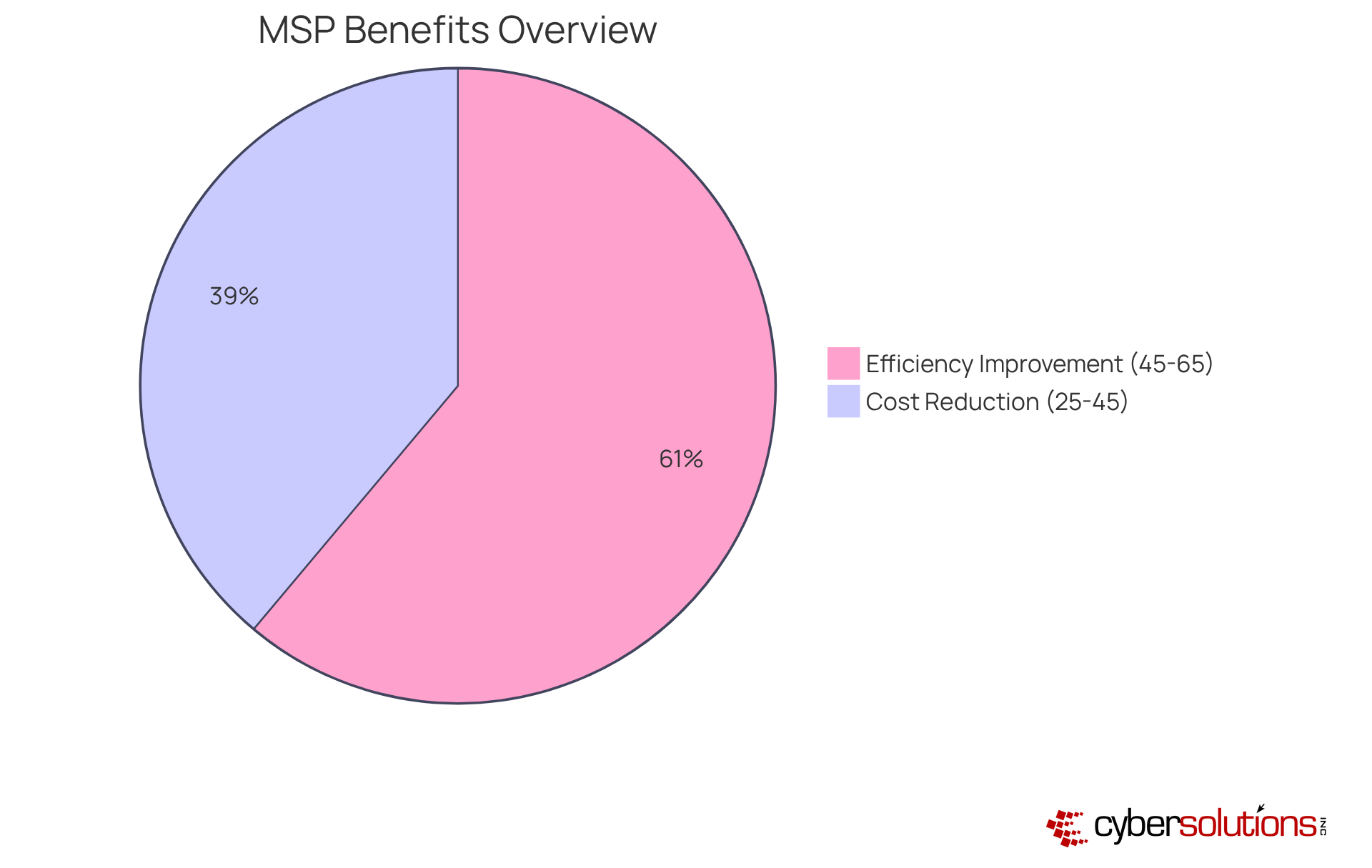
Engaging an MSP is not just a strategic move; it’s a vital step toward enhancing an organization’s financial health. In today’s competitive landscape, outsourcing IT services allows businesses to significantly lower overhead costs associated with hiring and training in-house staff. Did you know that successful deployment of managed services can boost operational efficiency by 45%-65%? This is not merely a statistic; it’s a game changer for organizations looking to optimize their resources.
Moreover, MSPs offer various pricing models, including flat-rate pricing that simplifies budgeting and eliminates unexpected expenses. This enables companies to plan their finances more effectively, encompassing everything from email licenses to software updates. Imagine having peace of mind with a comprehensive package that covers all your IT needs.
The return on investment (ROI) from partnering with an MSP is often realized through cost savings, reduced downtime, and a fortified security posture. Proactive measures, such as application allowlisting, prevent unauthorized software from executing, thereby enhancing system integrity. Additionally, monitoring ensures continuous oversight of systems, further mitigating risks.
Such strategic engagement not only bolsters financial performance but also guarantees adherence to stringent data protection protocols. As technology evolves, MSPs are expected to play a crucial role in addressing new regulations and cyber threats. This highlights that the partnership with an MSP is a necessity for organizations aiming to thrive in the modern business landscape.
Conclusion
Managed Service Providers (MSPs) are not just service vendors; they are strategic partners that profoundly impact an organization's operational efficiency and financial health. In an era where cybersecurity threats loom large, outsourcing IT functions allows businesses to focus on their core activities while leveraging the expertise and resources that MSPs offer. This partnership exemplifies the essence of what an MSP represents, underscoring their vital role in navigating the complexities of modern technology landscapes.
Key insights shared throughout this article reveal the diverse services provided by MSPs, including:
- Cybersecurity
- Compliance support
- Disaster recovery
The financial implications of engaging an MSP are significant, showcasing how organizations can achieve substantial cost reductions and improved ROI. Furthermore, the adaptability and continuous support offered by MSPs empower companies to enhance their security posture and stay compliant with ever-evolving regulations.
In conclusion, collaborating with Managed Service Providers is not merely beneficial; it is a strategic necessity for organizations aiming to thrive in today's competitive environment. By harnessing the expertise of MSPs, businesses can enhance their operational capabilities and safeguard their future against the backdrop of increasing cyber threats and regulatory demands. Embracing this partnership is not just an option; it is a critical step towards sustainable growth and success in the digital age.
Frequently Asked Questions
What are Managed Service Providers (MSPs)?
Managed Service Providers (MSPs) are specialized third-party companies that remotely oversee a customer's IT infrastructure and end-user systems, allowing organizations to focus on their core business functions.
What services do MSPs offer?
MSPs offer a diverse range of services, including network management, cybersecurity, data backup, and compliance support, all tailored to meet the unique requirements of their clients.
What is the trend regarding the reliance on MSPs in businesses?
As of 2025, approximately 62% of enterprises report relying on MSPs, reflecting a significant trend towards outsourcing IT operations to enhance operational efficiency and reduce costs.
How do MSPs impact operational efficiency and financial burden?
By outsourcing technology needs to MSPs, companies can enhance operational efficiency and alleviate the financial burden associated with maintaining in-house IT teams.
Can you provide examples of sectors that benefit from MSPs?
Yes, organizations in sectors such as healthcare and finance have reported improved compliance and security postures through strategic collaborations with MSPs.
How do industry leaders view the role of MSPs?
Industry leaders emphasize that MSPs are not just service providers; they are strategic collaborators that drive business transformation and help navigate the complexities of contemporary IT environments.
What is essential for MSPs to stand out in the marketplace?
MSPs that clearly articulate their unique offerings and demonstrate measurable outcomes will stand out in today's crowded marketplace, according to industry experts.
List of Sources
- Defining Managed Service Providers (MSPs)
- guardz.com (https://guardz.com/blog/top-6-trends-every-msp-must-know-about-for-2025)
- greenwichgp.com (https://greenwichgp.com/2025/07/17/h1-2025-managed-it-services-and-msp-market-update)
- kpmg.com (https://kpmg.com/us/en/articles/2025/5-key-trends-that-are-reshaping-managed-services.html)
- MSP Statistics In The USA: 2025 / Infrascale (https://infrascale.com/msp-statistics-usa)
- Top MSP Trends for 2026 [Expert Picks] (https://deskday.com/managed-service-provider-trends)
- The Role of MSPs in Modern IT Infrastructure
- n-able.com (https://n-able.com/blog/top-10-cybersecurity-statistics-every-msp-and-it-professional-should-know-in-2025)
- omegasystemscorp.com (https://omegasystemscorp.com/insights/blog/the-case-for-managed-it-services)
- seceon.com (https://seceon.com/state-of-cybersecurity-2025-for-usa-msps-mssps-challenges-threats-and-the-seceon-platform-solution)
- barracuda.com (https://barracuda.com/company/news/2025/organizations-employees-rely-msps-manage-security-challenges-growth)
- cyvent.com (https://cyvent.com/post/cybersecurity-msp-market-stats)
- Key Services Provided by MSPs
- expertinsights.com (https://expertinsights.com/endpoint-security/50-endpoint-security-stats-you-should-know)
- guardz.com (https://guardz.com/blog/36-endpoint-security-statistics-msps-should-know-about-in-2025)
- proprofsdesk.com (https://proprofsdesk.com/blog/help-desk-statistics)
- 2wtech.com (https://2wtech.com/five-key-trends-reshaping-managed-services-today)
- spyhunter.com (https://spyhunter.com/shm/endpoint-security-statistics)
- Evaluating the Financial Impact of MSP Engagement
- 101 Business Technology Stats You Need to Know for 2025 - Atlantic | Tomorrow's Office (https://tomorrowsoffice.com/blog/101-business-technology-stats-you-need-to-know)
- Managed IT Services is not an “Expensive”, But a Cost-Effective | sa.global (https://saglobal.com/int/insights/is-managed-services-as-expensive-as-its-made-out-to-be.html)
- jumpcloud.com (https://jumpcloud.com/blog/msp-statistics-trends)
- spendesk.com (https://spendesk.com/blog/cfo-quotes)
- fintechly.com (https://fintechly.com/leadership/50-powerful-quotes-to-inspire-fintech-leaders-and-innovators)