Introduction
Navigating the intricate landscape of Managed Service Provider (MSP) pricing presents a formidable challenge for C-suite leaders, particularly as organizations increasingly depend on technology to achieve their business objectives. This guide provides an in-depth exploration of diverse pricing models, including flat-rate and value-based pricing, empowering leaders with the insights necessary to optimize their IT investments. However, with a multitude of options at their disposal, how can executives ensure they choose the pricing structure that best aligns with their distinct operational needs and financial strategies?
Understand Managed Service Provider Pricing Models
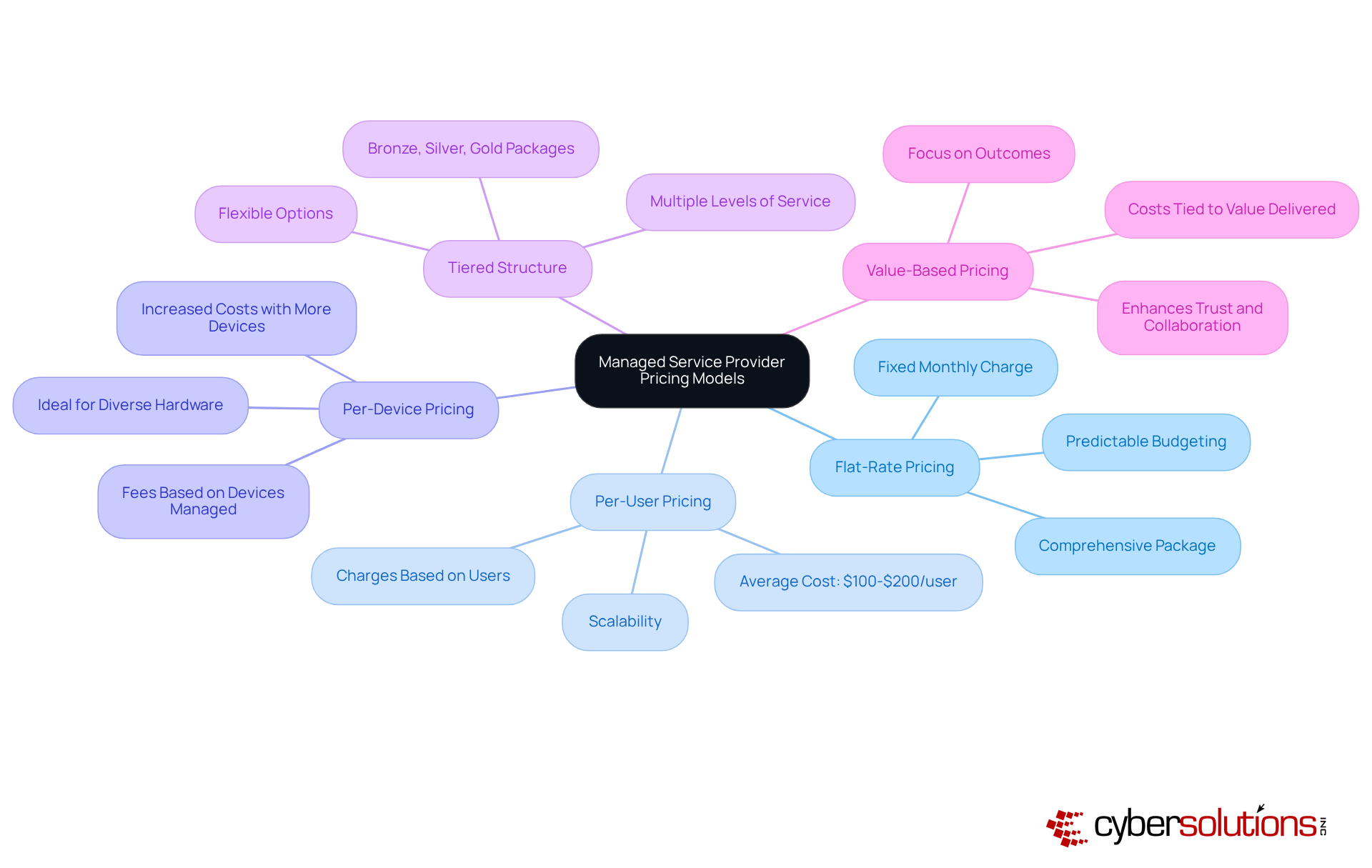
Managed Service Providers (MSPs) employ a variety of cost models, referred to as pricing models, to effectively meet diverse organizational needs and objectives. Understanding these models is crucial for leaders aiming to align their IT investments with their business goals. Key models include:
- Flat-Rate Pricing: This model features a fixed monthly charge for a specified range of offerings, promoting predictable budgeting and minimizing unforeseen expenses. It simplifies financial planning by encompassing everything from email licenses to software updates, providing peace of mind in one comprehensive package. This approach is particularly advantageous for businesses seeking stability in their IT expenditures.
- Per-User Pricing: Charges are determined by the number of users, making this model beneficial for organizations with fluctuating staff levels. It allows for straightforward billing and scalability as workforce dynamics change, with average costs typically ranging from $100 to $200 per user per month.
- Per-Device Pricing: This approach imposes fees based on the number of devices managed, ideal for businesses with a diverse array of hardware. While it offers clarity in costs, it can lead to unexpected expenses.
- Tiered Pricing: By providing various levels of assistance at different cost points, a tiered pricing model enables clients to select packages that best fit their requirements and financial plans. Typical levels consist of bronze, silver, and gold, each offering escalating degrees of assistance and support.
- Value-Based Pricing: This innovative model ties costs to the tangible value delivered to clients, often linked to specific outcomes or performance metrics. It fosters a results-driven partnership between the MSP and the client, enhancing trust and promoting long-term collaboration.
By comprehending these cost structures, leaders can more effectively evaluate which model aligns with their organizational objectives and budget constraints, ensuring they maximize the value of their managed IT solutions.
Identify Key Factors Affecting Pricing
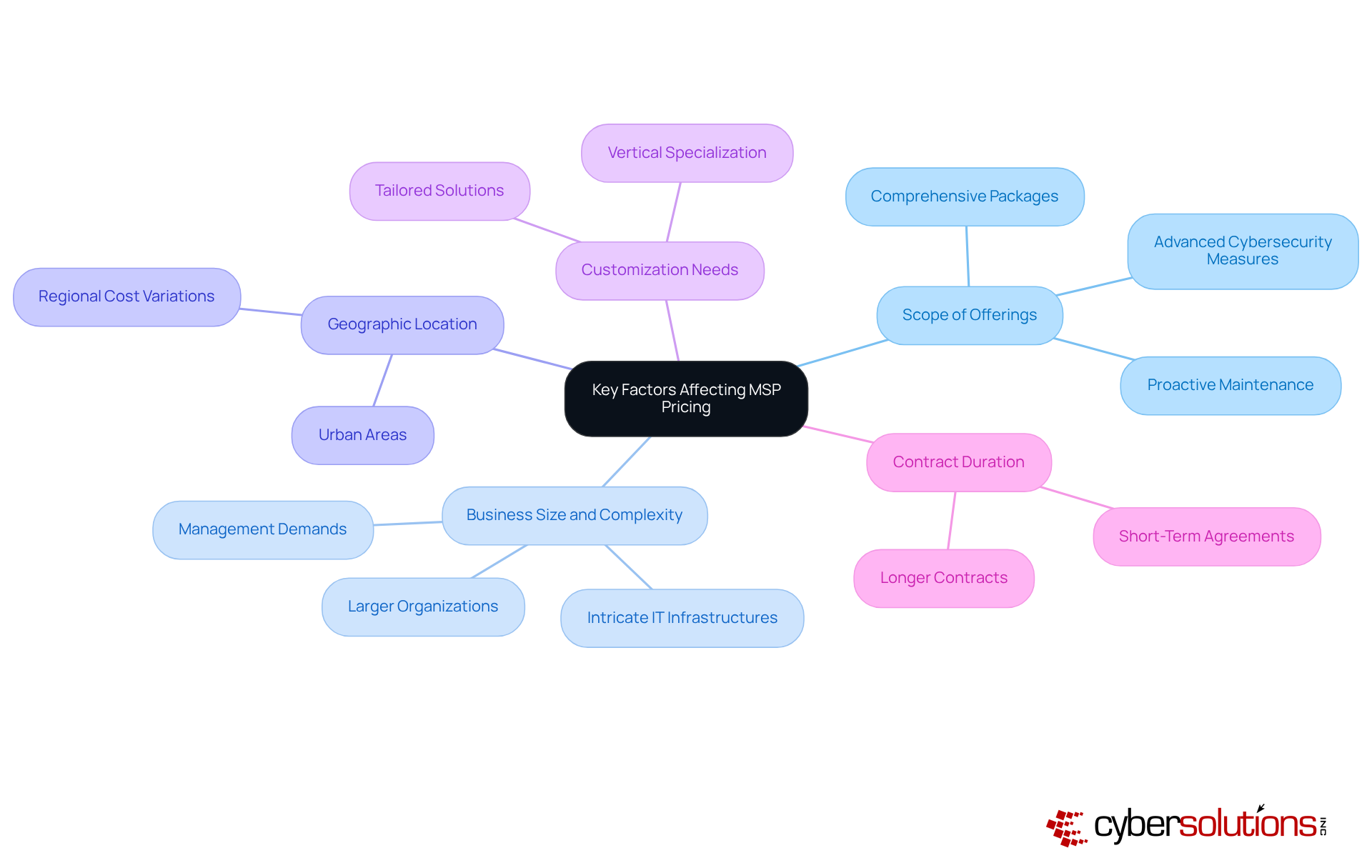
Several critical factors significantly influence the pricing of Managed Service Providers (MSPs):
- The range and complexity of services needed can greatly influence expenses. Comprehensive packages, which may include monitoring and proactive maintenance, typically command higher fees in terms of costs due to the increased resources and expertise involved.
- Larger organizations or those with intricate IT infrastructures often face higher costs. This is due to the greater management demands and the need for more robust support systems, which are reflected in pricing, to ensure efficiency and reliability.
- Pricing can fluctuate based on regional factors, with urban areas generally experiencing higher costs. This is linked to heightened demand for services and operational expenses, including salaries, rent, and utilities.
- Tailored solutions that address specific business requirements can result in higher fees compared to standard packages. Rates for MSPs that focus on specific verticals, like healthcare or finance, may be higher due to their niche expertise, reflecting the additional value they provide in ensuring regulatory compliance and security standards.
- The length of the agreement can also influence pricing. Longer contracts often benefit from discounts, resulting in lower monthly rates and cost savings over time, while short-term agreements may incur higher fees due to the increased risk and uncertainty for the provider.
By comprehending these elements, leaders can efficiently negotiate contracts and plan their IT budgets with these factors in mind, ensuring alignment with their organization's distinct requirements and operational objectives.
Evaluate and Select the Right Managed Service Provider
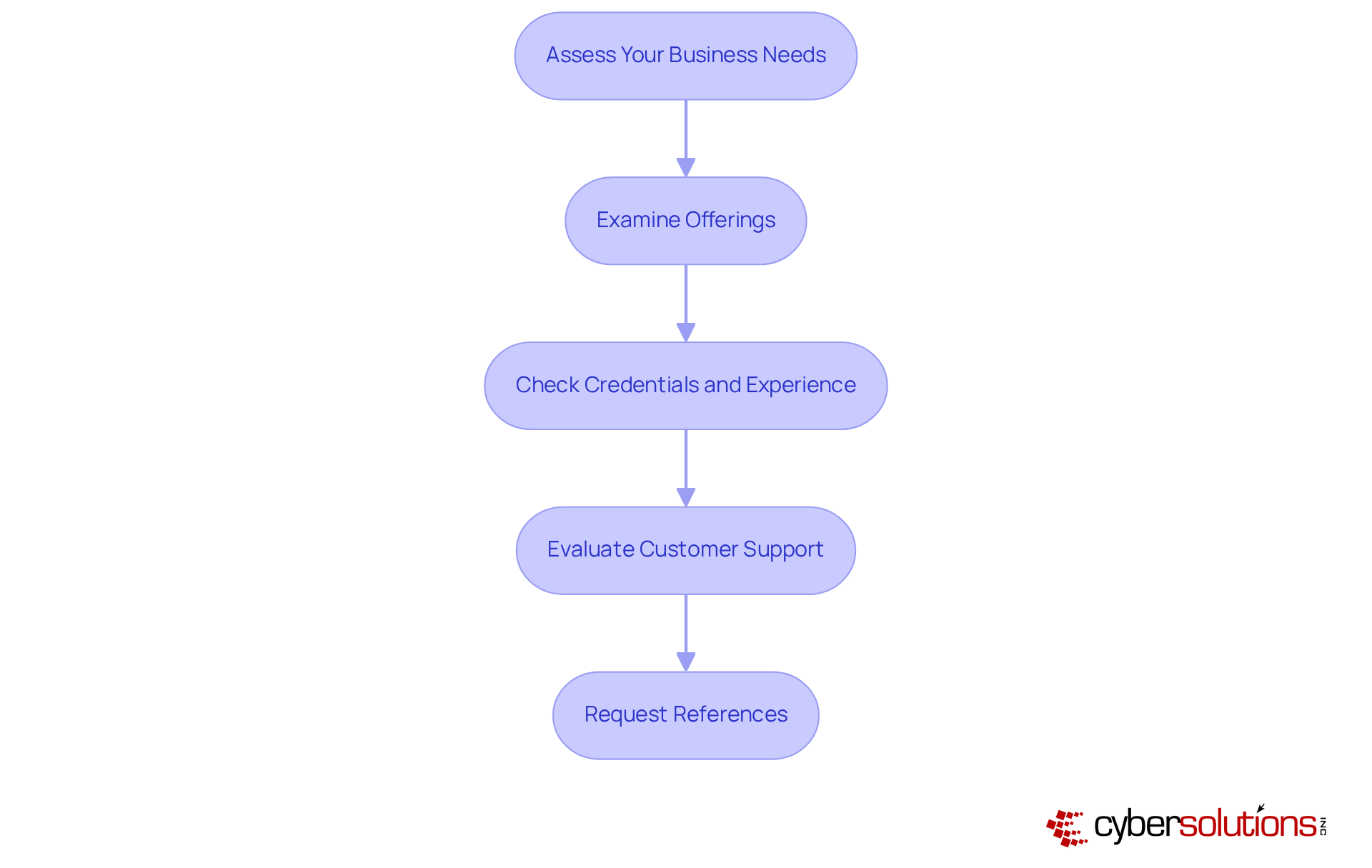
When evaluating managed service providers, it is essential to adopt a systematic approach to ensure the best fit for your organization.
Begin by clearly defining your organization's specific IT and business needs. This foundational step is crucial to guarantee that potential MSP offerings align with your operational goals and risk management strategies.
Examine Offerings: Investigate the comprehensive range of solutions each MSP provides. Ensure they can effectively address both your current needs and future growth, particularly in critical areas such as cybersecurity, cloud services, data management, and network infrastructure.
Verify the MSP's certifications, partnerships, and their history of managing environments similar to yours. A proven track record in your sector significantly mitigates risks associated with service delivery.
Assess the quality and availability of customer support. Seek out responsiveness, support level agreements (SLAs), and the overall assistance framework to ensure that your organization receives prompt help when necessary.
Request References: Engage with current or past clients to gather insights into their experiences. This feedback can provide invaluable perspectives on the MSP's performance and reliability.
By adhering to these steps, leaders can select an MSP that not only meets their technical requirements but also aligns with their organizational culture and strategic objectives.
Negotiate Contracts and Understand Terms
To negotiate contracts with managed service providers effectively is paramount for ensuring successful partnerships. Begin by understanding the terms. Familiarize yourself with essential contract components, including:
- Liability clauses
- Termination conditions
This foundational knowledge is crucial for navigating your obligations and rights within the agreement. Next, define the scope clearly. Ensure the contract explicitly outlines the services provided, including any limitations or exclusions. A well-defined scope helps prevent misunderstandings and sets clear expectations.
Furthermore, negotiate performance metrics. Discuss and agree on specific criteria that will be used to evaluate the MSP's effectiveness. Establishing measurable outcomes fosters accountability and ensures alignment with your business objectives. Additionally, consider the flexibility of the contract. Look for clauses that permit alterations in services or pricing as your business requirements change. Flexibility in the contract can accommodate growth and changes in your operational landscape.
Finally, seek legal advice. Have legal counsel review the contract to ensure that all terms are fair and protect your organization's interests. A thorough legal examination can identify potential pitfalls and safeguard against unfavorable conditions. By approaching negotiations with a clear understanding of your needs and the terms involved, leaders can secure agreements that foster successful partnerships with their MSPs. Understanding the negotiation process during discussions can help find common ground and improve the relationship. Aligning with the MSP can lead to significant reductions in IT issues and security vulnerabilities, further emphasizing the importance of effective negotiations.

Conclusion
Understanding managed service provider pricing is not merely beneficial; it is essential for C-suite leaders who seek to align their IT expenditures with strategic business goals. By exploring various pricing models—such as flat-rate, per-user, per-device, tiered structures, and value-based pricing—organizations can navigate their options more effectively and select a model that aligns with their unique needs.
Key factors influencing managed service provider pricing include:
- The scope of services offered
- The complexity of the business
- Geographic location
- Customization requirements
- Contract duration
Each of these elements plays a critical role in determining costs and must be carefully considered during the evaluation and selection process. Moreover, a systematic approach to assessing potential MSPs—by analyzing their offerings, credentials, customer support, and references—ensures a well-informed decision.
Ultimately, the ability to negotiate contracts effectively is vital for establishing successful partnerships with managed service providers. By understanding contract terms and advocating for flexibility along with clear performance metrics, leaders can secure agreements that not only protect their interests but also foster collaboration and innovation. Emphasizing these strategies empowers organizations to maximize their IT investments and drive business success in an increasingly complex digital landscape.
Frequently Asked Questions
What are managed service provider (MSP) pricing models?
MSP pricing models are various cost structures that Managed Service Providers use to meet different organizational needs and financial strategies. Understanding these models helps leaders align their IT investments with business objectives.
What is flat-rate pricing in MSP models?
Flat-rate pricing involves a fixed monthly charge for a specified range of services, allowing for predictable budgeting and minimizing unforeseen expenses. It simplifies financial planning by covering everything from email licenses to advanced cybersecurity.
How does per-user pricing work?
Per-user pricing charges organizations based on the number of users, making it beneficial for those with fluctuating staff levels. This model allows for straightforward billing and scalability, with average costs typically ranging from $100 to $200 per user per month.
What is per-device pricing?
Per-device pricing imposes fees based on the number of devices managed by the MSP. This model is ideal for businesses with diverse hardware but can lead to increased expenses as the number of devices rises.
Can you explain the tiered pricing structure?
The tiered pricing structure offers various levels of assistance at different cost points, allowing clients to choose packages that fit their requirements. Typical levels include bronze, silver, and gold, each providing escalating degrees of support.
What is value-based pricing in MSPs?
Value-based pricing ties costs to the tangible value delivered to clients, often linked to specific outcomes or performance metrics. This model fosters a results-driven partnership between the MSP and the client, enhancing trust and promoting long-term collaboration.
Why is it important to understand MSP pricing models?
Understanding MSP pricing models enables leaders to evaluate which model aligns with their organizational objectives and financial strategies, ensuring they maximize the value of their managed IT solutions.
List of Sources
- Understand Managed Service Provider Pricing Models
- resolution.de (https://resolution.de/post/managed-service-provider-pricing-models)
- pcs-ms.com (https://pcs-ms.com/managed-it-services-pricing)
- ninjaone.com (https://ninjaone.com/blog/managed-services-pricing-strategies)
- cloudbolt.io (https://cloudbolt.io/msp-best-practices/msp-pricing-models)
- cynet.com (https://cynet.com/msp/should-you-use-it-managed-services-evolution-pricing-models-and-pros-cons)
- Identify Key Factors Affecting Pricing
- ciodive.com (https://ciodive.com/news/managed-service-providers-MSP-spending/648579)
- andromeda-tech-solutions.com (https://andromeda-tech-solutions.com/itblog/10-factors-that-influence-managed-itservices-cost)
- ventr.it (https://ventr.it/post/understanding-msp-pricing-key-strategies-for-competitive-managed-services-in-2025)
- cynet.com (https://cynet.com/msp/should-you-use-it-managed-services-evolution-pricing-models-and-pros-cons)
- Evaluate and Select the Right Managed Service Provider
- meriplex.com (https://meriplex.com/what-to-look-for-in-a-managed-services-provider-and-what-to-avoid)
- ahead.com (https://ahead.com/resources/trends-in-managed-services-in-2025)
- themspsummit.com (https://themspsummit.com/article/top-msp-stories-of-the-week-july-25-2025)
- guardz.com (https://guardz.com/blog/top-6-trends-every-msp-must-know-about-for-2025)
- forbes.com (https://forbes.com/councils/forbestechcouncil/2025/05/15/why-your-managed-service-provider-choice-matters-more-than-ever)
- Negotiate Contracts and Understand Terms
- blog.thriveon.net (https://blog.thriveon.net/understanding-your-msp-contract-outsourcing)
- tribunecourier.com (https://tribunecourier.com/news/mercy-health-alerts-humana-patients-as-contract-negotiations-enter-new-phase/article_37f57f7b-35a5-54d0-b100-5652c7d9fb57.html)
- natlawreview.com (https://natlawreview.com/article/trends-negotiating-software-service-providers)
- jdsupra.com (https://jdsupra.com/legalnews/new-california-laws-increase-scrutiny-1095521)