
Introduction
The rapid evolution of technology is fundamentally reshaping how businesses operate. Virtual Desktop as a Service (DaaS) stands out as a transformative solution in the IT landscape, enhancing flexibility and mobility while providing a cost-effective alternative to traditional desktop infrastructures. However, as organizations increasingly embrace DaaS, they encounter critical decisions regarding its implementation and optimization.
How can companies effectively navigate the complexities of adopting DaaS to maximize efficiency and drive success? This question is pivotal as businesses seek to leverage the full potential of this innovative technology.
Define Virtual Desktop as a Service (DaaS)
Virtual Environment as a Service (VaaS) is revolutionizing the way users interact with technology, offering virtual workspaces accessible via the internet. Unlike traditional setups where operating systems and software reside on local machines, virtual desktop as a service (DaaS) provides these environments on remote servers managed by external providers. This innovative model empowers users to access their desktops from any device with an internet connection, enhancing flexibility and mobility.
DaaS solutions come equipped with features such as centralized management, automatic updates, and security measures. These attributes make them an attractive option for companies looking to improve productivity and reduce costs. In fact, the DaaS market is expanding, with projections indicating significant growth, increased adoption rates, and a compound annual growth rate (CAGR) exceeding 19.4% through 2035. This surge reflects the increasing demand for cloud-based solutions, particularly for virtual desktop as a service, driven by trends in remote work and BYOD policies, alongside the necessity for efficient, scalable IT solutions.
Key players in the Desktop as a Service market include industry giants like:
- VMware
- Citrix Systems
- Microsoft
- Google Cloud
- Amazon Web Services
These companies are not only shaping the competitive landscape but also fostering innovation in cloud-based computing solutions. As organizations navigate the complexities of modern IT environments, the adoption of DaaS could be the strategic move that enhances operational efficiency and drives business success.

Compare DaaS with Traditional Virtual Desktop Infrastructure (VDI)
While both DaaS and VDI offer virtual desktop solutions, they differ significantly in management and deployment. VDI requires organizations to maintain their own hardware and software infrastructure, leading to higher upfront costs and ongoing maintenance expenses. In contrast, DaaS operates on a subscription-based model where the service provider manages the infrastructure, allowing companies to avoid capital expenses and reduce operational costs. Moreover, DaaS enhances scalability, enabling businesses to swiftly adjust their desktop resources according to fluctuating demands without significant IT involvement.
However, C-suite leaders must be aware of common pitfalls associated with both models. For instance, while DaaS can lower initial expenses, it’s crucial for companies to choose a reliable service provider to prevent potential service interruptions. Conversely, VDI may offer greater control over the environment but can result in unexpected costs if not managed properly.
To illustrate the effectiveness of DaaS, consider a mid-sized healthcare organization that transitioned from VDI to DaaS. By adopting DaaS, they not only reduced their IT overhead by 30% but also improved their ability to scale resources during peak patient intake periods. This flexibility allowed them to maintain service levels without compromising service quality.
Furthermore, social media platforms and Facebook can enhance engagement and provide valuable insights to peers in the industry.

Highlight Benefits of Implementing DaaS
Implementing virtual desktop as a service is not just a trend; it’s a strategic move that offers organizations a wealth of advantages.
- Cost Efficiency: DaaS significantly reduces the need for substantial upfront investments in hardware and software, transforming IT expenditures into predictable monthly costs. This shift allows organizations to allocate resources more effectively, enhancing overall financial management.
- Scalability: Organizations benefit from the ability to easily modify their workstation environments according to fluctuating demands. This flexibility enables businesses to scale resources up or down without incurring significant infrastructure costs, ensuring optimal resource allocation.
- Enhanced Security: The service boosts data protection by keeping sensitive information in secure data centers instead of on local devices. This method reduces the threat of data breaches and losses, with statistics showing that organizations using DaaS encounter 60% fewer breach incidents compared to those depending on conventional workstations. As CA Communications indicates, 'Our solutions are crafted to effortlessly merge with your current infrastructure, ensuring a seamless shift to cloud-based workstations.'
- Simplified Management: By outsourcing routine maintenance tasks such as updates, backups, and security to the service provider, IT teams can concentrate on strategic initiatives that drive business growth. This reduces operational burdens and enhances overall efficiency.
- Remote Accessibility: DaaS enables employees to reach their virtual desktops from any place, encouraging remote work opportunities and increasing productivity. This accessibility is crucial in today’s hybrid work environment, where flexibility is paramount for maintaining workforce engagement and performance. A case study on 'Expert Implementation of Virtual Desktop' demonstrates that companies encounter minimal disruption during the transition, enabling a more efficient execution.

Outline Steps for Successful DaaS Implementation
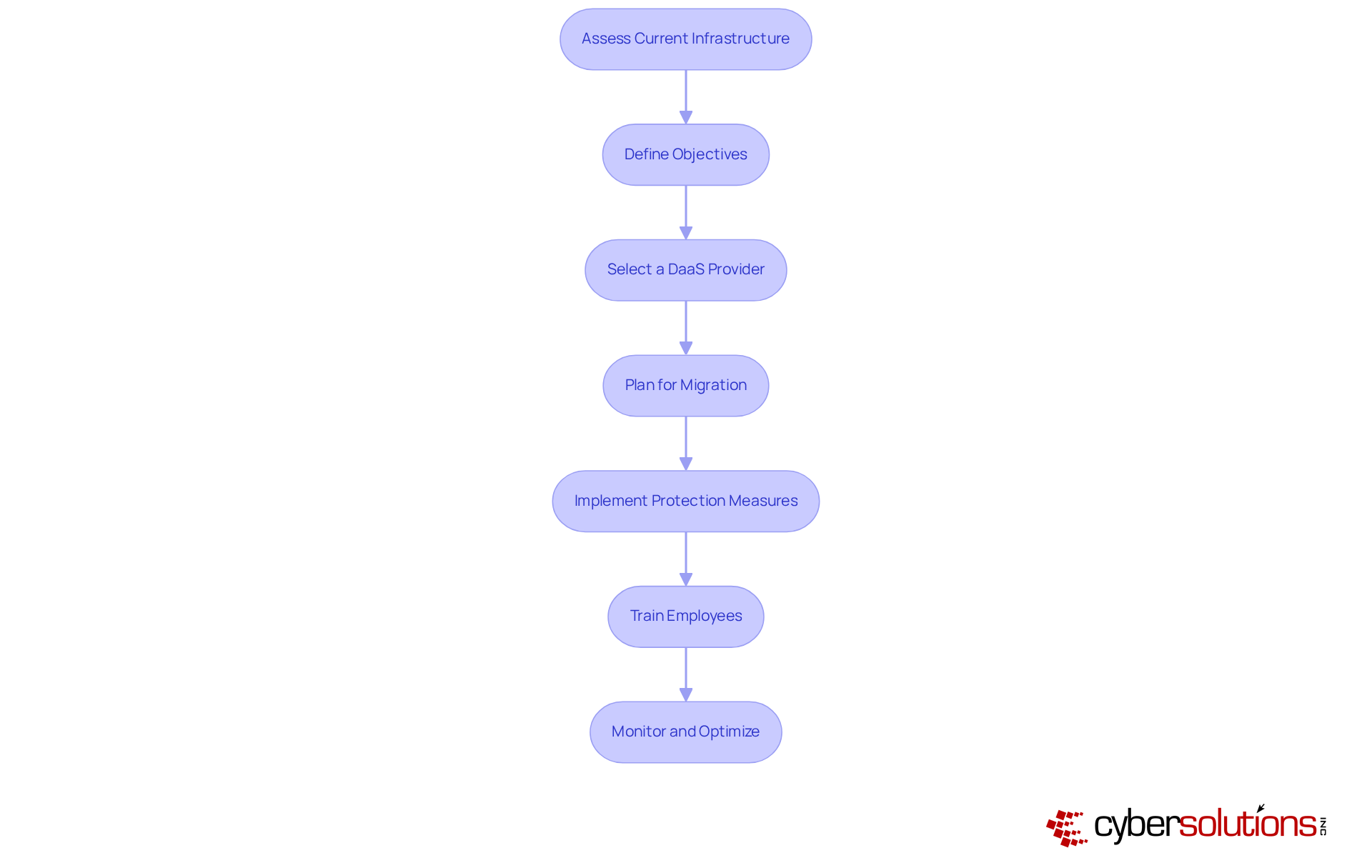
To successfully implement DaaS, organizations must take decisive action. Here’s how to navigate this transformative journey:
- Begin by evaluating your existing IT resources. Identify gaps that can be effectively filled by virtual desktop solutions, ensuring a solid foundation for your transition.
- Establish clear goals for what your organization aims to achieve with DaaS. Whether it’s cost savings, improved security, or enhanced flexibility, having defined objectives will guide your efforts.
- Select a provider: Research and choose a reputable provider that meets your organization’s needs and requirements. This decision is crucial for a successful implementation.
- Plan for Migration: Develop a detailed migration plan. This should include timelines, resource allocation, and risk management strategies to mitigate potential challenges.
- Implement Protection Measures: Ensure safeguards are in place to safeguard sensitive data during and after the transition. Protecting your data is paramount.
- Provide comprehensive training for employees. Familiarizing them with the new system is essential for maximizing productivity and minimizing disruptions.
- Continuously monitor the environment and optimize it. Make necessary adjustments to optimize performance and security, ensuring that your organization reaps the full benefits of DaaS.
By following these steps, organizations can effectively harness the power of DaaS, transforming their IT landscape and enhancing operational efficiency.
Conclusion
Embracing Virtual Desktop as a Service (DaaS) is not just a trend; it’s a pivotal shift in how organizations manage their IT environments. By leveraging cloud-based solutions, businesses can significantly enhance flexibility, reduce costs, and improve operational efficiency. The ability of DaaS to streamline processes and adapt to the evolving demands of the workforce highlights its critical role in modern IT strategies.
This article has illuminated the numerous advantages of DaaS over traditional Virtual Desktop Infrastructure (VDI). From cost efficiency and scalability to enhanced security and simplified management, DaaS presents a compelling case for organizations eager to modernize their desktop solutions. The outlined steps for successful implementation act as a roadmap, guiding organizations through this transition effectively, ensuring they maximize benefits while minimizing disruption.
Ultimately, adopting DaaS transcends a mere technological upgrade; it’s a strategic decision that can propel business success in a competitive landscape. Organizations must evaluate their current IT infrastructures, define clear objectives, and select the right service providers to fully harness the potential of DaaS. By doing so, they position themselves to thrive in an increasingly digital world, where flexibility and efficiency are not just advantages but necessities.
Frequently Asked Questions
What is Virtual Desktop as a Service (DaaS)?
Virtual Desktop as a Service (DaaS) is a cloud computing model that provides virtual workspaces accessible via the internet, where operating systems and software are hosted on remote servers managed by external providers.
How does DaaS differ from traditional desktop setups?
Unlike traditional setups where operating systems and software are installed on local machines, DaaS allows users to access their desktops from any device with an internet connection, enhancing flexibility and mobility.
What features are included in DaaS solutions?
DaaS solutions typically include centralized management, automatic updates, and robust security measures, making them a favorable option for companies looking to streamline IT operations and reduce costs.
What is the market outlook for DaaS?
The virtual desktop as a service market was valued at over USD 9.82 billion in 2025 and is projected to reach USD 11.53 billion in 2026, with a compound annual growth rate (CAGR) exceeding 19.4% through 2035, reflecting increasing demand for cloud-based services.
What factors are driving the growth of DaaS?
The growth of DaaS is driven by trends in remote work, Bring Your Own Device (BYOD) policies, and the need for efficient, scalable IT solutions.
Who are the key players in the DaaS market?
Key players in the DaaS market include VMware, Citrix Systems, Microsoft, Google Cloud, and Amazon Web Services, which are shaping the competitive landscape and fostering innovation in cloud-based computing solutions.
How can DaaS benefit organizations?
DaaS can enhance operational efficiency and drive business success by providing flexible, scalable, and cost-effective IT solutions that meet the complexities of modern IT environments.
List of Sources
- Define Virtual Desktop as a Service (DaaS)
- researchnester.com (https://researchnester.com/reports/desktop-as-a-service-daas-market/4123)
- Compare DaaS with Traditional Virtual Desktop Infrastructure (VDI)
- scribd.com (https://scribd.com/document/722110242/Dcc-Assign-2)
- Highlight Benefits of Implementing DaaS
- cacommunications.com (https://cacommunications.com/blog?p=the-power-of-desktop-as-a-service-daas-251203)
- cio.com (https://cio.com/article/1313813/is-daas-just-another-tool-in-the-shed-for-you-then-youre-missing-out-on-these-6-benefits.html)