
Introduction
In an era where cybersecurity threats loom large, the stakes for healthcare organizations have never been higher. Regulatory compliance has become a critical pillar for business integrity and trust. C-suite leaders face overwhelming complexities in navigating regulatory landscapes that can hinder their strategic objectives. However, by embracing compliance as a strategic asset, organizations can unlock new opportunities for growth and innovation.
How can they effectively transform compliance from a mere obligation into a strategic advantage that not only mitigates risks but also fosters growth and innovation?
Define Regulatory Compliance in the Digital Landscape
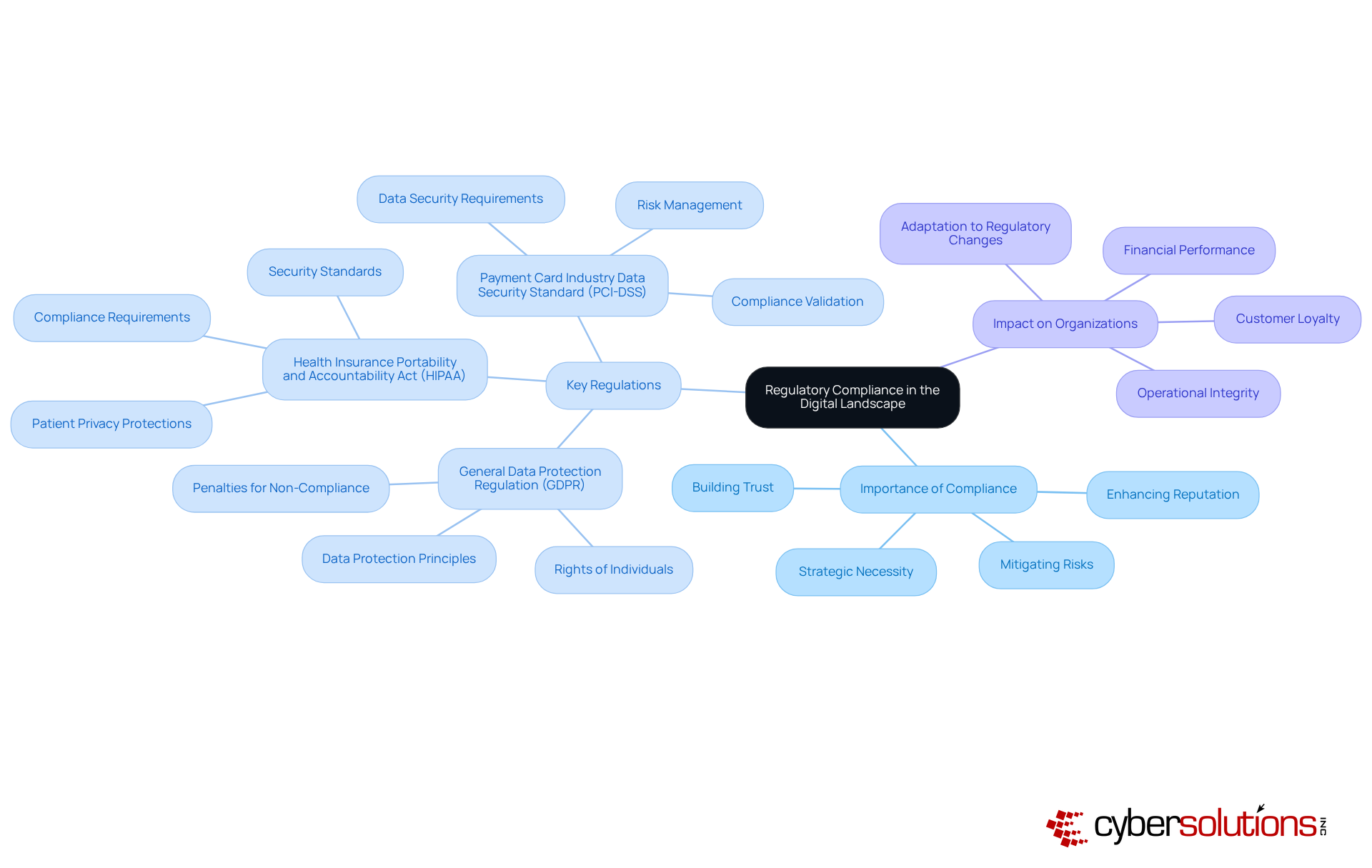
In an era where data breaches can cripple healthcare organizations, understanding how to be regulatory compliant is not just important - it's imperative. Regulatory compliance means being regulatory compliant by adhering to laws, regulations, guidelines, and specifications that govern a business's processes. In today's digital landscape, this includes a diverse range of regulations such as:
- General Data Protection Regulation (GDPR)
- Health Insurance Portability and Accountability Act (HIPAA) for healthcare
- Payment Card Industry Data Security Standard (PCI-DSS) for payment processing
As businesses increasingly rely on digital platforms, a thorough understanding of these regulations is essential.
It's not just about dodging penalties; compliance is key to earning trust from your customers and stakeholders, showcasing a commitment to ethical practices and robust data security. A proactive approach, such as application allowlisting, plays a critical role in this context by preventing unauthorized software from executing and ensuring that only approved applications run on systems. This not only reduces vulnerabilities but also helps entities to become regulatory compliant with strict requirements.
For C-suite leaders, defining adherence within this framework is crucial for strategic planning and risk management, as it significantly influences operational integrity and financial performance. By prioritizing compliance, organizations not only protect themselves but also enhance their reputation and customer loyalty. In 2026, organizations that prioritize regulations are not only mitigating risks but also positioning themselves as leaders in their industries, with 81% actively pursuing ISO 27001 certification, reflecting a widespread commitment to risk-based security frameworks. Furthermore, the increasing regulatory penalties highlight the financial and reputational stakes involved, making adherence a strategic necessity rather than a checkbox exercise. As the regulatory landscape evolves, those who adapt will not only survive but thrive in an increasingly competitive market.
Identify Key Challenges in Digital Compliance
In an era where cybersecurity threats loom large, healthcare organizations must navigate a labyrinth of compliance challenges that can jeopardize their operational integrity. C-suite leaders encounter several critical challenges in this landscape, including:
- Quickly Evolving Regulations: The regulatory environment is in continuous change, with 144 nations implementing protection or privacy laws that encompass about 82% of the worldwide population. This evolution requires ongoing monitoring and adjustment of regulatory strategies to avoid potential legal pitfalls.
- Data Privacy and Security: As data breaches and cyber threats increase, ensuring strong data protection while following regulatory requirements becomes essential. It's crucial for organizations to embrace robust cybersecurity strategies, especially since 56% of small and mid-sized businesses report high implementation costs as a major obstacle to achieving PCI standards, despite mounting regulatory pressure.
- Resource Distribution: When resources are tight, organizations often struggle to balance compliance needs with everyday operations. In 2026, 82% of organizations are increasing technology spending to support regulatory initiatives, highlighting the need for strategic resource allocation.
- Complexity of Compliance Frameworks: Organizations operating across multiple jurisdictions face a complex patchwork of regulations, which can be overwhelming. For example, minor regulatory adjustments in one domain can result in oversight issues in other areas, elevating operational pressure. A well-structured program that is regulatory compliant is essential to navigate these diverse requirements effectively.
By recognizing these challenges, C-suite leaders can improve their adherence strategies and allocate resources more effectively to mitigate risks and ensure organizational resilience. By proactively addressing these challenges, C-suite leaders can not only safeguard their organizations but also position them for sustainable growth in a complex regulatory landscape.

Implement Proactive Strategies for Compliance Management
In an era where compliance failures can lead to devastating consequences, proactive strategies are no longer optional for C-suite leaders. To effectively manage compliance, leaders should adopt the following proactive strategies:
- Establish a Conformity Culture: Cultivating an organizational culture that prioritizes adherence at all levels is essential. Regular training and awareness programs can highlight the significance of adherence in daily operations. A robust adherence culture not only reduces risks but also nurtures trust and responsibility within the entity.
- Conduct Regular Audits: Implementing routine adherence audits is crucial for identifying potential gaps and areas for improvement. Without proactive measures, compliance issues can quickly spiral out of control. In 2026, 92% of entities are anticipated to perform at least two audits or evaluations each year, indicating a shift towards continuous adherence monitoring. Engaging with expert audit support can further enhance this process, especially for organizations pursuing CMMC certification, as it offers guidance through the complexities of regulatory requirements.
- Utilize Regulatory Management Software: By investing in tools that automate tracking and reporting, organizations can streamline their adherence efforts. These tools optimize operations, minimize manual errors, and guarantee prompt updates on regulatory changes, making management of regulations more efficient and effective.
- Engage with Regulatory Bodies: Maintaining open lines of communication with regulatory agencies is vital for staying informed about upcoming changes and best practices. This engagement provides valuable insights that help organizations adapt swiftly to new requirements, ensuring they remain compliant in a rapidly evolving regulatory landscape. Grasping the various CMMC certification levels and the ongoing management of CMMC modifications is essential for companies managing federal information, as it assists in aligning their adherence strategies with the required security standards.
- Allocate Resources Wisely: Dedicating adequate resources to regulatory efforts-including personnel, technology, and training-is crucial for maintaining a robust framework. Organizations that allocate resources effectively are better positioned to withstand regulatory scrutiny and enhance their overall operational efficiency.
By applying these strategies, organizations can establish a proactive management system that is not only regulatory compliant but also enhances operational excellence. Ultimately, the ability to navigate regulatory complexities will define an organization's resilience and success in safeguarding sensitive information.

Leverage Technology for Enhanced Compliance Efficiency
In an era where cybersecurity threats loom large, healthcare organizations must prioritize compliance to safeguard their operations and patient trust. C-suite leaders can leverage technology to enhance compliance efficiency through several key approaches:
- Automation of Regulatory Processes: Implementing automation tools for repetitive regulatory tasks, such as information collection and reporting, helps minimize human error, making processes smoother. This not only streamlines operations but also allows resources to be redirected toward more strategic initiatives.
- Data Analytics for Regulatory Oversight: Employing data analytics facilitates real-time observation of adherence. Advanced analytics can identify trends and anomalies, enabling companies to proactively tackle potential regulatory issues before they escalate.
- Cloud-Based Regulatory Solutions: Adopting cloud-based regulatory management systems offers scalability and flexibility. These solutions provide centralized access to regulatory information, ensuring that adherence efforts throughout the organization are regulatory compliant and efficiently managed.
- Artificial Intelligence and Machine Learning: Exploring AI and machine learning technologies enhances regulatory monitoring and risk assessment capabilities. These technologies can analyze vast amounts of data swiftly, yielding insights that inform and enhance regulatory strategies.
- Integration of Regulatory Tools: Ensuring that regulatory tools are integrated with other business systems, such as financial and operational software, allows for a comprehensive view of adherence across the entity. This integration enhances decision-making and resource allocation, fostering a more cohesive regulatory strategy.
By embracing these technological advancements, healthcare leaders can not only navigate compliance challenges but also fortify their organizations against future risks.

Conclusion
In an era where digital threats loom large, regulatory compliance is not just a legal obligation; it’s a strategic necessity for C-suite leaders. Organizations that prioritize compliance not only safeguard their operations but also build trust with customers and stakeholders, reinforcing their commitment to ethical practices and data security.
This article highlights several critical aspects of regulatory compliance, including the necessity of defining compliance within the current regulatory framework, recognizing the key challenges organizations face, and implementing proactive strategies for effective compliance management. C-suite leaders need to:
- Embrace evolving regulations
- Address data privacy concerns
- Allocate resources wisely
- Leverage technology to enhance compliance efficiency
By adopting these practices, organizations can not only mitigate risks but also position themselves as leaders in their industries.
The significance of regulatory compliance extends beyond avoiding penalties; it is about fostering an organizational culture that values integrity and resilience. C-suite leaders are encouraged to take decisive action by investing in compliance strategies and technologies that not only meet current regulations but also anticipate future challenges. Ultimately, the commitment to compliance can be the defining factor that sets an organization apart in a fiercely competitive landscape.
Frequently Asked Questions
What is regulatory compliance in the digital landscape?
Regulatory compliance refers to adhering to laws, regulations, guidelines, and specifications that govern a business's processes, particularly in the context of digital operations.
Why is regulatory compliance important for businesses?
Regulatory compliance is crucial for avoiding penalties, earning customer trust, showcasing commitment to ethical practices, and ensuring robust data security.
What are some key regulations that businesses need to be aware of?
Key regulations include the General Data Protection Regulation (GDPR), the Health Insurance Portability and Accountability Act (HIPAA) for healthcare, and the Payment Card Industry Data Security Standard (PCI-DSS) for payment processing.
How can businesses ensure they remain compliant with regulations?
Businesses can adopt a proactive approach, such as application allowlisting, to prevent unauthorized software from executing and ensure that only approved applications run on their systems.
What role does regulatory compliance play in strategic planning for C-suite leaders?
For C-suite leaders, regulatory compliance is essential for strategic planning and risk management as it influences operational integrity and financial performance.
What benefits do organizations gain by prioritizing compliance?
By prioritizing compliance, organizations protect themselves, enhance their reputation, and build customer loyalty.
What is the significance of ISO 27001 certification in the context of regulatory compliance?
Pursuing ISO 27001 certification reflects a commitment to risk-based security frameworks and is a common goal for organizations prioritizing regulatory compliance.
How do increasing regulatory penalties impact businesses?
Increasing regulatory penalties highlight the financial and reputational stakes involved, making adherence to regulations a strategic necessity rather than a mere checkbox exercise.
What is the outlook for organizations that adapt to the evolving regulatory landscape?
Organizations that adapt to the evolving regulatory landscape are likely to not only survive but thrive in a competitive market, positioning themselves as leaders in their industries.
List of Sources
- Define Regulatory Compliance in the Digital Landscape
- Cybersecurity & Privacy 2026: Enforcement & Regulatory Trends (https://morganlewis.com/pubs/2026/03/cybersecurity-privacy-2026-enforcement-regulatory-trends)
- IT Compliance in 2026: The Regulations You Can't Afford to Ignore (https://primesecured.com/it-compliance-key-regulations-2026)
- 2026 Regulatory Update: The Shift to Digital Compliance (https://linkedin.com/pulse/2026-regulatory-update-shift-digital-compliance-mxktf)
- 150+ Compliance Statistics for 2026 | Indusface Blog (https://indusface.com/blog/key-compliance-statistics)
- linkedin.com (https://linkedin.com/pulse/regulatory-compliance-2026-what-leaders-need-watch-closely-jethur-71p7f)
- Identify Key Challenges in Digital Compliance
- v-comply.com (https://v-comply.com/blog/compliance-risk-leaders-concerns)
- ropesgray.com (https://ropesgray.com/en/insights/viewpoints/102me46/risk-and-compliance-in-2026-six-key-themes-shaping-enforcement-and-regulatory-sc)
- lahebo.com (https://lahebo.com/blogs/upcoming-regulatory-and-compliance-challenges-to-watch-out-for-in-2026-key-insights-and-trends)
- 150+ Compliance Statistics for 2026 | Indusface Blog (https://indusface.com/blog/key-compliance-statistics)
- 10 global compliance concerns for 2026 (https://thomsonreuters.com/en/reports/10-global-compliance-concerns-for-2026)
- Implement Proactive Strategies for Compliance Management
- ropesgray.com (https://ropesgray.com/en/insights/viewpoints/102me46/risk-and-compliance-in-2026-six-key-themes-shaping-enforcement-and-regulatory-sc)
- zluri.com (https://zluri.com/blog/key-compliance-statistics-and-insights)
- 130+ Compliance Statistics & Trends to Know for 2026 (https://secureframe.com/blog/compliance-statistics)
- 150+ Compliance Statistics for 2026 | Indusface Blog (https://indusface.com/blog/key-compliance-statistics)
- Emerging trends in risk & compliance management for 2026 (https://moodys.com/web/en/us/kyc/resources/insights/the-big-compliance-and-tprm-blog-of-the-year.html)
- Leverage Technology for Enhanced Compliance Efficiency
- fintech.global (https://fintech.global/2026/03/04/the-big-compliance-trends-to-watch-in-2026)
- 2026 Compliance Automation: Benefits, Tools & Best Practices (https://tuxcare.com/blog/compliance-automation-2)
- sqmagazine.co.uk (https://sqmagazine.co.uk/ai-compliance-cost-statistics)
- getfileflo.com (https://getfileflo.com/blog/compliance-automation-trends-2026)
- Compliance in 2026: What’s Changing and How to Stay Ahead | CMIT Solutions Boston (https://cmitsolutions.com/boston-ma-1020/blog/compliance-in-2026-whats-changing-and-how-to-stay-ahead)