Introduction
In an era where cyber threats are escalating in both number and sophistication, healthcare organizations face an urgent need to strengthen their cybersecurity defenses. Let’s explore how Endpoint Detection and Response (EDR) systems can play a pivotal role in strengthening defenses and what best practices leaders should consider.
Yet, as organizations work to adopt these advanced technologies, they often find themselves grappling with the complexities of integrating EDR into their current security frameworks. How can leaders navigate these complexities to ensure robust protection against evolving cyber dangers?
Many organizations find themselves overwhelmed by the complexities of integrating new technologies into their established systems. Without proper integration, healthcare organizations risk leaving themselves vulnerable to cyber threats that could compromise patient data and operational integrity.
Define Endpoint Detection and Response (EDR)
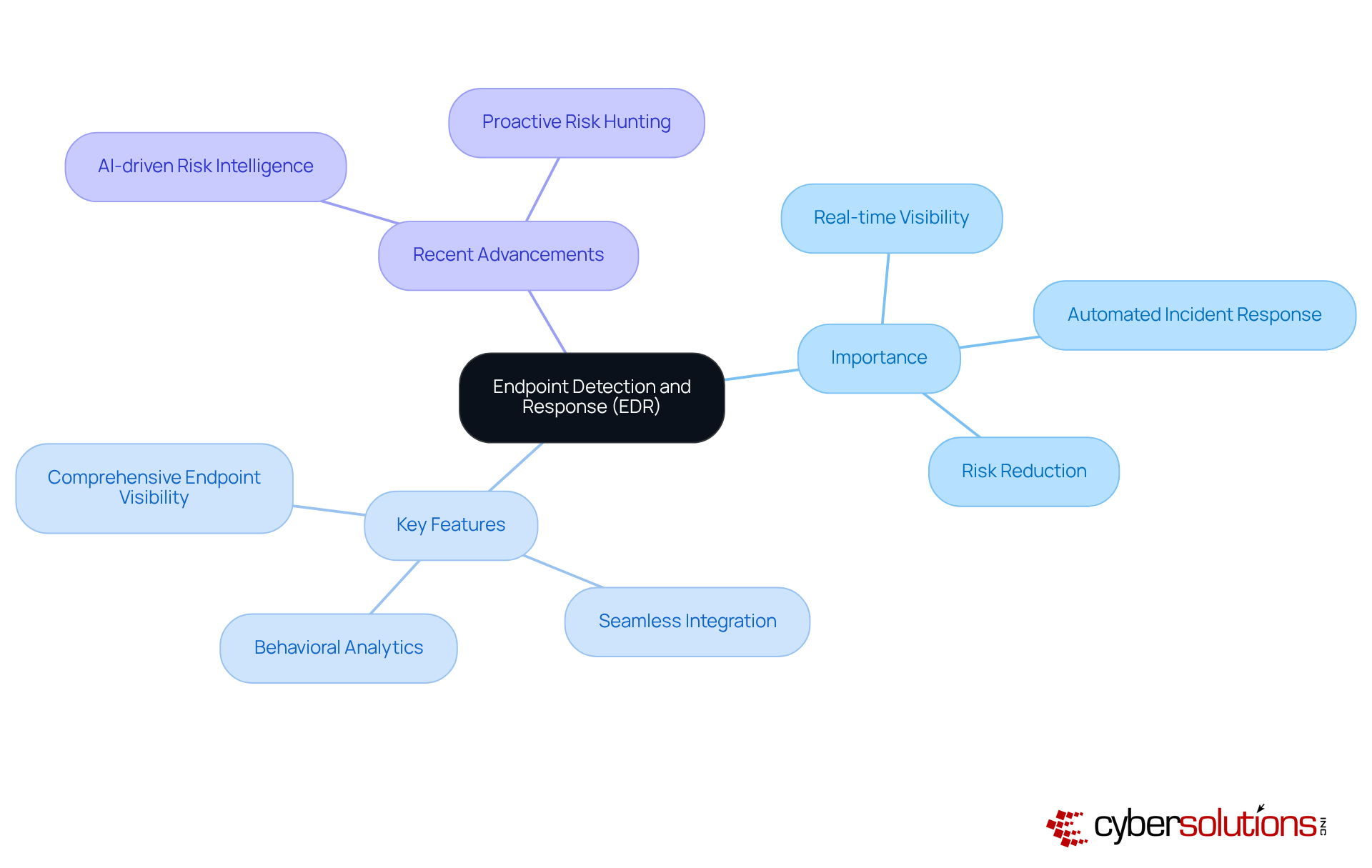
In an era where cyber threats are evolving at an unprecedented pace, the need for robust cybersecurity measures in healthcare has never been more critical. Endpoint detection and remediation is an essential cybersecurity technology designed to consistently observe and assess endpoint activities, enabling organizations to identify and respond to potential dangers efficiently. With endpoint detection and remediation solutions, you gain real-time visibility into what's happening on your endpoints, making it easier to spot suspicious activities and investigate incidents. By automating incident responses and establishing customized access controls, systems for endpoint detection and remediation significantly reduce risks linked to cyber attacks.
Advanced analytics and machine learning in endpoint detection and remediation solutions enhance detection capabilities, surpassing what traditional antivirus can offer. This evolution enables proactive risk hunting and swift incident response, which are vital in today’s intricate cyber environment. As cyber dangers become increasingly sophisticated, the significance of endpoint detection and remediation in reducing incident response times cannot be overstated. Organizations utilizing endpoint detection and remediation technology can expect enhanced detection rates and quicker containment of risks, ultimately protecting their vital assets and ensuring operational continuity.
Recent advancements in EDR technology include the incorporation of behavioral analytics and AI-driven risk intelligence, which further enhance detection accuracy and response efficiency. Key features of modern solutions for endpoint detection and remediation encompass:
- Automated incident response
- Comprehensive endpoint visibility
- Seamless integration with existing security infrastructures
These capabilities are essential for companies seeking to improve their cybersecurity stance and react efficiently to changing threats, especially when combined with round-the-clock network surveillance and notifications. By embracing endpoint detection and remediation technology, organizations can significantly enhance their defenses against the ever-evolving landscape of cyber threats. Organizations that fail to adapt to these advancements risk not only their data but also their operational integrity and reputation.
Explore Core Functions of EDR in Cybersecurity
In an era where cyber threats are increasingly sophisticated, the healthcare sector must prioritize cybersecurity to safeguard patient data and maintain trust. The core functions of endpoint detection and remediation are pivotal in enhancing organizational cybersecurity. Key functionalities include:
- Continuous Monitoring: EDR solutions deliver round-the-clock surveillance of endpoint activities, ensuring that any suspicious behavior is detected in real-time. This proactive approach is essential, as 71% of organizations reported an increase in cyberattack frequency over the past year.
- Risk Detection: Utilizing advanced algorithms and machine learning, EDR systems can recognize both known and unknown risks, including malware, ransomware, and insider threats. With ransomware attacks rising by 13% over five years, effective detection is critical for safeguarding sensitive data.
- Incident Response: EDR tools automate response actions, such as isolating infected endpoints, terminating malicious processes, and initiating remediation steps to mitigate damage. This capability is vital, as the average cost of a ransomware attack is approximately $1.85 million, underscoring the need for swift action.
- Data Collection and Analysis: EDR solutions collect extensive information from endpoints, allowing teams to perform thorough investigations and forensic analysis of incidents. This data is crucial for understanding attack vectors and improving future defenses.
- Threat Hunting: EDR enables protection teams to proactively seek out risks within the network, improving the entity's overall defensive stance. Ongoing threat exposure management can reduce the likelihood of suffering from breaches by threefold.
- Integration with Other Security Tools: EDR can seamlessly integrate with Security Information and Event Management (SIEM) systems and other security solutions, providing a holistic view of the entity's security landscape. This integration is essential for effective incident management and compliance with industry standards.
As cyber threats escalate, organizations face mounting pressure to protect sensitive data and maintain operational integrity. Investing in robust endpoint detection and remediation solutions is essential for healthcare organizations aiming to thrive in a perilous digital landscape.
Implement Best Practices for EDR Deployment and Optimization
In an era where healthcare data breaches are increasingly common, the need for robust cybersecurity measures has never been more critical. To effectively deploy and optimize EDR solutions, organizations should consider the following best practices:
- Conduct a Risk Evaluation: Start by assessing the existing protective stance to identify vulnerabilities and determine the specific requirements of the entity. This crucial step helps tailor the EDR implementation to effectively close existing gaps.
- Choose the Right EDR Solution: Select an EDR solution that fits the organization’s size, industry, and unique protection requirements. Key features to evaluate include threat detection capabilities, user-friendliness, and integration options with existing systems.
- Establish Clear Policies: Develop and document comprehensive policies for EDR usage, encompassing incident response protocols, user access controls, and data handling procedures. Well-defined policies are crucial for effective security operations and compliance.
- Pilot Testing: Implement a pilot program to test the EDR solution in a controlled environment. This approach allows organizations to make necessary adjustments and fine-tune the system before full-scale deployment, minimizing potential disruptions.
- Training and Awareness: Provide comprehensive training for IT personnel and end-users to ensure they are skilled in utilizing the EDR system and can identify possible risks. Enhanced awareness contributes to a more secure organizational culture.
- Regular Updates and Maintenance: Keep the EDR software current to safeguard against new risks. Consistently assess and modify detection guidelines and response approaches to adapt to the changing risk environment, ensuring continued effectiveness.
- Monitor and Evaluate Performance: Continuously assess the performance of the EDR solution, analyzing its effectiveness in detecting and responding to risks. Employ metrics to assess success and pinpoint areas for enhancement, promoting a cycle of ongoing improvement in overall posture.
Without a proactive approach to EDR implementation, healthcare organizations risk not only their data but also their reputation and trust with patients.

Maintain Continuous Monitoring and Threat Detection
In an era where healthcare data breaches are on the rise, the need for robust cybersecurity measures has never been more critical. Ongoing monitoring and endpoint detection and remediation are vital elements of a strong cybersecurity strategy. To fortify their defenses, healthcare organizations must adopt the following essential practices:
- Automated Notifications: Configure the endpoint detection and remediation system to generate automated notifications for suspicious activities, ensuring that response teams can act swiftly to potential dangers. With Cyber Solutions' 24/7 monitoring, instant alerts and real-time insights allow for swift action to prevent downtime or breaches.
- Regular Audits and Assessments: Conduct regular security audits and assessments to evaluate the effectiveness of monitoring tools and identify any vulnerabilities in the system.
- Integration with risk intelligence: Utilize risk intelligence feeds to enhance the endpoint detection and remediation system's capability to identify emerging risks and adjust to new attack vectors. Cyber Solutions offers advanced intelligence to safeguard against ransomware, phishing, and other malware attacks.
- User Behavior Analytics: Implement user behavior analytics to identify anomalies in user activities that may suggest insider risks or compromised accounts.
- Incident Response Drills: Regularly perform incident response exercises to assess the organization's preparedness to react to identified risks, ensuring that all team members are acquainted with their roles and responsibilities.
- Feedback Loop: Establish a feedback loop where insights gained from monitoring and incident responses are used to refine detection rules and improve overall security posture. By prioritizing these strategies, healthcare organizations can not only protect sensitive data but also enhance their overall operational resilience against evolving cyber threats through effective endpoint detection and remediation.

Conclusion
In today's healthcare landscape, the stakes of cybersecurity have never been higher. The integration of endpoint detection and remediation (EDR) into cybersecurity strategies is not merely an option but a necessity for organizations, particularly in the healthcare sector. With cyber threats evolving rapidly, adopting EDR technologies is essential for leaders to protect sensitive data and ensure operational integrity. By leveraging real-time visibility and automated incident responses, organizations can significantly enhance their defense mechanisms against potential cyberattacks.
This article delved into the core functions of EDR, highlighting its continuous monitoring capabilities, advanced risk detection, and automated incident response features. It also emphasized the importance of best practices for deploying EDR solutions, such as:
- Conducting thorough risk evaluations
- Selecting the right technology
- Maintaining regular updates
The insights provided illustrate how EDR not only improves detection rates but also fosters a proactive security culture within organizations, ultimately leading to better preparedness against cyber threats.
Data breaches can lead to significant financial and reputational damage, making endpoint detection and remediation a top priority. Organizations are urged to embrace these advanced strategies and technologies, ensuring they remain resilient in the face of evolving cyber risks. By committing to robust EDR practices, leaders can protect their organizations, uphold patient trust, and secure their operational future in an increasingly digital world. Implementing EDR is crucial not only for compliance but for securing the future of healthcare.
Frequently Asked Questions
What is Endpoint Detection and Response (EDR)?
Endpoint Detection and Response (EDR) is a cybersecurity technology designed to continuously monitor and assess endpoint activities, allowing organizations to identify and respond to potential threats effectively.
Why is EDR important in the healthcare sector?
EDR is critical in healthcare due to the evolving nature of cyber threats, providing real-time visibility into endpoint activities, helping to spot suspicious actions, and enabling efficient incident investigation and response.
How does EDR improve incident response times?
EDR enhances incident response times through automated responses and customized access controls, which significantly reduce the risks associated with cyber attacks.
What technologies enhance EDR capabilities?
Advanced analytics and machine learning enhance EDR capabilities, allowing for proactive risk hunting and faster incident responses beyond traditional antivirus solutions.
What are the key features of modern EDR solutions?
Key features of modern EDR solutions include automated incident response, comprehensive endpoint visibility, and seamless integration with existing security infrastructures.
How does EDR technology adapt to changing cyber threats?
Recent advancements in EDR technology, such as behavioral analytics and AI-driven risk intelligence, improve detection accuracy and response efficiency, helping organizations adapt to evolving threats.
What risks do organizations face if they do not implement EDR?
Organizations that fail to adopt EDR risk compromising their data, operational integrity, and reputation in the face of increasingly sophisticated cyber threats.
List of Sources
- Define Endpoint Detection and Response (EDR)
- corelight.com (https://corelight.com/resources/glossary/edr-endpoint-detection-response)
- fortunebusinessinsights.com (https://fortunebusinessinsights.com/endpoint-detection-and-response-market-107235)
- acronis.com (https://acronis.com/en/blog/posts/best-edr-endpoint-detection-and-response-solutions-in-2026)
- Explore Core Functions of EDR in Cybersecurity
- fortinet.com (https://fortinet.com/resources/cyberglossary/what-is-edr)
- 10 Cyber Security Trends For 2026 (https://sentinelone.com/cybersecurity-101/cybersecurity/cyber-security-trends)
- acronis.com (https://acronis.com/en/blog/posts/best-edr-endpoint-detection-and-response-solutions-in-2026)
- 205 Cybersecurity Stats and Facts for 2026 (https://vikingcloud.com/blog/cybersecurity-statistics)
- Implement Best Practices for EDR Deployment and Optimization
- deepwatch.com (https://deepwatch.com/blog/endpoint-detection-and-response-best-practices-in-2024)
- mordorintelligence.com (https://mordorintelligence.com/industry-reports/endpoint-detection-and-response-market)
- redcanary.com (https://redcanary.com/blog/security-operations/evaluating-edr)
- Maintain Continuous Monitoring and Threat Detection
- bitsight.com (https://bitsight.com/blog/5-things-to-consider-building-continuous-security-monitoring-strategy)
- Cybersecurity Trends to Consider in 2026 (https://blog.enterprisemanagement.com/cybersecurity-trends-to-consider-in-2026)
- 7 Benefits of Continuous Monitoring & How Automation Can Maximize Impact (https://secureframe.com/blog/continuous-monitoring-cybersecurity)
- crowdstrike.com (https://crowdstrike.com/en-us/cybersecurity-101/next-gen-siem/continuous-monitoring)
- solutionsreview.com (https://solutionsreview.com/cybersecurity-awareness-month-quotes-and-commentary-from-industry-experts-in-2025)