Introduction
In today's technology-driven business landscape, the role of Managed Service Providers (MSPs) is undeniably critical. These specialized firms empower organizations to streamline their IT operations, enabling leaders to concentrate on strategic growth instead of being overwhelmed by complex technical challenges.
But with a plethora of options available, how can leaders ensure they select the right MSP to meet their unique needs and maximize potential benefits?
This article explores the transformative advantages of engaging an MSP, detailing how they can:
- Enhance operational efficiency
- Bolster cybersecurity
- Ultimately support sustainable business growth
Defining Managed Service Providers (MSPs)
A Managed Service Provider (MSP) plays a crucial role in today's complex IT landscape, acting as a third-party entity that remotely oversees a customer's IT infrastructure and end-user systems. This framework empowers organizations to improve efficiency, enabling them to concentrate on their core business functions. MSPs offer a diverse range of services, including:
Each service is essential for maintaining data integrity and security.
The evolution of managed services stems from the increasing complexity of IT environments and the heightened demand for reliable support. Currently, a striking 90% of organizations are considering or have already adopted managed services, signaling a significant shift in how businesses approach IT management. Furthermore, 61% of small and medium-sized enterprises (SMEs) seek external support for IT management due to insufficient internal expertise, underscoring the vital role MSPs play in fortifying protective frameworks.
Real-world examples illustrate this trend: companies like Microsoft have expanded their Azure services to enhance cloud management and protection features, while NTT Ltd. secured substantial funding to bolster its capabilities in managed services and IT infrastructure. These developments underscore the growing dependence on MSPs to navigate the intricacies of modern IT landscapes.
As organizations increasingly embrace managed services, they enjoy the benefits of a streamlined IT environment, such as:
The managed services market, reflecting a robust growth trajectory driven by the urgent need for effective IT management solutions.

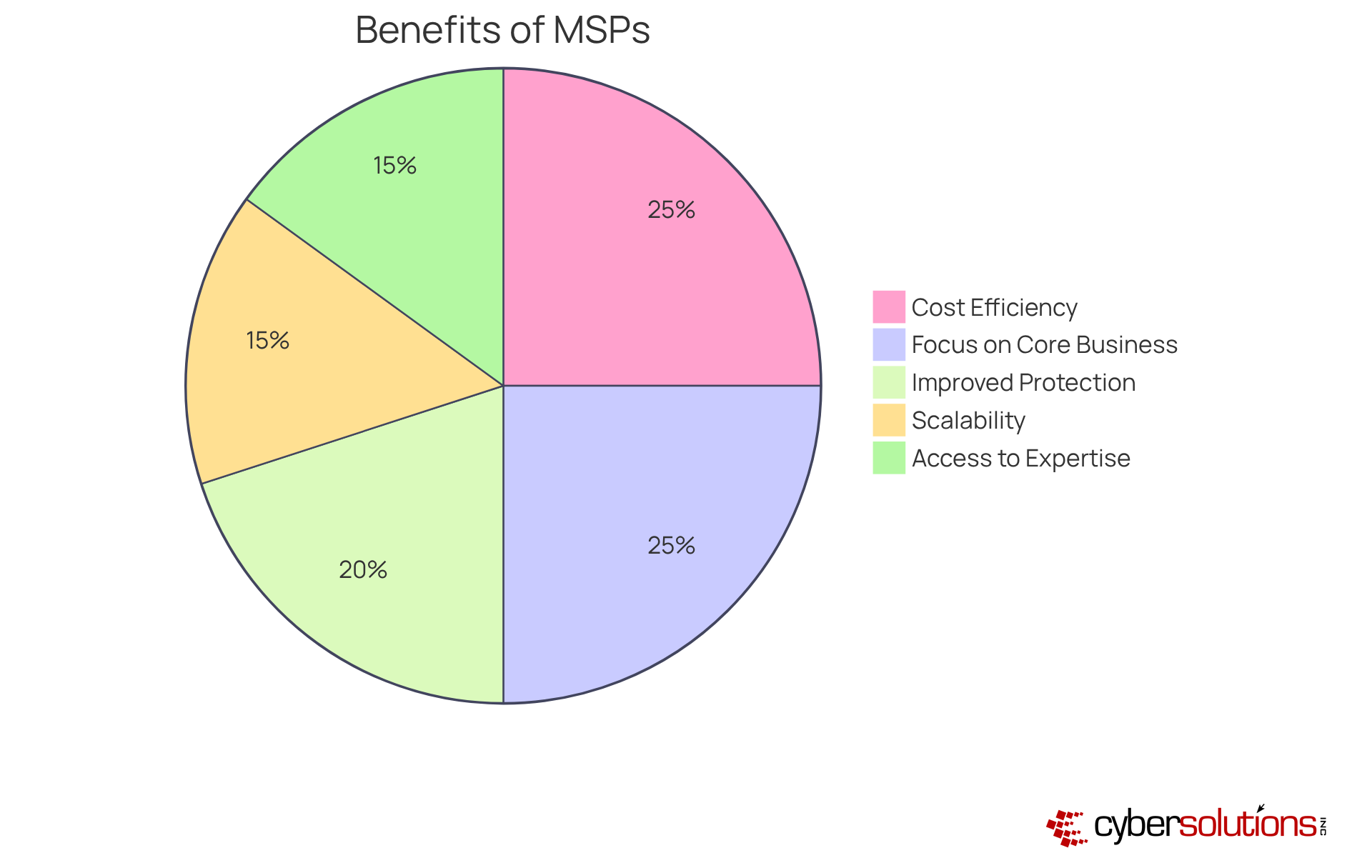
Key Benefits of Engaging an MSP
Engaging a managed service provider (MSP) is crucial for organizations aiming to enhance their performance by leveraging the benefits of technology in today’s competitive landscape. With the increasing complexity of IT systems, the right MSP can be a game changer.
- Cost Efficiency: MSPs typically offer a fixed pricing model, allowing organizations to budget effectively. This approach grants access to advanced technology and expertise without the financial burden of maintaining a large internal IT department. Research shows that companies that utilize the benefits of an MSP can lower overall IT expenses by 20-30%.
- Improved Protection: Given the escalating threat environment, MSPs implement robust security measures, including continuous monitoring, threat detection, and incident response. These proactive strategies significantly bolster cybersecurity, enhancing security measures by an impressive 40%.
- Focus on Core Business: By outsourcing IT management, companies can redirect their attention toward primary business objectives, enhancing overall productivity and fostering growth. In fact, 57% of entities believe outsourcing enables them to focus on core activities, resulting in improved efficiency.
- Scalability: MSPs provide solutions tailored to a company's changing requirements. This scalability accommodates growth without necessitating significant capital investments, allowing businesses to remain agile in a competitive environment.
- Access to Expertise: Collaborating with MSPs offers organizations specialized knowledge, ensuring they stay ahead of technological advancements and industry trends. This expertise is crucial, especially as 65% of IT budgets are spent merely on maintaining existing systems, highlighting the need for strategic investments in innovation.
By leveraging the benefits of a managed service provider, companies can not only improve their operational efficiency but also strengthen their protective stance, ultimately promoting sustainable growth.
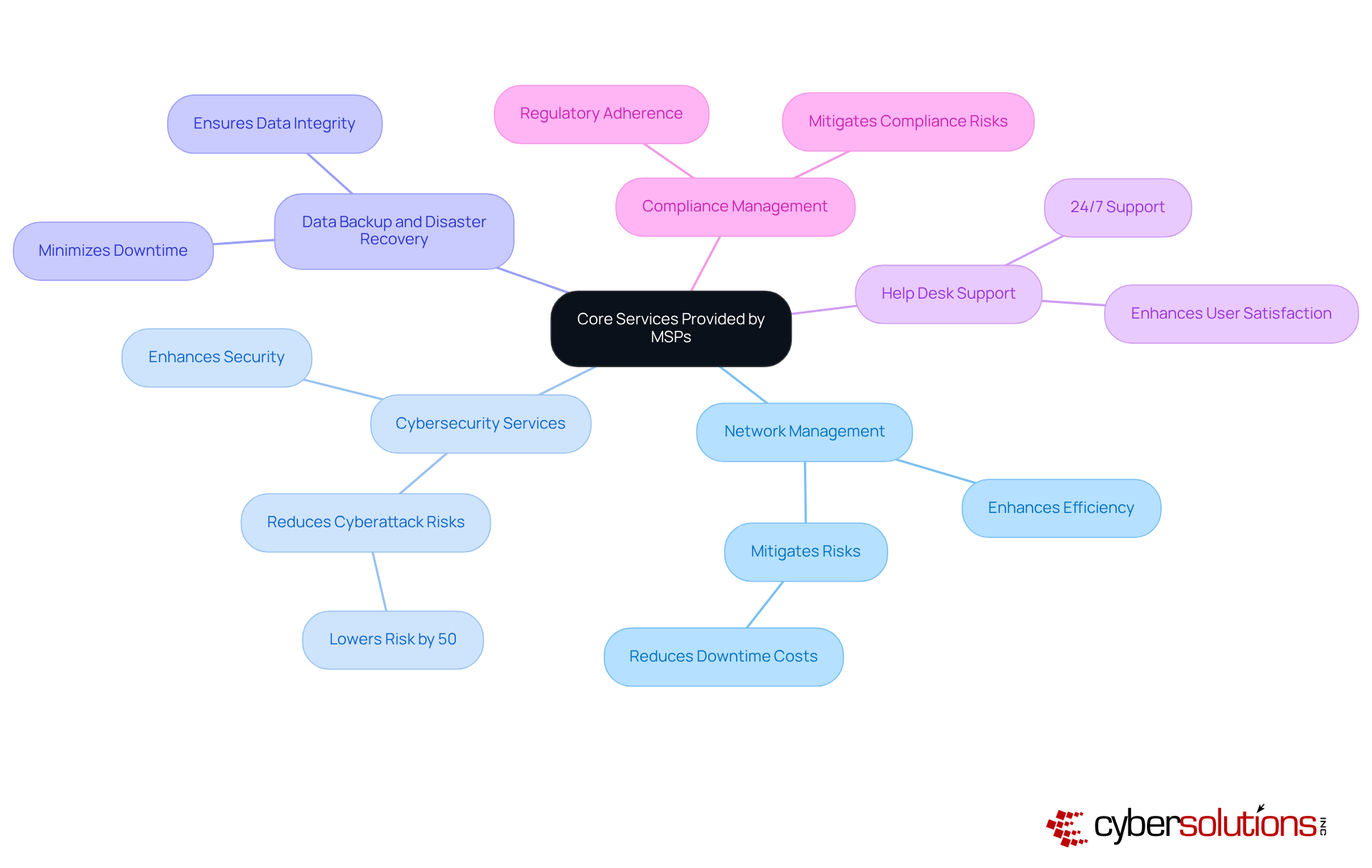
Core Services Provided by MSPs
The services provided by MSPs include playing a crucial role in managing and safeguarding organizations in today’s digital landscape. With the increasing prevalence of cyber threats, the need for robust cybersecurity measures has never been more pressing. MSPs offer a comprehensive suite of services designed to address these challenges head-on, allowing organizations to focus on their core missions while improving operational efficiency.
- Network management is one of the key offerings from MSPs. They provide ongoing oversight and administration of network performance, ensuring optimal operation and protection. This proactive approach not only enhances efficiency but also mitigates risks associated with network downtime, which can cost businesses up to $5,600 per minute. Organizations can significantly reduce operational disruptions by entrusting network management to MSPs, highlighting the importance of their expertise.
- Security services are another vital component of the MSP portfolio. These services include the implementation of robust security protocols, threat detection, and incident response strategies. By leveraging these services, organizations can lower the risk of cyberattacks by as much as 50%. In an increasingly hostile digital environment, safeguarding sensitive information is not just a necessity; it’s a critical imperative for survival.
- Disaster recovery solutions provided by MSPs ensure data integrity and availability during disasters, minimizing downtime and potential data loss. Effective disaster recovery planning is essential, as organizations face unexpected incidents and operational disruptions. Businesses can navigate these challenges with confidence, leveraging the expertise of MSPs.
- Help Desk Support is another essential service offered by MSPs. With 24/7 technical assistance, they address IT issues promptly, enhancing user satisfaction and productivity. This continuous support is vital for maintaining operational continuity and boosting employee morale, ensuring that teams can focus on their work without being hindered by technical difficulties.
- Finally, compliance management is a critical area where MSPs provide invaluable assistance. Navigating complex regulatory frameworks can be daunting for many organizations. MSPs help ensure adherence to industry regulations like HIPAA, PCI-DSS, and GDPR, which is increasingly crucial as 87% of organizations report adverse effects from low compliance maturity. By partnering with MSPs, organizations can experience the benefits of compliance management, which help them mitigate compliance risks and focus on their strategic goals.
In summary, the services provided by MSPs include empowering organizations to concentrate on their primary activities while efficiently managing IT intricacies and security challenges through the utilization of these essential resources. The partnership with MSPs not only enhances operational efficiency but also fortifies the organization against the ever-evolving landscape of cybersecurity threats.
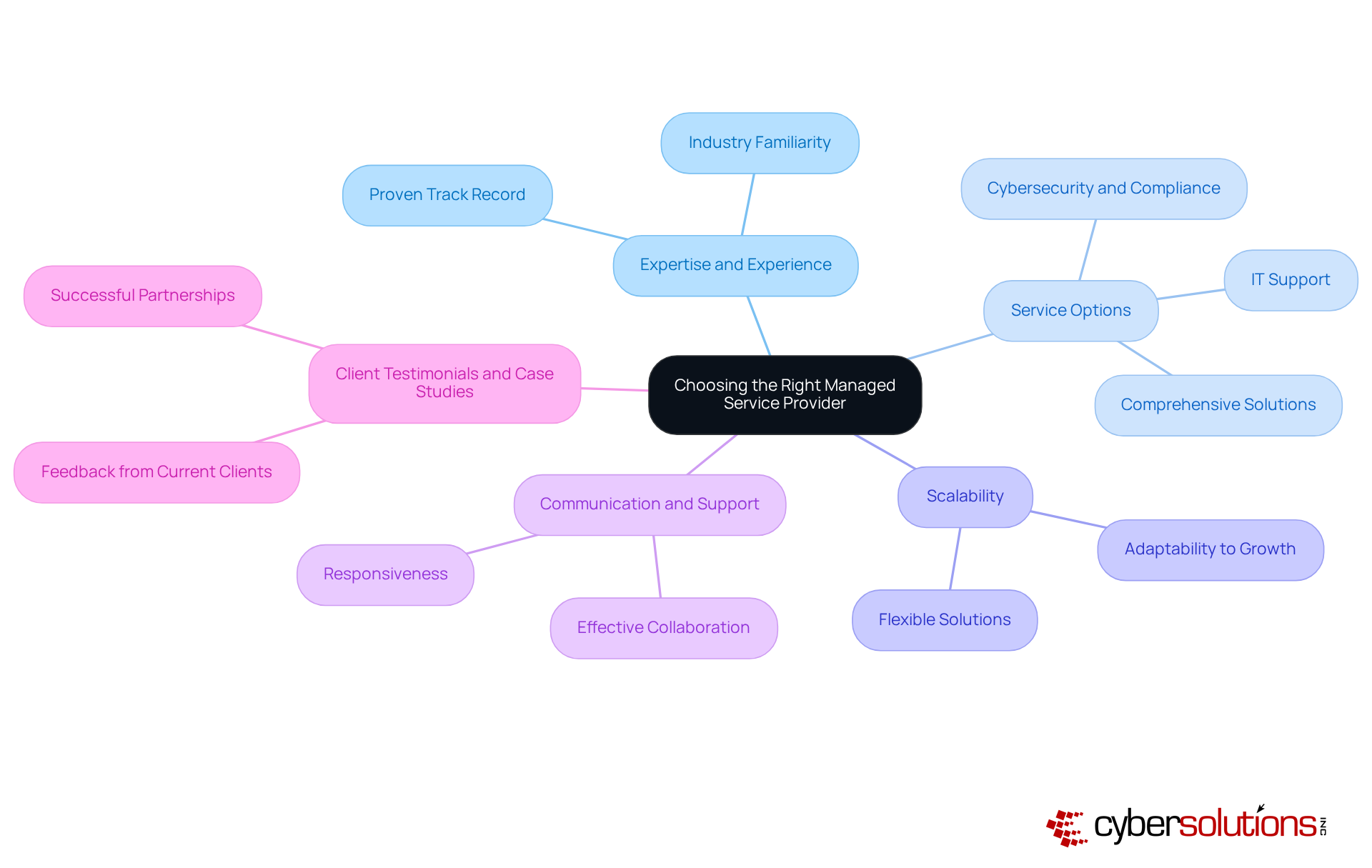
Choosing the Right Managed Service Provider
Selecting the right Managed Service Provider (MSP) is crucial for organizations aiming to leverage the benefits of a managed service to enhance their operations and security. In today’s rapidly evolving digital landscape, the benefits of a managed service can be a game-changer, particularly in addressing specific business needs. Here are several critical factors to prioritize in your search:
- Expertise and Experience: Look for an MSP with a proven track record. Their familiarity with industry standards can significantly enhance service delivery and ensure that your unique business needs are met.
- Service Options: Ensure the MSP offers a comprehensive range of services, including cybersecurity, compliance, and IT support. A diverse service portfolio guarantees that all aspects of your IT infrastructure are effectively managed.
- Scalability: Opt for an MSP that can grow alongside your business. Solutions that adapt to changing needs are essential for maintaining efficiency as your organization expands.
- Communication and Support: Evaluate the MSP's communication style and support framework. Effective collaboration and responsiveness are vital for a productive partnership, ensuring that your organization’s needs are addressed promptly.
- Testimonials and Case Studies: Investigate feedback from current clients to assess the MSP's reliability and effectiveness. Real-world examples of successful projects can provide valuable insights into the provider's capabilities and commitment to service excellence.
By focusing on these key factors, organizations can forge partnerships with MSPs that highlight the benefits of a managed service, meeting their current needs while supporting future growth.
Conclusion
Engaging with a Managed Service Provider (MSP) is not just a strategic decision; it’s a vital step for organizations aiming to master the complexities of IT management. In today’s fast-paced environment, enhancing operational efficiency and security is paramount. By entrusting IT responsibilities to seasoned experts, businesses can zero in on their core missions, ensuring they stay competitive in an ever-evolving landscape.
Consider the key advantages of partnering with an MSP:
- Cost efficiency
- Improved cybersecurity measures
- Flexibility to scale services according to business needs
MSPs deliver essential services like network management and data backup, while also providing specialized expertise that significantly mitigates the risks associated with cyber threats. As organizations increasingly recognize these benefits, the managed services market is poised for substantial growth in the coming years.
Ultimately, collaborating with a Managed Service Provider transcends mere outsourcing of IT functions; it fosters a partnership that drives innovation, enhances security, and promotes sustainable growth. Leaders must thoroughly evaluate potential MSPs based on their expertise, service offerings, and adaptability. This careful selection process ensures alignment with strategic goals. Embracing the advantages of managed service providers can lead to transformative outcomes for organizations, paving the way for long-term success. Are you ready to take the next step in securing your organization’s future?
Frequently Asked Questions
What is a Managed Service Provider (MSP)?
A Managed Service Provider (MSP) is a third-party entity that remotely oversees a customer's IT infrastructure and end-user systems, allowing organizations to delegate specific IT operations and focus on their core business functions.
What services do MSPs typically offer?
MSPs offer a diverse range of services, including network management, cybersecurity, data backup, and disaster recovery, all of which are essential for maintaining operational efficiency and security.
Why have managed solutions evolved in recent years?
The evolution of managed solutions has been driven by the increasing complexity of IT environments and the heightened demand for specialized knowledge in cybersecurity and compliance.
How prevalent is the adoption of managed solutions among organizations?
Currently, 90% of organizations are considering or have already adopted managed solutions, indicating a significant shift in how businesses approach IT management.
What percentage of small and medium-sized enterprises (SMEs) seek external support for cybersecurity?
61% of small and medium-sized enterprises (SMEs) seek external support for cybersecurity due to insufficient internal expertise.
Can you provide examples of companies enhancing their managed solutions?
Companies like Microsoft have expanded their Azure Managed Solutions to improve cloud management and protection features, while NTT Ltd. has secured funding to enhance its managed solutions capabilities in cybersecurity and IT infrastructure.
What benefits do organizations enjoy by working with MSPs?
Organizations working with MSPs can experience improved operational efficiency, reduced IT costs, and enhanced security measures.
What is the projected market size for managed services by 2030?
The managed services market is projected to reach $731 billion by 2030, reflecting strong growth driven by the urgent need for effective IT management solutions.
List of Sources
- Defining Managed Service Providers (MSPs)
- mspseo.agency (https://mspseo.agency/blog/msp-industry-statistics)
- jumpcloud.com (https://jumpcloud.com/blog/msp-statistics-trends)
- itpro.com (https://itpro.com/business/business-strategy/the-msp-market-has-changed-we-need-to-change-how-we-think-about-it)
- MSP Statistics In The USA: 2025 / Infrascale (https://infrascale.com/msp-statistics-usa)
- Managed Services Provider Statistics and Facts (2026) (https://scoop.market.us/managed-services-statistics)
- Key Benefits of Engaging an MSP
- cmitsolutions.com (https://cmitsolutions.com/richardson-tx-1049/blog/10-surprising-managed-it-statistics-small-businesses-need-to-know)
- Benefits of Managed Services: Cost Savings, Security, & Expertise (https://boyerassoc.com/blog/benefits-of-managed-services-cost-savings-security-expertise)
- thehackernews.com (https://thehackernews.com/2025/10/the-msp-cybersecurity-readiness-guide.html)
- jumpcloud.com (https://jumpcloud.com/blog/msp-statistics-trends)
- themitpro.com (https://themitpro.com/blogs/news/top-10-managed-it-services-benefits-2025)
- Core Services Provided by MSPs
- jumpcloud.com (https://jumpcloud.com/blog/msp-statistics-trends)
- mspseo.agency (https://mspseo.agency/blog/msp-industry-statistics)
- MSP Statistics In The USA: 2025 / Infrascale (https://infrascale.com/msp-statistics-usa)
- Managed Services Provider Statistics and Facts (2026) (https://scoop.market.us/managed-services-statistics)
- expertinsights.com (https://expertinsights.com/it-management/30-msp-stats)
- Choosing the Right Managed Service Provider
- ahead.com (https://ahead.com/resources/trends-in-managed-services-in-2025)
- defactoglobal.com (https://defactoglobal.com/case_studies/health-care-2)
- jumpcloud.com (https://jumpcloud.com/blog/msp-statistics-trends)
- MSP Statistics In The USA: 2025 / Infrascale (https://infrascale.com/msp-statistics-usa)