
Introduction
In today's digital landscape, where cyber threats are becoming increasingly sophisticated, the urgency for robust cybersecurity measures is paramount. Endpoint Detection and Response (EDR) stands out as a crucial solution, empowering organizations to monitor, detect, and respond to threats in real-time. This capability not only mitigates the impact of cyberattacks but also safeguards sensitive data and ensures compliance.
However, as organizations strive to implement these advanced solutions, pressing questions arise:
- What challenges do they face?
- How effective is EDR in a rapidly evolving digital world?
Understanding these intricacies is essential for leaders committed to protecting their organizations.
Define Endpoint Detection and Response (EDR)
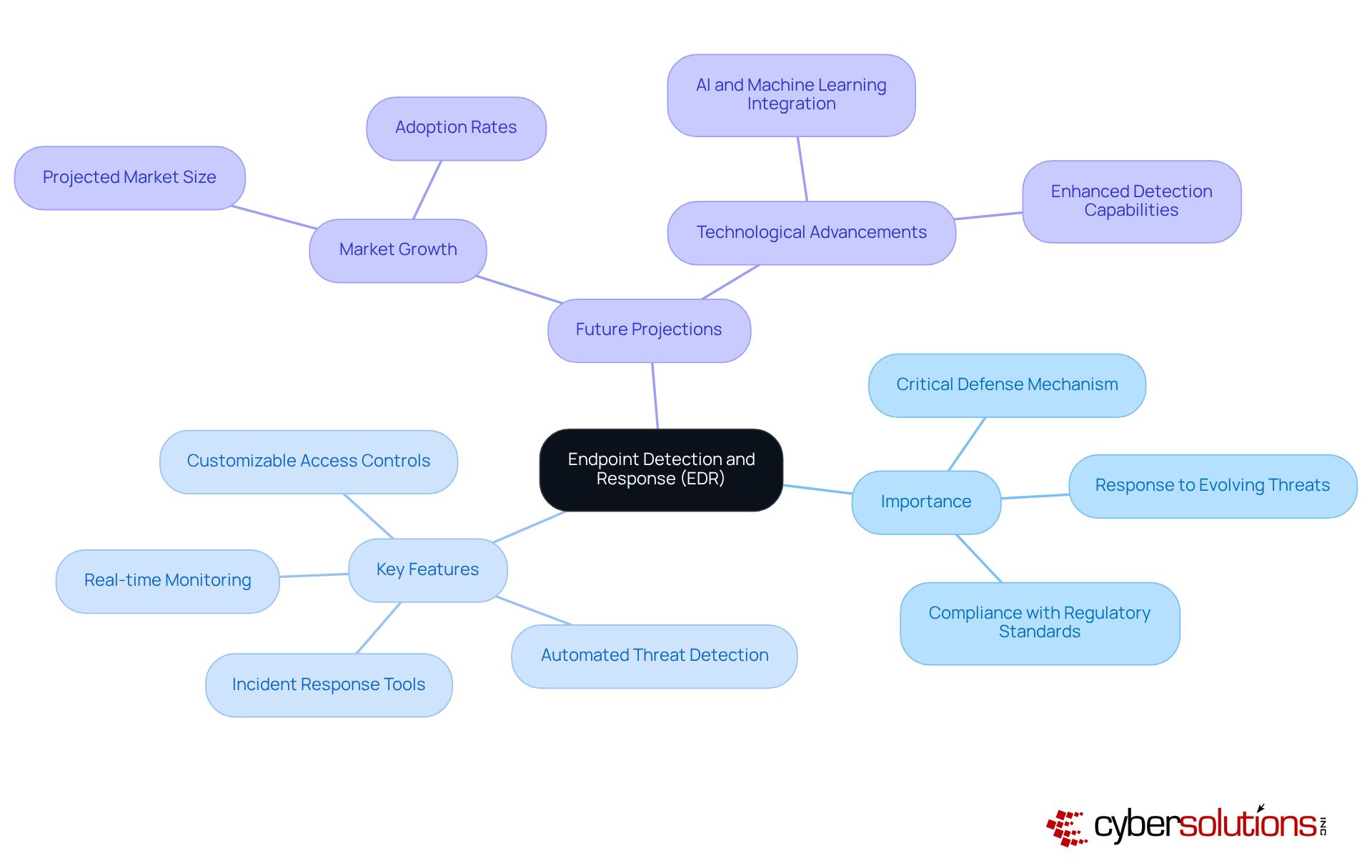
In today's digital landscape, cybersecurity is not just an option; it's a necessity. To understand EDR, one must recognize that it stands at the forefront of this critical defense, continuously monitoring, detecting, and responding to threats on endpoint devices like laptops, desktops, and servers. By gathering and analyzing data from these endpoints, EDR tools can identify harmful actions in real-time, significantly bolstering an organization's security posture.
Unlike traditional antivirus solutions that rely heavily on signature-based detection, EDR employs advanced and robust technologies. This proactive approach allows businesses to swiftly mitigate risks, reducing the typical downtime from ransomware attacks, which can extend up to 21 days. As we look ahead to 2025, it's projected that nearly 48% of organizations will implement EDR solutions, which raises the question of cybersecurity strategies and underscores their vital role in protecting sensitive data and ensuring business continuity.
Key features of EDR technology include:
- Customizable access controls
These elements make EDR an indispensable part of modern cybersecurity strategies. In a world where threats are ever-evolving, knowing the landscape and adapting is not just wise; it's your organization's future.
Explain the Importance of EDR in Cybersecurity
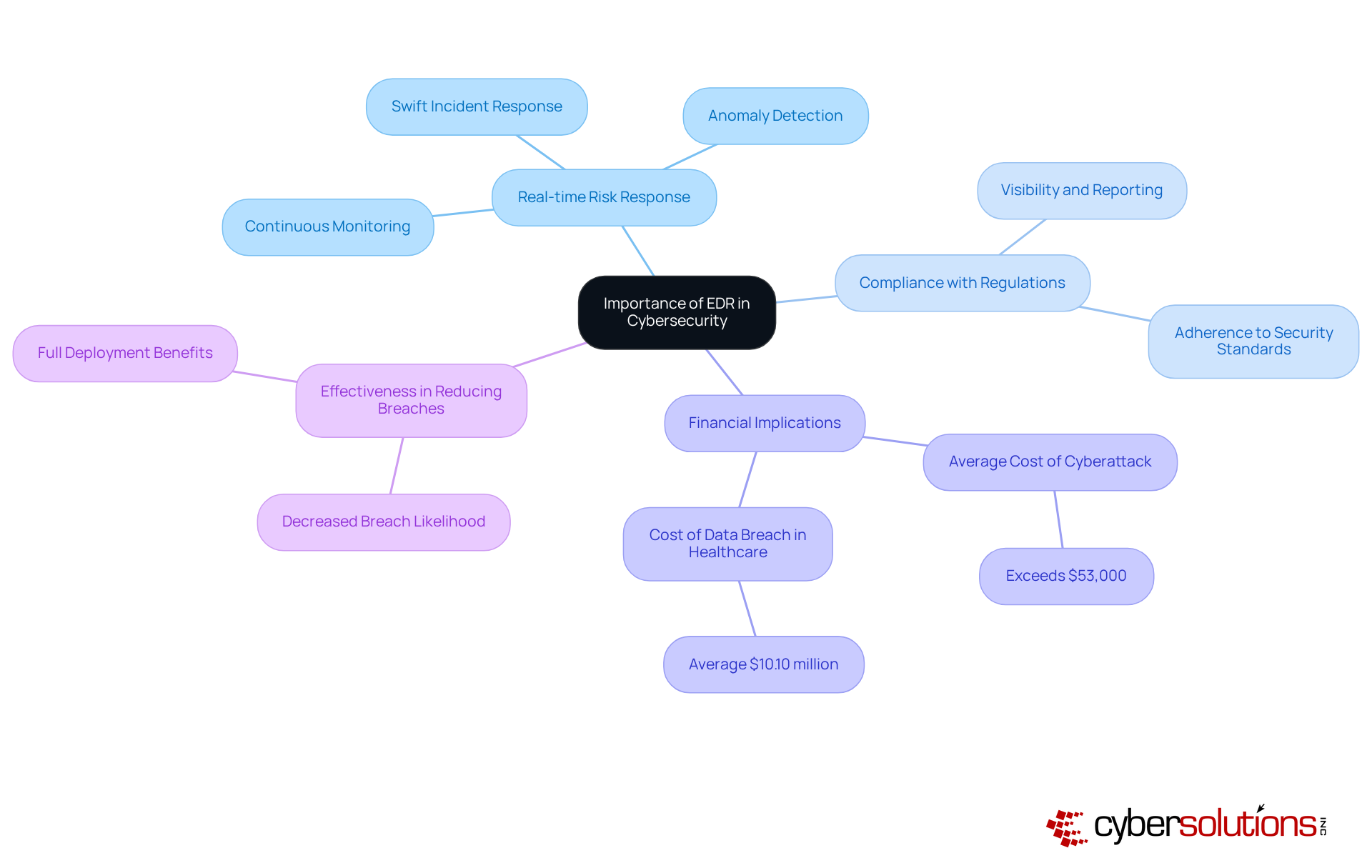
In cybersecurity, understanding threats is crucial, especially as the complexity and frequency of cyber threats continue to grow. In today’s landscape, organizations must be equipped to identify and respond to risks in real-time. This capability is essential for minimizing potential damage from cyberattacks. Continuous monitoring of endpoint activities allows EDR systems to detect anomalies that may indicate breaches, facilitating swift responses.
For healthcare organizations, the implications are profound. EDR is not just a checkbox; it’s a necessity. EDR provides the visibility and reporting required to demonstrate adherence to security standards. Without EDR, organizations face an increased risk per cyberattack, highlighting the financial urgency of implementing these solutions.
Real-world examples underscore EDR's effectiveness. Companies that fully deploy EDR tools experience a marked improvement, particularly when these tools are utilized across all endpoints. Cyber Solutions stands out in this arena, offering expert guidance. We ensure that compromised endpoints are thoroughly cleaned, patched, and reimaged as needed.
Moreover, with Cyber Solutions' expertise, suspicious activities are identified and neutralized before they escalate into serious threats. This protection is vital against ransomware, phishing, and other malware attacks. Ultimately, EDR is not just an option; it’s a necessity, empowering organizations to protect their assets and maintain trust with clients and stakeholders.
Outline Key Components and Functions of EDR Solutions
In today's digital landscape, the importance of cybersecurity cannot be overstated, especially in the healthcare sector. Cyber threats are evolving rapidly, posing significant risks to sensitive patient data and organizational integrity. For Chief Financial Officers (CFOs) in healthcare, navigating these challenges is paramount. To understand EDR solutions, it is important to note that EDR solutions emerge as a critical component in safeguarding against these threats, offering a robust defense mechanism that combines proactive monitoring with incident response.
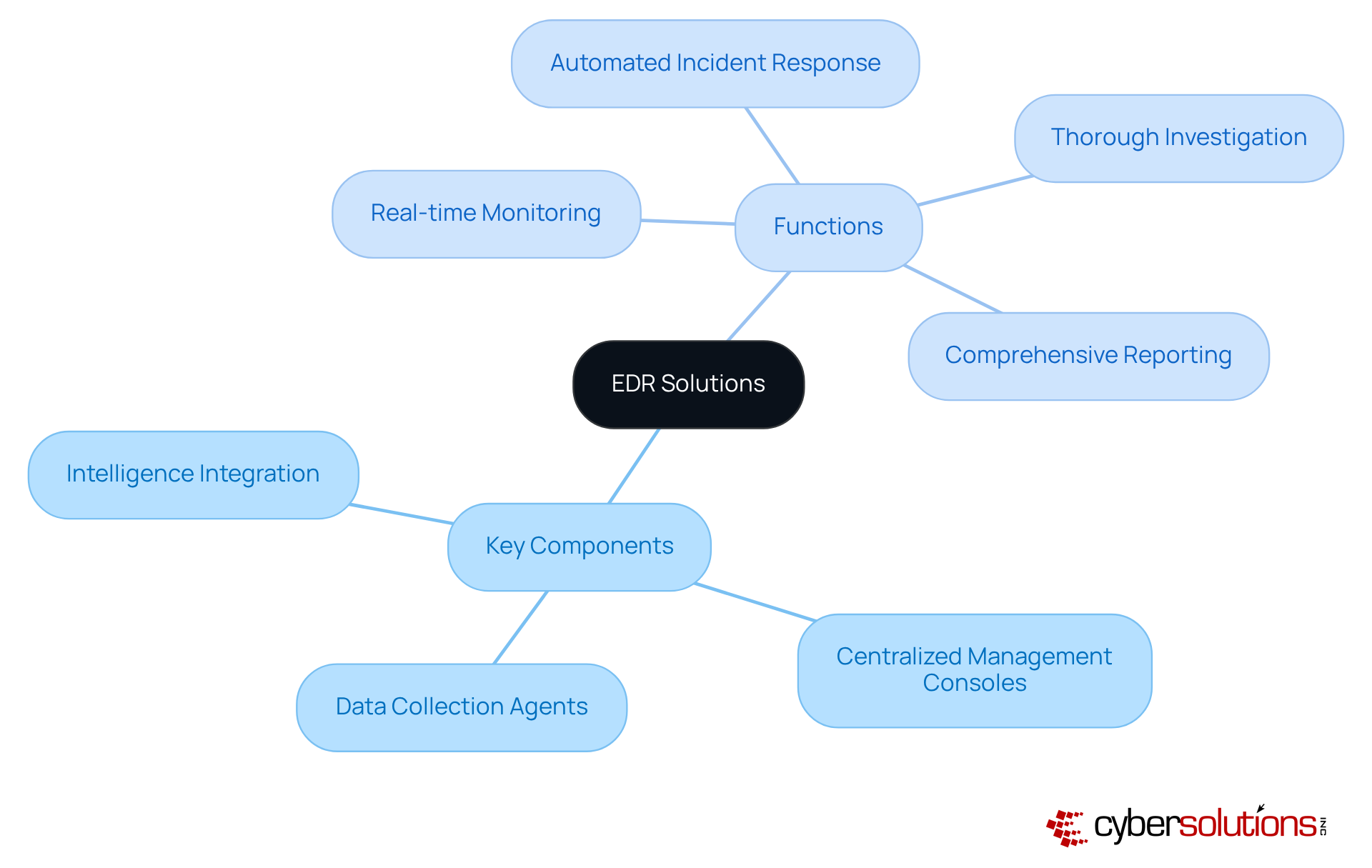
EDR solutions are built around several key components, including:
- Intelligence integration
EDR agents are installed on endpoint devices to continuously monitor activities, capturing detailed information on processes, network connections, and user behaviors. This information is sent to a centralized management console, where security teams can examine it for potential risks, enabling a proactive security stance.
Centralized consoles play a pivotal role in streamlining security operations. They provide a unified view of endpoint activities, allowing for efficient monitoring and rapid response to incidents. Organizations employing centralized consoles can significantly decrease their average response time to incidents, which is essential considering that the average duration to recognize and control a breach is about 277 days. By utilizing EDR tools, companies can automate response actions, such as isolating compromised devices and removing malware, thereby containing incidents before they escalate into major breaches.
Furthermore, EDR systems incorporate intelligence feeds that enhance detection capabilities by offering context on recognized risks and weaknesses. This integration enables organizations to remain proactive against emerging dangers, as EDR systems can analyze threats in real time. EDR includes functions such as:
- Thorough investigation
- Comprehensive reporting
All of which are essential for maintaining a robust security posture. As cyber risks continue to develop, the efficiency of EDR systems in identifying and addressing incidents becomes increasingly crucial for organizations seeking to safeguard their sensitive information and maintain adherence to regulatory standards.
Trace the Evolution of EDR in Cybersecurity
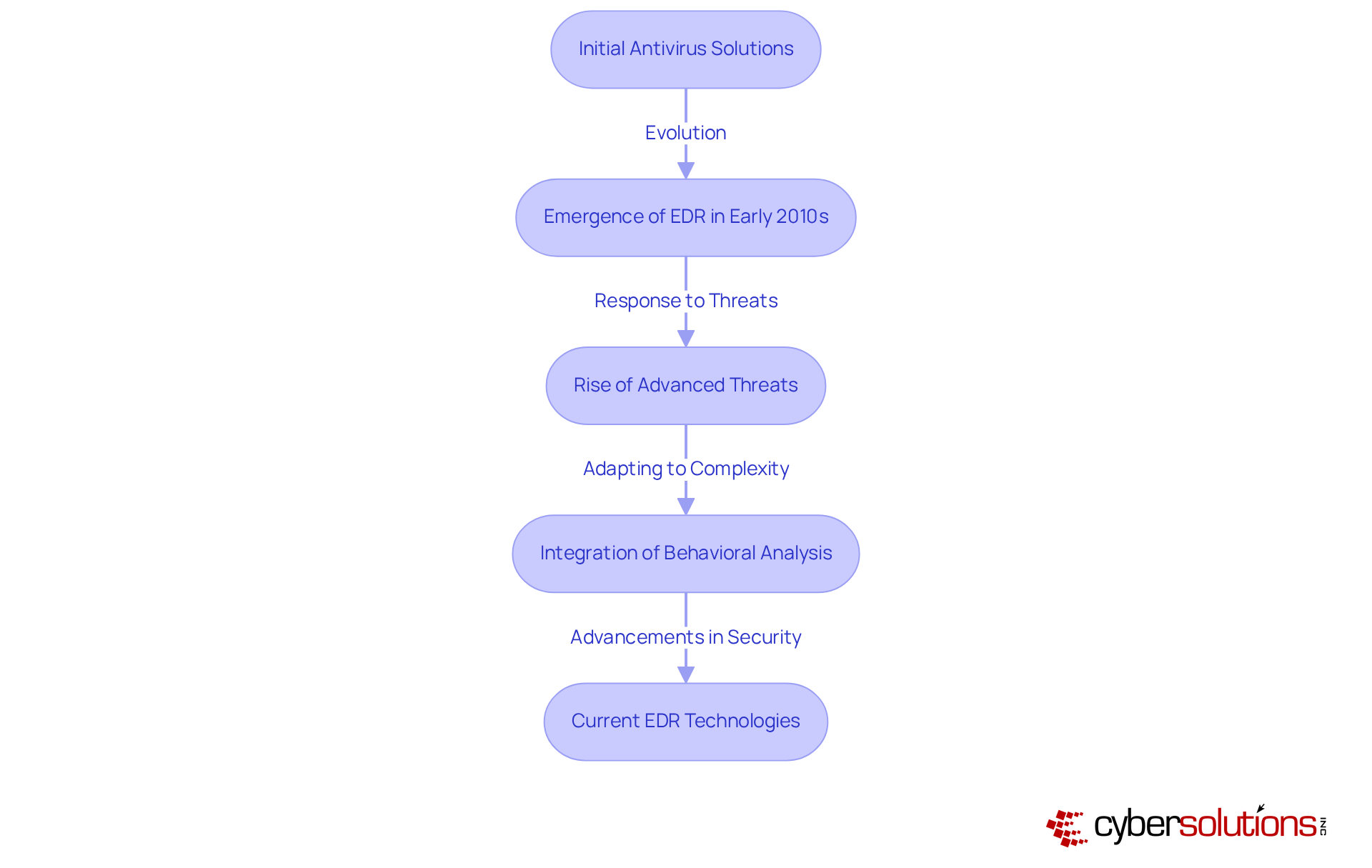
In today's digital age, the importance of robust cybersecurity cannot be overstated, especially in the healthcare sector. As organizations evolve, they face unique challenges that demand immediate attention. The development of technologies that answer the question of security marks a significant evolution in this landscape. Initially emerging in response to the limitations of conventional antivirus programs, these solutions have transformed from basic monitoring tools into sophisticated systems capable of detection and automated responses.
The early 2010s saw the rise of EDR as cyber dangers became increasingly sophisticated, revealing the inadequacies of signature-based detection methods. Today, when discussing cybersecurity, EDR is not just an option; it is an integral component of comprehensive strategies. With the rise of ransomware and advanced persistent threats (APTs), organizations must prioritize the adoption of EDR solutions. The continuous improvement of EDR reflects an ongoing arms race between cyber defenders and attackers, underscoring the necessity for organizations to stay ahead of potential threats.
How can healthcare CFOs navigate these complexities? By investing in EDR technologies, they can enhance their organization's security posture, prompting the inquiry of best practices to ensure that sensitive patient data remains protected. The evolution of technologies related to cybersecurity is a testament to the commitment required to combat modern threats effectively. As we move forward, embracing these advancements will be crucial for success.
Conclusion
In today’s rapidly evolving cyber landscape, understanding Endpoint Detection and Response (EDR) is not just beneficial; it’s essential for organizations, especially in the healthcare sector, where safeguarding sensitive data is paramount. EDR acts as a critical line of defense, continuously monitoring and responding to threats on endpoint devices. As cyber threats grow more sophisticated, the proactive capabilities of EDR solutions become vital for maintaining organizational integrity and compliance.
The multifaceted nature of EDR includes key features such as:
- Real-time monitoring
- Automated threat detection
- Comprehensive incident response tools
These elements are crucial in minimizing the impact of cyberattacks, particularly in healthcare, where regulatory compliance is non-negotiable. With the anticipated rise in EDR adoption, organizations must recognize the financial and operational advantages of implementing these solutions to effectively protect their assets.
Investing in EDR technology is not merely a strategic choice; it’s a necessity. Organizations must prioritize the adoption of EDR solutions to stay ahead of potential risks and ensure a robust cybersecurity posture. By embracing EDR, they not only protect sensitive information but also foster trust with clients and stakeholders, ultimately reinforcing their resilience against future cyber challenges.
Frequently Asked Questions
What is Endpoint Detection and Response (EDR)?
Endpoint Detection and Response (EDR) is a cybersecurity solution that continuously monitors, detects, and responds to threats on endpoint devices such as laptops, desktops, and servers. It analyzes data from these endpoints to identify harmful actions in real-time, enhancing an organization's security.
How does EDR differ from traditional antivirus solutions?
Unlike traditional antivirus solutions that primarily use signature-based detection, EDR employs behavioral analysis and robust incident response capabilities. This proactive approach enables faster risk mitigation and reduces downtime from attacks.
What are the key features of EDR technology?
Key features of EDR technology include real-time monitoring, automated threat detection, comprehensive incident response tools, and customizable access controls.
Why is EDR important for organizations?
EDR is crucial for organizations as it significantly bolsters their security posture, protects sensitive data, and ensures compliance with regulatory standards. It is projected that by 2025, nearly 48% of organizations will implement EDR solutions.
What impact can EDR have on ransomware attacks?
EDR can reduce the typical downtime from ransomware attacks, which can last up to 21 days, by swiftly mitigating risks and responding to threats.
List of Sources
- Define Endpoint Detection and Response (EDR)
- expertinsights.com (https://expertinsights.com/endpoint-security/edr-market-overview)
- empyreanit.com.au (https://empyreanit.com.au/case_studies/managed-soc-services)
- dimensionmarketresearch.com (https://dimensionmarketresearch.com/report/endpoint-detection-and-response-market)
- theinsightpartners.com (https://theinsightpartners.com/reports/endpoint-detection-and-response-market)
- omnicybersecurity.com (https://omnicybersecurity.com/case_studies/case-study-inside-a-red-team-engagement)
- Explain the Importance of EDR in Cybersecurity
- industrialcyber.co (https://industrialcyber.co/reports/incident-response-mfa-and-edr-rank-as-top-controls-in-marsh-mclennans-latest-cyber-risk-study)
- illumio.com (https://illumio.com/blog/top-cybersecurity-news-stories-from-october-2025)
- Key Cyber Security Statistics for 2026 (https://sentinelone.com/cybersecurity-101/cybersecurity/cyber-security-statistics)
- 205 Cybersecurity Stats and Facts for 2026 (https://vikingcloud.com/blog/cybersecurity-statistics)
- Top Cybersecurity Statistics: Facts, Stats and Breaches for 2025 (https://fortinet.com/resources/cyberglossary/cybersecurity-statistics)
- Outline Key Components and Functions of EDR Solutions
- expertinsights.com (https://expertinsights.com/endpoint-security/edr-market-overview)
- dimensionmarketresearch.com (https://dimensionmarketresearch.com/report/endpoint-detection-and-response-market)
- fortinet.com (https://fortinet.com/resources/cyberglossary/what-is-edr)
- sentinelone.com (https://sentinelone.com/cybersecurity-101/endpoint-security/edr-solutions)
- Trace the Evolution of EDR in Cybersecurity
- expertinsights.com (https://expertinsights.com/endpoint-security/edr-market-overview)
- snsinsider.com (https://snsinsider.com/reports/endpoint-detection-and-response-market-3088)
- dimensionmarketresearch.com (https://dimensionmarketresearch.com/report/endpoint-detection-and-response-market)
- databridgemarketresearch.com (https://databridgemarketresearch.com/reports/global-endpoint-detection-response-market?srsltid=AfmBOopkiw_hw6bp1GzJNCXoIFjikqE2sfsdS0l8wJyLOAjx31w-9NlU)