Cybersecurity Trends and Insights

Essential Risk Management Techniques for Cybersecurity Leaders

Essential Risk Management Techniques for Cybersecurity Leaders

Introduction

In an era where cyber threats are not just a possibility but a reality, the healthcare sector in South Carolina must prioritize cybersecurity to protect its most valuable asset: patient data. Organizations in this region, particularly within the healthcare and financial sectors, face unprecedented challenges in safeguarding sensitive information. Effective cybersecurity risk management is not merely a defensive measure; it is a strategic imperative that can protect assets, ensure compliance with regulations like HIPAA and PCI-DSS, and maintain stakeholder trust.

As cyber threats escalate, the challenge of protecting sensitive data intensifies, leaving organizations vulnerable to breaches. So, how can leaders cultivate a proactive risk management culture that not only addresses current vulnerabilities but also prepares for future challenges? Let’s explore some essential risk management techniques that can help cybersecurity leaders navigate these turbulent waters with confidence.

Define Cybersecurity Risk Management and Its Importance

In an era where cyber threats loom larger than ever, the healthcare sector must prioritize cybersecurity to protect sensitive patient information and maintain trust. Cybersecurity threat management means taking a proactive stance to identify and tackle the challenges that can jeopardize your organization’s information systems. This ongoing process involves assessing potential vulnerabilities and understanding the impact of various uncertainties on business operations. Managing digital security challenges is crucial; it serves as a protective shield against online dangers that can lead to data breaches, financial setbacks, and damage to reputation. Smart risk management techniques in cybersecurity not only protect your assets but also ensure compliance with industry regulations, enhancing your organization's resilience against cyber threats.

As we look ahead to 2026, the realm of digital security is advancing, with entities encountering increasingly sophisticated threats. The healthcare sector, particularly vulnerable due to the value of patient records, has reported an alarming rise in ransomware attacks, with costs from data breaches reaching an average of $9.77 million. Similarly, the financial services sector faces approximately $5.9 million for each data breach, underscoring the critical necessity for strong protective measures.

Statistics reveal that 88% of all cyber incidents are attributed to human errors. This highlights the necessity for comprehensive employee training and awareness programs. Furthermore, organizations that adopt proactive management practices can significantly decrease the duration required to detect and control breaches, potentially saving millions in damages. As digital risks continue to grow, incorporating protective measures into daily decision-making becomes crucial for sustaining security awareness and operational integrity.

Statements from industry specialists highlight this urgency: "Cybercrime expenses are anticipated to rise globally to nearly $14 trillion by 2028," indicating the essential need for entities to prioritize cybersecurity management. By adopting foundational best practices, including:

Businesses can strengthen their defenses against the changing landscape of challenges. Cyber Solutions stands ready to assist entities in navigating these challenges, ensuring that they remain resilient in the face of cyber threats. By embracing a robust cybersecurity strategy, organizations can not only safeguard their assets but also position themselves as leaders in the fight against cybercrime.
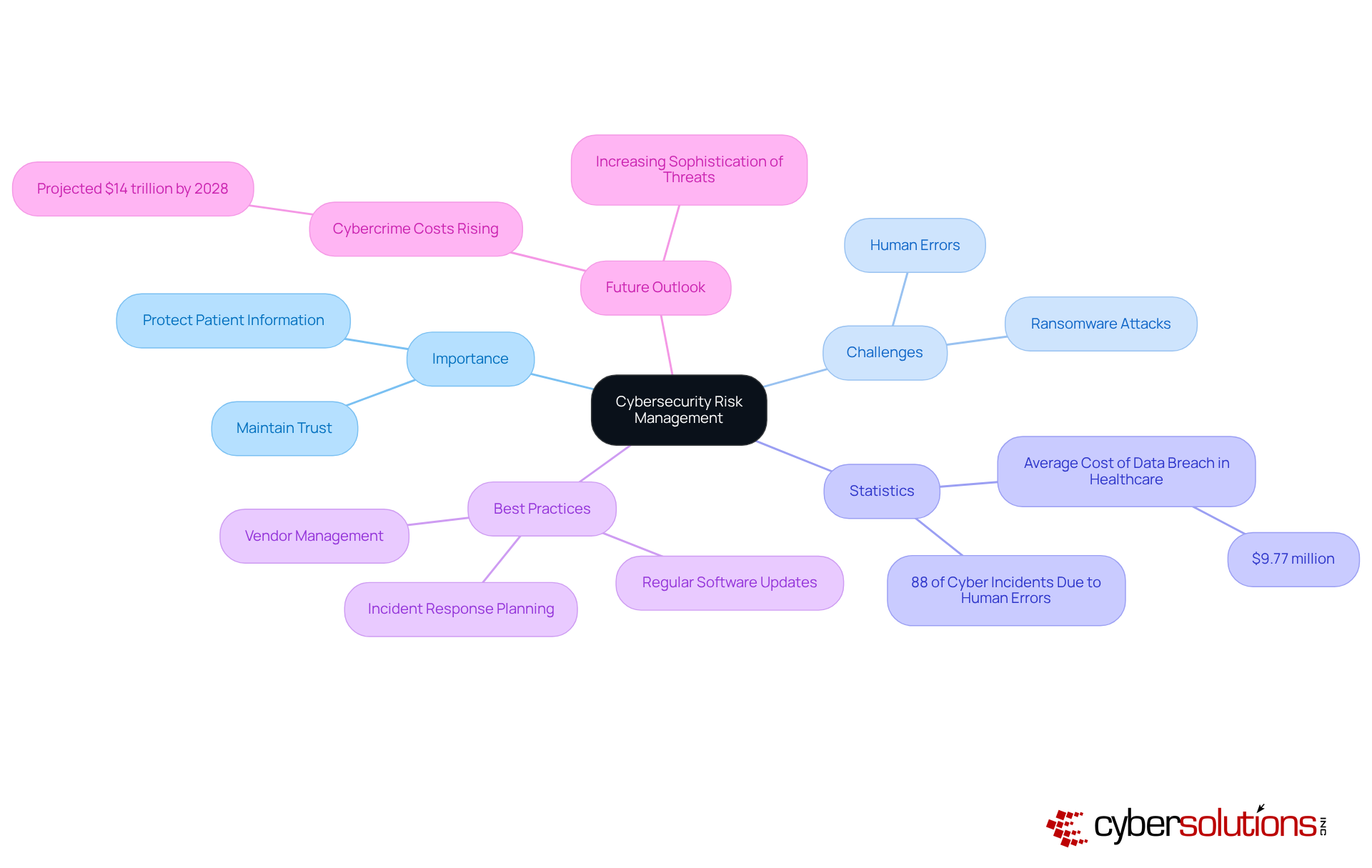
This mindmap illustrates the key aspects of cybersecurity risk management. Start at the center with the main concept, then explore the branches to see its importance, challenges, statistics, best practices, and future outlook. Each branch represents a critical area that contributes to understanding and managing cybersecurity risks.

Cultivate a Risk Management Culture Among Leadership

In an era where cyber threats loom large, the importance of robust digital security in healthcare cannot be overstated. To foster a culture of managing uncertainties, leadership must actively advocate the significance of digital security at all levels of the entity. This can be accomplished by incorporating threat management into the organization's core values and decision-making processes.

Leaders should communicate the significance of cybersecurity investments, such as:

  1. Proactive IT support
  2. Vigilant system monitoring
  3. Comprehensive cybersecurity measures that safeguard your organization

It is essential to foster open dialogues about potential challenges, as well as execute regular training sessions and workshops that strengthen this culture. By fostering a culture of accountability and awareness, entities can enhance their resilience against cyber threats, supported by Cyber Solutions' continuous monitoring and infrastructure management services. By prioritizing cybersecurity, organizations not only protect their assets but also ensure the trust of their patients and stakeholders.
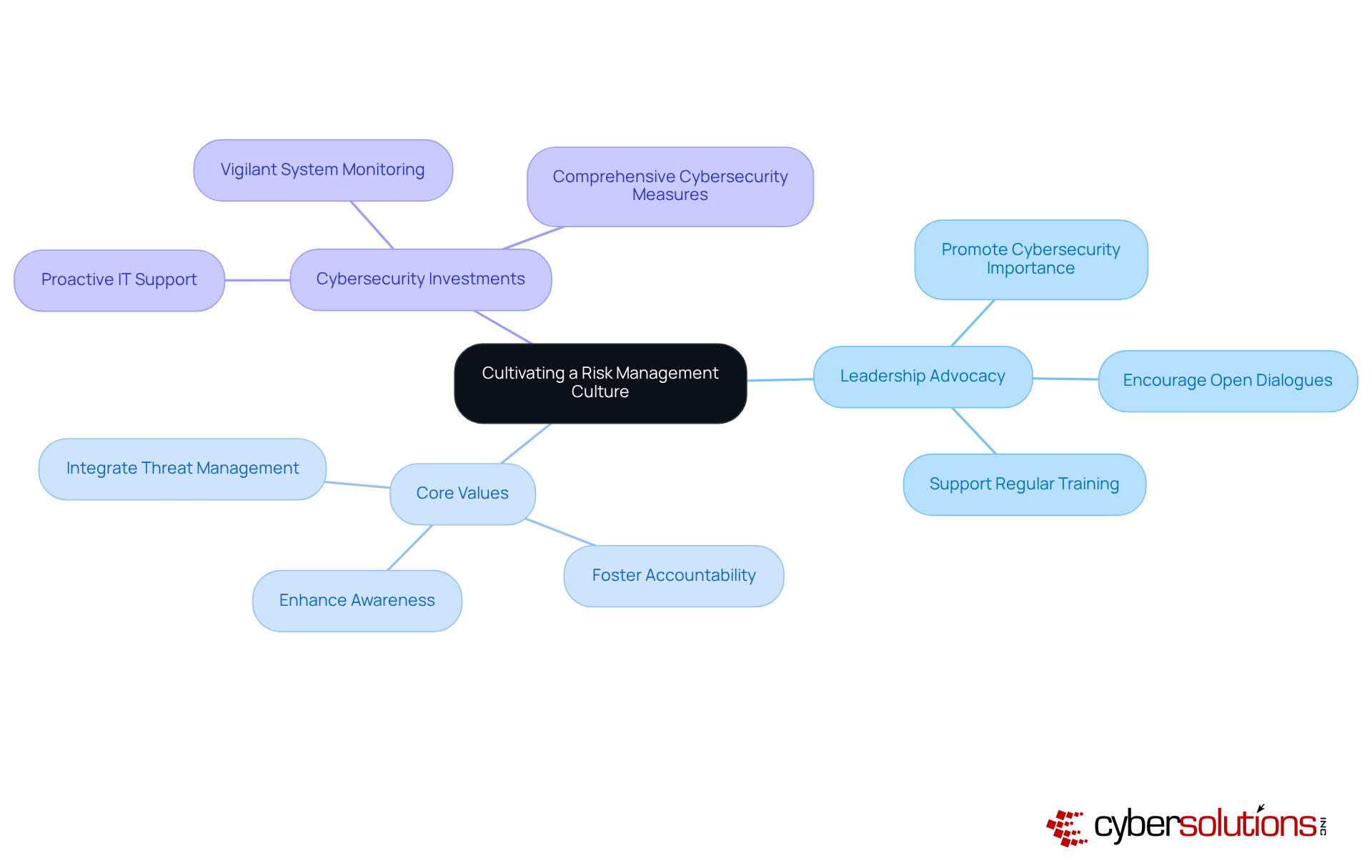
This mindmap starts with the main idea at the center and branches out to show how leadership can promote a culture of cybersecurity. Each branch represents a key area of focus, and the sub-branches detail specific actions leaders can take to enhance digital security.

Implement a Comprehensive Risk Assessment Process

In an era where cyber threats loom larger than ever, the healthcare sector must prioritize robust cybersecurity measures to protect sensitive patient data and maintain trust. To navigate this complex landscape, organizations must undertake several critical steps:

  1. Identify Assets: Determine the assets within the organization and evaluate their worth, as this forms the foundation of the assessment.
  2. Identify Threats and Vulnerabilities: Recognize potential threats and vulnerabilities that could impact these assets, including both internal and external factors. Understanding the CMMC certification tiers is crucial here, as it helps identify the specific security requirements needed to protect Federal Contract Information (FCI) and Controlled Unclassified Information (CUI).
  3. Assess Likelihood and Impact: Evaluate the probability of each threat occurring and the potential effect on business operations, considering historical data and emerging trends. For instance, the New Jersey Cyber Solutions and Communications Integration Cell (NJCCIC) reported a staggering 92 percent rise in incident reports in 2025, with ransomware being the primary cause of these occurrences, emphasizing the urgency of the assessment process.
  4. Prioritize Threats: Rank the identified threats based on their potential impact, allowing organizations to focus on the most critical challenges first. This prioritization is essential for developing tailored remediation strategies that address compliance gaps and enhance overall risk management techniques in cybersecurity.
  5. Develop a Mitigation Strategy: Create a strategy for addressing potential threats that outlines specific actions to tackle prioritized challenges, ensuring that resources are allocated effectively. Organizations should leverage established frameworks such as NIST or ISO 27001 to guide their assessments in implementing risk management techniques in cybersecurity, ensuring a structured approach.

The NJCCIC warns that without sustained funding and authorization, progress in reducing cyber risks will falter, underscoring the need for proactive measures. By performing comprehensive evaluations, entities can make knowledgeable choices about where to allocate resources in digital security measures, ultimately improving their resilience against cyber risks. This proactive approach not only safeguards sensitive data but also aligns cybersecurity initiatives with broader business objectives, fostering trust and operational continuity. Additionally, having a rapid incident response strategy, such as Cyber Solutions' 24-hour on-site support, can significantly mitigate damage and facilitate quicker recovery from incidents, ensuring compliance and operational integrity.
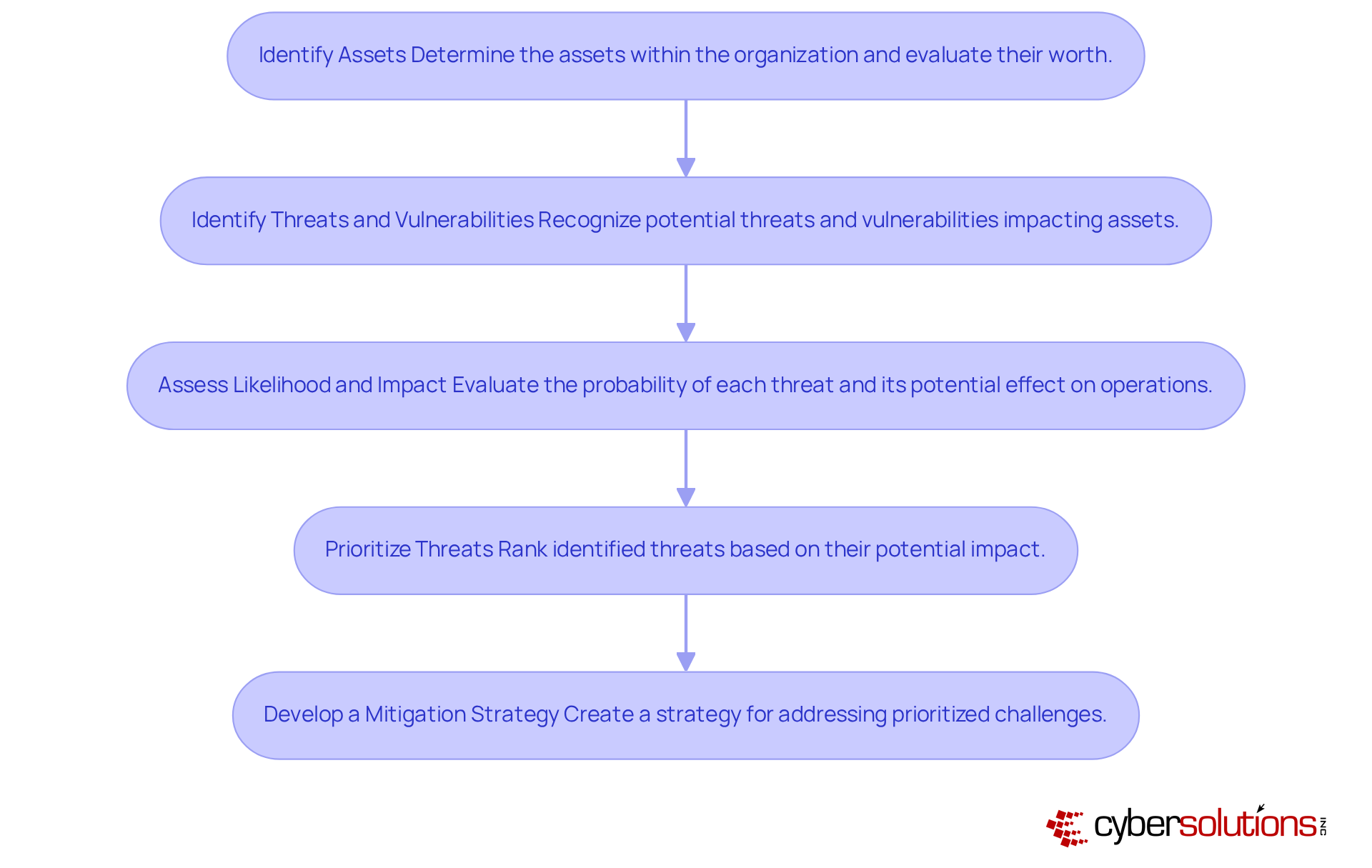
This flowchart outlines the steps organizations should take to assess and mitigate cybersecurity risks. Follow the arrows to see how each step leads to the next, starting from identifying assets to developing a strategy for mitigation.

Develop an Effective Incident Response Plan

In an era where cyber threats are increasingly sophisticated, a robust incident response plan (IRP) is not just beneficial - it's essential for survival. Key components of a robust IRP include:

  1. Preparation: Establish a dedicated incident response team, clearly defining roles and responsibilities to ensure swift action during incidents.
  2. Detection and Analysis: Implement advanced monitoring tools to detect potential incidents and analyze their impact, allowing for timely and informed decision-making.
  3. Containment, Eradication, and Recovery: Develop comprehensive procedures for containing incidents, eliminating risks, and recovering affected systems to minimize downtime and data loss.
  4. Post-Incident Review: Conduct thorough reviews of incidents to identify lessons learned and enhance future responses.

It's vital to regularly test your incident response plan with simulations to ensure effectiveness; entities with a validated IRP can lower breach expenses by an average of $2.66 million compared to those lacking one. Furthermore, case studies from South Carolina highlight the importance of tailored incident response strategies that reflect specific industry needs, particularly in sectors like healthcare and finance, where compliance and data protection are paramount. This proactive approach not only mitigates risks but also significantly reduces potential financial losses. By prioritizing a tailored incident response strategy, organizations can safeguard their assets and maintain trust in an unpredictable digital landscape.
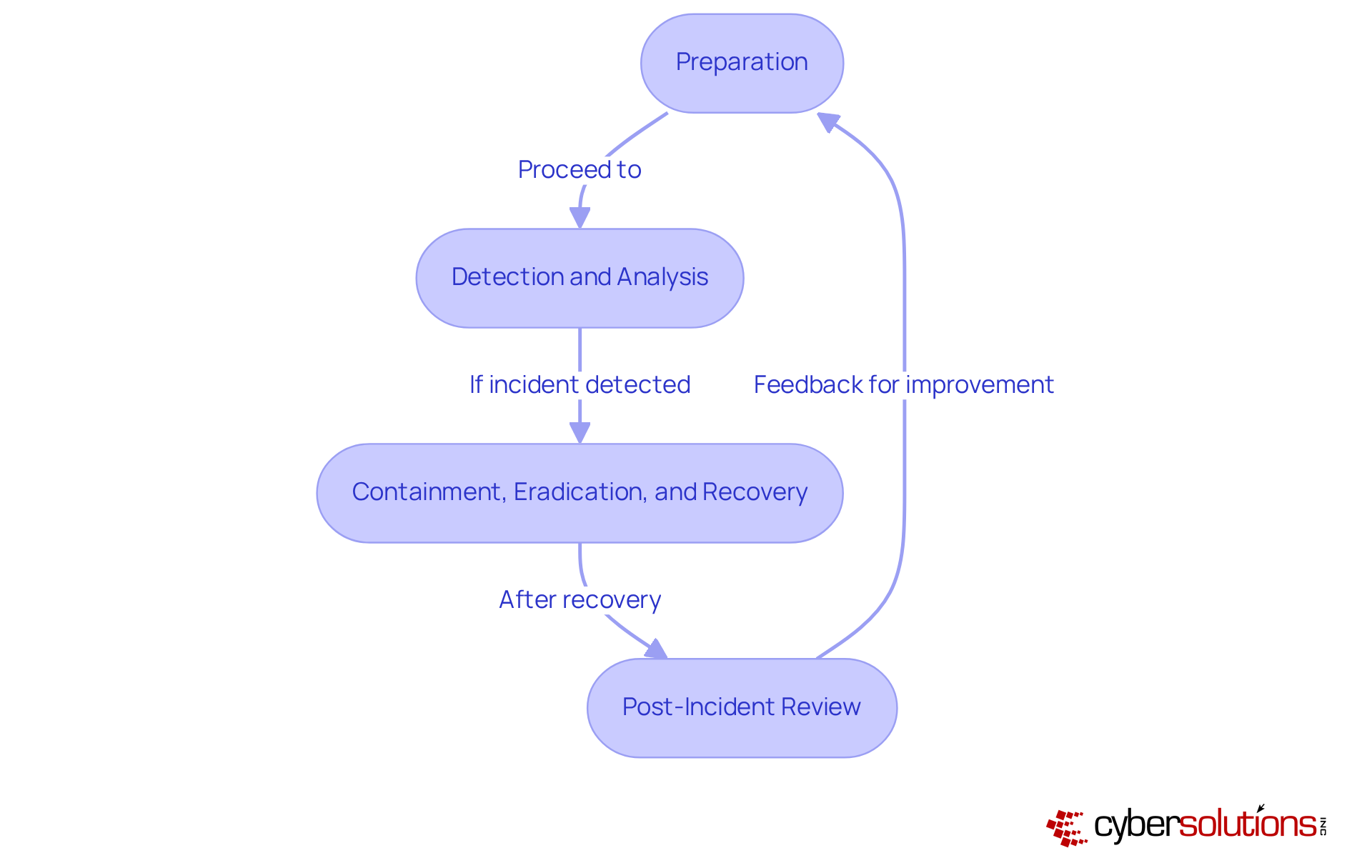
Each box represents a crucial step in creating an incident response plan. Follow the arrows to see how each step leads to the next, ensuring a comprehensive approach to managing cyber threats.

Prioritize Employee Training and Awareness Programs

In an era where cyber threats are increasingly sophisticated, prioritizing employee training in cybersecurity is not just beneficial - it's essential for safeguarding healthcare organizations. To effectively prioritize employee training and awareness programs, entities must implement a structured curriculum that encompasses critical cybersecurity topics, including:

Regular training sessions must be updated to keep pace with the latest threats and best practices, ensuring that employees are well-equipped to handle evolving cyber risks. Engaging methods, such as interactive workshops and real-world simulations, significantly enhance knowledge retention and practical application. For instance, organizations that implement regular phishing simulations have observed a 96% enhancement in employee vulnerability to such attacks, illustrating the effectiveness of ongoing training.

Additionally, it's essential to foster a culture where reporting suspicious activities is the norm. It's crucial that employees feel empowered to play their part in safeguarding against threats, as research indicates that 60% of breaches involve human error. By investing in comprehensive employee training, businesses can significantly reduce their vulnerability to cyber threats, ensuring sensitive data remains protected and maintaining operational integrity. This proactive approach enhances security posture and aligns with compliance requirements across various industries, such as HIPAA and PCI-DSS, which mandate documented cybersecurity awareness training. Furthermore, securing executive buy-in is vital for the success of these training initiatives, ensuring that they are treated as a priority within the organization. Without a strong commitment to training, organizations risk not only their data but also their reputation and compliance standing in a rapidly evolving digital landscape.
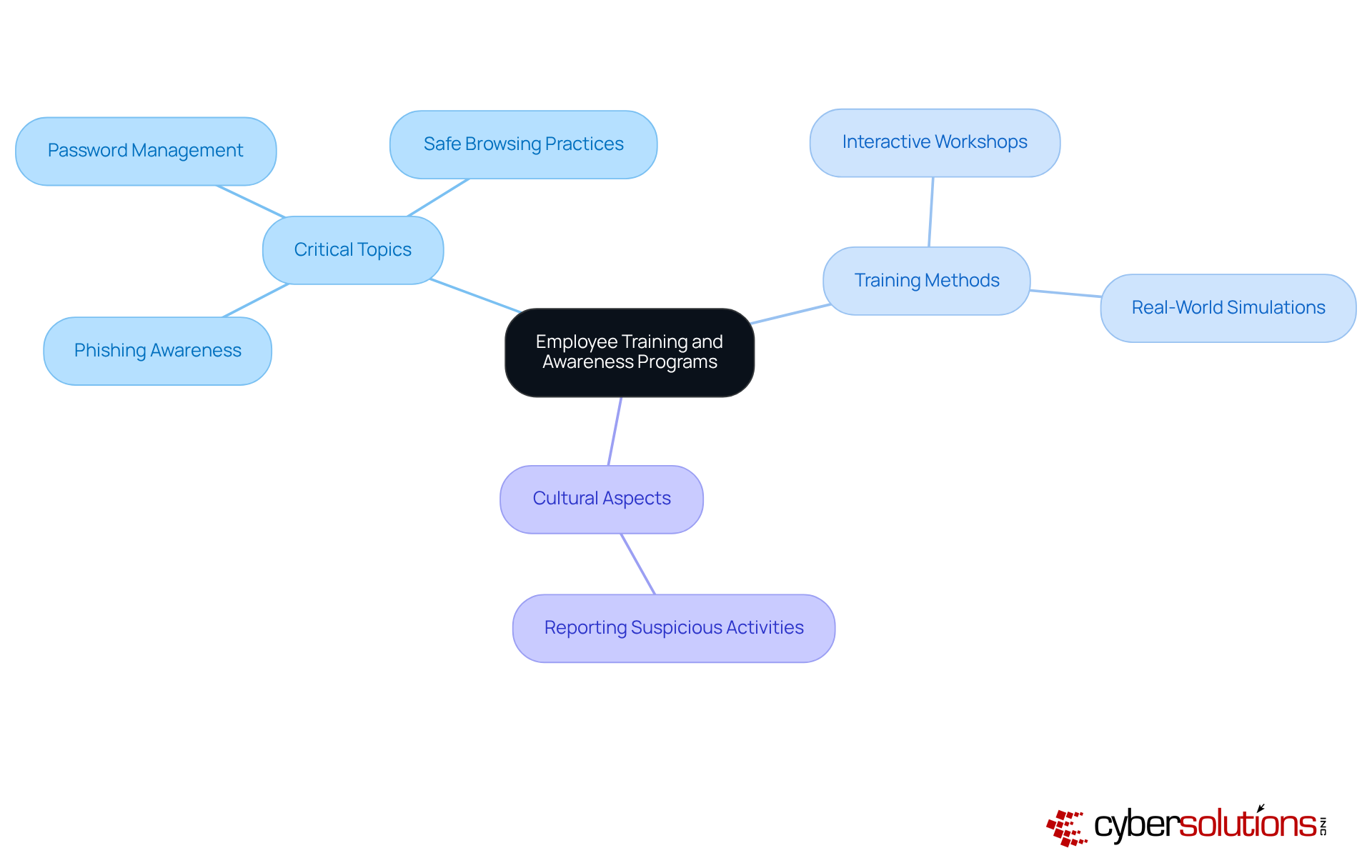
This mindmap starts with the central theme of employee training and branches out into key areas. Each branch represents a critical aspect of the training program, helping you understand how they connect and contribute to overall cybersecurity awareness.

Conclusion

In an era where cyber threats are escalating at an alarming rate, effective risk management in cybersecurity is not just important; it's essential for survival. By taking a proactive approach to identify vulnerabilities and implement strong protective measures, organizations can safeguard their assets and boost compliance with industry regulations. Cultivating a risk management culture among leadership is crucial, fostering accountability and awareness throughout the organization, ensuring that cybersecurity remains a top priority.

Key strategies include:

  1. Conducting comprehensive risk assessments
  2. Developing effective incident response plans
  3. Prioritizing employee training and awareness programs

Each of these components plays a vital role in building a resilient cybersecurity framework. Regular software updates, incident response planning, and ongoing employee education are essential practices that can significantly mitigate risks and reduce the potential impact of cyber incidents. Organizations that invest in these areas are better positioned to navigate the complexities of the digital landscape and maintain trust with their stakeholders.

It's clear that cybersecurity risk management is crucial for every organization today. As cybercrime continues to evolve, organizations must remain vigilant and proactive in their defense strategies. By embracing best practices and fostering a culture of cybersecurity awareness, businesses can protect sensitive data and solidify their reputation as trustworthy leaders in their industries. Engaging with experts like Cyber Solutions can further enhance these efforts, ensuring that organizations are equipped to face the challenges of an increasingly digital world.

Frequently Asked Questions

What is cybersecurity risk management and why is it important?

Cybersecurity risk management involves proactively identifying and addressing challenges that can threaten an organization's information systems. It is crucial for protecting sensitive patient information, maintaining trust, and ensuring compliance with industry regulations, especially in sectors like healthcare and finance.

What are the consequences of inadequate cybersecurity measures?

Inadequate cybersecurity can lead to data breaches, financial losses, and damage to an organization's reputation. For instance, the healthcare sector has seen costs from data breaches average around $9.77 million, while the financial services sector faces approximately $5.9 million per breach.

What role does human error play in cybersecurity incidents?

Statistics indicate that 88% of all cyber incidents are attributed to human errors, highlighting the need for comprehensive employee training and awareness programs to mitigate risks.

How can organizations improve their cybersecurity posture?

Organizations can enhance their cybersecurity by adopting best practices such as regular software updates, incident response planning, and vendor management. These measures help strengthen defenses against evolving cyber threats.

What is the significance of cultivating a risk management culture among leadership?

Cultivating a risk management culture among leadership is essential for integrating cybersecurity into the organization's core values and decision-making processes. Leaders should advocate for cybersecurity investments and foster open dialogues about potential challenges.

How can Cyber Solutions assist organizations in managing cybersecurity risks?

Cyber Solutions offers services such as continuous monitoring and infrastructure management to help organizations navigate cybersecurity challenges, ensuring they remain resilient against threats while protecting their assets and maintaining stakeholder trust.

List of Sources

  1. Define Cybersecurity Risk Management and Its Importance
    • 225 Cybersecurity Stats and Facts for 2026 (https://vikingcloud.com/blog/cybersecurity-statistics)
    • South Carolina Mulls New Ways to Secure IT (https://bankinfosecurity.com/south-carolina-mulls-new-ways-to-secure-it-a-5758)
    • Navigating the Cyber Threat Landscape: 2026 Outlook and Emerging Risks (https://panorays.com/blog/cyber-threat-landscape-2026-emerging-risks)
    • Top Ten Emerging Threats in 2026 (https://thebeckagefirm.com/top-ten-emerging-threats-in-2026)
  2. Cultivate a Risk Management Culture Among Leadership
    • 225 Cybersecurity Stats and Facts for 2026 (https://vikingcloud.com/blog/cybersecurity-statistics)
    • Must-Know Small Business Cybersecurity Statistics for 2026 (https://bdemerson.com/article/small-business-cybersecurity-statistics)
    • U.S. Chamber of Commerce Brings Cybersecurity Awareness Campaign to Columbia (https://uschamber.com/security/us-chamber-commerce-brings-cybersecurity-awareness-campaign-columbia)
    • Risk Management Strategies for IT Leaders | GW School of Business | The George Washington University (https://business.gwu.edu/articles/risk-management-strategies-it-leaders)
  3. Implement a Comprehensive Risk Assessment Process
    • DHS officials advance ICT risk assessment under supply-chain order | InsideCyberSecurity.com (https://insidecybersecurity.com/daily-news/dhs-officials-advance-ict-risk-assessment-under-supply-chain-order)
    • Cybersecurity Risk Management: 5 Steps for Assessing Risk | Splunk (https://splunk.com/en_us/blog/learn/cybersecurity-risk-management.html)
    • 2026 Cybersecurity & Technology Risk Survey: The CISO’s evolving role (https://kpmg.com/us/en/articles/2026/cybersecurity-technology-risk-survey-ciso-resilience.html)
    • Industry News 2026 The 6 Cybersecurity Trends That Will Shape 2026 (https://isaca.org/resources/news-and-trends/industry-news/2026/the-6-cybersecurity-trends-that-will-shape-2026)
    • 2026 Cyber Threat Assessment | NJCCIC (https://cyber.nj.gov/threat-landscape/2026-cyber-threat-assessment)
  4. Develop an Effective Incident Response Plan
    • 5 Key Components of an Effective Cyber Incident Response Plan in 2026 (https://cm-alliance.com/cybersecurity-blog/5-key-components-of-a-cyber-incident-response-plan)
    • Cyber Incident Response Plan Steps | NetDiligence (https://netdiligence.com/blog/2024/10/cybersecurity-incident-response-plans)
    • What Is an Incident Response Plan (IRP)? (https://paloaltonetworks.com/cyberpedia/incident-response-plan)
    • What is an Incident Response Plan? Know the 5 Basic Steps (https://bitsight.com/blog/how-create-incident-response-plan-5-steps)
  5. Prioritize Employee Training and Awareness Programs
    • Cybersecurity Awareness Training: Key Benefits for 2026 (https://adaptivesecurity.com/blog/what-is-cybersecurity-awareness-training)
    • Employee Cybersecurity Awareness Training: 2026 Guide (https://miniorange.com/blog/employee-cybersecurity-awareness-training)
    • 7 reasons why security awareness training is important in 2026 – CybSafe blog (https://cybsafe.com/blog/7-reasons-why-security-awareness-training-is-important)
    • 10 Hot Security Awareness Training Companies To Watch in 2026 (https://cybersecurityventures.com/security-awareness-training-companies)
    • Security Awareness Training Statistics 2025 [100+ Studies] | Brightside AI Blog (https://brside.com/blog/security-awareness-training-statistics-2025-100-studies)
Recent Posts
Essential Risk Management Techniques for Cybersecurity Leaders
Understanding USB Drive Malware: Risks and Protective Measures
Master CMMC Security Support: A Complete Guide for C-Suite Leaders
What is a Managed IT Provider and Why It Matters for Your Business
Understanding MSP Software Meaning: Key Insights for Executives
4 Essential Cyber Security Procedures for C-Suite Leaders
Is Adware Malware? Comparing Risks and Impacts for Businesses
What Makes Ransomware Distinct from Other Malware Types?
What is a MSP Provider and Why It Matters for Your Business
Why Phishing Works: Understanding Its Tactics and Impact
What is CMMC 2.0 Compliance? A Guide for C-Suite Leaders
Why Your Business Needs a Firewall Monitoring Service Now
4 Email Safety Best Practices for C-Suite Leaders to Implement
Why MSP Acronym Technology Matters for C-Suite Leaders
5 Essential Disaster Recovery Plan Best Practices for C-Suite Leaders
What is IT Support for SMBs and Why It Matters for Your Business
Digital Certificate Explained: Importance, Applications, and Types
Master Flash Drive Malware: Risks, Prevention, and Response Strategies
What Are IT Department Services and Why They Matter for Businesses
Crafting an Effective Incident Response Plan for Your Business
Best Practices for Choosing a Helpdesk Provider Effectively
Best Practices for Hosting and Managed Services in Business Resilience
Boost Cyber Awareness with Two-Factor Authentication Best Practices
What Does Failover Mean and Why It Matters for Business Continuity
Best Practices to Manage Multiple Firewall Devices Effectively
Achieve NIST 800-171 Compliance: A Step-by-Step Guide for Leaders
4 Best Practices for Backing Up Your Data Effectively
What is IT Support for Manufacturing Firms and Why It Matters
Master Cloud Management Gateway Costs: Best Practices for C-Suite Leaders
Understanding How Desktop Virtualization Works for Business Success
Back Up vs Backup: Key Differences for C-Suite Leaders
Best Practices for a Successful Managed Service Business
Best Practices for Your CMMC System Security Plan Development
Understanding the MSP Pricing Guide: Importance and Key Components
Master NIST 800-171 Compliance Consulting for Business Success
CMMC 2.0 Assessment Guide: A Case Study on Compliance Success
MSP vs ISP: Key Differences for C-Suite Leaders to Consider
What Questions Are Essential for Effective Risk Assessments?
Understanding MSP Provider Meaning: Services, Benefits, and Challenges
5 Steps for Executives to Manage an IT Emergency Effectively
MSP vs CSP: Key Differences Every C-Suite Leader Should Know
4 Best Practices to Reduce IT Management Costs for C-Suite Leaders
Master Healthcare Phishing: Strategies to Protect Your Organization
Best Practices to Combat Firewall Threats for C-Suite Leaders
10 Benefits of Out of Hours IT Support for Business Resilience
Understanding Compliance: Steps to Be in Compliance Meaningfully
10 Reasons C-Suite Leaders Choose Flat Rate IT Support
Why Is Logging Important for Cybersecurity and Business Resilience?
Master TOAD Cybersecurity: Understand, Analyze, and Defend Against Threats
What is a Traditional Firewall? Definition, Evolution, and Uses
Master Multiple Vendor Management: 4 Best Practices for C-Suite Leaders
Password Spraying vs Stuffing: Key Differences for C-Suite Leaders
4 Best Practices for Engaging an IT Service LLC Effectively
What Are Digital Certificates in Web Browsers and Why They Matter
10 Essential Items for Your CMMC Level 2 Controls Spreadsheet
Credential Stuffing vs Spraying: Key Differences Every C-Suite Must Know
4 Best Practices for Disaster Recovery Technology Solutions
CMMC vs NIST: Key Differences and Business Impacts Explained
Master Cyber Security Price: Budgeting for Effective Protection
Why C-Suite Leaders Choose Outsourced IT Solutions for Growth
Best Practices for a Strong Password Protection Policy
What is a Simple Disaster Recovery Plan and Why It Matters
Align MSP Services with Business Goals: 4 Best Practices for Leaders
10 Strategic Benefits of Managed IT Software for Business Leaders
10 Benefits of Managed IT Services in MN for Business Growth
5 Steps for C-Suite Leaders on How to Backup Business Data
Understanding the Definition of Acceptable Use Policy for Leaders
10 Essential Elements of an Acceptable Use Agreement
4 Best Practices for Effective IT Services in Commercial Settings
How to Explain Digital Certificates for Enhanced Cybersecurity
What 'Lot Best' Stands for in Cyber Security: Key Insights for Leaders
4 Best Practices for Strengthening Organizational Information Security
4 Best Practices for Effective Security Compliance Assessment
10 Business Security Managed Services to Enhance Your Operations
Protect Your Business: Combat Malware on USB Drives Effectively
Understanding Managed IT Services: Latest Trends and Insights
Understand the Difference Between Spyware and Adware for Your Business
4 Best Practices for Effective Data Privacy Awareness Training
What MSSP Stands For: Key Insights for Business Security Leaders
4 Key Insights on Cyber Security Services Pricing for Leaders
What Is the Purpose of an Acceptable Use Policy in Business?
Why Is NIST Compliance Mandatory for Your Organization's Success?
Understanding Acceptable Use Policy in Cybersecurity for Leaders
Estimate How Long It Takes to Backup Your Computer Effectively
4 Key Managed Service Provider Reviews for C-Suite Leaders
4 Best Practices for Effective Privileged User Monitoring
Master Threat Scenarios: Best Practices for C-Suite Leaders
4 Best Practices to Combat Phishing in Healthcare
What Is Cloud App Security? Importance, Features, and Risks Explained
What Is the Main Difference Between Vulnerability Scanning and Penetration Testing?
Master Security Drills: Best Practices for C-Suite Leaders
Why Information Security Is the Responsibility of Every Leader
Why Security Is Everyone's Responsibility in Your Organization
What Is a Good Way to Protect Your Data from Computer Malfunctions?
10 Cloud Services in Lafayette for Business Growth and Security
Master CMMC-RP Compliance: Strategies for C-Suite Leaders
Build Your Cybersecurity Tech Stack: 4 Essential Best Practices
Understanding the MSP Environment Meaning for Business Leaders
Understanding the Cost of Cyberattacks: Key Insights for Executives
4 Best Practices for Data in Use Encryption Success in Business