

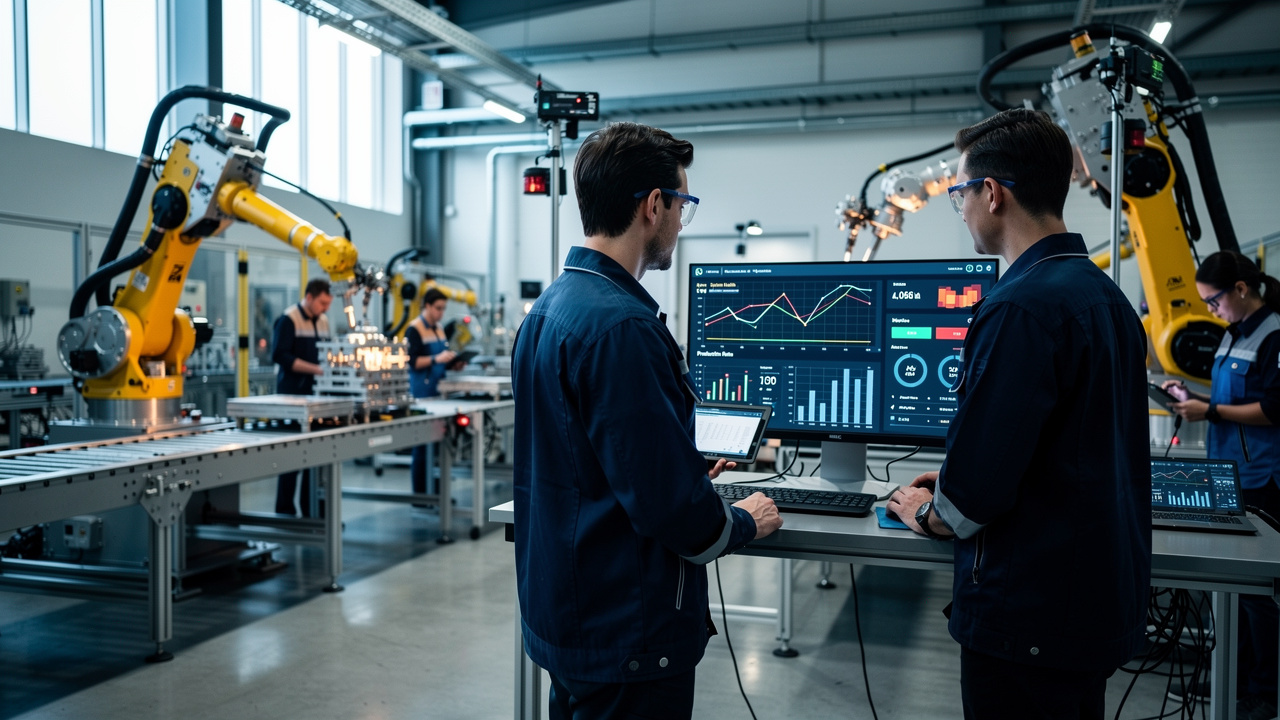
In an era where cyber threats loom large, the manufacturing sector must prioritize cybersecurity to protect its operational integrity and compliance. This comprehensive IT support not only enhances productivity but also fortifies data security against an ever-increasing array of cyber threats. Manufacturers are increasingly vulnerable to cyber threats, risking both their operational efficiency and compliance with regulations.
How can effective IT support not only enhance productivity but also ensure compliance with stringent regulations like HIPAA and PCI-DSS? Understanding this dynamic is crucial for firms aiming to thrive in a competitive landscape while safeguarding their critical assets. Failing to invest in effective IT support could jeopardize not only productivity but also the very foundation of compliance and security in manufacturing.
In an era where cyber threats loom larger than ever, the need for IT support for manufacturing firms has never been more critical. IT assistance encompasses a comprehensive range of technological services designed to ensure smooth production processes and strong data protection. This includes:
To thrive in today's competitive landscape, production firms must prioritize effective IT assistance to boost operational efficiency and safeguard sensitive data from cyber threats. As production increasingly incorporates interconnected systems and automation, robust IT assistance is essential for gaining a competitive edge and meeting industry regulations.
Looking ahead to 2026, the landscape of IT assistance for production is evolving, with a significant emphasis on proactive measures. A recent survey indicated that 80% of manufacturing executives are allocating at least 20% of their improvement budgets to smart manufacturing initiatives, which include advanced IT solutions. Additionally, the implementation of the EU Cyber Resilience Act, effective September 11, 2026, will impose new reporting obligations on manufacturers, highlighting the need for enhanced cybersecurity protocols.
Case studies demonstrate the tangible advantages of effective IT assistance. For example:
Moreover, IT support for manufacturing firms emphasizes that the importance of cybersecurity cannot be overstated. Manufacturing has become the most targeted sector for cyberattacks, with a significant portion of technology vulnerable to breaches. Implementing proactive IT assistance not only safeguards intellectual property but also ensures compliance with evolving regulatory frameworks, such as NIST CSF 2.0 and IEC 62443, which emphasize Zero Trust principles.
In summary, failing to prioritize IT assistance could mean not just lost opportunities, but also jeopardizing the very foundation of your production capabilities. The integration of effective IT assistance services is essential for production firms to navigate the complexities of modern production environments, enhance operational resilience, and maintain compliance in an increasingly regulated landscape.

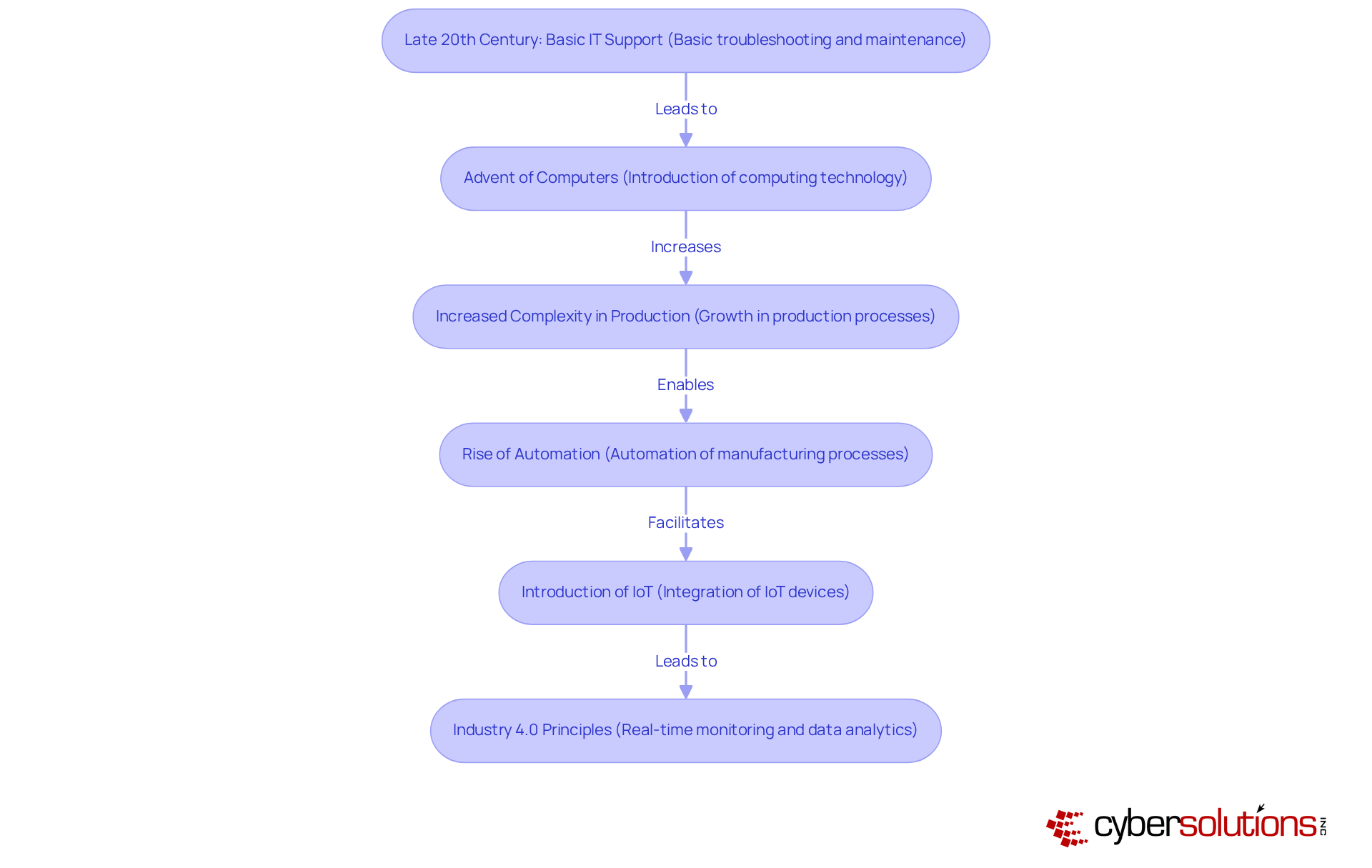
In an era where cybersecurity threats loom large, IT support for manufacturing firms has become a critical focus in the evolution of IT assistance in production. The late 20th century marked a significant transformation with the advent of computers, initially limiting IT assistance to basic troubleshooting and maintenance of isolated systems. As production processes grew more complex, the demand for IT support for manufacturing firms surged. The rise of automation, the Internet of Things (IoT), and Industry 4.0 principles have further reshaped IT assistance, necessitating capabilities like real-time monitoring, data analytics, and robust cybersecurity measures.
By 2026, how will manufacturers redefine IT assistance to be more proactive than ever before? The landscape is characterized by a shift that goes beyond mere problem-solving. Manufacturers are leveraging advanced technologies to enhance efficiency and mitigate risks. For instance, predictive maintenance, powered by IoT sensors and AI algorithms, enables early detection of equipment malfunctions, significantly reducing downtime and maintenance costs. This evolution is not just beneficial; it is essential for survival in a competitive landscape.
Historical data indicates that integrating IT with operational technology (OT) has led to improved productivity and reduced operational costs across various sectors, including production. As organizations adopt Industry 4.0 technologies, they optimize processes while enhancing their cybersecurity posture through advanced encryption and AI-driven threat detection. This evolution underscores the vital role of IT support for manufacturing firms in fostering innovation, ensuring compliance with standards like HIPAA and PCI-DSS, and driving value creation in the production sector. As Don Rogers, Global Industry Lead at Slalom, states, "In 2026, this strategic focus on speed, quality, and service will require integrated data platforms and predictive analytics to break down silos between suppliers, logistics, production, and distribution." Without embracing these advancements, manufacturers risk falling behind in a landscape defined by rapid technological change.
In an era where cybersecurity threats loom large, the stakes for manufacturing firms have never been higher. Effective IT support encompasses several essential components that collectively enhance operational resilience and productivity:
Neglecting these IT components could lead to costly disruptions and a compromised competitive edge in the market, which underscores the importance of IT support for manufacturing firms.

In an era where manufacturing firms face relentless technological advancements and cyber threats, effective IT support is not just beneficial - it's essential. Effective IT support is a cornerstone for manufacturing firms striving to enhance operational efficiency and safeguard sensitive data in an increasingly complex technological landscape. As production processes evolve, robust IT assistance is essential for staying competitive and meeting critical regulations like HIPAA, PCI-DSS, and GDPR. Yet, many firms struggle to keep pace with these demands, risking both their market position and regulatory standing. The proactive measures that IT support encompasses - ranging from cybersecurity protocols to system integration - are vital for navigating the challenges posed by modern manufacturing environments.
The article highlights several key components of effective IT support, including:
These elements work synergistically to minimize downtime, protect against cyber threats, and ensure that manufacturing firms can meet regulatory requirements. Case studies illustrate the tangible benefits of investing in IT support, showcasing how companies have achieved significant operational improvements and increased productivity through strategic IT initiatives. Without it, manufacturers may find themselves vulnerable to cyber threats and regulatory penalties.
By prioritizing IT support, manufacturers can not only safeguard their operations but also position themselves as leaders in a competitive landscape. As the industry continues to embrace advanced technologies and face evolving cyber threats, prioritizing comprehensive IT assistance is crucial for long-term success. Manufacturers must take proactive steps to integrate effective IT solutions, ensuring not only operational resilience but also a competitive edge in a rapidly changing market. Embracing these best practices will empower firms to thrive in the face of challenges and seize opportunities for growth in the manufacturing sector.
What is IT support for manufacturing firms?
IT support for manufacturing firms encompasses a range of technological services designed to ensure smooth production processes and strong data protection. This includes managing hardware and software systems, providing technical support, and implementing tailored cybersecurity measures.
Why is IT support critical for manufacturing firms today?
IT support is critical for manufacturing firms to boost operational efficiency and safeguard sensitive data from cyber threats. As production increasingly incorporates interconnected systems and automation, robust IT assistance is essential for gaining a competitive edge and meeting industry regulations.
What trends are shaping the future of IT assistance in manufacturing?
Looking ahead to 2026, there is a significant emphasis on proactive measures in IT assistance for manufacturing. A survey indicated that 80% of manufacturing executives are allocating at least 20% of their improvement budgets to smart manufacturing initiatives, which include advanced IT solutions.
What new regulations will impact IT support for manufacturing firms?
The implementation of the EU Cyber Resilience Act, effective September 11, 2026, will impose new reporting obligations on manufacturers, highlighting the need for enhanced cybersecurity protocols.
Can you provide examples of the benefits of effective IT assistance in manufacturing?
Yes, case studies show tangible advantages of effective IT assistance. For instance, Orb Interiors Ltd doubled their output without increasing staff due to efficiency gained from their IT systems, while Nautilus Designs experienced a 30% rise in order volume after implementing new IT solutions.
How does cybersecurity relate to IT support in manufacturing?
Cybersecurity is a critical aspect of IT support for manufacturing firms, as the sector is the most targeted for cyberattacks. Implementing proactive IT assistance safeguards intellectual property and ensures compliance with evolving regulatory frameworks, such as NIST CSF 2.0 and IEC 62443, which emphasize Zero Trust principles.
What are the risks of neglecting IT assistance in manufacturing?
Failing to prioritize IT assistance can lead to lost opportunities and jeopardize the foundation of production capabilities. Effective IT assistance is essential for navigating the complexities of modern production environments, enhancing operational resilience, and maintaining compliance in an increasingly regulated landscape.
Managed IT Service Provider | Cyber Security | Incident Response | Compliance As A Service | Hosted Phone Service | Managed Security Service Provider | AI As A Service