
Introduction
In an era where digital threats are more prevalent than ever, the stakes for effective data and system recovery have reached unprecedented heights. Organizations are confronted with a stark reality: nearly 60% of small to midsize businesses that experience a cyberattack may not survive beyond six months. This underscores the critical importance of robust data recovery strategies. By exploring best practices, companies can not only safeguard sensitive information but also ensure compliance and maintain operational continuity.
As organizations navigate the complexities of the digital landscape, a pressing question arises: how can they effectively prepare for, respond to, and recover from data loss incidents? The answer lies in fortifying their resilience against future threats. By implementing comprehensive data recovery plans, businesses can mitigate risks and enhance their ability to withstand cyber challenges.
Define Data Recovery and Its Importance for Businesses
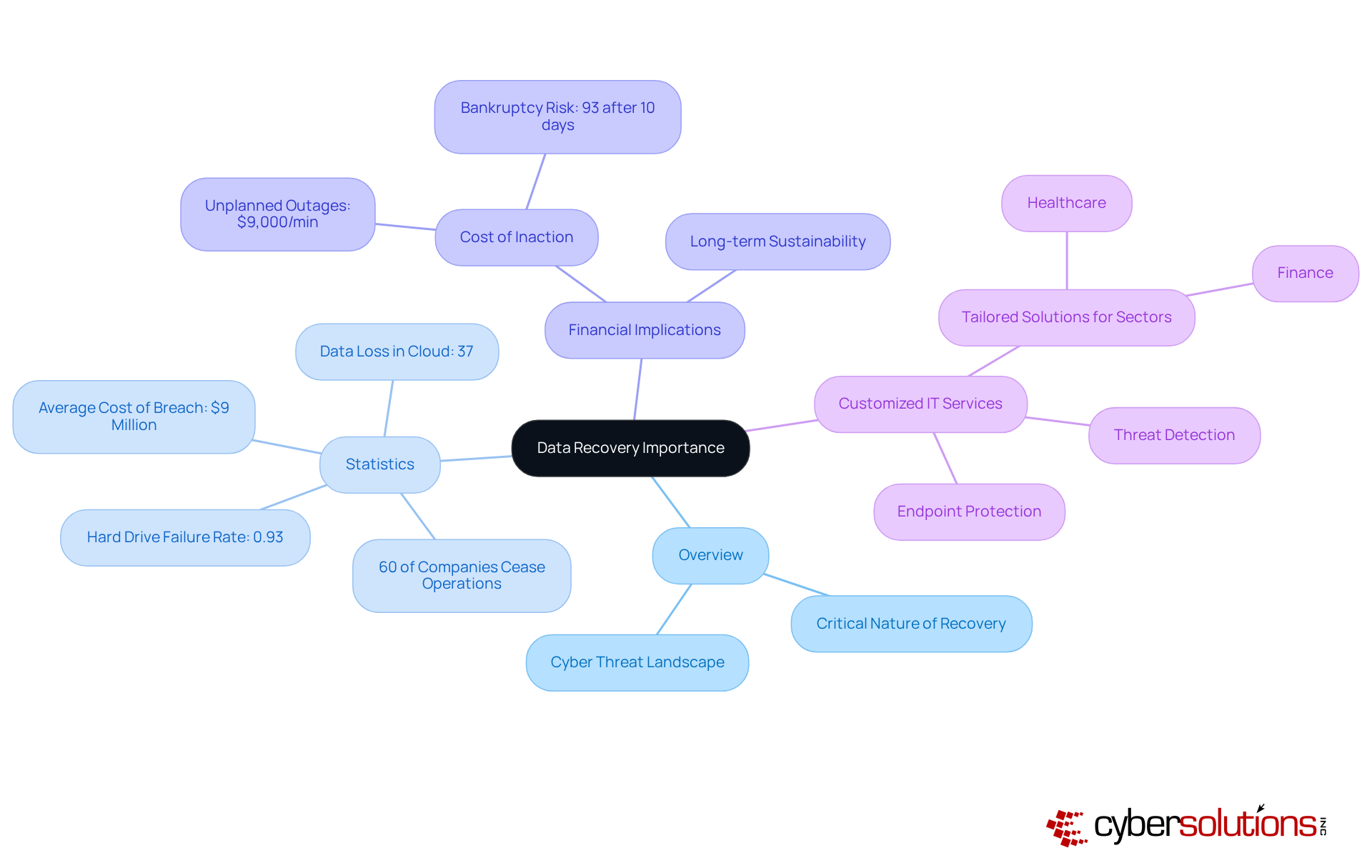
In today's digital landscape, the process of recovering lost, inaccessible, or corrupted information from backup systems or damaged storage devices is more critical than ever. For organizations, data recovery is not just about keeping operations running; it's about safeguarding sensitive data and ensuring business continuity. As we approach 2025, the rise in cyber threats makes it imperative for companies to prioritize data recovery as a core component of their IT strategy.
Consider this: nearly 60% of small and midsize companies that experience a cyberattack cease operations within six months. This statistic underscores the urgent need for effective data recovery solutions. The costs are staggering, with potential losses reaching millions. Organizations must not only understand but also implement best practices and system recovery to mitigate these risks.
By focusing on data protection, companies can protect their assets and ensure long-term sustainability in an increasingly complex digital environment. Customized IT services, such as endpoint protection and data encryption, play a vital role in addressing the unique security and compliance needs of sectors like healthcare and finance. These tailored solutions enhance the effectiveness of recovery strategies, allowing organizations to navigate the challenges posed by today's cybersecurity threats with confidence.
Identify Common Causes of Data Loss in Organizations
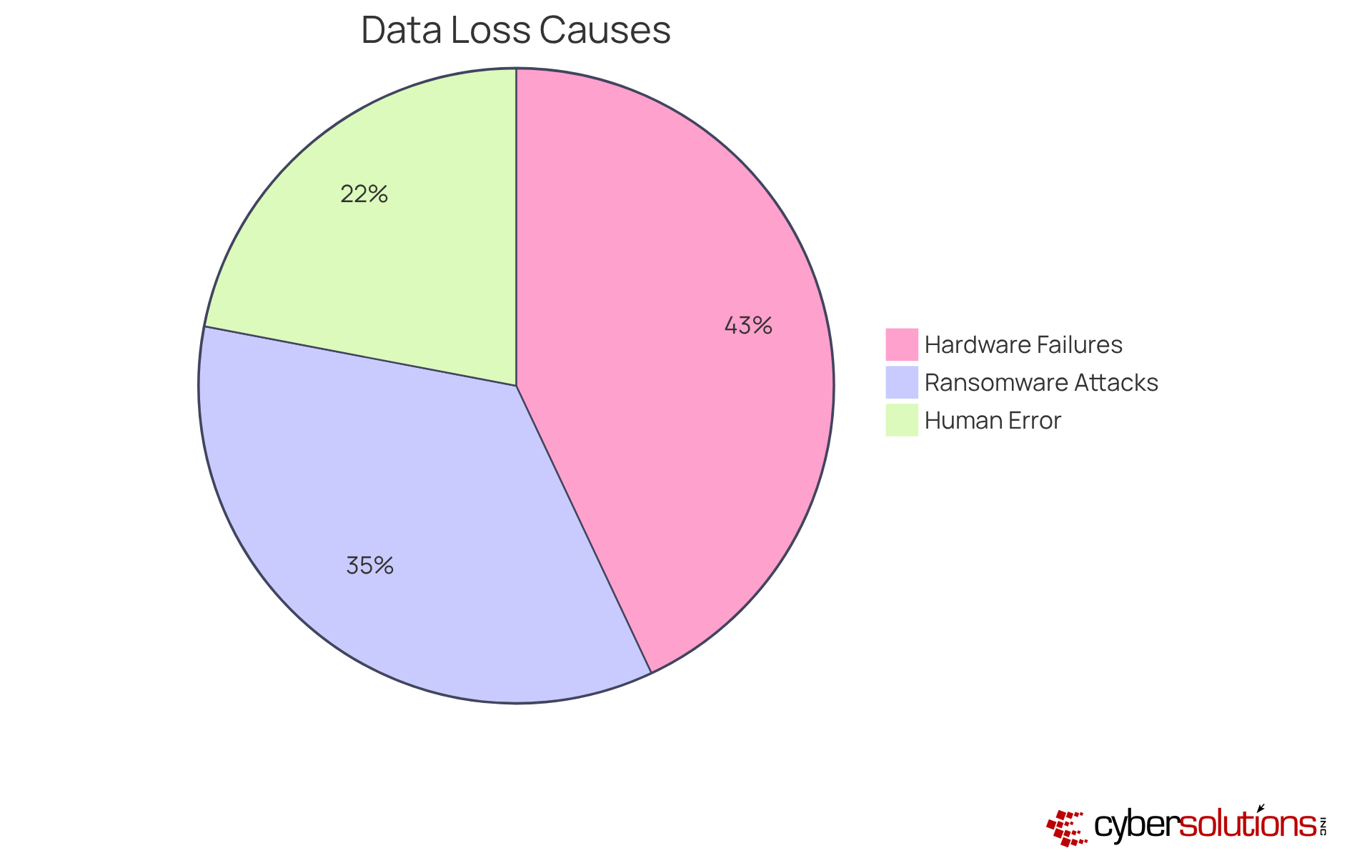
Data deterioration in companies poses a significant threat, stemming from various sources such as cyberattacks, human mistakes, and software corruption. According to the 2025 Data Breach Investigations Report:
- Human error is a leading contributor, accounting for approximately 22% of incidents, often due to accidental deletions or misconfigurations.
- With surging cyber threats, nearly 35% of breaches in 2025 are linked to this malicious tactic.
- Furthermore, hardware malfunctions, like hard drive crashes, present a serious risk, potentially leading to irreversible data loss if not managed properly.
To combat these challenges, implementing data recovery plans is crucial. This proactive approach helps detect suspicious activities that could arise from software vulnerabilities or hardware issues before they escalate into significant threats. By identifying these common causes, organizations can adopt targeted strategies, such as multi-factor authentication (MFA) and continuous monitoring, to mitigate risks and enhance their security posture.
In an era where data protection is paramount, understanding the landscape of cybersecurity threats is essential for organizations. By addressing these vulnerabilities head-on, companies can not only protect their data but also foster trust and reliability in their operations.
Implement Best Practices for Effective Data Recovery Solutions
In today’s digital landscape, the importance of effective data recovery solutions cannot be overstated. With cyber incidents projected to cost the US $639 billion by 2025, organizations must prioritize measures to safeguard their information. This urgency highlights the critical need for effective data recovery strategies.
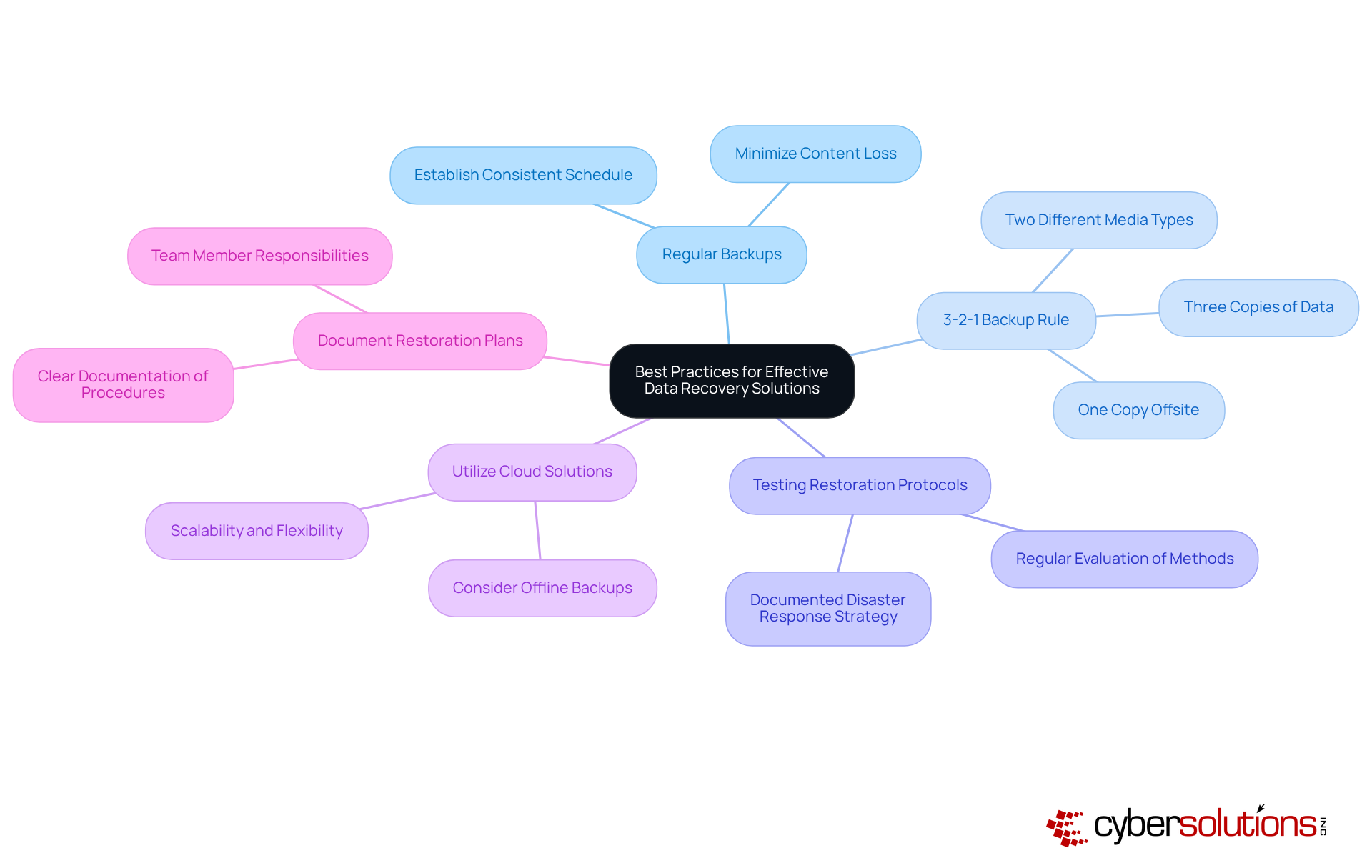
- Establish a consistent schedule for saving information, ensuring backups occur frequently enough to minimize potential content loss. This proactive approach is essential in mitigating risks associated with vulnerabilities from data breaches.
- Follow the 3-2-1 guideline: maintain three copies of data on two different types of media, with one copy stored offsite. This strategy significantly reduces the risk of data loss due to hardware failures, ransomware attacks, or natural disasters. Recent statistics reveal that 97% of modern ransomware incidents target both primary systems and backup repositories. As Daniel Pearson, CEO of KnownHost, aptly states, "By blending the time-tested 3-2-1 rule with modern advances like immutable storage and intelligent monitoring, companies can create a highly resilient backup architecture that enhances their overall cybersecurity stance."
- Regularly evaluate backup restoration methods to ensure swift and accurate retrieval of data. Many organizations overlook this crucial step, which can lead to significant issues if backups are needed after a breach due to compromised or inaccessible backup data. Alarmingly, only 54% of organizations have a documented recovery plan, and half of those test their plans infrequently. Additionally, avoid the common mistake of storing all backups on the same physical network, as this can compromise data integrity in the event of a malware attack.
- Embrace cloud-based backup solutions for their scalability and flexibility, facilitating easier access to data during recovery processes. As cloud storage becomes increasingly prevalent, integrating it into recovery plans is vital for enhancing resilience against data loss. However, organizations should also consider offline or air-gapped backups to protect against local disasters.
- Keep clear documentation of restoration procedures and responsibilities to streamline the recovery process during an incident. This ensures that all team members are aware of their roles and can respond promptly when a data failure occurs.
By implementing these best practices, organizations can bolster their resilience against data loss and focus on recovery efforts, ensuring rapid restoration when incidents arise and ultimately protecting their operations and sensitive information.
Integrate Cybersecurity Measures to Enhance Data Recovery
In today's digital landscape, incorporating cybersecurity measures into information recovery strategies is not just important—it's essential for safeguarding sensitive information against emerging threats like ransomware and data breaches. Organizations must take action to protect their data and ensure compliance with industry standards. Here are several key approaches:
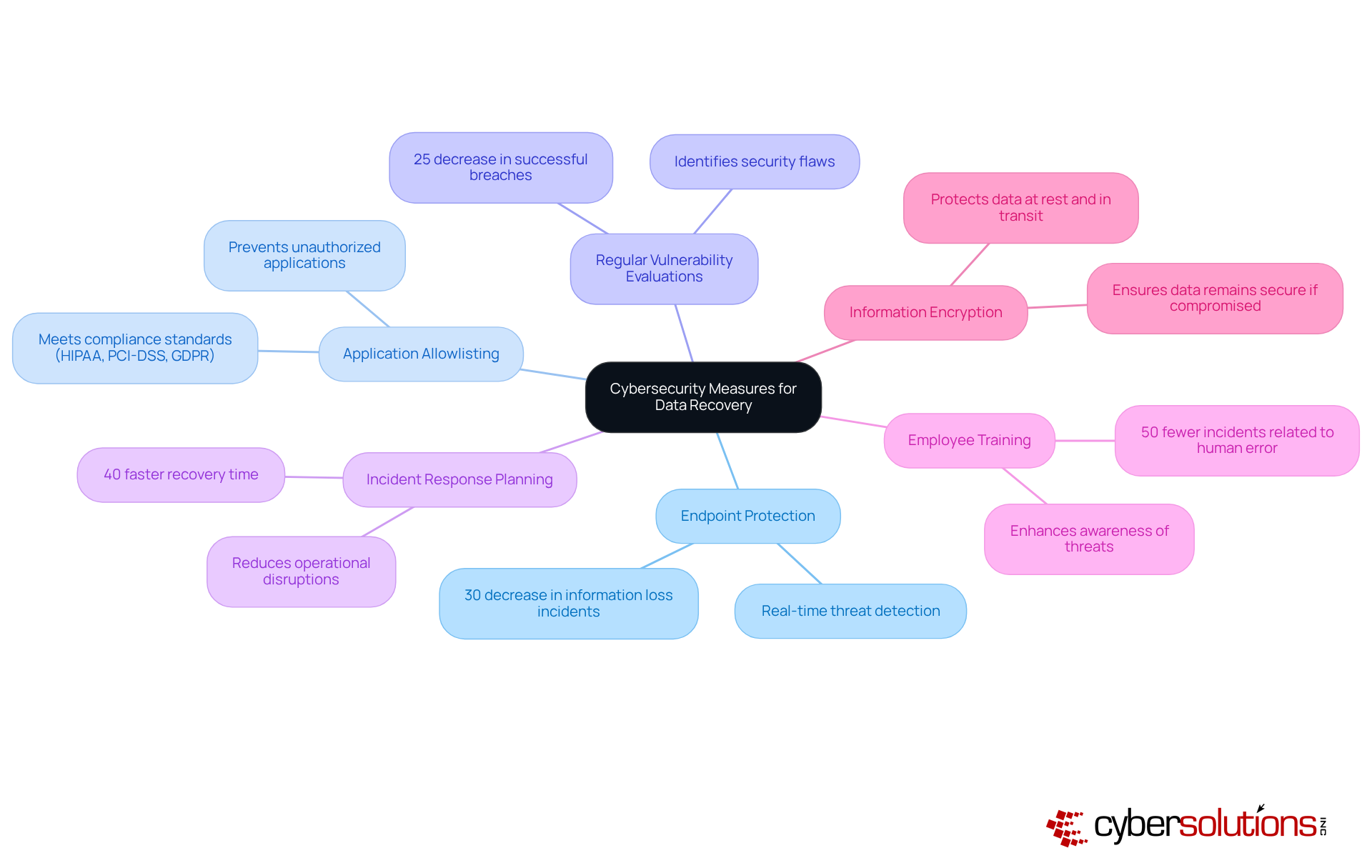
- Advanced endpoint protection solutions are crucial for detecting and responding to threats in real-time. In 2025, entities employing these solutions reported a 30% decrease in information loss incidents due to cyberattacks, underscoring their effectiveness in safeguarding sensitive details.
- This proactive cybersecurity strategy prevents unauthorized or malicious applications from executing on systems. By allowing only pre-approved software to operate, companies can significantly reduce the risk of malware and ransomware attacks. This method not only minimizes vulnerabilities but also helps meet standards like HIPAA, PCI-DSS, and GDPR, ensuring organizations adhere to stringent protection protocols.
- Conducting security assessments helps identify and address security flaws that could lead to information compromise. Organizations that implemented these assessments saw a 25% decrease in successful breaches, highlighting the importance of proactive security measures.
- A comprehensive incident response strategy is vital for ensuring quick recovery in the event of a breach or cyberattack. Organizations with well-defined plans reported a 40% faster recovery time, reducing operational disruptions and financial losses.
- Ongoing cybersecurity education for staff enhances awareness of potential threats and best practices for information protection. Research indicates that organizations with robust training programs experience 50% fewer incidents related to human error, a leading cause of information breaches.
- Encrypting sensitive information both at rest and in transit protects it from unauthorized access. Even if data is compromised, encryption ensures that it remains secure, significantly lowering the risk of exposure.
By integrating these cybersecurity measures into their information recovery plans, organizations can enhance their overall strategy for data protection and ensure a more robust response to data loss incidents. As cybersecurity specialists emphasize, "Prioritizing crucial controls such as access controls and multifactor authentication can lessen the threat of cyberattacks if they are consistently applied." This holistic approach not only protects data but also strengthens the organization against the increasing sophistication of cyber threats.
Conclusion
In today’s fast-paced digital landscape, the importance of data and system recovery is paramount. Organizations must understand that effective recovery strategies are not just a safety net; they are vital for maintaining operational integrity, safeguarding sensitive information, and ensuring compliance with industry regulations. As cyber threats grow more sophisticated, prioritizing robust data recovery practices is essential for protecting business continuity.
This article underscores several key insights into effective data recovery:
- Regular backups are crucial, and adherence to the 3-2-1 backup rule is a must.
- Testing restoration protocols cannot be overlooked.
- Integrating cybersecurity measures—such as endpoint protection, application allowlisting, and employee training—into recovery plans significantly enhances resilience against data loss incidents.
- By grasping the common causes of data loss and implementing tailored strategies, organizations can effectively mitigate risks and bolster their overall data protection frameworks.
The message is clear: organizations must take proactive steps to strengthen their data recovery strategies. As cyber threats continue to escalate, the time to act is now. By investing in comprehensive recovery solutions and integrating cybersecurity measures, businesses can not only protect their valuable data but also ensure their long-term sustainability in an increasingly complex digital environment. Embracing these best practices will empower organizations to navigate challenges with confidence and resilience, securing their future amid uncertainty.
Frequently Asked Questions
What is data recovery and why is it important for businesses?
Data recovery is the process of restoring lost, inaccessible, or corrupted information from backup systems or damaged storage devices. It is crucial for businesses as it helps safeguard sensitive data, ensures compliance with industry regulations, and maintains operational continuity.
How prevalent are cyberattacks and what impact do they have on businesses?
Cyberattacks are increasingly common, with nearly 60% of small and midsize companies that experience one ceasing operations within six months. The average cost of a security breach in the U.S. exceeds $9 million, highlighting the financial implications for organizations.
What should companies prioritize in their IT strategy regarding data recovery?
Companies should prioritize data and system recovery as a core component of their IT strategy to mitigate risks associated with cyberattacks and information breaches.
What role do customized IT services play in data recovery?
Customized IT services, such as endpoint protection and threat detection, are essential in addressing the unique security and compliance needs of sectors like healthcare and finance. These tailored solutions enhance the effectiveness of recovery strategies in navigating cybersecurity challenges.
What are the long-term benefits of focusing on data and system recovery?
By focusing on data and system recovery, companies can protect their assets, ensure long-term sustainability, and confidently navigate the complexities of the digital environment.
List of Sources
- Define Data Recovery and Its Importance for Businesses
- ntgit.com (https://ntgit.com/why-every-business-needs-a-smart-backup-and-disaster-recovery-strategy-in-2025)
- llcbuddy.com (https://llcbuddy.com/data/disaster-recovery-statistics)
- linkedin.com (https://linkedin.com/pulse/25-disaster-recovery-statistics-prove-every-business-needs-dale-tcipe)
- egroup-us.com (https://egroup-us.com/news/disaster-recovery-2025-why-it-matters)
- 99firms.com (https://99firms.com/research/data-loss-statistics)
- Identify Common Causes of Data Loss in Organizations
- invenioit.com (https://invenioit.com/continuity/data-loss-statistics?srsltid=AfmBOoo1nn3xSk7DqebI92IGRSnFONqeuDpeuxDUnCv5yTU9rQZzvE_h)
- verizon.com (https://verizon.com/business/resources/reports/dbir)
- mayerbrown.com (https://mayerbrown.com/en/insights/publications/2025/10/2025-cyber-incident-trends-what-your-business-needs-to-know)
- cloudeagle.ai (https://cloudeagle.ai/blogs/the-most-common-causes-of-data-breaches-in-2025--and-how-to-prevent-them)
- beyondidentity.com (https://beyondidentity.com/resource/verizon-dbir-2025-access-is-still-the-point-of-failure)
- Implement Best Practices for Effective Data Recovery Solutions
- solutionsreview.com (https://solutionsreview.com/backup-disaster-recovery/why-the-3-2-1-backup-rule-remains-a-cornerstone-of-cybersecurity-in-2025)
- informationweek.com (https://informationweek.com/cyber-resilience/the-role-of-the-3-2-1-backup-rule-in-cybersecurity)
- expertinsights.com (https://expertinsights.com/backup-and-recovery/cloud-backup-stats)
- backblaze.com (https://backblaze.com/blog/the-3-2-1-backup-strategy)
- acronis.com (https://acronis.com/en/blog/posts/backup-rule)
- Integrate Cybersecurity Measures to Enhance Data Recovery
- mayerbrown.com (https://mayerbrown.com/en/insights/publications/2025/10/2025-cyber-incident-trends-what-your-business-needs-to-know)
- varonis.com (https://varonis.com/blog/cybersecurity-statistics)
- nordlayer.com (https://nordlayer.com/blog/cybersecurity-statistics-of-2025)
- nextgov.com (https://nextgov.com/ideas/2025/09/federal-governments-data-protection-depends-resilience-not-just-cybersecurity/407928)
- 205 Cybersecurity Stats and Facts for 2026 (https://vikingcloud.com/blog/cybersecurity-statistics)