
Introduction
In today's world, cyber threats are more prevalent than ever, making the safeguarding of sensitive information a paramount responsibility for C-suite leaders in healthcare organizations. The implementation of Cybersecurity Maturity Model Certification (CMMC) controls presents a unique opportunity for executives to not only protect their data but also enhance their operational integrity and competitive advantage. Yet, a pressing question arises: how can leaders effectively navigate the intricate landscape of cybersecurity while ensuring compliance and minimizing risks?
This article explores ten essential CMMC controls designed to empower C-suite leaders, enabling them to fortify their organizations against evolving threats and achieve compliance with confidence. By understanding these controls, healthcare executives can take proactive steps to mitigate risks and safeguard their organizations in an increasingly complex digital environment.
Cyber Solutions: Comprehensive Endpoint Protection for CMMC Compliance
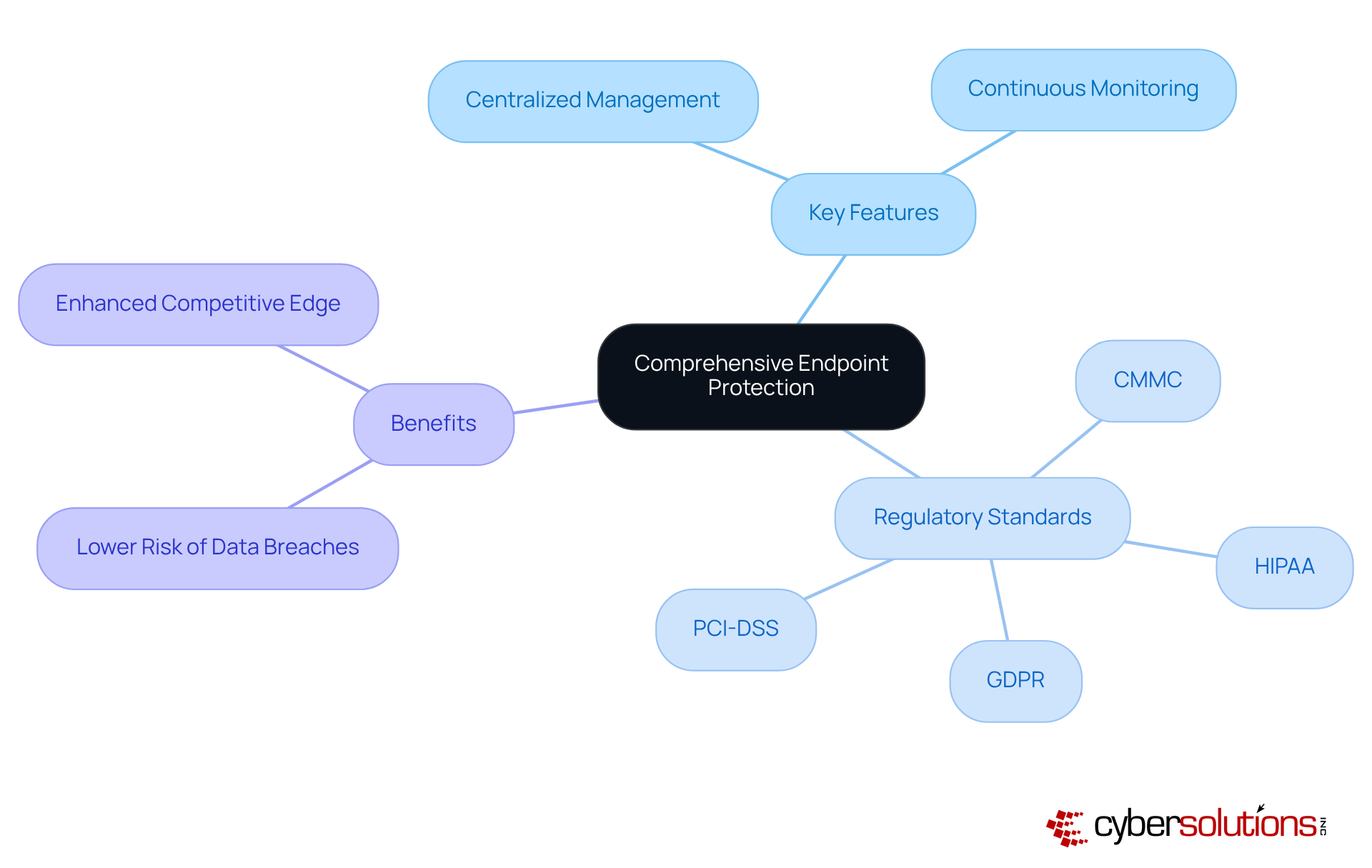
In today's digital age, cybersecurity is not just an option; it's a necessity, especially in healthcare. Cyber Solutions offers comprehensive services that include advanced threat detection and response capabilities, alongside endpoint protection. This proactive approach ensures that only authorized users can execute commands on all endpoints—laptops, desktops, and mobile devices—effectively preventing unauthorized software and malware from compromising your systems.
Key features of Cyber Solutions include:
- Centralized management for easy updates
- Continuous monitoring to detect unauthorized software attempts
By adopting these measures, healthcare organizations can significantly lower their risk of cyberattacks. Are you aware of the potential consequences of a breach? Not only can it lead to financial losses, but it can also damage your reputation and erode patient trust.
Moreover, implementing these strategies improves alignment with regulatory requirements and ensures adherence to strict cybersecurity standards, including:
- PCI-DSS
- GDPR
This ultimately safeguards sensitive information and upholds operational integrity. By positioning your entity favorably for securing federal contracts, you can enhance your competitive edge in the healthcare sector. Don't wait until it's too late—take action now to protect your organization.
Threat Detection: Proactive Measures for CMMC Control Implementation
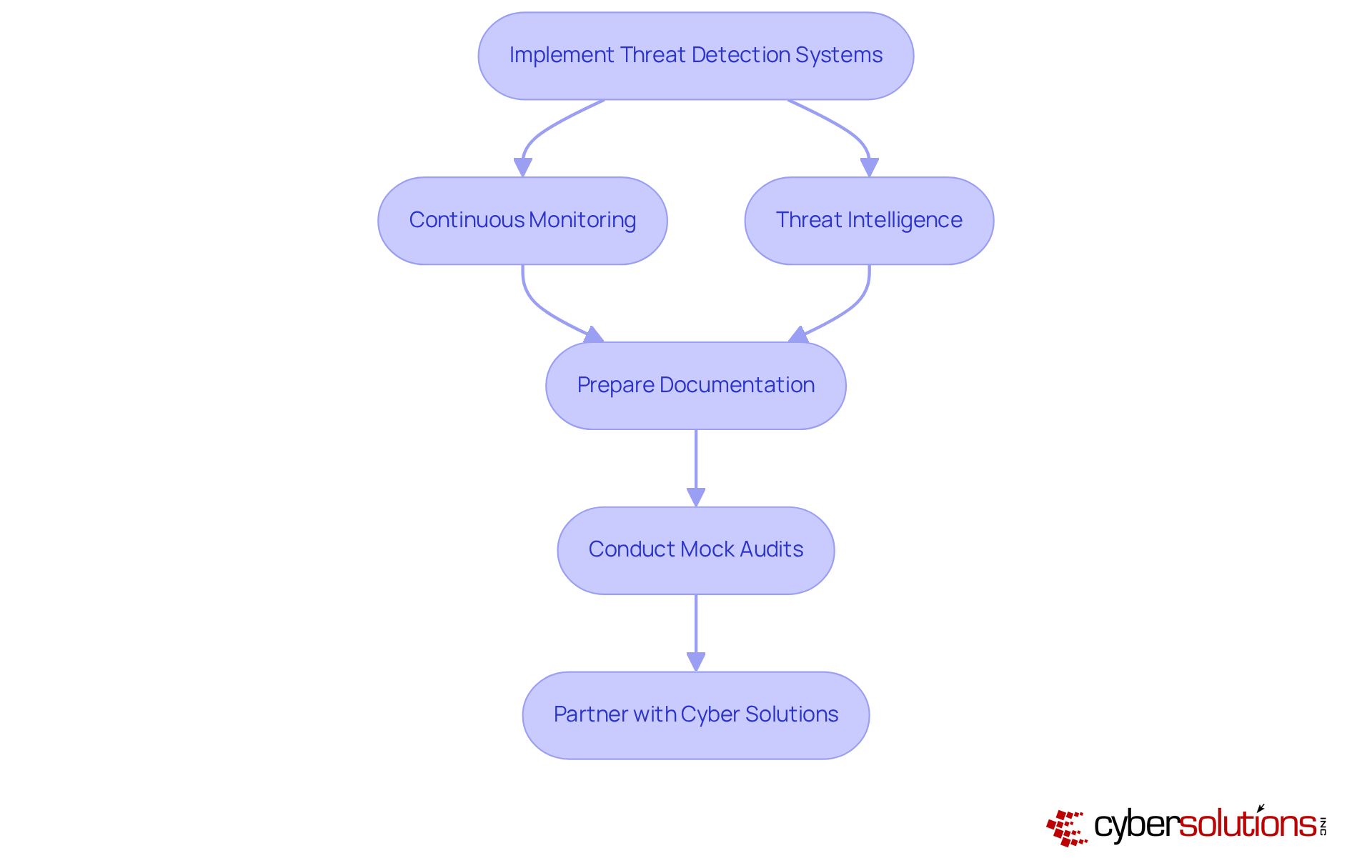
Implementing robust threat detection is not just a necessity; it’s a critical component for ensuring cybersecurity compliance. In today’s landscape, where threats are ever-evolving, organizations must leverage advanced analytics and machine learning to detect potential threats in real-time. This ensures that your entity meets the stringent cybersecurity standards required for CMMC compliance, including the necessary controls. Continuous monitoring of network activity, coupled with threat intelligence, allows organizations to respond swiftly to incidents, minimizing potential damage.
But it doesn’t stop there. Preparing thorough documentation and conducting mock audits are crucial steps in demonstrating adherence to CMMC requirements. This proactive approach not only enhances security but also helps maintain eligibility for lucrative government contracts. In a competitive defense contracting industry, this can provide a significant edge.
Are you ready to elevate your cybersecurity strategy? By partnering with Cyber Solutions, you can effectively address the unique challenges posed by today’s cybersecurity threats. Don’t wait for an incident to occur; take action now to safeguard your organization’s future.
Incident Response Plans: Essential for CMMC Control Readiness
An effective incident response plan is not just a best practice; it’s a cornerstone of success in today’s complex cybersecurity landscape. Cyber Solutions empowers organizations to develop customized incident response strategies that clearly define roles, responsibilities, and procedures for addressing incidents. Our experts swiftly identify, contain, and mitigate threats, ensuring business continuity while restoring your systems. This proactive readiness not only minimizes the impact of incidents but also demonstrates accountability, enabling organizations to recover quickly and effectively.
Incorporating our solutions enhances your preparedness for audits through continuous oversight and risk evaluations. With the ever-evolving nature of threats, can your organization afford to be unprepared? By partnering with Cyber Solutions, you can navigate these challenges with confidence, ensuring that your incident response plan is robust and effective. Let us help you safeguard your organization’s future.
Vulnerability Assessments: Key to Strengthening CMMC Controls
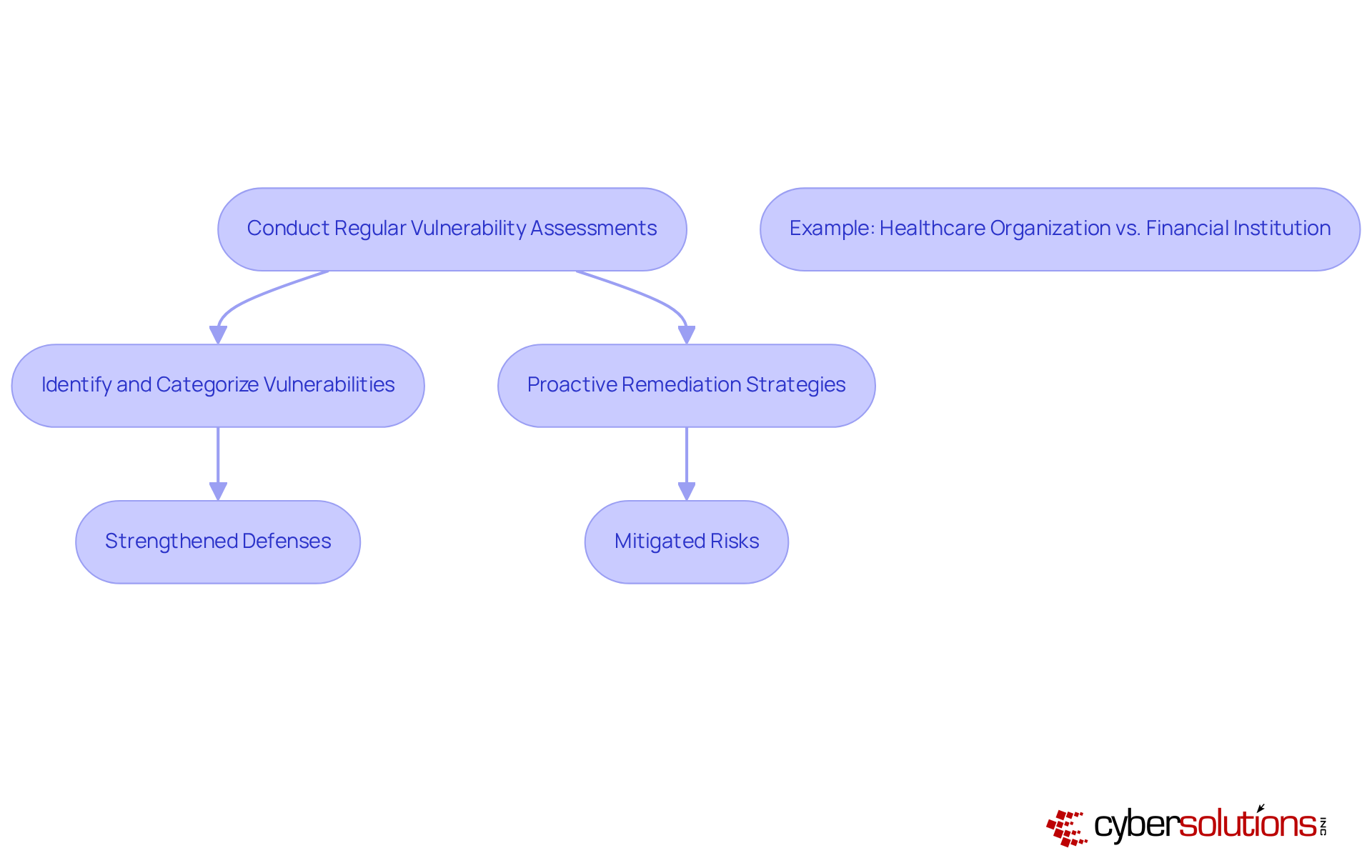
In today's digital landscape, vulnerability assessments are not just important; they are essential for maintaining compliance with the CMMC framework. These evaluations systematically identify and categorize vulnerabilities within a company's IT infrastructure, enabling organizations to strengthen their security posture. By addressing vulnerabilities before they can be exploited, organizations not only bolster their defenses but also align with best practices that emphasize continuous monitoring and risk management.
Organizations that prioritize vulnerability assessments often see significant improvements in their security. For example, a healthcare organization that conducted biannual evaluations successfully mitigated risks during a security incident, protecting sensitive patient data. Conversely, a financial institution that overlooked regular assessments faced dire consequences, including a data breach that led to substantial financial losses and regulatory penalties.
Data shows that companies implementing proactive security measures, such as regular vulnerability assessments, can cut breach costs by an average of 48%. Furthermore, organizations that integrate vulnerability assessments and these evaluations into their cybersecurity strategies demonstrate a commitment to cybersecurity, which is crucial for maintaining compliance and meeting regulatory requirements. By making vulnerability evaluations a priority, organizations can effectively enhance their defenses against evolving threats and ensure compliance with regulatory standards.
Compliance as a Service (CaaS): Simplifying CMMC Adherence
In today's complex regulatory landscape, Compliance as a Service emerges as a vital solution for organizations striving to meet their compliance requirements. Cyber Solutions stands at the forefront, offering continuous support and expert guidance to ensure that all necessary controls are not only implemented but also rigorously maintained. This innovative service alleviates the burdens of regulatory management, allowing organizations to focus on their core operations while confidently adhering to relevant standards.
Consider the unique challenges faced by CFOs in the healthcare sector. With the increasing frequency of cyberattacks and stringent compliance requirements, the stakes have never been higher. Organizations must navigate a maze of regulations while safeguarding sensitive patient data. How can they effectively manage these demands without compromising their operational efficiency?
Cyber Solutions provides the answer. By leveraging CaaS, organizations can streamline their compliance processes with expert assistance, ensuring they stay ahead of regulatory changes and cyber threats. This proactive approach not only enhances security but also fosters a culture of compliance that permeates the organization. With Cyber Solutions, healthcare entities can transform compliance from a daunting obligation into a strategic advantage.
Cybersecurity Training: Empowering Employees for CMMC Compliance
In today’s digital landscape, cybersecurity training is not just important; it’s essential for empowering employees to recognize and respond to potential threats. With the rise of sophisticated cyberattacks, organizations face unique challenges that demand immediate attention. Cyber Solutions offers customized training programs designed to equip personnel with knowledge and skills for adhering to regulatory standards.
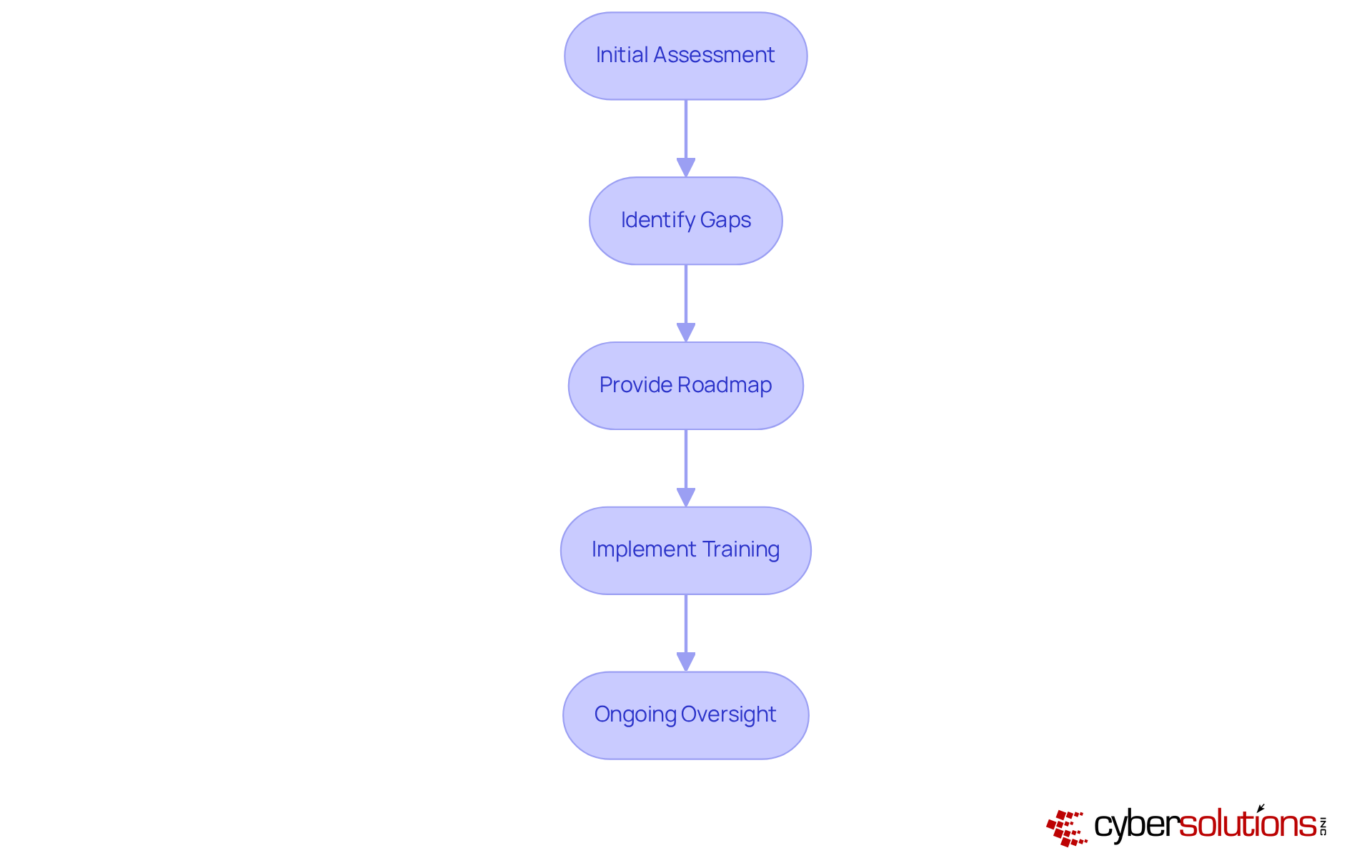
Our proven certification process begins with a thorough assessment of your current security posture. We identify gaps and provide a comprehensive training plan, ensuring that your organization is not only aware of potential risks but also prepared to tackle them head-on. By fostering a culture of security awareness and implementing tailored remediation tactics, organizations can significantly reduce the risk of human errors—often a leading cause of security incidents.
Moreover, we understand that the cybersecurity landscape is constantly evolving. That’s why we offer ongoing oversight for compliance changes and sector-specific solutions, guaranteeing that your organization remains compliant and secure. Our expert guidance during the official assessment ensures that your entity is fully prepared to achieve certification, addressing any outstanding concerns efficiently.
Are you ready to take the next step in safeguarding your organization? Let Cyber Solutions be your partner in navigating the complexities of cybersecurity, ensuring that you not only meet but also protect your most valuable assets.
Access Controls: Safeguarding Data for CMMC Compliance
Access controls, including user permissions and authentication methods, are not just a regulatory requirement; they are a critical line of defense in the ever-evolving landscape of cybersecurity, especially in healthcare. With sensitive data at risk, organizations must ensure that only authorized personnel can access this information. Cyber Solutions specializes in implementing role-based access control (RBAC) and multi-factor authentication (MFA), enhancing safety and compliance. By limiting access to essential information, organizations can effectively manage risks and ensure compliance with regulations.
In today’s digital age, the implications of inadequate access controls can be severe. Healthcare organizations face unique challenges, including the need to protect patient information while ensuring compliance with HIPAA and stringent regulations. Cyber Solutions understands these challenges and offers tailored solutions that not only address security concerns but also foster trust with patients and stakeholders alike.
Are you prepared to protect your organization from potential breaches? By partnering with Cyber Solutions, you can implement robust security measures that mitigate risks and enhance your security posture. Don’t leave your sensitive data vulnerable—take action now to ensure that your organization is equipped to handle the complexities of cybersecurity.

Regular Audits: Maintaining CMMC Compliance and Security
Frequent evaluations are essential for maintaining cybersecurity standards and ensuring the effectiveness of protective measures in today’s digital landscape. Organizations that prioritize consistent auditing not only comply with regulations but also significantly enhance their overall security posture. Did you know that businesses conducting regular audits experience fewer security incidents? This proactive approach can ultimately reduce the risk of data breaches and compliance violations. In fact, statistics indicate that entities focusing on audits can cut compliance-related incidents by as much as 50%. This underscores the tangible benefits of such practices.
Cyber Solutions offers comprehensive audit services tailored to assess a company's security measures. These audits provide a thorough evaluation of current practices, pinpointing areas for improvement and ensuring that organizations remain compliant with evolving regulations. With CMMC requiring a robust framework of 110 protective measures across 15 domains, regular audits serve as a proactive strategy to identify gaps and strengthen protocols.
Moreover, organizations that prioritize regular audits often find themselves better equipped to navigate the complexities of regulatory updates. By implementing a continuous monitoring mechanism, they can swiftly adapt to changes in regulatory requirements, safeguarding sensitive information while enhancing their competitive edge in the market. Additionally, adopting a layered cybersecurity approach can further enhance security measures, ensuring minimal operational disruption.
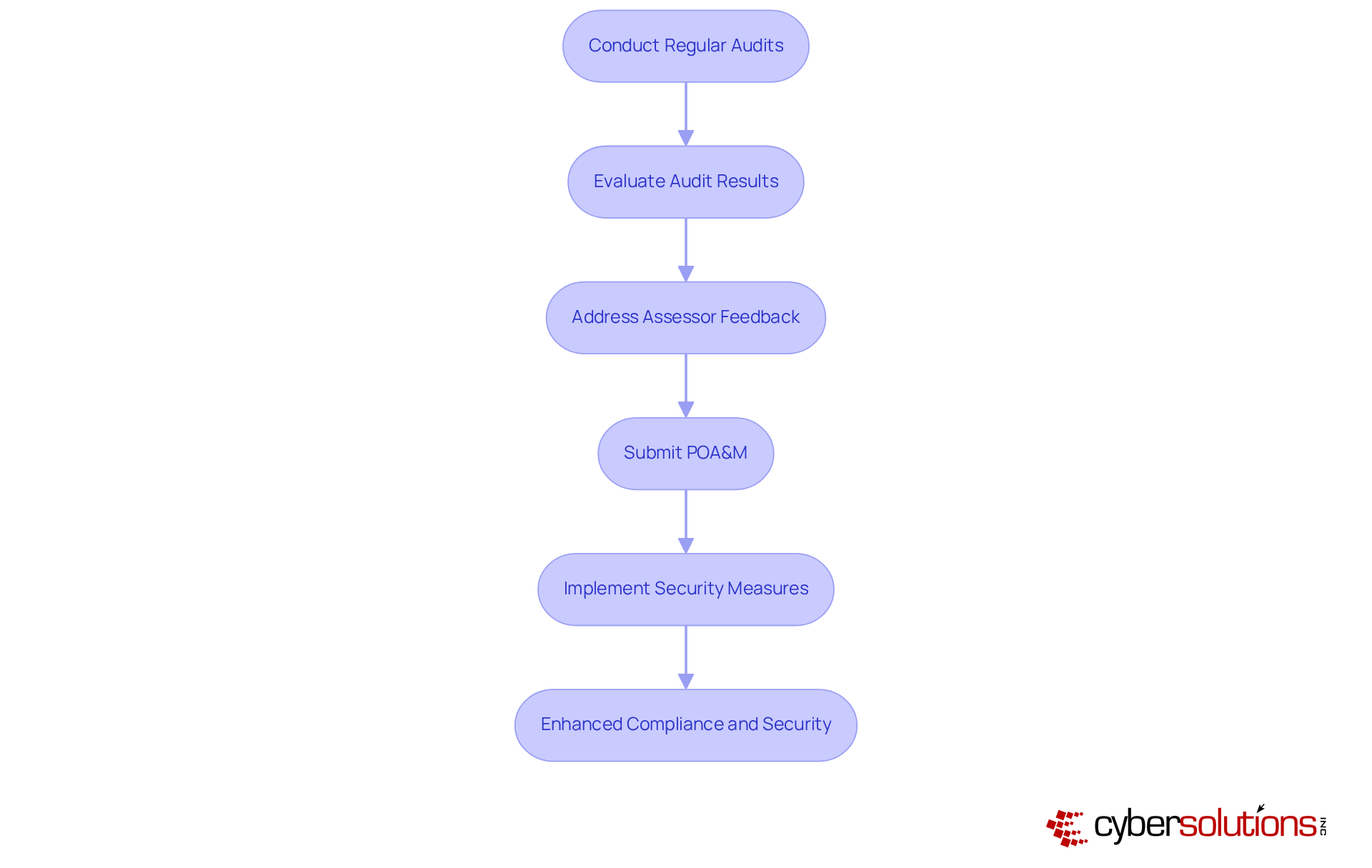
Addressing feedback from the assessor's report and submitting a post-audit plan are crucial components of the regulatory process that ensure ongoing compliance with standards. Furthermore, integrating application allowlisting into the security framework actively prevents unauthorized software from executing, thereby improving assurance and reducing vulnerabilities. In summary, incorporating regular audits into compliance strategies is not merely a best practice; it is a fundamental aspect of a resilient security posture.
Data Encryption: Protecting Sensitive Information for CMMC Compliance
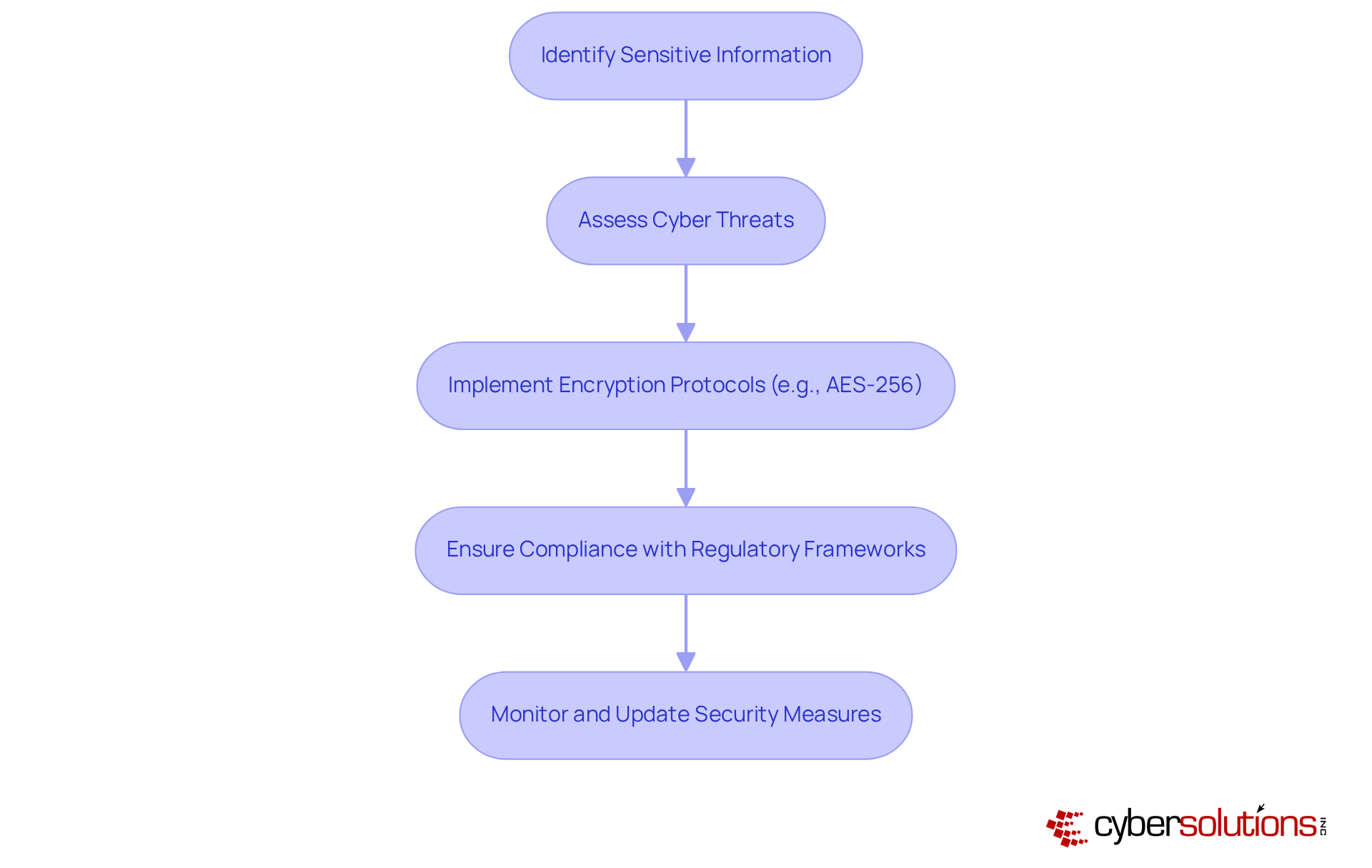
Data encryption stands as a cornerstone in the fight against cyber threats, particularly in the healthcare sector where sensitive information is at stake. With the rise of sophisticated cyberattacks, organizations must prioritize robust encryption methods to protect data both at rest and in transit. For example, employing end-to-end encryption standards like AES-256 can drastically reduce the risk of data breaches, as this method is widely recognized for its effectiveness in securing sensitive information.
Moreover, regulations mandate the use of cryptographic methods to protect controlled unclassified information (CUI), underscoring the critical role of encryption in compliance. Achieving compliance not only demonstrates a commitment to cybersecurity but also enhances eligibility for lucrative government contracts, assuring federal agencies of an organization’s capability to protect sensitive data.
The successful implementation of encryption protocols has led to a notable decrease in data breaches, showcasing the effectiveness of these measures in bolstering overall security. By prioritizing encryption, organizations not only meet compliance standards but also fortify their defenses against ever-evolving cyber threats, ensuring the integrity and confidentiality of their sensitive information.
In a landscape where the stakes are high, can your organization afford to overlook the importance of encryption? The time to act is now.
Incident Reporting: Ensuring Accountability in CMMC Compliance
In today's digital landscape, cybersecurity is not just a necessity; it's a critical component of regulatory compliance, especially in healthcare. Incident reporting plays a vital role in this process, enabling organizations to respond swiftly and effectively to breaches. Cyber Solutions specializes in developing clear protocols that foster accountability and transparency, ensuring that your organization is always prepared.
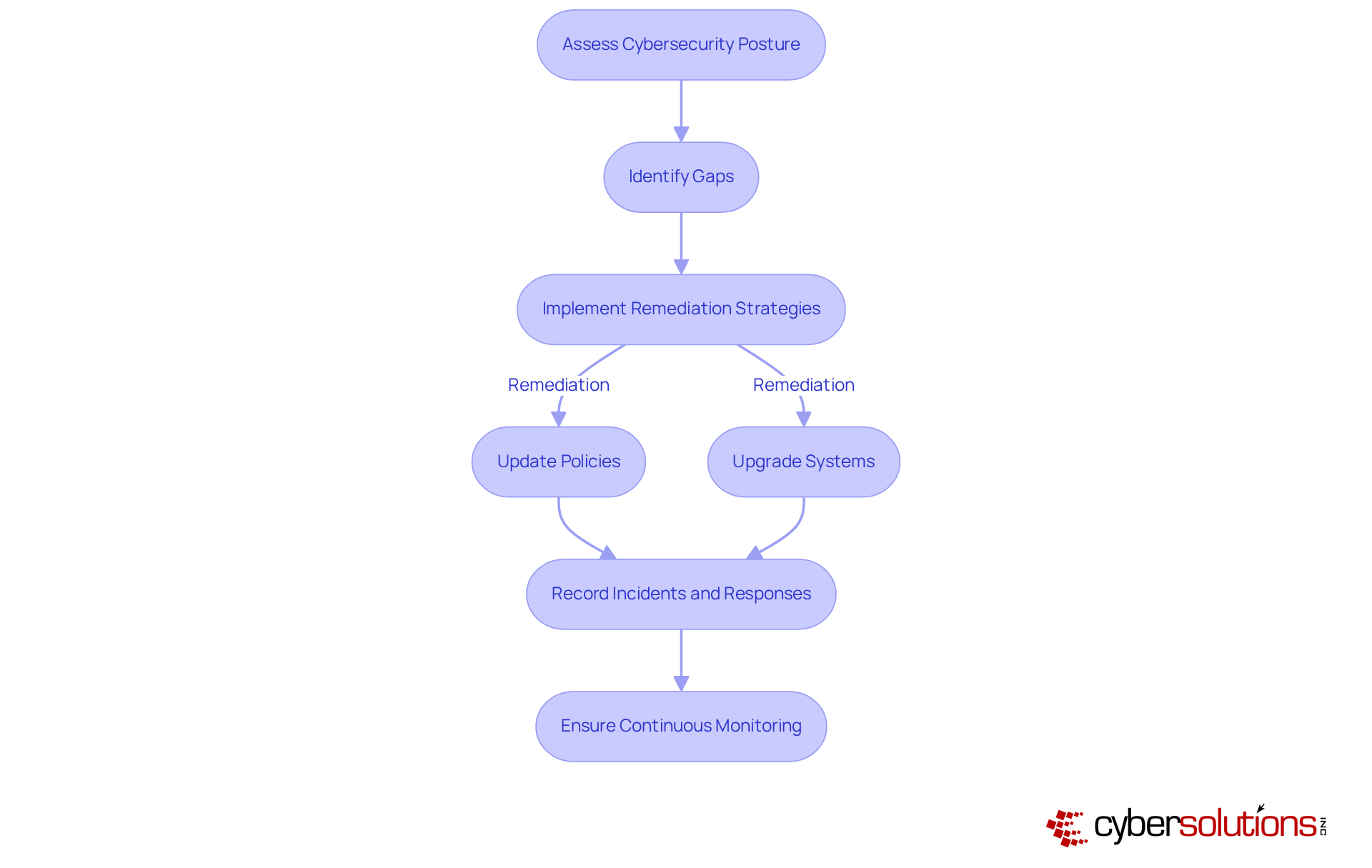
Our proven approach begins with a thorough assessment of your current security posture, pinpointing any gaps that may exist. From there, we implement tailored strategies, which include essential policy updates and system upgrades. By meticulously recording incidents and responses, organizations can glean valuable insights from past occurrences, enhancing their security protocols and improving adherence to regulations.
Moreover, our solutions offer continuous monitoring and support. This ensures that your organization remains audit-ready and can adeptly manage any incidents that may arise. With Cyber Solutions by your side, you can proceed with confidence, knowing that you have the expertise and resources to protect your organization effectively.
Conclusion
In today’s healthcare landscape, cybersecurity isn’t just a regulatory checkbox; it’s a crucial strategy for protecting sensitive information. With the threat landscape becoming more complex, organizations must prioritize:
- Comprehensive endpoint protection
- Proactive threat detection
- Robust incident response plans
These elements are essential not only for compliance but also for maintaining operational integrity.
Key strategies like:
- Regular vulnerability assessments
- The adoption of Compliance as a Service (CaaS)
- Effective access controls
are fundamental in achieving CMMC compliance. These measures safeguard against potential breaches while enhancing an organization’s competitive edge in securing government contracts. Moreover, continuous training and regular audits are vital, fostering a culture of security awareness and ensuring vigilance against emerging threats.
The stakes in cybersecurity are higher than ever. Organizations must act decisively to implement these controls and strategies, transforming compliance from a daunting task into a strategic advantage. By doing so, they not only protect their sensitive data but also build trust with patients and stakeholders, paving the way for a resilient and secure operational future. The time to act is now—embracing these essential CMMC controls is imperative for any organization committed to cybersecurity excellence.
Frequently Asked Questions
What is the importance of cybersecurity in healthcare?
Cybersecurity is essential in healthcare to protect sensitive information, prevent data breaches, and maintain patient trust.
What comprehensive services does Cyber Solutions offer for endpoint protection?
Cyber Solutions provides advanced threat detection and response capabilities, along with application allowlisting, to ensure that only approved applications can execute on all endpoints.
What are the key features of application allowlisting?
Key features include centralized management for easy updates and continuous monitoring to detect unauthorized software attempts.
How does implementing these cybersecurity measures benefit healthcare organizations?
These measures significantly lower the risk of data breaches, improve compliance with regulatory requirements, and safeguard sensitive information.
Which regulatory standards does Cyber Solutions help organizations comply with?
Cyber Solutions helps organizations comply with CMMC controls, HIPAA, PCI-DSS, and GDPR.
What role does threat detection play in CMMC control implementation?
Robust threat detection systems are critical for ensuring compliance with CMMC controls, allowing organizations to detect potential threats in real-time.
How can organizations prepare for CMMC compliance?
Organizations can prepare by leveraging advanced analytics, conducting thorough documentation, and performing mock audits to demonstrate adherence to CMMC controls.
What is the significance of having an incident response plan?
An incident response plan is essential for regulatory adherence, as it defines roles, responsibilities, and procedures for addressing security incidents, minimizing their impact.
How does Cyber Solutions assist with incident response strategies?
Cyber Solutions helps organizations develop customized incident response strategies that quickly identify, contain, and mitigate threats to ensure business continuity.
What is Compliance as a Service (CaaS) and how does it benefit organizations?
CaaS enhances preparedness for audits through continuous oversight and risk evaluations, ensuring organizations are ready to meet regulatory requirements.
List of Sources
- Vulnerability Assessments: Key to Strengthening CMMC Controls
- aisn.net (https://aisn.net/the-power-of-vulnerability-assessments)
- brightsec.com (https://brightsec.com/blog/the-critical-importance-of-vulnerability-assessments)
- advance-datasec.com (https://advance-datasec.com/the-importance-of-vulnerability-assessments)
- cyberproof.com (https://cyberproof.com/blog/why-vulnerability-assessment-is-essential-for-businesses)
- compassitc.com (https://compassitc.com/blog/what-are-the-benefits-of-conducting-regular-vulnerability-assessments)
- Regular Audits: Maintaining CMMC Compliance and Security
- sprinto.com (https://sprinto.com/blog/cmmc-audit-best-practices)
- brightdefense.com (https://brightdefense.com/resources/cmmc-level-2-compliance)
- isdecisions.com (https://isdecisions.com/en/blog/compliance/file-auditing-for-cmmc-2-0-compliance)
- Data Encryption: Protecting Sensitive Information for CMMC Compliance
- news.atakama.com (https://news.atakama.com/how-encryption-enables-cmmc-compliance)
- kiteworks.com (https://kiteworks.com/managed-file-transfer/cmmc-compliance-feature-requirements-checklist)
- modusadvanced.com (https://modusadvanced.com/resources/blog/what-is-cmmc-compliance-and-why-should-you-care)
- agileit.com (https://agileit.com/news/how-to-implement-cybersecurity-policies-for-cmmc-compliance)