
Introduction
In an era where digital threats are more pronounced than ever, the resilience of a business is fundamentally tied to its cybersecurity strategies. The increasing frequency of cyberattacks has driven organizations to pursue comprehensive management services that not only safeguard their data but also ensure compliance with a landscape of evolving regulations. This article explores ten essential cybersecurity management services that can empower businesses to strengthen their defenses, improve operational efficiency, and adeptly navigate the intricate terrain of contemporary threats.
How can organizations effectively balance the imperative for robust security measures with the escalating sophistication of cyber threats?
Cyber Solutions Inc.: Comprehensive Cybersecurity Management Services
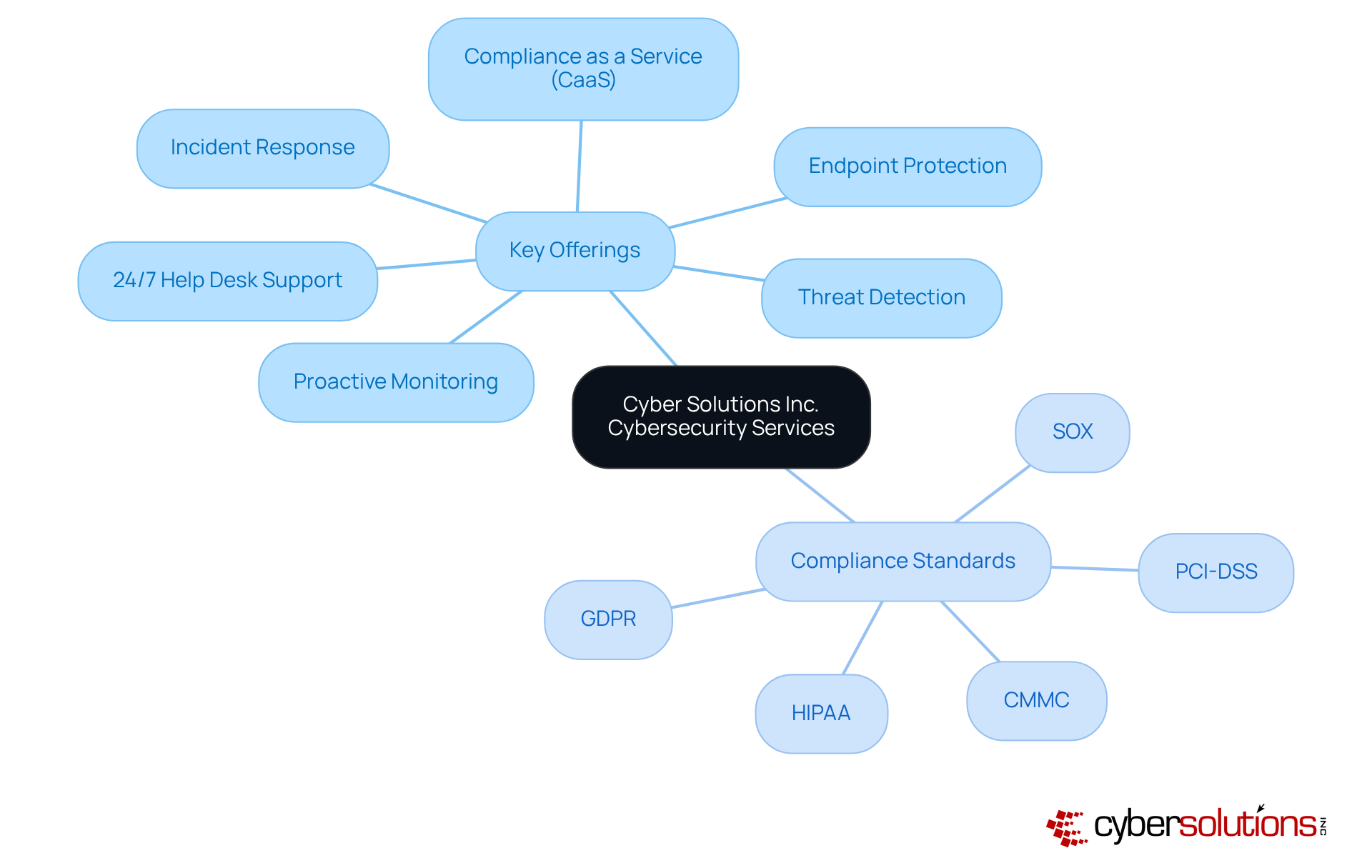
In today's digital landscape, the importance of cybersecurity cannot be overstated. Cyber Solutions Inc. provides an extensive range of services designed to protect businesses from the ever-evolving risks associated with the digital environment. Key offerings include:
- 24/7 help desk support
- threat detection
- incident response
Our CaaS solutions simplify the navigation of regulatory requirements, providing guidance, policy development, and resources to ensure adherence to standards such as:
- PCI-DSS
- CMMC
- SOX
- GDPR
This customized approach enables organizations to focus on their core operations while maintaining a robust protective stance.
By integrating these services, Cyber Solutions not only enhances protection but also boosts operational efficiency and ensures compliance with industry regulations. As more companies recognize the critical significance of cybersecurity, the demand for cybersecurity services continues to rise, reflecting a broader trend toward proactive risk management and resilience in the face of cyber threats. Notably, organizations allocate an average of 12% of their IT budgets to cybersecurity initiatives, underscoring the essential need for effective security measures. Furthermore, with 56% of businesses planning to leverage AI to train their cybersecurity professionals, the integration of advanced technologies is becoming vital for sustaining a competitive edge in security management.
Endpoint Protection: Safeguard Devices from Cyber Threats
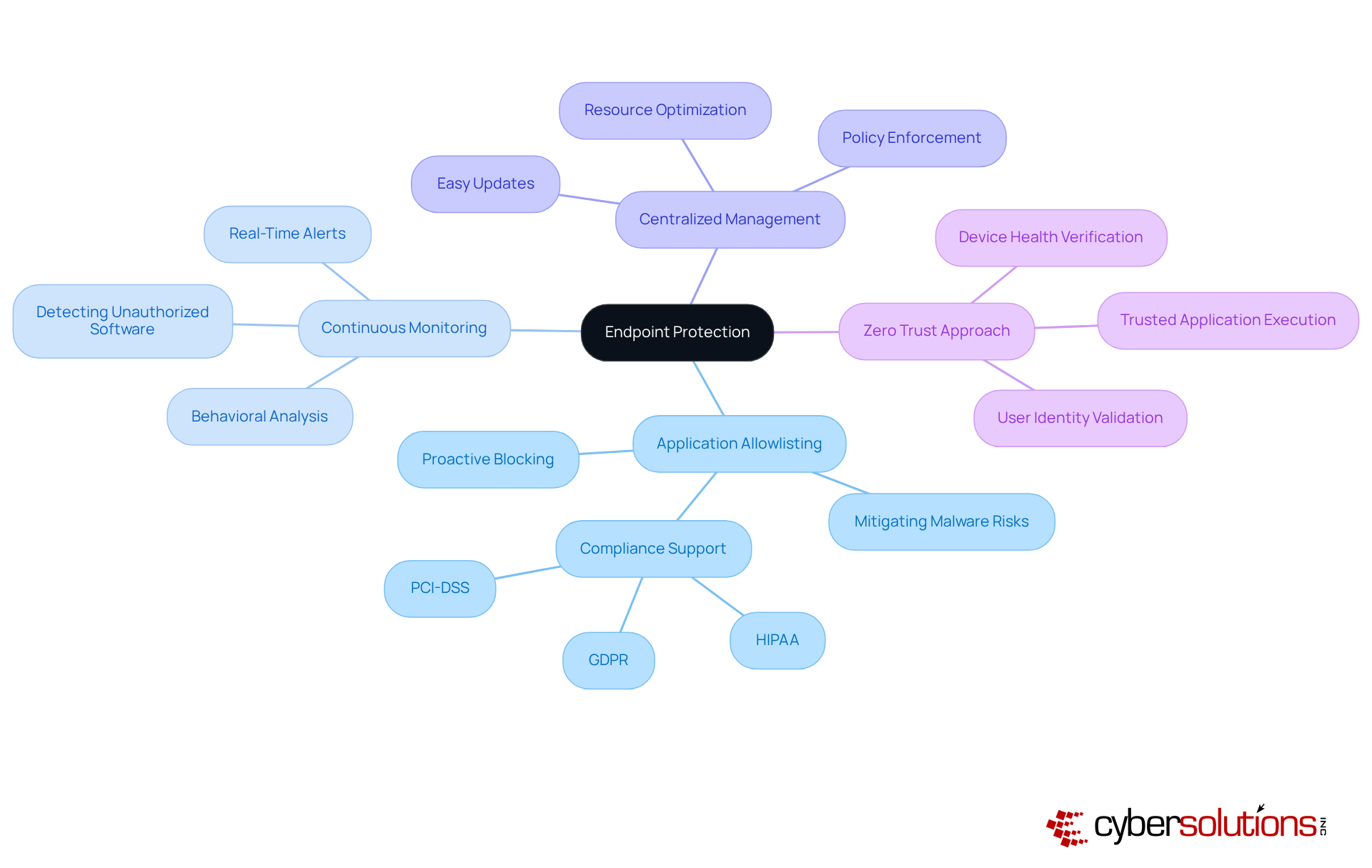
Endpoint protection is essential for devices such as laptops, desktops, and mobile devices against a wide array of cyber risks. This comprehensive service encompasses not only software solutions but also strategies that leverage next-generation technologies. A pivotal element of endpoint protection is application control, which proactively blocks unauthorized or malicious applications from executing on devices. By permitting only pre-approved software to run, organizations can significantly mitigate the risks of malware, ransomware, and data breaches, thereby ensuring the security of sensitive information.
Threat detection is crucial for detecting any attempts to execute unauthorized software, while centralized management facilitates easy updates and policy enforcement across all devices. Regular updates and vigilant monitoring are imperative to adapt to the ever-evolving threat landscape, ensuring that defenses remain robust against sophisticated attacks such as ransomware and zero-day exploits. Additionally, compliance management aids enterprises in meeting regulatory requirements, thereby reinforcing their overall security posture.
Moreover, adopting a zero-trust approach enhances protection by consistently verifying device health and user identity, ensuring that only trusted applications are allowed to run. In this landscape of increasing cyber threats, it is vital for organizations to implement security measures that allow them to take proactive steps, ensuring their defenses are not only effective but also adaptable to emerging challenges.
Threat Detection: Proactively Identify Security Breaches
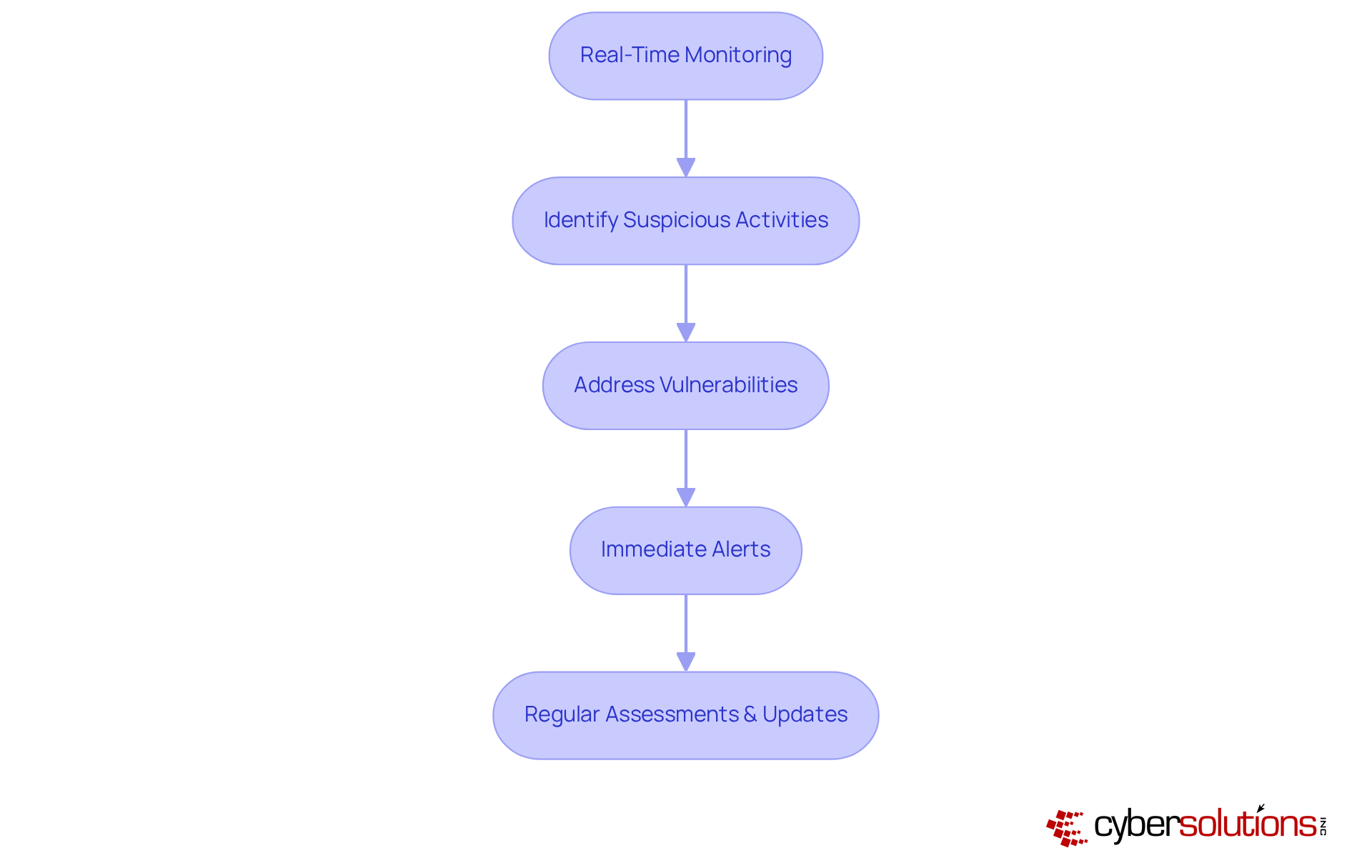
In today's digital landscape, the importance of cybersecurity cannot be overstated. Organizations leverage technology to monitor network traffic and identify suspicious activities in real-time, ensuring that organizations remain vigilant against ever-evolving threats. By employing machine learning and behavioral analytics, organizations can effectively detect anomalies that may signify a security breach, maintaining operational integrity.
Our commitment to cybersecurity means that potential vulnerabilities are swiftly addressed, allowing for immediate alerts and responses. This not only prevents downtime but also mitigates the risk of breaches, ensuring that healthcare organizations can focus on their core mission without interruption. Timely detection empowers organizations to implement prompt measures, minimizing the potential impact of cyber events.
Furthermore, regular assessments and updates to detection protocols are crucial in staying ahead of threats such as ransomware, phishing, and other malware attacks. By continually refining these protocols, organizations can enhance their defenses and foster a culture of security awareness. In an era where cyber threats are increasingly sophisticated, proactive threat detection is not just a necessity—it's a strategic imperative.
Incident Response: Manage and Mitigate Cyber Incidents
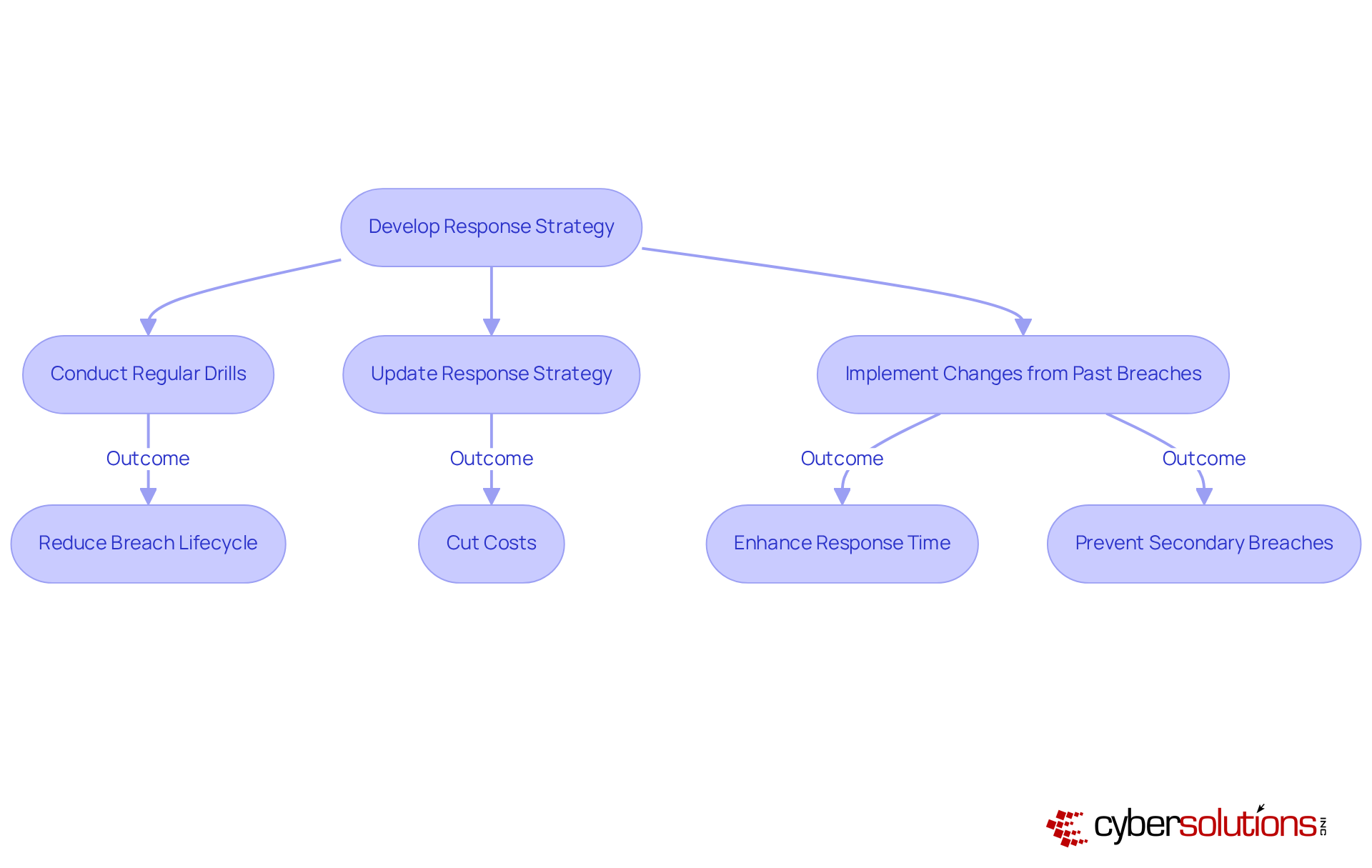
Response services are crucial for managing and mitigating the impact of cyber events, particularly in the healthcare sector. The initial step in this process involves developing a comprehensive response plan that outlines the necessary actions when a breach occurs. Organizations lacking a formal response plan face an increased risk of incidents, resulting in costs that are 58% higher per incident compared to those with a documented strategy. Regularly conducting drills and updating the response plan are vital activities that prepare teams to react swiftly and effectively during an incident.
Consider this: organizations that implement changes based on past breaches can significantly improve their security posture. Additionally, firms that conduct response testing at least biannually can save, on average, $1.49 million for each breach. This proactive stance not only shortens recovery time but also significantly diminishes the financial impact of breaches, which currently average $4.88 million globally.
Looking ahead to 2025, incident response strategies will include:
- Establishing protocols that can cut response time by 30% and prevent 21% more secondary breaches caused by mismanaged efforts.
- Having a response team on-site within 24 hours to facilitate efficient risk management.
- A layered recovery approach, incorporating endpoint isolation, malware removal, and user training, allows for a quicker and more thorough recovery.
Organizations that provide comprehensive training can reduce breaches by 60%, addressing the human element that contributes to 68% of violations. By prioritizing these strategies, especially in the healthcare sector, businesses can bolster their resilience against cyber threats and ensure a more effective response to incidents through improved preparedness.
Vulnerability Assessments: Identify and Address Security Weaknesses
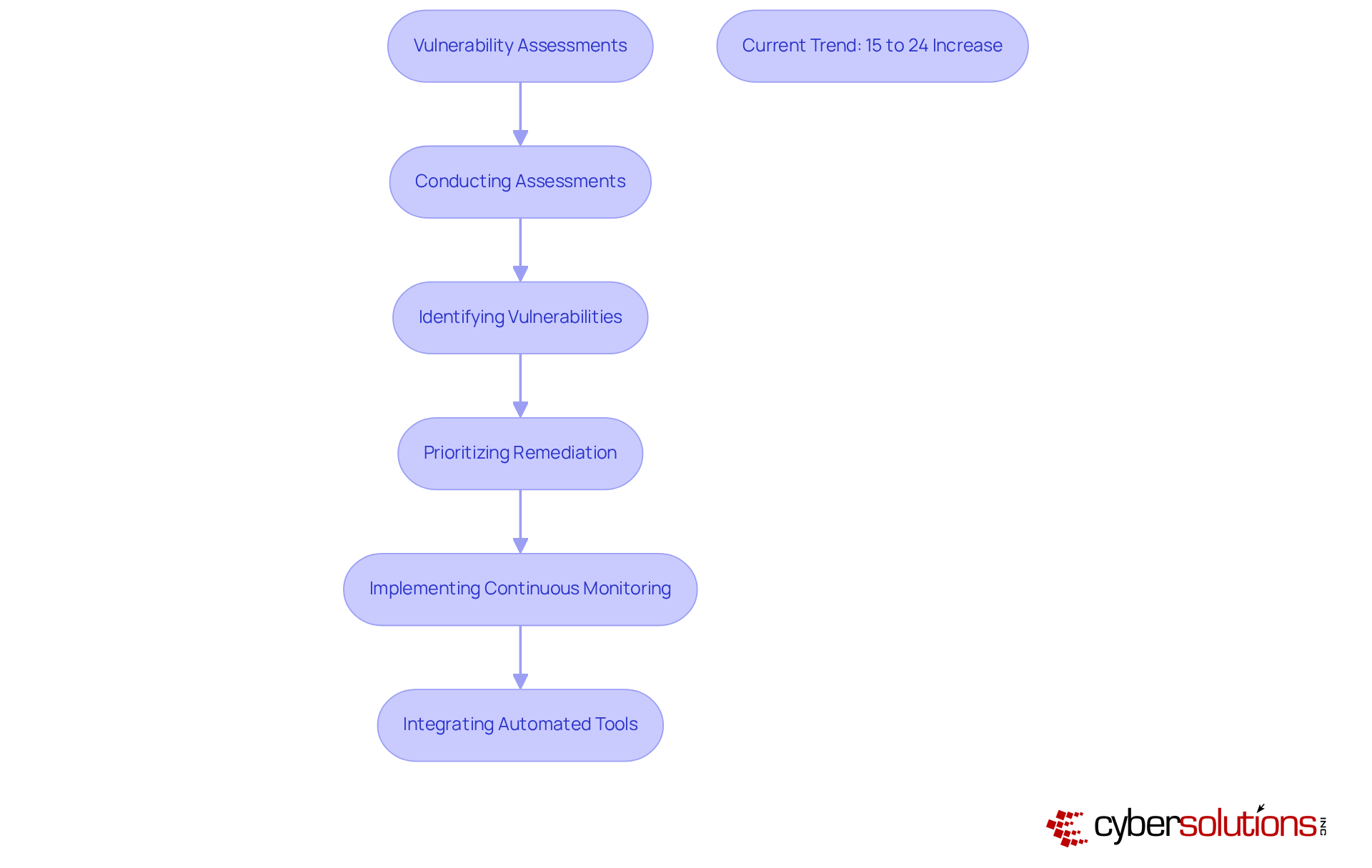
Vulnerability assessments, which are a cornerstone of a robust cybersecurity strategy, are often conducted as part of a comprehensive security program to systematically evaluate an entity's IT infrastructure and identify vulnerabilities. This critical process includes scanning for outdated software, misconfigurations, and other weaknesses that attackers may exploit. By regularly conducting these assessments as part of their security strategy, businesses can effectively prioritize remediation efforts, thereby ensuring compliance with regulations such as HIPAA, PCI-DSS, and GDPR.
In 2024, a significant 24% of entities reported conducting assessments more than four times a year, a notable increase from 15% in 2023. This trend underscores a growing awareness of the need for continuous monitoring and rapid response to emerging threats. For instance, organizations that have adopted ongoing scanning practices have substantially reduced the time required to detect and address vulnerabilities, effectively closing gaps before they can be exploited.
The impact of regular vulnerability evaluations on an organization's defensive stance cannot be overstated. These assessments not only aid in identifying potential weak points but also foster a culture of security awareness. As cyber risks evolve rapidly, maintaining a vigilant stance through regular assessments is essential. Experts assert that vulnerability management must be an ongoing process—both manual and automated—to ensure that newly discovered vulnerabilities are promptly patched or remediated.
Current trends in vulnerability management for 2025 indicate a shift towards integrating automated tools that streamline the scanning process and enhance visibility into security risks. Organizations are increasingly investing in solutions that provide comprehensive insights into their vulnerabilities, facilitating quicker action when new threats are identified. This proactive approach is vital for minimizing incident costs and improving overall security posture through effective remediation strategies.
In addition to regular assessments, application allowlisting serves as a critical strategy in preventing unauthorized software execution, thereby enhancing security. By ensuring that only approved applications can operate, entities significantly diminish the risk of malware and ransomware attacks. Coupled with monitoring solutions, which deliver real-time insights and instant alerts for suspicious activities, businesses can strengthen their proactive cybersecurity measures. Practical implementation of application allowlisting includes regularly updating allowlists and utilizing centralized management tools to streamline control and policy enforcement.
Compliance as a Service (CaaS): Navigate Regulatory Complexities
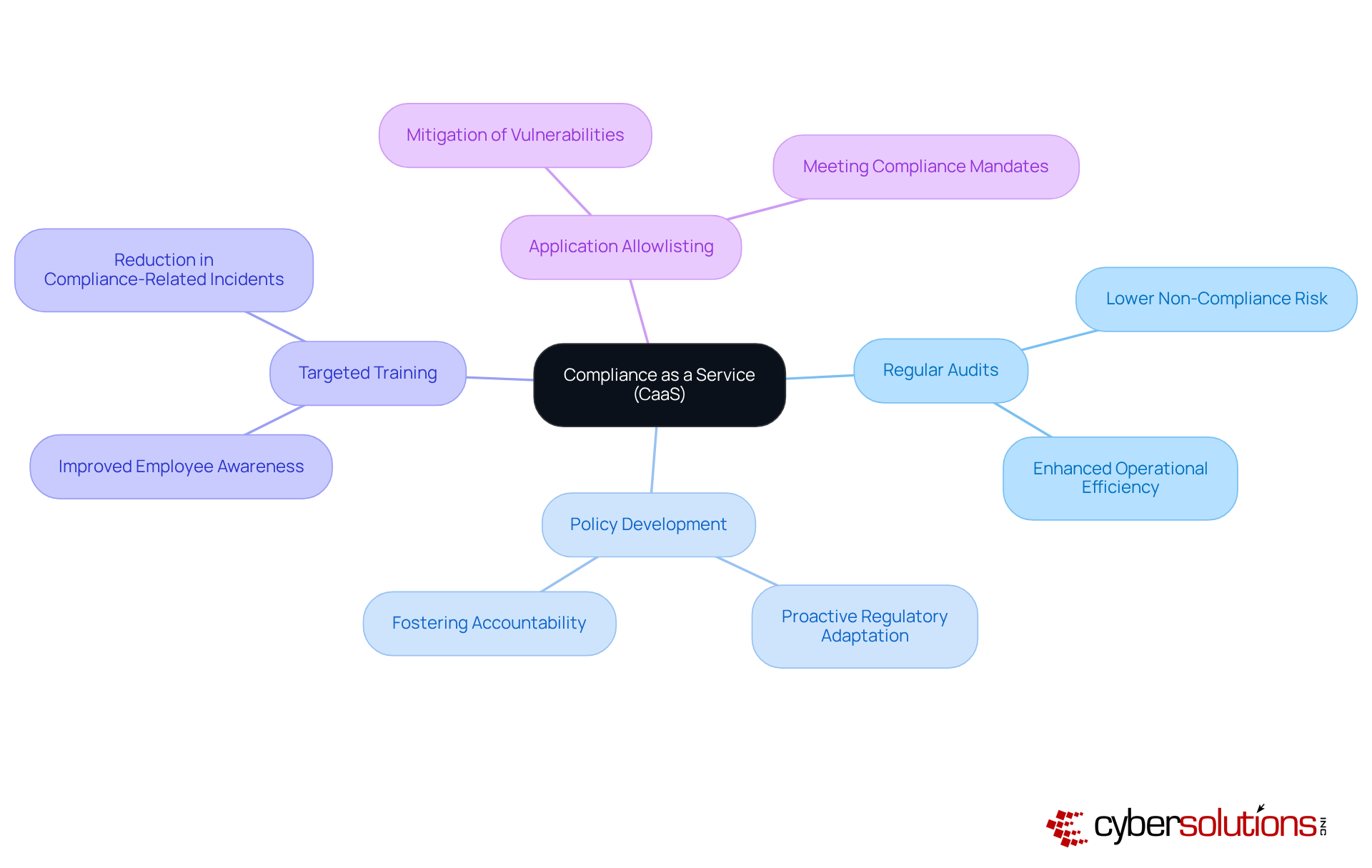
In today's business landscape, Compliance as a Service emerges as a vital solution for organizations striving to navigate the intricate regulatory environment, compliance frameworks, and GDPR. This service offers comprehensive solutions, encompassing regular audits, policy development, and targeted training. By doing so, it not only ensures that businesses remain compliant but also fosters a culture of accountability.
Outsourcing compliance management allows companies to concentrate on their core operations, significantly lowering the risk of non-compliance penalties. The service empowers businesses to stay ahead of regulatory changes, enabling them to adapt swiftly to evolving requirements. A critical element of this proactive approach is application allowlisting, which acts as a gold standard in cybersecurity by preventing unauthorized software from executing. This strategy not only enhances security but also assists organizations in meeting stringent compliance mandates.
For instance, entities that have effectively adopted CaaS, particularly those utilizing customized solutions, have reported increased efficiency and a marked reduction in compliance-related incidents. As we approach 2025, with regulatory scrutiny intensifying, leveraging CaaS will be paramount for maintaining compliance and safeguarding organizational integrity. As KRITIKA SINHA emphasizes, 'CaaS offers a transformative solution, providing streamlined processes, enhanced security, cost efficiency, and scalability.
Backup and Disaster Recovery: Ensure Business Continuity
services are essential for safeguarding critical business data and ensuring operational continuity. Regular backups, off-site storage, and robust recovery solutions empower organizations to swiftly restore operations after data loss incidents. A well-organized backup strategy not only minimizes downtime but also mitigates financial losses, enabling businesses to remain resilient against cyber threats and natural disasters through effective planning. Alarmingly, 94% of companies that face significant data loss cannot recover, highlighting the necessity of a comprehensive disaster recovery plan. Organizations that adopt thorough backup strategies can significantly reduce recovery times, allowing for rapid recovery from disruptions.
Best practices involve conducting regular assessments to identify critical functions and dependencies, which inform recovery priorities and establish key benchmarks such as Recovery Time Objectives (RTO) and Recovery Point Objectives (RPO). Moreover, leveraging modern hybrid cloud solutions can eliminate the need for expensive secondary facilities, optimizing resources while enhancing recovery capabilities. Hybrid cloud disaster recovery (DR) offers benefits like reduced facility costs, pay-as-you-use pricing, and instant capacity.
In today’s environment, where the average cost of IT downtime exceeds $300,000 per hour for mid-sized enterprises, investing in disaster recovery solutions is not merely prudent—it is vital for survival.
Managed Security Service Providers (MSSPs): Ongoing Security Management
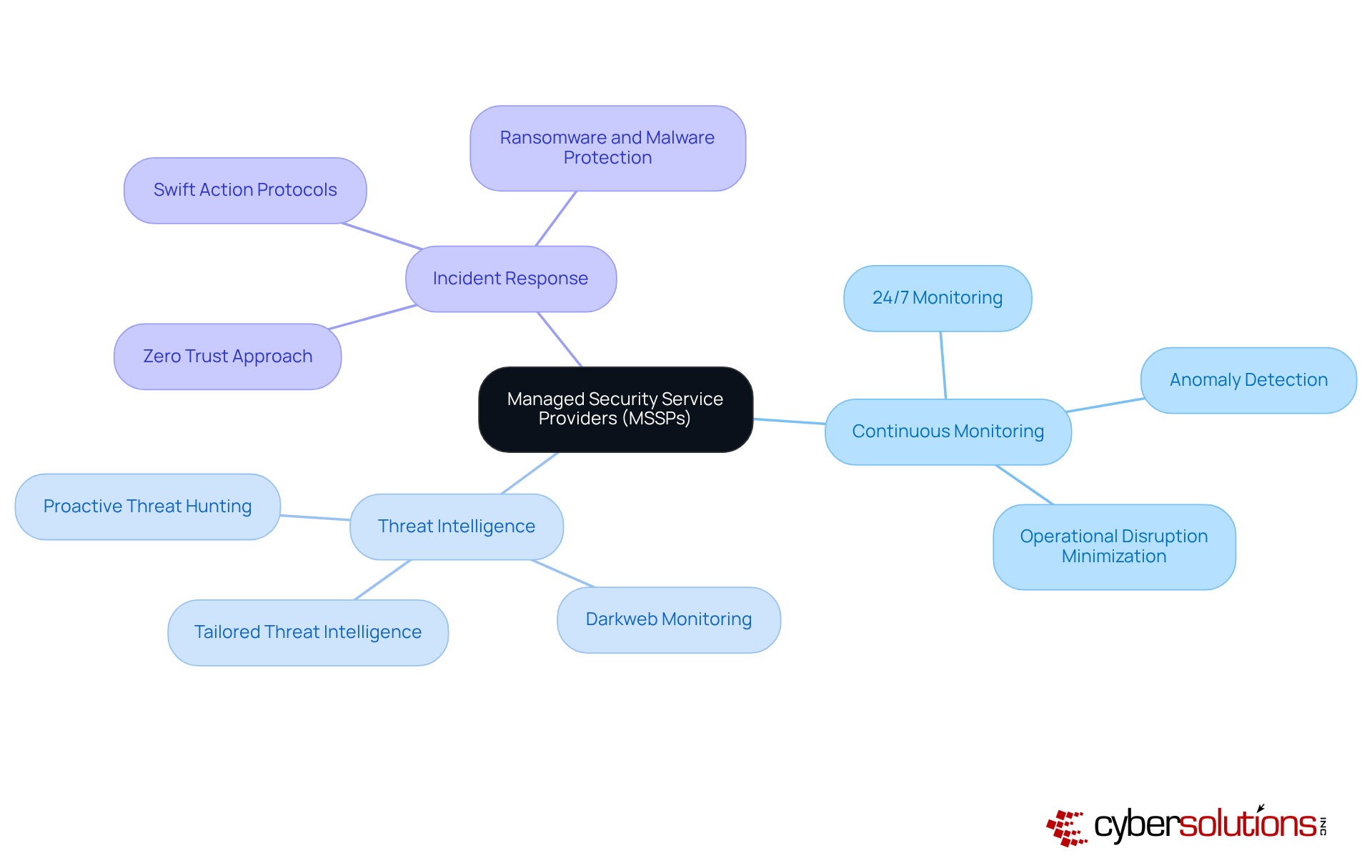
In today's digital landscape, the importance of cybersecurity in healthcare cannot be overstated. MSSPs provide essential services that include:
- Continuous monitoring
- Threat intelligence
- Incident response
Healthcare CFOs face unique challenges as they navigate an environment rife with cyber threats. By collaborating with MSSPs, organizations can leverage expert knowledge and advanced technologies to significantly enhance their security posture.
Our services are designed to ensure minimal operational disruption, particularly for healthcare entities, by adopting a proactive approach. With 24/7 network monitoring and instant alerts, we detect anomalies and potential vulnerabilities in real-time, enabling swift action to prevent downtime or breaches. This proactive strategy not only helps businesses stay ahead of cyber threats but also maximizes their cybersecurity investments, providing robust protection against ransomware, phishing, and other malware attacks.
Are you prepared to safeguard your organization against evolving threats? With MSSPs, you can confidently manage security, ensuring that your organization remains secure and resilient.
Co-Managed IT Support: Enhance Internal Teams with External Expertise
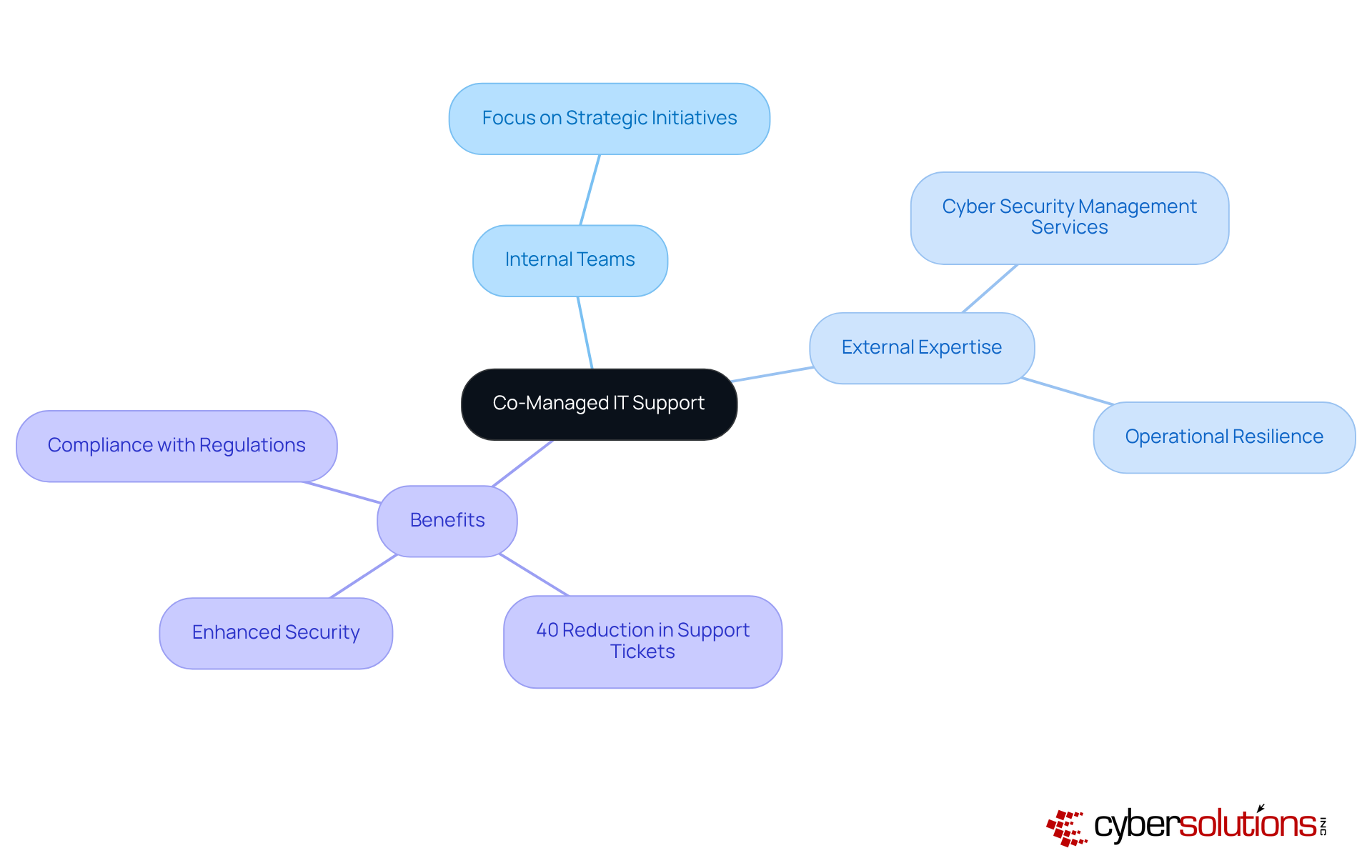
Co-Managed IT Support stands at the forefront of modern IT strategy, effectively merging the strengths of internal IT teams with the specialized expertise of external providers. This collaborative model empowers enterprises to scale without the burden of extensive hiring.
By leveraging external expertise through co-managed IT support, companies can significantly bolster their security protocols, optimize operations, and respond against cyber threats. Organizations that have embraced co-managed IT support have reported a remarkable 40% reduction in support tickets, showcasing improved efficiency.
Furthermore, this approach enables internal teams to concentrate on strategic initiatives while external partners manage high-volume tasks, ultimately fostering enhanced productivity. As cyber challenges grow increasingly sophisticated, leveraging co-managed IT support to integrate external expertise not only mitigates risks but also ensures compliance with industry regulations, underscoring its value as an essential component of contemporary business strategy.
Cybersecurity Training and Awareness: Empower Employees Against Threats
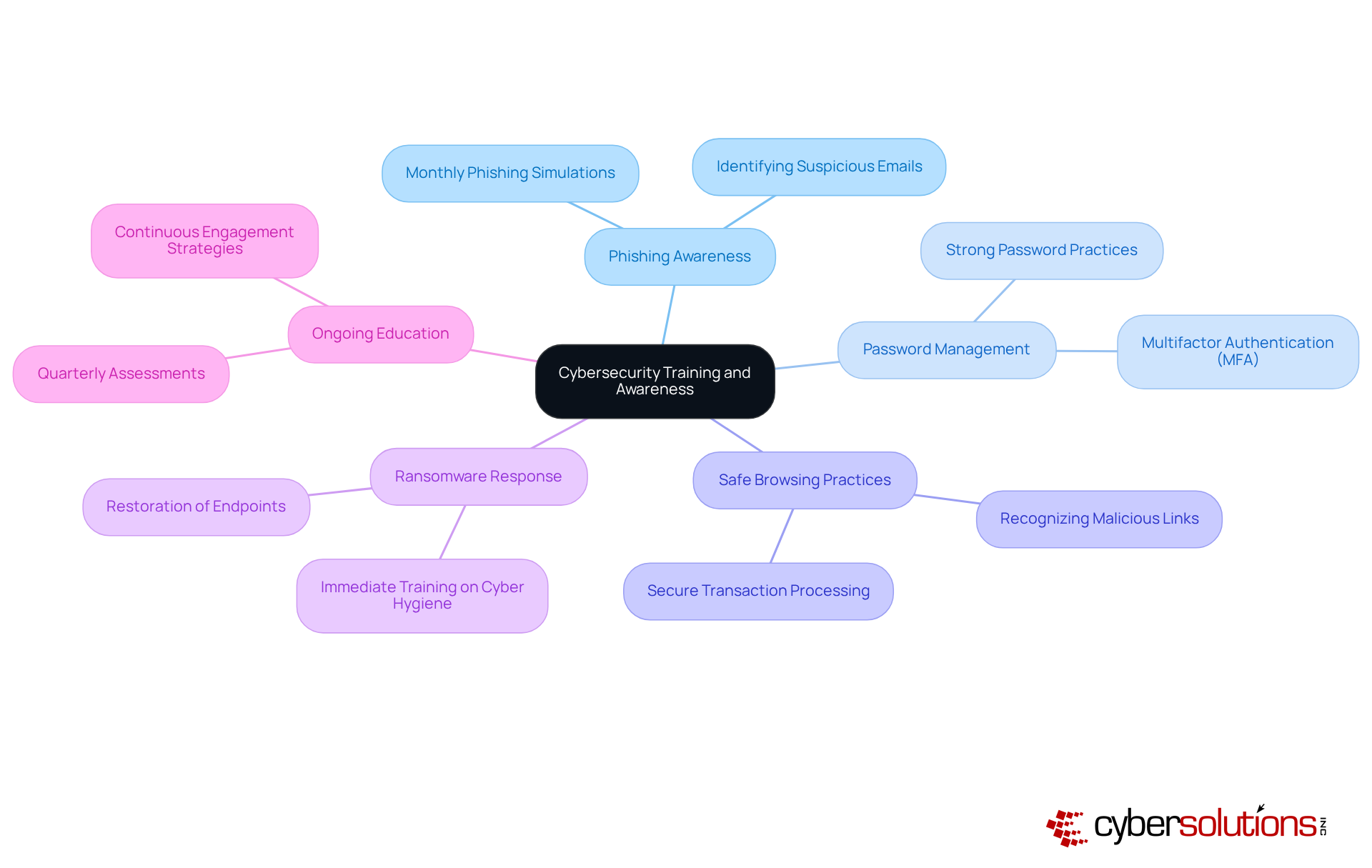
Training programs are essential for equipping employees with the knowledge to recognize and respond to potential threats. These initiatives cover critical topics such as cybersecurity policies, password management, and safe browsing practices. By empowering staff, organizations can significantly reduce the likelihood of cyber incidents stemming from human errors, thereby cultivating a robust culture of safety awareness.
Consider the incident response team, successfully restored 4,500 endpoints within two weeks. This achievement was made possible through immediate training on identifying suspicious emails and adhering to proper cybersecurity hygiene. Such an efficient response ensured that critical healthcare operations could continue with minimal downtime. The provider’s commitment to employee training, particularly with a focus on a proactive approach, underscores the importance of proactive protective strategies.
Moreover, organizations like Franciscan Alliance have implemented monthly phishing simulations and quarterly assessments, fostering continuous education and engagement among staff. This proactive methodology not only enhances awareness but also diminishes the likelihood of successful attacks.
A study from EDUCAUSE indicates that organizations with effective training programs experience a notable reduction in breaches. By measuring engagement and analyzing incident response rates, businesses can refine their training initiatives, ensuring they address the most pressing threats, as exemplified by the healthcare provider's experience.
As we approach Cybersecurity Awareness Month, themed 'Building a Cyber Strong America,' the necessity for training becomes increasingly evident, especially in sectors like healthcare and finance, where security measures are critical. Organizations must customize their training to align with specific business needs, ensuring employees are adequately prepared to safeguard sensitive information.
Ultimately, training not only protects the organization but also empowers employees to actively engage in the protection of digital assets, reinforcing the notion that cybersecurity is a collective responsibility.
Conclusion
In today's increasingly interconnected world, the importance of cybersecurity management services cannot be overstated. These services transcend mere protective measures; they represent essential strategies that empower businesses to adeptly navigate the complex landscape of digital threats. By embracing a comprehensive cybersecurity approach, organizations can bolster their resilience, protect sensitive data, and ensure operational continuity amidst evolving cyber risks.
Key aspects of effective cybersecurity management have been underscored, including:
- Endpoint protection
- Proactive threat detection
- Incident response planning
- Compliance as a service
Each of these components is vital in strengthening an organization's defenses. Regular vulnerability assessments, coupled with the integration of managed security service providers, further enhance security postures, equipping businesses to confront potential breaches and regulatory challenges with confidence.
Ultimately, the journey toward robust cybersecurity is a collective endeavor, necessitating not only advanced technologies but also a culture of awareness and preparedness among employees. Organizations are urged to invest in ongoing training and to leverage external expertise through co-managed IT support. This strategic investment fosters a resilient framework that not only defends against current threats but also adapts to future challenges. The proactive implementation of cybersecurity management services is not merely a safeguard; it is a strategic imperative for any organization aspiring to thrive in today's digital landscape.
Frequently Asked Questions
What services does Cyber Solutions Inc. offer for cybersecurity management?
Cyber Solutions Inc. provides a range of cybersecurity management services, including 24/7 help desk support, proactive monitoring, endpoint protection, threat detection, incident response, and Compliance as a Service (CaaS).
What is Compliance as a Service (CaaS) and what does it include?
CaaS simplifies the navigation of regulatory requirements by providing risk assessments, policy development, and ongoing compliance monitoring to ensure adherence to standards such as HIPAA, PCI-DSS, CMMC, SOX, and GDPR.
How does Cyber Solutions Inc. enhance operational efficiency?
By integrating various cybersecurity services, Cyber Solutions Inc. enhances protection, boosts operational efficiency, and ensures compliance with industry regulations, allowing organizations to focus on their core operations.
What percentage of IT budgets do organizations typically allocate to cybersecurity measures?
Organizations allocate an average of 12% of their IT budgets to cybersecurity measures, highlighting the essential need for investment in these services.
How is artificial intelligence being utilized in cybersecurity?
56% of businesses plan to leverage AI to train their cybersecurity professionals, indicating the growing importance of advanced technologies in maintaining a competitive edge in security management.
What is endpoint protection and why is it important?
Endpoint protection safeguards devices like laptops, desktops, and mobile devices against cyber risks. It includes traditional antivirus solutions and advanced threat detection capabilities, helping to mitigate risks from malware, ransomware, and zero-day attacks.
What is application allowlisting and how does it contribute to security?
Application allowlisting is a security measure that permits only pre-approved software to run on devices, proactively blocking unauthorized or malicious applications, thus significantly reducing the risk of malware and ransomware attacks.
How does threat detection work and what technologies are involved?
Threat detection services monitor network traffic and identify suspicious activities in real-time using advanced technologies such as machine learning and behavioral analytics to detect anomalies that may indicate a security breach.
Why is continuous monitoring important in cybersecurity?
Continuous monitoring is crucial for detecting unauthorized software activity and addressing potential vulnerabilities swiftly, which helps prevent downtime and mitigates the risk of breaches.
What is a zero-trust approach in cybersecurity?
A zero-trust approach involves consistently verifying device health and user identity to ensure that only trusted applications are allowed to run, thereby enhancing protection against cyber threats.
List of Sources
- Cyber Solutions Inc.: Comprehensive Cybersecurity Management Services
- discovercybersolutions.com (https://discovercybersolutions.com)
- Cybersecurity News and Analysis | Cybersecurity Dive (https://cybersecuritydive.com)
- discovercybersolutions.com (/cyber-security-news/cyber-solutions-acquires-clevertech)
- The Hacker News | #1 Trusted Source for Cybersecurity News (https://thehackernews.com)
- 205 Cybersecurity Stats and Facts for 2026 (https://vikingcloud.com/blog/cybersecurity-statistics)
- Endpoint Protection: Safeguard Devices from Cyber Threats
- solutionsreview.com (https://solutionsreview.com/endpoint-security/endpoint-security-and-network-monitoring-news-for-the-week-of-october-3rd)
- darkreading.com (https://darkreading.com/endpoint-security)
- solutionsreview.com (https://solutionsreview.com/endpoint-security/endpoint-security-and-network-monitoring-news-for-the-week-of-august-22nd)
- sentinelone.com (https://sentinelone.com/cybersecurity-101/endpoint-security/next-gen-endpoint-protection)
- federalnewsnetwork.com (https://federalnewsnetwork.com/commentary/2025/08/cisa-must-shift-cyber-defense-toward-a-holistic-endpoint-protection-and-prevention-strategy)
- Threat Detection: Proactively Identify Security Breaches
- prnewswire.com (https://prnewswire.com/news-releases/leidos-and-seetrue-collaborate-to-advance-ai-powered-threat-detection-technology-across-market-sectors-302384153.html)
- watchguard.com (https://watchguard.com/wgrd-news/press-releases/watchguard-supercharges-comprehensive-threat-detection-and-response-ai)
- sophos.com (https://sophos.com/en-us/press/press-releases/2025/10/sophos-launches-advisory-services)
- CrowdStrike 2026 Global Threat Report | Key Cyber Threat Trends (https://crowdstrike.com/en-us/global-threat-report)
- darktrace.com (https://darktrace.com/blog/2025-cyber-threat-landscape-darktraces-mid-year-review)
- Incident Response: Manage and Mitigate Cyber Incidents
- Incident Response Statistics to Know in 2025 (https://jumpcloud.com/blog/incident-response-statistics)
- cisa.gov (https://cisa.gov/news-events/news/cisa-releases-open-source-eviction-strategies-tool-cyber-incident-response)
- frsecure.com (https://frsecure.com/blog/incident-response-statistics-how-do-you-compare)
- cisa.gov (https://cisa.gov/news-events/alerts/2025/09/23/cisa-releases-advisory-lessons-learned-incident-response-engagement)
- Vulnerability Assessments: Identify and Address Security Weaknesses
- brightsec.com (https://brightsec.com/blog/the-critical-importance-of-vulnerability-assessments)
- thehackernews.com (https://thehackernews.com/2025/02/navigating-future-key-it-vulnerability.html)
- infosecurity-magazine.com (https://infosecurity-magazine.com/risk-and-vulnerability-assessment)
- thehackernews.com (https://thehackernews.com/search/label/Vulnerability)
- breachpoint.com (https://breachpoint.com/the-importance-of-vulnerability-scanning-for-cybersecurity)
- Compliance as a Service (CaaS): Navigate Regulatory Complexities
- compliancescorecard.com (https://compliancescorecard.com/2025/01/compliance-scorecard-releases-new-features-to-its-compliance-as-a-service-offering)
- ethisphere.com (https://ethisphere.com/ethics-and-compliance-issues-2025)
- kpmg.com (https://kpmg.com/us/en/media/news/key-regulatory-challenges-for-2025.html)
- transputec.com (https://transputec.com/blogs/compliance-challenges-in-2025)
- ncontracts.com (https://ncontracts.com/nsight-blog/august-regulatory-update)
- Backup and Disaster Recovery: Ensure Business Continuity
- us.sios.com (https://us.sios.com/blog/importance-of-disaster-recovery-planning-for-businesses)
- Disaster Recovery & Business Continuity Planning (https://centriconsulting.com/news/insights/be-prepared-why-a-disaster-recovery-and-business-continuity-plan-is-crucial-for-your-organization)
- thehackernews.com (https://thehackernews.com/2025/08/turning-bia-insights-into-resilient-recovery.html)
- egroup-us.com (https://egroup-us.com/news/disaster-recovery-2025-why-it-matters)
- netcentrix.com (https://netcentrix.com/news/the-importance-of-a-disaster-recovery-plan-for-business-continuity)
- Managed Security Service Providers (MSSPs): Ongoing Security Management
- infosecurity-magazine.com (https://infosecurity-magazine.com/managed-security-services)
- prnewswire.com (https://prnewswire.com/news-releases/claro-enterprise-solutions-wins-2025-cybersecurity-excellence-award-for-best-managed-security-service-provider-302447397.html)
- wicys.org (https://wicys.org/managed-security-services-provider-mssp-market-news)
- msspalert.com (https://msspalert.com)
- crn.com (https://crn.com/news/security/2025/blue-mantis-expands-into-full-scale-mssp-with-launch-of-mantis-protect-service)
- Co-Managed IT Support: Enhance Internal Teams with External Expertise
- ntiva.com (https://ntiva.com/blog/co-managed-it-for-businesses)
- itbuilder.co.uk (https://itbuilder.co.uk/blog/co-managed-it-support-uk-sme-rebuild)
- houstontech.com (https://houstontech.com/how-co-managed-it-services-empower-in-house-it-teams-not-replace-them)
- channelpronetwork.com (https://channelpronetwork.com/2025/06/18/how-to-win-over-skeptical-internal-it-teams-and-boost-co-managed-services)
- bradenonline.com (https://bradenonline.com/how-co-managed-it-empowers-growing-teams)
- Cybersecurity Training and Awareness: Empower Employees Against Threats
- Home | IP Pathways (https://ippathways.com/the-importance-of-cybersecurity-training-for-employees)
- er.educause.edu (https://er.educause.edu/articles/2025/10/stay-aware-stay-secure-cybersecurity-awareness-month-2025)
- microsoft.com (https://microsoft.com/en-us/security/blog/2025/10/01/cybersecurity-awareness-month-security-starts-with-you)
- infosecurity-magazine.com (https://infosecurity-magazine.com/security-training-and-awareness)
- cisa.gov (https://cisa.gov/news-events/news/dhs-and-cisa-announce-cybersecurity-awareness-month-2025)