
Introduction
In a world where cyber threats loom larger than ever, healthcare CFOs find themselves at a critical juncture, grappling with the dual imperatives of safeguarding sensitive patient data and managing tight budgets. With a staggering 88% of medical institutions experiencing cyberattacks in the past year alone, the stakes have never been higher.
This article delves into essential cybersecurity strategies tailored specifically for small and medium-sized healthcare businesses, offering CFOs a roadmap to not only protect their organizations but also enhance operational efficiency.
How can these leaders effectively navigate the complex landscape of cybersecurity while ensuring compliance and maintaining patient trust? The urgency of addressing these challenges cannot be overstated.
Cyber Solutions Inc.: Comprehensive Cybersecurity Services for SMBs
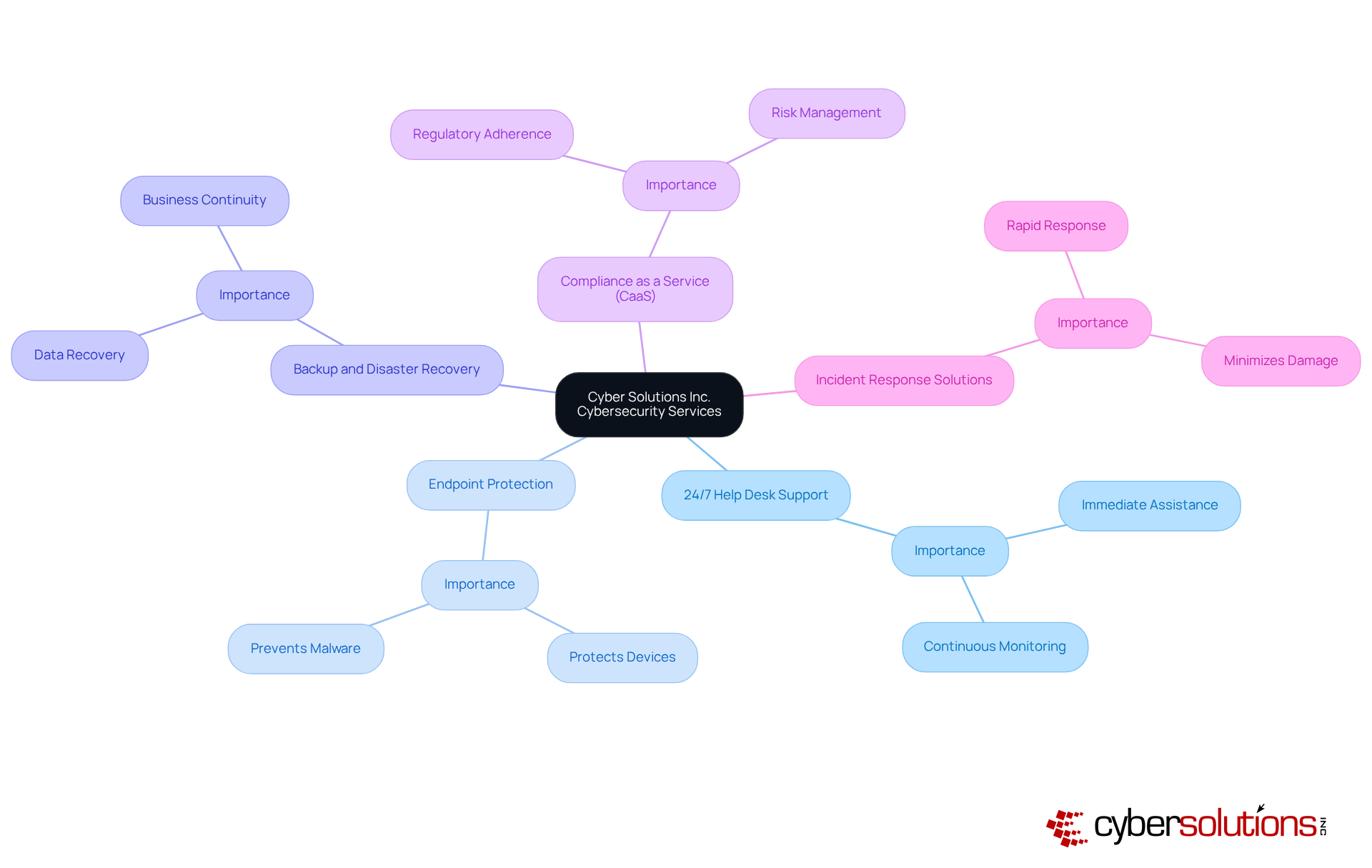
Cyber Solutions Inc. delivers a comprehensive suite of cybersecurity services meticulously designed for small and medium-sized businesses (SMBs) operating within the medical sector. Among our key offerings are:
These services are vital for healthcare organizations and ensuring compliance with rigorous regulations such as HIPAA, PCI-DSS, and GDPR. With 88% of medical institutions reporting at least one cyber assault in the past year and cyberattacks affecting over 100 million individuals in 2023, the urgency for cybersecurity measures has never been more pronounced.
Healthcare CFOs face the dual challenge of shielding their organizations from cyber threats while managing operational costs. The average cost of a medical data breach reached $9.8 million in 2024, despite a 10.6% decrease from the previous year, underscoring the financial impact of breaches. By adopting comprehensive strategies, including proactive incident response strategies, medical facilities can significantly bolster their security posture while realizing considerable cost savings. For example, Cyber Solutions' clients employing AI and automation tools have successfully detected and contained incidents 98 days faster than average, resulting in lower recovery expenses.
Moreover, as the risk landscape continues to shift, it is imperative for CFOs to remain informed about emerging trends. The proliferation of ransomware attacks, which have targeted 74% of hospitals in recent years, underscores the pressing need for proactive measures. Industry experts assert that investing in cybersecurity transcends mere choice; it is an ethical obligation to protect patient information and uphold trust. By leveraging tailored cybersecurity strategies, including effective CaaS and robust incident response, CFOs in the medical sector can adeptly navigate these challenges, ensuring their organizations remain resilient against rising cyber threats. Additionally, our flat-rate pricing model simplifies budgeting, enabling organizations to manage their expenses without unexpected costs.
Endpoint Protection: Safeguard Your Business from Cyber Threats
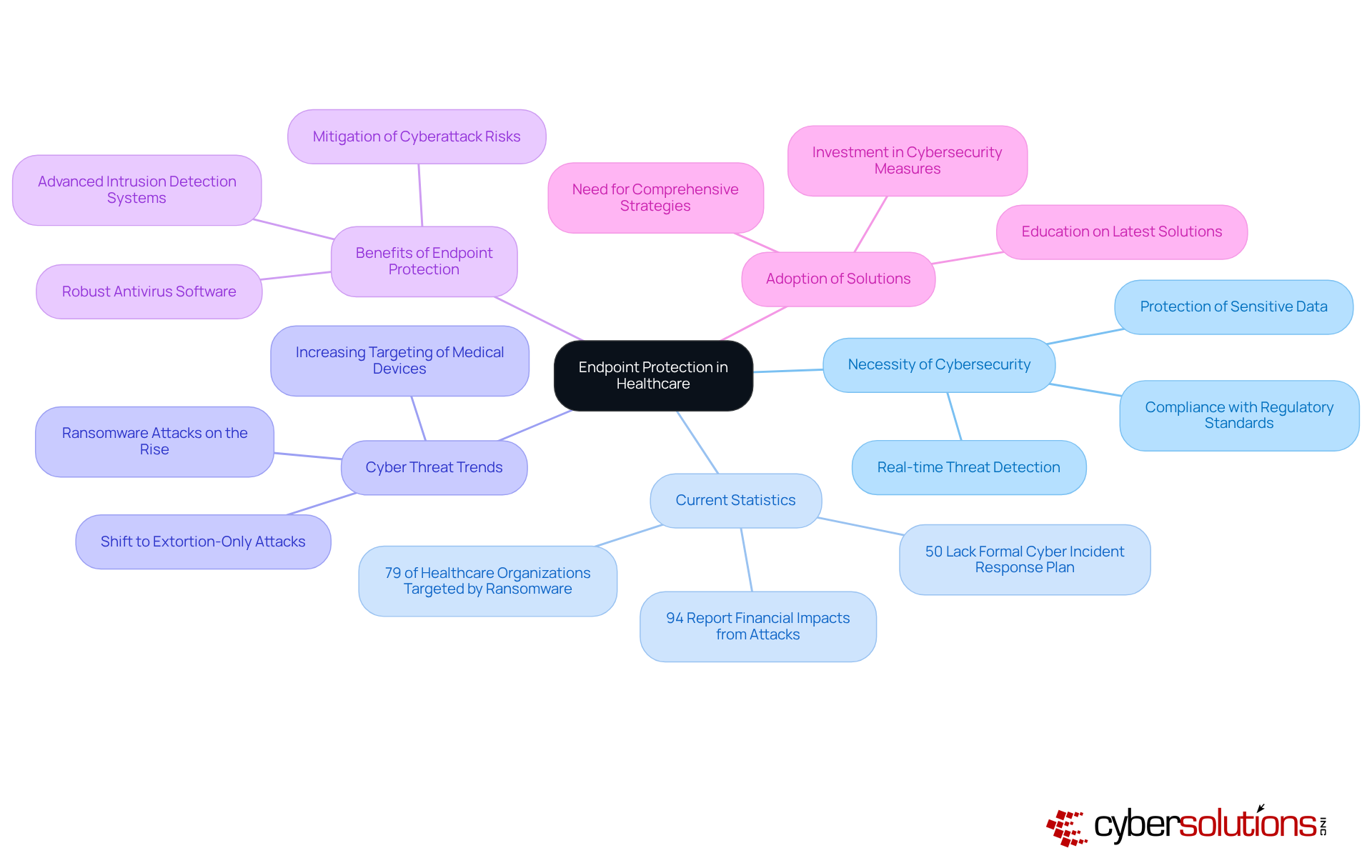
In today's healthcare landscape, cybersecurity is not just an option; it is a necessity. Endpoint protection solutions are crucial for securing devices within your network, particularly in the medical field where sensitive data is perpetually at risk. These solutions not only detect but also respond to threats in real-time, significantly mitigating the risk of cyberattacks. For instance, implementing robust antivirus software and firewalls can drastically reduce vulnerabilities.
Consider this: half of medical institutions lack a formal cybersecurity strategy. This alarming statistic underscores the importance of emphasizing endpoint protection, especially for CFOs who are tasked with safeguarding financial and patient information. Recent trends indicate that assailants are increasingly targeting medical devices, with 79% of medical entities reporting ransomware attacks in the past year.
By adopting comprehensive cybersecurity measures, healthcare entities can enhance their security posture and ensure patient safety. This proactive approach not only protects sensitive information but also maintains operational integrity. Furthermore, as the landscape of cyber threats evolves, it is crucial for small to medium-sized enterprises in the medical field to remain informed about the latest security developments. By doing so, they can effectively address these challenges and secure their vital assets.
Threat Detection: Proactively Identify and Mitigate Risks
Effective threat detection is paramount for healthcare entities, underscoring the necessity for organizations to identify potential threats. The implementation of Information and Event Management (SIEM) systems provides real-time insights into security measures, enabling organizations to respond swiftly to incidents. This proactive strategy not only mitigates potential damage but also ensures adherence to stringent regulations, including compliance requirements.
Organizations utilizing SIEM systems have reported a significant improvement, achieving resolutions of threat events up to 40% faster. Expert opinions affirm that advanced technologies enhance threat detection capabilities, allowing service providers to stay ahead of evolving threats. Successful applications across various medical environments have demonstrated improved detection rates and a marked decrease in the impact of breaches, highlighting the critical role of these systems in safeguarding sensitive patient information.
As cyberattacks continue to escalate, with medical institutions facing an average of 2.91 phishing attempts per user in 2024, the integration of cybersecurity solutions becomes increasingly vital for maintaining robust SMB security. Moreover, entities should consider tailored remediation strategies and support services, including virtual CISO services, to enhance their cybersecurity posture.

Incident Response Planning: Minimize Damage and Recovery Time
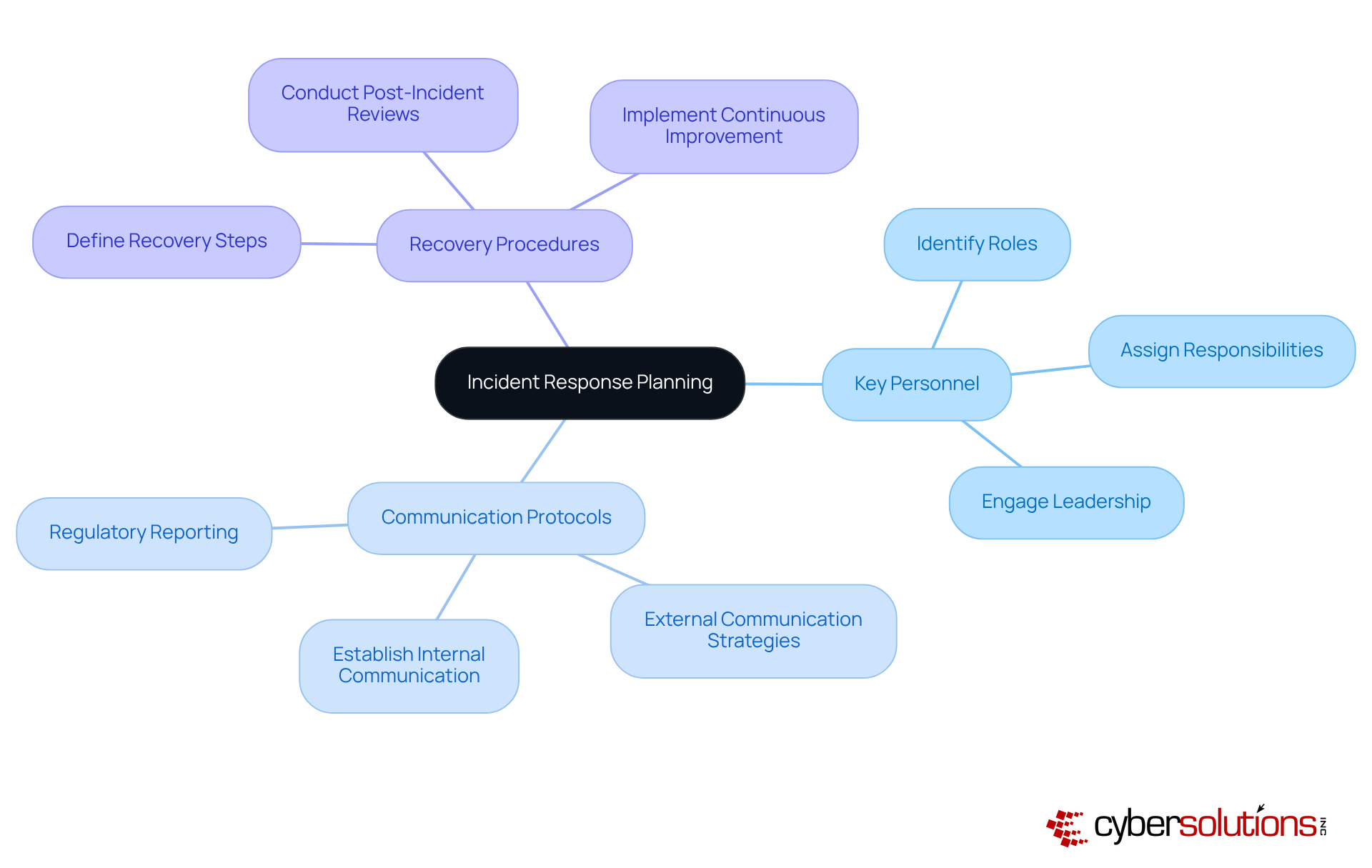
A successful strategy is paramount for medical entities aiming to manage incidents effectively. This plan must clearly delineate the necessary steps, including:
- The identification of key personnel
- The establishment of communication protocols
- The definition of recovery procedures
Given that a structured response can significantly mitigate damage. Consider this: timely action is critical.
Furthermore, the typical recovery duration from breaches in medical facilities is alarmingly prolonged, with entities taking an average of 258 days to identify and manage a breach. However, those equipped with a response plan can act swiftly, minimizing downtime and ensuring that patient care remains uninterrupted during crises.
Real-world examples demonstrate that medical entities employing incident response strategies can decrease response times by 30% and avert secondary breaches resulting from mismanaged efforts. By prioritizing planning and leveraging expert advice, CFOs in the medical sector can safeguard their institutions against the escalating risk landscape while maintaining trust with patients.
Additionally, integrating user manuals for achieving compliance and sustaining security into the strategy is crucial for ensuring that all regulatory obligations are met, thereby enhancing the entity's resilience against cyber risks.
Vulnerability Assessments: Identify and Address Security Weaknesses
Regular assessments are essential for medical institutions, serving as a proactive measure to detect and address security flaws before they can be exploited. Alarmingly, statistics reveal that only a fraction of healthcare organizations consistently perform these evaluations, leaving them vulnerable to SMB cybersecurity risks. Effective assessments must integrate automated scans with manual testing to guarantee comprehensive coverage of potential vulnerabilities. Notably, entities such as Ascension Health have faced significant breaches, underscoring the severe consequences of overlooking this essential practice.
Expert opinions reinforce the necessity of conducting vulnerability assessments as a cornerstone of a robust cybersecurity strategy. Cybersecurity architect Mohammed Khalil asserts that vulnerability management is vital for establishing a resilient defense against evolving threats. By promptly addressing vulnerabilities, healthcare entities can dramatically reduce their risk of data breaches, which, in 2025, averaged $7.42 million per incident, while also ensuring patient trust.
To conduct effective assessments, organizations should follow a structured approach:
- Regularly scheduled assessments to stay ahead of emerging threats.
- Comprehensive scanning tools that cover all aspects of the IT environment.
- Manual testing to identify complex vulnerabilities that automated tools may overlook.
- Ongoing observation and reassessment of protective measures to adapt to new threats.
By implementing these strategies, medical entities can not only improve their security but also enhance their overall security posture, ensuring compliance and resilience in an increasingly regulated environment.

Compliance as a Service (CaaS): Navigate Regulatory Complexities
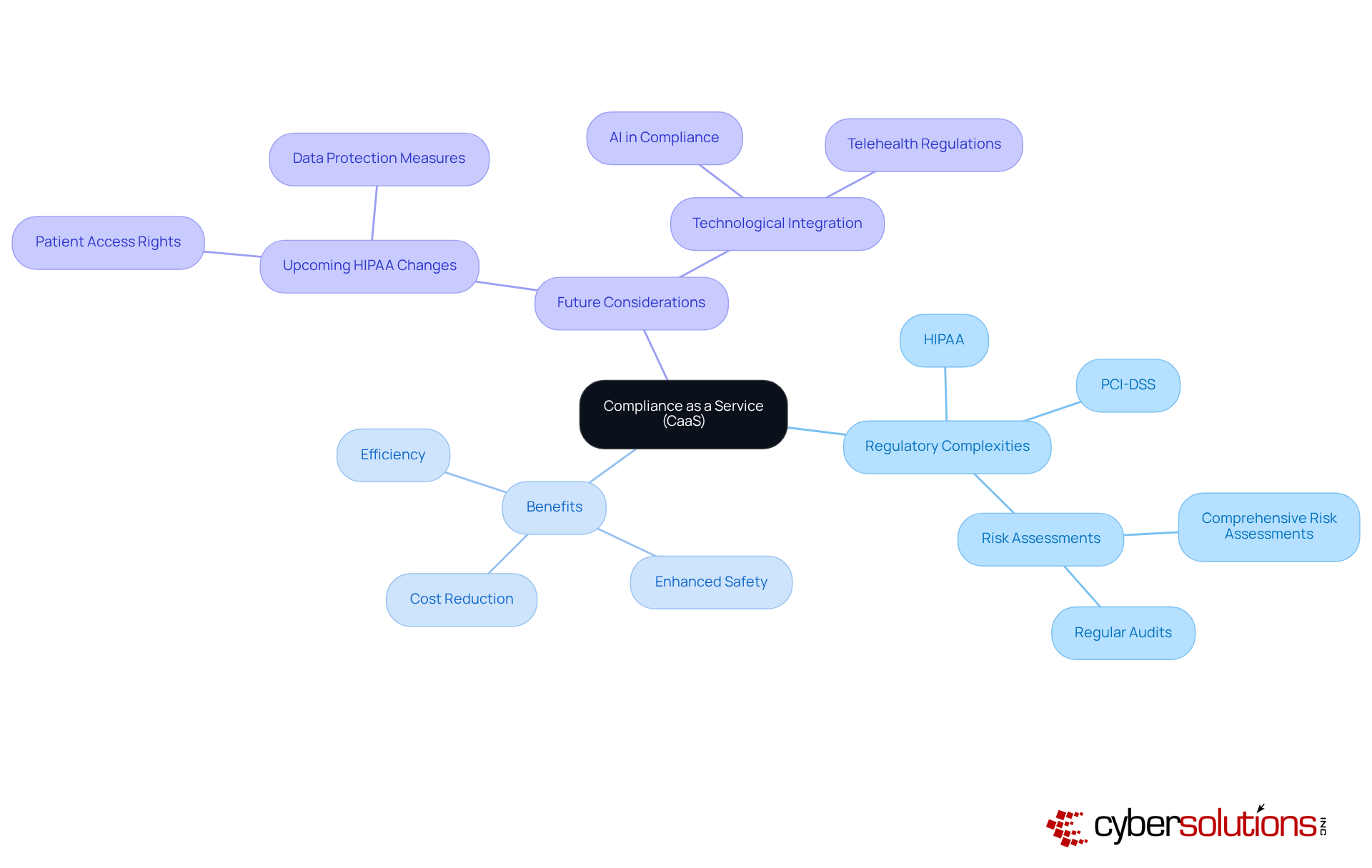
In the healthcare sector, navigating the complexities of regulatory requirements is more critical than ever. Compliance as a Service equips healthcare entities with the essential tools and expertise needed to adeptly manage these challenges. By outsourcing compliance management, organizations can effectively meet vital standards such as HIPAA, alleviating the necessity for an in-house compliance team. This strategic approach not only reduces operational expenses but also significantly enhances safety and efficiency.
Consider this: healthcare providers can conduct audits in less than 30 days, ensuring they remain compliant with evolving regulations. With new regulations set to take effect in 2025—introducing improved patient access rights and stricter data protection measures—the utilization of CaaS becomes increasingly paramount. Organizations that have successfully implemented CaaS have reported reduced risks and diminished compliance costs.
Expert insights reveal a compelling perspective: viewing compliance as a strategic investment, rather than a mere expense, can lead to substantial long-term savings. This is particularly relevant when considering the high costs associated with potential breaches. By adopting CaaS, medical entities can focus on delivering quality care while confidently managing their compliance responsibilities.
Backup and Disaster Recovery: Ensure Business Continuity
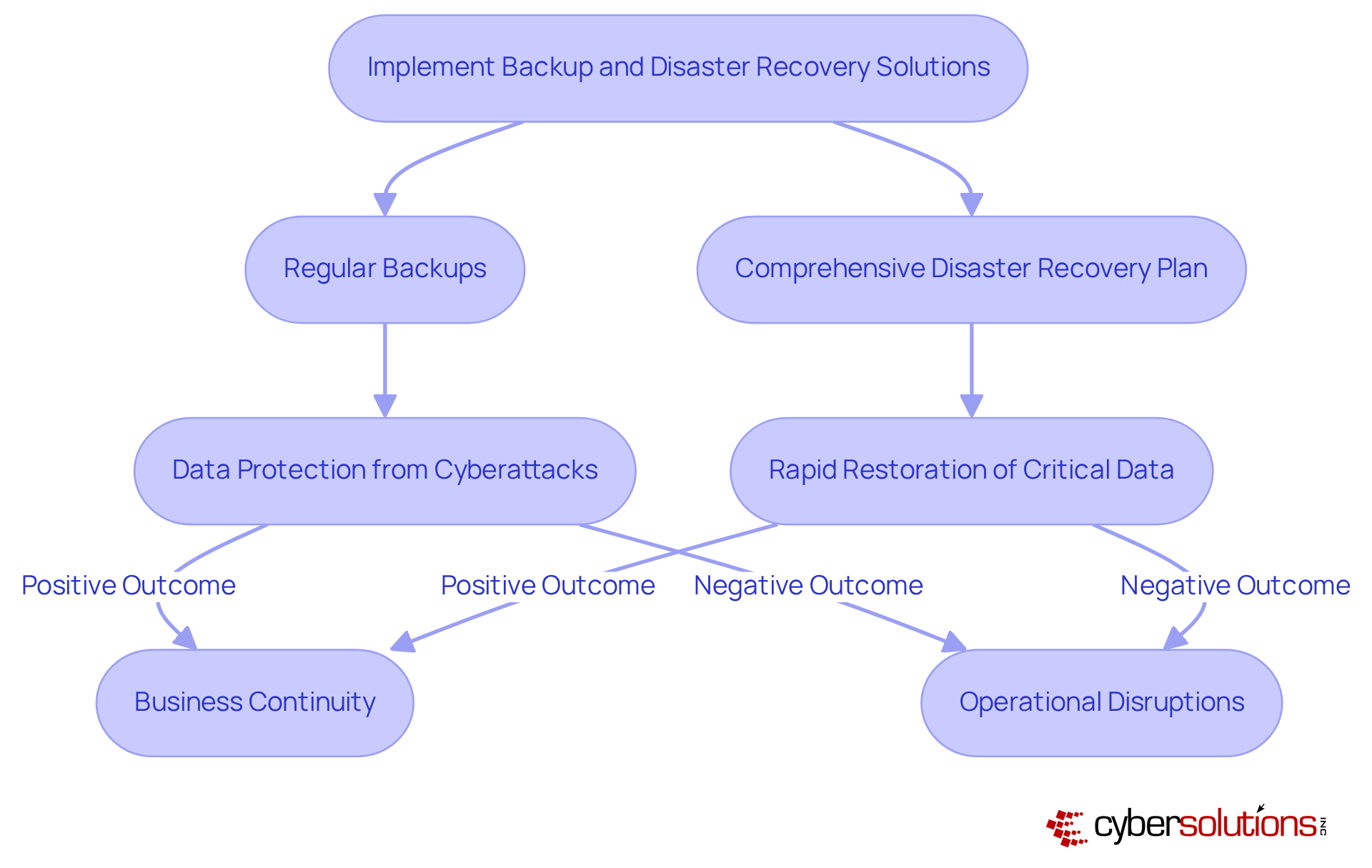
In today's digital landscape, implementing robust cybersecurity solutions is not just advisable but essential for medical institutions. Preparing for system failures is paramount. Regularly scheduled backups, paired with a comprehensive disaster recovery plan, facilitate the rapid restoration of critical data, significantly reducing downtime and mitigating financial repercussions.
Alarmingly, medical institutions without proper planning experience challenges during incidents, leading to substantial operational and compliance risks. The Change Healthcare cyberattack, which compromised sensitive information from up to 190 million individuals, underscores the urgent need for effective cybersecurity measures.
Therefore, healthcare CFOs must prioritize these solutions as part of their strategic planning. By doing so, they can ensure business continuity in an increasingly volatile digital environment.
Firewalls: Protect Your Network from Unauthorized Access
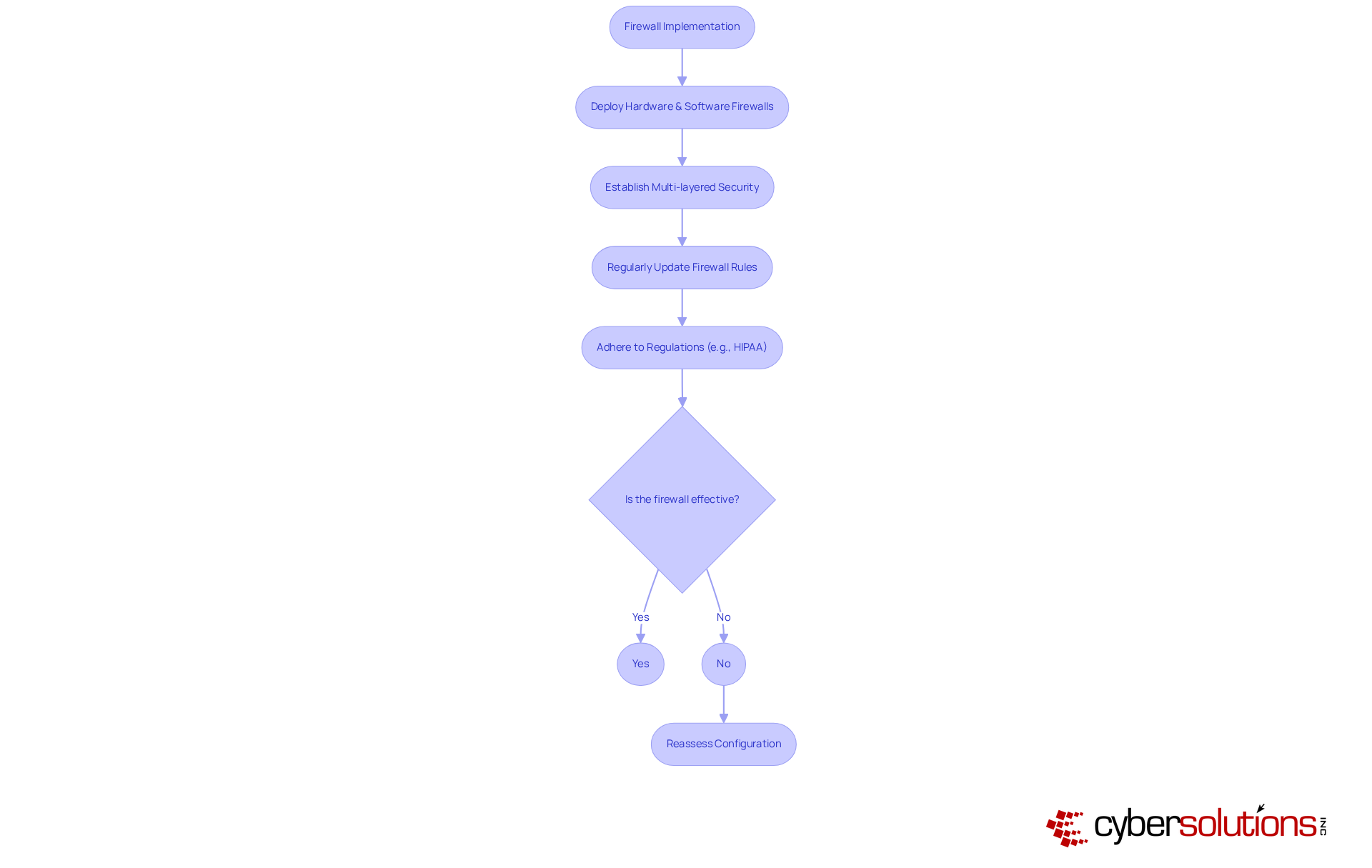
Firewalls are not just a component but a cornerstone of cybersecurity for medical networks, safeguarding against unauthorized access and cyber threats. By deploying both hardware and software firewalls, businesses can establish a multi-layered security framework that effectively blocks malicious traffic. This approach is particularly vital in the medical field, where sensitive patient data is at risk. Did you know that 92% of healthcare organizations experienced a cyber attack in the past year? This statistic underscores the necessity of robust defenses.
To maintain optimal protection against evolving threats, it is essential to update firewall rules and configurations. This proactive step not only improves safety but also guarantees compliance with regulations, which mandates the protection of patient information. Successful instances abound, with medical entities utilizing firewalls to prevent unauthorized access and mitigate risks linked to data breaches. In fact, entities utilizing firewalls have reported significant enhancements in their security posture, allowing them to concentrate on patient care rather than cybersecurity issues.
Moreover, firewalls play a crucial role in ensuring data security, which often face unique challenges due to limited resources. By implementing effective firewall solutions, these entities can significantly reduce their vulnerability to cyber threats, ensuring the confidentiality and integrity of patient data. As the medical industry continues to invest heavily in cybersecurity—projected to reach $5.61 billion by 2025—the importance of firewalls cannot be overstated.
Managed Security Service Providers (MSSPs): Ongoing Cybersecurity Support
In today's digital landscape, the importance of cybersecurity cannot be overstated. Partnering with a Managed Security Service Provider (MSSP) equips healthcare organizations with essential ongoing cybersecurity support and expertise. MSSPs offer a comprehensive range of services, including:
- Round-the-clock monitoring
- Threat identification
- Incident management
- Compliance documentation
- Risk evaluations
These are critical components for sustaining robust protective measures. This collaboration proves particularly advantageous for small and medium-sized businesses (SMBs) that often struggle with cybersecurity due to limited resources for an in-house security team.
Recent trends indicate that approximately 45% of medical SMBs are now leveraging MSSPs to bolster their cybersecurity posture, recognizing the necessity for specialized assistance in an increasingly complex risk environment. By utilizing MSSPs, medical organizations can ensure that their security needs are addressed effectively and efficiently, allowing them to focus on their core operations. Expert opinions emphasize that MSSPs not only enhance protection but also foster a culture of resilience against evolving cyber threats.
A significant example of this is a recent case where an MSSP assisted a medical provider in recovering from a ransomware attack. By implementing robust security measures, they successfully protected patient data and operations. This strategic choice is especially beneficial for healthcare CFOs who are tasked with managing budgets and maintaining compliance in a challenging regulatory landscape.
Conclusion
In the realm of healthcare, the imperative for robust cybersecurity measures cannot be overstated, particularly for small and medium-sized businesses (SMBs). As healthcare CFOs grapple with the dual challenge of protecting sensitive patient data while managing operational costs, implementing comprehensive cybersecurity strategies emerges as a critical necessity. The escalating frequency and sophistication of cyberattacks highlight the ethical obligation of healthcare organizations to prioritize cybersecurity, ensuring patient trust and regulatory compliance.
This article has outlined essential strategies for enhancing cybersecurity within healthcare SMBs, including:
- The significance of endpoint protection
- Proactive threat detection
- Incident response planning
- Vulnerability assessments
- Compliance as a Service (CaaS)
- The vital role of Managed Security Service Providers (MSSPs)
Each of these components plays a crucial role in building a resilient cybersecurity framework capable of withstanding the ever-evolving threat landscape. Moreover, the financial implications of data breaches further emphasize the need for strategic investment in cybersecurity solutions that not only mitigate risks but also promote operational efficiency.
Ultimately, the responsibility lies with healthcare CFOs to cultivate a culture of cybersecurity awareness and resilience within their organizations. By embracing these strategies and leveraging expert resources, healthcare entities can navigate the complexities of cybersecurity, ensuring the protection of patient information and compliance with regulatory standards. The time to act is now; safeguarding sensitive data is not merely a choice but a foundational element of healthcare excellence and patient trust in an increasingly digital world.
Frequently Asked Questions
What services does Cyber Solutions Inc. offer for small and medium-sized businesses (SMBs) in the medical sector?
Cyber Solutions Inc. offers a comprehensive suite of cybersecurity services, including 24/7 help desk support, endpoint protection, backup and disaster recovery, compliance as a service (CaaS), and incident response solutions.
Why is cybersecurity important for medical institutions?
Cybersecurity is crucial for medical institutions to safeguard sensitive patient data and ensure compliance with regulations such as HIPAA, PCI-DSS, and GDPR. With a high percentage of medical institutions experiencing cyberattacks, robust cybersecurity protocols are essential.
What are the financial implications of inadequate cybersecurity in the medical field?
The average cost of a medical data breach reached $9.8 million in 2024, highlighting the significant financial ramifications of inadequate cybersecurity measures.
How can managed IT and cybersecurity services benefit medical facilities?
By adopting managed IT and cybersecurity services, medical facilities can enhance their security posture, reduce recovery expenses, and achieve faster incident detection and containment.
What is the significance of endpoint protection in healthcare cybersecurity?
Endpoint protection is vital for securing devices within a network, as it detects and responds to threats in real-time, significantly mitigating the risk of cyberattacks in the medical field.
What percentage of medical institutions lack a formal cyber incident response strategy?
Half of medical institutions lack a formal cyber incident response strategy, emphasizing the need for robust endpoint protection.
How do SIEM systems contribute to threat detection in healthcare organizations?
SIEM systems provide real-time insights into network activity, allowing organizations to identify potential threats and respond swiftly, thereby reducing incident response times by up to 40%.
What is the average number of phishing attempts faced by medical institutions in 2024?
Medical institutions face an average of 2.91 phishing attempts per user in 2024, highlighting the increasing need for effective cybersecurity measures.
How can CFOs in the medical sector navigate cybersecurity challenges?
CFOs can navigate cybersecurity challenges by leveraging tailored cybersecurity strategies, including effective CaaS and robust incident response, to protect patient information and maintain organizational resilience.
What pricing model does Cyber Solutions Inc. offer for its services?
Cyber Solutions Inc. offers a flat-rate pricing model, which simplifies budgeting and helps organizations manage their cybersecurity expenses without unexpected costs.
List of Sources
- Cyber Solutions Inc.: Comprehensive Cybersecurity Services for SMBs
- fortune.com (https://fortune.com/2025/09/29/cybersecurity-professionals-under-pressure-ai-amid-rising-threats-cfo)
- 38 Must-Know Healthcare Cybersecurity Stats (https://varonis.com/blog/healthcare-cybersecurity-statistics)
- getastra.com (https://getastra.com/blog/security-audit/small-business-cyber-attack-statistics)
- isaca.org (https://isaca.org/resources/news-and-trends/industry-news/2025/healthcares-growing-threat-landscape)
- prnewswire.com (https://prnewswire.com/news-releases/small-business-cyberattack-surge-attacks-nearly-double-in-2025-guardz-reports-302560327.html)
- Endpoint Protection: Safeguard Your Business from Cyber Threats
- isgtech.com (https://isgtech.com/five-critical-cyber-stats-every-healthcare-leader-must-know)
- aha.org (https://aha.org/change-healthcare-cyberattack-underscores-urgent-need-strengthen-cyber-preparedness-individual-health-care-organizations-and)
- hipaajournal.com (https://hipaajournal.com/cybersecurity-news)
- expertinsights.com (https://expertinsights.com/endpoint-security/50-endpoint-security-stats-you-should-know)
- ama-assn.org (https://ama-assn.org/topics/cybersecurity)
- Threat Detection: Proactively Identify and Mitigate Risks
- Top Cybersecurity Statistics: Facts, Stats and Breaches for 2025 (https://fortinet.com/resources/cyberglossary/cybersecurity-statistics)
- censinet.com (https://censinet.com/perspectives/2025-healthcare-cybersecurity-tools-comparison)
- 38 Must-Know Healthcare Cybersecurity Stats (https://varonis.com/blog/healthcare-cybersecurity-statistics)
- Healthcare Cybersecurity Challenges & Threats - 2025 (https://rubrik.com/insights/healthcare-cybersecurity-challenges-threats-2025)
- acecloudhosting.com (https://acecloudhosting.com/blog/cybersecurity-quotes)
- Incident Response Planning: Minimize Damage and Recovery Time
- dialoghealth.com (https://dialoghealth.com/post/healthcare-cybersecurity-statistics)
- Incident Response Statistics to Know in 2025 (https://jumpcloud.com/blog/incident-response-statistics)
- compliancy-group.com (https://compliancy-group.com/june-2025-healthcare-data-breaches-affected-7-1m)
- bluesight.com (https://bluesight.com/news/major-healthcare-data-security-trends-in-2025)
- transunion.com (https://transunion.com/blog/healthcare-incident-response)
- Vulnerability Assessments: Identify and Address Security Weaknesses
- getastra.com (https://getastra.com/blog/security-audit/healthcare-data-breach-statistics)
- dialoghealth.com (https://dialoghealth.com/post/healthcare-cybersecurity-statistics)
- deepstrike.io (https://deepstrike.io/blog/healthcare-data-breaches-2025-statistics)
- healthcareittoday.com (https://healthcareittoday.com/2024/09/30/the-importance-of-vulnerability-assessment-to-healthcare-cloud-security)
- Compliance as a Service (CaaS): Navigate Regulatory Complexities
- centraleyes.com (https://centraleyes.com/how-the-new-hipaa-regulations-2025-will-impact-healthcare-compliance)
- medtrainer.com (https://medtrainer.com/blog/navigating-2025-healthcare-regulatory-changes)
- compliancebridge.com (https://compliancebridge.com/4-quote-that-underscore-importance-of)
- shccares.com (https://shccares.com/blog/workforce-solutions/healthcare-compliance-trends)
- Backup and Disaster Recovery: Ensure Business Continuity
- digacore.com (https://digacore.com/blog/real-time-data-backup-healthcare-cost-value)
- dbtech.com (https://dbtech.com/8-shocking-downtime-stats-in-healthcare-and-how-to-avoid-them)
- Data Loss Statistics In The US In 2025 / Infrascale (https://infrascale.com/data-loss-statistics-usa)
- solutionsreview.com (https://solutionsreview.com/backup-disaster-recovery/world-backup-day-quotes-from-experts-for-2025)
- ipfabric.io (https://ipfabric.io/blog/the-cost-of-network-downtime-in-healthcare)
- Firewalls: Protect Your Network from Unauthorized Access
- nordlayer.com (https://nordlayer.com/blog/firewall-hipaa-compliance)
- The importance of firewalls in healthcare security (https://paubox.com/blog/firewall-healthcare)
- dialoghealth.com (https://dialoghealth.com/post/healthcare-cybersecurity-statistics)
- healthtechmagazine.net (https://healthtechmagazine.net/article/2025/08/next-generation-firewalls-in-healthcare-cybersecurity-perfcon)
- Healthcare Cybersecurity Statistics 2024 (https://ispartnersllc.com/blog/healthcare-cybersecurity-statistics)
- Managed Security Service Providers (MSSPs): Ongoing Cybersecurity Support
- ninjaone.com (https://ninjaone.com/blog/smb-cybersecurity-statistics)
- scoop.market.us (https://scoop.market.us/managed-security-services-statistics)
- sqmagazine.co.uk (https://sqmagazine.co.uk/cyber-threat-statistics)
- 205 Cybersecurity Stats and Facts for 2026 (https://vikingcloud.com/blog/cybersecurity-statistics)
- bluesight.com (https://bluesight.com/news/major-healthcare-data-security-trends-in-2025)