Introduction
In today’s digital landscape, dark web security monitoring has become essential for organizations grappling with the complexities of modern cybersecurity threats. C-suite leaders can gain invaluable insights by mastering the art of monitoring these hidden online spaces, where stolen data and sensitive information are exchanged among cybercriminals.
But with the alarming rise in illicit web threats, a pressing question arises: how can executives ensure their organizations are not only aware of these risks but also equipped to counteract them?
This article explores vital practices and strategies that empower leaders to strengthen their defenses against the ever-evolving dangers lurking in the dark web.
Understand Dark Web Monitoring and Its Importance
Dark web security monitoring is crucial for C-suite leaders, as it involves the continuous surveillance of illicit online spaces where stolen data, credentials, and sensitive information are traded. Understanding this concept is essential, as it directly impacts an organization’s risk profile. The concealed web is a breeding ground for cybercriminals who exploit vulnerabilities to access corporate data. With a significant portion of entities expected to be affected by illicit web threats in 2026, the urgency of addressing this issue cannot be overstated.
By employing deep web surveillance, companies can proactively detect compromised information before it escalates into serious breaches. This not only protects their reputation but also ensures financial stability. Such a proactive approach reduces risks and meets compliance requirements, keeping organizations vigilant against evolving cyber threats. Case studies reveal that organizations with breached credentials found on the hidden web face a 2.56 times greater risk of experiencing a cyberattack. This statistic underscores the necessity for robust strategies in dark web security monitoring.
Expert opinions further emphasize that effective risk management in today’s digital landscape requires a comprehensive understanding of underworld web activities and their potential impact on corporate security. As cyber threats continue to evolve, it’s imperative for executives to stay informed and take decisive action to safeguard their organizations.

Identify Key Features of Effective Dark Web Monitoring Solutions
When it comes to safeguarding your organization against the lurking threats of the dark web, C-suite leaders must prioritize several key features in monitoring solutions:
- Comprehensive Coverage: A robust solution should scan a wide array of dark web sources - forums, marketplaces, and social media platforms - to ensure that no potential threat slips through the cracks. This extensive reach is vital, as different sectors face unique exposures that require tailored oversight strategies.
- Ongoing Real-Time Alerts: Efficient tracking tools deliver prompt notifications when sensitive information is identified, enabling organizations to respond swiftly to potential breaches. Continuous monitoring significantly minimizes operational downtime and allows for rapid incident response, which is essential for mitigating risks.
- Actionable Intelligence: The capability to transform raw data into actionable insights is crucial. Solutions should provide context around detected threats, empowering informed decision-making and proactive measures against emerging risks.
- Integration Capabilities: The monitoring solution must seamlessly integrate with existing cybersecurity frameworks, bolstering the overall security posture of the organization. This integration is key to effectively leveraging deep web intelligence and ensuring comprehensive protection.
- User-Friendly Dashboard: An intuitive interface allows security teams to navigate and interpret data effortlessly, facilitating quicker responses to threats. A user-friendly dashboard enhances operational efficiency and empowers teams to act decisively.
By focusing on these critical aspects, executives can ensure they select a solution that effectively mitigates risks associated with dark web security monitoring, ultimately safeguarding their organizations against evolving cyber threats.

Implement Best Practices for Dark Web Security Monitoring
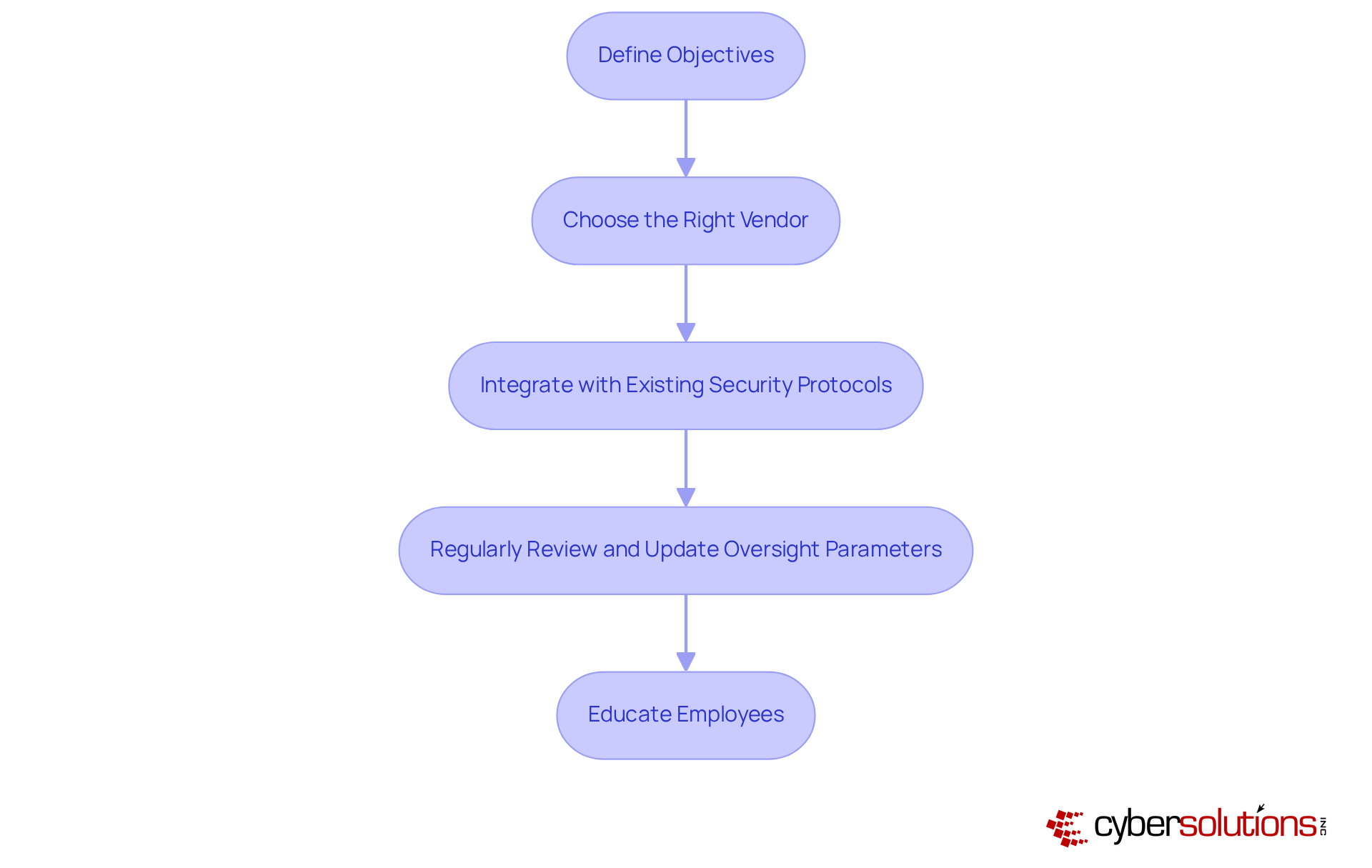
To effectively implement deep web security oversight, C-suite leaders must recognize the critical importance of cybersecurity in today’s digital landscape.
- Defining Objectives is the first step: clearly outline what your organization aims to achieve with deep web oversight, such as identifying compromised credentials or tracking brand mentions.
- Next, it’s essential to Choose the Right Vendor. Conduct thorough research to select a vendor that meets your specific needs. Focus on those with proven track records and comprehensive service offerings, like Cyber Solutions, which provides advanced cybersecurity solutions including endpoint protection, email security, firewalls, and threat detection.
- Furthermore, you should Integrate with Existing Security Protocols. Ensure that your current cybersecurity measures are complemented by dark web security monitoring, creating a cohesive defense strategy. Cyber Solutions’ services are designed to safeguard systems and sensitive data, enhancing your overall security posture.
- Additionally, Regularly Review and Update Oversight Parameters. As threats evolve, so should your oversight parameters. Regularly assess and adjust what data is being monitored to stay ahead of potential risks.
- Finally, it’s crucial to Educate Employees. Promote a culture of cybersecurity awareness within your organization. Employees must recognize the significance of hidden web oversight and understand how their actions can impact overall security.
By adhering to these optimal methods, organizations can establish a robust framework for hidden web surveillance that effectively reduces risks and strengthens their security stance.
Evaluate the Benefits of Dark Web Monitoring for Your Organization
Investing in dark web security monitoring is crucial for organizations, particularly for C-suite leaders who prioritize risk management and compliance. In today’s digital landscape, where threats are ever-evolving, understanding the benefits of dark web security monitoring can significantly enhance an organization’s overall security posture.
- Early Threat Detection: Identifying compromised data before it can be exploited allows entities to proactively mitigate potential breaches. This early detection can lower breach costs by nearly $2 million, making it a vital investment for any organization.
- Enhanced Security Posture: Continuous surveillance not only strengthens the overall security framework but also complicates the efforts of cybercriminals. This proactive approach helps organizations stay ahead of emerging threats, ensuring a robust defense against attacks.
- Regulatory Compliance: With many sectors facing stringent data protection regulations, dark web security monitoring aids firms in demonstrating compliance. By actively managing and mitigating risks associated with data breaches, businesses can avoid hefty fines and bolster their security measures.
- Cost Savings: The financial impact of a data breach can be staggering, with the average global cost reaching $4.44 million. Investing in dark web security monitoring can lead to significant savings by preventing breaches and the associated recovery costs.
- Reputation Management: Protecting sensitive data not only safeguards the organization but also enhances its reputation, fostering trust among clients and stakeholders. A proactive stance on cybersecurity can greatly increase customer confidence.
By recognizing and communicating these advantages, C-suite leaders can make informed decisions regarding their cybersecurity investments, ensuring their organizations remain secure in an increasingly complex digital environment.

Conclusion
Dark web security monitoring stands as a crucial pillar for C-suite leaders, fundamentally shaping an organization's capacity to protect sensitive information and mitigate the risks posed by cyber threats. In a landscape where cyber threats are ever-evolving, understanding the significance of monitoring illicit online spaces is not just beneficial - it's imperative. Executives who grasp this can implement proactive measures that not only shield their organizations but also bolster their overall security posture.
Key points throughout this discussion underscore the necessity of comprehensive coverage, real-time alerts, and actionable intelligence in effective monitoring solutions. By adopting best practices - such as defining clear objectives, selecting the right vendors, and cultivating a culture of cybersecurity awareness - organizations can adeptly navigate the complexities of dark web threats. The advantages of investing in these monitoring solutions are manifold, ranging from early threat detection to enhanced compliance and reputation management, further emphasizing their critical value in today’s digital landscape.
The importance of dark web security monitoring cannot be overstated. As cyber threats continue to evolve, C-suite leaders must prioritize these strategies to ensure their organizations remain resilient. By embracing robust monitoring practices, executives not only safeguard their assets but also foster trust and confidence among stakeholders, paving the way for sustainable success in an increasingly challenging environment.
Frequently Asked Questions
What is dark web monitoring?
Dark web monitoring involves the continuous surveillance of illicit online spaces where stolen data, credentials, and sensitive information are traded, helping organizations detect compromised information before it escalates into serious breaches.
Why is dark web monitoring important for organizations?
It is crucial for organizations as it directly impacts their risk profile, protects their reputation, ensures financial stability, and helps meet compliance requirements against evolving cyber threats.
What are the risks associated with not implementing dark web monitoring?
Organizations that do not implement dark web monitoring face a significantly higher risk of cyberattacks, with those having breached credentials found on the hidden web facing a 2.56 times greater risk of experiencing such attacks.
How can dark web monitoring benefit C-suite leaders?
Dark web monitoring provides C-suite leaders with essential insights into potential threats, enabling them to take proactive measures to safeguard their organizations and manage risks effectively.
What does deep web surveillance entail?
Deep web surveillance entails actively monitoring the hidden web for compromised information, allowing organizations to identify and address vulnerabilities before they lead to serious security breaches.
What is the expected trend regarding illicit web threats by 2026?
A significant portion of entities is expected to be affected by illicit web threats by 2026, highlighting the urgency for organizations to address dark web security monitoring.
How do expert opinions view the importance of understanding dark web activities?
Experts emphasize that effective risk management in today’s digital landscape requires a comprehensive understanding of underworld web activities and their potential impact on corporate security.
List of Sources
- Understand Dark Web Monitoring and Its Importance
- huntsmansecurity.com (https://huntsmansecurity.com/blog/5-useful-quotes-from-hacked-organisations)
- acecloudhosting.com (https://acecloudhosting.com/blog/cybersecurity-quotes)
- sqmagazine.co.uk (https://sqmagazine.co.uk/dark-web-statistics)
- goodreads.com (https://goodreads.com/quotes/tag/dark-web)
- pandasecurity.com (https://pandasecurity.com/en/mediacenter/dark-web-statistics)
- Identify Key Features of Effective Dark Web Monitoring Solutions
- sentinelone.com (https://sentinelone.com/cybersecurity-101/threat-intelligence/dark-web-monitoring)
- cyberint.com (https://cyberint.com/blog/dark-web/5-key-features-of-dark-web-monitoring-tools)
- cyble.com (https://cyble.com/blog/dark-web-intelligence-monitoring-guide)
- sqmagazine.co.uk (https://sqmagazine.co.uk/dark-web-statistics)
- Implement Best Practices for Dark Web Security Monitoring
- pandasecurity.com (https://pandasecurity.com/en/mediacenter/dark-web-statistics)
- cyble.com (https://cyble.com/knowledge-hub/dark-web-monitoring-trends)
- deepstrike.io (https://deepstrike.io/blog/dark-web-statistics-2025)
- hafiz-muhammad-rizwan.github.io (https://hafiz-muhammad-rizwan.github.io/Dark-Web)
- Evaluate the Benefits of Dark Web Monitoring for Your Organization
- agilityrecovery.com (https://agilityrecovery.com/blog/top-five-advantages-dark-web-monitoring-and-why-its-critical-businesses)
- sentinelone.com (https://sentinelone.com/cybersecurity-101/threat-intelligence/dark-web-monitoring)
- openpr.com (https://openpr.com/news/4437649/dark-web-intelligence-market-set-for-explosive-growth-to-us-1-7)
- rivanorth.com (https://rivanorth.com/guides/dark-web-monitoring-cost)