
Introduction
In today’s world, where cyber threats are growing more sophisticated by the day, the onus of protecting sensitive data rests heavily on C-suite leaders. Particularly in the healthcare sector, organizations are grappling with unique challenges that demand immediate attention. The necessity for robust managed services cybersecurity strategies has never been more pressing. This article delves into ten essential strategies designed to not only bolster security posture but also empower executives to adeptly navigate the complexities of the current digital landscape. With the stakes at an all-time high, one must ask: are organizations truly ready to implement these strategies and shield themselves from the relentless evolution of cyber threats?
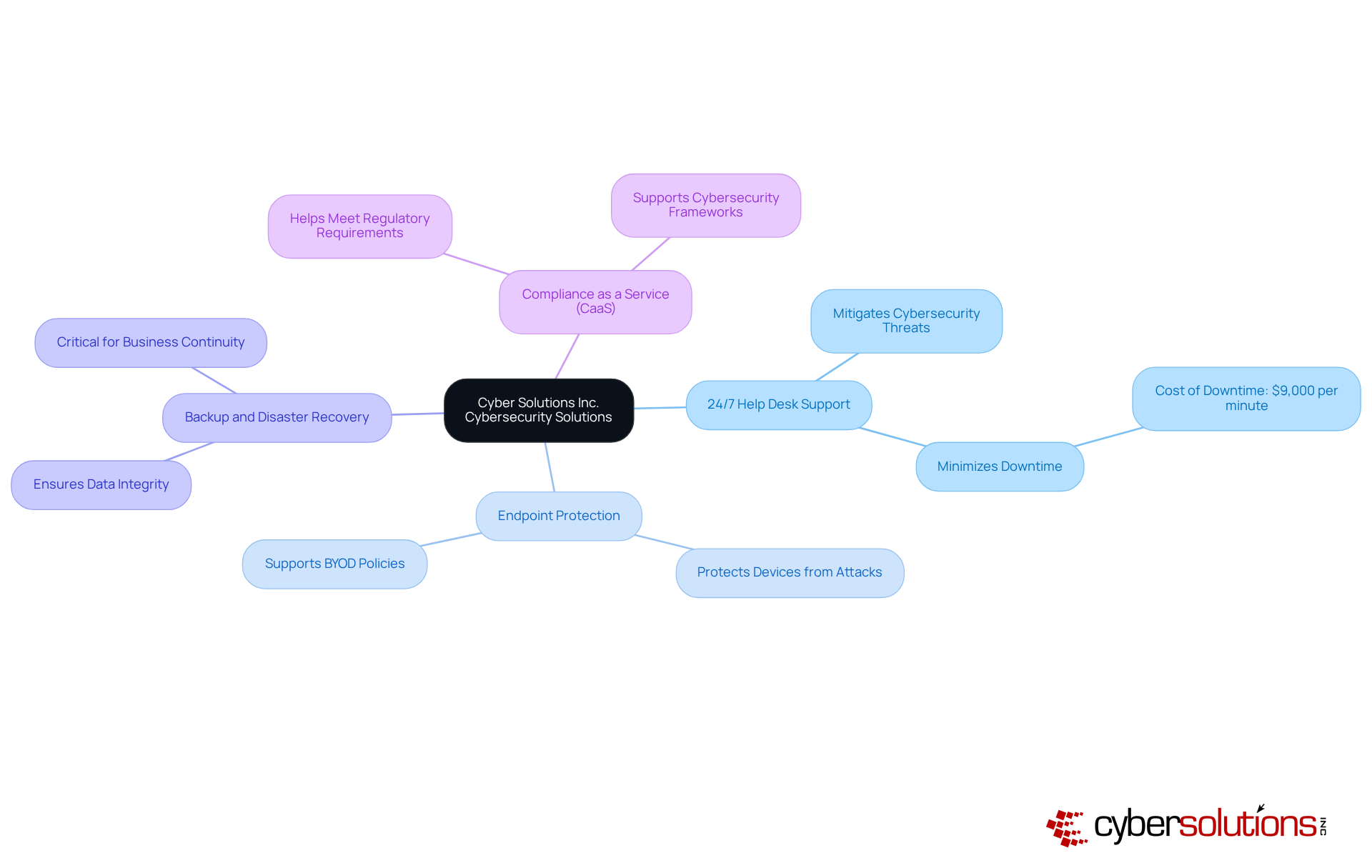
Cyber Solutions Inc.: Comprehensive Cybersecurity Solutions for Managed Services
In today’s digital landscape, cybersecurity is crucial, especially in healthcare. With the increasing complexity of cyber threats, healthcare organizations face unique challenges that demand immediate attention. Cyber Solutions Inc. stands ready to provide a comprehensive range of cybersecurity and IT services tailored specifically for industries like healthcare, finance, manufacturing, and government.
Our key offerings include:
These are crucial, as a staggering 82% of companies are expected to rely on managed IT services by 2025, highlighting a growing dependence on external expertise to enhance protection and operational efficiency. For instance, the implementation of endpoint protection has proven effective in mitigating cybersecurity threats, allowing businesses to respond swiftly to incidents and minimize downtime, which can cost companies up to $9,000 per minute.
Consider a recent case study involving a healthcare provider: our rapid deployment of an incident response plan led to a swift recovery from a ransomware attack, ultimately strengthening their security measures to protect sensitive patient data. By leveraging advanced technologies and expert knowledge, Cyber Solutions empowers organizations to focus on their core operations while ensuring their IT infrastructure remains secure and compliant with industry regulations.
Current trends indicate a growing demand for cybersecurity services, with a projected market growth rate of 11.8% from 2025 to 2032. This growth is driven by the increasing frequency of cyberattacks, necessitating proactive measures and continuous monitoring. Cyber Solutions offers monitoring and alert services to detect anomalies and potential vulnerabilities, ensuring that suspicious activities are addressed before they escalate into threats.
As organizations navigate evolving digital threats, customized security measures are vital. C-Suite leaders must prioritize investing in comprehensive cybersecurity strategies to safeguard their operations and maintain compliance. Are you ready to take the necessary steps to protect your organization? Let Cyber Solutions guide you in fortifying your cybersecurity posture.
Implement Endpoint Protection: Safeguard Devices Against Threats
In today's digital landscape, cybersecurity is not just an option; it's a necessity, especially in the healthcare sector. With the increasing number of devices accessing networks, endpoint protection is crucial. This involves deploying protective solutions that monitor and manage these devices, including:
- antivirus software
- firewalls
- intrusion detection systems
One standout feature is application allowlisting, a proactive measure that blocks all applications except those explicitly approved. This significantly reduces the attack surface, making it a vital component of any cybersecurity strategy.
Frequent updates and patches are essential to safeguard against vulnerabilities, but the proactive nature of application allowlisting sets it apart from conventional protective measures. It not only enhances security but also helps organizations meet compliance requirements such as:
- PCI-DSS
- GDPR
C-suite leaders, particularly CFOs, must prioritize cybersecurity measures, including endpoint protection and application allowlisting, as part of their overall security strategy. This is especially important in mitigating risks associated with IoT devices and mobile devices.
To bolster your organization's security posture, consider conducting regular reviews of your application allowlist. Ensuring it remains up-to-date and effective is key to staying ahead of potential threats. By taking these proactive steps, healthcare organizations can better protect patient data and maintain trust with patients and stakeholders alike.
Utilize Threat Detection: Identify and Respond to Cyber Threats Promptly
In today's rapidly evolving digital landscape, the significance of advanced risk detection systems cannot be overstated. Organizations must recognize potential threats in real-time, leveraging machine learning algorithms and tools to identify anomalies effectively. As we approach 2025, the urgency for cybersecurity measures grows, especially in sectors like healthcare where the stakes are high. Did you know that these systems are faster than traditional tools? This remarkable speed not only enhances response times but also significantly reduces the risk of data breaches.
C-suite leaders, particularly CFOs, should prioritize investments in cybersecurity solutions that deliver actionable insights. These platforms enable swift responses to emerging threats, ensuring that organizations remain one step ahead of cybercriminals. For instance, large banks are already utilizing AI-powered behavior analytics to monitor login patterns and flag suspicious activities. Similarly, healthcare providers have successfully implemented AI-driven email filtering tools to combat phishing attacks. These real-world examples illustrate a growing trend: by adopting advanced technologies, companies can bolster their cybersecurity posture and ensure operational resilience.
As cyber threats continue to evolve, the need for robust security measures becomes increasingly critical. Organizations that invest in cybersecurity not only protect their data but also safeguard their reputation and trust with clients. The question remains: are you ready to take action and fortify your defenses against the ever-present threat of cyberattacks? Embrace these technologies today and secure your organization's future in an increasingly complex digital environment.

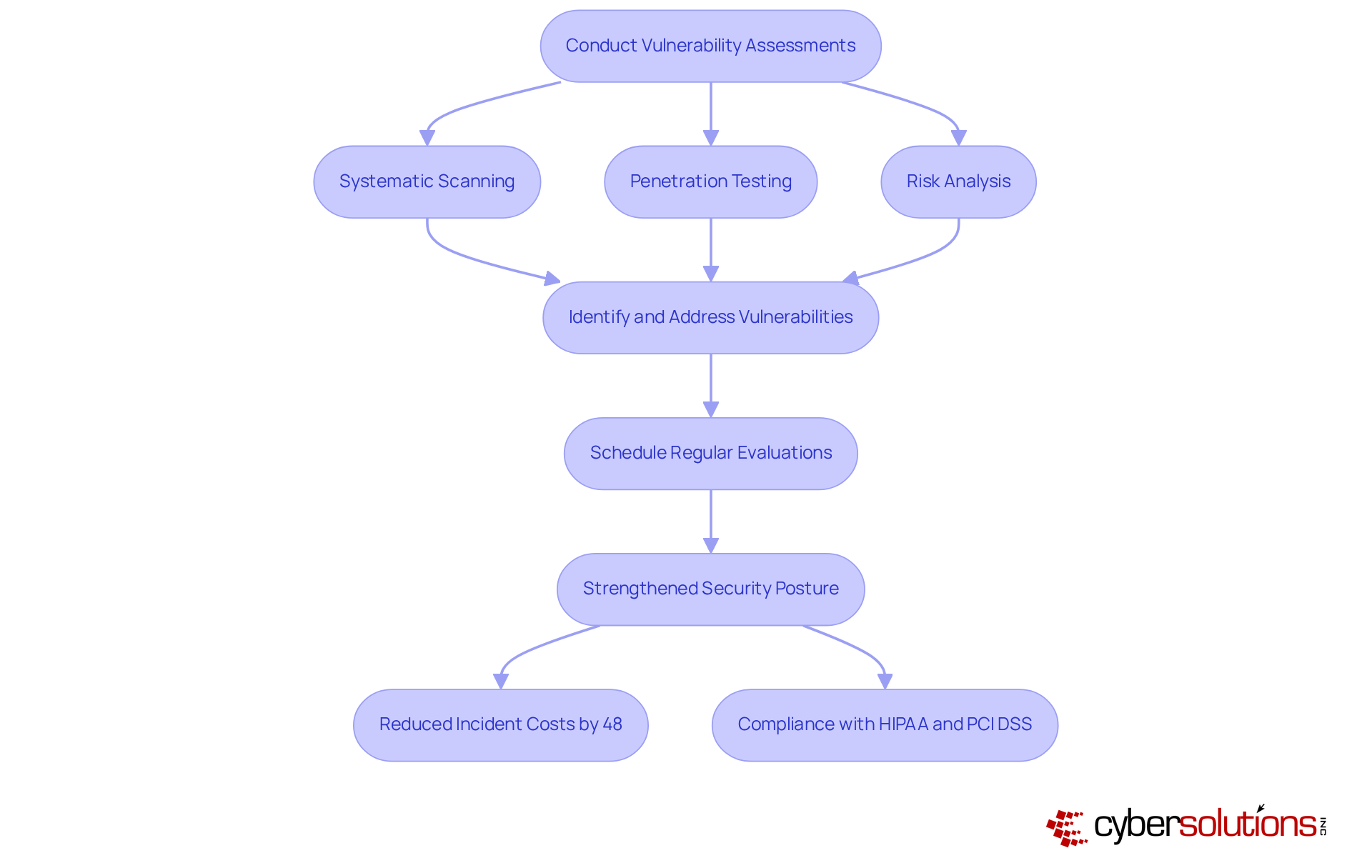
Conduct Vulnerability Assessments: Strengthen Security Posture Regularly
Vulnerability assessments are essential for identifying and addressing weaknesses within a company's systems and networks. In today's landscape, where cyber threats are prevalent, this proactive approach is not just beneficial—it's vital. Systematic scanning uncovers vulnerabilities, while assessments and risk analysis help pinpoint potential entry points for attackers. Organizations that conduct regular evaluations significantly enhance their protective stance, demonstrating compliance with industry standards like HIPAA and PCI DSS, and avoiding costly fines.
C-suite executives must prioritize establishing a regular timetable for these evaluations. Not only do they bolster safety, but they also enhance reputation by showcasing a commitment to security. Expert insights reveal that integrating vulnerability assessments into the security strategy can reduce incident costs by an impressive 48%. This statistic underscores the necessity of a robust security framework.
Moreover, organizations that consistently conduct these evaluations are better equipped to adapt to the ever-evolving threat landscape. This adaptability ensures that their defenses remain effective. By fostering a culture of continuous improvement in security practices, companies can effectively safeguard their assets and maintain operational resilience.
In conclusion, the importance of vulnerability assessments cannot be overstated. They are not merely a checkbox on a list; they are a strategic imperative that enhances security, builds stakeholder confidence, and ultimately protects the organization from the financial and reputational damage of cyber incidents.
Establish Incident Response Plans: Prepare for Cybersecurity Breaches
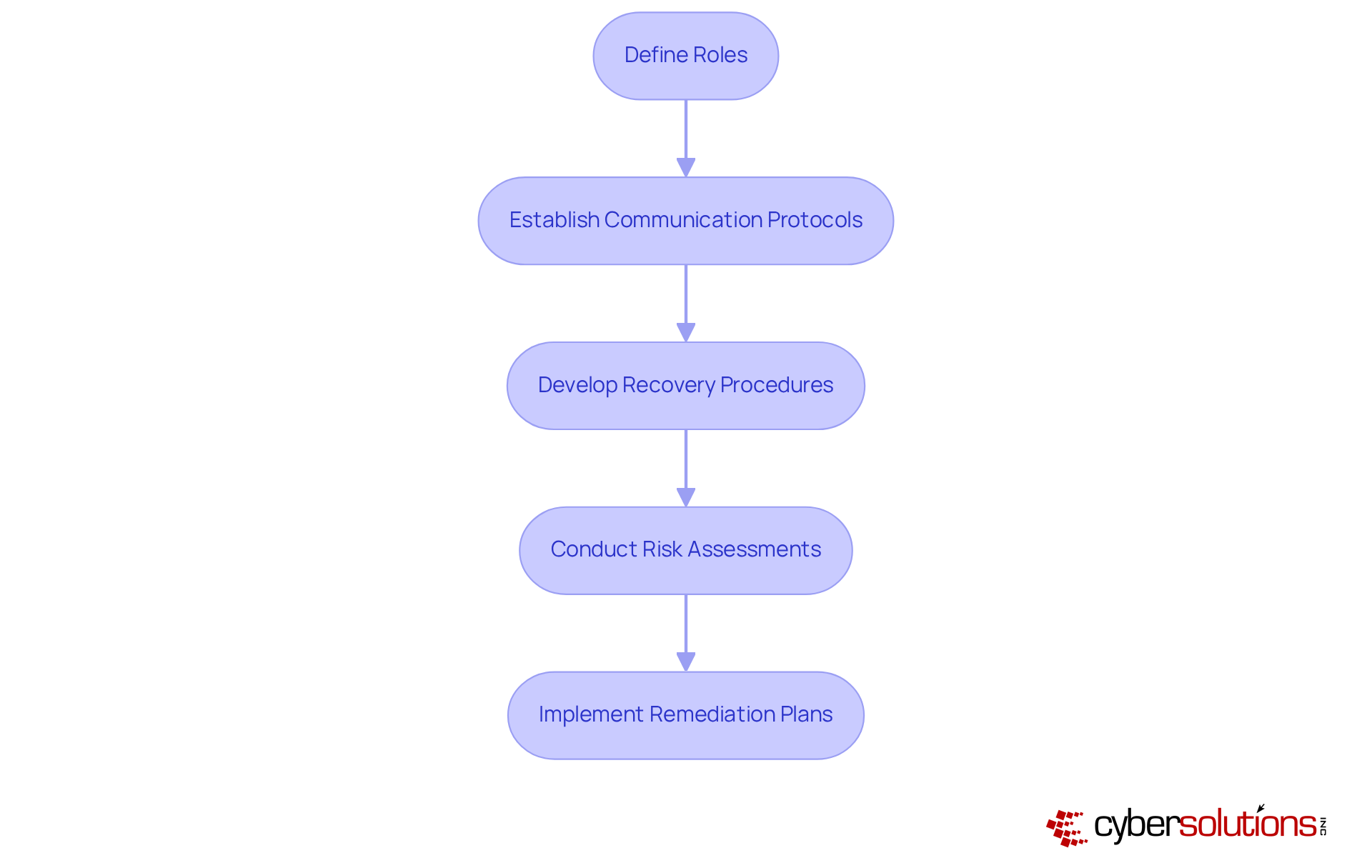
In today’s healthcare landscape, the importance of a robust incident response plan cannot be overstated. Establishing an incident response plan is essential; it involves creating a documented strategy that outlines the steps to take in the event of a cybersecurity breach. This plan should clearly define roles, communication protocols, and recovery procedures. C-suite executives must ensure their teams are well-educated and that the strategy is consistently evaluated to adapt to evolving risks.
Moreover, thorough documentation is crucial for compliance, particularly with standards like HIPAA. This includes risk assessments and incident management. Cyber Solutions offers compliance services, simplifying the navigation of regulatory requirements. This service ensures that businesses are audit-ready and can effectively manage incidents while maintaining compliance.
Are you prepared to face the unique challenges posed by cyber threats? With the right strategies in place, organizations can not only protect sensitive information but also enhance their overall security posture. Cyber Solutions stands ready to assist in fortifying your defenses and ensuring compliance in an increasingly complex regulatory environment.
Leverage Compliance as a Service: Navigate Regulatory Requirements Effectively
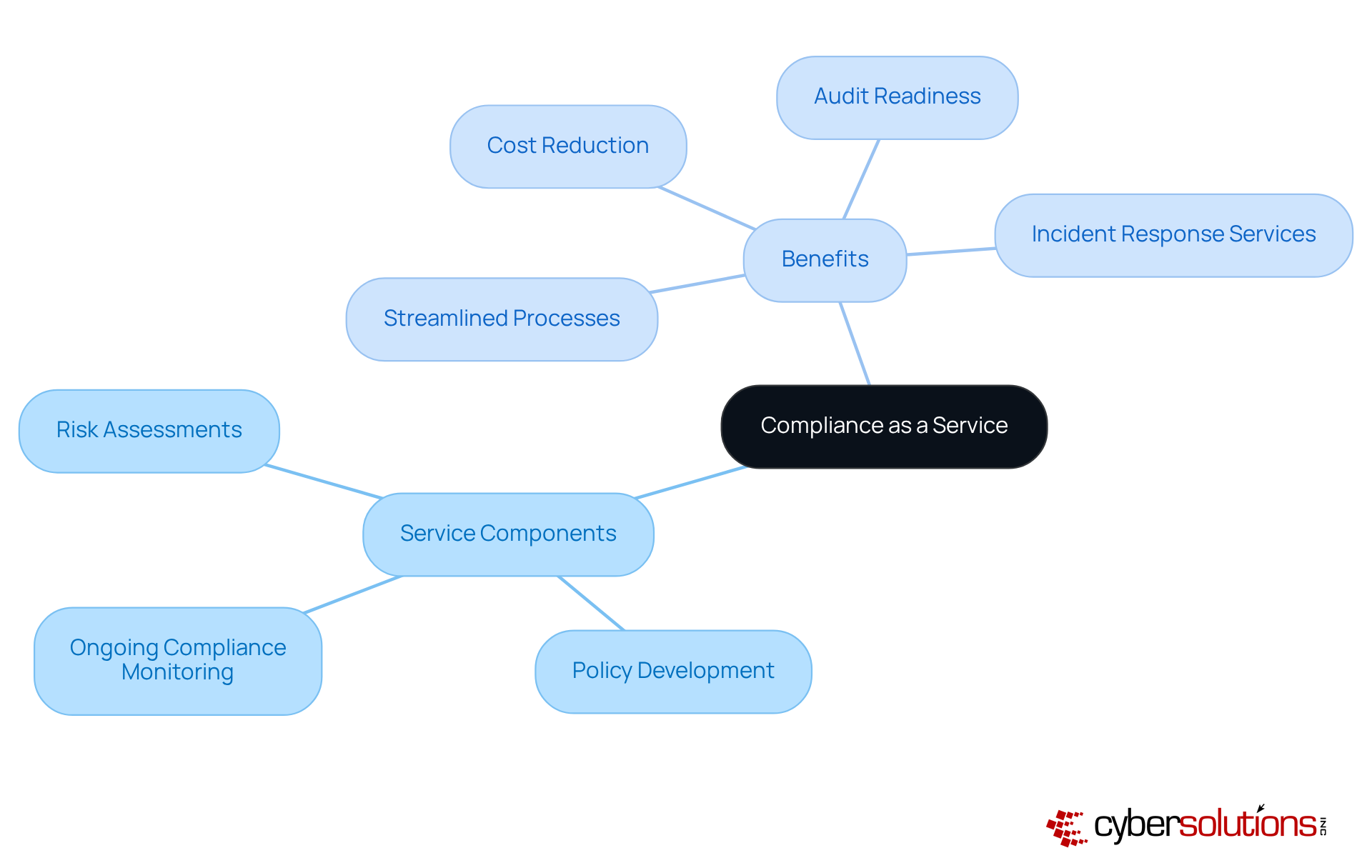
In today's rapidly evolving digital landscape, compliance is not just a regulatory requirement; it's a critical component of strategy, especially in healthcare. Compliance as a Service empowers organizations to outsource their compliance needs to specialized providers like Cyber Solutions, effectively managing risks and ensuring robust security.
Our CaaS solutions offer comprehensive services, including:
- Risk assessments
- Policy development
- Ongoing compliance monitoring
This approach not only simplifies compliance but also ensures that organizations remain vigilant against emerging threats. With our flat-rate pricing model, unexpected IT expenses become a thing of the past, allowing for predictable budgeting and financial planning for compliance services.
C-suite leaders, particularly CFOs, should seriously consider CaaS as a means to enhance efficiency, reduce operational costs, and improve compliance. This strategic move enhances organizational resilience and supports sustainable business growth. Moreover, our cybersecurity services are a key component of our offerings, complementing CaaS by swiftly identifying and addressing risks, ensuring security while maintaining compliance.
In a world where cybersecurity threats are increasingly sophisticated, can your organization afford to overlook compliance? By partnering with Cyber Solutions, you not only mitigate risks but also position your organization for success in a challenging regulatory environment.
Implement Backup and Disaster Recovery: Ensure Business Continuity
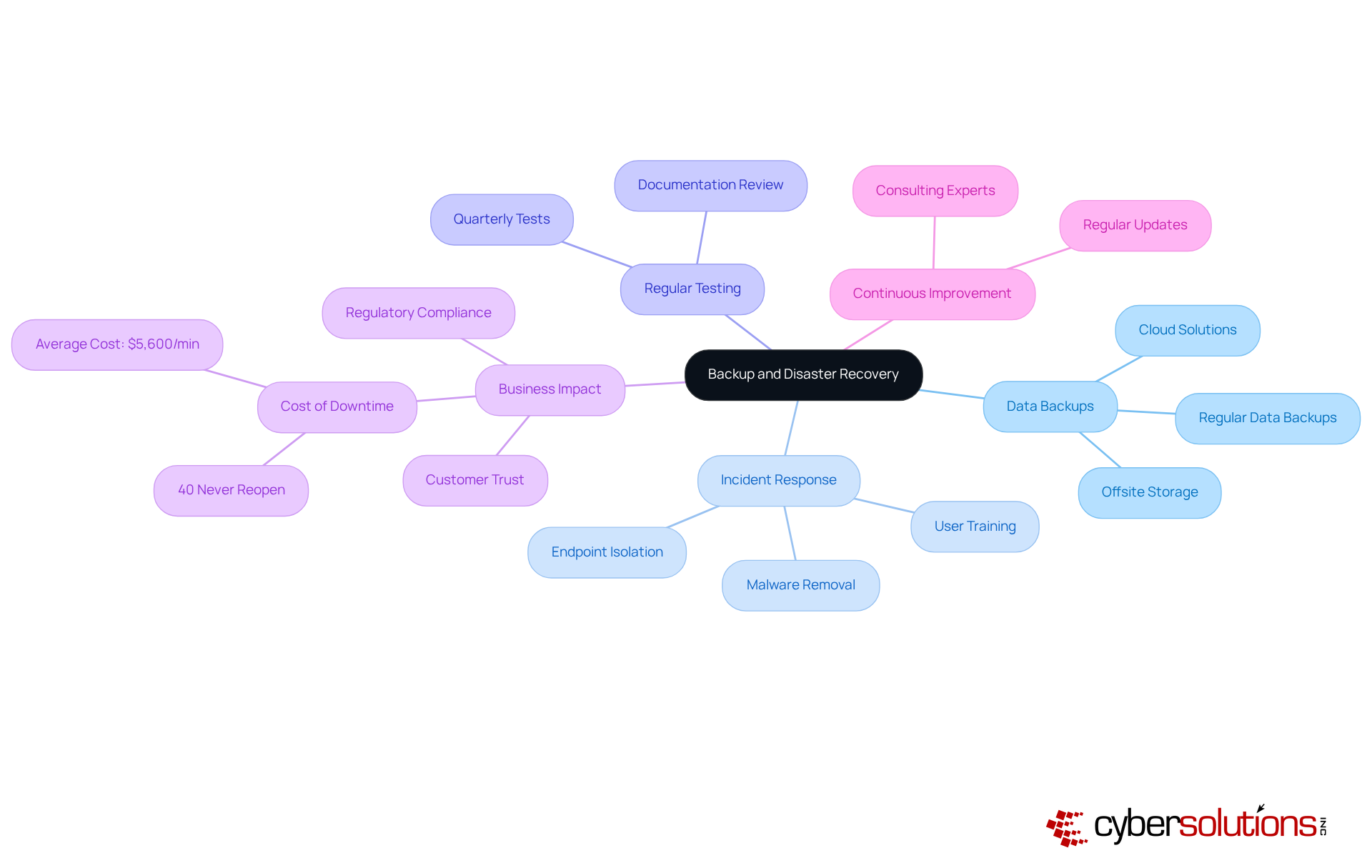
Establishing a comprehensive plan is essential for maintaining business continuity. In today's landscape, where cybersecurity threats loom large, this strategy must include:
- Regular backups
- Offsite storage
to ensure that critical information remains secure and readily accessible. C-suite leaders must prioritize these measures; after all, the average downtime for businesses lacking a disaster recovery plan can exceed $5,600 per minute, with 40% of such businesses never reopening after a disaster. By implementing backup solutions, organizations can minimize downtime, safeguard their operations, and enhance their resilience against potential crises.
In light of recent incidents, such as the ransomware attack on a healthcare provider, the importance of rapid response cannot be overstated. Having an incident response team on-site within 24 hours can significantly contain threats and minimize damage. A layered approach—including:
- Endpoint isolation
- Malware removal
enables a faster and more complete recovery. For instance, the healthcare provider not only recovered ahead of schedule but also improved its security measures, demonstrating the effectiveness of these strategies. By showcasing a reliable and efficient response, companies can cultivate strong partnerships with service providers, enhancing their overall cybersecurity posture.
Real-world examples demonstrate that businesses with disaster recovery plans not only recover faster but also maintain customer trust and compliance with regulatory requirements, ultimately securing their competitive advantage in the market. To ensure the effectiveness of these plans, it is vital to test them. C-suite leaders should consider consulting with experts to review and enhance their disaster recovery strategies, ensuring they are prepared for any potential disruptions.
Adopt Co-Managed IT Support: Enhance Internal Teams with External Expertise
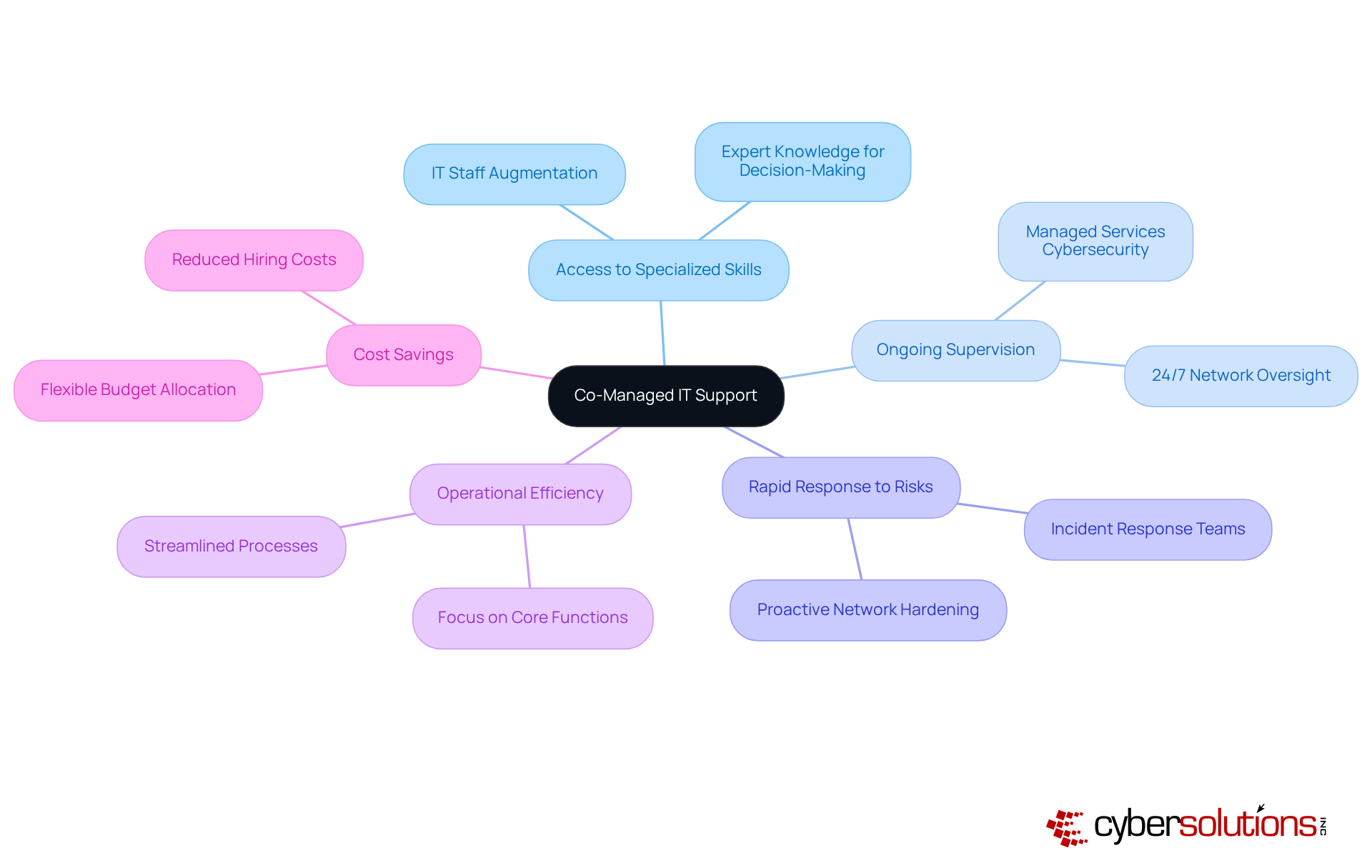
Implementing co-managed IT support is crucial for organizations aiming to strengthen their internal teams with external expertise. In today’s landscape, where cyber threats are prevalent, this strategic alliance not only provides access to specialized skills but also ensures ongoing supervision through collaboration and enhanced protective solutions. With co-managed IT support, organizations can swiftly identify anomalies and potential vulnerabilities, making it an essential strategy for C-suite leaders looking to tackle skill gaps and bolster their cybersecurity posture without the burdensome process of extensive hiring.
Organizations that have embraced co-managed IT services report significant improvements in their security posture. This allows them to respond rapidly to risks while maintaining operational efficiency. By leveraging external knowledge, they can navigate the complexities of digital security more effectively with timely interventions, ensuring resilience in an ever-evolving online environment. Moreover, a layered strategy—including incident response teams and regular assessments—further enhances recovery and protection against cyber threats.
In conclusion, co-managed IT support is not just a tactical decision; it’s a strategic imperative for organizations committed to safeguarding their assets and ensuring robust cybersecurity. As the digital landscape continues to evolve, the need for such partnerships becomes increasingly clear. Are you ready to take the next step in fortifying your organization’s defenses?
Provide Cybersecurity Training: Empower Employees to Recognize Threats
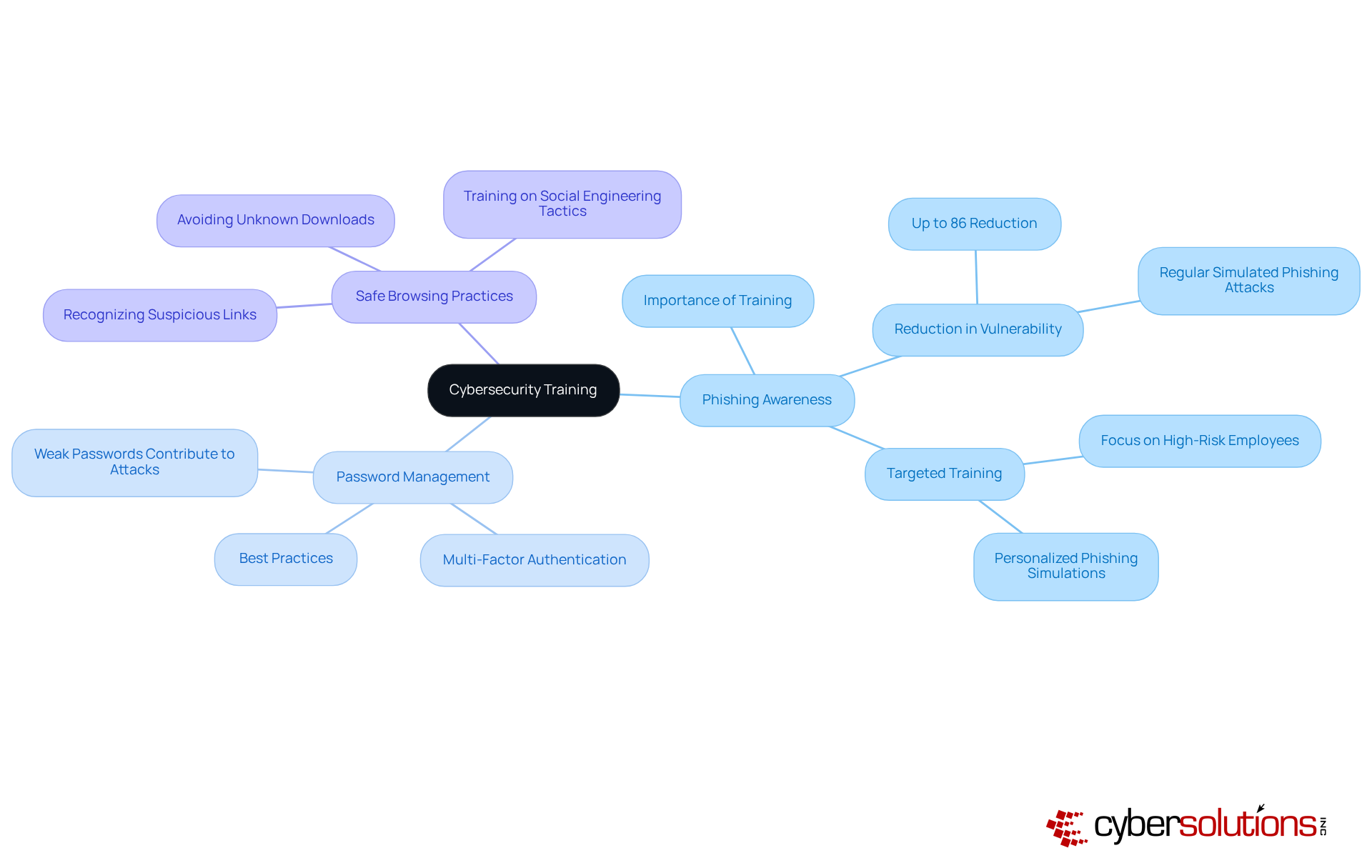
In today's digital landscape, comprehensive training is not just beneficial—it's essential. Employees must be equipped with the skills to identify and respond to potential threats effectively. Programs that focus on key areas like cybersecurity awareness, phishing detection, and incident reporting are crucial. C-suite leaders, particularly CFOs, must prioritize training to foster a culture of security. This proactive approach significantly reduces the likelihood of successful attacks.
Consider this: studies reveal that firms with robust training programs can lower employee vulnerability to phishing attacks by as much as 86%. This statistic underscores the importance of cybersecurity training, which enhances employees' ability to recognize sophisticated threats, including the increasingly effective AI-generated phishing attempts. By investing in ongoing education, companies not only safeguard their digital assets but also cultivate a proactive culture that empowers employees to actively protect company data.
The implications for healthcare organizations are profound. With the rise of cyber threats, the need for a comprehensive training program is more critical than ever. Cybersecurity training can address these challenges effectively, ensuring that employees are not just passive recipients of information but active participants in the security process. This shift not only protects sensitive data but also builds a resilient organizational culture.
Conduct Regular Security Audits: Assess and Improve Cybersecurity Measures
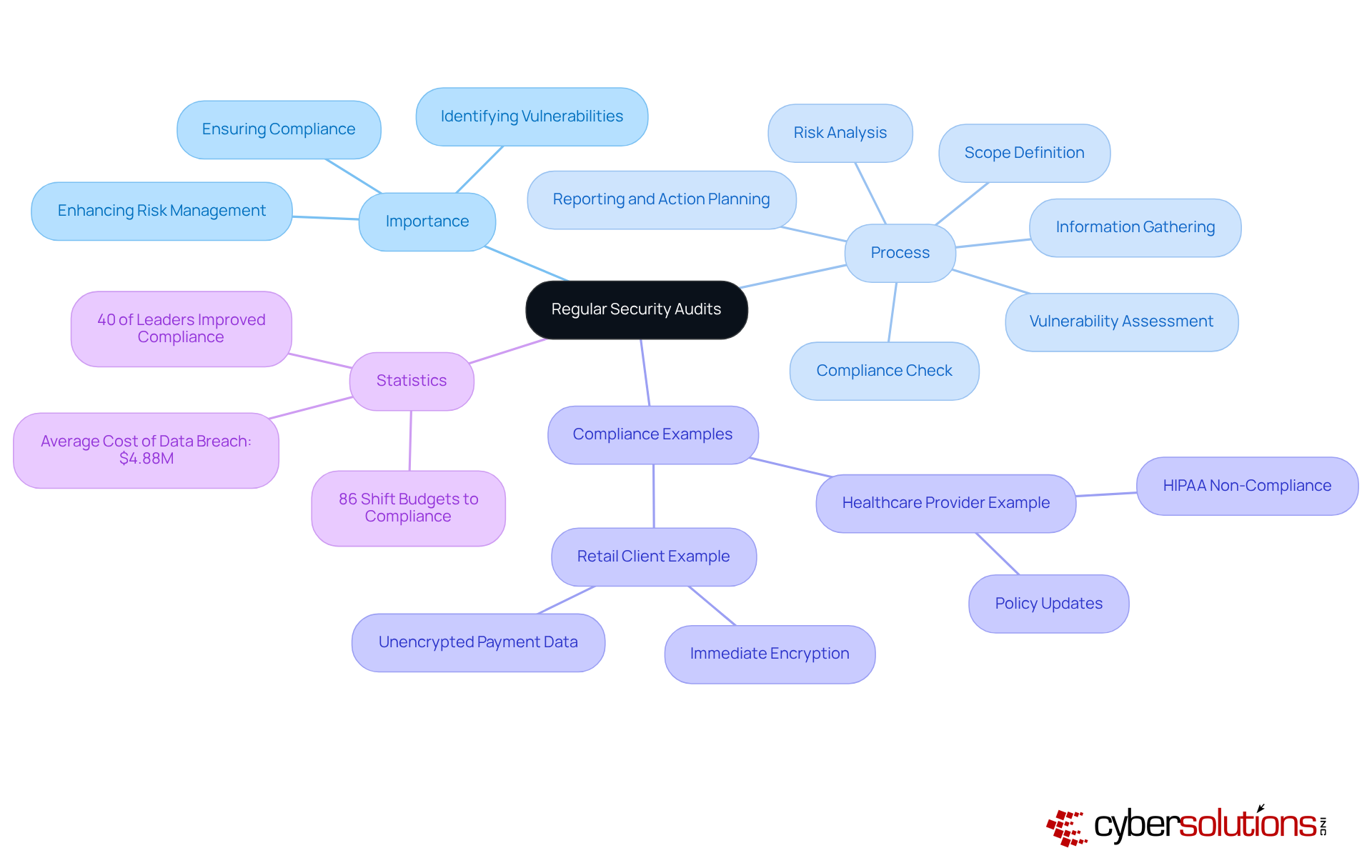
Routine assessments are vital for evaluating a company's cybersecurity practices, identifying weaknesses, and ensuring compliance. This comprehensive process encompasses evaluations of policies, procedures, and technical controls, allowing organizations to address vulnerabilities before they can be exploited. For example, a healthcare provider's audit uncovered non-compliance with HIPAA, leading to immediate policy updates that significantly mitigated risks.
C-suite leaders must establish a systematic schedule for these audits. Not only do they bolster security posture, but they also adapt to the ever-evolving threat landscape. Did you know that 40% of business leaders reported enhancements in their cybersecurity measures to achieve better compliance in the past year? Regular audits provide organizations with the insights needed for improvement and ensuring operational resilience.
Expert insights underscore the importance of regular audits. As one cybersecurity leader aptly stated, "Regular audits provide entities the visibility and control they require to safeguard what is important." By prioritizing audits, C-suite executives can ensure their organizations remain compliant and fortified against emerging threats.
Conclusion
In today’s rapidly changing digital landscape, the need for strong managed services cybersecurity strategies is more critical than ever, especially for C-suite leaders. With organizations facing a surge in cyber threats, it’s essential to implement comprehensive solutions that not only protect assets but also ensure compliance with industry regulations. The strategies outlined here serve as a roadmap for executives aiming to bolster their cybersecurity posture and shield their organizations from potential breaches.
Key insights include:
- The necessity of 24/7 monitoring
- Vulnerability assessments
- Incident response plans
By adopting endpoint protection and utilizing compliance as a service, organizations can proactively mitigate risks and maintain business continuity. Furthermore, integrating employee training programs empowers staff to recognize and respond to threats, fostering a culture of security awareness that is vital in today’s environment.
Ultimately, taking decisive action to strengthen cybersecurity measures transcends mere defense; it’s a strategic imperative for organizational resilience and trust. C-suite leaders are urged to embrace these best practices and cultivate a proactive approach to cybersecurity. By doing so, they can adeptly navigate the complexities of the digital landscape and safeguard their organizations against the ever-present threat of cyberattacks.
Frequently Asked Questions
What services does Cyber Solutions Inc. provide for cybersecurity?
Cyber Solutions Inc. offers a comprehensive range of managed services including 24/7 help desk support, endpoint protection, backup and disaster recovery, and compliance as a service (CaaS).
Why is managed IT service expected to grow by 2025?
A staggering 82% of companies are expected to rely on managed IT services by 2025 due to the increasing complexity of cyber threats, which necessitates external expertise to enhance protection and operational efficiency.
How does 24/7 help desk support benefit organizations?
24/7 help desk support helps mitigate cybersecurity threats by allowing businesses to respond swiftly to incidents, minimizing downtime, which can cost companies up to $9,000 per minute.
What is the significance of endpoint protection in cybersecurity?
Endpoint protection is crucial as it involves deploying protective solutions that monitor and manage devices accessing networks, helping to safeguard against potential threats.
What is application allowlisting and why is it important?
Application allowlisting is a proactive security measure that blocks all applications except those explicitly approved, significantly reducing the attack surface and enhancing overall security.
How can organizations ensure compliance with regulations through cybersecurity?
Implementing endpoint protection and application allowlisting helps organizations meet compliance obligations such as HIPAA, PCI-DSS, and GDPR.
What role does threat detection play in cybersecurity?
Advanced threat detection systems help organizations recognize potential cyber risks in real-time, enabling them to respond promptly and effectively to emerging threats.
How can AI improve threat detection?
AI-driven systems can detect cyberattacks 85% faster than traditional tools, enhancing response times and significantly reducing the risk of data breaches.
What should C-suite leaders prioritize in their cybersecurity strategy?
C-suite leaders, especially CFOs, should prioritize investments in managed services cybersecurity, including endpoint protection, application allowlisting, and threat intelligence platforms for actionable insights.
What are the potential consequences of not investing in cybersecurity?
Organizations that fail to invest in robust cybersecurity measures risk data breaches, loss of reputation, and diminished trust with clients and stakeholders.
List of Sources
- Cyber Solutions Inc.: Comprehensive Cybersecurity Solutions for Managed Services
- MSP Statistics In The USA: 2025 / Infrascale (https://infrascale.com/msp-statistics-usa)
- fortunebusinessinsights.com (https://fortunebusinessinsights.com/cyber-security-managed-services-market-106883)
- discovercybersolutions.com (/cyber-security-news/cyber-solutions-acquires-clevertech)
- cyvent.com (https://cyvent.com/post/cybersecurity-msp-market-stats)
- statista.com (https://statista.com/outlook/tmo/cybersecurity/security-services/managed-services/united-states?srsltid=AfmBOooV_-q3DGLDQNzJDWlqTsz1E4Q1FvhOAvZ8_q1ZUps0D1D1vAU2)
- Implement Endpoint Protection: Safeguard Devices Against Threats
- alexonet.com (https://alexonet.com/remote-work-makes-endpoint-security-even-more-important)
- canon.ca (https://canon.ca/en/products/IT-Solutions/Blogs/The-Importance-of-Endpoint-Security-in-a-Hybrid-Work-Environment)
- mitrais.com (https://mitrais.com/news-updates/the-importance-of-endpoint-security-for-remote-work)
- guardz.com (https://guardz.com/blog/36-endpoint-security-statistics-msps-should-know-about-in-2025)
- score.org (https://score.org/utah/resource/eguide/role-endpoint-security-protecting-remote-workers-devices)
- Utilize Threat Detection: Identify and Respond to Cyber Threats Promptly
- ir.mrcy.com (https://ir.mrcy.com/news-releases/news-release-details/mercury-demonstrate-ai-powered-integrated-threat-detection?mobile=1)
- pymnts.com (https://pymnts.com/artificial-intelligence-2/2025/tech-giants-tackle-major-ai-security-threat)
- bitlyft.com (https://bitlyft.com/resources/real-world-examples-of-ai-in-cyber-threat-detection)
- Top Cybersecurity Statistics: Facts, Stats and Breaches for 2025 (https://fortinet.com/resources/cyberglossary/cybersecurity-statistics)
- digitalisationworld.com (https://digitalisationworld.com/blog/58218/2025-ai-insights-threat-detection-and-response)
- Conduct Vulnerability Assessments: Strengthen Security Posture Regularly
- brightsec.com (https://brightsec.com/blog/the-critical-importance-of-vulnerability-assessments)
- ionix.io (https://ionix.io/guides/vulnerability-assessment)
- thehackernews.com (https://thehackernews.com/2025/02/navigating-future-key-it-vulnerability.html)
- blog.cyberadvisors.com (https://blog.cyberadvisors.com/how-annual-vulnerability-assessments-can-save-your-business)
- cyberproof.com (https://cyberproof.com/blog/why-vulnerability-assessment-is-essential-for-businesses)
- Establish Incident Response Plans: Prepare for Cybersecurity Breaches
- infrascale.com (https://infrascale.com/incident-response-statistics-usa-2025)
- aha.org (https://aha.org/news/aha-cyber-intel/2025-10-07-2025-cybersecurity-year-review-part-one-breaches-and-defensive-measures)
- 2026 Unit 42 Global Incident Response Report (https://paloaltonetworks.com/resources/research/unit-42-incident-response-report)
- Incident Response Statistics to Know in 2025 (https://jumpcloud.com/blog/incident-response-statistics)
- calian.com (https://calian.com/itcs/blogs/2025-emerging-trends-in-incident-response)
- Leverage Compliance as a Service: Navigate Regulatory Requirements Effectively
- impactitsolutions.com (https://impactitsolutions.com/insights/launching-compliance-service)
- cloud9data.com (https://cloud9data.com/compliance-as-a-service-caas)
- secureframe.com (https://secureframe.com/blog/compliance-as-a-service-caas)
- transputec.com (https://transputec.com/blogs/compliance-challenges-in-2025)
- archivemarketresearch.com (https://archivemarketresearch.com/reports/compliance-as-a-service-12784)
- Implement Backup and Disaster Recovery: Ensure Business Continuity
- us.sios.com (https://us.sios.com/blog/importance-of-disaster-recovery-planning-for-businesses)
- ntgit.com (https://ntgit.com/why-every-business-needs-a-smart-backup-and-disaster-recovery-strategy-in-2025)
- aspiretech.com (https://aspiretech.com/blog/the-critical-importance-of-business-disaster-recovery-planning)
- netcentrix.com (https://netcentrix.com/news/the-importance-of-a-disaster-recovery-plan-for-business-continuity)
- Adopt Co-Managed IT Support: Enhance Internal Teams with External Expertise
- iottechnews.com (https://iottechnews.com/news/staff-augmentation-is-the-future-of-tech-teams)
- intelligenthq.com (https://intelligenthq.com/why-more-companies-are-turning-to-external-expertise-for-growth)
- belltec.com (https://belltec.com/all-inclusive-or-co-managed-it-services)
- The Benefits of Co-Managed IT Services | Omega Systems (https://omegasystemscorp.com/insights/blog/understanding-the-benefits-of-co-managed-it-services)
- MSP Statistics In The USA: 2025 / Infrascale (https://infrascale.com/msp-statistics-usa)
- Provide Cybersecurity Training: Empower Employees to Recognize Threats
- weforum.org (https://weforum.org/stories/2025/10/cybersecurity-people-not-just-technology)
- uscsinstitute.org (https://uscsinstitute.org/cybersecurity-insights/blog/why-cybersecurity-training-is-the-smartest-investment-for-organization-in-2026)
- kelsercorp.com (https://kelsercorp.com/blog/why-employee-cybersecurity-training-matters-more-than-ever-in-2025)
- Security Awareness Training Statistics 2025 [100+ Studies] | Brightside AI Blog (https://brside.com/blog/security-awareness-training-statistics-2025-100-studies)
- keepnetlabs.com (https://keepnetlabs.com/blog/security-awareness-training-statistics)
- Conduct Regular Security Audits: Assess and Improve Cybersecurity Measures
- iapp.org (https://iapp.org/news/a/california-adopts-cybersecurity-audit-rule-outlining-reasonable-cybersecurity)
- charterts.com (https://charterts.com/insights/the-importance-of-regular-cybersecurity-audits)
- protexcentral.org (https://protexcentral.org/2025/01/27/importance-regular-security-audits-protecting-business-emerging-threats)
- softwaremind.com (https://softwaremind.com/blog/why-security-audits-matter-more-than-ever-in-2025)
- Security Audit: Importance, Process, and Best Practices 2026 (https://sentinelone.com/cybersecurity-101/cloud-security/security-audit)