
Introduction
In today's healthcare landscape, where organizations are increasingly targeted by cyber threats, the significance of robust managed firewall security stands paramount. With staggering statistics revealing that medical facilities encounter an average of 40 cyberattacks annually, CFOs must acknowledge the critical role these security measures play in safeguarding sensitive patient data and ensuring compliance with regulations. Yet, the challenge lies in navigating the complexities of various firewall types and effectively implementing a comprehensive security strategy.
How can CFOs lead their organizations in fortifying defenses while optimizing cybersecurity budgets? This pressing question demands attention as the stakes continue to rise.
Define Firewall Security and Its Importance in Healthcare
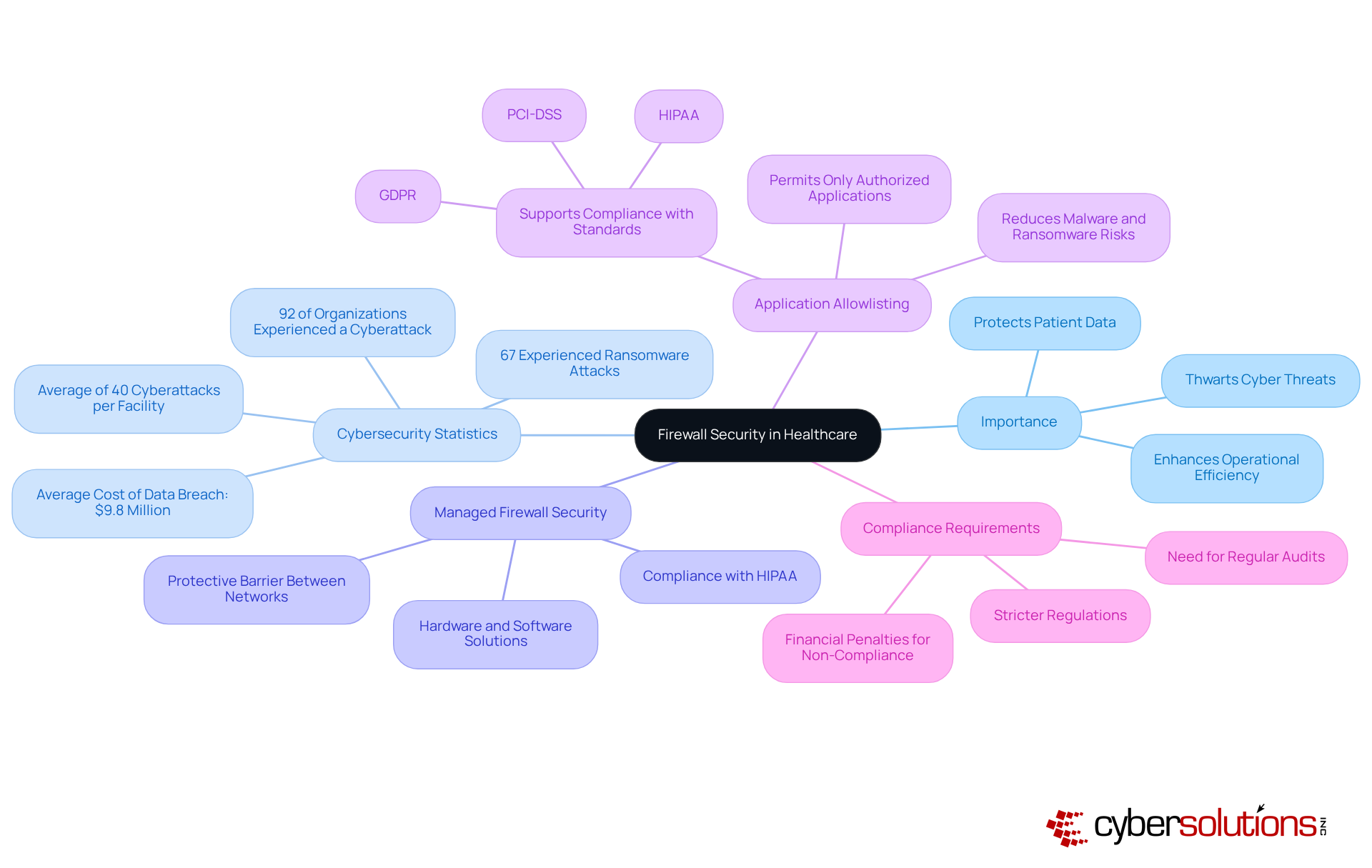
In today's digital age, cybersecurity in healthcare is not just important—it's imperative. With delicate patient data being routinely stored and exchanged, the role of firewall security, which encompasses both hardware and software solutions, cannot be overstated. This acts as a protective barrier between trusted internal networks and untrusted external environments, effectively thwarting unauthorized access and cyber threats, while ensuring compliance with stringent regulations like HIPAA.
Recent statistics underscore the urgency for robust solutions: in 2024, medical facilities faced an alarming average of cyber incidents, with 92% reporting at least one incident. The financial ramifications are staggering, as the costs of data breaches highlight the consequences of inadequate security measures. Furthermore, recent studies indicate a rise in cyberattacks, further emphasizing the necessity for firewalls to ensure patient data protection.
Beyond firewall management, application whitelisting emerges as a vital aspect of a comprehensive cybersecurity strategy. By permitting only authorized applications to operate, organizations can significantly reduce the risk of malware, ransomware, and unauthorized software execution. This proactive approach not only mitigates vulnerabilities but also aids medical entities in meeting compliance requirements.
Implementing effective firewalls and application controls is essential while enhancing operational efficiency. This makes it a crucial investment for CFOs aiming to optimize cybersecurity budgets. By prioritizing these protective measures, medical institutions can safeguard their resources, maintain patient trust, and minimize the risk of costly fines associated with data breaches. Real-world examples illustrate this point: entities that have successfully adopted advanced protection solutions report improved security and compliance with regulatory standards, underscoring the critical importance of these measures in today's digital landscape.
Explore Different Types of Firewalls and Their Applications
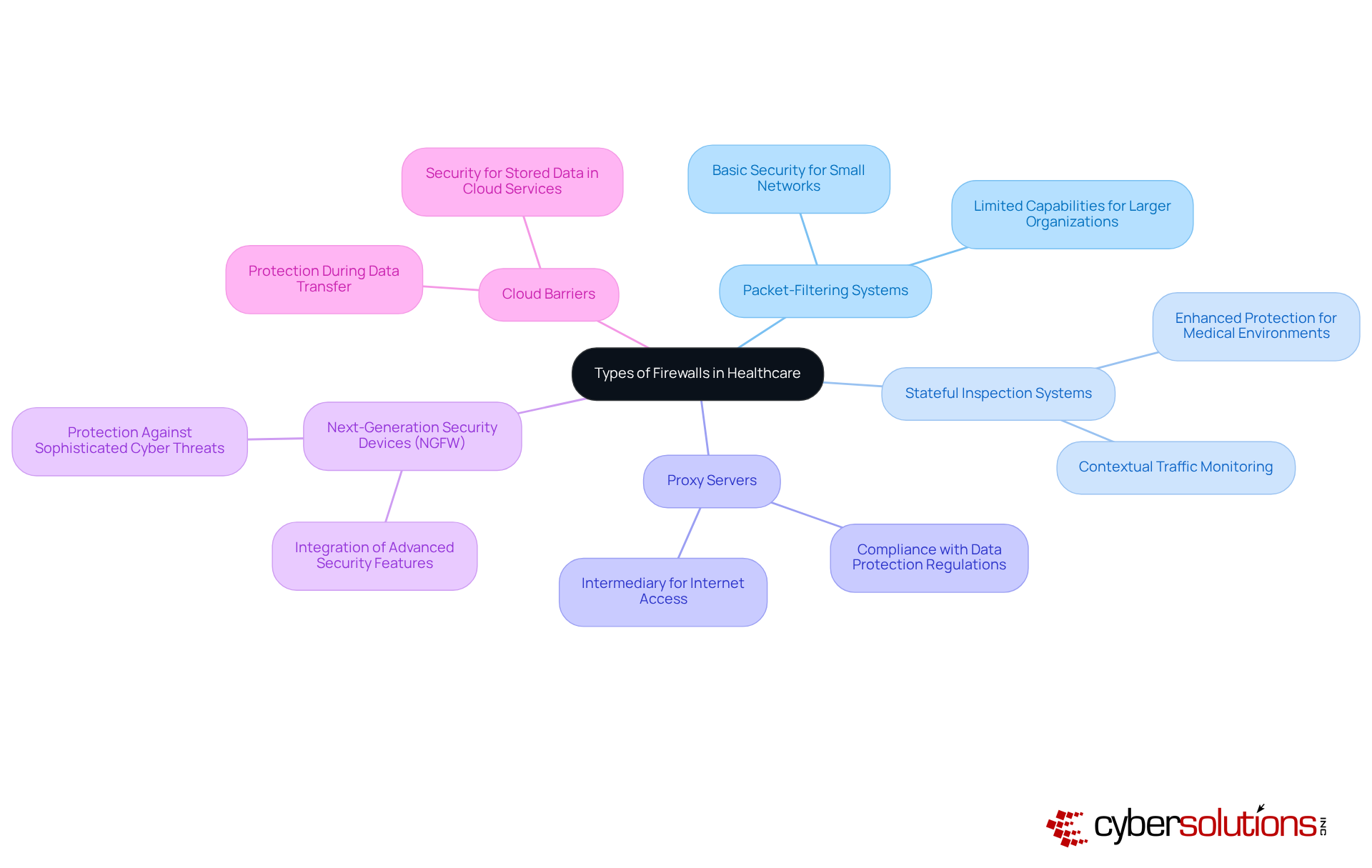
In the rapidly evolving landscape of cybersecurity, firewall security is indispensable for safeguarding medical organizations from cyber threats. Understanding the various types of firewalls is essential for effective security in this sector. Here’s an overview of the primary firewall types and their applications in healthcare:
- Packet Filtering Firewalls: These foundational systems scrutinize data packets, permitting or denying them based on established rules. While suitable for smaller networks, their limited capabilities may not suffice for larger medical organizations that demand more robust solutions.
- Stateful Inspection Firewalls: By monitoring the state of active connections, these firewalls make decisions based on the context of the traffic. This type offers enhanced protection compared to packet filtering firewalls and is frequently employed in medical environments, where security is paramount for ensuring secure connections.
- Proxy Servers: Serving as intermediaries between users and the internet, proxy servers add an extra layer of security by masking internal IP addresses. They are particularly beneficial for medical institutions that need to oversee and manage internet usage, ensuring compliance with regulations.
- Next-Generation Firewalls (NGFW): These advanced systems integrate traditional security functionalities with features such as intrusion prevention systems (IPS) and application awareness. NGFWs are ideal for medical institutions facing sophisticated threats, providing extensive defense against various attacks.
- Cloud Barriers: As medical institutions increasingly migrate to cloud services, cloud barriers deliver adaptable protection solutions that secure data during transfer and while stored. They are vital for entities aiming to protect sensitive patient information while leveraging cloud technologies.
Looking ahead to 2025, the market share of these protective technologies in healthcare is expected to reflect a growing preference for NGFWs and cloud defenses, driven by the necessity for advanced protection strategies against evolving cyber threats. By comprehending these types of barriers and their specific applications, organizations can implement solutions that align with their security requirements and budget constraints.
Implement Firewall Security: A Step-by-Step Guide for CFOs
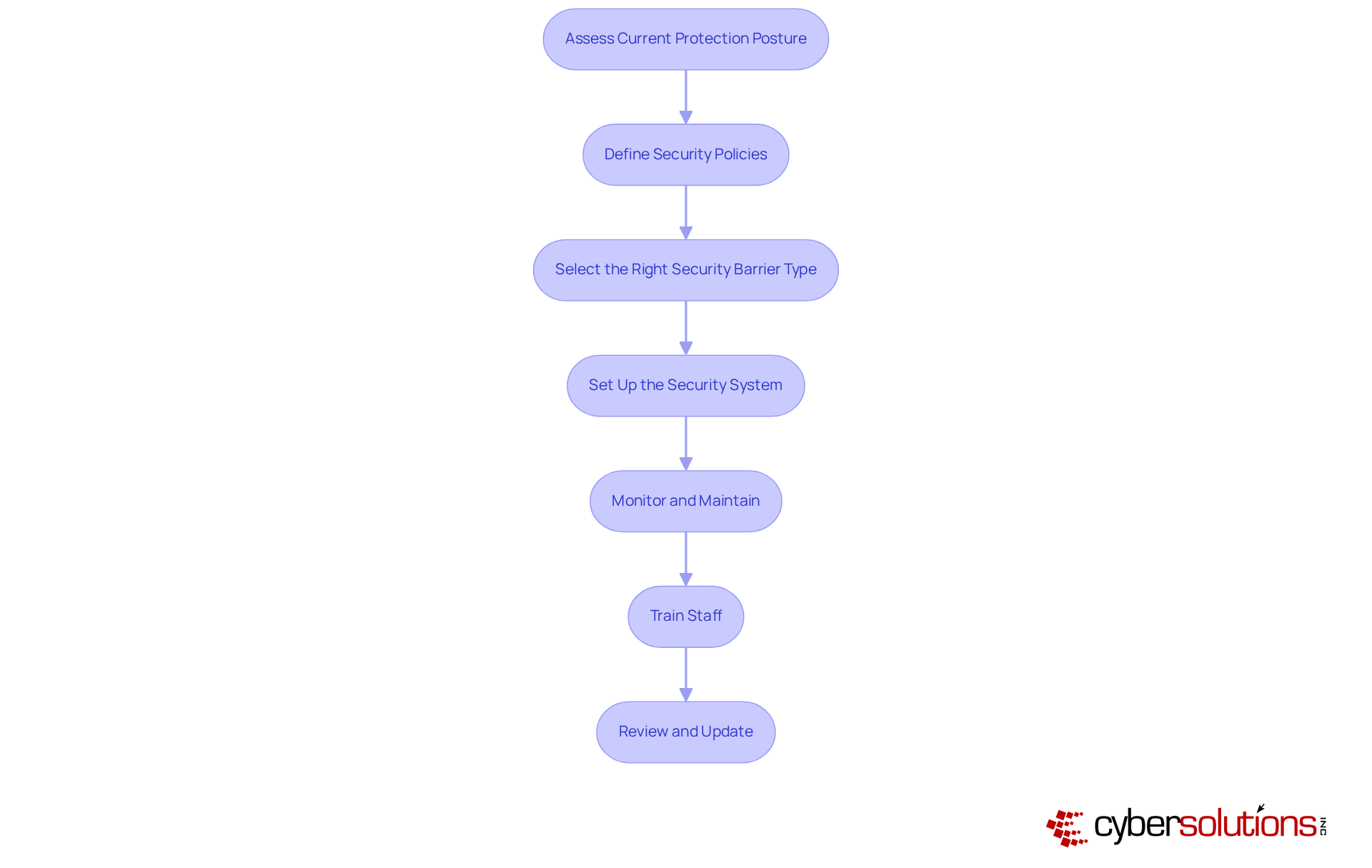
Implementing firewall security is essential in today’s healthcare landscape, where threats are increasingly sophisticated. CFOs must lead the charge in implementing security measures while ensuring compliance. Here are several key steps to effectively implement firewall security:
- Evaluate Current Security: Begin by evaluating your organization's existing protective measures and identifying vulnerabilities. This evaluation will guide your security strategy and assist in prioritizing areas requiring attention. Conducting a risk assessment is essential to identify compliance gaps and risks within your systems, providing actionable recommendations to address vulnerabilities.
- Define Security Policies: Establish clear policies that outline acceptable use, access controls, and data protection measures. These policies will direct the setup of your security system and ensure adherence to regulations such as HIPAA.
- Select the Right Security Barrier Type: Based on your assessment and policies, choose the appropriate category of security barrier that meets your organization's needs. Consider factors such as scalability, ease of management, and integration with existing systems to ensure seamless operation.
- Set Up the Security System: Collaborate with IT experts to set up the security system in line with your established policies. Ensure that rules are set to allow legitimate traffic while blocking unauthorized access, thereby protecting sensitive patient information.
- Monitor and Maintain: Regularly check logs and performance to detect any anomalies or breaches. Proactive monitoring is crucial to detect and respond to threats before they compromise sensitive data. Arrange regular maintenance to update security software and guidelines as necessary, swiftly addressing vulnerabilities to reduce risks.
- Train Staff: Instruct employees on the significance of cybersecurity and optimal methods for upholding a safe environment. Regular training can significantly reduce the likelihood of breaches caused by human error.
- Review and Update: Periodically assess your security measures and policies to ensure they remain effective against evolving threats. This ongoing assessment is crucial for adapting to new vulnerabilities and risks. A compliance officer can provide strategic guidance and oversight to direct your compliance initiatives and manage protection strategies without the expense of a full-time employee.
By diligently following these steps, CFOs can effectively lead their organizations in implementing firewall security measures that not only protect sensitive data but also ensure compliance.
Conclusion
In the realm of healthcare, the significance of managed firewall security cannot be overstated. As cyber threats grow increasingly sophisticated, CFOs must prioritize the implementation of robust firewall solutions to protect sensitive patient data and ensure compliance with industry regulations. This tutorial underscores the critical role that managed firewall security plays in safeguarding healthcare organizations against potential breaches and the financial repercussions that follow.
Key insights discussed include:
- Alarming statistics surrounding cyberattacks in the healthcare sector
- The various types of firewalls available
- Essential steps for effective implementation
From assessing current security postures to training staff and regularly updating policies, each step is crucial for establishing a comprehensive cybersecurity strategy. Moreover, the importance of application allowlisting and the selection of appropriate firewall types are highlighted as pivotal components in enhancing overall security.
Ultimately, investing in managed firewall security is not merely a technical necessity but a strategic imperative for healthcare CFOs. By proactively addressing cybersecurity challenges and fostering a culture of compliance, organizations can protect their valuable resources, maintain patient trust, and mitigate the risks associated with data breaches. Taking action now ensures that healthcare institutions are well-equipped to navigate the evolving landscape of cybersecurity threats, safeguarding both their operations and the sensitive data they manage.
Frequently Asked Questions
What is firewall security in healthcare?
Firewall security in healthcare refers to managed security solutions that include both hardware and software to protect sensitive patient data by creating a barrier between trusted internal networks and untrusted external environments, preventing unauthorized access and cyber threats.
Why is firewall security important in the healthcare sector?
Firewall security is crucial in healthcare to safeguard delicate patient data, ensure compliance with regulations like HIPAA, and protect against the increasing number of cyberattacks targeting medical facilities.
What statistics highlight the need for robust firewall security in healthcare?
In 2024, medical facilities experienced an average of 40 cyberattacks each, with 92% reporting at least one incident. The average cost of a medical data breach reached $9.8 million, and 67% of healthcare entities faced ransomware attacks.
What is application allowlisting, and why is it important?
Application allowlisting is a cybersecurity strategy that permits only authorized applications to run within an organization. It is important because it reduces the risk of malware, ransomware, and unauthorized software execution, helping organizations meet compliance requirements.
How do managed firewall security and application allowlisting contribute to compliance?
These measures help healthcare organizations meet compliance standards such as HIPAA, PCI-DSS, and GDPR by proactively protecting sensitive data and minimizing vulnerabilities.
What are the financial implications of inadequate cybersecurity measures in healthcare?
Inadequate cybersecurity can lead to significant financial ramifications, with the average cost of a medical data breach reaching $9.8 million, alongside potential fines for non-compliance with regulations.
How can healthcare institutions benefit from implementing firewall security and application allowlisting?
By implementing these protective measures, healthcare institutions can safeguard patient data, enhance operational efficiency, maintain patient trust, and reduce the risk of costly fines associated with data breaches.
Are there real-world examples of the effectiveness of these cybersecurity measures?
Yes, entities that have adopted advanced protection solutions and application allowlisting report notable reductions in breach incidents and improved compliance with regulatory standards, demonstrating the critical importance of these measures.
List of Sources
- Define Firewall Security and Its Importance in Healthcare
- Key Cyber Security Statistics for 2026 (https://sentinelone.com/cybersecurity-101/cybersecurity/cyber-security-statistics)
- cobalt.io (https://cobalt.io/blog/cybersecurity-statistics-2024)
- 38 Must-Know Healthcare Cybersecurity Stats (https://varonis.com/blog/healthcare-cybersecurity-statistics)
- Healthcare Cybersecurity Statistics 2024 (https://ispartnersllc.com/blog/healthcare-cybersecurity-statistics)
- Explore Different Types of Firewalls and Their Applications
- scribd.com (https://scribd.com/doc/218983430/Handbook-of-Biomedical-Informatics)
- cshub.com (https://cshub.com/attacks/articles/cyber-attacks-data-breaches-february-2025)
- healthtechmagazine.net (https://healthtechmagazine.net/article/2025/08/next-generation-firewalls-in-healthcare-cybersecurity-perfcon)
- dokumen.pub (https://dokumen.pub/information-systems-management-in-practice-1292023546-9781292023540.html)
- Implement Firewall Security: A Step-by-Step Guide for CFOs
- nordlayer.com (https://nordlayer.com/blog/firewall-hipaa-compliance)
- balbix.com (https://balbix.com/insights/what-is-cyber-security-posture)
- blog.grandstream.com (https://blog.grandstream.com/case_studies/nava-healthcare-pvt.-ltd.-uc-and-networking-solution)
- pmc.ncbi.nlm.nih.gov (https://pmc.ncbi.nlm.nih.gov/articles/PMC5522514)
- scrut.io (https://scrut.io/post/evaluate-security-posture-of-company)