
Introduction
Cybersecurity has become a pressing issue for small businesses, increasingly targeted by cybercriminals at alarming rates. The financial implications of cybersecurity are significant, with costs varying widely based on factors such as industry regulations and business size. With a staggering 60% of small businesses failing within six months of a cyberattack, the critical question arises: how can these organizations effectively balance the need for robust cybersecurity measures with their budget constraints?
This article explores the complexities of cybersecurity costs for small businesses, offering valuable insights and strategies to help them navigate this challenging landscape. By understanding the current cybersecurity threats and their implications, small businesses can take proactive steps to safeguard their operations and ensure their longevity in an increasingly digital world.
Defining Cybersecurity Costs for Small Businesses
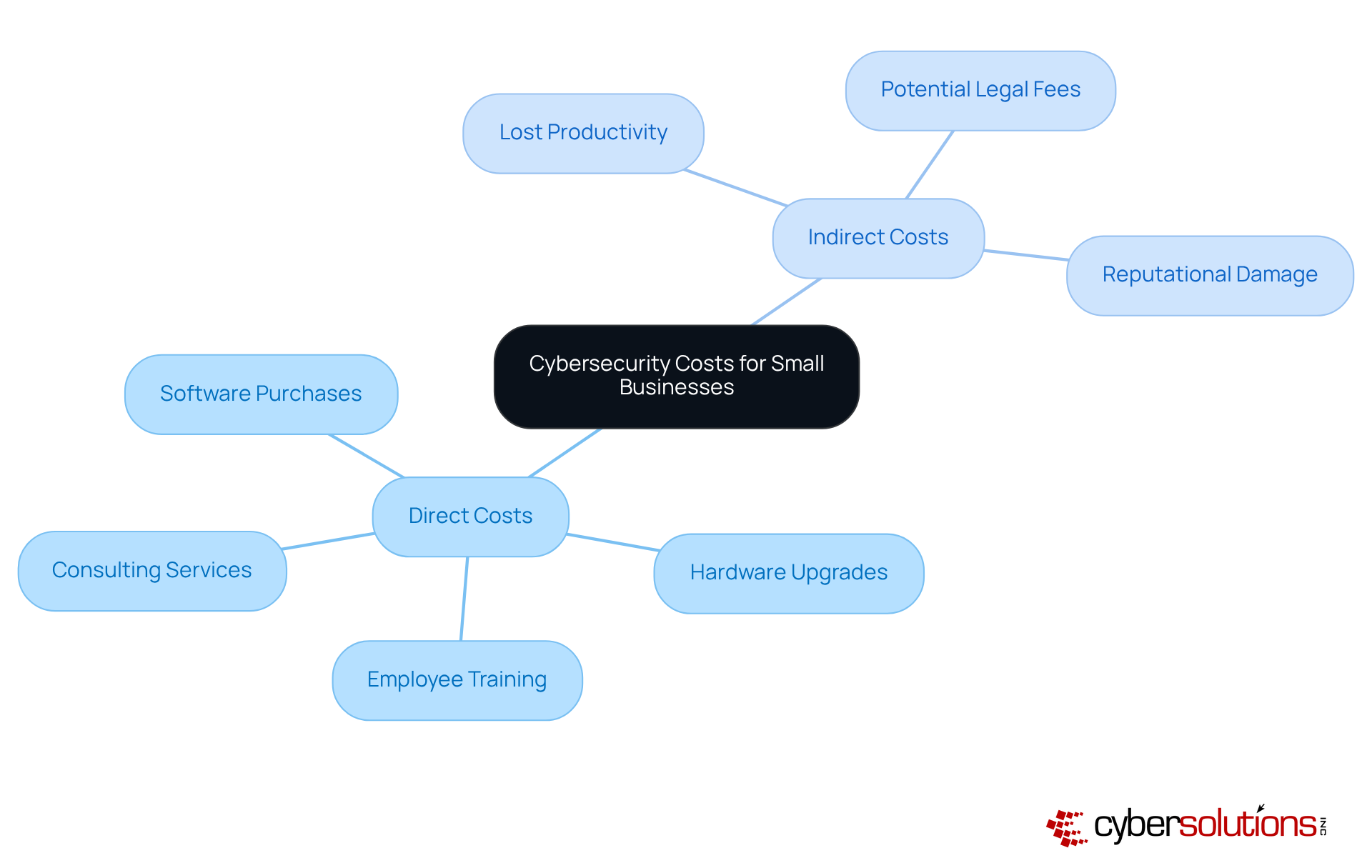
is not just an option for small enterprises; it’s a necessity. With small enterprises facing greater risks than larger firms, the stakes have never been higher. The costs can be categorized into direct and indirect expenses, both of which can significantly impact operations.
Direct costs encompass:
- Software purchases
- Hardware upgrades
- Employee training
- Consulting services
Typically, small enterprises allocate between $5,000 and $50,000 annually for cybersecurity, influenced by their size and industry requirements. However, the implications of neglecting cybersecurity can be severe. A data breach can incur costs ranging from $120,000 to $1.24 million. This stark reality underscores the importance of investing in cybersecurity.
Indirect expenses also play a crucial role, including:
- Lost productivity during a breach
- Potential legal fees
- Reputational damage
Alarmingly, 74% of small enterprise owners either self-manage their online security or rely on unqualified individuals, which can exacerbate vulnerabilities. How can these businesses mitigate such risks?
Enter Cyber Solutions, offering a flat-rate pricing model that simplifies budgeting and eliminates unexpected IT costs. This model covers everything from email licenses to advanced security services, ensuring comprehensive protection. Additionally, understanding cybersecurity solutions is vital for small-sized enterprises. CaaS provides robust solutions to meet regulatory requirements, helping organizations remain compliant and shielded from potential penalties.
This comprehensive approach not only safeguards operations but also enhances overall security strategies. By investing in cybersecurity measures, small enterprises can protect their assets and ensure a more secure future.
Key Factors Influencing Cybersecurity Expenses
Cybersecurity is not just a technical necessity; it’s a critical investment for small businesses navigating today’s digital landscape. Understanding the factors that influence the costs of cybersecurity for small businesses is essential for making informed decisions and safeguarding sensitive information.
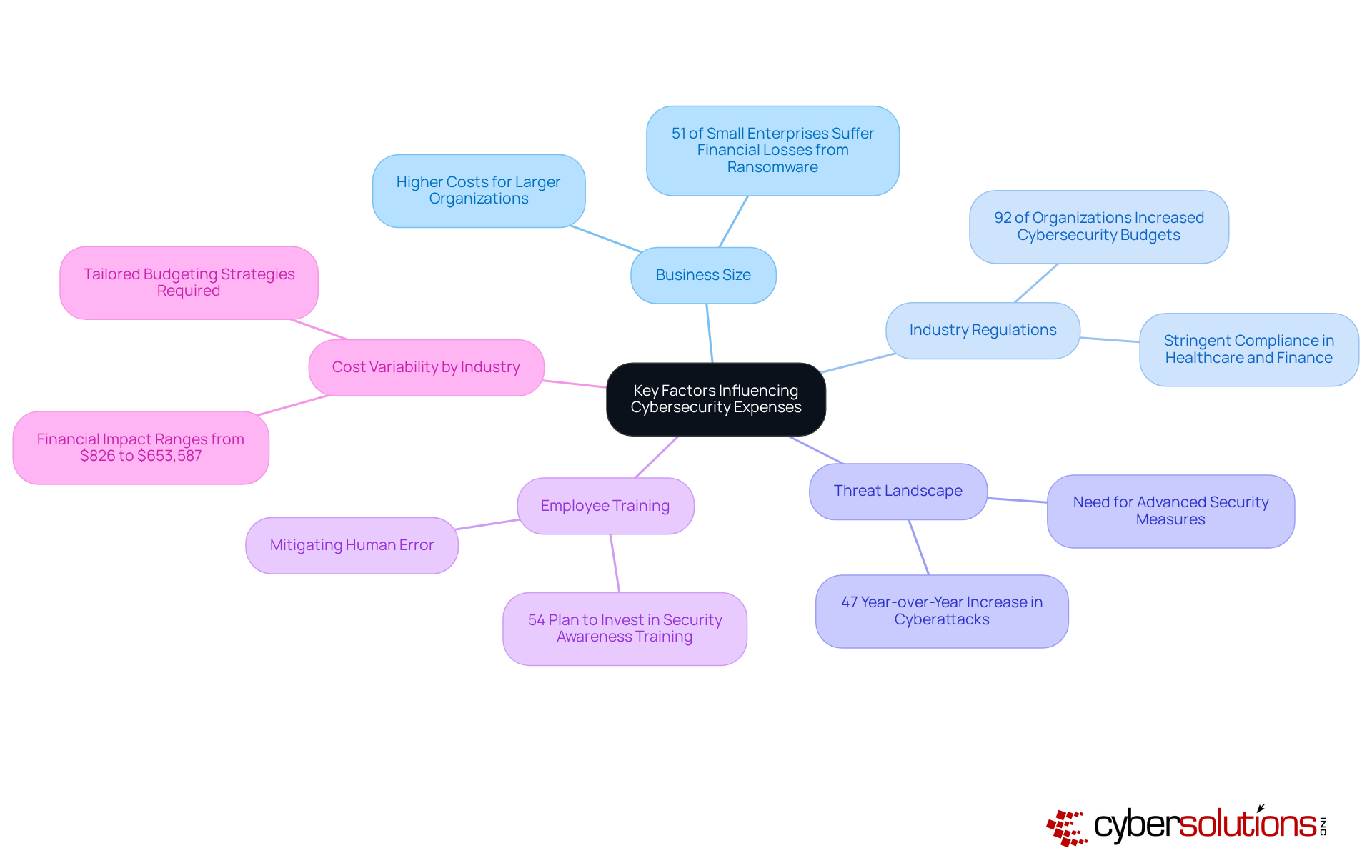
- Key considerations in determining the expenses. Larger organizations often face higher expenses due to their extensive networks and the volume of sensitive data they manage. For example, a staggering 51% of small enterprises that fall victim to ransomware report significant financial losses, underscoring the heightened risks associated with larger operations.
- Industry Regulations further complicate the financial landscape. Regulations differ across sectors, with industries like healthcare and finance facing stringent regulations that demand higher security investments. Approximately 92% of organizations have reported increased spending, driven by the need to meet regulatory compliance and manage emerging threats. This highlights the substantial financial implications of the cost of cybersecurity for small business requirements.
- The Threat Landscape is ever-evolving, compelling organizations to invest in advanced security measures. Small businesses are particularly vulnerable, experiencing a 47% year-over-year increase in cyberattacks, which underscores the urgency for enhanced defenses against increasingly sophisticated threats.
- Employee Training is another critical factor. Regular training programs are vital for reducing human error, a leading cause of many breaches. Investing in employee training not only mitigates risks but can also help reduce costs by preventing incidents before they occur. Notably, 54% of organizations plan to invest in training programs to strengthen their security posture.
- Finally, sector-specific costs must be considered. Different sectors incur varying costs of cybersecurity for small businesses when it comes to online security. For instance, the financial impact of a data breach can range from $826 to $653,587, depending on the attack type and sector involved. This variability necessitates tailored budgeting strategies to address the specific risks and compliance needs associated with the industry.
By comprehending these factors, small enterprises can navigate the complexities of cybersecurity funding more effectively, ensuring they allocate resources wisely to protect against potential threats.
Strategies for Creating an Effective Cybersecurity Budget
To establish a robust cybersecurity budget, small businesses must recognize the critical importance of understanding the risks to safeguard their digital assets. With cyber threats on the rise, it’s essential to adopt strategies that not only protect sensitive information but also ensure business continuity.
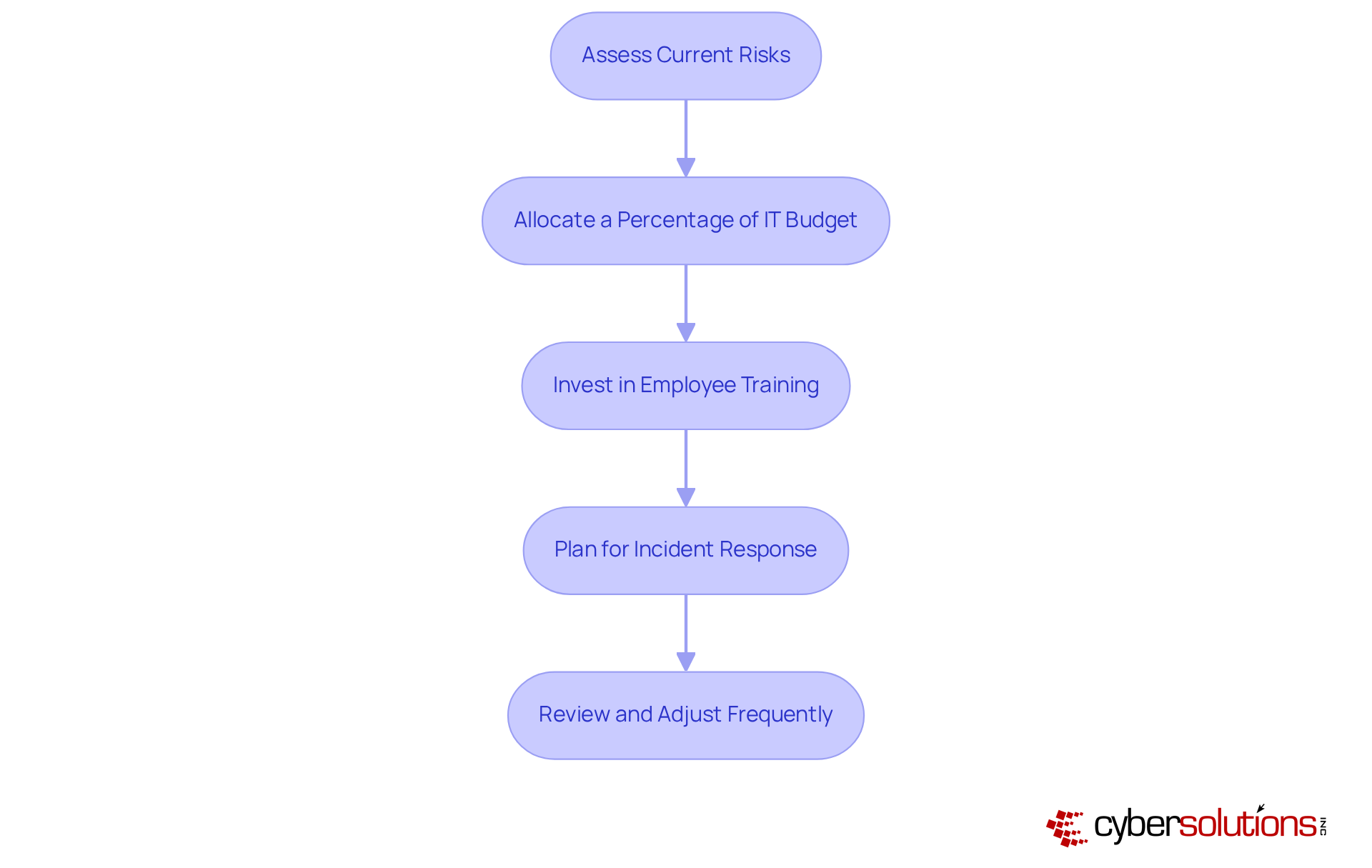
- Assess Current Risks: Start with a risk assessment to identify vulnerabilities and prioritize areas that need immediate attention. This foundational step is crucial for understanding the specific threats your organization faces.
- Allocate a Percentage of IT Budget: It’s wise to allocate a percentage of your IT budget for cybersecurity. This ensures that essential security measures are adequately funded, reflecting the growing recognition of cybersecurity's significance in organizational operations. In fact, businesses typically spend around 11% of their IT budgets on security, providing a useful benchmark for your allocation.
- Provide Employee Training: Regular training sessions are vital, as human error is the leading cause of data breaches. Investing in ongoing education for employees can significantly reduce risks and enhance your overall security posture. Remember, "that ignoring the problem is usually the most expensive choice."
- Plan for Incident Response: Designate funds for incident response and recovery efforts to minimize financial losses in the event of a breach. This planning should cover expenses related to forensic investigations, legal proceedings, and public relations strategies to effectively manage reputational damage. A single breach can demonstrate the potential costs, which can range from $50,000 to $250,000 in ransom payments, downtime, and recovery.
- Stay Updated: Cybersecurity requirements are constantly evolving; therefore, it’s crucial to monitor changes and operational shifts. This proactive approach ensures your organization remains resilient against emerging cyber risks.
Understanding the Financial Impact of Cyber Threats
The staggering costs emphasize the importance of cybersecurity. In 2025, the average cost is expected to be between $120,000 and $1.24 million due to an average data breach. This figure includes expenses like recovery efforts and legal fees, as well as indirect costs such as lost revenue and customer trust. Alarmingly, 60% of small enterprises that suffer a data breach close within six months due to the financial burden.
These statistics underscore the necessity to consider the implications when investing in cybersecurity. By taking proactive measures in their operations, they can mitigate the risk of future breaches; it's a critical business imperative that demands attention and action.

Conclusion
Investing in cybersecurity is not just an option for small businesses; it’s a vital necessity that can determine their survival in an increasingly digital and threat-filled landscape. The multifaceted costs associated with cybersecurity - ranging from direct expenses like software and employee training to indirect costs such as reputational damage - must be understood to make informed financial decisions.
Small businesses face a significantly heightened risk of cyberattacks. Many owners mismanage their security or rely on unqualified individuals, leaving them vulnerable. By adopting a comprehensive approach that includes:
- Proactive budgeting
- Employee training
- Incident response planning
small enterprises can effectively mitigate risks and protect their assets. The staggering potential costs of cyber incidents further emphasize the importance of prioritizing cybersecurity as a core component of business strategy.
The financial implications of neglecting cybersecurity can be devastating, potentially leading to closures within months of an attack. Small businesses must recognize this reality. By embracing a proactive mindset and committing to robust cybersecurity measures, organizations can safeguard their operations and secure a more resilient future. The time to act is now; investing in cybersecurity today can save small businesses from catastrophic losses tomorrow.
Frequently Asked Questions
Why is cybersecurity important for small businesses?
Cybersecurity is crucial for small businesses because they face cyberattacks 210 percent more often than larger firms, making them more vulnerable to potential threats.
What are the direct costs associated with cybersecurity for small businesses?
Direct costs include software purchases, hardware upgrades, employee training, and consulting services.
How much do small businesses typically spend on cybersecurity annually?
Small businesses typically allocate between $5,000 and $50,000 annually for cybersecurity costs, depending on their size and industry requirements.
What are the potential financial repercussions of neglecting cybersecurity?
Neglecting cybersecurity can lead to severe financial consequences from a data breach, with costs ranging from $120,000 to $1.24 million.
What are some indirect expenses related to cybersecurity for small businesses?
Indirect expenses can include lost productivity during a cyber incident, potential legal fees, and reputational damage.
What percentage of small business owners manage their own online security?
Alarmingly, 74% of small business owners either self-manage their online security or rely on unqualified individuals, which can increase vulnerabilities.
How can small businesses mitigate cybersecurity risks?
Small businesses can mitigate risks by utilizing services like Cyber Solutions, which offers a flat-rate pricing model that covers various security needs and simplifies budgeting.
What is Compliance as a Service (CaaS)?
Compliance as a Service (CaaS) provides robust solutions to help organizations meet regulatory requirements, ensuring they remain compliant and protected from potential penalties.
What benefits does investing in cybersecurity provide for small businesses?
Investing in cybersecurity helps protect business assets, enhances overall security strategies, and ensures a more secure future for the organization.
List of Sources
- Defining Cybersecurity Costs for Small Businesses
- totalassure.com (https://totalassure.com/blog/Cost-of-Cybersecurity-for-Small-Businesses-in-2025)
- execweb.com (https://execweb.com/post/cost-of-cybersecurity-for-small-businesses)
- smallbusiness.house.gov (https://smallbusiness.house.gov/news/documentsingle.aspx?DocumentID=407346)
- purplesec.us (https://purplesec.us/learn/data-breach-cost-for-small-businesses)
- heimdalsecurity.com (https://heimdalsecurity.com/blog/small-business-cybersecurity-statistics)
- Key Factors Influencing Cybersecurity Expenses
- totalassure.com (https://totalassure.com/blog/Cost-of-Cybersecurity-for-Small-Businesses-in-2025)
- dailysecurityreview.com (https://dailysecurityreview.com/cyber-security/gsma-warns-of-rising-cybersecurity-costs-amid-fragmented-regulations)
- New Cybersecurity Regulations Drive Strategy and Budget Increases | Swimlane (https://swimlane.com/blog/cybersecurity-regulations-drive-strategy-and-budget-increases)
- strongdm.com (https://strongdm.com/blog/small-business-cyber-security-statistics)
- Strategies for Creating an Effective Cybersecurity Budget
- upguard.com (https://upguard.com/blog/increasing-cybersecurity-budgets)
- ais-now.com (https://ais-now.com/blog/cybersecurity-awareness-month-2025-small-business-budget)
- heimdalsecurity.com (https://heimdalsecurity.com/blog/small-business-cybersecurity-statistics)
- ibm.com (https://ibm.com/think/insights/making-smart-cybersecurity-spending-decisions-in-2025)
- techmagic.co (https://techmagic.co/blog/cybersecurity-budget)
- Understanding the Financial Impact of Cyber Threats
- Must-Know Small Business Cybersecurity Statistics for 2026 (https://bdemerson.com/article/small-business-cybersecurity-statistics)
- guardz.com (https://guardz.com/blog/small-business-cyberattacks-rise-in-2025-guardz-mid-year-findings)
- purplesec.us (https://purplesec.us/learn/data-breach-cost-for-small-businesses)
- hiscoxgroup.com (https://hiscoxgroup.com/news/press-releases/2025/29-09-25)
- senscy.com (https://senscy.com/the-ultimate-small-business-cybersecurity-guide-protecting-your-smb-in-todays-landscape)