Introduction
Understanding compliance is paramount for CFOs in the healthcare sector, where the stakes are exceptionally high and the regulatory landscape is continuously evolving. This article explores the multifaceted definition of compliance, emphasizing its critical role in safeguarding financial integrity and operational efficiency within healthcare organizations.
As regulatory demands become increasingly complex, one must consider:
- How can CFOs adeptly navigate these challenges to not only ensure compliance but also foster institutional growth and resilience?
Define Compliance: Core Concepts and Importance
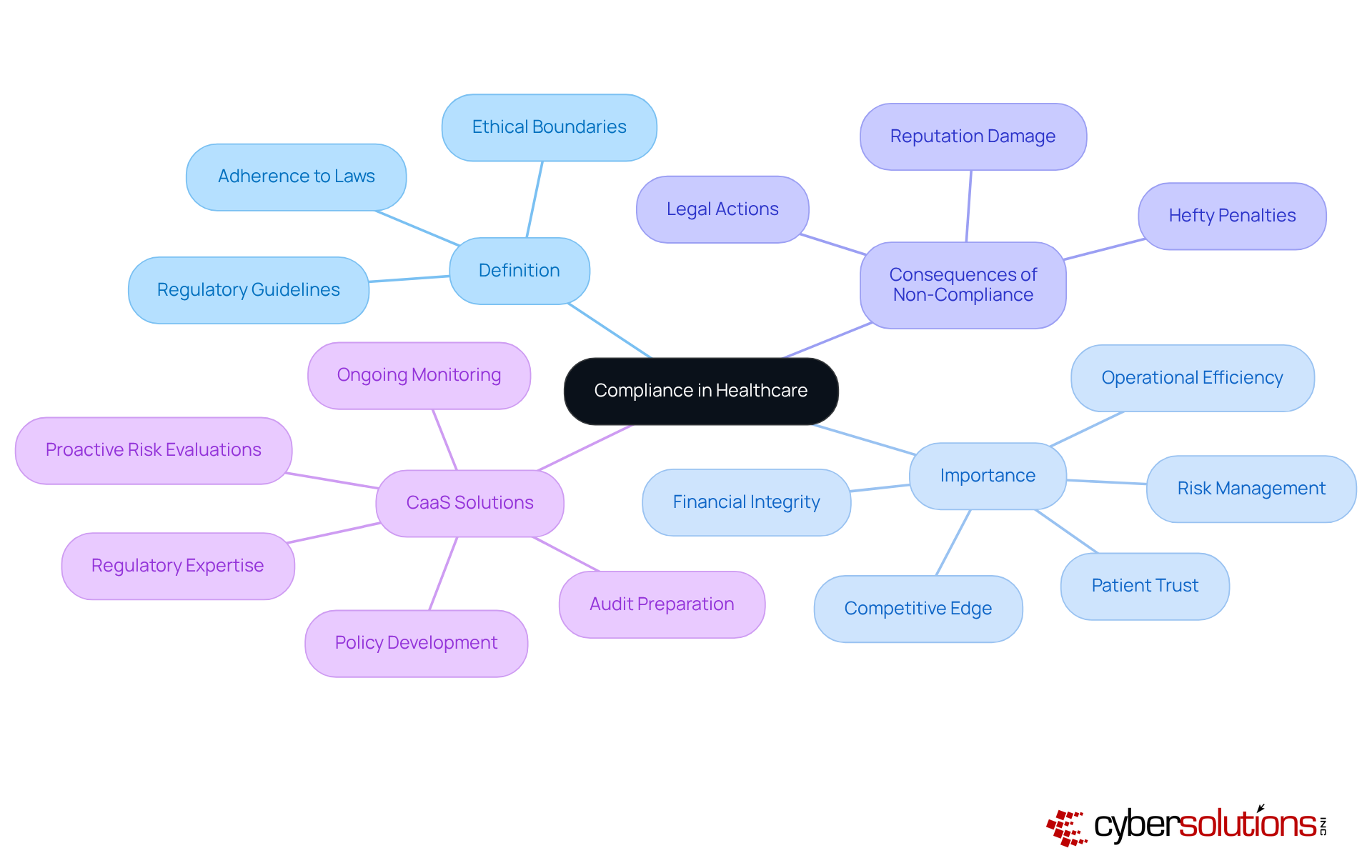
The definition of compliance in the medical field refers to the critical process of adhering to the laws, regulations, and guidelines governing medical practices. It encompasses a wide range of activities aimed at ensuring healthcare entities operate according to the standards within legal and ethical boundaries. For CFOs, understanding compliance is not merely beneficial; it is essential, as it directly influences financial performance, operational efficiency, and effective risk management. The concept of compliance goes beyond legal obligations; it is a strategic imperative that helps organizations avoid penalties, enhance patient trust, and maintain a competitive edge in the marketplace.
The importance of compliance lies in the potential risks, as the consequences of non-compliance can be severe, including hefty penalties, legal actions, and significant damage to reputation. In this context, utilizing compliance-as-a-service solutions presents a valuable opportunity for healthcare entities. These solutions provide access to enterprise-level regulatory expertise without the prohibitive costs associated with maintaining in-house personnel. CaaS streamlines the regulatory process through comprehensive assessments, policy development, ongoing monitoring, and proactive risk evaluations—elements that are essential to understanding the challenges with stringent regulations like HIPAA.
This proactive approach not only mitigates risks but also prepares organizations for audits, thereby enhancing their overall compliance posture. In an era where regulatory landscapes are constantly evolving, embracing CaaS is not just a choice; it is a necessary step towards ensuring robust compliance, reflecting the organization's commitment to ethical standards, and fostering trust within the healthcare sector.
Trace the Origins of Compliance: Historical Context and Evolution
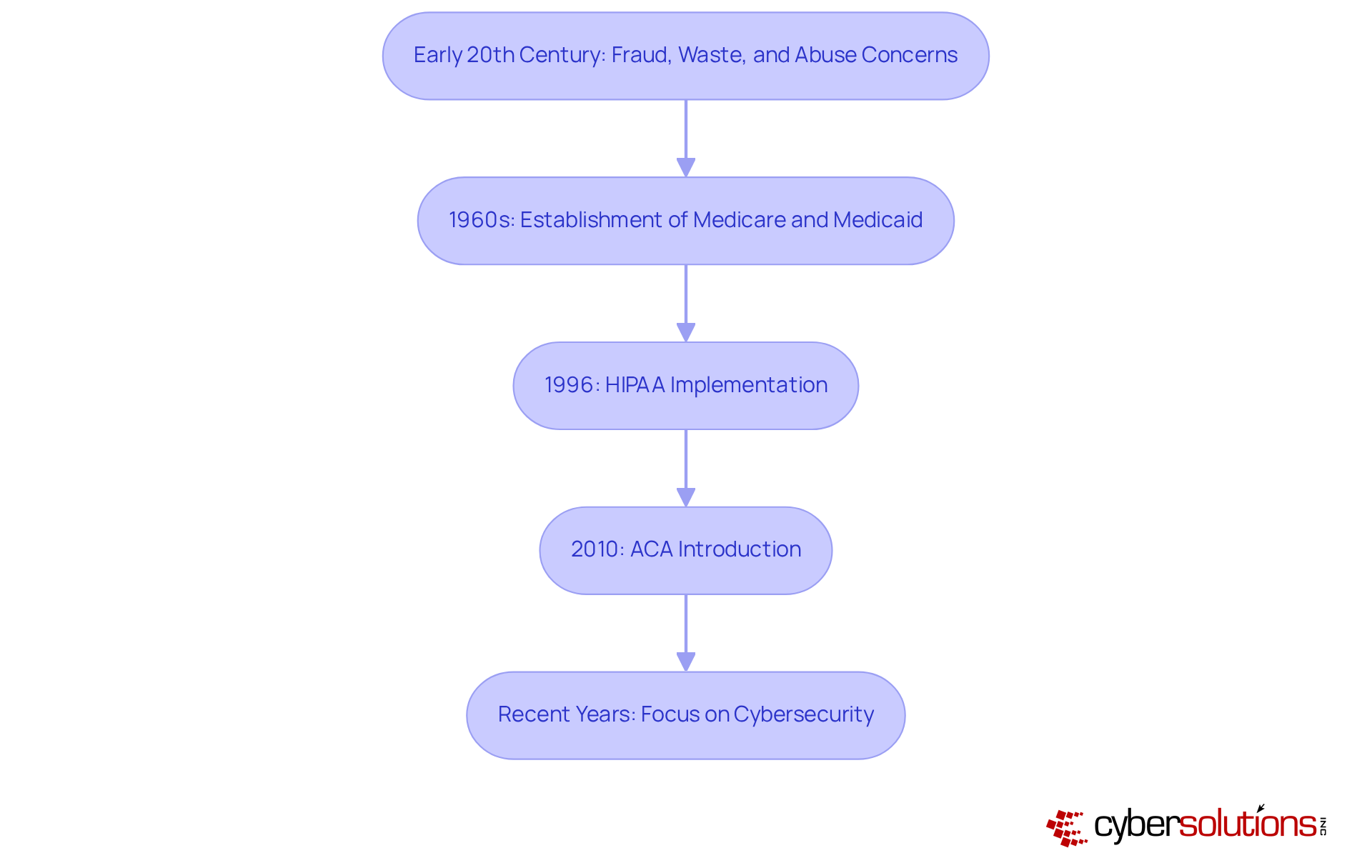
The importance of cybersecurity in healthcare cannot be overstated, especially as the landscape of threats continues to evolve. The roots of compliance in medical settings date back to the early 20th century, when concerns about fraud, waste, and abuse began to emerge. The establishment of Medicare and Medicaid in the 1960s was a pivotal moment, introducing a regulatory framework for medical service providers. Over the decades, laws and guidelines like the Health Insurance Portability and Accountability Act (HIPAA) and the Affordable Care Act (ACA) have contributed to the definition of compliance, driven by growing concerns about patient privacy, billing accuracy, and the integrity of medical services.
In recent years, the evolution of compliance has expanded to include a definition of cybersecurity that encompasses risk management. For instance, following a ransomware attack, a medical provider promptly initiated staff training on recognizing suspicious emails and adhering to proper cybersecurity practices. This proactive approach not only restored their 4,500 endpoints within two weeks but also reinforced their commitment to ongoing education and a Zero Trust security posture. Such measures are critical for CFOs to consider, as they reflect a broader societal commitment to ensuring that medical organizations operate ethically, transparently, and securely.
The challenges faced by healthcare organizations in maintaining cybersecurity are significant. With the increasing frequency of cyberattacks, the need for robust security measures is paramount. CFOs must navigate these complexities, balancing financial constraints with the necessity of effective cybersecurity solutions. Engaging with Cyber Solutions can provide healthcare organizations with the tools and expertise required to address these pressing challenges effectively.
Identify Key Components: Types and Areas of Compliance
Key elements of adherence in healthcare encompass regulations, standards, and the definition of compliance.
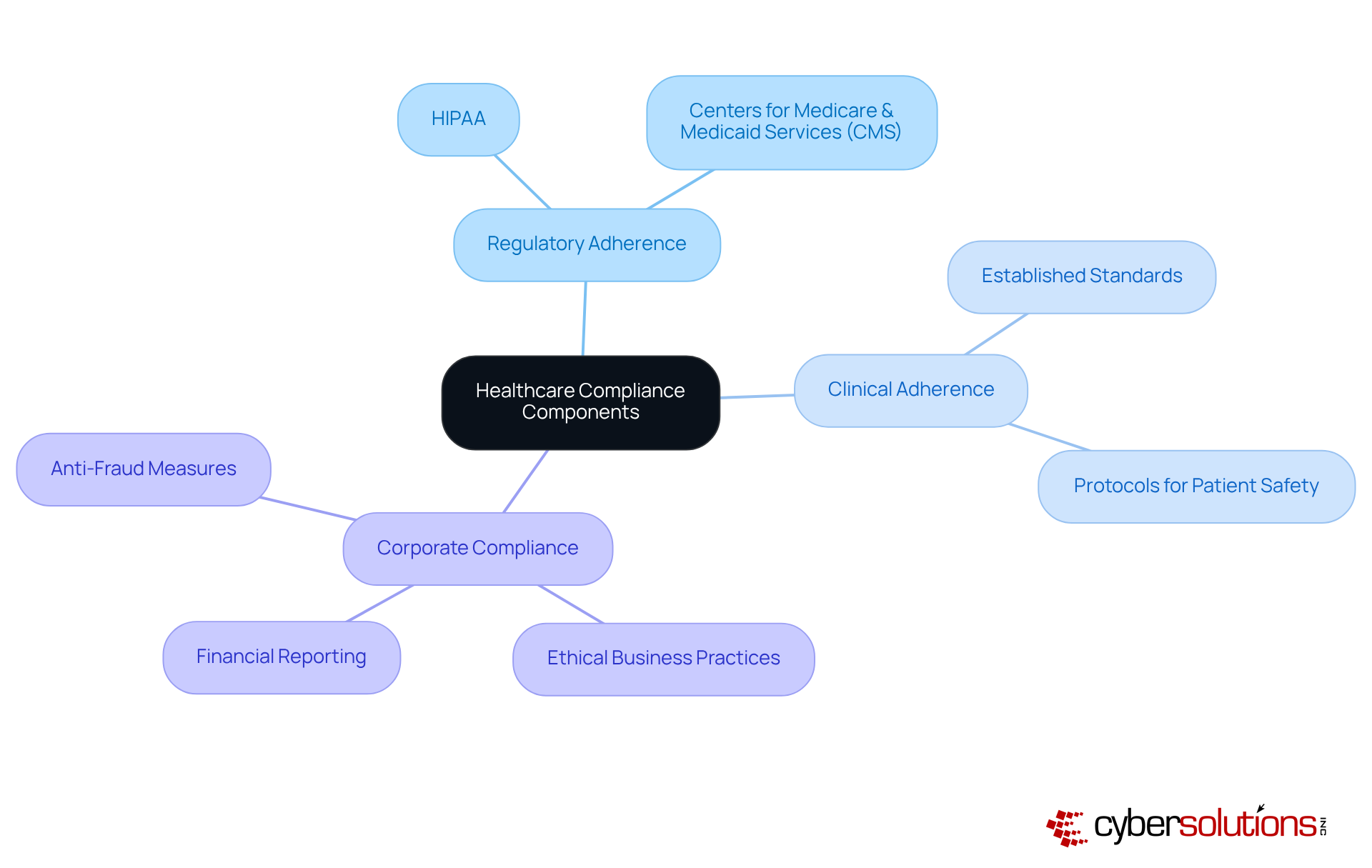
- Compliance is crucial, involving strict adherence to laws and regulations established by government agencies, such as the Food and Drug Administration and the Centers for Medicare & Medicaid Services (CMS). This foundational aspect ensures that healthcare organizations operate within legal frameworks, thus protecting patient rights and institutional integrity.
- Quality assurance focuses on delivering medical services in accordance with established standards and protocols. This commitment is vital for ensuring patient safety and maintaining a high quality of care. By aligning clinical practices with recognized guidelines, healthcare providers can enhance patient outcomes and foster trust within the community.
- Ethical conduct encompasses ethical business practices, which include rigorous financial reporting and anti-fraud measures. This element is essential in preserving the integrity of medical institutions and safeguarding patient interests.
Each of these components plays a pivotal role in the healthcare landscape, highlighting the necessity for compliance.
Examine Compliance in Finance: Regulatory Challenges and Importance
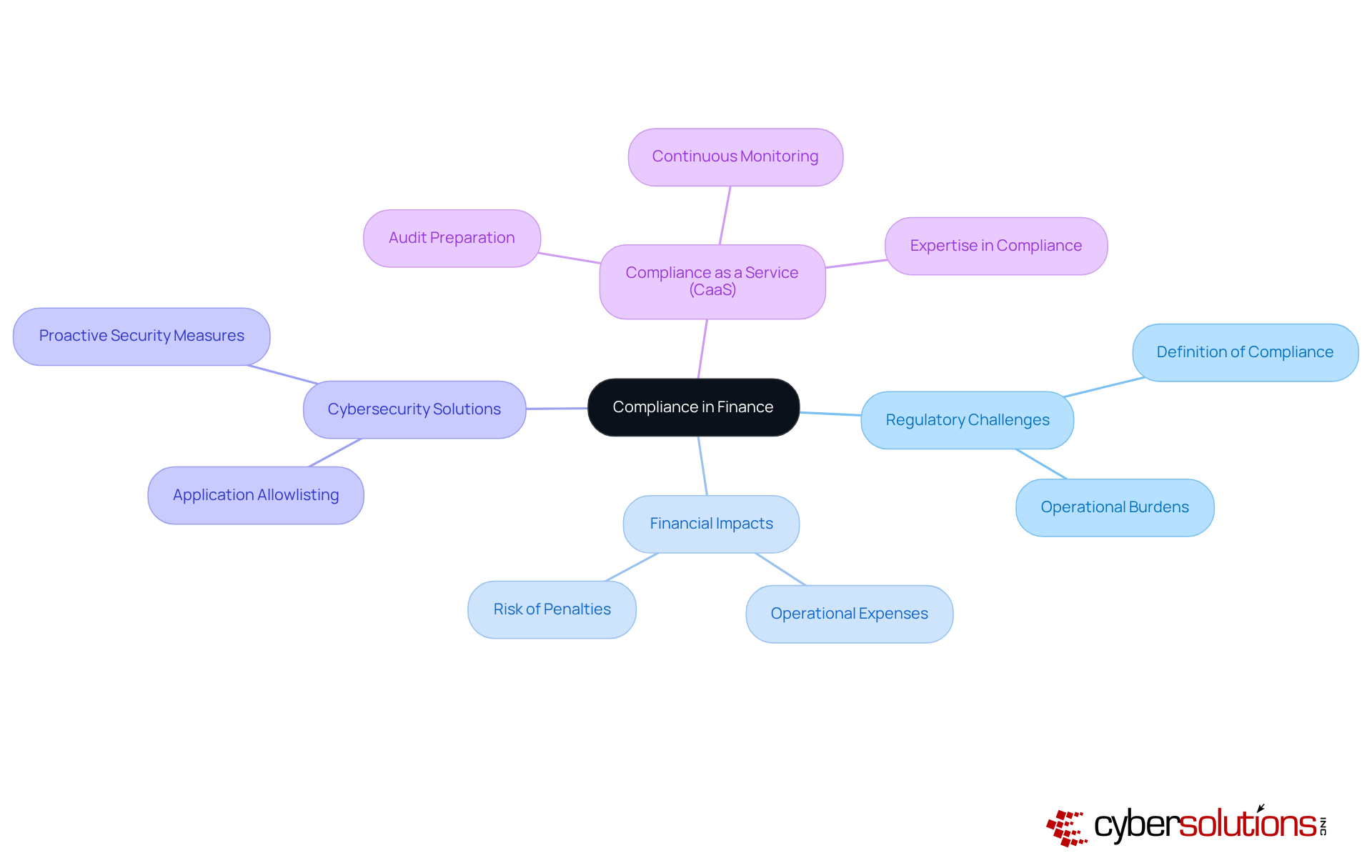
In today’s healthcare landscape, cybersecurity is not just an option; it is a necessity. The intricate regulatory environment presents unique challenges for healthcare CFOs, who must navigate the complexities of financial guidelines while also managing operational expenses and maximizing revenue. This dual responsibility often creates tension, especially when regulatory demands result in increased operational burdens. For instance, implementing solutions like cybersecurity measures can significantly bolster cybersecurity by proactively preventing malware and unauthorized software from executing. This proactive approach not only enhances security but also clarifies the relationship with critical regulations such as HIPAA.
While regulatory software plays a vital role in compliance and minimizing risks, it also requires a substantial financial investment. CFOs are tasked with balancing these conflicting demands, ensuring that the investment does not compromise the organization's financial health. Moreover, leveraging consulting services can equip healthcare entities with the necessary expertise to effectively navigate the complex regulatory landscape. This service offers valuable benefits, including audit preparation and continuous monitoring, which are essential for maintaining compliance.
Ultimately, understanding the regulatory management is a strategic advantage that can enhance organizational performance. By reducing the risk of penalties and fostering a culture of accountability within the organization, CFOs can ensure that their entities not only meet regulatory requirements but also thrive in a competitive environment.
Conclusion
Understanding compliance within the healthcare sector is paramount for CFOs, as it encompasses adherence to a complex framework of laws, regulations, and ethical guidelines. This multifaceted concept safeguards financial integrity and operational efficiency while enhancing patient trust and organizational reputation. For CFOs, compliance transcends mere legal obligations; it emerges as a strategic imperative that shapes the very foundation of healthcare organizations.
The historical context of compliance reveals its evolution from early regulatory frameworks to a contemporary emphasis on cybersecurity and proactive risk management. Key components—regulatory, clinical, and corporate compliance—underscore the necessity for a comprehensive approach in navigating the intricate healthcare landscape. Moreover, the role of Compliance as a Service (CaaS) solutions presents a practical pathway for healthcare entities to bolster their compliance efforts while effectively managing financial constraints.
In light of the challenges posed by a constantly evolving regulatory environment, it is crucial for CFOs to prioritize compliance as a core component of their organizational strategy. By embracing innovative solutions and fostering a culture of accountability, healthcare organizations can not only meet regulatory demands but also position themselves for long-term success in a competitive marketplace. The commitment to understanding and implementing compliance will ultimately pave the way for improved patient outcomes and a more resilient healthcare system.
Frequently Asked Questions
What is the definition of compliance in the medical field?
Compliance in the medical field refers to the process of adhering to laws, regulations, and guidelines governing medical practices, ensuring that healthcare entities operate within legal and ethical boundaries.
Why is understanding regulatory adherence important for CFOs?
For CFOs, understanding regulatory adherence is essential as it directly influences financial integrity, operational efficiency, and effective risk management within healthcare organizations.
What are the consequences of non-compliance in healthcare?
The consequences of non-compliance can include hefty penalties, legal actions, and significant damage to an organization’s reputation.
What is Compliance As A Service (CaaS)?
Compliance As A Service (CaaS) solutions provide healthcare entities with access to enterprise-level regulatory expertise without the high costs of maintaining in-house personnel.
How does CaaS help healthcare organizations?
CaaS helps healthcare organizations by streamlining the regulatory process through comprehensive assessments, policy development, ongoing monitoring, and proactive risk evaluations, which are essential for understanding compliance with regulations like HIPAA.
What are the benefits of a proactive compliance approach?
A proactive compliance approach safeguards patient information, prepares organizations for audits, and enhances their overall compliance posture in a constantly evolving regulatory landscape.
Why is embracing CaaS considered necessary for healthcare organizations?
Embracing CaaS is considered necessary as it ensures robust compliance, reflects the definition of compliance, and fosters trust within the healthcare sector.