Introduction
In an era where cybersecurity threats loom larger than ever, organizations are confronted with the pressing challenge of adhering to stringent CMMC Level 2 requirements. For C-Suite leaders, comprehending these regulations transcends mere compliance; it embodies a pivotal opportunity to bolster their organization’s security posture and competitive edge within the defense contracting sector. As the compliance deadline approaches, executives must ask themselves: how can they ensure their organizations not only meet these requirements but also leverage them to cultivate resilience against the ever-evolving landscape of cyber threats?
Cyber Solutions Inc.: Comprehensive Cybersecurity Services for CMMC Level 2 Compliance
In today's digital landscape, the importance of cybersecurity cannot be overstated, particularly for organizations striving to meet the CMMC Level 2 requirements. Cyber Solutions Inc. is specifically tailored to assist these organizations. Their Adherence as a Service (CaaS) solutions simplify the navigation of compliance challenges, providing risk assessments, policy development, and ongoing adherence monitoring that cater to the unique needs of various industries. This customized strategy ensures that clients can effectively manage the complexities of regulations while maintaining operational efficiency.
With the crucial deadline for compliance set for December 16, 2024, entities must act quickly. The adherence to CMMC Level 2 necessitates thorough preparation, highlighting the significance of external validation in the adherence process. By harnessing advanced technologies and expert insights, Cyber Solutions empowers organizations to achieve compliance, allowing them to focus on their core business objectives. The incorporation of these services not only enhances regulatory preparedness but also strengthens the overall cybersecurity posture, establishing businesses as trustworthy allies in the Defense Industrial Base.
Moreover, employee training programs are vital components of Level 2 compliance, ensuring that the workforce is equipped with the necessary knowledge to effectively mitigate cyber threats. Cyber Solutions also offers robust incident response services, rapidly identifying, containing, and mitigating threats to restore systems and ensure business continuity.
Understanding the certification tiers is essential:
- Level 1 emphasizes fundamental cybersecurity practices.
- Level 2 requirements focus on intermediate strategies for safeguarding Controlled Unclassified Information (CUI).
- Level 3 incorporates advanced protocols for the most sensitive data.
This comprehensive approach not only prepares organizations for compliance but also fortifies their defenses against evolving cyber threats.
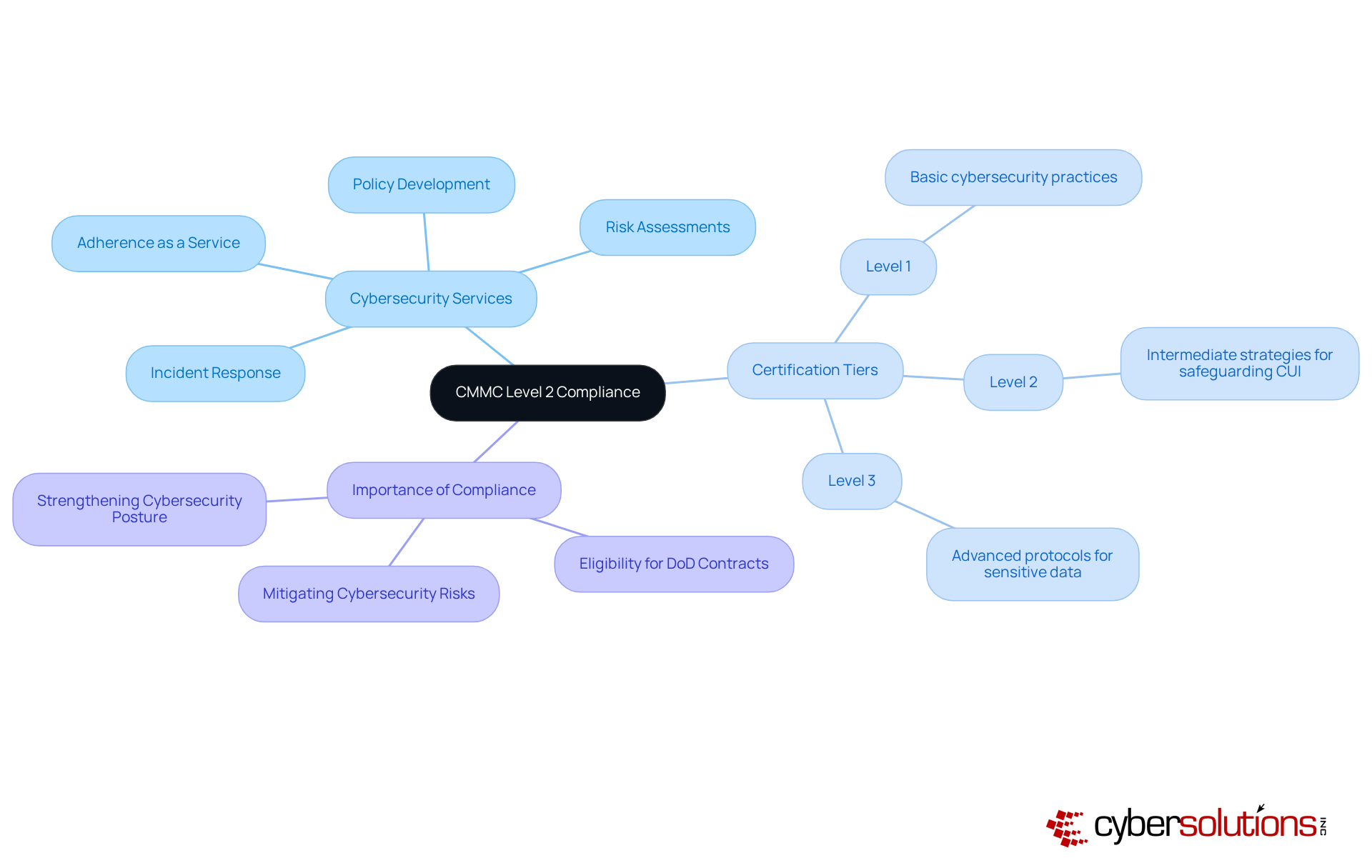
CMMC Level 2 Requirements: Key Controls and Practices
The mandate the implementation of across various domains, including access control, incident response, and risk management. Key practices encompass:
- The development of
- The execution of
- The provision of on security protocols
Notably, entities like Manufacturing Consulting Concepts (MCC) have successfully achieved Level 2 certification, underscoring the effectiveness of these practices. Statistics reveal that organizations with established are significantly better equipped to meet these stringent requirements, yet a considerable number of defense contractors remain unprepared for compliance.
C-Suite executives must prioritize understanding the in order to allocate resources effectively and ensure organizational compliance, as certification in this framework is increasingly regarded as a competitive advantage in the defense contracting sector.
To facilitate this, leveraging (CaaS) can provide businesses with:
- Continuous monitoring
- Proactive risk evaluations
This approach streamlines the regulatory process while mitigating potential fines and ensuring eligibility for lucrative government contracts.
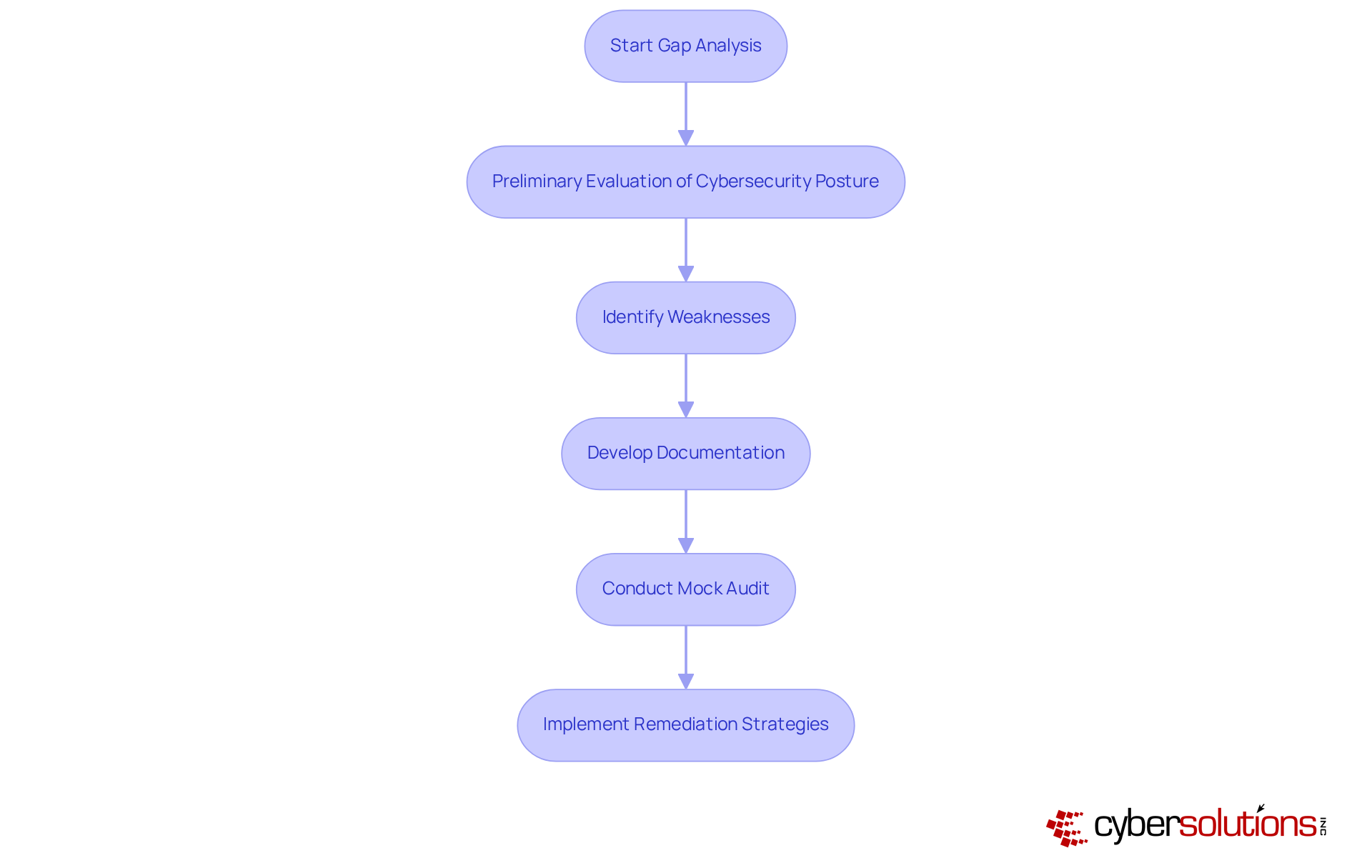
Conduct a Gap Analysis: Assessing Current Compliance Status
Performing a gap analysis is essential for organizations aiming to achieve Level 2 compliance. This process involves a thorough assessment of existing policies, procedures, and controls against the specific requirements outlined in Level 2. By pinpointing areas of non-compliance, organizations can effectively prioritize their remediation efforts.
Cyber Solutions initiates the process with a preliminary evaluation of your current security posture, identifying weaknesses within your systems and providing a roadmap to meet regulatory standards. This includes the development of necessary documentation, such as security policies and procedures, to demonstrate compliance. Conducting a gap analysis is also vital to ensure your organization is fully prepared for the official assessment, addressing any outstanding issues.
Understanding compliance requirements empowers leaders to make informed decisions regarding budget allocations and necessary investments in cybersecurity initiatives. Tailored remediation strategies, including policy updates and system improvements, are crucial for effectively addressing vulnerabilities. Continuous oversight of compliance efforts ensures that organizations remain compliant and ready for future audits.
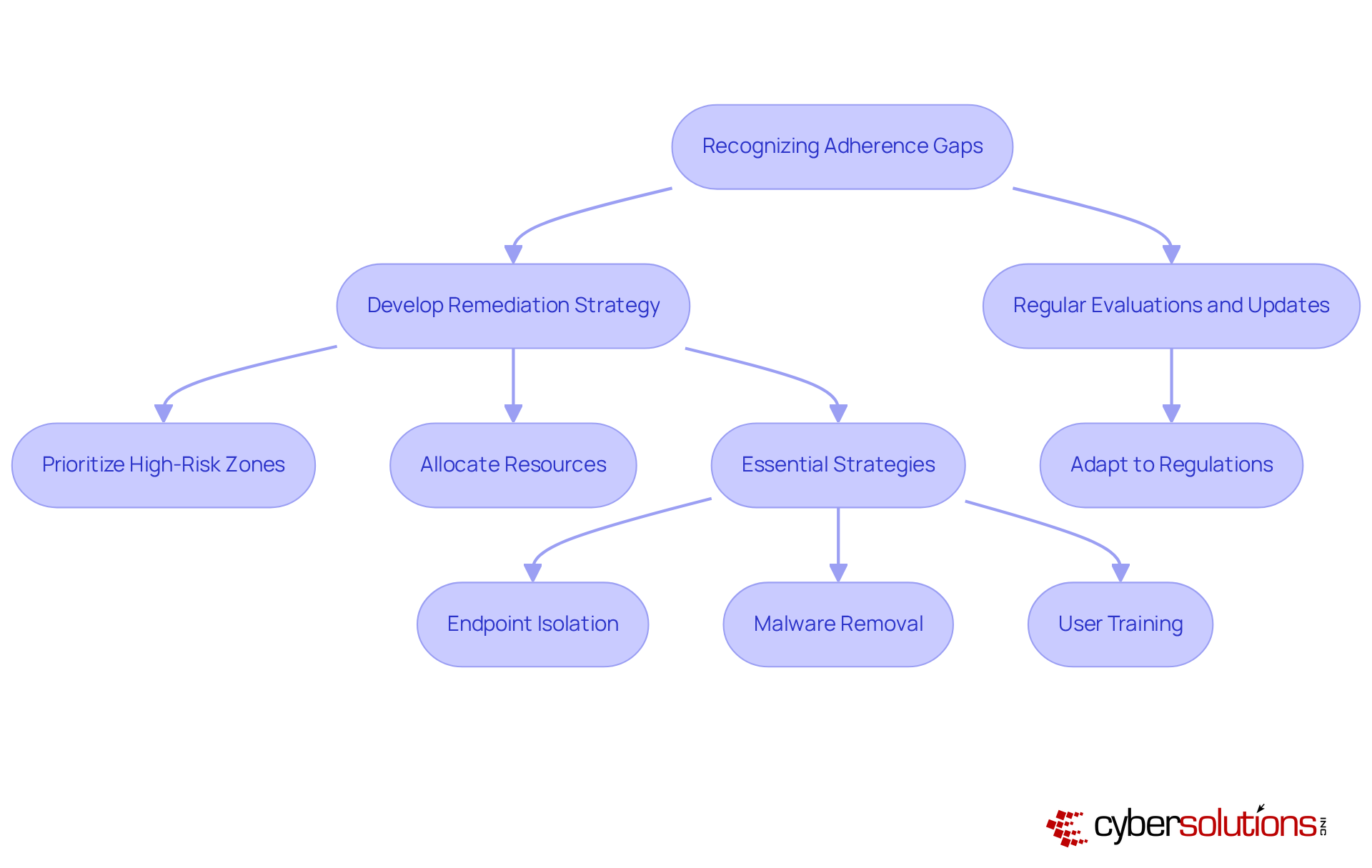
Develop a Remediation Plan: Steps to Address Compliance Gaps
Recognizing adherence gaps is critical; therefore, entities must develop a remediation plan that outlines specific actions, timelines, and assigned responsibilities. This strategy should prioritize compliance measures, ensuring that resources are allocated efficiently to meet established standards.
Regular evaluations and updates to the remediation plan are vital, allowing organizations to adapt to evolving regulations and threats. Not only do effective controls address vulnerabilities, but they also enhance the overall security posture through essential strategies such as:
- Endpoint isolation
- Malware removal
These are fundamental components of a cybersecurity strategy. This proactive stance fosters resilience against future risks and strengthens partnerships with cybersecurity providers like Cyber Solutions Inc.
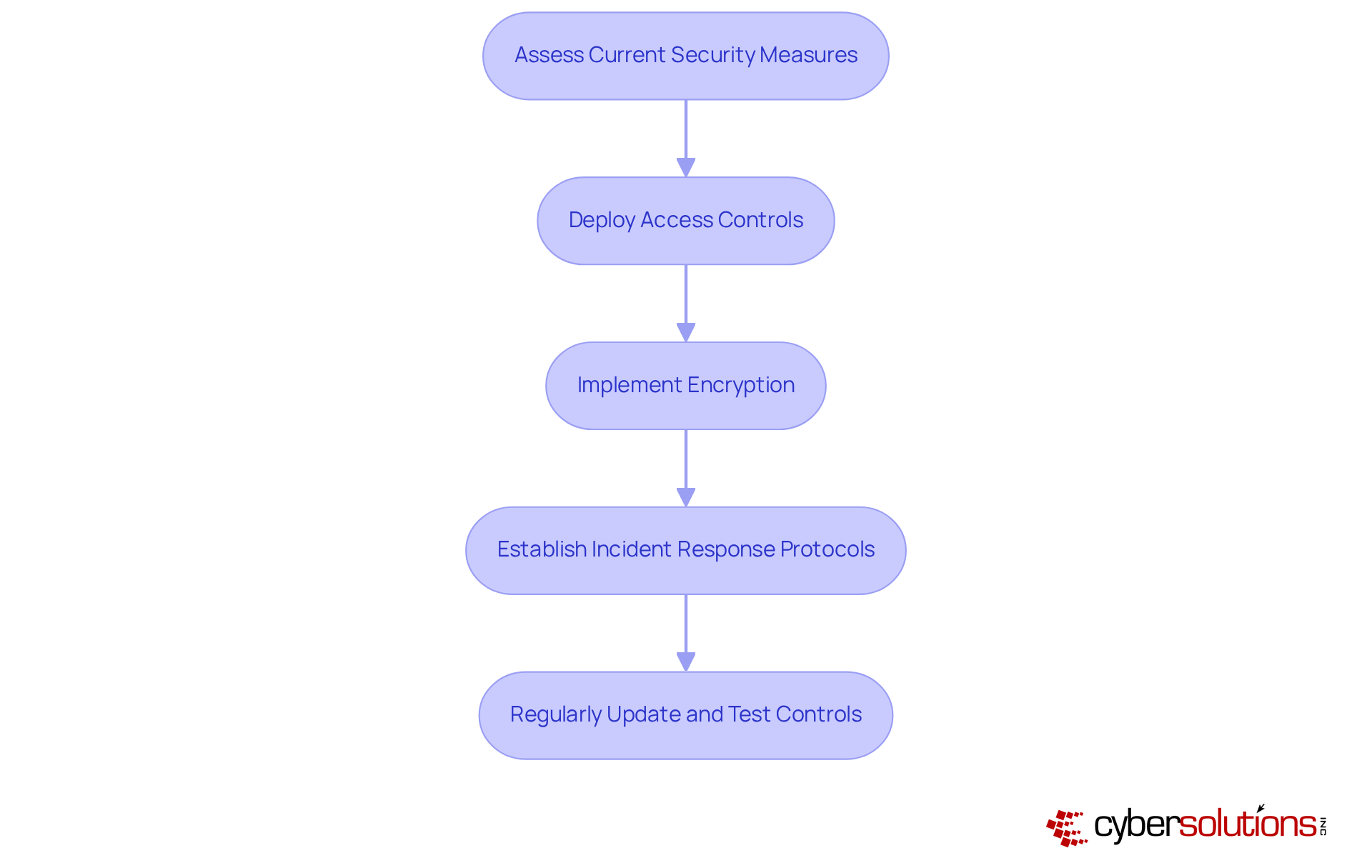
Implement Necessary Controls: Establishing Security Measures
In the realm of healthcare, achieving the necessary compliance is paramount. Entities must deploy a comprehensive suite of protective measures, including firewalls, encryption, and incident response protocols. Among these, malware protection emerges as a pivotal strategy, proactively thwarting unauthorized or malicious software from executing. This not only reduces the attack surface but also minimizes vulnerabilities, thereby enhancing overall security. Notably, recent assessments reveal high scores in risk management (4.4 ± 0.3) and data integrity measures (4.3 ± 0.3), underscoring the efficacy of these strategies in safeguarding patient data and contributing to an overall EHR assessment score of 22 ± 1.5.
To maintain resilience against the ever-evolving landscape of cyber threats, regular updates and rigorous testing of these controls are essential. A phased approach to compliance with CMMC enables organizations to implement necessary measures gradually. The Department of Defense estimates that by the fourth year, approximately 229,818 small entities will be subject to CMMC requirements, highlighting the urgency for organizations to act swiftly to mitigate potential non-compliance risks.
As Casey Crane aptly stated, "Without trying to be compliant with industry standards, you leave yourself and your sensitive data exposed to potential theft, manipulation, and other forms of compromise." This perspective reinforces the necessity for entities to prioritize risk assessment, employee training, and incident response as foundational components of their cybersecurity strategy.
To implement these controls effectively, organizations should concentrate on integrating advanced encryption techniques and establishing clear access protocols tailored to their specific operational needs. This proactive strategy not only ensures adherence but also cultivates trust with stakeholders, positioning the entity as a resilient participant in the defense marketplace.
Conduct Regular Security Assessments: Ensuring Continuous Compliance
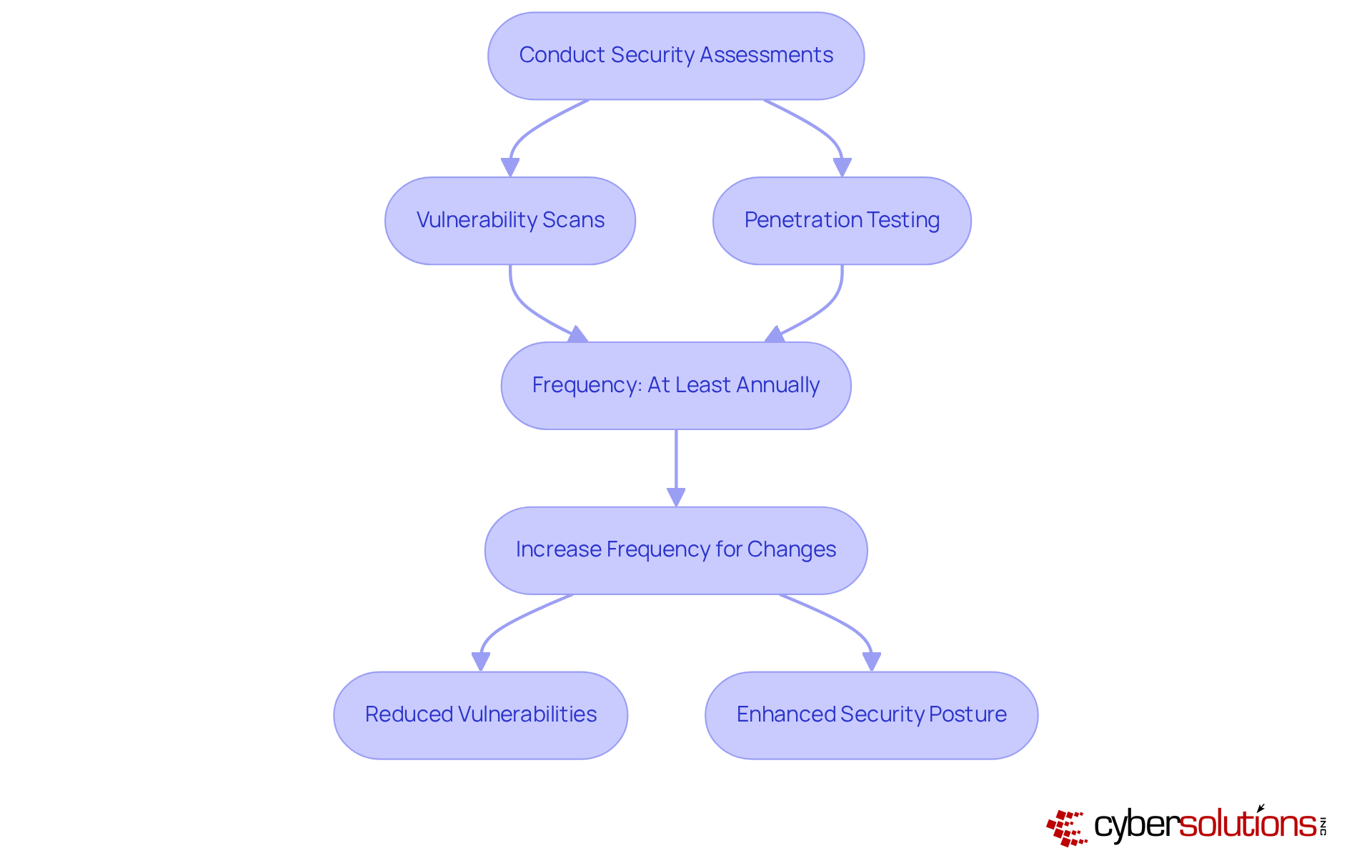
In today's rapidly evolving landscape of cybersecurity threats, frequent assessments including penetration testing and vulnerability scanning are essential for identifying weaknesses within a business's security framework. These assessments should be conducted at least annually, with an increase in frequency in response to significant organizational changes or emerging threats. As we approach 2025, the shifting environment of cybersecurity necessitates measures to ensure compliance with regulations.
Statistics reveal that organizations conducting regular assessments can significantly reduce unresolved vulnerabilities. For instance, a midsized healthcare company that transitioned from annual to quarterly testing experienced a remarkable 42% decrease in unresolved issues within just six months. Moreover, with over 25,000 Common Vulnerabilities and Exposures (CVEs) reported in 2022, the urgency for proactive security measures is clear.
Cybersecurity analysts assert that regular assessments not only facilitate adherence to the compliance framework but also enhance an organization’s security posture by uncovering critical weaknesses before they can be exploited. By integrating these evaluations into their security protection strategies, organizations can more effectively adapt to the evolving threat landscape and maintain robust compliance.
Enhance Employee Training: Building a Security-Conscious Culture
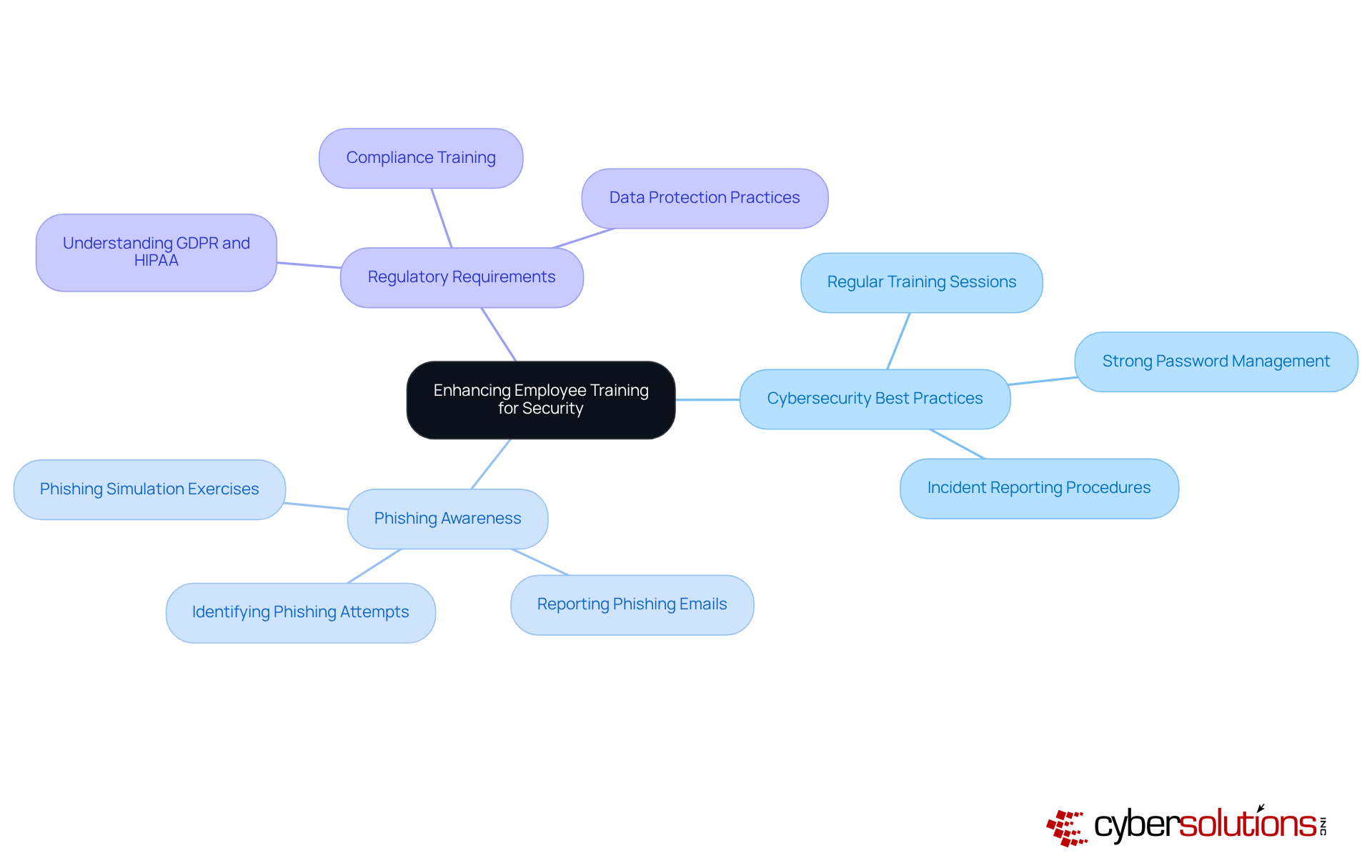
Enhancing employee training is not just beneficial; it is essential for cultivating a security-conscious culture within organizations. In today's landscape, where cybersecurity threats are ever-evolving, offering regular training sessions on cybersecurity best practices is paramount. By empowering employees with the necessary knowledge, companies can significantly reduce the risk of human error and bolster their overall security posture. This not only enhances compliance but also instills a sense of responsibility among staff, ultimately leading to a more resilient organization.
Obtain a Third-Party Assessment: Validating Compliance Efforts
Securing an assessment is crucial for validating compliance with the CMMC standards. Engaging an external evaluator delivers an unbiased review of a company's adherence to these standards, pinpointing areas ripe for enhancement while simultaneously serving as a robust demonstration of conformity to clients and regulatory authorities.
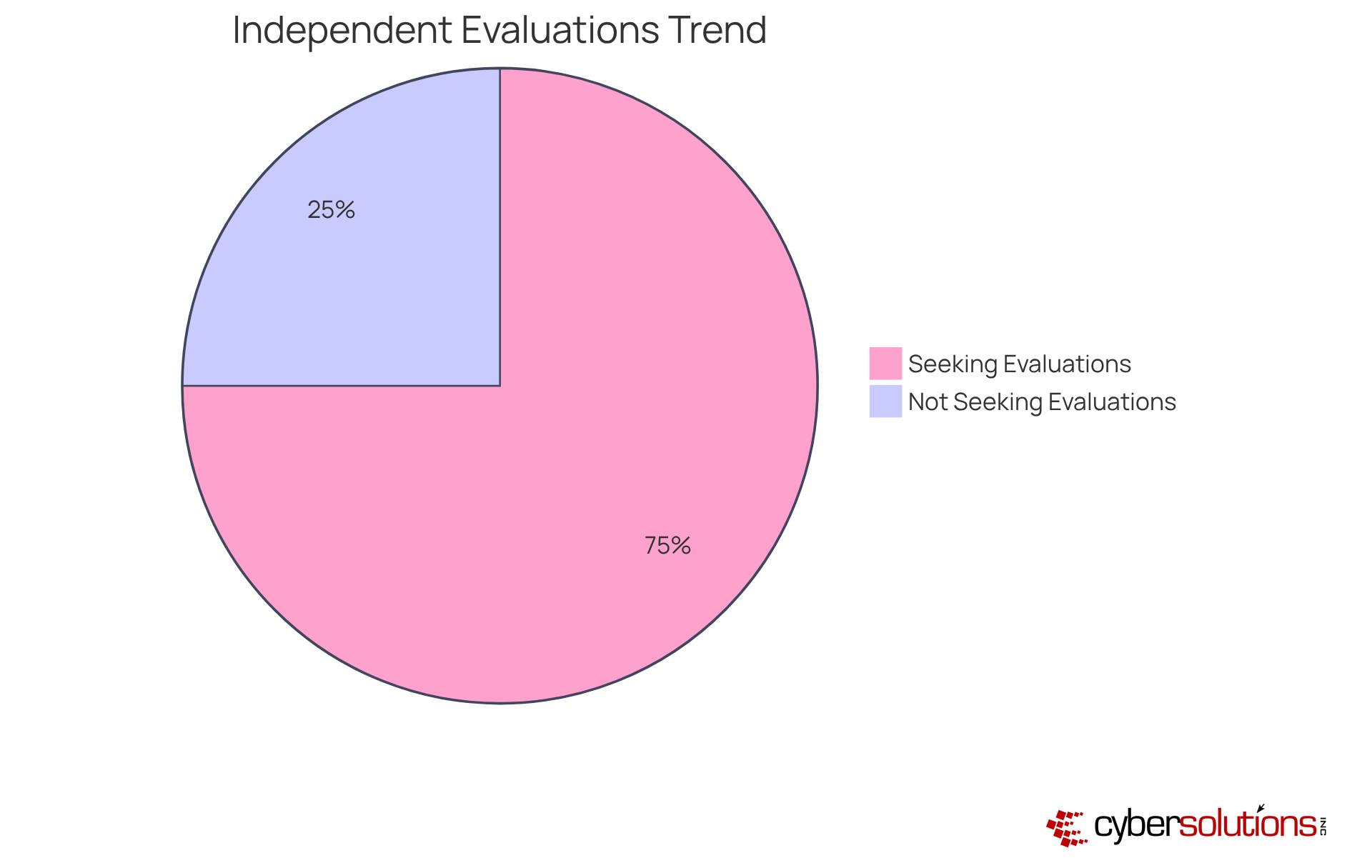
It is projected that approximately 70-75% of entities managing Controlled Unclassified Information (CUI) will enlist independent evaluators for their compliance checks, signaling a growing trend toward external validation. Independent evaluations not only bolster adherence but also elevate the overall security posture, as organizations receive recommendations that address specific vulnerabilities.
As Tony Giles, Director of Information Security at NSF-ISR, articulates, "We are passionate about this work and proud to take part in it," highlighting the dedication of independent assessors to maintaining stringent standards. By harnessing these evaluations, organizations can adeptly navigate the complexities of compliance, ensuring they meet the requirements while enhancing their security measures.
Address Findings: Responding to Compliance Assessment Results
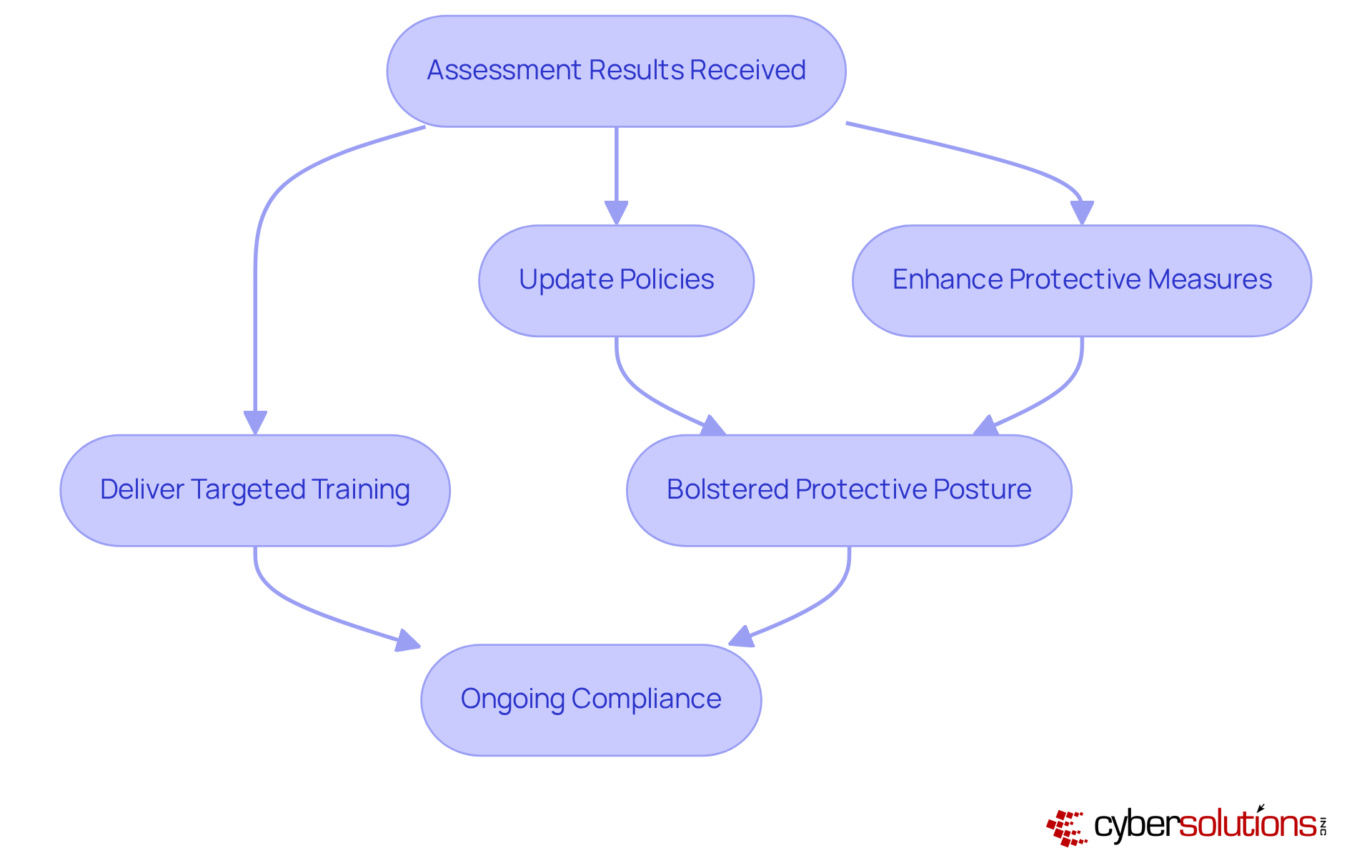
Upon receiving assessment results, entities must swiftly prioritize and address any identified findings. This imperative process often entails:
- Updating policies
- Enhancing security measures
- Delivering targeted training to employees
not only to comply but also to ensure alignment with the CMMC Level 2 requirements. As Paul Koziarz emphasizes, without a robust regulatory framework, companies may overlook vital security measures until it is too late. Richard Clarke further notes the severe consequences of neglecting cybersecurity protection, stating, "If you allocate more for coffee than for IT defense, you will be hacked."
Moreover, the typical duration required to resolve assessment findings can significantly impact a company's overall protection strategy, making prompt responses crucial. By cultivating a culture of security awareness, entities can effectively mitigate risks and strengthen their resilience against evolving threats.
C-Suite executives should consider:
- Implementing regular training sessions
- Establishing clear deadlines for addressing findings
to ensure their organizations remain proactive in their security initiatives. Additionally, maintaining a specialized response team on standby can further enhance recovery efforts, as evidenced by recent case studies where timely interventions resulted in successful outcomes in the face of ransomware threats.
Understand Penalties for Non-Compliance: Recognizing Risks and Consequences
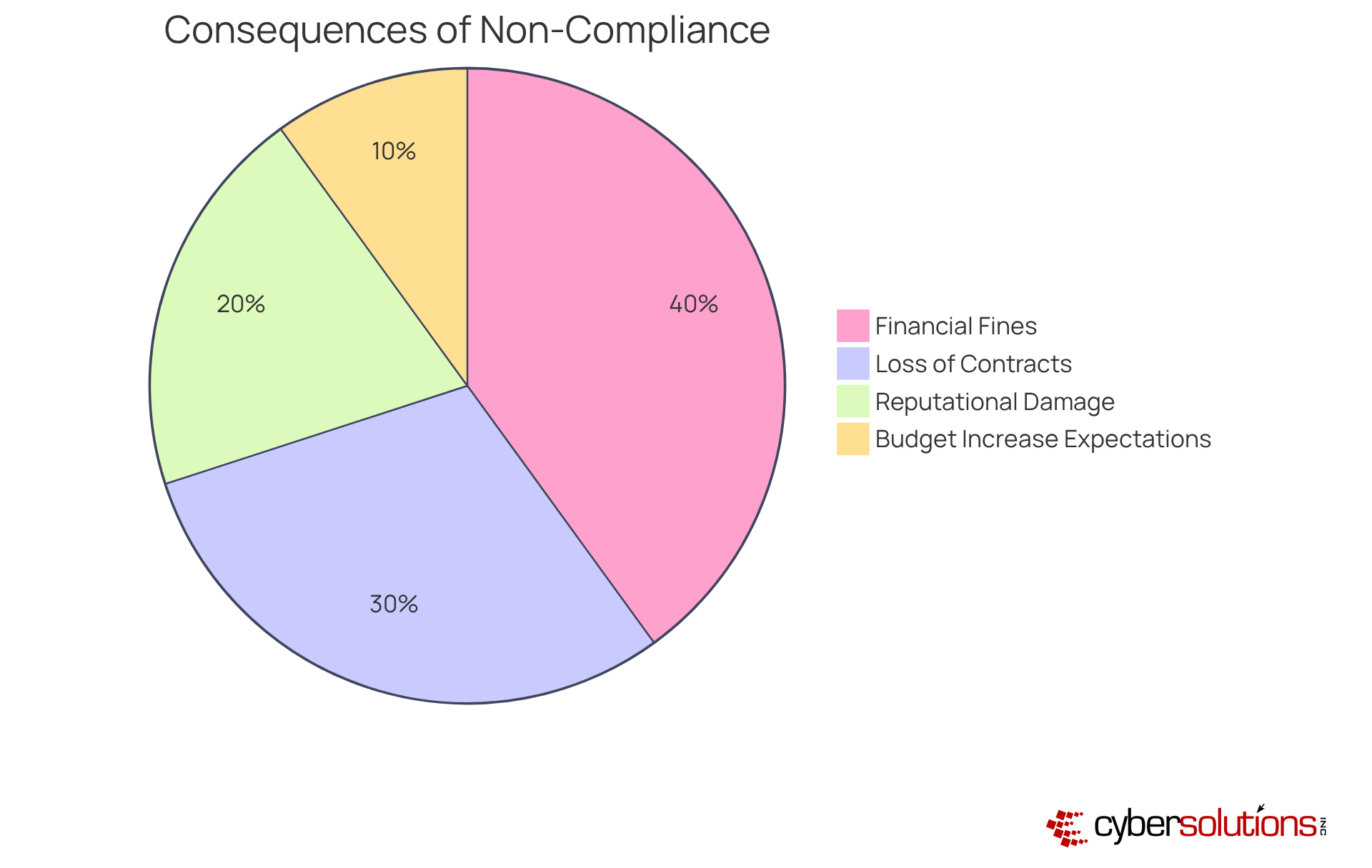
Organizations must recognize the substantial penalties associated with non-compliance. These penalties can take the form of fines, loss of eligibility for critical contracts, and severe reputational damage. Notably, around 34% of entities anticipate a lasting budget increase to meet compliance standards, underscoring the financial repercussions of non-adherence. The risks extend beyond immediate financial consequences; entities that fail to meet regulatory requirements may find themselves excluded from government contracts, which jeopardizes their market position and future growth.
Legal experts assert that non-compliance is not merely a regulatory oversight but a potentially serious violation under the False Claims Act. Entities that have faced fines for inaccurate statements highlight the importance of compliance. By proactively addressing compliance requirements and investing in necessary security measures, organizations can mitigate these risks and enhance their reputation, ensuring they remain competitive in an increasingly regulated environment.
Conclusion
The significance of CMMC Level 2 compliance cannot be overstated, particularly for organizations operating within the Defense Industrial Base. As the deadline for compliance approaches, C-Suite leaders must prioritize understanding the specific requirements and implement necessary measures to ensure their organizations not only meet but exceed these standards. By doing so, they position their businesses as trustworthy partners, ready to tackle the challenges of a complex regulatory landscape.
Throughout this article, key strategies for achieving CMMC Level 2 compliance have been outlined. From conducting thorough gap analyses and developing robust remediation plans to enhancing employee training and obtaining third-party assessments, each step is crucial in building a resilient cybersecurity framework. Additionally, recognizing the potential penalties for non-compliance serves as a vital reminder of the stakes involved, ensuring that organizations remain vigilant and proactive in their efforts.
In an environment where cyber threats are constantly evolving, the call to action is clear: organizations must invest in comprehensive cybersecurity solutions and foster a culture of security awareness among employees. By embracing these practices, C-Suite leaders can not only safeguard their sensitive information but also enhance their competitive edge in the defense contracting sector. The time to act is now—prioritize CMMC Level 2 compliance and secure a safer future for your organization.
Frequently Asked Questions
What services does Cyber Solutions Inc. offer for CMMC Level 2 compliance?
Cyber Solutions Inc. offers a range of cybersecurity services, including Adherence as a Service (CaaS), risk assessments, policy development, and ongoing adherence monitoring tailored to meet the unique needs of various industries.
What is the deadline for compliance with CMMC Level 2 requirements?
The deadline for compliance with the CMMC Level 2 cybersecurity framework is December 16, 2024.
What is required for CMMC Level 2 compliance?
CMMC Level 2 compliance requires third-party evaluation and certification by a Certified Third Party Assessment Organization (C3PAO) and involves implementing 110 protective measures across various domains.
What are the key practices included in CMMC Level 2 requirements?
Key practices include developing robust data protection policies, conducting regular risk assessments, and providing comprehensive training for all personnel on security protocols.
How can organizations assess their current compliance status for CMMC Level 2?
Organizations can perform a gap analysis, which involves assessing existing policies, procedures, and controls against CMMC Level 2 requirements to identify areas of non-compliance.
What role does ongoing training play in achieving CMMC Level 2 compliance?
Ongoing training and awareness campaigns are vital for ensuring that the workforce is equipped with the necessary knowledge to effectively mitigate cyber threats.
How can Compliance as a Service (CaaS) benefit organizations?
CaaS can provide continuous monitoring, proactive risk evaluations, and audit preparation assistance, streamlining the regulatory process and helping organizations avoid potential fines.
What is the importance of understanding certification tiers in CMMC?
Understanding certification tiers is essential as it helps organizations recognize the different levels of cybersecurity practices required, from basic to advanced protocols, to protect sensitive data.
What happens if an organization is not prepared for CMMC Level 2 compliance?
Organizations that are unprepared for compliance may face challenges in securing government contracts and could incur fines due to non-compliance with regulatory requirements.
List of Sources
- Cyber Solutions Inc.: Comprehensive Cybersecurity Services for CMMC Level 2 Compliance
- brightdefense.com (https://brightdefense.com/resources/cmmc-level-2-compliance)
- solutionsreview.com (https://solutionsreview.com/security-information-event-management/cybersecurity-awareness-month-quotes-from-industry-experts-in-2024)
- cyberdefensemagazine.com (https://cyberdefensemagazine.com/cmmc-2-0-final-rule-released-get-prepared-now)
- News (https://cybersheath.com/company/news)
- CMMC Goes Live: New Cybersecurity Requirements for Defense Contractors | Insights | Holland & Knight (https://hklaw.com/en/insights/publications/2025/09/cmmc-goes-live-new-cybersecurity-requirements)
- CMMC Level 2 Requirements: Key Controls and Practices
- secureframe.com (https://secureframe.com/blog/cmmc-deadline-announcement)
- Pentagon to officially implement CMMC requirements in contracts by Nov. 10 (https://defensescoop.com/2025/09/09/cmmc-dfars-final-rule-amendment)
- CMMC Goes Live: New Cybersecurity Requirements for Defense Contractors | Insights | Holland & Knight (https://hklaw.com/en/insights/publications/2025/09/cmmc-goes-live-new-cybersecurity-requirements)
- agilitypr.com (https://agilitypr.com/pr-news/pr-skills-profession/cmmc-level-2-demystified-the-110-requirements-explained-for-non-security-leaders)
- linkedin.com (https://linkedin.com/pulse/oira-completes-review-dfars-cmmc-rule-defense-face-kayne-mcgladrey-f5nte)
- Conduct a Gap Analysis: Assessing Current Compliance Status
- brightdefense.com (https://brightdefense.com/resources/cybersecurity-compliance-statistics)
- quzara.com (https://quzara.com/blog/cmmc-gap-analysis-2025-guide)
- 100+ Compliance Statistics You Should Know in 2026 (https://sprinto.com/blog/compliance-statistics)
- CMMC Goes Live: New Cybersecurity Requirements for Defense Contractors | Insights | Holland & Knight (https://hklaw.com/en/insights/publications/2025/09/cmmc-goes-live-new-cybersecurity-requirements)
- 130+ Compliance Statistics & Trends to Know for 2026 (https://secureframe.com/blog/compliance-statistics)
- Develop a Remediation Plan: Steps to Address Compliance Gaps
- brightdefense.com (https://brightdefense.com/resources/cybersecurity-compliance-statistics)
- 100+ Compliance Statistics You Should Know in 2026 (https://sprinto.com/blog/compliance-statistics)
- purplesec.us (https://purplesec.us/learn/vulnerability-management-metrics)
- sentinelone.com (https://sentinelone.com/cybersecurity-101/cybersecurity/vulnerability-remediation-tracking-best-practices-tools)
- coalfirefederal.com (https://coalfirefederal.com/cmmc/remediation-support)
- Implement Necessary Controls: Establishing Security Measures
- researchgate.net (https://researchgate.net/publication/385207514_Evaluating_the_Effectiveness_of_Data_Encryption_Methods_in_Healthcare_Database_Management)
- CMMC Goes Live: New Cybersecurity Requirements for Defense Contractors | Insights | Holland & Knight (https://hklaw.com/en/insights/publications/2025/09/cmmc-goes-live-new-cybersecurity-requirements)
- pmc.ncbi.nlm.nih.gov (https://pmc.ncbi.nlm.nih.gov/articles/PMC11328515)
- 10 Cybersecurity Compliance Statistics That Show Why You Must Up Your Cybersecurity Game (https://thesslstore.com/blog/cybersecurity-compliance-statistics)
- CMMC Compliance Is No Longer Optional: Why It Matters and How to Prepare (https://legatosecurity.com/blog/cmmc-compliance-is-no-longer-optional-why-it-matters-and-how-to-prepare)
- Conduct Regular Security Assessments: Ensuring Continuous Compliance
- strobes.co (https://strobes.co/blog/penetration-testing-frequency-how-often-is-enough)
- breachpoint.com (https://breachpoint.com/the-importance-of-vulnerability-scanning-for-cybersecurity)
- deepstrike.io (https://deepstrike.io/blog/penetration-testing-statistics-2025)
- barracuda.com (https://barracuda.com/company/news/2025/barracuda-launches-managed-vulnerability-security)
- getastra.com (https://getastra.com/blog/security-audit/penetration-testing-statistics)
- Enhance Employee Training: Building a Security-Conscious Culture
- Creating a Company Culture for Security: What Actually Works (According to 3M+ Hoxhunt Users) - Hoxhunt (https://hoxhunt.com/blog/creating-a-company-culture-for-security)
- Security Awareness Training: USA 2025 Statistics | Infrascale (https://infrascale.com/security-awareness-training-statistics-usa)
- How to Create a Security-First Culture at Work: 2026 Guide (https://invensis.net/blog/how-to-build-security-culture-in-workplace)
- securitymentor.com (https://securitymentor.com/security-awareness-training-statistics-and-trends)
- keepnetlabs.com (https://keepnetlabs.com/blog/security-awareness-training-statistics)
- Obtain a Third-Party Assessment: Validating Compliance Efforts
- summit7.us (https://summit7.us/blog/cmmc-l2-self-assessments)
- nsf.org (https://nsf.org/news/nsf-isr-receives-cmmc-third-party-assessment-organization-authorization)
- Pentagon to officially implement CMMC 2.0 requirements in contracts by Nov. 10 | News & Events | Clark Hill PLC (https://clarkhill.com/news-events/news/pentagon-to-officially-implement-cmmc-2-0-requirements-in-contracts-by-nov-10)
- federalnewsnetwork.com (https://federalnewsnetwork.com/contracting/2025/09/with-the-issuance-of-the-final-cmmc-rule-contractors-brace-for-audits-assessors-and-aspirin)
- Address Findings: Responding to Compliance Assessment Results
- lsa.inc (https://lsa.inc/case_studies/maximizing-cms-star-ratings-ensuring-compliance)
- compliancebridge.com (https://compliancebridge.com/4-quote-that-underscore-importance-of)
- atera.com (https://atera.com/blog/best-cybersecurity-quotes)
- cyburanus.com (https://cyburanus.com/blog/51-powerful-cybersecurity-quotes)
- Understand Penalties for Non-Compliance: Recognizing Risks and Consequences
- tealtech.com (https://tealtech.com/blog/cmmc-compliance-for-dod-contractors-dec162024)
- 100+ Compliance Statistics You Should Know in 2026 (https://sprinto.com/blog/compliance-statistics)
- CMMC Cost: Level 2 Audit vs. Non-Compliance Penalties (https://intersecinc.com/blogs/understanding-the-cost-of-cmmc-non-compliance)
- compassmsp.com (https://compassmsp.com/resources/cmmc-compliance-2025-whats-changing-and-when)